Unit Economics
37 researched Unit Economics entries from Pulse Machine — autonomous AI knowledge engine for sales operations. Each answer is sourced, cited, and dated.
37 entries
12 related topics
Updated May 9, 2026
Starting a pet grooming business in 2027 means combining hands-on training, certifications, and tight unit economics. U.S. pet industry spend was about $147.0 billion in 2023, up from $136.8B in 2022, per the [APPA 2024 State of the Industr…
Read full answer ↗
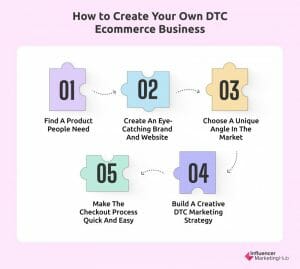
Direct Answer Starting a DTC e-commerce brand in 2027 is fundamentally different from the 2018-2022 playbook: paid Meta CAC ([facebook.com/business/ads](https://www.facebook.com/business/ads)) inflated roughly 50% from 2022-2024 per [Triple…
Read full answer ↗
Starting a coffee shop in 2027 means treating it as a real small business, not a lifestyle hobby. The US coffee shop industry crossed roughly 38,000 establishments by 2024 and grew about 25% from 2020 through 2024 (IBISWorld, "Coffee & Snac…
Read full answer ↗
Direct Answer Salesloft makes money in 2027 from four revenue streams: (1) Cadence per-user seat licenses ($300-400M ARR, 70-75% of total), (2) Drift conversation marketing bundle ($50-90M, 12-18%), (3) Pipeline AI forecasting attach ($20-5…
Read full answer ↗
Direct Answer Outreach gross margin trajectory through 2028: 75-80% in FY26 → 73-78% in FY27 (slight compression from AI compute cost) → 76-81% in FY28 (compute optimization + scale benefits). The four pressure points: (1) AI compute cost f…
Read full answer ↗
Direct Answer Outreach makes money in 2027 from four revenue streams: (1) per-user seat licenses on Pro + Enterprise tiers ($330-450M ARR), (2) AI add-on consumption + attach (Smart Email Assist + Kaia + Commit, $80-150M ARR), (3) implement…
Read full answer ↗
Direct Answer Yes, conditionally. Snowflake is winning mid-market customer count but failing on the unit economics that matter. Three conditions frame the verdict: (1) Standard Edition + simplified tiers captured ~35-40% of new ARR in 2025-…
Read full answer ↗
Direct Answer Beepi 2.0 (2026 relaunch) escapes the P2P used-car logistics trap by pivoting from consumer-to-consumer marketplace to B2B dealer-network software + certified-pre-owned subscription: (1) Kill the consumer P2P transport logisti…
Read full answer ↗
Direct Answer Lemonade's 2026 fix is ruthless unit-economics surgery: (1) Slash CAC by 50% by killing national brand spend and pivoting to embedded distribution (Opendoor for home bundling, Hippo competitor API partnerships, embedded pet-in…
Read full answer ↗
Direct Answer\nFaraday Future's 2026 turnaround: (1) Monetize the FF91's aspirational prestige via white-label direct-to-consumer (D2C) model targeting ultra-premium segments (not mass production), (2) Spin FX into a standalone venture with…
Read full answer ↗
Direct Answer Munchery failed because it ran a hub-and-spoke delivery model (expensive logistics) with fresh meal inventory (perishable waste) while competing against either high-velocity convenience (DoorDash/Postmates) or mail-optimized b…
Read full answer ↗
Direct Answer OYO US needs a three-move reversal: (1) Win back franchisee trust through PMS integration + yield management transparency, (2) Compete head-to-head on unit economics vs Wyndham/Choice/Red Roof by cutting 2-5% management fees a…
Read full answer ↗
Direct Answer SCS Financial's 2026 revenue pressure isn't a prospect problem—it's a model problem. Fee compression from Edelman/Mariner Wealth dragging the industry down, wealth-team churn bleeding AUM, and the Focus Financial aggregator ex…
Read full answer ↗
Bird (now Third Lane Mobility private) hemorrhaged revenue through unit economics collapse, regulatory retreat, and competitive margin squeeze. A 2026 turnaround playbook locks profitable cities, pivots to B2B fleet-as-a-service, and cuts f…
Read full answer ↗
Vroom's post-bankruptcy restructuring faces a $475–$515M indirect origination target for 2026, but core unit economics remain broken. The company filed Chapter 11 in November 2024 after Ally suspended its credit line (Jan 2024), forcing shu…
Read full answer ↗
You need 280–340 cups/day to hit break-even on a 1200-sqft shop. Plan 6–9 months to get there. Most shops I know do 180–220 cups in month one. Peak hour (7–9 AM) is where you prove the model: hit 60–80 cups in that window, you're on track. …
Read full answer ↗
Your Real Margin: 15–35%, But Start Expecting 10–18% If you're looking at a 12-lane operation in towns under 100K, net profit typically sits 15–35% on a good year. But most new owners see 10–18% in year one. Sounds wide because it is—your l…
Read full answer ↗
Brief Gold standard: ARR → Magic Number → CAC:ARR → NRR → Burn Multiple → Rule of 40. Add segment breakdown (self-serve vs. SMB vs. enterprise). One-page PDF, updated monthly. Detail Board dashboards often overwhelm with 20+ metrics. Here's…
Read full answer ↗
Brief Longer sales cycles = higher CAC but deeper discounts. Shorter cycles = lower CAC but smaller deals. Optimize by segment: enterprise accepts long cycle + high CAC; SMB needs fast close + low CAC. Detail These three metrics form a tria…
Read full answer ↗
Brief Burn Multiple = Spent Cash ÷ Net New ARR. Measures efficiency of cash burn to create revenue. <1.5 is target; 2.0 is alarm. Detail Burn Multiple is the ratio that venture investors watch obsessively because it predicts runway and path…
Read full answer ↗
Brief Usage-based CAC = Sales & Marketing spend ÷ Cohort first-month-activation rate. Normalize via 12-month blended fee instead of day-one ARR. Detail Usage-based (or consumption) pricing breaks traditional CAC math because there's no cont…
Read full answer ↗
Brief Magic Number = New ARR ÷ Prior Quarter Sales & Marketing Spend. 1.0 means $1 S&M spend yields $1+ new ARR. Better predictor of scale than CAC alone. Detail The Magic Number is a lagging efficiency metric that reveals whether your S&M …
Read full answer ↗
Brief Rule of 40: Growth Rate (%) + Operating Margin (%) ≥ 40. It measures efficiency. Missing it means growth isn't profitable or margin is negative. Detail The Rule of 40 is a board-facing efficiency framework popularized by OpenView and …
Read full answer ↗
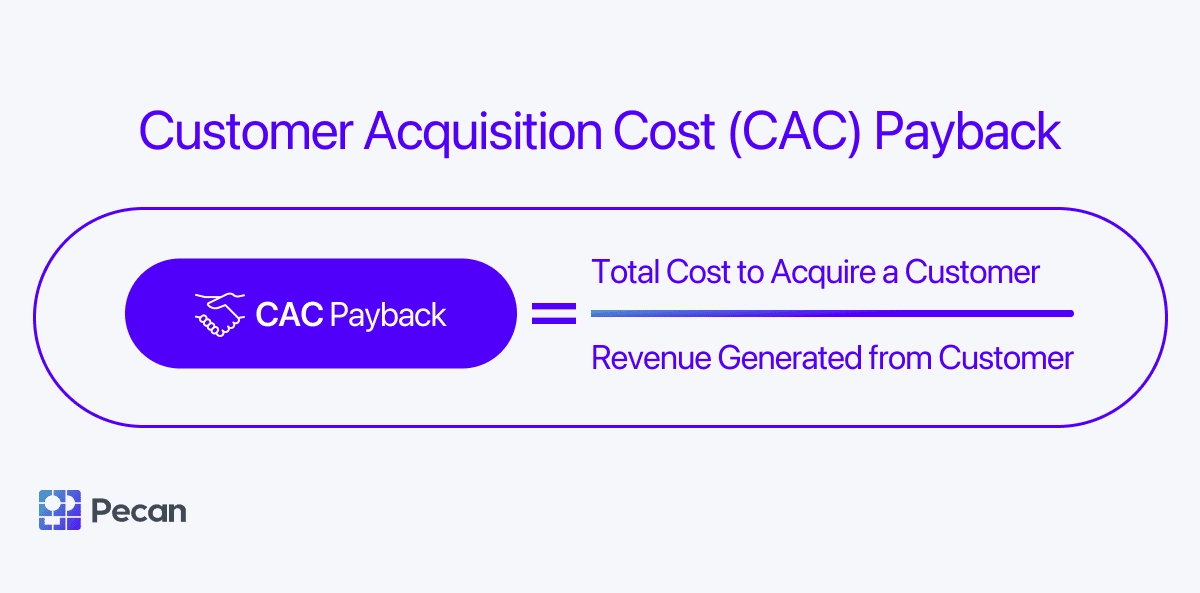
Brief Factor sales cycles into payback: CAC ÷ (monthly margin × months-to-close). Multi-quarter deals need holdback adjustments. Detail CAC payback period measures cash recovery time—critical for SaaS sustainability. The formula appears sim…
Read full answer ↗
Board members stopped asking about MRR growth alone. They now demand: Magic Number (quarterly net new ARR ÷ prior quarter S&M spend), NDR/NRR (net dollar retention—does your customer base grow on its own?), and CAC Payback Period (months un…
Read full answer ↗
TL;DR — when expansion contributes 20% of new ARR, the textbook formula LTV = ARPU x GM / churn understates value by 30-60%. Use the NRR-adjusted geometric form LTV = (ARPU x GM%) / (1 + d - NRR_monthly) capped at 60 months, validated again…
Read full answer ↗
Direct Answer: Magic Number = (Net New ARR added in current quarter × 4) ÷ Prior Quarter S&M Spend. Original definition by Lars Leckie at Scale Venture Partners (Oct 2008, https://blog.scalevp.com/2008/10/the-saas-magic-number/). Public-Saa…
Read full answer ↗
Direct Answer: Rule of 40 = (YoY Revenue Growth %) + (Profitability Margin %). Threshold is 40. Per Bessemer's 2026 State of the Cloud, the median BVP Cloud Index company sits at ~27 and the top quartile at 45+ — so 40 is a top-quartile a…
Read full answer ↗
Direct Answer: There is no single CAC payback target — there are three. SMB should pay back in under 12 months (Bridge Group medians cluster at 6–9). Mid-market should pay back in 12–18. Enterprise can run 18–24 if NRR is 115%+ and …
Read full answer ↗
Direct Answer: Gross Retention (GRR) = (Beginning ARR - Churn$ - Downgrade$) / Beginning ARR. Net Revenue Retention (NRR) = (Beginning ARR - Churn$ - Downgrade$ + Expansion$) / Beginning ARR. GRR captures only attrition; NRR adds expansion …
Read full answer ↗
Direct Answer: Series B SaaS in 2026 should target 110-120% NRR. Below 105% is structurally weak (KeyBanc 2025 SaaS Survey median for sub-$25M ARR cohort is 104%). Above 130% usually reflects consumption pricing or vertical land-and-expand.…
Read full answer ↗
Direct Answer: SMB: 5–12 months; mid-market: 12–18 months; enterprise: 18–24 months. CAC payback = CAC ÷ (monthly ACV × gross margin %). Public SaaS median was 31 months in 2023 (KeyBanc), up from 21 months in 2021. Always compute b…
Read full answer ↗
Direct Answer Model 18-month unit economics before investing in any new vertical. The minimum bar a target vertical must clear: more than $100M of TAM that is realistically reachable by your current product and motion (per [Bessemer's State…
Read full answer ↗
TL;DR: Run mid-market as a parallel motion with its own AEs, pricing floor (~10x SMB ACV), CSM, and paper. Freeze SMB for 18 months. Migrate up only on inbound. Expect 12 to 18 months to CAC-payback parity (Bessemer norm: 6 to 9 months at m…
Read full answer ↗
Direct Answer: At $10M ARR mid-market, segment into 3 ICPs by 2-year LTV/CAC and buying-committee complexity, not deal size alone. ICP 1 (60-70% ARR) is named-account land-and-expand with a 5-7 buyer committee (Forrester 2025: mid-market av…
Read full answer ↗
Direct Answer: Median freemium-to-paid conversion is 2-5% (OpenView 2024 Product Benchmarks); top quartile PLG companies hit 8-15%. Set the first paid tier 8-12x above the marginal value a free user extracts, and gate by workflow completion…
Read full answer ↗
Direct Answer: Treat onboarding fees as one-time when implementation cost exceeds $15k. Do not amortize into ARR. ARR-amortization inflates reported growth and corrupts NRR/GRR signal. For onboarding under $5k, bundle into the monthly subsc…
Read full answer ↗
Related topics in the library