
How do you start a pressure washing business in 2027?
 Curated byKory White · Fractional CRO · Maryland
 PULSEKNOWLEDGE LIBRARY
Quality
Certified
Start a pressure washing business in 2027 by picking one segment — residential route, commercial contracts, or fleet — funding a real $8,000–$18,000 skid setup, forming an LLC with $1M/$2M general liability, and selling recurring service rather than one-off jobs. Route density and contracts, not equipment, decide whether you build an asset.
What a pressure washing business actually is, and why the 2027 version is different
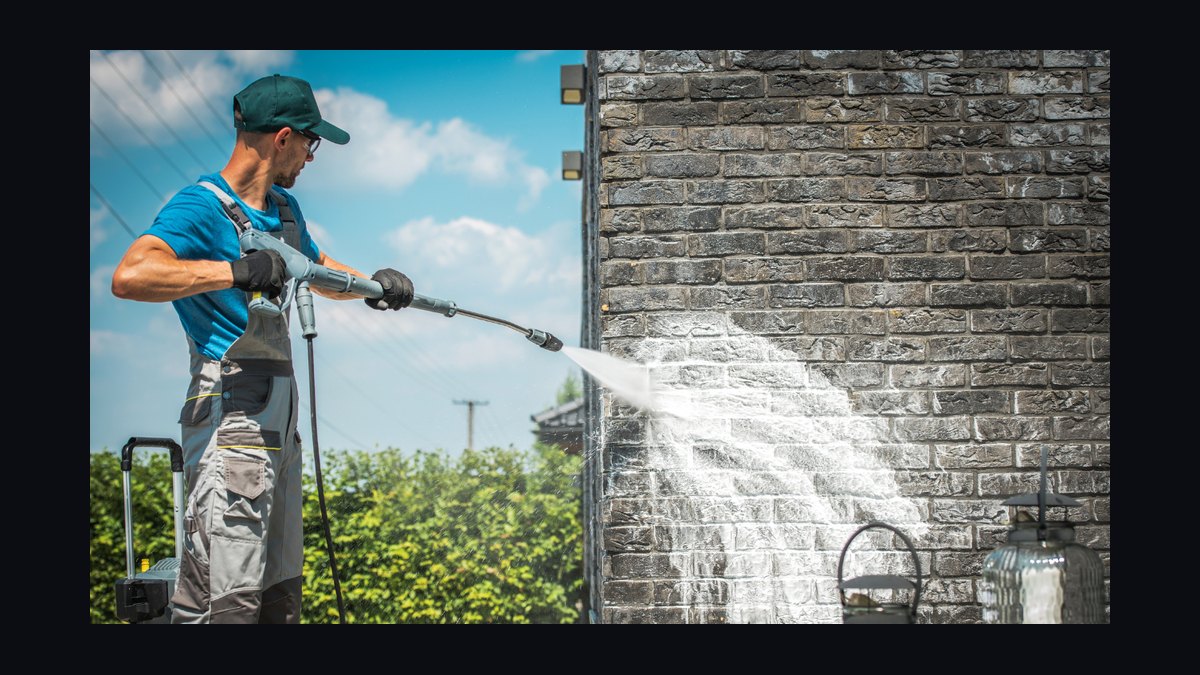
A pressure washing business sells labor, chemistry, and reliability against a demand curve that never stops: buildings get dirty, algae grows on north-facing siding, grease accumulates on dumpster pads, road film coats trucks. The physical service is simple — high-pressure water plus a surface cleaner for horizontal concrete, low-pressure "soft wash" with a sodium hypochlorite mix for siding and roofs. What separates a company from a side hustle has nothing to do with the wand. It has to do with whether the revenue repeats.
The industry is genuinely fragmented. Exterior cleaning in the US is commonly sized in the low tens of billions of dollars across pressure washing, window cleaning, and gutter work, and no national brand has consolidated it the way TruGreen consolidated lawn care or Rollins consolidated pest control. The majority of revenue sits in sub-$500K owner-operator shops. That fragmentation is the opportunity, and it is also why the segment is flooded with unserious entrants — the barrier to *starting* is a credit card and a box-store machine, while the barrier to *building* is route density, commercial relationships, capital equipment, and regulatory compliance.
Three things make the 2027 entry different from the 2020 entry. First, the back office has been transformed by AI tooling — quoting from satellite imagery, speed-to-lead auto-response, route optimization, automated review requests — so a solo operator now carries the administrative output that used to require an office assistant. The spray wand is not being automated; the $8-an-hour admin job largely has been. Second, stormwater enforcement under the Clean Water Act's NPDES program has tightened through the 2020s, which means compliant commercial work increasingly requires water recovery equipment. That is a wall for the casual entrant and a moat for the operator who invests. Third, the post-2023 pattern of homeowners maintaining rather than moving has kept residential curb-appeal demand steady.
Framed in RevOps terms — the discipline this site is built around — a pressure washing business is a revenue system with a funnel (lead source → quote → close → job → recurrence ask), a retention layer, and a unit-economics model that either compounds or leaks. Most failed operators never draw that system. They treat every job as an isolated transaction, which means they re-acquire every customer at full cost, forever. Treating the business as a route-based recurring-revenue company from day one is the single decision that determines whether year five is a $1.5M sellable asset or a $60K job you cannot quit.

The five customer segments are worth naming precisely, because choosing one is the highest-leverage decision you will make. Residential one-off (driveways, patios, single washes) runs $150–$450 per ticket with no recurrence and heavy price shopping — fine as a month-one cash bridge, fatal as a model. Residential route (house wash plus roof soft-wash, sold into neighborhood clusters) runs $350–$750 per ticket with annual or semi-annual cadence and works because you can service three to five homes in one subdivision in a day. Commercial flatwork and exterior maintenance (retail centers, grocery, quick-service restaurants, gas stations, HOAs, property managers) prices at roughly $0.08–$0.22 per square foot for concrete and $500–$5,000+ per building wash, on quarterly or semi-annual contracts. Fleet and heavy-equipment washing runs $150–$400 per vehicle on weekly or bi-weekly recurrence at the customer's yard. Specialty work — rust removal, graffiti, masonry restoration, oil-stain remediation, post-construction cleanup — is higher margin and lower volume, best added onto an existing base rather than used as a starting point.
Your addressable market is local, not national, because this is a drive-time business. A workable sizing exercise for a metro of one million people: roughly 300,000–380,000 single-family homes, of which perhaps 12–18% buy exterior cleaning in a given year at a $300–$500 average ticket, producing a residential pool in the low tens of millions. Layer on the commercial property inventory — every shopping center, bank branch, medical office, apartment complex, and municipal facility — and the fleet inventory from trucking terminals, construction yards, and school-bus depots. A mature single-operator business captures well under 2% of that. The market is never the constraint. Drive time is.
The step-by-step process from decision to first recurring account
The sequence matters, and most entrants run it out of order — buying equipment before choosing a segment, then reverse-engineering a strategy around whatever machine they happened to buy.
Step one: pick the segment before you buy anything. Score yourself on three axes. Capital available (below $8,000 means you are not ready to start seriously — save longer). Sales aptitude (comfortable with cold walk-ins and 60–90 day sales cycles points to commercial; tolerance for door-hanger grinding points to residential route; willingness to work 4 AM around fleet schedules points to fleet). Local market shape (commercial property concentration, logistics-corridor presence, subdivision density). Pick one primary segment. Two adjacent ones at most.
Step two: form the entity and bind insurance before the first job. LLC formation is typically $50–$500 depending on state filing fees. General liability at $1M per occurrence / $2M aggregate is what commercial clients require, and premiums commonly land in the $600–$2,000 per year range for a small operation. Add inland marine coverage for the equipment and trailer, commercial auto for the vehicle, and workers' compensation the moment you have an employee. If you are chasing commercial, price pollution liability too — it is increasingly named in property-management vendor requirements.
Step three: buy the Tier 2 setup. Detailed in the cost section below. Do not skip to marketing with a hobbyist machine; the equipment determines your job-throughput ceiling and your credibility with commercial buyers.
Step four: build the digital foundation before you need it. Claim and fully optimize the Google Business Profile — correct primary category, service areas, photos of real jobs, and a review-request process wired into the workflow from job number one. Stand up a simple website with service pages and a quote form. Set up field service management software (Jobber, Housecall Pro, or ServiceTitan at larger scale) at roughly $50–$300+ per month, and configure auto-text-back on missed calls and form fills. Speed-to-lead is not a nicety — the vendor who responds first wins a large share of residential quotes outright.
Step five: run the segment-appropriate acquisition motion. For residential route: GBP optimization plus Local Services Ads, then door-hanger saturation of 80–200 homes surrounding every job you book, plus a yard sign on every property. For commercial: a one-page capability sheet, walk-ins to property managers and facility managers, LinkedIn outreach to regional and district managers, and partnerships with landscapers and janitorial firms who already hold the accounts. For fleet: show up at the yard and offer a free demo wash on one truck.
Step six: execute with a documented job process — pre-job equipment and chemical checklist, water source confirmed, plants and fixtures protected, before photos, surface cleaner for flatwork and soft wash for vertical and roof surfaces, after photos, walk-through with the customer.
Step seven — the step almost everyone skips: make the recurrence ask on site, every time. Before you leave, schedule or set the reminder for the next service. Annual house wash. Quarterly commercial flatwork. Weekly fleet session. This one habit is the difference between a business and a treadmill.
Costs, timelines, and the numbers that actually govern the business
There are three honest capital tiers, and picking the wrong one is the most common expensive mistake.
Tier 1, roughly $500–$2,500, buys a consumer or entry "commercial" gas machine, a cheap surface cleaner, some hose, and magnetic truck signs. It feels accessible and it is heavily promoted online. It is a trap. The pump is often not rebuildable, the flow rate cannot support volume work, and the setup signals amateur to any commercial buyer. Use this tier only to test whether you can tolerate the physical work.
Tier 2, roughly $8,000–$18,000, is the correct starting point for a real business. Budget approximately: a belt-drive cold-water machine at 5.5–8 GPM and 3,000–4,000 PSI, $2,500–$6,500 (or a hot-water burner unit at $6,000–$12,000 if you are targeting fleet and grease); a stainless surface cleaner, 16–30 inch, $350–$900; a 12V soft-wash system with proportioner or downstream injector, $600–$2,000; a 200–325 gallon buffer tank, $300–$700; commercial hose reels plus 300–500 feet of pressure hose and soft-wash line, $600–$1,500; a used enclosed trailer or a truck-bed skid frame, $1,500–$6,000; chemicals, PPE, ladders, telescoping wands, valves and fittings, $800–$1,500; and business setup — entity, insurance binder, GBP, website, branded shirts — at $1,200–$2,800. Note that GPM, not PSI, is what drives cleaning speed. Marketing beginners obsess over PSI; the professional buys flow.
Tier 3, roughly $25,000–$55,000+, is a fully outfitted trailer with hot water, reclaim, and multiple machines. Reclaim systems alone run $3,000–$15,000+. This tier is correct if you are funded specifically to attack commercial and fleet with reclaim from day one and already have a pipeline. It is a trap if an equipment financing salesperson talked you into it before you have a single account. Most successful operators reach Tier 3 by reinvesting Tier 2 profits in years one and two.
Separate from equipment, hold $3,000–$8,000 of working capital for fuel, chemical resupply, insurance installments, and — critically — the net-30 to net-60 gap on commercial invoices. Commercial clients pay on their terms, not yours, and the operator who wins a great contract and then cannot float sixty days of payroll has won nothing.
Unit economics per job. Take a residential house wash quoted at $450. Chemical — sodium hypochlorite, surfactant, brighteners — runs roughly $12–$25. Fuel for the machine and the drive, $15–$35. Labor at $18–$24 per hour for a two-to-three-hour job including setup and drive, $54–$90 (or your own opportunity cost if solo). Equipment depreciation and maintenance reserve, $20–$40 per job. Allocated overhead for insurance, software, and phone, $35–$60. Card processing, roughly $10–$14. Contribution lands around $180–$280 — *if* the route is tight. Take a single job with a 40-minute drive each way and $40–$80 of that contribution disappears into windshield time nobody pays you for.
Commercial flatwork inverts the picture favorably. Twenty thousand square feet of retail parking at $0.12 per square foot is $2,400. With a high-GPM machine and a surface cleaner, a two-person crew completes it in four to six hours. Chemical and fuel $80–$160, labor $200–$340, allocated overhead $120–$200 — contribution in the $1,700–$2,000 range, recurring quarterly. Fleet batches similarly: a session of 8–14 trucks at $250 each, two technicians, shared chemical and water setup, produces $1,200–$2,400 of contribution on weekly recurrence.
The metric that matters is not revenue per hour. It is contribution margin per route-day, and recurring contracts win on that metric because they amortize customer acquisition cost toward zero and let you plan crew utilization instead of improvising it.
Pricing models by segment. Per-square-foot is standard for commercial flatwork at $0.08–$0.22 for concrete and $0.15–$0.40 for building soft-wash, higher where soiling is heavy or grease-laden — enforce a minimum job size so you are not nickel-and-dimed. Flat-rate by tier is best for residential: roughly $275–$400 for a single-story home up to about 2,000 square feet, $400–$650 for two-story, $650–$1,100 for large homes, with driveway-and-walkway packages and roof soft-wash priced by footprint. Flat-rate makes your efficiency your profit. Hourly, at $125–$225 for a solo operator and $200–$400 for a crew, belongs only on unscopeable specialty work like graffiti or rust. Contract or retainer pricing — a fixed monthly fee for a defined scope, such as monthly entrance and sidewalk cleaning plus a semi-annual building wash — is the highest-value model, because it smooths cash flow, locks out competitors, and is what makes the business sellable. Build a 4–7% annual escalator into every contract you sign; operators who never raise prices on existing accounts silently lose margin every year to wage and chemical inflation.
Timelines. Entity formation and insurance: one to three weeks. Equipment procurement and setup: two to six weeks. First residential revenue: within days of going live if you are knocking and running GBP properly. First commercial contract: expect 60–90 days from first contact, sometimes longer through an RFP cycle — this is why commercial-first founders have frightening early months.
Revenue trajectory, honestly. Year one solo: $60,000–$130,000 at 35–55% net margin, working 45–55 hours a week including unpaid quoting and admin. The goal of year one is not income; it is proving the model, banking 5–15 recurring accounts, accumulating reviews, and funding Tier 3 equipment from profit. Year two with a first hire: $130,000–$280,000, margin compressing to 25–40% as labor, a second vehicle, and software scale up. Year three with crews: $280,000–$550,000 at 18–30% — the make-or-break year, where operators who documented their systems scale cleanly and those who did not hit a chaos ceiling. Year four: $450,000–$900,000 with three-plus trucks and a real management layer. Year five: $700,000–$1.6 million for a route-dense, contract-heavy operation at 15–25% margin on much larger absolute dollars, with genuine asset value. Home-services acquirers price businesses like this on a multiple of seller's discretionary earnings, and the multiple tracks recurring contract base, documented SOPs, a management layer, and clean books. A generalist with the same revenue and none of those things is often not acquirable at any multiple.
Seasonality shapes all of it. Northern markets run roughly March through October for exterior work; southern markets stretch longer but compress the daily window around summer heat and afternoon storms. Build a cash reserve during peak months, front-load commercial and fleet contracts because they are far less seasonal than residential, and develop off-season offerings — gutter cleaning in late fall, holiday light installation, commercial deep-cleans scheduled into shoulder seasons. Use the slow months for pump rebuilds, spring booking campaigns, SOP writing, and commercial selling, since a 60–90 day cycle worked in January produces April contracts.
Where new operators get it wrong
The failure pattern is remarkably consistent, and it has six stages. Recognizing them in advance is worth more than any equipment recommendation.
The gear mistake. A $300–$600 consumer machine with a non-rebuildable pump cannot survive daily commercial use. It produces a homeowner-with-a-better-machine service rather than a professional one, and it fails — usually somewhere around month twelve to eighteen, right when momentum finally exists.
The pricing mistake. Quoting off competitor ads or gut feel — $99 driveways, $150 house washes — without job-costing. Those numbers do not cover chemical, fuel, equipment reserve, insurance, self-employment tax, and drive time. The operator has bought themselves a sub-minimum-wage job and cannot see it because gross revenue looks fine.

The channel mistake. Leaning on boosted Facebook posts and shared-lead marketplaces. Shared leads put you in a bid against several other contractors in front of a price shopper; close rates are low and the customers churn. Meanwhile the highest-ROI residential channel — GBP ranking driven by review count, review velocity, proximity, and correct category — is free and gets neglected.
The everything-customer mistake. A fleet job 40 minutes north on Tuesday, a residential deck 35 minutes south on Wednesday. Route density collapses, the day disappears into the truck, and margin evaporates without ever showing up as a line item. Enforce geography ruthlessly. Charge for travel beyond a defined radius, or decline.
The no-recurrence mistake. Every dollar is a one-off. There is no contract base, no reminder cadence, no monthly floor. Year three starts at zero exactly like year one did.
The burnout. Twelve to twenty-four months in: $40,000–$70,000 of revenue, 55-plus hour weeks including unpaid quoting, a body that hurts, and either an exit or a permanent solo grind with no asset value.
Beyond that sequence, four specific errors deserve naming. Misclassifying technicians as 1099 contractors to dodge workers' compensation is common and genuinely dangerous — it creates tax, wage-and-hour, and uninsured-injury exposure that can end the business. Skipping written service agreements leaves you liable for pre-existing conditions: oxidized siding, loose mortar, failing paint, old window seals. Disclaim them in writing, photograph them before you start. Ignoring stormwater rules on commercial jobs is the fastest way to a fine and a lost account — wash water carrying detergent, oil, grease, or sediment into a storm drain is a regulated discharge under the Clean Water Act's NPDES framework, and property managers are increasingly held responsible for their vendors' discharges. Staying solo too long out of a belief that nobody washes as well as you do caps the business permanently; the first technician hire, typically $16–$24 per hour depending on market, should come when you are consistently turning away work or when your selling time is worth more than your washing time. Hire for reliability and physical durability, train the technique — competence with a wand takes weeks, showing up on time is character.
Decision framework: what to choose, when
The framework below compresses the choices into the order they should be made. Read it as a gate sequence — fail an early gate and the later ones do not matter.
The fit test comes first and is not rhetorical. Can you tolerate physically demanding, weather-exposed, repetitive work for the 12–24 months you will be solo or near-solo? Are you willing to run either commercial cold outreach with 60–90 day cycles or door-hanger route grinding? Will you actually write SOPs, or do you just want a job with a truck? An honest "no" here saves you $12,000 and two years.

The segment gate follows: commercial if your strength is relationships and patience, residential route if it is disciplined hustle and local reputation-building, fleet if you will work early mornings around someone else's yard schedule. Do not split across all three in year one.
The capital gate: Tier 2 or wait. Tier 1 is the trap; Tier 3 financed on day one without a pipeline is a different trap wearing a nicer trailer.
The compliance gate is where the 2027 moat lives. NPDES stormwater enforcement has been tightening, and commercial and municipal buyers increasingly write water-recovery capability and environmental insurance directly into their vendor requirements. That requirement legally excludes the flood of uninsured, no-reclaim competitors from the highest-value contracts. Reclaim equipment at $3,000–$15,000+ is not a cost center; it is a bid qualifier. Residential-only operators still need to follow the rules — biodegradable surfactants, divert to landscaping, never into a storm drain — but the professionalization of the commercial tier is actively pricing out your unserious competition, which is good news if you are serious.
The model gate is the one that compounds: commit to recurrence from the first job. Every one-off carries a recurrence ask and a route-saturation follow-up. Adopt the software stack before you feel you need it, because the solo phase is where admin drowns people.
Related questions
Do I need a license to pressure wash?
Most cities and counties require a general business license, typically $50–$400. A contractor license or registration applies in some states above certain job-value thresholds, and some jurisdictions require wastewater or mobile-cleaner discharge permits. Check your specific state and municipality — requirements vary widely and change.
Hot water or cold water for a first machine?
Cold water, belt-drive, 5.5–8 GPM covers residential and most commercial flatwork at a fraction of the cost. Hot water is non-negotiable only for fleet, grease, and heavy industrial soiling, where cold water smears oil rather than lifting it. Buy hot only if fleet is your chosen segment.
Can I start part-time while keeping a job?
Yes, and many do. Pick one zip-code cluster and one service — house washes, for instance — and run weekends. Expect a realistic part-time ceiling around $25,000–$40,000 before scheduling conflicts and commercial availability force a full-time decision.
What is soft washing and when do I use it?
Soft washing applies low pressure with a sodium hypochlorite and surfactant mix to kill organic growth — algae, mildew, lichen — on siding, stucco, and roofs. High pressure damages shingles, screens, and older siding. Flatwork gets pressure and a surface cleaner; vertical and roof surfaces get soft wash.
FAQ
How much money do I really need to start?
Plan on $8,000–$18,000 for equipment plus $3,000–$8,000 of working capital. The equipment covers a belt-drive machine, surface cleaner, soft-wash system, buffer tank, reels and hose, a skid or used trailer, chemicals and PPE, and business setup. The working capital covers fuel, resupply, and the 30–60 day gap before commercial invoices pay.
How long until it replaces a full-time income?
Most operators who commit full-time reach a livable owner draw somewhere in months six to eighteen, and part-timers typically transition once they are clearing $4,000–$6,000 of monthly net profit consistently. The reliable predictor is not revenue — it is how much of that revenue is contracted or on a reminder cadence before you leap.
Which segment is best for a beginner with no sales background?
Residential route. It converts effort into revenue faster than commercial, the sales cycle is same-day rather than 60–90 days, and reputation compounds through GBP reviews and neighborhood visibility. Move into commercial contracts in year two once you have insurance history, a review base, and reclaim capability.
What insurance do commercial clients actually require?
General liability at $1M per occurrence and $2M aggregate is the common baseline, plus workers' compensation once you have employees and commercial auto for the vehicle. Larger property managers and municipalities increasingly ask for pollution or environmental liability and proof of water-recovery capability, and will request a certificate of insurance before you set foot on site.
Is the work going to be automated away?
Not the washing. Surface assessment, chemical selection, damage avoidance, and variable-site problem-solving are not close to automated at a price that beats a trained two-person crew. What has changed is the office — AI-assisted quoting from satellite imagery, dispatch, route optimization, and review generation — which widens the gap between operators who adopt the stack and those who do not.
How do I get the first customers with almost no budget?
Fully optimize the Google Business Profile, then go direct. For residential, door-hang the blocks around every job you complete and put a yard sign on every property. For commercial, walk into property management offices, gas stations, and QSR franchisees with a one-page capability sheet. For fleet, offer a free demo wash on one truck at a yard — it closes accounts that outlast any ad campaign.
Sources
- US Environmental Protection Agency — NPDES Stormwater Program: https://www.epa.gov/npdes/npdes-stormwater-program
- US EPA — Summary of the Clean Water Act: https://www.epa.gov/laws-regulations/summary-clean-water-act
- US Small Business Administration — Choose a Business Structure: https://www.sba.gov/business-guide/launch-your-business/choose-business-structure
- IRS — Small Business and Self-Employed Tax Center: https://www.irs.gov/businesses/small-businesses-self-employed
- US Bureau of Labor Statistics — Occupational Outlook Handbook: https://www.bls.gov/ooh
- OSHA — Occupational Safety and Health Administration: https://www.osha.gov
- US Census Bureau — American Housing Survey and County Business Patterns: https://www.census.gov
- Power Washers of North America (PWNA): https://www.pwna.org
- United Association of Mobile Contract Cleaners (UAMCC): https://www.uamcc.org
- Google — Local Services Ads: https://ads.google.com/local-services-ads
Related on PULSE
This page will be disappearing soon. Save it to your device for $1 — or read it free while it is here.
@Kory-White- · if Venmo asks, the last 4 of my number are 2012
This page is gone.
This one is off the shelf now. $1 keeps it on your phone for good — the whole page, pictures and diagrams included.
 window-cleaningHow do you start a residential window cleaning business in 2027?
 window-cleaningHow do you start a window cleaning business in 2027?
 lawn-careHow do you start a lawn care business in 2027?
 gutter-cleaningHow do you start a gutter cleaning business in 2027?
 home-cleaningHow do you start a home cleaning service business in 2027?
 soft-washHow do you start a soft wash roof cleaning business in 2027?
 deck-stainingHow do you start a deck staining business in 2027?
 dumpster-rentalHow do you start a dumpster rental business in 2027?
 junk-removalHow do you start a junk removal business in 2027?
 handymanHow do you start a handyman service business in 2027?