
Skill Drill: Onboarding New Hires for Insurance Sales
 Curated byKory White · Fractional CRO · Maryland
 PULSEKNOWLEDGE LIBRARY
Quality
Certified

This skill drill transforms a new insurance producer's ability to run a compliant, structured first client conversation that moves from rapport through needs-discovery to a clear recommendation—without pitching prematurely. A sales manager or team lead facilitates this 45-minute exercise with 2–10 new hires, using verbatim scripts and live role-plays to build muscle memory around SPIN-style discovery and the Sandler up-front contract. By the end, every participant can surface a genuine coverage gap the prospect didn't know existed and lock a concrete next step, turning a potentially awkward first meeting into a trusted consultation that builds long-term client relationships and reduces compliance risk.
The single most common reason new insurance producers fail in their first 90 days is not a lack of product knowledge—it is the inability to run a conversation that feels natural, trustworthy, and valuable to the prospect. They pitch coverage before understanding the situation, quote price before establishing value, and freeze when a prospect says "I already have insurance." This drill directly addresses that gap by giving new hires a repeatable four-step conversation structure—set expectations, discover the situation, surface the implication of a gap, and lock a next step—that works across life, P&C, health, and commercial lines. For a deeper dive into the methodology behind structured discovery conversations, see our SPIN Selling framework for insurance.
Why This Drill Targets the Core Failure Point in Week One
Insurance is the rare sales profession where the product is invisible, the buyer is anxious, and a single misstatement can trigger a compliance issue. New hires usually fail not because they lack product knowledge but because they cannot run a conversation: they pitch coverage before they understand the prospect's situation, they quote price before they establish value, and they freeze when a prospect says "I already have insurance." Carriers like State Farm, Allstate, and Northwestern Mutual all train a structured first appointment for exactly this reason—the structure protects the customer and the producer.
The skill this drill builds maps directly onto recognized methodology. SPIN Selling (Neil Rackham) gives the discovery spine: Situation, Problem, Implication, Need-payoff questions instead of feature-dumping. Sandler Training's up-front contract teaches the producer to set expectations before the meeting so nobody is "thinking it over" at the end. Dale Carnegie's rapport principles keep an anxious buyer talking. A new life or P&C producer who can run a SPIN-style discovery and a Sandler up-front contract closes more first appointments and generates fewer compliance complaints than one who memorized a product brochure. This drill makes that conversation a muscle, not a hope.

What You'll Need to Run This Drill Effectively
- Group size: 2–10 new hires. If you have more, split into pods of 4 with a veteran observer in each.
- Materials: Printed copies of the two role-play scenarios below (one per pair), a one-page "discovery question bank," and a timer visible to the room.
- Room setup: Chairs in pairs facing each other, plus one open corner for the "pressure test" fishbowl. If remote, use breakout rooms of two.
- Handouts: The leader's verbatim up-front-contract script (below) and a blank "first appointment" worksheet with four boxes: Situation, Problem, Implication, Next Step.
- Prep ask: Before the room fills, the leader reads the two scenarios aloud once to themselves so the role-play prompts land cleanly.
Round 1 — Set the Scene and Model the Up-Front Contract (5 min)
The leader frames the skill and reads the up-front contract aloud so every new hire hears the target out loud before they attempt it.

> Leader reads aloud: "Today we are not practicing how to sell a policy. We are practicing how to run a first appointment so good that the client tells you their real situation. The producer who learns the situation wins the account. The producer who pitches first loses it. By the end of this hour you will run a four-step conversation: set expectations, discover the situation, surface the implication of a gap, and lock a next step. Watch me model it once, then you run reps."
The leader then models the Sandler up-front contract in 60 seconds with a volunteer:

> Leader (as producer): "Thanks for the 20 minutes. Here's how I'd like to use it: I'll ask you a handful of questions about your home, your family, and what you'd want protected if something went sideways. If I see a gap, I'll tell you straight. If everything looks solid, I'll tell you that too and we're done. Fair?"
What good looks like: the volunteer relaxes, agrees, and the producer never said the word "policy" or "premium." The room sees that the contract lowers the buyer's guard. This single skill, practiced daily, can dramatically improve first appointment conversion rates.

Round 2 — Run the Discovery Reps with SPIN Questions (15 min)
Pair up. One person is the producer, one is the prospect using Scenario A (below). The producer's only job is to run SPIN-style discovery and fill the four-box worksheet. No quoting allowed. Swap after 6 minutes so both run reps.
Scenario A — P&C / homeowners: "You're a 38-year-old who just bought a $480,000 home with a finished basement home office. You have a homeowners policy your mortgage broker picked, you've never read it, and you run a small Etsy business out of the basement. You did not mention the business unless the producer asks the right questions."

The producer must surface, through questions only, that the home-based business is almost certainly uncovered by a standard HO-3 policy—a real, common gap that a Situation → Problem → Implication question chain reveals.
> Producer script spine (read, then improvise): > - *Situation:* "Walk me through the home—square footage, when you bought it, who picked the current policy?" > - *Problem:* "What's actually in the basement day to day?" > - *Implication:* "If a client slipped on your steps coming to pick up an order, or a fire started from your shipping equipment—who'd be on the hook?" > - *Need-payoff:* "If I could show you a way to cover the business without buying a separate commercial policy, would that be worth ten minutes next week?"
What good looks like: the producer asks at least four questions before offering any opinion, names the specific gap (business activity excluded under a standard homeowners form), and the prospect says some version of "I never thought about that."

Round 3 — Pressure Test the "I Already Have Insurance" Objection (10 min)
Fishbowl format: one pair runs in the center, the rest observe. The prospect now uses Scenario B and leads with the most common new-hire killer: "I already have insurance, I'm all set."
Scenario B — life insurance: "You're 45, married, two kids in middle school, and you have a $50,000 group life policy through work. You believe you're 'covered' and you open by saying so. You only engage if the producer makes you feel the gap rather than lectures you about it."

> Leader hands the producer this objection-turn script: > "Totally fair—most people with a group policy feel set, and it's a great start. Quick question: that $50,000 through work—does it follow you if you change jobs, and would it cover the mortgage plus get both kids through college? … Okay. I'm not here to replace anything. I just want to make sure that if the worst happened, your family stays in the house. Worth ten minutes to find out where the real number lands?"
This is a Challenger Sale-style reframe: the producer teaches the prospect something they didn't know (group life is rarely portable and rarely sufficient) instead of arguing. The leader coaches live, pausing the fishbowl to redirect if the producer gets defensive or quotes a number.

What good looks like: the producer acknowledges the existing coverage, asks one question that exposes the gap (portability or adequacy), and earns a second appointment without pressuring.
Round 4 — Debrief and Build a Shared Question Bank (10 min)
Everyone returns to the full group. Go around the room: each producer names the one gap their prospect didn't know they had, and the one question that surfaced it. The leader writes the best questions on a whiteboard to build a shared question bank.

> Leader closes: "Notice nobody here closed a sale—and that was the point. You ran the conversation that earns the right to recommend. Every one of you found a gap the client couldn't see. That is the job. Run this exact four-box structure on your next ten real appointments and bring me what you find."
What good looks like: every new hire can state the four steps (contract, discover, surface implication, lock next step) from memory, and the whiteboard holds at least eight reusable discovery questions.
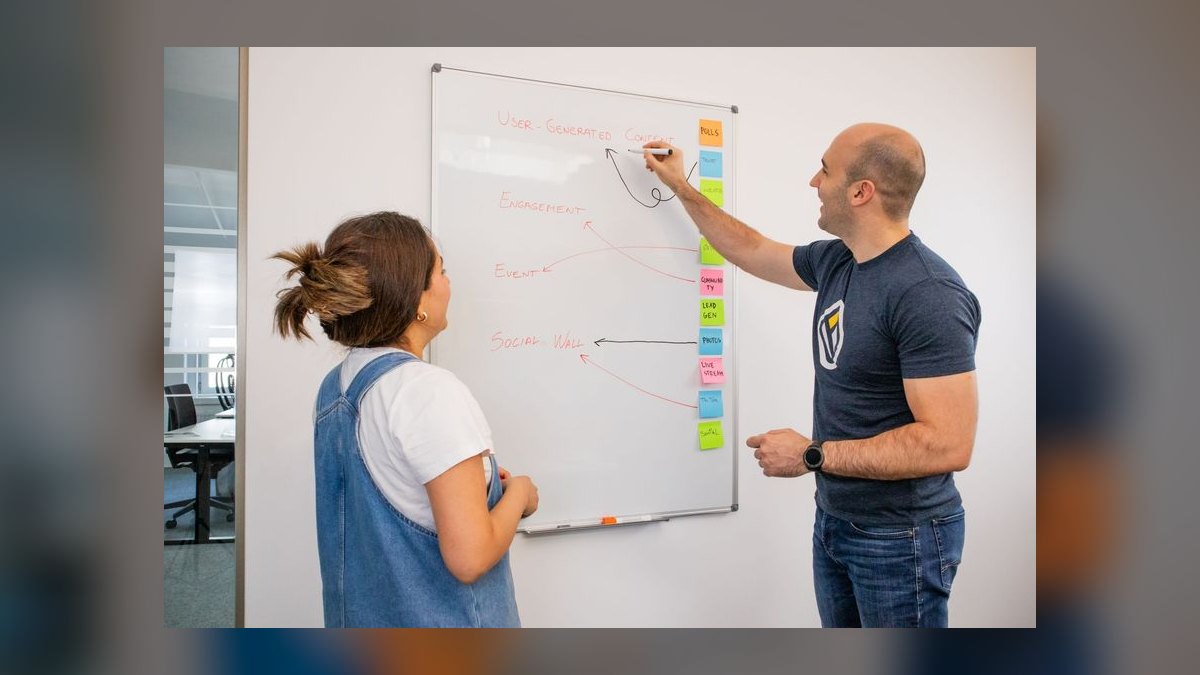
The Complete Drill Flow Diagram
Adapting the Drill for Different Team Sizes and Skill Levels
Scaling the Drill: 5-Minute, 30-Minute, and 60-Minute Versions
- 5-minute version: Run only the up-front contract. The leader models it once, then each new hire delivers it to a partner in 60 seconds. Goal: lower the buyer's guard before any pitch. This alone fixes the most common week-one mistake.
- 30-minute version: Rounds 1 and 2 only—set the scene, model the contract, then run two discovery reps with Scenario A. Skip the fishbowl; do a fast verbal debrief. Best for a weekly sales meeting slot.
- 60-minute version: All four rounds, then add a second scenario set (commercial lines or auto) and a second pressure-test objection ("your premium is higher than the other guy"). End by having each hire write their own up-front contract in their own words and read it aloud.
Common Mistakes and Coaching Cues
- Pitching before discovering. If a producer names a product in the first two minutes, stop them. Cue: "What's the situation before the solution?"
- Quoting price to end the awkwardness. New hires throw out a premium to relieve tension. Cue: "Price answers a question they haven't asked yet."
- Arguing with 'I already have insurance.' Defensiveness loses the room. Cue: "Agree, then ask one question that exposes the gap."
- Asking closed questions only. "Do you have life insurance?" gets a dead yes/no. Cue: "Make it open—'walk me through what's covered.'"
- Skipping the up-front contract. Without it, the meeting drifts and ends in "let me think about it." Cue: "Set the rules of the game before you play it."
- Compliance drift. Never let a role-play promise coverage that doesn't exist. Cue: "If you wouldn't put it in writing, don't say it out loud."
Related Questions
How do you train new insurance agents to handle objections without being defensive?
Use the Challenger Sale reframe: teach the agent to acknowledge the prospect's position, then ask a single question that exposes a gap the prospect didn't know existed. This turns an adversarial moment into a collaborative discovery.
What is the most important conversation skill for a new insurance producer?
The Sandler up-front contract. Setting clear expectations before the conversation starts lowers the buyer's guard, eliminates the "I need to think about it" ending, and positions the producer as a consultant rather than a salesperson.
How can a sales manager reinforce this drill after the initial training?
Run the 5-minute up-front-contract rep at every weekly sales meeting. Rotate which objection scenario you pressure-test in the fishbowl. Have producers bring real discovery questions from client appointments and add them to the shared question bank.
Can this drill be used for commercial lines insurance training?
Yes. Swap the homeowner scenario for a small business owner scenario. The four-step structure—contract, discover, surface implication, lock next step—is identical. The gap you hunt for changes from home-based business exposure to things like workers' compensation classification errors or inadequate cyber liability coverage.
How do you measure success from this onboarding drill?
Track three metrics: number of discovery questions asked per first appointment (target 8+), number of second appointments scheduled, and compliance incidents. Producers who run the four-box structure consistently will show higher conversion and fewer complaints.
FAQ
How long does this drill take the first time? Budget the full 45 minutes for the first run. After your team knows the four-box structure, the 30-minute version works for weekly reinforcement.
Do I need experienced producers to run it? No. A sales manager can run it solo for new hires. If you have veterans, use them as tough prospects in the fishbowl—that raises the difficulty fast.
What if my new hires sell life, not P&C, or vice versa? Swap the scenarios. The four-step structure—contract, discover, surface implication, lock next step—is identical across life, P&C, health, and commercial lines. Only the gap you hunt for changes.
How do I keep it compliant? Brief the room up front: in role-play, never promise coverage or quote a binding number. The drill builds the conversation, not the quote. Keep a licensed supervisor in the room if any real prospect language is rehearsed.
Can I run this remotely? Yes. Use breakout rooms of two for the discovery reps and bring everyone back to the main room for the fishbowl and debrief. Share the worksheet as a fillable doc.
How often should I re-run it? Run the full version monthly for new hires in their first 90 days, and drop the 5-minute up-front-contract rep into your weekly meeting indefinitely. The skill decays without reps.
What if a new hire struggles with the SPIN questioning format? Start with only the Situation and Problem questions. Once they can comfortably ask four open-ended questions about the prospect's current situation, add the Implication question. Build the skill incrementally.
How do I handle a producer who tries to close the sale during the role-play? Stop the role-play immediately and redirect. Remind them: "The goal of a first appointment is not to close the sale. It is to earn the right to recommend. If you pitch now, you lose the trust you just built."
Can this drill be used for cross-training veteran producers? Yes. Veterans often develop bad habits like jumping to price or skipping discovery. Running them as tough prospects in the fishbowl forces them to experience the drill from the buyer's perspective, which can be a powerful reset.
What if the team has more than 10 new hires? Split into pods of 4 with a veteran observer in each. Run the fishbowl in the main room with one volunteer pair from each pod rotating in. This keeps the drill manageable while maintaining high engagement.
Sources
- SPIN Selling — Neil Rackham / Huthwaite
- Sandler Training — The Up-Front Contract
- The Challenger Sale — CEB / Gartner
- Dale Carnegie — Relationship & Rapport Skills
- LIMRA — Insurance Sales Research & Producer Training
- The National Alliance for Insurance Education & Research
- Harvard Business Review — Effective Sales Conversations
- Association for Talent Development (ATD)
- Insurance Journal — Producer Training Best Practices
- Sales Hacker — Objection Handling Techniques
Related on PULSE
- Skill Drill: Onboarding New Hires for Furniture Manufacturing
- Skill Drill: Onboarding New Hires for Industrial Equipment
- Skill Drill: Conflict Resolution for Insurance Sales
- Skill Drill: Negotiation for Insurance Sales
- Skill Drill: Relationship Selling for Insurance Sales
- Skill Drill: Running Effective Meetings for Healthcare Sales
This page will be disappearing soon. Save it to your device for $1 — or read it free while it is here.
@Kory-White- · if Venmo asks, the last 4 of my number are 2012
This page is gone.
This one is off the shelf now. $1 keeps it on your phone for good — the whole page, pictures and diagrams included.
 pulse-skillsSkill Drill: Handling Vendor Loyalty Objections for Financial Services
 pulse-skillsSkill Drill: Handling Gatekeepers for Steel and Metals
 pulse-skillsSkill Drill: Giving Feedback for Plumbing Supply
 pulse-skillsSkill Drill: Handling Vendor Loyalty Objections for Commercial Real Estate
 pulse-skillsSkill Drill: Handling Rejection for Roofing
 pulse-skillsSkill Drill: Conflict Resolution for Insurance Sales
 pulse-skillsSkill Drill: Closing Techniques for B2B Distribution
 pulse-skillsSkill Drill: Qualifying Leads for Plumbing Supply
 pulse-skillsSkill Drill: Onboarding New Hires for Industrial Equipment
 pulse-skillsSkill Drill: Objection Handling for B2B Distribution