
What Makes Theodore Roosevelt’s “The Man in the Arena” a Great Speech in 2027
 Curated byKory White · Fractional CRO · Maryland
 PULSEKNOWLEDGE LIBRARY
Quality
Certified
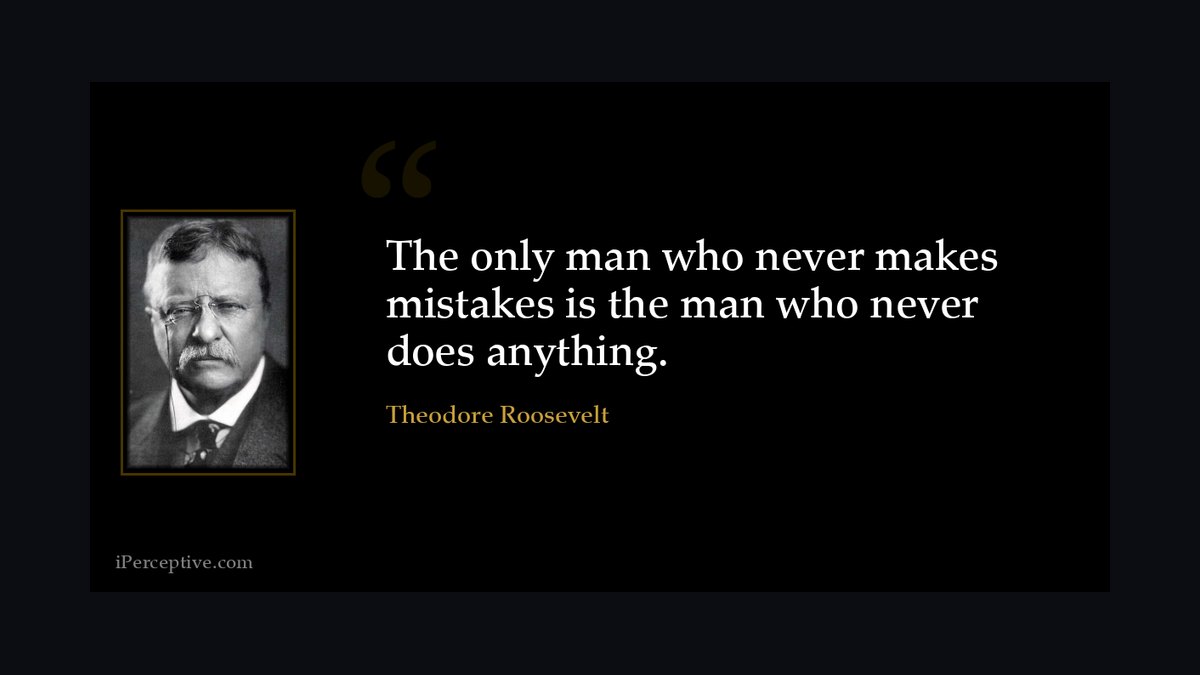
Theodore Roosevelt’s “The Man in the Arena” speech, delivered in Paris in 1910, endures as a masterpiece of rhetoric because it reframes failure as a prerequisite for honor and condemns the cowardice of armchair critics. Its greatness lies in its visceral, muscular language that elevates the doer over the detractor, creating a timeless anthem for resilience and action. By focusing on the dignity of striving, regardless of outcome, the speech transcends its historical context to inspire anyone who dares to risk failure in pursuit of a worthy cause. This message resonated in Roosevelt’s progressive era, but its core call to embrace vulnerability and effort remains profoundly relevant today.
The speech, formally titled "Citizenship in a Republic," was delivered at the Sorbonne on April 23, 1910, during a post-presidential tour of Europe. Roosevelt, a former U.S. president with a famously robust persona, used the address to critique the superficial and cynical attitudes he saw in society. While the entire lecture covers broader themes of civic duty and national strength, it is the climactic passage—known as "The Man in the Arena"—that has become legendary. This section’s power stems from its stark contrast between the active participant, who deserves credit for his efforts, and the cold critic who stands safely on the sidelines. The speech’s greatness is not accidental; it is a deliberate construction of language, rhythm, and imagery that has made it a cornerstone of public speaking and leadership literature.
Why Does the Speech’s Central Metaphor of the “Arena” Resonate So Deeply?
The metaphor of the arena transforms an abstract argument about courage into a vivid, almost cinematic scene. By placing the individual in a physical, perilous space—the arena—Roosevelt taps into a primal understanding of risk and reward. The arena is not a boardroom or a debating hall; it is a place of dust, sweat, and blood, where victory is uncertain and defeat is visible. This imagery makes the stakes tangible and immediate, allowing the listener or reader to viscerally feel the struggle. The metaphor is effective because it is universal; it does not require knowledge of politics or business to understand that someone in an arena is taking a real risk.
Furthermore, the arena metaphor creates a powerful dichotomy between the “doer” and the “critic.” The doer is the one who is “actually in the arena,” whose face is “marred by dust and sweat and blood.” This is a person of action, flawed but admirable. In contrast, the critic is “the timid soul” who points out “how the strong man stumbles.” This binary simplifies a complex emotional truth into a memorable, motivational image. It gives people a clear identity to aspire to—the fighter—and a clear identity to reject—the bystander. This psychological clarity is a key reason the speech has been quoted by leaders from Winston Churchill to Nelson Mandela, and why it continues to be cited in modern contexts, such as in advice for entrepreneurs navigating failure.

How Does the Speech’s Rhetorical Structure Build Its Emotional Impact?
The speech’s greatness is deeply tied to its use of classical rhetorical devices, which amplify its emotional resonance. Roosevelt employs anaphora, the repetition of a word or phrase at the beginning of successive clauses, to build momentum. The famous passage is structured around the repeated construction “who … who … who,” creating a rhythmic, incantatory effect that drives the listener forward. For example, he describes the man who “strives valiantly,” who “errs,” who “comes short again and again,” and who “spends himself in a worthy cause.” This repetition not only reinforces the idea of continuous effort but also mimics the relentless nature of the struggle itself.
The speech also masterfully uses antithesis, or the juxtaposition of contrasting ideas. The most striking example is the contrast between the “doer” and the “critic.” Roosevelt does not merely say critics are unhelpful; he paints them as “cold and timid souls” who “know neither victory nor defeat.” This stark opposition elevates the doer’s struggle to a moral high ground, while simultaneously diminishing the critic’s position. The emotional climax is reached in the final image: “if he fails, at least he fails while daring greatly.” This line transforms failure from a source of shame into a badge of honor. The structure of the entire passage—building from action to error to eventual victory or defeat—mirrors the arc of a heroic journey, making the listener feel they are part of that story.

The pacing is also crucial. Roosevelt begins with the action (“It is not the critic who counts”), then moves to the appearance of the doer (“whose face is marred”), then to the context of the struggle (“who strives valiantly”), and finally to the judgment (“who spends himself in a worthy cause”). This logical and emotional progression ensures that by the time he reaches the final line, the audience is fully primed for a cathartic conclusion. For a deeper analysis of how rhetorical devices shape persuasive speech, see our guide on effective communication strategies.
How Did the Historical Context of 1910 Influence the Speech’s Message?
The historical moment of 1910 is essential for understanding the speech’s greatness. Roosevelt delivered the address during a period of intense social and political change in both the United States and Europe. The Progressive Era was in full swing, with reformers challenging entrenched power structures and advocating for labor rights, corporate regulation, and social justice. At the same time, many were skeptical of these efforts, accusing progressives of being naive or dangerous. Roosevelt, a leading progressive, was speaking directly to this tension. The “critics” he lambastes are not just any bystanders; they are the elite skeptics who dismissed reform as futile or idealistic.

Moreover, the speech reflects Roosevelt’s own biography. Having left the presidency in 1909, he was in a transitional phase, facing criticism for some of his policies and for his decision to run for a third term (which would happen in 1912). The “man in the arena” can be read as a self-portrait of a leader who had taken immense risks and faced both triumphs and failures. This personal dimension adds authenticity to the rhetoric; Roosevelt is not delivering a theoretical lecture but a defense of his own life’s philosophy. The speech’s greatness, therefore, is partly due to its perfect alignment between the speaker’s character and his message. Roosevelt was the embodiment of the “man in the arena,” and his audience knew it.
The international setting of Paris also matters. Roosevelt was speaking to a European audience that often viewed America as a brash, uncultured nation. His speech, which celebrates action over criticism, can be seen as a defense of the American spirit of pragmatism and risk-taking. It was a subtle assertion that the “vulgar” American way of doing things might actually be more virtuous than the sophisticated cynicism of old-world elites. This geopolitical subtext gave the speech an added layer of meaning, making it not just a personal philosophy but a national creed.

Why Is the Speech Still Quoted by Leaders and Motivational Speakers Today?
The enduring appeal of “The Man in the Arena” lies in its ability to speak to universal human experiences of risk, failure, and perseverance. In the modern world, where social media and easy commentary often dominate, the speech’s critique of the “critic” feels more relevant than ever. Leaders in business, sports, and politics frequently quote it to encourage teams to take bold action and not be paralyzed by fear of judgment. The speech provides a powerful antidote to the culture of perfectionism and online shaming, reminding people that the act of trying is inherently valuable.
The speech also functions as a foundational text for the concept of “growth mindset” and “grit.” Psychologists like Angela Duckworth have pointed to Roosevelt’s words as an early articulation of the idea that persistence is more important than innate talent. The line “who spends himself in a worthy cause” reframes effort as a noble expenditure, not a waste. This aligns perfectly with modern leadership theories that emphasize resilience, learning from failure, and focusing on process over outcome. For a deeper dive into how this speech applies to contemporary leadership, read our analysis on building resilient teams.

What Are the Key Lines and Why Are They So Memorable?
The speech’s power is concentrated in a few unforgettable lines that have entered the lexicon. The opening, “It is not the critic who counts,” immediately sets up the central conflict and grabs attention by challenging a common assumption. The phrase “credit belongs to the man who is actually in the arena” is a masterstroke of demotic language, using the prosaic word “credit” to elevate the doer’s position. But the most famous line is undoubtedly “the man who spends himself in a worthy cause,” followed by the climactic “if he fails, at least he fails while daring greatly.” This line is memorable because it redefines failure as a form of success. It grants permission to fail, which is a deeply liberating and emotionally resonant idea.
Another key line is the description of the critic as “the timid soul who knows neither victory nor defeat.” This is a devastating dismissal. It implies that the critic is not only unhelpful but also living a less full life. The contrast between “daring greatly” and “cold and timid” is stark and emotional. The use of “cold” evokes a lack of passion, while “timid” suggests a lack of courage. Together, they paint a picture of a person who is emotionally and spiritually impoverished. This rhetorical strategy is effective because it makes the audience want to avoid being that person, thus internalizing the speech’s call to action.

The line “who strives valiantly” also carries weight because of its archaic, heroic tone. “Valiantly” is a word from chivalric romance, and it elevates the everyday struggles of the doer to the level of an epic quest. This language choice is deliberate; Roosevelt wants his audience to see their own efforts as part of a grand, noble tradition. The speech’s greatness is in how it uses simple, concrete words (“dust,” “sweat,” “blood”) alongside elevated ones (“valiantly,” “worthy cause”) to create a texture that is both grounded and inspiring.
How Has the Speech Influenced Political and Cultural Discourse?
The speech has had a profound and measurable impact on political rhetoric and cultural identity. It has been quoted by U.S. presidents from Richard Nixon to Barack Obama, each finding in it a validation of their own struggles. Nelson Mandela, in his autobiography “Long Walk to Freedom,” cited the speech as a source of inspiration during his 27 years in prison. This cross-ideological appeal is rare and speaks to the speech’s universal themes. It has also been used in popular culture, from movies like “The Fighter” to countless commencement addresses, cementing its status as a go-to touchstone for motivation.

In the business world, the speech is a favorite of entrepreneurs and venture capitalists. It perfectly captures the startup ethos of failing fast and learning from mistakes. Companies like Nike and Apple, which brand themselves around risk-taking and innovation, have internalized its message. The phrase “daring greatly” has become a slogan for those who embrace vulnerability, as popularized by author Brené Brown. This cultural penetration ensures that the speech remains not just a historical artifact but a living document that continues to shape how people think about courage and effort. For more on how this speech influences modern business culture, see our piece on entrepreneurial mindset.
Related questions
Why is “The Man in the Arena” considered a timeless speech?
It is timeless because it focuses on the universal human experience of striving and failing, which remains relevant across centuries and cultures, offering a powerful counterpoint to the fear of judgment.
What rhetorical devices does Roosevelt use in the speech?
Roosevelt uses anaphora, antithesis, and vivid imagery to create rhythm, contrast, and emotional impact, making the message both memorable and persuasive.
How does the speech define a “worthy cause”?
The speech does not prescribe specific causes but implies that any effort that requires courage, risk, and commitment in service of a greater good is worthy.
What was the original title of the speech?
The original title was “Citizenship in a Republic,” and it was delivered as part of a larger lecture on civic duty and national character.
How did the speech affect Roosevelt’s political career?
While delivered after his presidency, the speech reinforced his public image as a man of action and helped lay the groundwork for his 1912 Bull Moose Party campaign.
FAQ
Why is the “Man in the Arena” passage so famous? The passage is famous because it perfectly encapsulates the value of effort over outcome, using visceral imagery and a powerful rhetorical structure that resonates with people facing any kind of challenge.
What is the main message of the speech? The main message is that the person who takes action, even if they fail, is more admirable than the person who stands on the sidelines and criticizes, as the doer at least dares greatly.
Who is the intended audience for the speech? The speech was originally delivered to a French academic audience, but its message is universal, aimed at anyone who might be hesitant to take risks or who feels discouraged by critics.
How long is the famous “Man in the Arena” excerpt? The excerpt that is typically quoted is only about 150 words long, but it is exceptionally dense with meaning and emotional power.
Is the speech still relevant in the digital age? Yes, it is extremely relevant because it critiques the culture of online criticism and “armchair experts,” encouraging people to engage actively rather than passively observe.
What does “spends himself in a worthy cause” mean? It means that the individual dedicates all their energy, time, and effort—their very self—to a goal they believe is important, without holding back.
Can the speech be applied to non-political contexts? Absolutely, it is frequently applied to business, sports, personal development, and any area where people strive to achieve something meaningful despite the risk of failure.
Sources
- Theodore Roosevelt Center at Dickinson State University
- American Rhetoric: “Citizenship in a Republic” Full Text
- National Archives: Theodore Roosevelt Speech Collection
- History.com: Theodore Roosevelt Biography
- Stanford Encyclopedia of Philosophy: Rhetoric
- The Art of Manliness: Analysis of “The Man in the Arena”
- Brené Brown: “Daring Greatly” Reference
Related on PULSE
- Theodore Roosevelt’s The Man in the Arena (1910) — Text and Why It Endures
- What Makes Winston Churchill's "Their Finest Hour" a Great Speech
- What Makes Lincoln’s Gettysburg Address a Great Speech
- What Makes FDR’s “Nothing to Fear” a Great Speech
- What Makes Susan B. Anthony's "On Women's Right to Vote" a Great Speech
- What Makes Steve Jobs’ Stanford Commencement a Great Speech
Recently Added — Related
This page will be disappearing soon. Save it to your device for $1 — or read it free while it is here.
@Kory-White- · if Venmo asks, the last 4 of my number are 2012
This page is gone.
This one is off the shelf now. $1 keeps it on your phone for good — the whole page, pictures and diagrams included.
 pulse-speechesA Graduation Speech for a Kindergarten Graduation
 pulse-speechesA Speech for a Company All-Hands
 pulse-speechesA Speech for a Memorial Day Ceremony
 pulse-speechesA Wedding Speech for a Groomsman
 pulse-speechesA Toast for a Quinceañera
 pulse-speechesA Speech for a Layoff Announcement with Compassion
 pulse-speechesA Toast for a Christening
 pulse-speechesA Speech for an Employee of the Year
 pulse-speechesA Wedding Speech for a Small Backyard Wedding
 pulse-speechesHow to Keep a Wedding Toast Under Three Minutes in 2027