

A Eulogy vs. a Memorial Speech: How to Choose the Right Tribute in 2027

Choose a eulogy when you are the designated speaker at a funeral honoring one life with a single narrative arc; choose a memorial speech when the gathering is later, less liturgical, or shared among several speakers. Eulogies run 3–5 minutes and carry the ceremony. Memorial speeches run 2–4 minutes and layer.
What actually separates a eulogy from a memorial speech
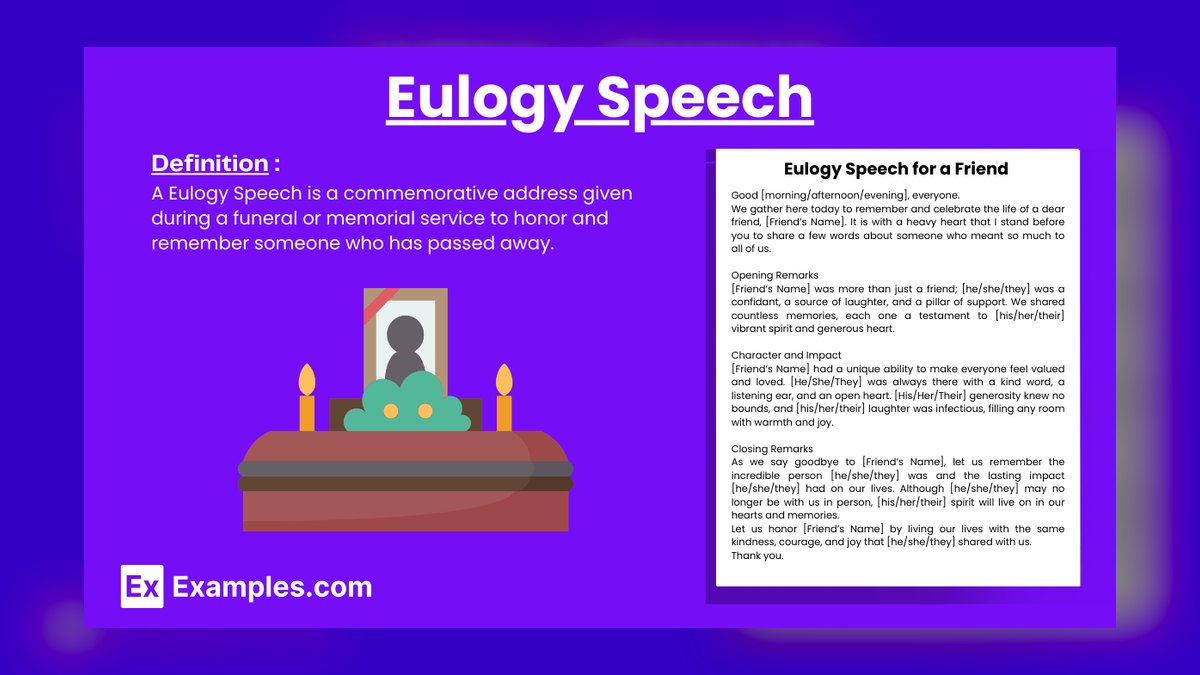
The two words get used interchangeably in casual conversation, and that sloppiness costs people real anguish at the microphone. A eulogy is a specific liturgical and social object: the primary spoken tribute delivered at a funeral or committal service, usually within days of the death, usually by one or two people the family formally designated. It occupies a fixed slot in an order of service. The room is raw. The body or the urn is often present. The eulogy is doing structural work for the ceremony — it is the part where the assembled group is told, in plain language, who this person was and why the loss matters. If the eulogy fails, the service has a hole in it.
A memorial speech sits in a looser frame. Memorial services frequently happen weeks or months after death — scheduling around travel, cremation timelines, scattered family, or a deliberate decision to wait until the acute shock passes. The format is typically multi-speaker: three, five, sometimes eight people each take three minutes. Nobody carries the whole weight. A memorial speech is therefore a *contribution*, not a *summation*. You are one panel in a mosaic, and the mosaic is the tribute.
That structural difference cascades into everything else. Length: a eulogy of 3–5 minutes (roughly 450–750 spoken words at a funeral-appropriate 140–150 words per minute) is standard, and 6–7 minutes is the outer edge before a grieving room starts to drift. A memorial speech should target 2–4 minutes (roughly 280–600 words) because five other people are waiting and the total program has to stay under 60–75 minutes or attendance frays. Scope: a eulogy needs to gesture at the whole life — origin, character, relationships, work, the thing they were known for. A memorial speech should do the opposite: pick one story, one trait, one specific era, and go deep. Overlap between memorial speakers is the single most common failure of those events, and it happens because nobody coordinated.
Tone is the third axis. Eulogies carry more ceremonial gravity and more grief-in-the-present-tense; humor works, but it needs to be warm rather than sharp, and it needs to land early so the room knows laughing is permitted. Memorial speeches, delivered at distance, tolerate — often benefit from — more humor, more specificity, more of the odd small anecdote that would feel too casual three days after a death. The passage of time changes what a room can hold.
There is also a quieter distinction people miss: audience composition. A funeral audience skews toward whoever could physically get there on short notice — immediate family, local friends, neighbors, colleagues. A memorial audience is more self-selecting and often broader, including people who flew in specifically. That means a memorial speech can assume slightly more shared history with the person and slightly less shared context with each other. You may need to identify yourself ("I worked with Ray from 2009 to 2016") in a way a eulogist rarely does.
Adjacent forms you may actually be asked for instead
Before you commit to writing either one, confirm which object the family is actually requesting, because at least four other spoken forms circulate at these events and each has a different shape.
A remembrance or reflection is what many religious traditions call the family-delivered piece when the clergy member is delivering the actual homily. It is shorter — 2–3 minutes is typical — and deliberately does not attempt theology or life-summary. If the officiant tells you the service includes "a homily and then a time of remembrance," you are not writing a eulogy; you are writing a remembrance, and writing a full eulogy will overrun the slot and irritate the person running the clock.
A toast at a celebration of life is a different instrument again. Celebrations of life are often held in a restaurant, backyard, brewery, or club rather than a chapel, and the speaking is more informal and sometimes unscheduled. A toast runs 60–120 seconds, ends on a raised glass and a directed line ("to Ray"), and tolerates far more levity. People who prepare a eulogy and then deliver it as a toast produce a room-flattening effect that nobody enjoys.
An obituary is written, not spoken, and its constraints are entirely different: newspaper submissions are often priced per line or per column inch, families routinely spend a few hundred dollars on a print obituary, and the form demands facts — dates, survivors, service details, memorial-donation instructions. Text harvested from an obituary makes a terrible eulogy because obituary prose is compressed and list-shaped, and lists read as flat when spoken aloud.
A graveside or committal word is the shortest form of all — often under 90 seconds, delivered standing, outdoors, frequently in weather, to a much smaller group. Short, concrete, and finished. Do not attempt a full tribute at the graveside if there was already a service; the group is cold and the moment wants brevity.
And increasingly there is the video or recorded tribute — a remote speaker recording 2–3 minutes to be played in the room. This has its own rules. Record in landscape, close enough that your face fills a meaningful part of the frame, with a hard-wired or lavalier microphone if you can, because chapel AV systems will expose bad phone audio brutally. Send the file at least 48 hours ahead so the funeral director can test it; a file that will not play is a small catastrophe with no recovery path.
Knowing which of these you have been asked for is a two-minute conversation with the family or the funeral director, and it prevents nearly every avoidable disaster.
How to decide which tribute you are giving
The decision is rarely yours alone — it is a function of the event's format, your relationship to the deceased, and what the family has asked. Work through it in order rather than starting from what you feel like writing.
Start with timing and setting. If the event is within roughly a week of the death and happens in a funeral home, church, chapel, synagogue, mosque, or graveside, you are in eulogy territory. If it is more than two weeks out, or it is in a venue chosen for gathering rather than ritual, you are almost certainly in memorial-speech territory.
Then count the speakers. One or two designated speakers means the tribute has to be complete — that is a eulogy regardless of what the invitation calls it. Three or more speakers means the tribute is distributed, and your job is a slice.
Then check the ask. "Would you say a few words?" is a genuinely ambiguous sentence and you should not guess at it. Ask three concrete questions: How long do you want me to speak? Who else is speaking, and about what? Is there anything you specifically want me to include or avoid? That last question surfaces family landmines — an estranged sibling, a cause of death the family is not naming publicly, a second marriage, a business dispute — before you write them into a draft.
One more decision input people neglect: your own capacity. If you were extremely close to the person and the death was recent and sudden, a eulogy is a heavy lift, and there is no shame in telling the family you would rather speak briefly at the later memorial. A common and graceful arrangement is to have a slightly-more-distant relative or a longtime friend deliver the eulogy while the closest survivors speak short pieces later. Choosing the smaller form is a legitimate choice, not a failure.
The numbers behind each form
Concrete figures make these decisions much easier, and most of them are simple arithmetic that people never do.
Speaking rate. Conversational speech runs about 150 words per minute. Grief slows people down slightly and pauses stretch, so plan at 130–140 words per minute for anything delivered at a service. That gives you a hard word budget: a 3-minute eulogy is roughly 400–430 words; a 5-minute eulogy is roughly 650–700 words; a 2-minute memorial speech is roughly 260–280 words; a 4-minute memorial speech is roughly 520–560 words. Write to the word count, not to a page count — font size and margins lie to you.
Program arithmetic. A funeral service commonly runs 30–60 minutes total, and the eulogy is one component alongside readings, music, prayers, and the officiant's remarks. That is why a 10-minute eulogy causes visible problems — it can consume a third of the service. A memorial with six speakers at 3 minutes each is 18 minutes of speaking, which becomes 25–30 minutes once transitions, mic handoffs, and one person going long are counted. Program planners should budget 1.4× the sum of the stated speaking times. If your total exceeds 75 minutes, cut a speaker or shorten the slots.
Drafting time. A serviceable eulogy takes most people 3–5 hours of actual work spread across two or three sittings — one to gather and dump memories, one to shape, one to cut. Do not attempt it in a single sitting the night before; the draft you produce at 1 a.m. under grief is almost always too long and too abstract. A memorial speech, being shorter and single-threaded, is typically a 1.5–3 hour job.
Rehearsal. Read the piece aloud, standing, at least four times, and at least once in front of another person. Time each read. Most people lose 10–15% of their draft in the first read-aloud simply because sentences they wrote turn out to be unsayable. Reading aloud also surfaces the two or three lines that will break you, which you can then either cut or mark for a deliberate pause.
Formatting for the podium. Print at 14–16 point type, 1.5 line spacing, one side only, and number the pages. Never staple — stapled pages do not turn cleanly and the sound carries. Never read from a phone; screens time out, notifications appear, and the downward head angle wrecks projection. Bring two copies and hand one to someone in the front row who has agreed to finish for you if you cannot.
Story count. A eulogy supports two to three specific stories plus a frame; more than three and the piece turns into a list. A memorial speech supports exactly one story told well. The most common structural failure in both forms is five half-stories instead of two complete ones.
Cost context, honestly stated. Funerals are expensive events and speaking is the free part, but the surrounding decisions cost real money — printed programs, floral tributes, venue rental for a later memorial, and print obituaries all carry charges that vary enormously by region and provider. If you are helping plan rather than just speak, ask the funeral home for the itemized general price list, which U.S. funeral providers are required to give you under the FTC's Funeral Rule. Do not accept verbal-only pricing.
Names and pronunciation. Write out phonetic spellings for any name you might stumble on, including the deceased's full legal name if you plan to use it, and any place names, hometowns, or foreign-language terms. Practice the hardest one ten times. Mispronouncing a surviving spouse's name from the podium is a wound that gets remembered.
Building either piece: structure, sequencing, and the day itself
The writing process is nearly identical for both forms; what differs is the aperture.
Step one — collect before you compose. Set a timer for 20 minutes and write every fragment you can recall: phrases they used, how they answered the phone, what their car smelled like, the argument you had in 2014, what they were doing the last time you saw them happy. Do not edit. Then call two or three other people and ask them one question: "What is a moment with them that you still think about?" You will get material you could not have generated alone, and you will find out what other speakers are likely to say.
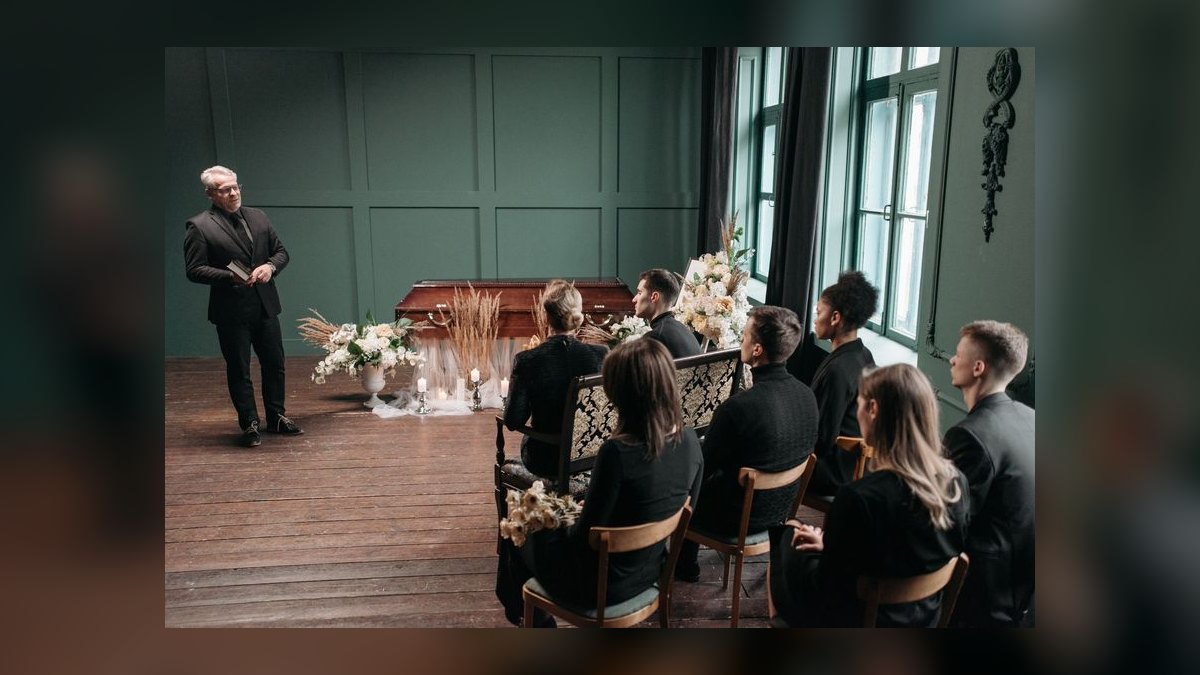
Step two — pick the thread. For a eulogy, find the organizing claim about who this person was — not "she was kind," which is inert, but something with an edge to it: "She was the person who noticed when you were faking it." Everything in the piece then earns its place by supporting that claim. For a memorial speech, pick the single story that best demonstrates one facet, and accept that you are leaving 95% of the person out. That is what the other speakers are for.
Step three — build the arc. A reliable eulogy shape: open with a specific concrete image (never "we are gathered here today"), state the organizing claim, tell two or three stories that prove it, name what has been lost in plain terms, and close with a forward-facing line — what continues, what people will carry. A reliable memorial-speech shape is tighter: identify yourself and your connection in one sentence, tell the story, land the point of the story in two sentences, stop.
Step four — cut hard. Read aloud and remove anything that is (a) a summary of what someone else will say, (b) an apology for your speaking, (c) a list of accomplishments without a story attached, or (d) an inside joke that fewer than half the room will get. Résumé recitation is the leading cause of a flat tribute; if you must include achievements, attach each to a moment.
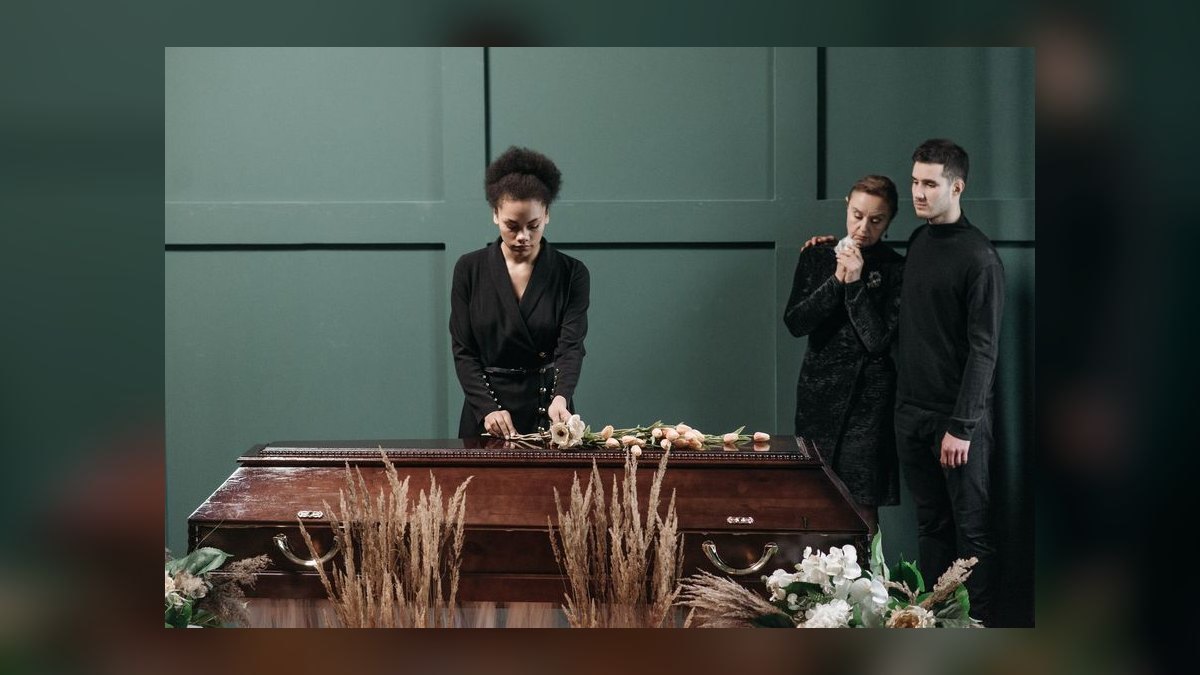
Step five — check with the family. Send the draft to one trusted family member 24–48 hours ahead. You are checking for factual errors, unwelcome disclosures, and duplication with other speakers. This one step prevents the majority of tribute disasters.
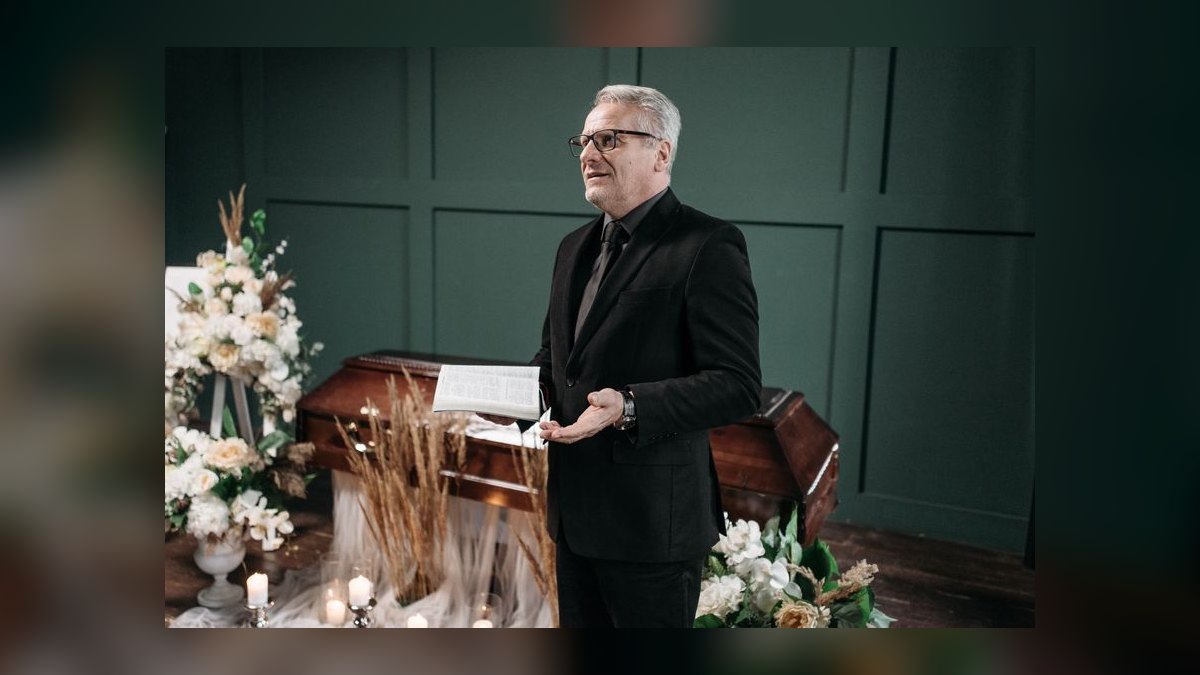
The day itself. Arrive early and stand where you will speak so the sightlines are not a surprise. Ask whether the microphone is fixed, handheld, or lavalier, and whether there is a lectern to hold your pages — holding paper in a shaking hand with no lectern is genuinely hard. Have water. When you begin, take one full breath before the first word and go slower than feels natural; adrenaline will speed you up by 10–20%. If you break, stop, breathe, and keep going — rooms are entirely forgiving of this and it is not something to fear. If you truly cannot continue, your front-row backup finishes the page. Look up at least at the start and the end; you do not need to memorize it.
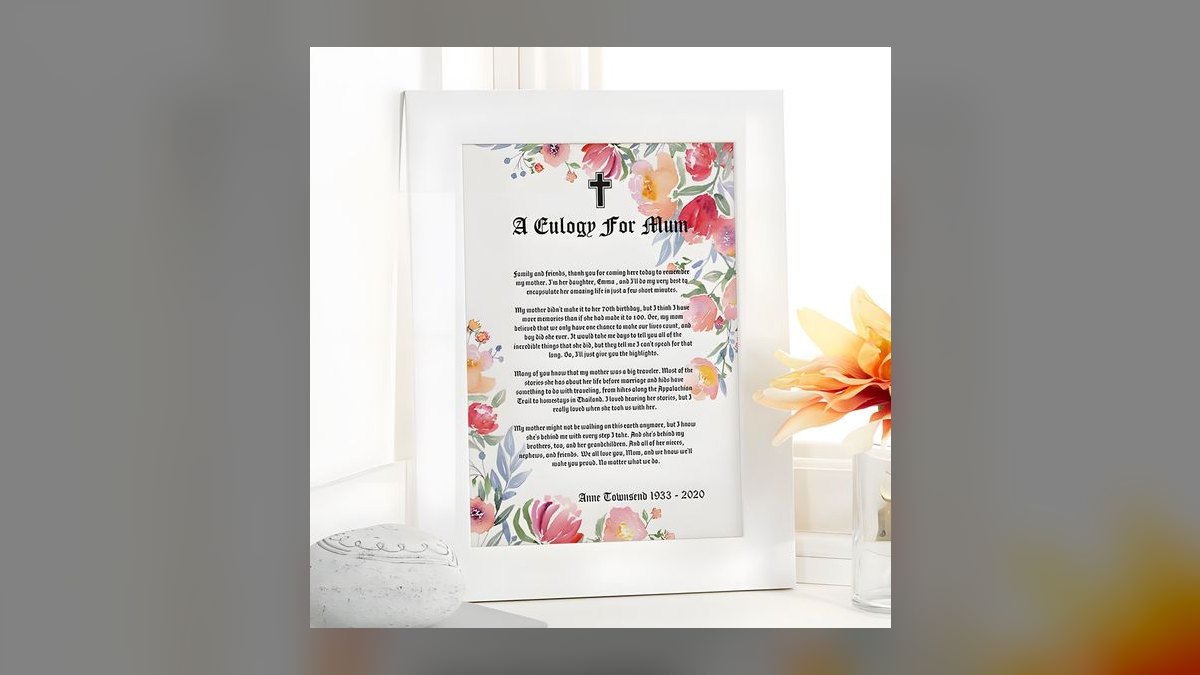
Upstream and downstream. Whatever you write does not end at the podium. Families frequently reprint eulogy text in memorial programs, post it to obituary guest books or funeral-home tribute pages, read it at anniversary gatherings, or include it in a memory book. That is an argument for writing something durable rather than merely survivable — and for keeping a clean digital copy. If the service is being livestreamed or recorded, assume the piece will be watched by people who were not in the room, including at a much later date, and avoid references that only make sense to those physically present.
Related questions
How long should a eulogy be?
Three to five minutes, or roughly 400–700 spoken words at a funeral pace of 130–140 words per minute. Six to seven minutes is the outer limit. Time a full read-aloud rather than estimating from page count, since formatting distorts length badly.
Can more than one person give a eulogy?
Yes. Two eulogists splitting 6–8 minutes total is common and often easier than one person carrying it alone. Coordinate directly so you cover different ground — one on family life, one on work or friendship — and agree on who closes.
What if I start crying and cannot finish?
Stop, breathe, and resume; rooms expect it and no one judges it. As insurance, hand a printed copy to someone in the front row beforehand who has agreed to step up and finish reading if you signal them. Knowing that backup exists usually keeps you steady.
Is a celebration of life different from a memorial service?
Mostly in tone and venue. Celebrations of life are typically informal, often non-religious, held anywhere from a backyard to a rented hall, and favor short toasts and open-floor sharing. Memorial services keep more of a formal program with scheduled speakers, even when held long after the death.
Should I write out the full text or use notes?
Write the full text. Grief and adrenaline degrade recall, and bullet points invite rambling past your time slot. Print it large and unstapled, mark your pauses, and rehearse enough that you can look up at the opening and closing lines.
FAQ
What is the actual difference between a eulogy and a memorial speech?
A eulogy is the primary tribute delivered at a funeral, usually within days of the death, by one or two designated speakers, and it must summarize a whole life in 3–5 minutes. A memorial speech is one contribution among several at a later gathering, runs 2–4 minutes, and covers a single story or facet rather than the full arc. The difference is structural — completeness versus contribution — and it determines length, scope, and tone.
How do I know which one I have been asked to give?
Ask directly rather than inferring. Three questions settle it: how long should I speak, who else is speaking and about what, and is there anything you want me to include or avoid. If the answer is "you and one other person, five minutes each, at the funeral Friday," you are writing a eulogy. If it is "six of us, three minutes each, at the hall next month," you are writing a memorial speech.
Is humor appropriate in a tribute?
Yes, and it usually helps — but calibrate to distance. At a funeral three days after a death, warm humor placed early gives the room permission to breathe; sharp or ironic humor lands badly. At a memorial months later, more latitude exists and specificity is rewarded. Avoid anything that requires context half the room lacks, and never make the joke at the expense of a survivor.
What should I do if the death was sudden, violent, or by suicide?
Follow the family's lead on what is named publicly, and ask explicitly before writing. Many families prefer the cause not be stated from the podium; others want it acknowledged directly. Focus the tribute on the life rather than the circumstances of the death, and if you want to signal support for others struggling, coordinate that with the family rather than deciding unilaterally.
Can I use text from the obituary in my speech?
Use it for facts — dates, places, names, survivors — but not for prose. Obituary writing is compressed and list-shaped by design, and lists read as flat when spoken aloud. Convert every fact you borrow into a moment: instead of "he served twenty-two years in the fire service," describe one night he came home from a call.
What if I cannot attend but still want to contribute a tribute?
Record a 2–3 minute video, shot in landscape with good audio, and send the file to the funeral director at least 48 hours in advance so it can be tested on the venue's system. Alternatively, write the piece and ask a designated reader to deliver it, giving them your printed copy with pronunciation notes and marked pauses.
Sources
- https://www.psychologytoday.com/us/basics/grief
- https://www.mayoclinic.org/healthy-lifestyle/end-of-life/in-depth/grief/art-20045340
- https://www.ftc.gov/business-guidance/resources/complying-funeral-rule
- https://consumer.ftc.gov/articles/shopping-funeral-services
- https://www.aarp.org/caregiving/end-of-life/
- https://hospicefoundation.org/
- https://www.nfda.org/
- https://www.merriam-webster.com/dictionary/eulogy
- https://www.apa.org/topics/grief
Related on PULSE
- How to write a eulogy when you barely knew the person
- Planning a memorial service program: speaker order, timing, and transitions
- Celebration of life vs. traditional funeral: choosing a format
- What to say to someone who is grieving — and what to avoid
- Writing an obituary that reads like a person, not a form
 pulse-speechesA Wedding Speech vs. a Best Man Speech: Which Fits Your Role Better in 2027
 pulse-speechesA Wedding Toast vs. a Wedding Speech — Which Do You Need in 2027
 pulse-speechesA Eulogy for a Parent
 pulse-speechesChurchill’s Their Finest Hour (1940) — Key Passages and Lessons
 pulse-speechesWinston Churchill’s Blood, Toil, Tears and Sweat (1940) — Text and Lessons
 pulse-speechesA Father of the Bride Wedding Toast
 pulse-speechesA Motivational Monday Speech to Start the Week
 pulse-speechesA Speech for a Project Wrap Celebration
 pulse-speechesA Wedding Speech for a Bridesmaid
 pulse-speechesA Toast for a 25th Anniversary