

How to Choose a Wedding Speech Writer in 2027
Choose a wedding speech writer by matching format to need: hire a ghostwriter for a full custom toast, a coach for structure and delivery help, or an editor to sharpen your own draft. Vet writers on sample toasts, interview process, revision rounds, and turnaround — not on price alone.
The outcome you should expect
A good engagement with a wedding speech writer does not produce a speech that sounds like a professional wrote it. It produces a speech that sounds unmistakably like *you*, told back to you in a shape that holds a room. That distinction matters more than any other quality signal in this market, and it is the single easiest way to tell a strong writer from a weak one before you pay a deposit.
Concretely, the deliverable you should expect is a 3-to-5 minute speech — roughly 450 to 750 spoken words at a comfortable pace of about 130 to 150 words per minute — organized around one central claim about the couple, supported by two or three specific stories, and closed with a toast line the room can raise glasses to. Anything longer than about six minutes is a risk regardless of how good the writing is; reception audiences have a well-documented attention cliff, and venue coordinators routinely build speech blocks of 15 to 20 minutes total across all speakers. If your writer hands you 1,200 words and says "trim what you like," they have handed you the hard part back.
You should also expect a *process*, not just a file. A serious writer runs an intake interview — typically 45 to 90 minutes, by video or phone — where they mine you for material you did not know you had. That interview is the actual product. The writing is downstream of it. Writers who skip the interview and instead send a questionnaire form are selling a template fill, and the output reads that way: generic beats about "when I first met her," a joke about the open bar, a closing quote from a poet neither person has read.
Expect at least two revision rounds included in the base fee, with the first draft landing 5 to 10 business days after the interview. Expect the writer to give you the speech in a delivery-ready format: short paragraphs, marked pauses, and phonetic notes on any names you might trip over. And expect them to tell you honestly if you do not need them. The best speech writers turn away a meaningful share of inquiries because the person on the call already has a great story and just needs 30 minutes of structural advice — which is a coaching engagement, not a ghostwriting one.
One adjacent expectation worth setting: a wedding speech writer is not a wedding *toast* writer only. The same skill set covers rehearsal dinner remarks, welcome-party openers, parent-of-the-couple speeches, officiant scripts for friend-officiants, and the increasingly common "thank you" remarks the couple gives at the end of the night. If you are hiring anyway, ask whether they bundle. A best man speech plus a father-of-the-bride speech from the same writer usually costs less than two separate engagements and produces better results, because the writer can deliberately avoid overlapping stories between speakers — a coordination problem nobody thinks about until two speeches in a row open with the same camping trip.
What drives that outcome
The quality of a wedding speech is driven by three inputs, in descending order of importance: the raw material you supply, the interview technique that extracts it, and the prose craft that shapes it. Most buyers evaluate writers on the third input, because prose is the only one visible in a sample. That inversion is why so many people pay for a speech and feel vaguely disappointed by it.
Raw material means specifics. Not "she's always been generous" but "she drove four hours in a snowstorm to sit in a hospital parking lot because they wouldn't let her past the lobby." Specificity is the entire game. A mediocre writer working with three concrete, sensory, slightly embarrassing anecdotes will beat an excellent writer working with adjectives every single time. When you are evaluating a writer, listen to how they ask questions during the discovery call. Do they ask "what's she like?" or do they ask "tell me about a time she made you angry and you couldn't stay angry"? The second question is worth ten times the first.
Interview technique is what converts a nervous groomsman who says "I dunno, we're just close" into forty minutes of usable transcript. Professionals use a few reliable moves: asking for the first memory rather than the best memory; asking what the person would say if the couple were not in the room; asking about the moment the speaker realized the relationship was serious; and asking for the thing they are *not* going to say, because the unsayable version usually contains the emotional core that a sanitized version can gesture at. Writers who record and transcribe the interview will quote you back to yourself, and those quoted lines are almost always the strongest lines in the finished speech.
Prose craft is real but narrower than people think. In a five-minute toast it mostly amounts to: cutting throat-clearing preamble, front-loading a hook in the first fifteen seconds, controlling rhythm so laughs have room to land, and engineering a turn — the moment the speech stops being funny and becomes sincere — that does not feel like a gear grinding. That turn is the hardest technical thing in the form. Ask any candidate writer how they handle it. A vague answer is disqualifying; a specific one ("I usually plant a callback in the second story so the sincere section can pay it off") tells you they have written a hundred of these.
A fourth driver sits underneath all three: time. Writers booked six weeks out do better work than writers booked six days out, not because they are more careful but because you get a rehearsal cycle. The single highest-leverage thing in the whole process is reading the draft aloud, twice, at least a week before the wedding, and sending the writer the three lines that felt strange in your mouth. Lines that read well and speak badly are the most common defect in professionally written toasts, and they are trivially fixable if there is time to fix them.
Benchmarks and realistic ranges
Pricing in this market is wide and largely unregulated, so treat any number as a band rather than a rate card. Broadly, the market sorts into four tiers.
At the low end you have marketplace freelancers — writers on general gig platforms offering a wedding speech for a modest flat fee, often with a fast turnaround and a questionnaire-only intake. The output is serviceable and generic. It is a reasonable choice if you genuinely cannot write and genuinely have no budget, but you should expect to do heavy personalization yourself, and you should expect the structure to be conventional: greeting, how I know the couple, two compliments, a joke, a toast.
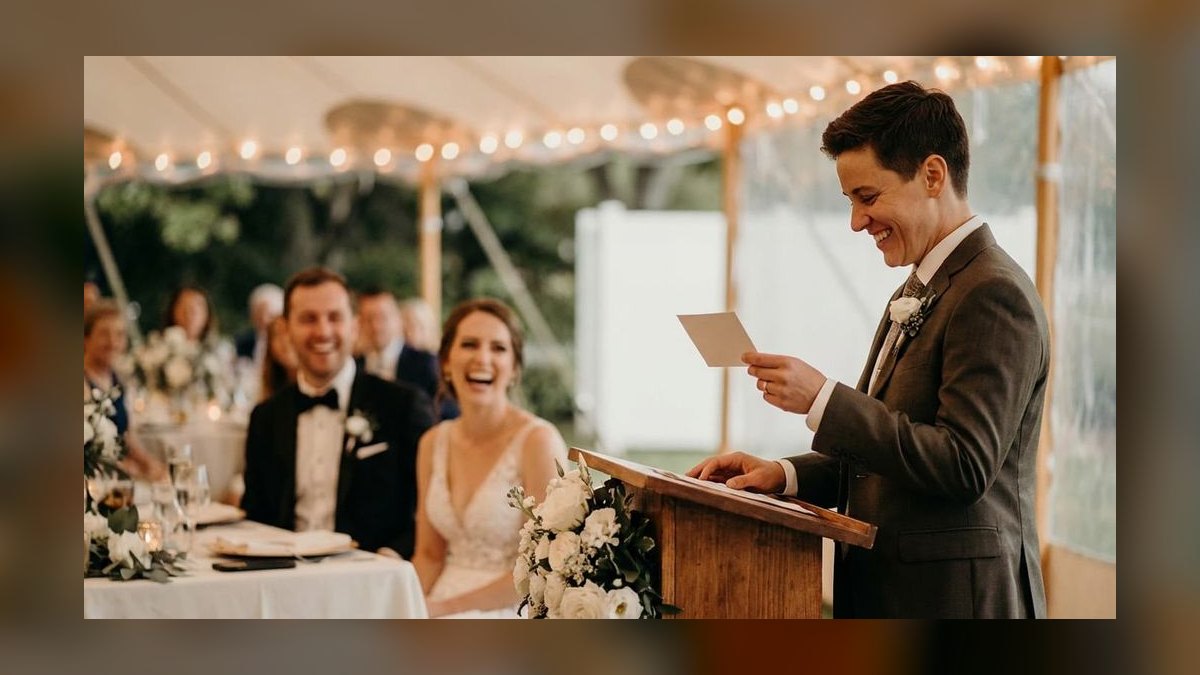
In the middle sits the independent professional who does this as a specialty — usually a working writer, comedian, journalist, or speechwriter with a wedding-focused offering. This is where the interview-based process lives, and where the price jumps because you are buying an hour of their attention plus draft cycles. This tier is the sweet spot for most buyers. You are paying for a person who will get on a call and dig.
Above that sits the boutique speechwriting firm or the writer with a substantial credential — corporate speechwriting background, television writing credits, a book. Turnaround is often faster, the intake is more polished, and you may work with a team rather than an individual. Whether the premium is worth it depends almost entirely on whether the extra money buys you *more interview time*, which is the input that actually moves quality.
And running alongside all of it is the coaching tier: you write the speech, the coach fixes it. Sessions are typically an hour, often two sessions total, and the cost is meaningfully lower than full ghostwriting because the labor is smaller. For anyone who can write a competent paragraph, this is usually the best value in the entire market. You keep your voice by default, because it was your voice to start with.
On timelines: book four to eight weeks out for a full custom engagement. Two weeks is workable with a writer who has capacity. Under one week you are paying a rush premium and cutting the rehearsal cycle, which is exactly the wrong thing to cut. Peak wedding season in most of the northern hemisphere runs roughly May through October with a September–October crest, and good writers fill their calendars months ahead for those dates. If your wedding is in that window, the availability constraint is real and you should treat booking as a scheduling problem more than a shopping problem.
On length, the benchmarks are unusually consistent across venues and planners: best man and maid of honor speeches at three to five minutes; parent speeches at three to five; couple's thank-you remarks at two to three; welcome dinner remarks at two to four. Total speech block at the reception should stay under about twenty minutes. If four people are speaking and each writes to five minutes, you have a twenty-minute block before anyone ad-libs, and people always ad-lib. Build in slack.
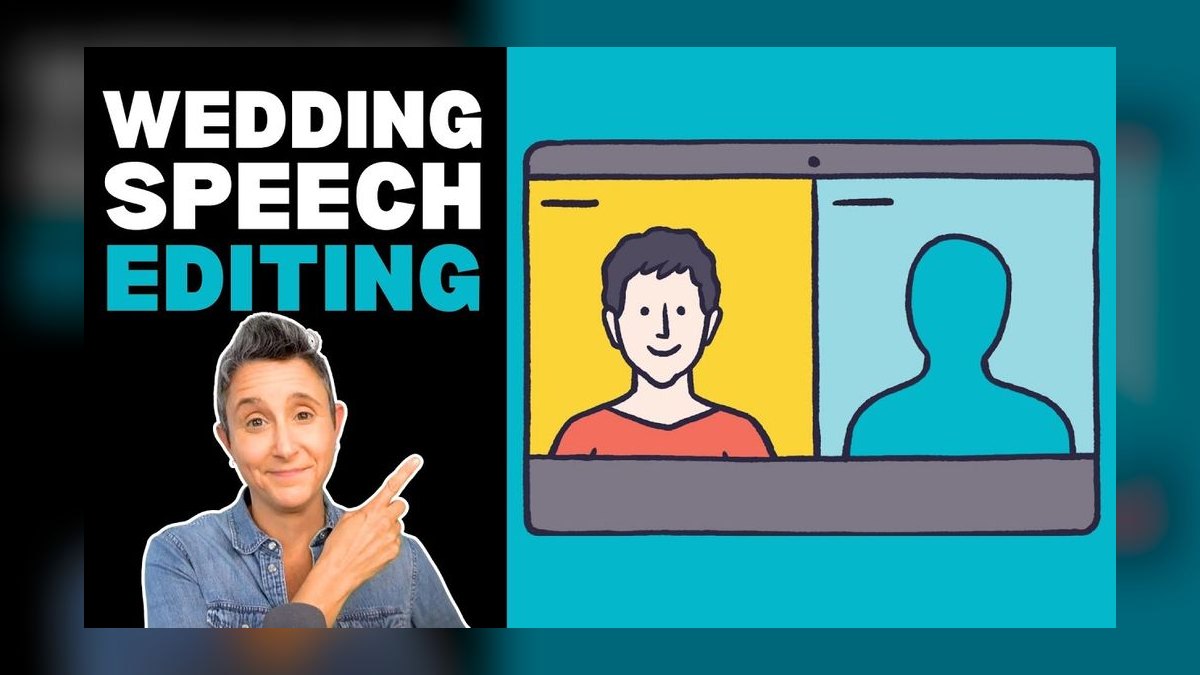
On revision counts: two rounds included is standard; three is generous; unlimited is a marketing claim that usually means the writer expects one round. What matters more than the count is whether revisions include a *delivery* pass — a read-aloud edit — rather than only line edits on the page.
Risks, edge cases, and failure modes
The most common failure is voice mismatch. You get back a speech that is objectively better written than anything you would have produced and that you cannot deliver, because it uses words you do not use. Mitigate this by insisting the writer record the interview and by asking them to preserve at least three of your verbatim phrases in the final draft. If you read the draft and cannot find a single sentence that sounds like you talking, send it back — that is a legitimate revision request, not nitpicking.
The second failure is the roast that goes wrong. Wedding audiences are multigenerational and include people who met the couple last night. A joke that kills among six friends can silence a room of a hundred and forty. Any competent writer will apply a filter: nothing about exes, nothing about the couple's sex life, nothing about anyone's drinking, nothing that requires the audience to know a person who is not present, and nothing whose punchline is a family member's flaw. If a writer pushes edgier material because it is "funnier," push back — you are the one standing there.
The third is over-polish. A speech that is too smooth reads as insincere at a wedding in a way it would not at a corporate keynote. Small verbal stumbles, a pause where you get choked up, a sentence that restarts — these are features. Some coaches deliberately leave rough edges in. If the draft is aggressively symmetrical, with tricolons stacked three deep and a rhetorical turn every paragraph, it will sound like a politician's stump speech at your friend's dinner. Ask for it plainer.
The fourth is the disclosure question, and it is genuinely contested. There is no universal etiquette rule requiring you to announce that a professional helped. Most people treat it like hiring an editor: the words are still yours because the stories, the judgment, and the delivery are yours. But two edge cases deserve care. If the couple has explicitly asked for a personal, unassisted toast, honor that. And if you are tempted to pass off a writer's original *jokes* as your own observations about people in the room, that is where the ghostwriting norm gets thin — the emotional content should be genuinely yours even if the sentences are shaped by someone else.
The fifth is process risk: the writer who disappears. Wedding vendors in this category are frequently solo operators without contracts. Insist on a written agreement covering deliverable, revision count, delivery date, refund terms, and — importantly — what happens if you cannot reach them in the final week. Pay a deposit rather than the full amount up front. Keep all correspondence in email, not disappearing DMs. If the writer will not put a delivery date in writing, that is the whole answer.
A sixth, quieter risk: AI-generated drafts sold as bespoke work. A speech that is fluent, structurally perfect, emotionally nonspecific, and full of phrases like "a testament to" or "in a world where" was probably generated, lightly edited, and marked up. The tell is the absence of unglamorous specifics — real details are odd, textured, and slightly off-key. There is nothing inherently wrong with a writer using drafting tools; there is something wrong with charging bespoke rates for a prompt-and-paste and skipping the interview that justified the price. Ask directly what their process is. Ask to see the interview questions. Ask how much of the final text comes from the transcript.
Two edge cases worth planning for. First, non-native-speaker delivery: if English is your second language, prioritize a writer who will do a phonetics-and-pacing pass and who writes in short clauses. A beautifully written long-sentence speech is punishing to deliver under stress. Second, the co-delivered speech — two maids of honor, or a pair of siblings — which is a genuinely different craft problem. Alternating speakers need clean handoffs, distinct voices, and a rehearsal, and not every writer has done one. Ask specifically.
A practical rollout plan
Work backward from the wedding date. The sequence below assumes an eight-week runway; compress proportionally if you have less, but never compress the rehearsal window.
Weeks 8–7: scope and shortlist. Decide which product you actually need. If you have stories and can write, buy coaching or editing. If you have stories and cannot write, buy ghostwriting. If you do not have stories — you are a coworker-turned-groomsman who has known him three years — buy ghostwriting *and* do the homework of calling two people who have known him longer. Then shortlist three writers. Read a full sample from each, not an excerpt. Check whether the samples sound like three different people or like one writer with a house style; the former is the good sign.
Week 7: interview them. Get on a short call with each. Ask: What is your intake process, and how long is the interview? How many revisions are included? What is your delivery date? How do you handle the shift from funny to sincere? What do you refuse to write? Have you done a co-delivered speech? What happens if I hate the first draft? A writer who answers these crisply has done this hundreds of times. A writer who answers with reassurance instead of specifics has not.
Weeks 6–5: intake and gather. Before the interview, spend an hour collecting raw material — scroll old photos, find the group chat, call one person who knew the couple at a stage you did not. Bring it to the call. The single best preparation is a list of ten moments, however trivial. Your writer will use three; the other seven are how they find the through-line.
Weeks 4–3: draft and revise. Expect draft one within about a week of the interview. Read it aloud immediately, out loud, standing up. Mark every phrase that feels foreign in your mouth. Send those back with the note "sounds unlike me" rather than trying to rewrite them yourself — that is what you are paying for. Do the second round the same way.

Week 2: lock and rehearse. Freeze the text. Print it in large type on stiff cards, numbered, with pauses marked. Rehearse standing, at speaking volume, at least five times. Time it. If it runs long, cut the weakest story entirely rather than trimming every paragraph — surgical removal preserves rhythm; uniform trimming destroys it.
Week 1: logistics. Confirm the microphone situation with the venue or DJ. Ask where you will stand and whether there is a lectern. Tell the coordinator how long you need. If several people are speaking, compare openings so two speeches do not start the same way. Bring the cards; do not rely on a phone screen that will dim or ring.
If you take one operational habit from this plan, make it the read-aloud. Every serious problem in a written speech — length, voice mismatch, an unlandable joke, a tongue-twisting name — surfaces on the first spoken pass and on no other pass. Writers know this. The ones who build it into their process are the ones worth paying.
Related questions
Do I need a writer if I'm already a decent writer?
Probably not a ghostwriter. Buy an hour of coaching or a structural edit instead. Most competent writers freeze on wedding speeches because of emotional proximity, not skill — an outside editor fixes that far more cheaply than a full rewrite does.
How long should the speech actually be?
Three to five minutes for best man, maid of honor, and parent speeches — roughly 450 to 750 words at normal speaking pace. Two to three for the couple's thank-you. Keep the whole reception speech block under about twenty minutes across all speakers.
Is it dishonest to use a wedding speech writer?
Generally no — it is treated like hiring an editor, since the stories, judgment, and delivery remain yours. Two exceptions: honor an explicit request for an unassisted toast, and keep the emotional content genuinely your own rather than invented for effect.
What should I bring to the intake interview?
A list of ten specific moments, however small, plus old photos and the group chat. Specifics beat adjectives. Also bring the thing you would say if the couple were not in the room — that unsayable version usually holds the speech's emotional core.
Can one writer handle multiple speeches at the same wedding?
Yes, and it is often better and cheaper. A single writer can deliberately avoid overlapping stories between the best man, maid of honor, and parent speeches — a coordination problem that separately hired writers cannot see and routinely blunder into.
FAQ
How far in advance should I book a wedding speech writer?
Four to eight weeks for a full custom engagement. Two weeks is workable if the writer has capacity. Under a week you are paying rush rates and sacrificing the rehearsal cycle, which is the part you least want to lose. Peak season — roughly May through October, cresting in early fall — books out fastest, so treat availability as a scheduling constraint rather than a shopping one.
What is the difference between a speech writer, a speech coach, and an editor?
A ghostwriter interviews you and produces the full text. A coach works from your draft or your outline and improves structure, timing, and delivery, usually in one or two sessions. An editor does line-level cleanup on text you wrote. Cost rises in that order in reverse — editing is cheapest, ghostwriting most expensive. If you can write a decent paragraph, coaching is usually the best value.
How can I tell whether a sample speech is any good?
Look for unglamorous specifics: a real place, an odd detail, a slightly embarrassing moment. Fluent, emotionally generic prose full of phrases like "a testament to" is the failure signature — of a template, a hurried writer, or an unedited generated draft. Also check whether multiple samples sound like different people or like one house voice.
What should never go in a wedding speech?
Exes, sex, anyone's drinking, inside jokes requiring absent people, and punchlines whose target is a family member's flaw. Wedding audiences are multigenerational and include near-strangers. A joke calibrated for six close friends frequently dies in front of a hundred and forty. If a writer pushes edgier material, remember you are the one standing there.
What should be in the agreement before I pay?
Deliverable and approximate length, number of revision rounds, first-draft and final-delivery dates, refund and cancellation terms, and a stated response window in the final week before the wedding. Pay a deposit rather than the full fee up front, and keep correspondence in email. A writer unwilling to commit to a delivery date in writing has answered your question.
Can I use a wedding speech writer for other events at the wedding?
Yes. The same skill set covers rehearsal dinner remarks, welcome-party openers, friend-officiant scripts, and the couple's closing thank-you. Bundling several speeches with one writer usually costs less than separate engagements and produces better results, because they can consciously prevent two speakers from telling overlapping stories.
Sources
- https://www.brides.com/
- https://www.theknot.com/
- https://www.marthastewart.com/weddings
- https://www.vogue.com/weddings
- https://www.nytimes.com/section/style
- https://hbr.org/2014/06/how-to-give-a-killer-presentation
- https://www.toastmasters.org/resources/public-speaking-tips
- https://blog.ted.com/10-tips-for-better-slide-decks/
- https://writingcenter.unc.edu/tips-and-tools/speeches/
- https://www.bbc.co.uk/bitesize/articles/zn3wjhv
Related on PULSE
- How to Choose a Wedding Photographer in 2027
- How to Choose a Wedding Planner in 2027
- How to Choose a Wedding DJ or Band in 2027
- How to Choose an Officiant for a Friend-Led Ceremony in 2027
- How to Build a Reception Timeline That Doesn't Run Long
- How to Rehearse and Deliver a Speech Without Notes
 pulse-speechesA Retirement Speech vs. a Eulogy: Which Is the Right Farewell in 2027?
 pulse-speechesA Eulogy for a Close Friend vs. a Eulogy for a Family Member: How the Tone Changes in 2027
 pulse-speechesA Wedding Speech vs. a Best Man Speech: Which Fits Your Role Better in 2027
 pulse-speechesA Wedding Toast vs. a Wedding Speech — Which Do You Need in 2027
 pulse-speechesA Eulogy vs. a Memorial Speech: How to Choose the Right Tribute in 2027
 pulse-speechesA Eulogy for a Parent
 pulse-speechesChurchill’s Their Finest Hour (1940) — Key Passages and Lessons
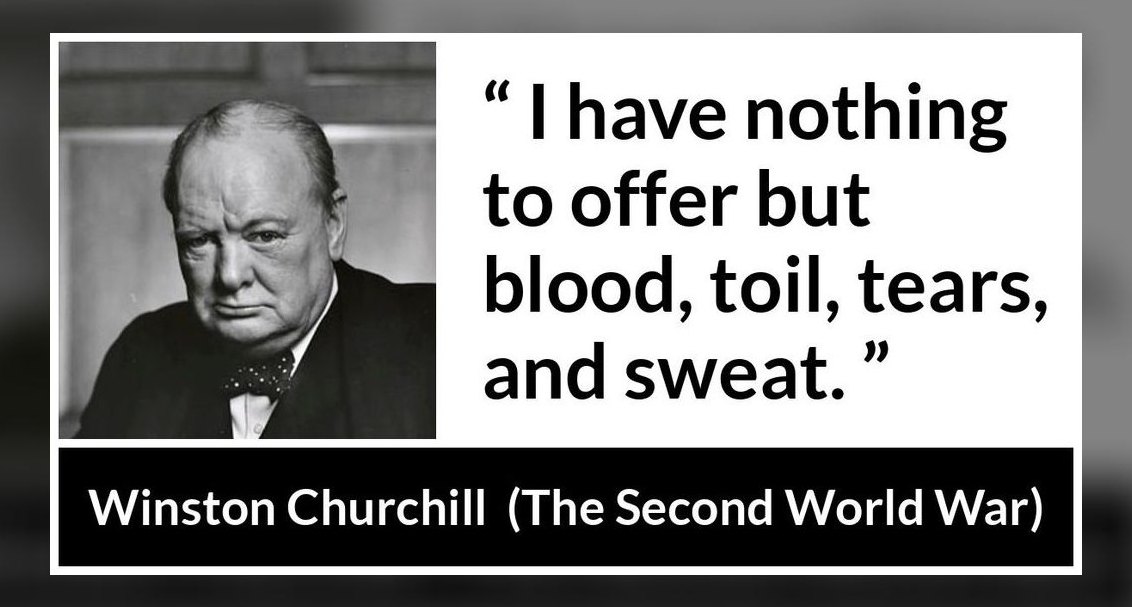 pulse-speechesWinston Churchill’s Blood, Toil, Tears and Sweat (1940) — Text and Lessons
 pulse-speechesA Father of the Bride Wedding Toast
 pulse-speechesA Motivational Monday Speech to Start the Week