
A Top 10 List of the Most Inspiring Sports Speeches in 2027
 Curated by Kory White · Fractional CRO · Maryland
 PULSEKNOWLEDGE LIBRARY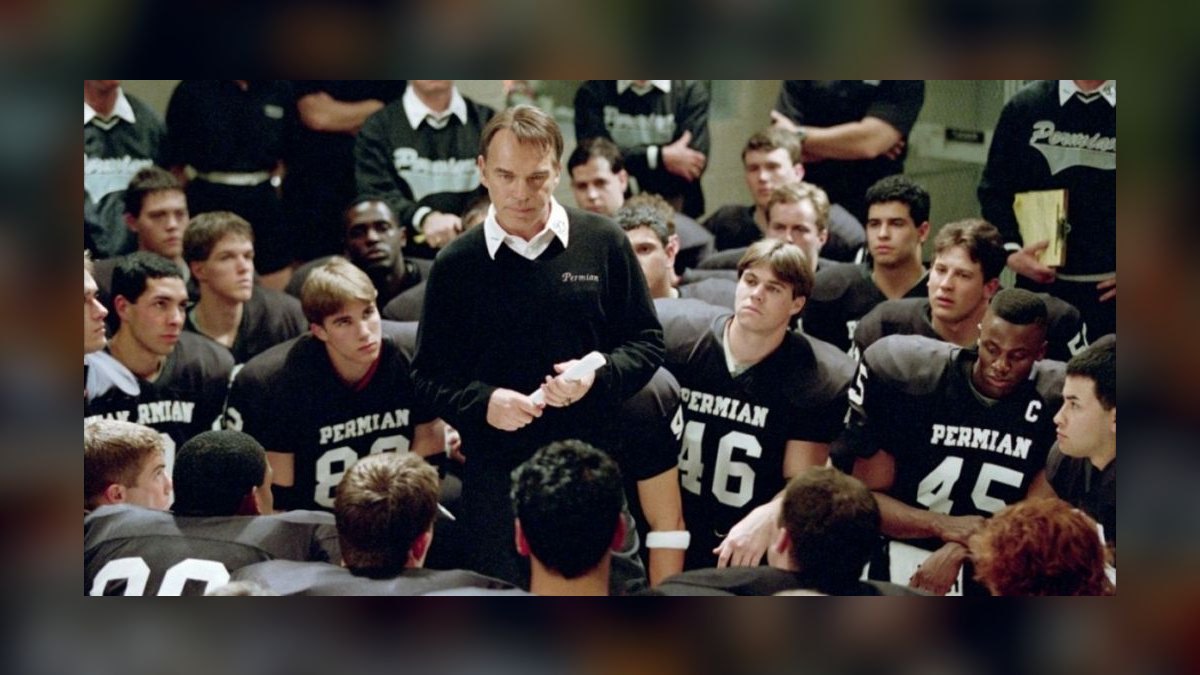
The most inspiring sports speeches of 2027 are the ones that named a specific, hard thing and asked a specific group to carry it. Ranked by durability rather than volume, the best share four traits: a concrete stake, an honest admission, a named audience, and a single repeatable line that survives without the room.
A locker room where nobody believes the plan yet
Picture the situation that produces the speeches worth ranking. It is not the trophy presentation. It is the moment before, when a group has already absorbed a bad result and is being asked to go do the same hard thing again with less confidence than they had last time. A coach walks into a room where the season's premise has quietly stopped being credible to the people who have to execute it. Everyone in the room knows the record. Everyone knows what the outside conversation says. The speech has to do something that a plan cannot do on its own: restore the belief that effort still converts into outcome.
That is the actual job. It is worth being precise about it because most lists of inspiring sports speeches confuse the job with the delivery. They rank volume, tears, and camera angles. Those are artifacts of broadcast, not of persuasion. The speeches that people still quote decades later — Jim Valvano's 1993 ESPY address, Lou Gehrig's 1939 farewell at Yankee Stadium, Kevin Durant's 2014 MVP acceptance — are not the loudest ones on record. Gehrig's is roughly 280 words delivered by a man whose body was failing, and its most quoted sentence is a claim of good fortune. Valvano's is structured around three things a person should do every day. Durant's is a sequence of specific thank-yous ending in one about his mother. None of them raise the roof through decibels.
So when we build a list of the most inspiring sports speeches from 2027, the framing question is not "which one got the biggest reaction in the room." It is "which one changed what the room did next, and which one still means something to someone who was never in the room." Those are two different tests, and a genuinely great speech passes both. A speech can pass the first and fail the second — a fiery pre-game rant that produces one excellent half and nothing else. It can also pass the second and fail the first — a beautifully written retirement address that moves the public and asks nothing of any team.
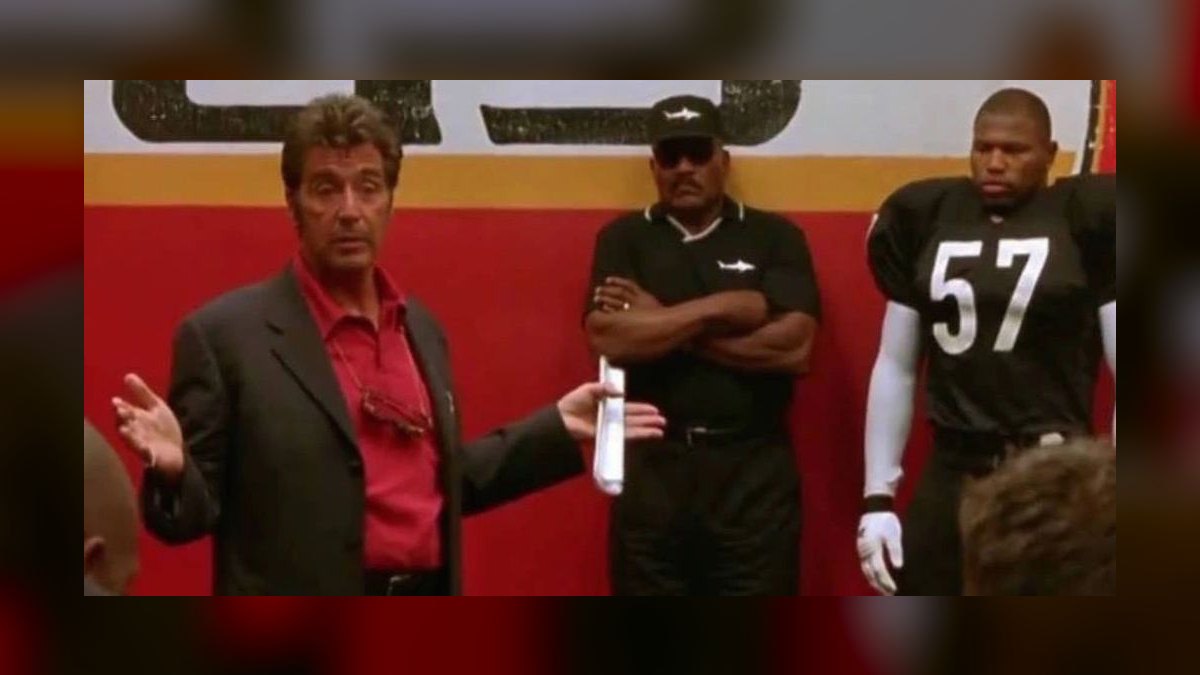
The scenario also explains why the honest speeches outrank the confident ones. A room that has already lost knows the difference between a leader who is describing reality and a leader who is describing a wish. If the speech opens by claiming the group is better than the record shows, it spends its first thirty seconds fighting the audience's own evidence. If it opens by naming the record accurately and then arguing about what is still controllable, it borrows credibility instead of spending it. Nearly every speech that ages well does the second thing. That pattern is stable enough that you can use it as a ranking criterion rather than a stylistic preference.
One more thing about the framing scenario: the audience for a modern sports speech is almost never just the room. Locker room audio gets released as content. Press conferences clip and travel. A captain's huddle speech is captured on a sideline microphone and posted within the hour. This changes the incentives in ways worth stating plainly — a coach who knows the audio will circulate is partly performing for the circulation. The most inspiring 2027 speeches are the ones where you cannot detect that second audience in the delivery. When you can detect it, the speech reads as content, and content ages badly.
How a sports speech actually converts words into behavior
The mechanism is less mystical than the highlight reels suggest. A speech that moves people does four things in sequence, and you can diagram it. It establishes a shared and accurate reading of the situation, it names a stake that the audience already cares about, it reassigns responsibility from an abstract group to specific individuals, and it compresses all of that into a phrase short enough to survive under fatigue. Skip any one of those and the speech either does not land or does not last.
Start with the shared reading. Groups under stress fragment into private narratives — one player thinks the scheme is wrong, another thinks the effort is wrong, a third thinks the leadership is wrong. A speech that does nothing but state the situation accurately performs a real function: it collapses those private narratives into one public one. That is why the strongest openings are frequently factual and unflattering. "We are down two scores because we have turned it over three times" is a better opening than "we are better than this," because it is verifiable in the room.
Then the stake. Inspiration is not generated by importance in the abstract; it is generated by importance to *these people*. Generic stakes — legacy, greatness, history — are weak because they belong to no one. Specific stakes are strong because they attach: the seniors who will never play another home game, the walk-on who earned a scholarship in week nine, the town that shows up whether the team is good or not. Valvano's ESPY speech works partly because the stake is unmistakably his own mortality, stated without euphemism, and partly because he immediately converts that private stake into a public instruction about how to spend a day.
Then reassignment. This is the step most speeches skip, and it is why most speeches evaporate. "We need to be tougher" assigns responsibility to nobody. "Front seven, you are getting one more series, and the run fits are yours" assigns it to seven people who now know what they own. Reassignment is what turns emotion into behavior. It is also why the best in-game speeches are short — you cannot reassign responsibility to eleven groups in ninety seconds, so a good one picks the two that matter.
Finally, compression. Under physical fatigue, working memory collapses. A tired athlete in the fourth quarter cannot retrieve a paragraph. They can retrieve four words. Every durable sports rallying cry is short enough to survive that collapse, and the good ones encode an instruction rather than a mood. The compression step is what lets a speech outlive its delivery — the phrase travels into practices, into the next season, sometimes into a program's permanent vocabulary long after the person who said it has moved on.

The diagram makes an argument worth stating directly: the failure modes are more informative than the successes. Most speeches that fall flat fail at step three or step four, not at step one. Coaches are generally good at describing reality and naming stakes. They are much worse at assigning ownership and at compressing. A speech that runs six minutes and ends without a single retrievable line has done real work in the room and left nothing behind.
Real numbers, ranges, and what the ranking criteria actually measure
If you are going to publish a Top 10 list of the most inspiring sports speeches in 2027, the criteria have to be stated or the list is just taste. Here is a scoring frame that produces defensible rankings, with realistic ranges drawn from what the historical record of famous speeches actually looks like.
Length. The canonical inspiring speeches cluster far shorter than people expect. Gehrig's 1939 farewell runs under 300 words and takes roughly two minutes. Valvano's ESPY address is longer — around ten minutes, and he famously kept talking past the teleprompter's wrap signal — but its quoted core is three sentences. Herb Brooks's pre-game address before the 1980 U.S.–Soviet game, as reconstructed by players and the film, is well under two minutes. A practical range for an in-competition speech is 45 to 120 seconds. For a ceremonial or retirement speech, 4 to 12 minutes. Anything over 15 minutes in either category is a memoir, not a speech, and it should be scored as one.

Ratio of specific to general language. Count the concrete nouns — names, numbers, places, dates — against the abstract ones — greatness, legacy, heart, belief. Speeches that endure tend to run heavily concrete. A rough working threshold: if fewer than one in four content words is concrete, the speech will not survive the week. This is measurable, which is the point; it converts "inspiring" from a vibe into something two people can argue about with evidence.
Retrievable line count. Score one point per phrase of eight words or fewer that a listener could repeat without notes 24 hours later. The great ones have one, occasionally two. Zero is the common case and the common failure. More than three is usually a sign of a speech that was written to be quoted rather than to be heard, which reads as manufactured.
Assignment density. How many distinct people or units get a specific instruction? For a team address, one to three is right. Zero means the speech was a mood. Ten means nobody heard theirs.
Half-life. How long does the phrase stay in circulation inside the organization? A pre-game speech that shapes one half has a half-life measured in hours. A speech whose line becomes the team's shorthand for the rest of the season has a half-life measured in months. The rare ones — "Don't give up, don't ever give up" — have half-lives measured in decades and escape the sport entirely. A Top 10 List of the Most Inspiring Sports Speeches in 2027 should weight half-life most heavily, because it is the only criterion that separates genuine inspiration from good delivery.
Audience size versus audience attachment. These trade against each other. A speech to 40 people in a room can carry enormous attachment and near-zero reach. A speech at an awards ceremony reaches millions with almost no attachment. The highest-scoring speeches manage both, and they do it by being addressed to a small named group in public — Durant's MVP speech is addressed to his teammates one at a time and then to his mother, and the fact that a large audience overhears an intimate address is exactly why it travels.
Practical scoring weights that produce a sane list: half-life 30%, retrievable line quality 20%, specificity ratio 20%, assignment density 15%, honesty of the opening 15%. Length is not scored directly; it shows up through the other criteria, since long speeches almost always dilute specificity and retrievability.

A note on evidence discipline, because this matters for anyone actually compiling such a list. Many famous sports speeches exist in the public record only as reconstruction. The most quoted version of Brooks's 1980 address comes substantially from the 2004 film *Miracle*, not from a contemporaneous recording. Coaches' locker room remarks are routinely paraphrased by players years later and harden into canon. If you are ranking 2027 speeches, insist on primary audio or video for anything you quote. Where you only have a paraphrase, say so in the entry rather than presenting it as a transcript. A list built on reconstructed quotes is a list of things people wish had been said.
The trade-offs: what you give up with each style of speech
There is no single best form. Each approach buys something and costs something, and the ranking depends on which trade you think matters. Laying these out explicitly is what separates a considered list from a highlight compilation.
The fire speech. High volume, high emotion, short. Buys immediate arousal — measurable in the first ten minutes of play. Costs credibility if used more than a few times a season, because the group calibrates. Coaches who deliver a fire speech weekly find that by November it produces nothing, and they have no higher gear left for the game that needs one. The trade-off is essentially a depleting resource: every use spends some of the next use's power.

The quiet speech. Low volume, slow pace, often delivered sitting down. Buys attention through contrast and signals that the speaker is not panicking. Costs energy — it will not produce a physical spike, so it is the wrong tool for a flat first quarter. It is the right tool after a bad quarter, when arousal is already high and what the group needs is a lowered heart rate and a clear next instruction.
The confessional speech. The speaker admits their own error first. Buys enormous credibility and makes the subsequent ask nearly impossible to refuse — a coach who says "I called that series badly, here is what I am changing" earns the right to demand something. Costs authority if overused or if the admission is not genuinely the speaker's fault. Fake humility is detected instantly by people who watch you every day.
The ceremonial speech. Retirement addresses, hall of fame inductions, award acceptances. Buys reach and permanence; these are the speeches that become cultural artifacts. Costs actionability — they ask nothing of anyone, so they cannot change behavior in a competitive sense. They inspire in the older meaning of the word: they change how someone feels about their own life, not what a team does on the next possession.

The player speech. Delivered by a peer rather than a coach. Buys authenticity that no coach can manufacture, because the speaker will personally pay the cost of the ask. Costs polish and risks fragmenting authority if it contradicts the staff. The best programs make room for these deliberately; the worst treat them as insubordination.
The honest conclusion from the trade-off map is that a Top 10 list mixing ceremonial and competitive speeches is comparing two different products. The cleanest lists either separate them into two tracks or state upfront which axis they are ranking. A retirement address and a halftime address cannot both be "most inspiring" under one definition without the definition doing quiet work to hide the mismatch.
Common pitfalls when compiling or delivering these speeches
Ranking the moment instead of the speech. The single most frequent error. A mediocre speech delivered before a historic comeback gets remembered as great because of what followed. Separate the two. Ask what the speech would score if the team had lost by twenty. If the answer is "nothing," it does not belong on the list. Outcome contamination is why so many rankings of inspiring sports speeches are functionally rankings of famous games.
Quoting the film instead of the record. Covered above but worth repeating as a compilation discipline, because it is endemic. Verify against primary audio. Where the only source is a player's later recollection, attribute it that way in the entry.

Confusing volume with conviction. Shouting is a delivery choice, not a measure of belief. Some of the most convicted speeches in the record are delivered flat. If your list is entirely shouting, you have selected on broadcast availability — loud speeches get clipped and uploaded, quiet ones do not — and your sample is biased, not your judgment.
Ignoring speeches outside the major sports and outside men's competition. A list built only from football and basketball is a list about what television covers. Some of the most durable recent examples come from tennis retirements, from Olympic team addresses, from women's soccer and basketball locker rooms where the speech often carries an argument about the sport's conditions as well as the game. A credible Top 10 List of the Most Inspiring Sports Speeches in 2027 should reflect that spread or explain why it does not.
The everything speech. For deliverers: trying to cover situation, stakes, tactics, personnel, history, and motivation in one address. The result is a speech with no retrievable line. Pick one ask. A speech with one clear instruction beats a speech with five every time, and the difference shows up within minutes.

Reusing last year's speech. Groups remember. A returning player who hears the same address they heard in the previous season stops listening and, worse, tells the newcomers it is coming. Specificity is not just a rhetorical preference — it is what makes a speech non-reusable, and non-reusability is what makes it credible.
Delivering the ask without the change. If the speech demands more effort but nothing about the plan, the rotation, or the preparation changes, the group correctly reads it as pressure rather than leadership. The speech is one component; if it is the only thing that changed, its half-life is one game. The best examples on any such list are paired with a visible structural change, and the speech's job is to explain the change rather than substitute for it.
Over-mining the archive. A final compilation pitfall: filling a 2027 list with older speeches because they are safer picks. If the list is about 2027, it should be about 2027, with historical references used as calibration rather than as entries. Padding a current-year list with Gehrig and Valvano is an admission that the compiler did not do the year's listening.
Related questions
What makes a short speech more memorable than a long one?
Fatigue and stress compress working memory. A tired listener can retrieve a four-word phrase and cannot retrieve a paragraph. Short speeches also force the speaker to choose one ask, which is exactly the discipline that produces a retrievable line.
Should a coach admit fault in a motivational speech?
Only when it is true. A genuine admission buys credibility that makes the subsequent demand nearly impossible to refuse. A manufactured one is detected immediately by people who watch the speaker daily, and it costs more authority than it borrows.
How do you tell a great speech from a great outcome?
Score the speech as if the team lost. Strip the result and ask whether the words still name a stake, assign responsibility, and leave a retrievable phrase. Most famous speeches fail this test, which is the useful finding.
Do player-delivered speeches work better than coach-delivered ones?
Sometimes. Peers carry authenticity because they personally pay the cost of the ask. They lose polish and can fragment authority if they contradict the staff. Strong programs plan for peer speeches rather than tolerating them.
Why do reconstructed quotes dominate famous sports speeches?
Most locker rooms historically had no recording. Players reconstruct decades later, films dramatize, and the dramatized version circulates more widely than any transcript. Always check whether primary audio exists before quoting.
FAQ
How long should an in-game speech be?
Between roughly 45 and 120 seconds. That window is long enough to state the situation, name one stake, and assign responsibility to one or two units, and short enough that the closing line is still in working memory when players take the field. Ceremonial speeches run longer — four to twelve minutes is typical — because their job is meaning rather than immediate behavior. Past fifteen minutes in either category, retention drops sharply and the address becomes a memoir.
What single element separates speeches that last from ones that do not?
Compression into a retrievable phrase. Everything else can be excellent and the speech will still evaporate if there is no eight-words-or-fewer line a listener can repeat the next day without notes. Half-life is the criterion that most cleanly divides the durable from the merely well-delivered, and compression is the mechanism that produces it.
Is it fair to rank ceremonial speeches against locker room speeches?
Not under one definition. They optimize for different things — reach and permanence versus immediate behavior change. The cleanest approach is two tracks, or a clearly stated axis at the top of the list. Blending them silently lets the compiler pick whichever definition flatters the ranking they already wanted.
How do you verify a speech before including it in a ranking?
Insist on primary audio or video. If only a paraphrase exists, label it a paraphrase in the entry. Many canonical sports speeches survive only as reconstruction — sometimes reconstruction filtered through a screenplay — and a list built on those is documenting what people wish had been said rather than what was.
Does a fire speech stop working if you use it often?
Yes. Groups calibrate to their leader's baseline. A coach who delivers maximum intensity weekly finds by late season that the same delivery produces no response and there is no higher gear available for the game that needs one. Treat high-arousal delivery as a depleting resource and spend it two or three times a season.
Why do the best speeches open with bad news?
Because the room already knows it. Opening with an accurate, unflattering statement of the situation collapses competing private narratives into one shared reading and demonstrates that the speaker is not managing perception. Opening with a claim the audience's own evidence contradicts spends credibility in the first thirty seconds.
Sources
- https://www.espn.com/espys/story/_/id/9469238/jim-valvano-1993-espys-speech-transcript
- https://www.baseball-almanac.com/quotes/lou_gehrig_speech.shtml
- https://www.si.com/nba/2014/05/06/kevin-durant-mvp-speech-transcript
- https://www.americanrhetoric.com/top100speechesall.html
- https://www.olympics.com/en/news/miracle-on-ice-1980-usa-soviet-union-hockey
- https://hbr.org/2013/06/how-to-give-a-killer-presentation
- https://www.apa.org/topics/sport-exercise/performance-psychology
- https://www.nytimes.com/section/sports
- https://www.bbc.com/sport
Related on PULSE
- [What makes a leadership message stick after the meeting ends](/knowledge.html?q=leadership-message-retention)
- [How to run a team huddle that actually changes behavior](/knowledge.html?q=team-huddle-structure)
- [Why short internal announcements outperform long ones](/knowledge.html?q=short-announcements-outperform)
- [Building a shared vocabulary across a distributed team](/knowledge.html?q=shared-team-vocabulary)
- [When to admit a mistake in front of your team](/knowledge.html?q=admitting-mistakes-leadership)
 pulse-speechesA Eulogy vs. a Memorial Speech: How to Choose the Right Tribute in 2027
 pulse-recentA Top 10 List of the Most Memorable Wedding Toasts in History in 2027
 pulse-recentA Top 10 List of the Most Emotional Wedding Speeches Ever Given in 2027
 pulse-recentA Top 10 List of the Most Powerful Graduation Speeches of All Time in 2027
 pulse-recentA Top 10 List of the Greatest Eulogies Ever Delivered in 2027
 pulse-recentA Wedding Speech vs. a Vow Renewal Speech: Which Fits Your Moment Better in 2027
 pulse-speechesFranklin Roosevelt’s Day of Infamy (1941) — Text, Context, and Why It Endures
 pulse-speechesA Eulogy for a Grandfather Who Served in the War in 2027
 pulse-recentHow to Choose a Wedding Speech That Fits Your Relationship in 2027
 pulse-speechesA Toast for a Baby Shower