
The Annual Price Increase Rollout — 60-Min Training
 Curated byKory White · Fractional CRO · Maryland
 PULSEKNOWLEDGE LIBRARY
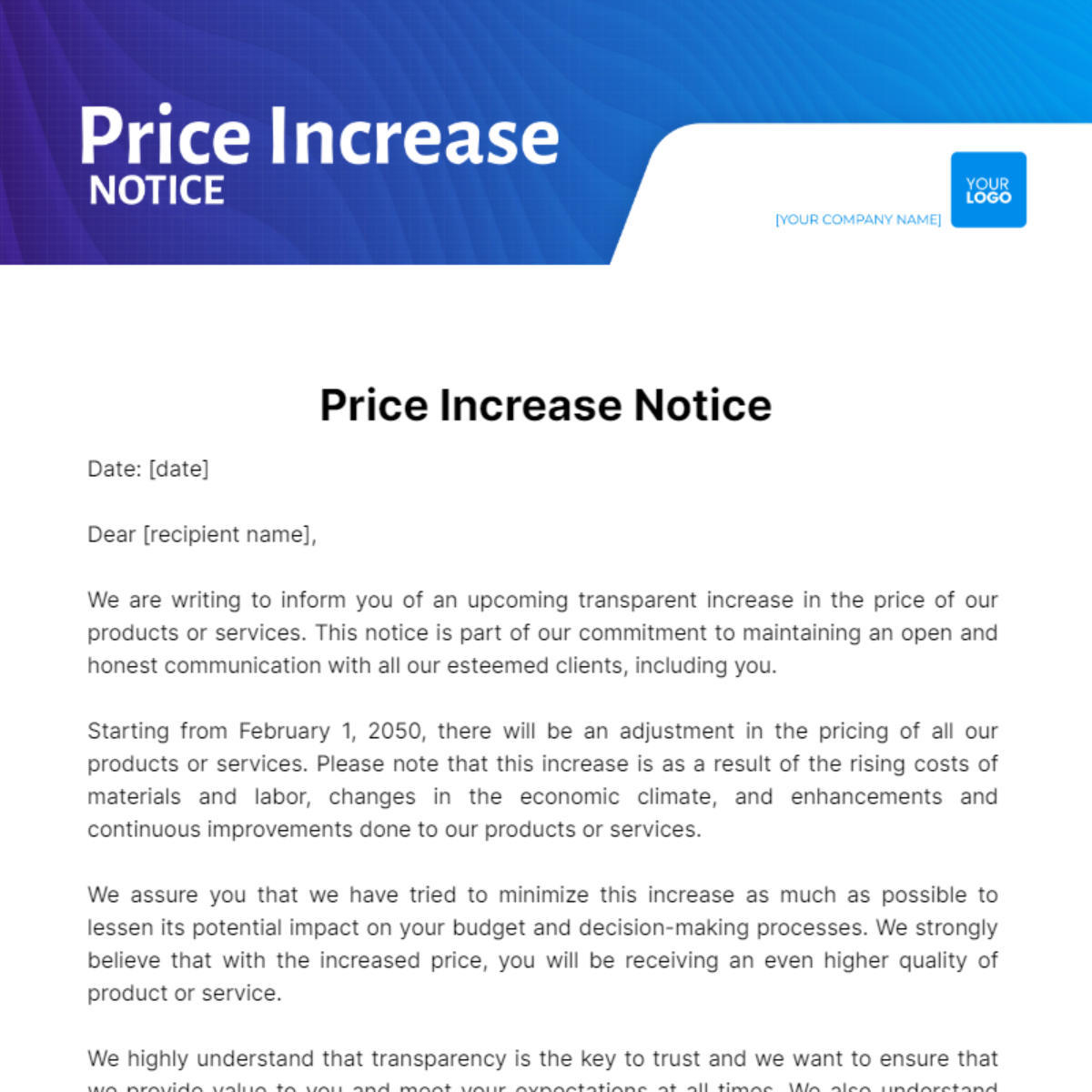
Run a 60-minute manager-led working session where every CSM and AE walks out with two artifacts: a written communication plan for their top 5 at-risk accounts and a rebuttal playbook for the 6 most common pushback scenarios. The 2027 default move for SaaS is a 7 to 12 percent list-price increase on existing customers, segmented by tier — strategic accounts get hand-delivered notices at 90 days with grandfathering optionality, mid-market gets templated 60/30/7-day sequences in Gainsight or ChurnZero, and SMB gets automated HubSpot emails with a self-serve FAQ. The single biggest mistake teams make is treating the rollout as a finance-and-legal exercise instead of a renewal motion — Pavilion's 2026 Pricing Power Survey found teams who routed price increases through CS owners retained 94 percent of pre-increase ARR versus 81 percent for teams who let billing operations send the notices cold. This session forces the field to own the conversation before the email goes out.
> Pavilion 2026 Pricing Power Survey: "SaaS companies that ran price increases through a CS-led communication sequence held NRR 11 points higher than peers who relied on automated billing notices alone."
> Gainsight 2026 NRR Benchmark Report: "62 percent of price-increase churn happens in the 14-day window after the 30-day notice — not at renewal. The 30-day notice is the real renewal date."
1. Opening context — why this rollout breaks teams (5 min)

Open the session by reframing the problem. This is not a pricing exercise. It is a renewal motion that happens to involve a price change. Every customer who gets the email becomes a renewal conversation, whether or not their contract anniversary is in the next 30 days.
Whiteboard frame:
- Who gets which increase (segmentation — strategic, mid-market, SMB)
- When they hear it (90/60/30/7-day cadence by tier)
- Who owns the conversation when they push back (CSM-led for strategic and mid-market, AE-led for expansion-eligible, support-deflected for SMB)

Walk the room through the numbers. KeyBanc's 2026 Private SaaS Survey put the median 2027 planned list-price increase at 9 percent, with top-quartile companies pushing 12 to 15 percent on legacy cohorts that have been under-priced for three or more years. ChurnZero 2026 data shows the customers most likely to churn on a price increase are the ones who have logged in fewer than 4 times in the prior 90 days — not the ones complaining loudest. Pull the login data before the session.
*The rule for this session: every customer the team touches walks away with a plan in writing. No verbal commitments, no "I'll send something later." Written or it did not happen.*
2. The pre-session brief — what every rep needs ready before the email goes out (15 min)

Before any CSM or AE sends a single notice, they need to complete a brief on every account in their top-5 at-risk list. This is the artifact that separates a managed rollout from a panicked one. The manager reviews briefs live during this section.
Verbatim Pre-Session Brief Template:
- Account name, current ARR, contract anniversary date, and renewal owner of record. If the renewal owner is not you, stop and reassign before continuing.
- Increase percentage applied to this account and the dollar impact (current ARR multiplied by the increase percentage). Round to the nearest $500 so the conversation is clean.
- Last 90-day product usage trend pulled from your Gainsight or ChurnZero health score — flat, declining, or growing. Declining accounts get a different sequence than growing ones.
- Last QBR date and the three top business outcomes the customer named. If you do not know their top outcomes, the brief is incomplete and you cannot send the notice.
- Known competitive threats and any open support escalations. Pull from Salesforce activity and Zendesk in the last 60 days.
- Your predicted reaction on a 1-to-5 scale (1 = accepts silently, 5 = threatens to cancel) and the rebuttal you plan to lead with from the playbook.

Coach the room: the brief takes 15 to 20 minutes per account. Five accounts is roughly 90 minutes of prep work outside this session. Block the calendar. Do not skip the QBR-outcomes line — that is the field that wins or loses the conversation.
*Bad-example call-out — a brief that just lists ARR and percentage and stops there is a finance exercise, not a renewal plan. If a rep submits one of those, send it back.*
3. Segmentation drill — who gets what increase and what notice cadence (10 min)

The segmentation drill is non-negotiable. Every account on the list must land in exactly one bucket before the session ends. Run through the rules.
- Strategic accounts (top 20 percent of ARR or named in your enterprise tier): maximum 5 to 7 percent increase, 90-day notice, CSM hand-delivers on a scheduled call. Grandfathering available for multi-year commit conversions. Use DocuSign for any contract amendments.
- Mid-market growing accounts (mid-tier ARR, expanding usage, positive health score): 8 to 10 percent increase, 60/30/7-day sequence, CSM-led with AE on standby for expansion conversations. No grandfathering unless they commit to a multi-year extension at the new rate.
- Mid-market flat or declining accounts: 10 to 12 percent increase, 60/30/7-day sequence, CSM owns the conversation. These are your highest churn-risk segment — Gainsight 2026 data shows 38 percent of price-increase-driven churn comes from this exact cohort. Pull a save-play list before the notices go out.
- SMB accounts (bottom 40 percent of ARR, self-serve oriented): 10 to 15 percent increase, automated HubSpot email at 60 days, in-product banner at 30 days, support-deflected for objections. Do not give SMB customers CSM time on a price increase — the unit economics do not work.
- Legacy under-priced accounts (any tier, prior contracted price more than 25 percent below current list): call the customer before any email goes out. These are conversations, not announcements. OpenView's 2026 SaaS Pricing Report found 71 percent of "shocked customer" escalations came from legacy under-priced accounts who learned of the increase via email.
The exception callout: any account with an active executive sponsor relationship (CEO, CFO, or CRO at the customer's company) gets a peer-level call before any written notice. The VP of CS or the AE's RVP makes the call. This is the one rule that has no exceptions.
What to NEVER say in this session:
- "Everyone is doing this" (customers do not care what everyone is doing — they care about their contract)
- "Our costs went up" (frame as value delivered, not cost-passed-through)
- "Corporate decided" (you own the relationship, you own the message)
- "It's only X percent" (any percentage is a real dollar amount to the customer)
- "You can lock in the old price if you sign today" (under-cuts the increase and trains customers to negotiate next year)
- "I'm sorry about this" (apologizing signals the increase is unjustified — frame as standard annual list adjustment)
Each phrase above gets a parenthetical because the reason matters more than the rule. Reps repeat phrases they do not understand and stop repeating them when they do.
Close this section with the segmentation worksheet — every rep marks each of their top 5 accounts with a tier and a notice date before the next section starts.
4. The CSM hand-delivery call — verbatim script and what not to do (10 min)
The 90-day strategic call is the highest-leverage 12 minutes in the entire rollout. Get the open right and the rest of the conversation is a confirmation. Get it wrong and you spend the next 45 days managing an escalation.

Verbatim CSM Hand-Delivery Script:
> "Hey [Name], thanks for making time. I wanted to walk you through something before it shows up in an email so you hear it from me directly. [Pause for acknowledgment.] We're making our 2027 list-price adjustment across the customer base, and for your account that translates to a [X] percent increase, which is about [$Y] on your annual contract starting [renewal date]. [Pause — let them react.] Before I walk through the why and what it means for your team, I want to confirm three things you told me at our last QBR were your priorities for 2027 — [outcome 1], [outcome 2], and [outcome 3]. Those are still the priorities? [Confirm.] Good. Here is what we have shipped against those three priorities in the last 12 months [list 3 concrete deliverables tied to their outcomes]. The increase reflects continued investment in exactly those areas, and I have the 2027 roadmap items mapped to your priorities ready to walk through whenever you want. What questions do you have on what I just shared?"
The script works because it does four things in sequence: tells them before the email, names the dollar amount in their language, anchors on their stated business outcomes, and asks an open question that invites concern instead of suppressing it. ChurnZero 2026 research found CSMs who opened with the dollar amount and the customer's own stated outcomes saw a 73 percent acceptance rate on first call. CSMs who opened with the percentage alone saw 41 percent.
Do NOT do any of the following:
- Read the script word-for-word. Internalize the structure and use your own phrasing.
- Schedule the call for less than 30 minutes. The customer needs runway to react.
- Send any written communication until the call is complete and a follow-up email is sent the same day summarizing what was discussed.
5. Rebuttal playbook — the 6 most common objections and what to say (15 min)
The room builds the rebuttal playbook live in this section. Each rep writes their version for their top 3 objections by the end of the 15 minutes.
The math every rep needs to internalize:

- The breakeven on save discounts: if you offer a 3-point discount off the new price to save the account, the customer needs to renew for at least 2.4 years for the discount math to beat losing them and replacing them at full price. Bessemer Cloud 100 2027 benchmarks put SaaS payback on new-customer acquisition at 19 months for mid-market — replacement is more expensive than retention almost every time.
- The churn-risk threshold: any account with a health score below 60 and a predicted reaction of 4 or 5 should not get the standard increase. Route to a save-play with VP-CS approval before the 60-day notice goes out.
- The expansion offset: for every dollar of price increase you lose to discounts, the team should target $1.30 of net-new expansion in the same quarter. Track the ratio weekly in Salesforce dashboards through the rollout window.
Common CSM/AE objections and the rebuttals:
*"My customer is going to push back hard and I do not want to lose them."* That is the exact reason this conversation happens before the email. You have 90 days to build the case. If you cannot defend the increase by week 4, you escalate to your VP and we build a save-play. The worst version of this is finding out at day 87 that the customer is gone.
*"We are giving them too small of an increase, they would pay more."* Possibly. Bring me three accounts you think are under-priced by the end of the week with usage data and competitive context, and we will run a separate uplift conversation outside the standard rollout. Do not freelance individual increases inside this cadence — it breaks the audit trail.
*"Procurement is going to drag this into a 6-week negotiation."* Then you start the conversation 6 weeks earlier. The 90-day notice exists for exactly this. Procurement teams who see a CSM-delivered, business-outcome-anchored message at 90 days close in 22 days on average per Pavilion 2026 data. The ones who see a billing-ops email at 30 days close in 47.
Action close: each rep writes their three personal rebuttals on the worksheet and exchanges with a peer for a 90-second roleplay before the section ends.
6. Commitments and close — what walks out of the room (5 min)

Lock the commitments in writing before anyone leaves. The session is only valuable if the artifacts get used in the next 72 hours.
- Written communication plan for your top 5 at-risk accounts — tier, increase percentage, notice date, channel, owner, predicted reaction, lead rebuttal. Submitted to your manager by end of day tomorrow.
- Personal rebuttal playbook for the 6 most common objections in your own words, stored in your team Notion or Salesforce notes, reviewed in your 1:1 next week.
- Calendar blocks for every 90-day strategic call this week and every 60-day mid-market sequence kickoff next week. No more than 4 hand-delivery calls per CSM per week — the conversations are mentally heavy and quality drops past four.
> OpenView 2026 SaaS Pricing Report: "Companies that documented per-account communication plans before sending price-increase notices retained 12 points more NRR than companies that ran the rollout through marketing or billing automation alone. The artifact is the difference."
The increase rollout is won and lost in the next 90 days, not on renewal day. Walk out, finish your briefs, schedule your calls, and put the playbook to work.
FAQ
Q1: What is the typical 2027 SaaS price increase percentage and how is it segmented by customer tier? A: KeyBanc 2026 Private SaaS Survey put median 2027 increases at 9 percent. The working segmentation is 5 to 7 percent for strategic accounts, 8 to 10 percent for healthy mid-market, 10 to 12 percent for flat or declining mid-market, and 10 to 15 percent for SMB. Legacy under-priced accounts (more than 25 percent below current list) get individual conversations regardless of tier.
Q2: When should grandfathering be offered and to which accounts? A: Offer grandfathering only to strategic-tier accounts in exchange for a multi-year commit at the new floor price, or to accounts with active executive-sponsor relationships where the relationship outweighs the immediate revenue lift. Mid-market and SMB do not get grandfathering by default — once you offer it broadly, it becomes the new baseline expectation every renewal cycle.
Q3: What is the right notice cadence for each tier? A: Strategic gets a 90-day hand-delivered CSM call, then a written confirmation. Mid-market gets a 60-day written notice, a 30-day check-in call, and a 7-day reminder. SMB gets an automated 60-day HubSpot email, a 30-day in-product banner, and a 7-day final notice. The 30-day touch is the real renewal moment — Gainsight 2026 data shows 62 percent of increase-driven churn happens in the 14 days after that notice.
Q4: How do we measure increase-related churn risk before the notices go out? A: Pull three signals from Gainsight or ChurnZero per account: 90-day login trend, health score, and last-QBR outcomes completion. Combine with the rep's predicted-reaction score (1 to 5). Any account scoring 4 or 5 with a health score below 60 routes to a save-play with VP-CS approval before any notice is sent.
Q5: What tooling stack supports the rollout end-to-end? A: Salesforce as the source of truth for accounts and renewal owners, Gainsight or ChurnZero for health scores and usage trends, HubSpot for SMB automated sequences, DocuSign for any amended contracts, and Zendesk for support-deflected SMB objections. The CSM workflow lives in Gainsight or ChurnZero with timeline entries logged for every customer conversation.
Q6: How do we handle a customer who threatens to cancel on the 30-day notice? A: Within 24 hours, the CSM escalates to VP-CS with a one-page brief — account name, ARR, increase amount, customer's stated reason, three options for response. VP-CS approves one of: hold the increase and lock a multi-year commit at current rate, offer a 3-point save discount with multi-year, or accept the churn and route to win-back in 90 days. Never resolve a cancel threat in the first call — buy 24 hours and bring the leader in.
Related on PULSE
- [The Annual Sales Planning Reboot — 60-Min Training](/knowledge/st226)
- [The Concession-Trading Workshop: Never Give Without Getting (60-Min Training)](/knowledge/st0773)
- [The Mutual Action Plan Build Session (60-Min Training)](/knowledge/st0774)
Sources
- Pavilion 2026 Pricing Power Survey — NRR impact of CS-led versus billing-led price-increase communication
- Gainsight 2026 NRR Benchmark Report — timing patterns of price-increase-driven churn
- ChurnZero 2026 Customer Success Industry Report — health-score correlations with increase acceptance rates
- OpenView 2026 SaaS Pricing Report — segmentation patterns and shocked-customer escalation root causes
- KeyBanc Capital Markets 2026 Private SaaS Survey — median 2027 planned list-price increases by company size
- Bessemer Cloud 100 2027 Benchmarks — SaaS payback periods and retention-versus-replacement economics
- Salesforce State of Sales 2026 — renewal-owner accountability patterns and CRM workflow standards
- Gartner 2026 Subscription Economy Report — procurement negotiation cycle lengths by notice-delivery method
This page will be disappearing soon. Save it to your device for $1 — or read it free while it is here.
@Kory-White- · if Venmo asks, the last 4 of my number are 2012
 sales-trainingThe Renewal Conversation Reboot — 60-Min Training
 sales-trainingFixing Pricing Exception Chaos — 60-Min Training
 sales-trainingGroup Health Benefits Broker Selling — 60-Min Training
 sales-trainingAPI Security Selling to the Head of Platform Engineering — 60-Min Training
 sales-trainingThe Deal Desk Operations Reboot — 60-Min Training
 sales-trainingExpired Listing Reactivation Calling — 60-Min Training
 sales-trainingThe Cross-Sell Conversation — 60-Min Training
 sales-trainingRefinance and HELOC Conversion Selling — 60-Min Training
 sales-training60-Min Sales Training: Budget Conversations Without Killing the Deal
 sales-trainingTree Service Estimate Selling — 60-Min Training