Pulse ← Trainings
Sales Trainings · sales-training
✓ Machine Certified10/10?

The Win-Loss Review Meeting: Running a Monthly Deal Post-Mortem That Turns Closed Deals Into a Repeatable Playbook — a 60-Minute Sales Training

📖 9,743 words⏱ 44 min read5/22/2026

Direct Answer

Most teams treat a closed deal as finished — won deals get a Slack celebration, lost deals get quietly forgotten — and that is the single most expensive habit in B2B sales. Every closed deal, won or lost or stalled, is paid-for market research: a buyer spent weeks evaluating you and the moment they decide, they hold the most accurate read of your strengths, your gaps, and your competitors that you will ever get.

The Win-Loss Review Meeting is the recurring 60-minute team meeting where you systematically extract that research before the memory fades, separate honest patterns from rep folklore, and convert it into a small number of concrete playbook changes a named owner ships next quarter.

It is a fully runnable agenda built on six timed sections, and it ends with at most three commitments that the next month's review verifies.

This training does not turn into a blame session and it does not produce a fifteen-item action list nobody owns. It installs the discipline of treating each closed deal as evidence rather than a verdict on a person, tests the loss reason a rep typed into the CRM against what the buyer actually said, and builds a monthly habit so the team compounds its learning instead of repeating its mistakes.

Run it after any quarter where the same losses kept recurring, when a new competitor starts winning a segment, and on a standing monthly cadence to keep your loss data honest.

TL;DR

  • Problem: Closed deals are treated as finished — wins get celebrated, losses get a one-word CRM reason and are forgotten — so the team's most valuable market research evaporates and the same mistakes recur every quarter.
  • Framework: The Win-Loss Teardown Loop — every closed deal is examined for its real trigger, its decision process, its champion access, and its true loss or win reason, then sorted into a controllable bucket the team owns and an uncontrollable bucket it does not.
  • Method: The team reviews a numbers snapshot, tears down one or two wins and two losses against fixed questions, pressure-tests each recorded reason against buyer evidence, names patterns that repeat across three or more deals, and converts them into at most three owned commitments.
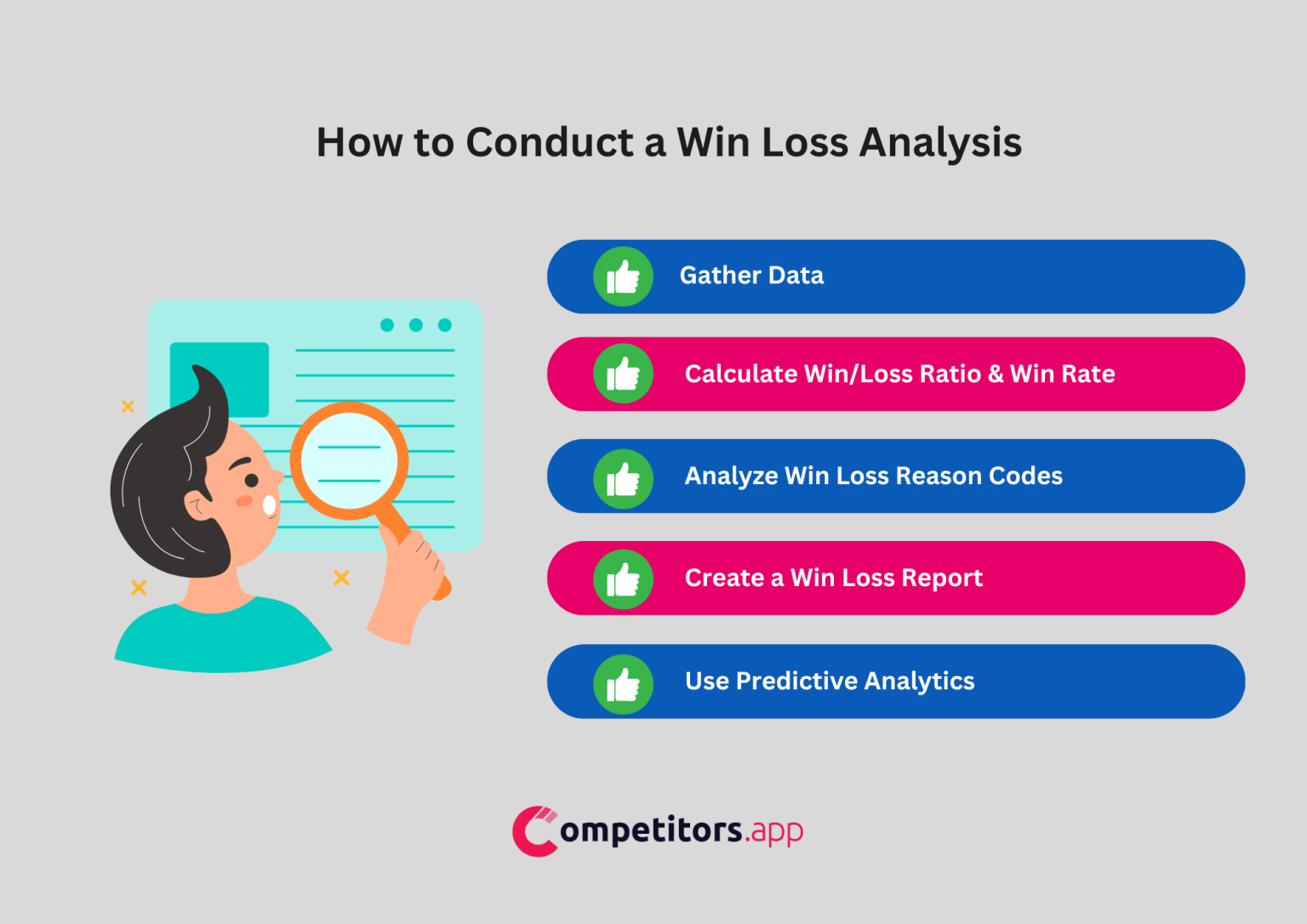
  • Format: A 60-minute training — Frame 0:00-0:05, Numbers Snapshot 0:05-0:13, Won-Deal Teardown 0:13-0:25, Lost-Deal Teardown 0:25-0:40, Pattern Synthesis 0:40-0:52, Commitments and Counter-Case 0:52-1:00.
  • Outcome: Recorded CRM loss reasons start matching what buyers actually say, the no-decision rate becomes a tracked number rather than a silent leak, and at least one playbook change per quarter is traceable directly back to a win-loss pattern.

The Pulse Training

Who this is for: Front-line sales managers, account executives, sales engineers, RevOps and sales-operations leaders, and enablement leaders who own or contribute to closed-deal review — the retrospective discipline of learning from deals that have already been won, lost, or marked no-decision.

Per Gartner B2B buying research, CSO Insights / Korn Ferry, and the published methodology of win-loss research firms Clozd, DoubleCheck Research, and Anova Consulting Group: roughly 60% of B2B purchase processes that begin end in no decision rather than a competitive loss, buyers spend only about 17% of the total purchase journey with any sales rep, and the loss reason a rep records in the CRM disagrees with the buyer's stated reason in a large share of deals — often the rep's first guess is wrong more than half the time once a buyer is actually interviewed.

Run this after a quarter of recurring losses, when a new competitor emerges, and monthly as a standing calibration habit.

What teams leave with: A WIN-LOSS TEARDOWN LOOP for converting any closed deal into evidence, plus the five failure modes of the review itself (internal-only teardowns laundering bias, sample-size noise on small or long-cycle teams, the blame ritual that degrades data, hindsight bias inflating the controllable bucket, and opportunity cost when commitments never change behavior).

Plus a numbers-snapshot template, a won-deal and lost-deal teardown question set, a controllable-versus-uncontrollable sorting rubric, a pattern-qualification rule, a facilitation script, a commitments tracker, and a monthly follow-up loop that makes the review stick.

The manager brings: (1) The prior month's closed-deal list — wins, losses, and no-decisions — with two or three teardown deals pre-selected. (2) The numbers snapshot already built: win rate, no-decision rate, cycle-length gap, win rate by source and segment. (3) Any buyer win-loss interview notes or recorded-call evidence available, so the room can test recorded loss reasons against what buyers actually said rather than against rep memory.

MEETING AGENDA — 60 MINUTES

TimeBlockOwnerOutcome
0:00-0:05Frame and Ground Rules — state the one rule, this meeting analyzes deals not people; assign a scribe; set the output as patterns, not blameManagerThe room agrees a loss analyzed honestly is worth more than a win celebrated blindly
0:05-0:13The Numbers Snapshot — present the prior month at a glance: win rate, no-decision rate, cycle gap, win rate by source and segment; anchor the discussion in data before any opinionManager or RevOpsThe scoreboard is on screen; the room argues from numbers, not the loudest voice
0:13-0:25Won-Deal Teardown — tear down one or two recent wins against four fixed questions; name the repeatable move so it can be taughtOwning rep + roomOne or two repeatable winning plays named and written down
0:25-0:40Lost-Deal Teardown — tear down two recent losses including one no-decision; pressure-test the recorded reason against buyer evidence; sort controllable from uncontrollableOwning rep + roomEach loss reason validated or rejected; controllable losses isolated
0:40-0:52Pattern Synthesis — step back from individual deals; name the two or three patterns that repeat across three or more dealsFacilitator + roomTwo to three qualified patterns, not ten anecdotes
0:52-1:00Commitments + Counter-Case — the five ways the review backfires, then at most three owned, dated playbook changesManagerThree or fewer commitments with named owners, verified next month

Bottom Line

Your team is not short on data about why it wins and loses — it is drowning in it. Every closed deal carries the answer; the team just lets it evaporate because the won deal got a celebration and the lost deal got a one-word CRM reason and a quiet forget. The win-loss review is the meeting that stops the evaporation: it treats each closed deal as paid-for research, tests the rep's theory against the buyer's reality, and turns the patterns that survive that test into a few concrete changes someone owns.

Run it well — paired with buyer evidence, at a cadence matched to deal volume, inside a culture that tolerates honest losing — and the team stops repeating its mistakes and starts compounding its learning. Run it badly, or skip it, and you keep paying for the same market research every quarter and throwing it away.


SECTION 1 — FRAME AND GROUND RULES (0:00-0:05)

Coach Note

Five minutes, hard stop at 0:05. Every minute spent on framing is a minute stolen from the teardowns, so this section is deliberately the shortest in the meeting. The job of the open is not to teach — it is to set the one rule that makes the next 55 minutes safe to be honest in.

1.1 State the one rule

Open by stating, plainly, the single rule the whole meeting runs on: this meeting analyzes deals, not people. No rep is on trial. The owning rep of a torn-down deal is not defending a performance review; they are the team's most informed witness to a piece of market research. The output of the hour is pattern recognition the whole team can act on, not a verdict on anyone's quarter.

Say this explicitly because reps will not assume it. A sales team's default reading of "let's review the deals you lost" is "let's review where you failed," and a rep who hears that will do exactly what self-protection demands: pre-sanitize the messy deals, omit the embarrassing details, and present a clean, lossless story.

The moment that happens, the data the meeting analyzes becomes fiction, and a meeting that analyzes fiction is worse than no meeting at all. The one rule is not a courtesy. It is the precondition for the meeting producing anything real.

Frame the value inversion the room needs to internalize: a lost deal analyzed honestly is worth more than a won deal celebrated blindly. A won deal you do not understand is luck you cannot repeat. A lost deal you understand precisely is a defect you can fix forever. The team that gets good at this stops treating losses as wounds to hide and starts treating them as the cheapest, highest-fidelity research it will ever receive — a buyer spent weeks evaluating the market and is handing you the findings for free.

There is a structural reason the win-loss review is run as a *team* meeting rather than as one-on-one coaching after each loss, and it is worth naming for the room up front. A loss reason is a claim about the market, and a claim about the market calibrates against the pattern across many deals, not against a single rep's memory of a single deal.

When a manager debriefs one lost deal privately with one rep, the conclusion that emerges is one rep's theory checked against one manager's theory — two people with correlated incentives, both of whom would rather the loss be "price" than "we ran weak discovery." When the whole team puts a month of deals on the table at once, a loss reason has to survive the room: three reps who each lost to the same competitor in the same segment produce a pattern no single debrief could have seen, and a loss reason that only one rep believes gets visibly outvoted by the evidence.

The team format is not a scheduling convenience. It is what converts a pile of individual anecdotes into market intelligence, and it is the reason this hour exists on the calendar at all.

1.2 Assign a scribe and set the output

Assign a scribe before the meeting starts moving — not the manager, who needs to facilitate, and not the rep whose deal is up. The scribe has one job: capture every committed action item with its owner and date, verbatim, so that nothing decided in the room is lost between this meeting and the next.

A win-loss review with no written record is a conversation, not a process, and conversations do not compound.

Name the output so the room knows what "done" looks like. By 1:00 the meeting must produce: a numbers snapshot the room has seen, one or two named winning plays, a set of validated or rejected loss reasons, two or three qualified patterns, and at most three owned, dated commitments.

Not fifteen. The number three is a deliberate constraint and it is worth defending out loud — a meeting that generates fifteen action items generates zero, because no team ships fifteen changes in a month and an un-shipped commitment trains the room to ignore commitments. Three changes, actually shipped and verified next month, beats fifteen logged and forgotten every time.

1.3 Where this meeting sits in the system

Land one piece of context so reps understand why this meeting exists alongside the others on their calendar. The win-loss review is the retrospective meeting in a complete sales-meeting system. It pairs with the forward-looking weekly deal inspection covered in the Forecast Call Reset (st0037): the forecast call asks "will this deal close," and the win-loss review asks "why did the last batch close or not" — and the honest answer to the second question is what makes the first one anything more than rep optimism.

It also has a renewal-side sibling in the Renewal Risk Forecast (st0042), which runs the same pattern-finding discipline on account health and renewals instead of new logos. Reps should see the win-loss review not as one more meeting but as the feedback loop that calibrates all the others.

The win-loss review as a fact surveyThe win-loss review as evidence extraction
Wins get celebrated, losses get a one-word reasonEvery closed deal is torn down as paid-for research
The CRM loss reason is accepted as the truthThe recorded reason is tested against buyer evidence
The loudest rep's theory becomes the team's theoryPatterns must clear a three-deal threshold to count
Fifteen action items, no owners, no datesAt most three commitments, each owned and dated
Same mistakes recur every quarterOne traceable playbook change per quarter
Meeting runs on momentum until it quietly diesMeeting is killed without ceremony if it stops working

Transition: "For the next 55 minutes we are going to read the month's scoreboard, tear down a handful of real deals, find the patterns that repeat, and leave with three changes someone owns. Nobody is on trial. The deals are the witnesses."


SECTION 2 — THE NUMBERS SNAPSHOT (0:05-0:13)

Coach Note

Eight minutes. The manager or RevOps lead presents; the room mostly listens. Do not interpret yet — the snapshot's only job is to put the scoreboard on the screen so every teardown that follows is anchored in data rather than the loudest voice or the most recent deal. Build this before the meeting; do not assemble it live.

2.1 Put the scoreboard on the screen

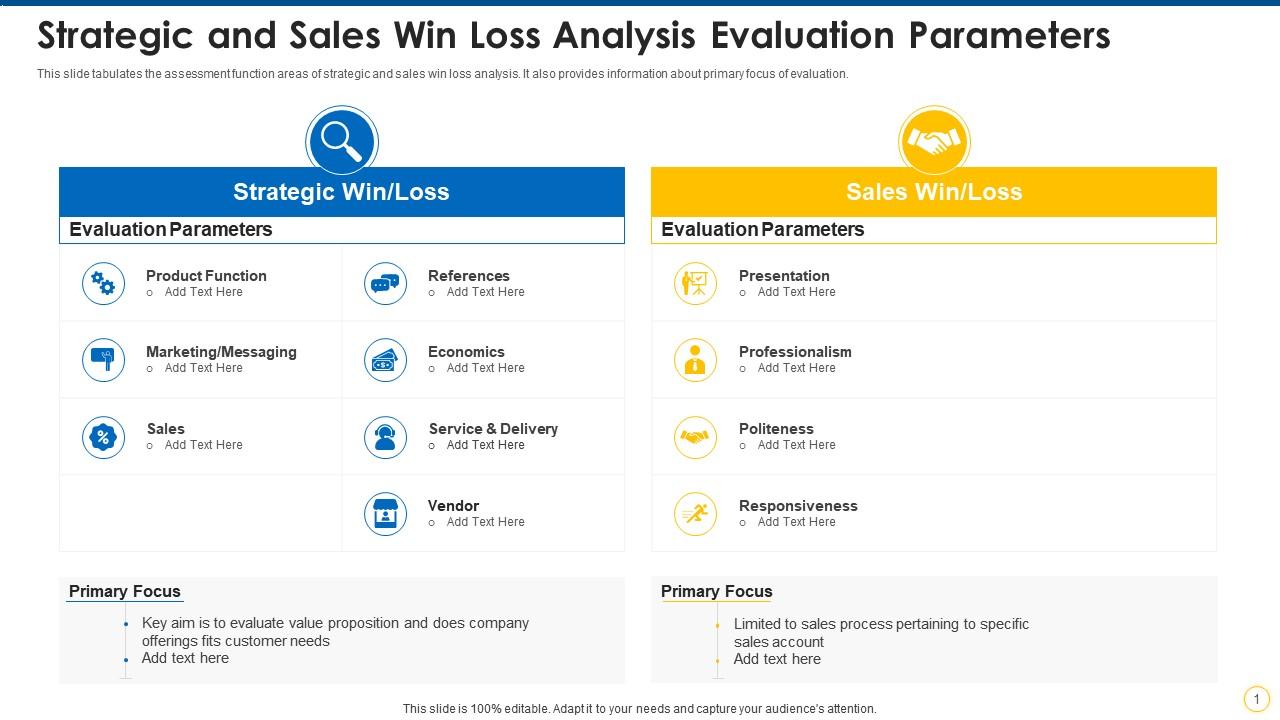
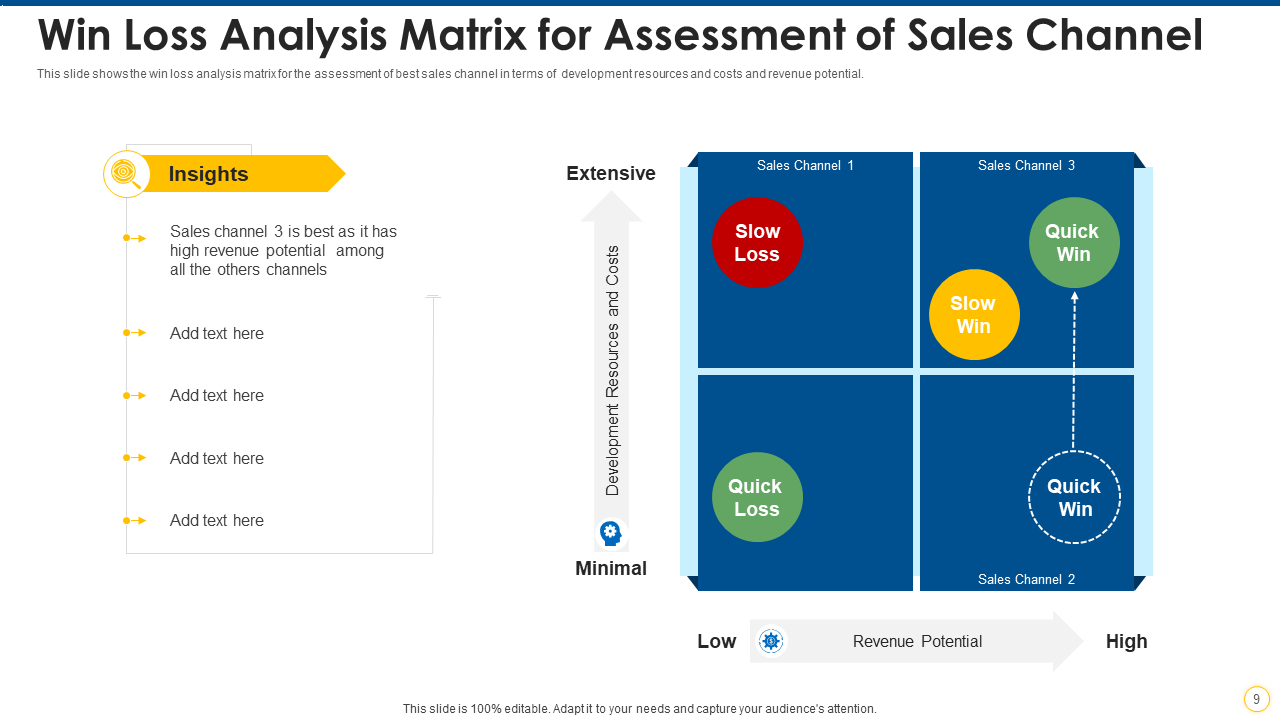
The sales manager or RevOps lead opens with the prior month at a glance. Five numbers, no more, so the snapshot is absorbed in eight minutes and not turned into a data-review meeting of its own: deals won, deals lost, the no-decision rate, the average sales cycle for wins versus losses, and win rate broken out by lead source and by segment. Each number is put on screen and stated; none is interpreted.
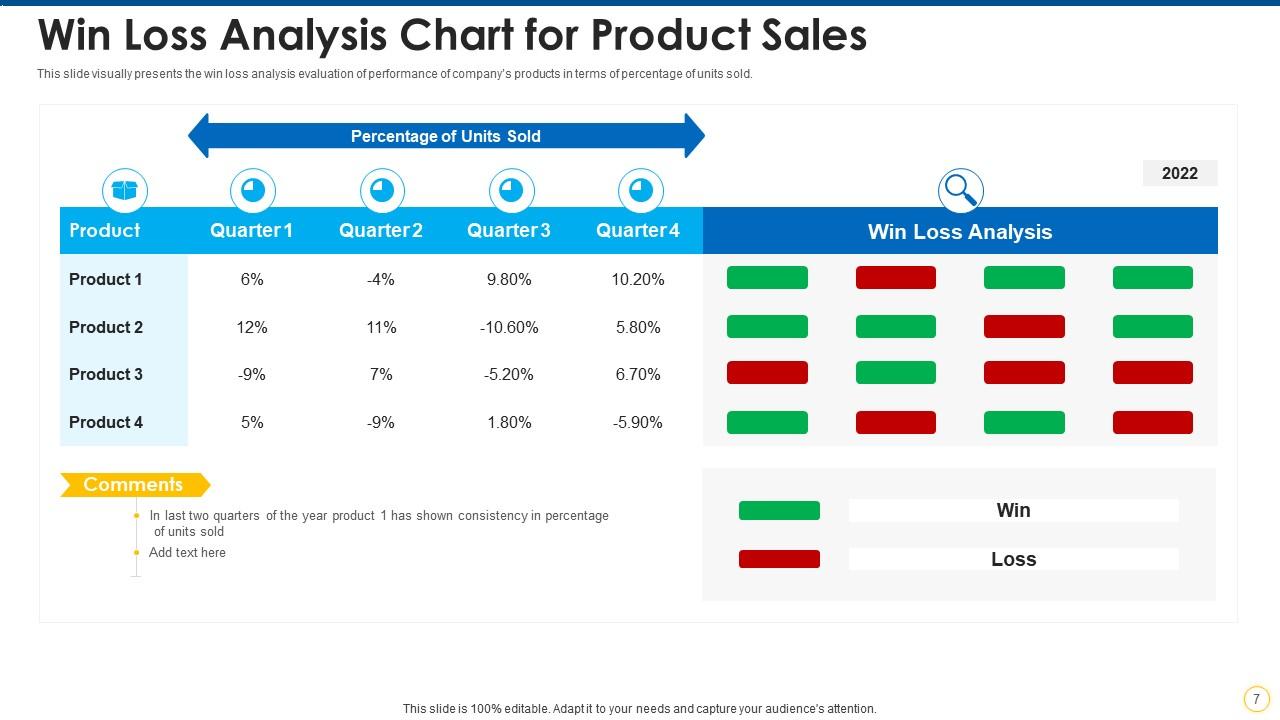
The teardowns in Sections 3 and 4 are where interpretation happens, and they happen better when the room has already absorbed the shape of the month.

The reason the snapshot comes first is structural. Human memory of a month of selling is dominated by recency and salience — the deal that closed last Friday and the deal that blew up loudly feel like the whole month, and a meeting that starts from memory will over-weight both. The snapshot replaces memory with the actual distribution, so when a rep later says "we keep losing on price," the room can check that claim against a number on the screen instead of nodding along with a feeling.

It is worth being explicit with the room about what the snapshot is *not*. It is not a forecast, and it is not a performance scorecard for individual reps. A win-loss review that drifts into ranking reps by win rate has quietly become a performance review, and the moment reps perceive that, the one rule from Section 1 collapses — they will defend their numbers instead of analyzing their deals.

The snapshot is a description of the *team's* month, presented at the team level. Individual coaching belongs in a one-on-one, not here. The manager should say this plainly when the snapshot goes up: these numbers describe how the team did, and the next 47 minutes are about understanding *why*, not about deciding who did well.

2.2 Report win rate and no-decision rate as distinct numbers

Show win rate as a real, defined percentage — closed-won divided by the sum of closed-won and closed-lost — so the number means the same thing every month and cannot be quietly redefined when it looks bad. Then, separately and prominently, report the no-decision rate as its own distinct number.

This separation is the single most important discipline in the snapshot. Gartner's B2B buying research has consistently found that roughly 60% of B2B purchase processes that begin end in no decision rather than a competitive loss — the prospect evaluates, gets partway, and then does nothing, defaulting back to the status quo.

A board that folds no-decisions into the "lost" column is hiding its single largest leak, because a competitive loss and a no-decision have completely different fixes: a competitive loss is a head-to-head problem you solve with differentiation and battlecards, while a no-decision is a problem of urgency and business case that you solve far upstream in discovery.

Most CRMs do not track no-decision as a distinct outcome by default, which means RevOps usually has to construct the number deliberately — and the win-loss review is the forum that makes anyone bother to.

The deeper reason this distinction matters is that the two outcomes route to opposite parts of the organization, and a team that cannot tell them apart fixes the wrong thing. If a board is losing head-to-head to a named competitor, the work is competitive — sharper differentiation, an updated battlecard, a positioning shift, possibly a product gap escalated to the roadmap.

If a board is bleeding no-decisions, the competitor is the status quo itself, and the work is entirely upstream: discovery that surfaces a quantified, owned problem, and a business case strong enough to survive the buyer's internal scrutiny. Pour competitive-battlecard effort onto a no-decision problem and nothing improves, because the buyer was never choosing between vendors — they were choosing between acting and not acting, and they chose not.

The snapshot's separation of these two numbers is what tells the team which of those two completely different repairs the month actually calls for.

There is also a measurement trap to name. Gartner and CSO Insights research has long noted that buyers spend only about 17% of the total purchase journey with any sales rep at all, and only about 5 to 6% with any single vendor's rep — which means the team's entire view of "why we lost" is assembled from a thin slice of the buyer's real decision.

A no-decision often looks, from inside that slice, like a deal that was "going well" right up until it went quiet, because the decisive internal conversation — the one where the buyer's committee decided the problem was not worth solving this year — happened in the 83% of the journey the rep never saw.

The snapshot makes the no-decision rate undeniable as a number even when no single deal felt like a loss.

2.3 Surface the cycle-length gap

The fifth number is the wins-versus-losses cycle gap. Report the average sales cycle for won deals next to the average for lost and no-decision deals. The pattern across most B2B teams is consistent: lost and no-decision deals frequently run roughly 1.3 to 1.5 times longer than wins before they finally die.

A deal that is not going to close often does not get killed quickly — it lingers, gets nurtured, consumes forecast attention and sales-engineering hours, and dies slowly. That means a *stretching* average cycle is an early warning sign that the funnel is filling with deals that were never going to convert, and the snapshot is where that warning first becomes visible.

Snapshot metricDefinitionWhat the room watches for
Deals won / lostRaw closed-won and closed-lost counts for the monthThe base volume that decides whether monthly patterns are even valid
Win rateClosed-won / (closed-won + closed-lost), as a fixed percentageA definition that never shifts; trend over three months, not one
No-decision rateNo-decision deals as a share of all closed opportunitiesThe largest leak on most boards; never folded into "lost"
Cycle gapAverage cycle for wins vs. average for losses and no-decisionsLosses running 1.3-1.5x longer; a stretching average as early warning
Win rate by sourceWin rate split by lead source — inbound, outbound, partnerWhether one channel is feeding the funnel deals that never close
Win rate by segmentWin rate split by segment, size, or industryWhether a competitor or a fit problem is concentrated in one segment

Common Trap

"Our win rate is up, so the month was good." A win rate can rise simply because the team stopped logging losing deals, or because no-decisions are quietly sitting in an open-pipeline limbo instead of being closed out. Always read win rate next to the no-decision rate and the raw deal counts.

A rising win rate on falling volume, or alongside a swelling no-decision pile, is not a good month — it is a measurement artifact.


SECTION 3 — WON-DEAL TEARDOWN (0:13-0:25)

Coach Note

Twelve minutes — roughly six minutes per deal if you take two, the full twelve if you take one complex win. The instinct in a won-deal teardown is to let the rep enjoy the victory lap; resist it. The teardown's job is to extract the repeatable move, and a rep who only tells the flattering half of the story has taught the team nothing.

3.1 Pick the wins worth tearing down

Pick one or two recent wins — not the easiest wins of the month, which teach little, but the *instructive* ones: a competitive displacement, a deal that nearly died and was recovered, a win in a segment the team usually loses. The owning rep walks the room through the deal. The point is not celebration; the point is to name the repeatable move — the specific, nameable play that worked — precisely enough that another rep could run it on a different deal next month.

This matters because wins are analyzed far less rigorously than losses, and that asymmetry is itself a defect. A team that only studies its losses learns only what to stop doing; it never builds a positive playbook of what to start doing. Worse, an un-analyzed win invites the most dangerous attribution error in sales — the rep, and the room, assume the win happened *because of* whatever the rep did, when it may have happened *despite* it.

The teardown's discipline is to separate the move that actually drove the outcome from the moves that merely accompanied it.

There is a specific cognitive trap the won-deal teardown is built to counter, and the facilitator should understand it even if they do not lecture the room on it. Outcome bias — documented across decades of decision research — means that once people know a result was good, they rate every decision that led to it as good, regardless of whether those decisions were actually sound.

A rep who won a deal will narrate a clean, confident story in which every move they made was deliberate and correct. Some of it will be true; some of it will be a coincidence the good outcome has retroactively promoted to "strategy." The four fixed questions exist precisely to break that narrative open: by forcing the rep to name the *buyer's* stated reason and the deal's near-death moment, the teardown surfaces the parts of the story the victory glow normally papers over.

A win the team cannot honestly dissect is a win the team cannot reproduce.

3.2 The four won-deal questions

Walk the owning rep through four fixed questions, in order, and hold them to answering all four — not just the flattering one. Budget roughly six minutes per deal so there is room for the hard answers.

The four questions are: What was the real trigger event that created urgency? A deal closes because something changed in the buyer's world — a new mandate, a failure, a leadership change, a deadline — and naming that trigger tells the team what to look for in qualifying future deals.

Who was the economic buyer and how did we reach them? The path to the person who actually controls the budget is the most repeatable and most often the most fragile part of a win. What did the buyer tell us tipped the decision our way? Note the verb: what the *buyer* said, not what the rep believes — these are different things, and only the first is evidence.

What nearly killed the deal? Every real win has a near-death moment, and the recovery move is frequently the most teachable asset in the whole deal.

Won-deal questionWhat it reaches forWhy it is repeatable
What was the real trigger event?The change in the buyer's world that created urgencyTells the team the qualifying signal to hunt for in new deals
Who was the economic buyer and how did we reach them?The path to budget authorityThe single most fragile and most reusable step in any win
What did the buyer say tipped the decision?The buyer's own stated reason, not the rep's theoryOnly the buyer's verb is evidence; the rep's is a hypothesis
What nearly killed the deal?The near-death moment and the recovery moveThe recovery is usually the most teachable asset in the deal

3.3 Name the repeatable move

Close each won-deal teardown by forcing one sentence from the room: the repeatable move, named. Not "the rep did a great job" — that is unteachable. Something specific and portable: "the rep got a second stakeholder on the first call, which is why the deal never went single-threaded," or "the rep tied the trigger event to a dollar figure in week one, so price was never the conversation." A repeatable move stated that precisely can become a battlecard line, a discovery-question addition, or a coaching point.

If the room cannot reduce the win to a portable sentence, the teardown is not finished. When a teardown surfaces a winning play around prospecting or pipeline creation, route it into the prospecting-cadence training (st0036) so the move spreads beyond one rep.

Common Trap

"We won because our product is better." Sometimes true, but as a teardown conclusion it is useless — it is unteachable, unrepeatable, and usually a rep declining to do the analysis. Push past it every time: if the product is genuinely better, *which* capability did the buyer name, to *whom*, at *what moment* in the deal?

That specific answer is a competitive-positioning asset. "Our product is better" is just a victory lap with no playbook attached.


SECTION 4 — LOST-DEAL TEARDOWN (0:25-0:40)

Coach Note

Fifteen minutes — the longest section in the meeting, because losses carry more learning than wins and resist analysis harder. Take two losses, and make sure one of them is a no-decision. Protect the owning rep: the moment a teardown becomes an interrogation, every rep in the room learns to hide their messy deals.

4.1 Pick the losses worth tearing down

Pick two recent losses, and deliberately include one no-decision among them. The instinct is to tear down the two competitive losses — they have a clear villain and a satisfying story — but given that no-decisions are usually the largest category on the board, a review that only ever examines competitive losses is studying the smaller problem.

The owning rep presents each loss without defensiveness, which the manager protects by holding the one rule from Section 1: the deal is the witness, the rep is not the defendant.

4.2 Pressure-test the recorded loss reason

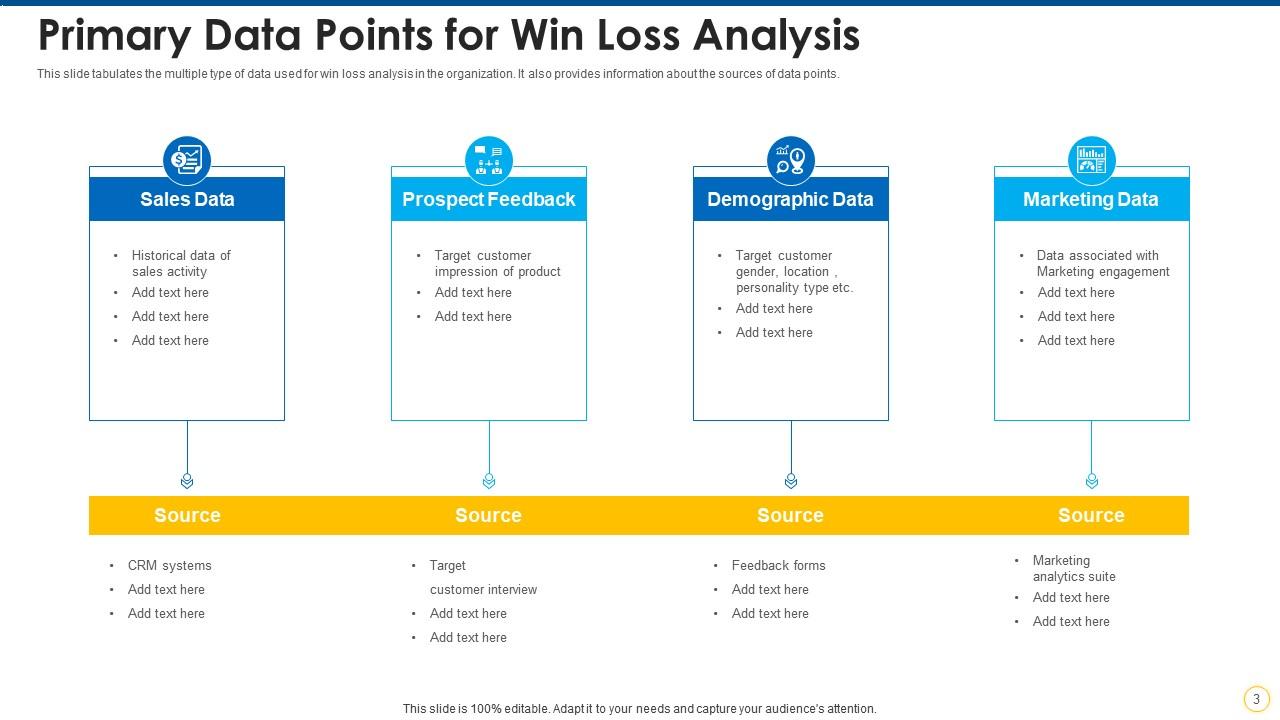
This is the analytical core of the meeting. For each loss, pull up the loss reason the rep recorded in the CRM and pressure-test it against evidence. Three questions do most of the work: Did we ever actually confirm the budget existed, or did we assume it? Did we have multi-threaded access, or did the whole deal rest on one champion? Where, precisely, did the deal stall — which stage, after which event? Whenever a buyer win-loss interview or a recorded call exists, read back a direct quote, because a buyer's own words override every theory in the room.

The reason this pressure test is non-negotiable is that the recorded loss reason is systematically unreliable. Dedicated win-loss research firms — Clozd, Primary Intelligence (now DoubleCheck Research), and Anova Consulting Group — have all published the same finding: there is a large, consistent gap between the loss reason a rep records in the CRM and the reason the buyer gives in a structured post-decision interview.

The direction of the error is predictable. Price is systematically over-reported as a loss reason — it is the socially safe answer, the one that blames no one in the room — while decision-process problems, weak champion access, and a failure to build urgency are systematically under-reported.

Clozd's published win-loss guidance documents that the rep's first-guess loss reason is wrong in a large share of deals, often more than half once the buyer is actually interviewed. The teardown exists to catch exactly that error before it becomes a "validated" team conclusion.

Understanding *why* the error runs in that particular direction makes the pressure test sharper. A rep records the loss reason, and a rep is a person with an incentive — not a malicious one, just a human one. "We lost on price" is the reason that requires no further reflection, implicates no skill gap, and ends the conversation; it is comfortable.

"We lost because I never reached the economic buyer and the deal rested on a single mid-level champion who left" is the reason that is true far more often and that no rep volunteers, because it names a fixable failure as theirs. The structured buyer interview removes the rep's incentive entirely — the buyer has no reason to protect the rep's self-image — which is why interview-derived loss reasons skew so heavily away from price and toward process, access, and urgency.

The win-loss review cannot fully replace a buyer interview, but it can do the next best thing: it can make the room *suspicious* of every comfortable loss reason, and demand evidence before a comfortable reason is allowed to stand.

The timing of any buyer interview matters and the room should know the standard. Win-loss interview programs run by Clozd and DoubleCheck Research typically conduct a structured 30-to-45-minute buyer interview within 30 to 45 days of the deal closing, while the buyer's recall is still accurate and before the details blur.

A team that does fund interviews should align them to that window; a team that cannot fund them should at minimum capture the rep's own debrief notes within the same window, because even rep memory degrades fast — a loss reason reconstructed three months later is mostly narrative.

Recorded loss reasonThe pressure-test questionWhat it usually turns out to be
"We lost on price"Did the buyer ever name a specific competing quote, or compare total cost of ownership?Often a weak business case — value was never quantified, so all price felt like cost
"They went with the incumbent"Did we give the buyer a concrete reason to absorb switching cost?Often a failure to build enough urgency to overcome status-quo bias
"Budget froze" / "bad timing"Did we ever confirm budget existed, and tie the deal to a dated trigger?Often a no-decision in disguise — there was never a compelling reason to act now
"They picked a competitor"Did we have multi-threaded access, or one champion who went quiet?Often a single-threading loss — the champion left or lost influence
"Lost to no decision"Where exactly did it stall, and was there ever a quantified problem?Usually accurate, and usually the most important deal in the room to study

4.3 Sort controllable from uncontrollable

After each loss is pressure-tested, the team sorts it into one of two buckets. A controllable loss is one where a process or execution gap the team owns contributed to the outcome — weak discovery, single-threading, a missed stakeholder, a slow follow-up, a qualification gate that should have caught the deal earlier.

An uncontrollable loss is a genuine bad fit — the buyer needed a capability the product does not have, was in the wrong segment, or never had real budget. Only controllable losses generate action items. Uncontrollable losses are logged and dropped; spending the meeting's commitments on a deal that was unwinnable burns the playbook's credibility.

One pattern surfaces in this section more than any other, and the room should expect it: the single-threaded loss. Gong Labs conversation research has found that deals with three or more engaged contacts close at materially higher rates than single-contact deals — so "we had one champion, and we lost them" is one of the most common controllable patterns a teardown exposes.

When that pattern recurs, the fix is not the vague instruction to "talk to more people"; it is a specific, teachable skill, and the team should route into the multi-threading playbook (st0002) rather than hand-waving. A pile of dead deals that share characteristics is also a target list, not just a lesson — when the teardown surfaces recoverable losses, feed them into the Closed-Lost Win-Back Sprint (st0032).

The sorting itself should follow a fixed sequence rather than a gut feeling, because the gut feeling is exactly where hindsight bias does its damage. Walk each loss through the sequence: first establish what the buyer actually said, then check whether a specific decision point existed where a different and *available* action would plausibly have changed the outcome, and only then assign the bucket.

A loss is controllable only when the room can name that point concretely — not "we could have sold better" but "at the second meeting we should have asked for the security stakeholder, and we had the contact." If no such point can be named, the loss is uncontrollable, and the meeting moves on without spending a commitment on it.

The Loss Classification Sequence

flowchart TD A[Lost or no-decision deal selected for teardown] --> B[Owning rep presents without defensiveness] B --> C[Pull the recorded loss reason from the CRM] C --> D{Buyer interview or recorded-call evidence exists} D -->|Yes| E[Read back the buyer's own words] D -->|No| F[Treat the recorded reason as a hypothesis only] E --> G{Recorded reason matches buyer evidence} F --> H[Pressure-test budget, threading, and stall point] G -->|No| I[Replace with the evidenced loss reason] G -->|Yes| H I --> H H --> J{A specific decision point with an available better action} J -->|Yes| K[Controllable loss - eligible for an action item] J -->|No| L[Uncontrollable loss - log and drop] K --> M[Carry into pattern synthesis] L --> M

Common Trap

"It was bad timing — budget got frozen, nothing we could have done." This is the most common way a controllable loss gets misfiled as uncontrollable. Push on it: was the deal ever tied to a dated trigger event and a quantified cost of inaction? If not, "budget froze" usually means the team never built a reason compelling enough to survive a budget review — which is a controllable discovery and business-case failure wearing an uncontrollable costume.

Common Trap

"We lost to a competitor's feature we don't have — that's uncontrollable." Sometimes. But check the timeline first: did the buyer have that requirement from the start, or did the competitor *teach* them to want it mid-deal? A requirement the competitor planted is a controllable loss — the team was out-sold on framing, not out-built on product — and it routes straight into competitive positioning, not the uncontrollable bucket.


SECTION 5 — PATTERN SYNTHESIS (0:40-0:52)

Coach Note

Twelve minutes. This is where individual deals become team intelligence. The facilitator's job here is subtraction: the room will want to name ten patterns, and the discipline is to force it down to the two or three that actually clear the evidence bar. A pattern list that is too long produces no action.

5.1 Step back from the individual deals

Pattern synthesis is the moment the meeting stops being a series of deal stories and becomes an analysis. The facilitator explicitly steps the room back: forget the individual deals for a moment — across the whole month, what repeats? Are losses clustering at one specific pipeline stage?

Is one competitor winning a specific segment again and again? Is one objection recurring across unrelated deals? Is one lead source producing deals that consistently die?

The teardowns in Sections 3 and 4 produced the raw material; this section is where the team reads the pattern in it.

The reason this gets its own dedicated section, rather than being left to emerge naturally, is that pattern recognition does not happen on its own in a deal-by-deal discussion. Each deal feels unique to the rep who ran it, and a meeting that moves deal to deal will treat every loss as a one-off.

Only a deliberate step back — same month, all deals on the table at once — surfaces the structural defect that three separate reps each experienced as a personal bad-luck story.

This is also where the qualification frameworks reps are already trained on earn their place in the meeting. MEDDIC and MEDDPICC — the qualification model originated at PTC by Dick Dunkel and Jack Napoli — give the team a shared vocabulary for *where* a pattern lives: Metrics, Economic Buyer, Decision Criteria, Decision Process, Identify Pain, Champion.

When the facilitator asks "what repeats," a team fluent in that vocabulary can answer with precision — "we keep losing the Economic Buyer stage" or "Decision Process was never mapped in any of the three" — rather than with the vague "we keep losing on execution." The same is true of the buyer-behavior model in *The Challenger Sale*: a pattern of losses where the buyer never reframed their own problem is a teaching-and-tailoring gap, and naming it that way tells the team exactly which skill to drill.

Pattern synthesis is the moment those frameworks stop being onboarding content and become a diagnostic instrument.

5.2 The rule of three

Apply one hard rule to qualify a pattern: a pattern only counts if it shows up in three or more deals. A single anecdote is not a pattern. Two data points can be coincidence. Three of the same failure in one month is a process defect worth changing the playbook over.

The rule of three exists to defend the meeting against its own most dangerous instinct: changing the playbook based on a vivid single deal. The deal that blew up most loudly last month is not necessarily representative of anything — it may be a genuine outlier — and a team that rewrites its qualification criteria or its competitive strategy off one memorable loss is reacting to noise.

The rule of three forces the team to demonstrate that a problem is structural before it spends a commitment on it. If a compelling-sounding pattern shows up in only one or two deals, it is logged as an anecdote to watch, not actioned — it may become a real pattern next month, or it may quietly disappear, and either way the team learns more by waiting than by reacting.

5.3 Force the list down to two or three

The facilitator forces the room to name two or three patterns, not ten. This is a constraint, and it is deliberate. A meeting that surfaces ten patterns has effectively surfaced none, because the team cannot act on ten things and will end up acting on whichever one the loudest voice favors.

Two or three well-evidenced patterns, each clearing the rule of three, is the right output — it is small enough that the commitments section can convert all of them, and it forces the room to argue about which patterns matter most, which is itself a valuable calibration.

When more than three patterns clear the rule of three — which happens on a high-volume team — the facilitator needs a tiebreaker, and the right one is *leverage*, not severity. Rank the qualified patterns by a simple question: which one, if fixed, would change the most future deals?

A pattern that appears in three deals at one pipeline stage but that stage touches every deal the team runs is higher leverage than a pattern that appears in five deals but only in one narrow segment. The team should also weight by *fixability* — a pattern with a clear, cheap, teachable fix beats a pattern whose only fix is a six-month product change, even if the second pattern is more painful.

The commitments section can carry three changes; the facilitator's job is to make sure those three are the three that move the most pipeline, not the three that generated the most discussion heat.

It is worth naming the difference between a pattern and a *trend* here, because the two get confused. A pattern is a structural defect visible inside the month under review — three deals, this month, dying the same way. A trend is the same pattern showing up across multiple consecutive months.

The win-loss review acts on patterns, but it *tracks* trends: a pattern that recurs for three months running is no longer a defect to fix with a single commitment — it is evidence that prior commitments did not work, and it should trigger the kill-switch review in Section 6 rather than yet another action item aimed at the same problem.

Pattern typeWhat it looks like across dealsWhere the fix usually routes
Stage-clustering lossThree-plus deals stall and die at the same pipeline stageA qualification gate added at that stage; tighter exit criteria
Competitive concentrationOne competitor wins the same segment repeatedlyA battlecard update and a positioning shift for that segment
Recurring objectionThe same objection kills unrelated dealsA discovery-question addition or an enablement asset
Single-threading lossThree-plus losses trace to one champion going quietThe multi-threading playbook drilled as a team skill
Source-quality leakOne lead source feeds deals that consistently dieA handoff-criteria fix or a change in source mix
No-decision clusterDeals die of no urgency, not a competitorAn upstream discovery and business-case fix

Common Trap

"This loss reminds me of that other deal from two months ago — that's a pattern." Two deals, two months apart, is not a pattern; it is a pair of anecdotes and possibly a coincidence. The rule of three is specifically three deals within the month's window under review, not a loose memory of similar-feeling deals across quarters.

Loose pattern-matching across time is how a team rewrites its playbook based on a story it likes rather than evidence it has.

The Win-Loss Review Flow

flowchart TD A[Deal closes won or lost or no-decision] --> B[Rep logs outcome and tentative reason in CRM] B --> C[Optional buyer win-loss interview within 30-45 days] C --> D[Monthly win-loss review meeting] D --> E[Numbers snapshot reviewed on screen] E --> F[Won and lost deals torn down against fixed questions] F --> G{Recorded reason survives the buyer-evidence pressure test} G -->|Yes| H[Sort the deal controllable or uncontrollable] G -->|No| I[Replace the reason with the evidenced one] I --> H H --> J{Pattern repeats across three or more deals} J -->|Yes| K[Create a playbook change with a named owner] J -->|No| L[Log as an anecdote and watch next month] K --> M[Verify the commitment at next month review] L --> M M --> A

SECTION 6 — COMMITMENTS AND COUNTER-CASE (0:52-1:00)

Coach Note

Eight minutes. Run the Counter-Case honestly — naming the failure modes is what keeps the team from over-trusting the meeting — then close on at most three written, owned, dated commitments. No new analysis here; this section converts what the meeting already produced.

6.1 The Counter-Case — when the win-loss review backfires

Run this section honestly, because a meeting taught without its failure modes gets over-trusted, and the win-loss review run badly does active harm. There are five specific ways it backfires. Name them out loud so the room respects the meeting's limits.

1. Internal teardowns are not buyer truth. A win-loss review built only on rep self-reporting can simply launder the same biased loss reasons through a meeting and stamp them "validated by the team." The room agrees a deal was lost on price because every rep in the room wants it to be price — it is the answer that blames no one — and no buyer was ever actually asked.

Clozd and DoubleCheck Research exist precisely because the inside view is unreliable. The mitigation: if you cannot fund any buyer interviews, treat every loss-reason conclusion the meeting produces as a *hypothesis*, not a finding, and label it as such in the notes. A team that mistakes its internal consensus for buyer truth is wrong with confidence, which is worse than being uncertain.

2. Sample size betrays small and long-cycle teams. The rule of three assumes the team closes enough deals each month to see a real pattern. A team closing six deals a month with a long, lumpy enterprise cycle will manufacture "patterns" out of pure statistical noise — and then change the playbook based on noise, which is actively worse than doing nothing.

The mitigation: for low-volume or long-cycle teams, run the review quarterly rather than monthly, or pool deals across a rolling 90-day window, so the pattern threshold is applied to a sample large enough to carry signal.

3. It can become a blame ritual no edict can stop. If the surrounding culture punishes losses, "we analyze deals, not people" is a poster, not a reality. Reps will read the room correctly, pre-sanitize their losing deals, omit the embarrassing details, and the data the meeting analyzes becomes fiction.

In a genuinely low-trust org, the win-loss review can actively *degrade* data quality versus simply reading the CRM, because it adds a social incentive to lie that the CRM alone does not. The mitigation is not a better poster — it is the manager modeling it by tearing down their own coaching misses first, and it is honestly assessing whether the culture can support the meeting at all before committing to run it.

4. Hindsight bias inflates the controllable bucket. Knowing the outcome makes every loss look preventable and every win look earned — this is one of the most robust findings in decision research. A team reviewing losses with the outcome already known will over-assign losses to the "controllable" bucket and pile up action items for deals that were genuinely bad-fit and unwinnable.

The mitigation: when sorting a loss as controllable, the room must name the *specific* decision point at which a *different, available* action would plausibly have changed the outcome. If no one can name that point, the loss goes in the uncontrollable bucket. "We could have done better" is hindsight; "we should have multi-threaded at the second meeting, and we had the contacts to do it" is a controllable loss.

5. Opportunity cost is real. Sixty minutes monthly across a full sales team is a meaningful payroll line and a meaningful chunk of selling time. If the commitments do not actually change rep behavior — if the same three patterns recur for three straight months — the meeting has become theater, and theater that consumes selling time.

The mitigation is a kill switch: if three consecutive months of commitments produce no measurable behavior change, the meeting is killed or fundamentally redesigned, without ceremony. A win-loss review is not sacred; it is an instrument, and an instrument that has stopped working gets put down.

Failure modeWhat it looks likeThe mitigation
Internal teardowns laundered as truthThe room "validates" a loss reason no buyer ever confirmedLabel every loss conclusion a hypothesis unless buyer evidence exists
Sample-size noiseA six-deal-a-month team invents patterns from random variationRun quarterly or pool a rolling 90-day window for low-volume teams
The blame ritualReps pre-sanitize losing deals; analyzed data becomes fictionManager tears down their own misses first; assess culture before running
Hindsight biasEvery loss looks preventable; the controllable bucket overflowsName the specific decision point and available action, or file uncontrollable
Opportunity costSame patterns recur for months; commitments change nothingA kill switch — redesign or end the meeting after three dead months

Common Trap

"The team agreed it was a price loss, so it's settled." A room agreeing is not evidence — it is consensus, and consensus among people with the same incentive to avoid blame is exactly the bias the win-loss research firms were built to correct. Unless a buyer said it, the team's agreement is a shared hypothesis.

Label it that way, and prioritize getting buyer evidence for the loss reasons that, if true, would cost the most to act on.

6.2 Three debrief questions

Spend two minutes on three quick debrief questions before writing commitments. Pull short answers from the room.

  1. Lead-in: The honest loss. Of the losses we tore down, which recorded reason did the pressure test most clearly *break* — and what was the loss actually about?
  2. Lead-in: The repeatable win. Which winning move from the teardowns is the one most worth teaching the whole team this month?
  3. Lead-in: The evidence gap. Which of this month's loss-reason conclusions are we treating as fact when they are really only hypotheses we never tested against a buyer?

6.3 Written commitments

Convert the qualified patterns into a small number of concrete changes. Each rep or owner writes down, before leaving the room:

Cap the total at three commitments. The scribe reads all three back to the room, with owners and dates, so nothing is ambiguous. Each one lands on next month's agenda for follow-through.

Leave-Behind

The Win-Loss Review Card. (1) The one rule: this meeting analyzes deals, not people — a loss analyzed honestly beats a win celebrated blindly. (2) The scoreboard: read win rate and no-decision rate as separate numbers; a stretching cycle is an early warning. (3) The pressure test: every recorded loss reason is a hypothesis until a buyer confirms it; price is the most over-reported reason.

(4) The rule of three: a pattern counts only at three-plus deals in the month; one anecdote is logged, not actioned. (5) The cap: at most three owned, dated commitments — fifteen action items generate zero.

6.4 The follow-up loop that makes the review stick

A win-loss review that ends at the commitments is a review that decays. The single highest-leverage thing the manager does is carry the three commitments into the next month's review as the first agenda item. Open that meeting by asking each owner the two questions that close the loop: *did the change ship, and did it move the pattern?* That check is what converts the win-loss review from a monthly event into a standing system — it tells the room that a commitment is a thing that gets verified, not a thing that gets logged and forgotten.

Follow-up moveTimingHow you know it worked
Scribe distributes the three commitmentsWithin 24 hours of the meetingEvery owner has their commitment and date in writing
Open next month's review with last month's commitmentsNext monthly reviewEach owner reports shipped or not, with the pattern's status
Re-pressure-test any loss reason labeled a hypothesisWhen buyer interview evidence arrivesHypotheses are confirmed or corrected against real buyer data
Track recurring patterns across three monthsRolling, every reviewA pattern that recurs three months running triggers the kill-switch review
Re-confirm the meeting still earns its hourQuarterlyCommitments are demonstrably changing behavior, or the meeting is redesigned

6.5 When to run this training again

Run the Win-Loss Review on a standing monthly cadence for teams with enough deal volume to make the rule of three meaningful — and on a quarterly cadence, or against a rolling 90-day window, for low-volume or long-cycle enterprise teams where a monthly sample is statistical noise.

Run a focused session sooner after any quarter where the same losses kept recurring, when a new competitor starts winning a segment, or when a new product, segment, or pricing model is introduced and the team's old loss-reason intuitions no longer apply. And re-confirm quarterly that the meeting still earns its hour: if three months of commitments have not changed behavior, redesign it or kill it.

What Good Looks Like

After two or three monthly cycles, three things should be visibly true. First, the recorded CRM loss reasons start matching what buyers actually say in interviews — the gap between rep theory and buyer reality narrows. Second, the no-decision rate becomes a tracked, discussed number rather than a silent leak hiding inside the "lost" column.

Third, at least one playbook change per quarter is traceable directly back to a named win-loss pattern. The win-loss review is the meeting that turns a sales team from a group that repeats its mistakes into a group that compounds its learning.


This is a Pulse Sales Training and a core RevOps coaching template — a fully runnable 60-minute live training for front-line sales managers, account executives, sales engineers, RevOps leaders, and enablement leaders who own closed-deal review. It installs the Win-Loss Teardown Loop and the monthly pattern-finding discipline that turns closed deals into a repeatable playbook instead of forgotten history.

Closest siblings in the sales-training series: (st0037) (The Forecast Call Reset — the forward-looking weekly deal-inspection meeting that the win-loss review calibrates and makes honest), (st0042) (The Renewal Risk Forecast — the renewal-side sibling that runs the same pattern discipline on account health), (st0002) (Multi-Threading Enterprise Deals — the fix the teardown routes to whenever losses cluster on single-threading), (st0041) (The Discovery Question Calibration Clinic — where recurring early-stage and no-decision loss patterns get fixed at the discovery source), (st0032) (The Closed-Lost Win-Back Sprint — converts the recoverable dead deals a teardown surfaces into re-opened pipeline), (st0036) (the prospecting-cadence training — where a winning pipeline-creation move from a won-deal teardown spreads beyond one rep), and (st0030) (the competitive-positioning training — where a competitor-concentration pattern becomes an updated battlecard and segment strategy).

Hub: /sales-trainings.

Sources

  1. Clozd — *The Ultimate Guide to Win-Loss Analysis*; methodology for structured post-decision buyer interviews and the documented gap between the CRM-recorded loss reason and the buyer's stated reason. https://www.clozd.com/
  2. Clozd — published win-loss research and benchmarks on loss-reason accuracy, the over-reporting of price, and interview timing. https://www.clozd.com/resources
  3. Primary Intelligence / DoubleCheck Research — win-loss program research on loss-reason accuracy and the recommended 30-45 day buyer-interview window. https://www.doublecheckresearch.com/
  4. Anova Consulting Group — win-loss analysis program research, including price as a systematically over-reported loss reason. https://www.anovaconsulting.com/
  5. Gartner — B2B buying-journey research; the finding that roughly 60% of B2B purchase processes end in "no decision." https://www.gartner.com/en/sales
  6. Gartner — B2B buying research on buyers spending only about 17% of the purchase journey with sales reps, and ~5-6% with any single vendor. https://www.gartner.com/en/sales/insights/b2b-buying-journey
  7. CSO Insights — sales-performance research on buyer time allocation across the purchase journey and the "no decision" loss category. https://www.kornferry.com/capabilities/sell-talent-development
  8. Korn Ferry — sales-effectiveness and sales-transformation research and benchmarking. https://www.kornferry.com/
  9. Matthew Dixon & Brent Adamson, *The Challenger Sale* (CEB / Portfolio, 2011) — buyer decision-process and champion-mobilization research. https://www.penguinrandomhouse.com/
  10. Brent Adamson, Matthew Dixon & Nicholas Toman, "The End of Solution Sales," *Harvard Business Review* (2012) — buyer-behavior research underpinning decision-process analysis. https://hbr.org/2012/07/the-end-of-solution-sales
  11. MEDDIC Academy — the MEDDIC / MEDDPICC qualification framework originated at PTC by Dick Dunkel and Jack Napoli; the Metrics, Economic Buyer, Decision Process, and Champion vocabulary used in deal teardowns. https://meddic.academy/
  12. MEDDICC (Andy Whyte, 2020) — the contemporary codification of MEDDIC / MEDDPICC and its qualification discipline. https://meddicc.com/
  13. Gong.io — Gong Labs conversation-intelligence research on multi-threading: deals with three-plus engaged contacts close at materially higher rates than single-contact deals. https://www.gong.io/
  14. Gong.io — Gong Labs research on sales-cycle length, deal momentum, and stalled-deal signals. https://www.gong.io/labs/
  15. Daniel Kahneman, *Thinking, Fast and Slow* (Farrar, Straus and Giroux, 2011) — hindsight bias and outcome bias, the basis for the controllable-bucket Counter-Case. https://us.macmillan.com/
  16. Baruch Fischhoff — foundational research on hindsight bias ("creeping determinism") and the distortion of retrospective judgment. https://www.cmu.edu/dietrich/sds/people/faculty/baruch-fischhoff.html
  17. Harvard Business Review — "Major Sales: Who Really Does the Buying?" (Thomas Bonoma) and related research on B2B buying committees. https://hbr.org/1982/05/major-sales-who-really-does-the-buying
  18. Forrester — B2B revenue-process maturity research and the move from an intuitive to a defined, repeatable selling process. https://www.forrester.com/
  19. SiriusDecisions (now Forrester) — demand-waterfall and buyer-needs research underpinning structured deal review. https://www.forrester.com/
  20. Gartner — "The Challenger Customer" research on consensus-driven B2B buying groups of 6-10 stakeholders. https://www.gartner.com/
  21. Neil Rackham, *SPIN Selling* (McGraw-Hill, 1988) — the research base on quantified problem and implication, relevant to testing whether a no-decision loss had a real business case. https://www.mheducation.com/
  22. Mike Bosworth, *Solution Selling* (McGraw-Hill, 1994) — the pain-chain and diagnostic-questioning model that frames why no-decision losses occur. https://www.mheducation.com/
  23. Keith M. Eades, *The New Solution Selling* (McGraw-Hill, 2003) — updated diagnostic and pain-development sequence relevant to no-decision analysis. https://www.mheducation.com/
  24. Salesforce — "State of Sales" report; sales-productivity, win-rate, and pipeline-quality benchmarks. https://www.salesforce.com/resources/research-reports/state-of-sales/
  25. HubSpot Research — annual sales-statistics and buyer-behavior research. https://research.hubspot.com/
  26. The Bridge Group — SaaS AE Metrics and inside-sales benchmarking; win-rate and sales-cycle data. https://www.bridgegroupinc.com/
  27. SaaStr — sales-leadership writing on win rates, pipeline health, and why "no decision" deals dominate lost pipeline. https://www.saastr.com/
  28. Pavilion — go-to-market leadership community; practitioner guidance on win-loss programs and deal-review standards. https://www.joinpavilion.com/
  29. Crayon — competitive-intelligence research, including the role of win-loss analysis in competitive programs. https://www.crayon.co/
  30. Klue — competitive-enablement research on operationalizing win-loss insight into battlecards. https://klue.com/
  31. Andy Whyte, *MEDDICC* (2020) — the Decision Process and Champion criteria applied to diagnosing why a deal stalled. https://meddicc.com/
  32. Gong.io — Gong Labs research on stakeholder count, engagement breadth, and win-rate drivers across recorded B2B deals. https://www.gong.io/resources/
Download:
Was this helpful?  
Sources cited
gartner.comWin-loss analysis practice — the structured discipline of interviewing buyers after a closed deal (won, lost, or no-decision) to capture the real decision drivers; widely documented by win-loss research practitioners and B2B sales-operations literature, which consistently finds a material gap between the loss reason a rep records in CRM and the reason a buyer states in a post-decision interview, with price over-reported and decision-process or champion-access gaps under-reported
Deep dive · related in the library
sales-training · pre-call-planningThe Pre-Call Plan Huddle: Running a 60-Minute Working Session That Stops Reps From Walking Into Important Sales Calls Cold — a 60-Minute Sales Trainingsales-training · demo-recoveryThe No-Show and No-Decision Demo Recovery Sprint: Running a 60-Minute Team Working Session Where Reps Pull Every Prospect Who Sat Through a Demo and Then Went Dark, Diagnose Exactly Where the Deal Lost Heat, and Build a Specific Re-Engagement Move That Forces a Real Yes or No — a 60-Minute Sales Trainingsales-training · speed-to-leadThe Inbound Speed-to-Lead Drill: Running a 60-Minute Team Working Session That Rebuilds How Fast and How Well Reps Respond to Inbound Leads So Hot Demand Stops Going Cold — a 60-Minute Sales Trainingsales-training · multithreadingThe Single-Threaded Deal Rescue: Running a 60-Minute Team Working Session Where Every Rep Maps the Buying Committee on Their Top Three Deals and Builds a Plan to Reach the People Who Can Actually Kill the Deal — a 60-Minute Sales Trainingsales-training · territory-planningThe Territory Plan Build: Running a 60-Minute Team Working Session Where Every Rep Maps and Ranks Their Whole Book of Accounts So Selling Time Goes to the Deals That Will Actually Close — a 60-Minute Sales Trainingsales-training · competitive-sellingThe Competitive Knockout Session: Running a 60-Minute Team Working Session That Builds a Trap-Setting Plan to Unseat an Incumbent in an Active Evaluation — a 60-Minute Sales Trainingsales-training · pipeline-generationThe Pipeline Generation Block: Running a 60-Minute Team Working Session Where Every Rep Builds the Prospecting Math, Time-Block, and Weekly Action Plan That Guarantees They Self-Source Enough Pipeline to Hit Quota — a 60-Minute Sales Trainingsales-training · premature-proposalThe "Just Send Me a Proposal" Trap: Running a 60-Minute Team Working Session Where Reps Build the Exact Words to Refuse a Premature Proposal and Convert the Brush-Off Into a Real Discovery Meeting — a 60-Minute Sales Trainingsales-training · champion-enablementThe Champion Enablement Workshop: Running a 60-Minute Team Working Session Where Every Rep Builds an Internal Selling Kit That Arms Their Champion to Win the Deal in the Rooms the Rep Will Never Be In — a 60-Minute Sales Trainingsales-training · trade-showThe Trade Show Lead-Capture and Follow-Up Sprint: Running a 60-Minute Team Working Session Where Reps Build the Qualifying Questions, Capture System, and 72-Hour Follow-Up Plan That Turns Booth Conversations Into Booked Meetings Before the Leads Go Cold — a 60-Minute Sales Training
More from the library
industry-kpiWhat are the key sales KPIs for the Commercial Roll-Up & Sectional Door Manufacturing industry in 2027?industry-kpiWhat are the key sales KPIs for the Veterinary Equipment & Surgical Supply Distribution industry in 2027?industry-kpiWhat are the key sales KPIs for the Mobile Fleet Car Wash & Detailing Services industry in 2027?industry-kpiWhat are the key sales KPIs for the Commercial Dock Leveler & Loading Equipment Service industry in 2027?industry-kpiWhat are the key sales KPIs for the Architectural Lighting Design & Specification industry in 2027?industry-kpiWhat are the key sales KPIs for the Commercial Ice & Refrigeration Plant Operations industry in 2027?industry-kpiWhat are the key sales KPIs for the Commercial Greenhouse Automation & Controls Integration industry in 2027?how-to-start · dump-trailer-rentalHow do you start a dump trailer rental business in 2027?industry-kpiWhat are the key sales KPIs for the Commercial Drone Pesticide & Crop Spraying Services industry in 2027?industry-kpiWhat are the key sales KPIs for the Industrial Scaffolding & Access Services industry in 2027?industry-kpiWhat are the key sales KPIs for the Marine Fuel Dock & Bunkering Services industry in 2027?industry-kpiWhat are the key sales KPIs for the Specialty Pharmacy Distribution industry in 2027?industry-kpiWhat are the key sales KPIs for the Industrial Valve & Flow Control Distribution industry in 2027?industry-kpiWhat are the key sales KPIs for the Grain Elevator & Bulk Grain Handling industry in 2027?industry-kpiWhat are the key sales KPIs for the Industrial Tank Cleaning & Confined Space Services industry in 2027?