
The Buying-Process Map — 60-Min Training
 Curated byKory White · Fractional CRO · Maryland
 PULSEKNOWLEDGE LIBRARY
The Buying-Process Map is a champion-validated document that records who signs, who blocks, which reviews are mandatory, and how long each stage actually takes — written with the customer, never assumed from outside. This 60-minute training moves an AE from "I think they'll sign in Q3" to a documented, confirmed, stage-by-stage map for one real live deal.
Why most enterprise forecasts miss by two quarters
Most AEs forecast against a buying process they have never actually mapped. The deal looks healthy through the demo and business-case stages, then stalls when procurement, legal, security, and IT review surface in the final 30 days — steps the rep never scheduled because the customer never walked them through them. The pattern is predictable: a seller quotes a close date built on their own historical cycle-time average ("it usually takes them 30 days"), which is not the same thing as *this* customer's actual internal process.
The gap is real and it compounds quietly. Deals without a documented, customer-validated buying process tend to slip meaningfully past the AE's original close date — often six to seven weeks — while deals resting on a written, confirmed map slip closer to a week or two. A large share of enterprise sellers cannot accurately name the procurement, legal, and security-review steps for their own open opportunities, which means they are forecasting against a machine they do not understand. The forecast is not optimistic; it is uninformed.

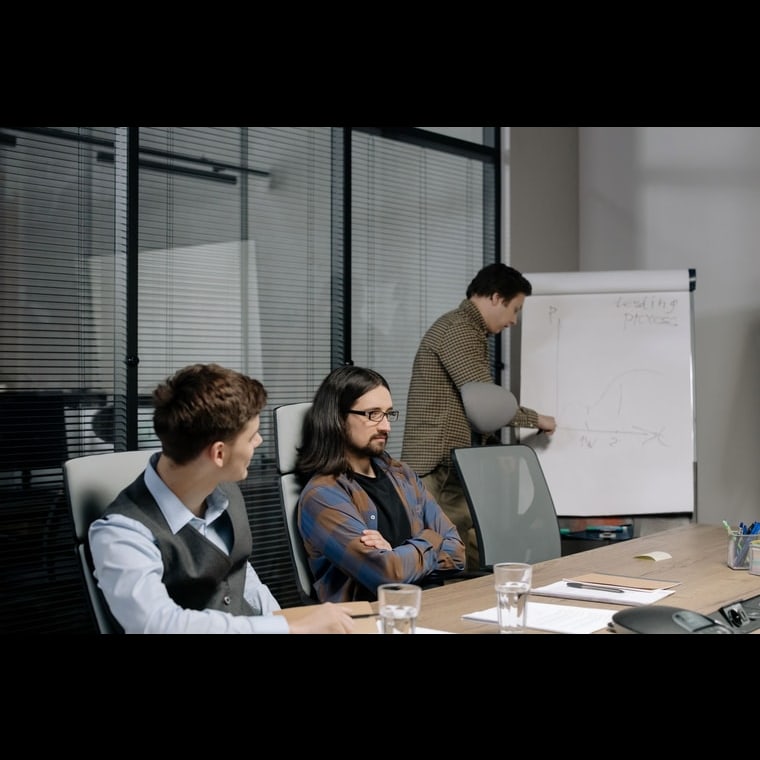
Open the training by writing three lines on the whiteboard and leaving them up for the full hour:
- The customer has a buying process whether you know it or not.
- Procurement, legal, security, and IT review always take longer than you assume.
- A map you wrote by yourself is not a map — it is a guess. The map has to come from the customer.
Then set the governing rule for the session: a deal does not have a real close date until the map is written down *and* the customer has corrected it. That single sentence reframes the next 60 minutes from a pep talk into a working session where every AE leaves holding a concrete artifact tied to a live opportunity. The manager's job for the hour is to keep every rep anchored to a specific deal, not to the abstract idea of "mapping." Abstraction is where this training goes to die; specificity is where forecast accuracy comes from.

The pre-session brief and live-deal selection
The training only works if every AE walks in with one real deal to map, not a hypothetical. Send a pre-session brief 24 hours ahead so reps arrive with raw material instead of building from a blank page in the room. The brief asks each AE to complete six items before they sit down:
- Pick the single most important open opportunity over roughly $100K ACV, sitting in the middle stages of the pipeline — post-discovery, pre-signature. Early-stage deals have nothing to map yet; already-signing deals are past the point where mapping helps.
- List the current best guess of who needs to sign or approve — names where known, titles where the name is unknown. A list of empty titles is itself a finding.
- List what they know, what they assume, and what they do not know about the customer's procurement, legal, security, and IT-review processes.
- Write the current close date and their honest confidence percentage — not the number they'd give the manager, the number they actually believe.
- Note the last time the champion, or anyone at the account, confirmed that close date in writing. "Verbal in the demo six weeks ago" is not a confirmation.
- Sketch a best-guess buying process on a blank worksheet *before* the session, so it can be compared against reality afterward.

The most important coaching instruction for the manager: do not let AEs skip the best-guess sketch. The gap between what a rep sketched and what the real customer process turns out to be is the single biggest learning moment of the hour. Reps who write "I don't really know" next to three of the six stages are telling you exactly which deals are going to slip, and roughly when. Call out the trap explicitly — "it usually takes them 30 days" is the rep's own history-rate average, not the customer's process. The assignment is to map *this* deal, on *this* account, with *these* stakeholders — not the rep's career average across a hundred prior deals that shared nothing but a logo shape.
The six-stage map discipline
Drill the canonical structure every enterprise buying-process map should capture. Walk it on the whiteboard first, then have each AE overlay it on their live deal. The durations below are working ranges to anchor the conversation, not fixed truths — the entire point is to make reps go ask the champion for the *real* numbers rather than defaulting to the template.

- Stage 1 — Internal alignment. The champion confirms internal stakeholders agree on the need and the timing. Typically one to three weeks. If alignment isn't real, nothing downstream holds.
- Stage 2 — Vendor selection. The customer's formal evaluation process, sometimes a full RFP with scoring committees. Typically two to six weeks.
- Stage 3 — Business case approval. Internal finance review and business-case sign-off. Typically one to three weeks. No enterprise approves a six-figure purchase without one.
- Stage 4 — Procurement and pricing. Procurement engagement, negotiation, MSA review, vendor onboarding paperwork. Typically two to six weeks, and it starts later than reps expect.
- Stage 5 — Legal and security. MSA red-lines, the security questionnaire, data-protection and privacy review. Typically one to four weeks, and materially longer in regulated industries like finance and healthcare.
- Stage 6 — Signature and onboarding kickoff. Final signature, PO issuance, onboarding handoff. Typically one to three weeks.
Handle the exceptions out loud so reps don't force every deal into the same shape. Mid-market deals under roughly $100K ACV often compress stages 2–3 into a single two-week step and stages 4–5 into another. Very large deals over $1M ACV frequently add a seventh stage — board or executive-committee approval — that can add two to eight weeks and often runs on fixed meeting cadences the AE cannot accelerate by any amount of urgency. If the board meets monthly and you miss this month's packet deadline by a day, you have lost a month, full stop. Map to the customer's actual structure, not the training template.

Then post the list of things reps must never say in this session, because each one is a slip wearing a confident face:
- "Procurement is just a formality" — procurement is where a large fraction of enterprise deals actually die or stall for weeks.
- "Legal will be quick" — legal red-lines routinely run two to four weeks in regulated buyers, longer if the MSA has never been reviewed.
- "Our security questionnaire is short" — the customer's questionnaire is the one that matters, and it can run hundreds of questions. Pull it forward now.
- "We can skip the business case" — no enterprise approves a six-figure purchase without a written one.
- "The CFO doesn't need to weigh in" — deals over $100K ACV routinely require finance sign-off regardless of who the champion is.
- "We'll figure out the paperwork at the end" — that sentence is precisely how a deal closes 60 days late.
The champion map-building conversation
The map only counts if the customer has validated it, so drill the exact conversation AEs run with their champion. Frame it as reducing the champion's burden, not interrogating them — a well-run mapping call surfaces risks the champion themselves had not scheduled, which makes it a favor rather than a chore.

Set the call up in advance with a clear, low-threat ask: "I want to spend 20 minutes mapping your internal process end-to-end so we don't surprise each other on timing." On the call, share the six-stage draft on screen and say: "I've drafted my best guess of how this goes — can we walk through it and you correct what's wrong?" Handing the champion a draft to correct is far easier for them than asking them to narrate a process from a blank page, and it gets you honest edits fast. Then, for each stage, ask exactly three questions and nothing more:
- Who specifically needs to be involved in this stage? Names, not departments.
- How long does this typically take here? Their history, not yours.
- What's the failure mode that usually slows this stage down? The champion often knows the recurring bottleneck cold.

Within four hours of the call, send a written summary and ask the champion to confirm or correct it: "Here's what I heard. If anything is wrong, tell me before our next call so I can recalibrate the close date." The written-confirmation step is the whole game. Deals where the AE captured the map in writing *and* got the champion to confirm it in writing close on the original date at a dramatically higher rate than deals resting on a verbal "yeah, that sounds about right." Verbal agreement evaporates; a written thread the champion replied "looks right" to is durable evidence you can forecast against and show your manager.
Three things not to do. Don't accept "I'll let you know" as the close-date answer — push politely but firmly for a stage-by-stage breakdown. Don't map from a single champion's desk — validate at least one stage with a second contact, because champions misremember their own procurement timelines constantly. And don't treat the map as static — re-validate it monthly, because customer priorities, budget cycles, and personnel move underneath you without telling you.

The update cadence and stage-risk math
Building the map once is not the work — maintaining it is. Walk reps through the cadence and the arithmetic they use to flag stage-risk before it detonates the forecast in the final month.
The stage-risk math AEs need to internalize is counterintuitive and worth drilling until it's reflexive:

- A stage that has not *started* by its expected date adds its full duration to the close date, not half. A two-week procurement step that is a day late pushes the close by two weeks, because the clock on that stage hasn't even begun.
- When two stages are behind, the slip compounds rather than adds, because sequential dependencies stack. Procurement will not start until the business case is signed, so a late business case delays everything downstream by its own slip *plus* procurement's full duration.
- "We're almost ready" is not data. A written stakeholder confirmation is data. Forecast movements should be driven by the second kind and never the first — optimism is not evidence.
Rehearse the three objections reps raise and the rebuttals that dissolve them. *"My champion will think I'm being pushy"* — mapping the process reduces the champion's administrative load and flags risks they hadn't seen; it reads as competence, not pressure. *"I don't want to slow the deal with process questions"* — asking the questions does not slow the deal; not asking them creates the exact slip you fear, discovered too late to fix. *"What if my map shows a longer cycle than I told my manager?"* — that is precisely the point; a realistic cycle beats a fantasy cycle every time, and any manager would rather hold an honest date now than absorb an optimistic surprise at quarter close.
Commitments and close
The hour only pays off if every rep leaves with a specific plan tied to a real opportunity, so close by extracting three written commitments from each AE, spoken out loud and logged:

- Specific deal. Each rep names their target deal and the close date currently sitting in the CRM, then states whether they will keep, push, or pull that date based on what the mapping exercise just revealed. Saying it aloud makes the recalibration real.
- Specific map gap. Each rep names the single biggest unknown in their map — usually procurement timing, security-review duration, or business-case requirements — and the exact champion they will ask to fill it.
- Specific follow-up. Each rep commits to booking the 20-minute champion mapping call this week and sending the written confirmation within four hours of that call.
Log every commitment in a shared sheet and review it at next week's pipeline call, so the training produces accountability rather than a warm feeling that fades by Friday. Teams that document the customer's buying process in writing with champion confirmation consistently close at a meaningfully higher rate than teams that don't, and forecast accuracy improves within a quarter of adoption. The map is the artifact: produce it, refresh it, and defend it against the optimism that quietly reappears every time a deal goes quiet. The manager checks progress at the next 1:1 — the deal named today should have a champion-confirmed map by then, or a clear reason it doesn't.
Related questions
How is the Buying-Process Map different from MEDDIC's Decision Process?
MEDDIC's Decision Process is one field on a qualification checklist. The Buying-Process Map is the working artifact — names, dates, stage durations, and champion sign-off. MEDDIC tells you *what* to discover; the map is where you record what you actually found and confirmed.
What if the customer won't share their process?
Treat refusal as a signal you don't have a real champion. Genuine champions want you to know the process because it makes the deal more likely to close on time. If your contact won't map it with you, develop a better-positioned contact or expect the deal to slip past your date.
How detailed should the map be?
Detailed enough to name three things per stage: the person responsible, the duration in calendar days, and the likely failure mode. Less than that and you're guessing; more than that and you're spending time on documentation you should be spending on selling.
Should I share the map with the customer?
Yes — collaborative mapping is the entire point. Sharing the document creates accountability; when the customer sees the timeline in writing they take it seriously, and strong champions will often co-edit it, which validates the dates further and surfaces disagreements early.
When does a deal earn a real close date?
Only after the map is written down and the customer has corrected it. Until the champion has confirmed the stages, owners, and durations in writing, the close date is an internal guess, not a forecast you should stake quota on.
FAQ
How is this different from MEDDIC's Decision Process field?
MEDDIC's Decision Process is one bullet on a qualification framework. The Buying-Process Map is a living working document — names, dates, stage durations, and a champion's written sign-off. MEDDIC points you at what to discover; the map is the visual record of what you actually confirmed with the customer.
What if the customer won't tell me their process?
That is a strong sign you don't have a true champion. Real champions want you to understand the process because it improves the odds of an on-time close. If your contact refuses to map it, either develop a better-positioned contact or plan for the deal to slip beyond your forecast date.
How often should I update the map?
Weekly micro-check on the current stage, bi-weekly check on the next two upcoming stages, a monthly full re-validation, and a quarterly account-level refresh. The map decays in accuracy the moment it stops being maintained, so treat updates as recurring calendar work, not a one-time task.
Should I share the map with the customer?
Yes. The purpose is collaborative mapping, and putting the timeline in front of the customer creates shared accountability. Many AEs go a step further and invite the champion to co-edit the document, which surfaces disagreements about timing while there is still room to act on them.
What's the single biggest mistake AEs make with the map?
Treating it as a one-time exercise. The map is a living document — built in week one, maintained weekly, refreshed monthly. Reps who build it once and never revisit it end up defending a fantasy artifact that no longer reflects the customer's real process or timeline.
How does the map improve forecast accuracy specifically?
It replaces cycle-time averages with the customer's actual sequential dependencies, so a slip in one stage is reflected in the close date immediately rather than discovered in the final 30 days. Written champion confirmation turns "we're almost ready" into dated, evidence-backed forecast movements.
Sources
- https://www.gartner.com/en/sales
- https://www.forrester.com/research/
- https://hbr.org/topic/subject/sales
- https://www.salesforce.com/resources/research-reports/state-of-sales/
- https://corporatevisions.com/
- https://www.rainsalestraining.com/
- https://www.challengerinc.com/
Related on PULSE
- [The Power Map Reboot — 60-Min Training](/knowledge/st180)
- [The Incumbent Displacement Map — 60-Min Training](/knowledge/st0074)
- [MEDDIC Decision Process — Field Guide](/knowledge/q11133)
- [Procurement Stall — Deal Rescue Playbook](/knowledge/q1158)
This page will be disappearing soon. Save it to your device for $1 — or read it free while it is here.
@Kory-White- · if Venmo asks, the last 4 of my number are 2012
 sales-trainingThe Procurement Navigation Reboot — 60-Min Training
 sales-trainingThe Forecasting Calibration Workshop — 60-Min Training — Pulse Sales Trainings
 sales-trainingThe Executive Selling Reboot — 60-Min Training
 sales-trainingThe Single-Threaded Deal Rescue — 60-Min Training
 sales-trainingMulti-Threading Enterprise Deals — 60-Min Training
 sales-trainingThe Deal Strategy Whiteboard Session — 60-Min Training
 sales-trainingThe Enterprise Land-and-Expand Reboot — 60-Min Training
 sales-trainingThe Executive Sponsor Program Reboot — 60-Min Training
 sales-trainingThe Multi-Threading Strategy Workshop — 90-Min Training — Pulse Sales Trainings
 sales-trainingThe Incumbent Displacement Map — 60-Min Training