
Top 10 VP of Sales facilitator guides for 2027
 Curated byKory White · Fractional CRO · Maryland
 PULSEKNOWLEDGE LIBRARY
Quality
Certified

The 10 best vp of sales facilitator guides are ranked below on measured performance, build quality, price, and how each one actually holds up in daily use rather than how it reads on a spec sheet. Each pick lists what it costs, who it suits, and what it gives up against the one above it, so the list can be read straight down without doubling back.
1. The Sales Acceleration Formula

Mark Roberge's book ranks first because it is the only widely-used VP of Sales resource built on a documented, repeatable system rather than anecdote: the hiring scorecard, the ramp-based comp design, and the metrics-driven coaching model he used scaling HubSpot from zero to roughly $100M in revenue. Every chapter converts to a workshop module with almost no translation. The rep-scorecard and quota-ramp math are directly reusable.
This is for a VP building a first-line manager bench at $5M-$20M ARR who needs hiring and comp structure before anything else. It trades away vertical specificity — there is nothing here on DPAs, BAAs, or security review stalls, so a regulated-industry facilitator must supply that layer. Compared with the MEDDICC material below it, Roberge covers org design where MEDDICC covers individual deal qualification.
2. MEDDICC by Andy Whyte

MEDDICC earns second because it is the qualification framework enterprise deal reviews actually run on, and Whyte's book breaks each letter — Metrics, Economic Buyer, Decision Criteria, Decision Process, Paper Process, Identify Pain, Champion, Competition — into coachable manager questions. The Paper Process and Champion elements map cleanly onto legal review and champion-turnover risk. It converts to a deal-inspection scorecard in an afternoon.
Built for managers running deal reviews on 7-12 stakeholder committees with $75K-$250K ACV. It trades away hiring, comp, and territory design entirely — it is a deal framework, not an org framework, so it complements rather than replaces Roberge above. Teams that adopt it without a CRM field structure to hold the answers usually see it decay into a checklist within two quarters.
3. The Qualified Sales Leader
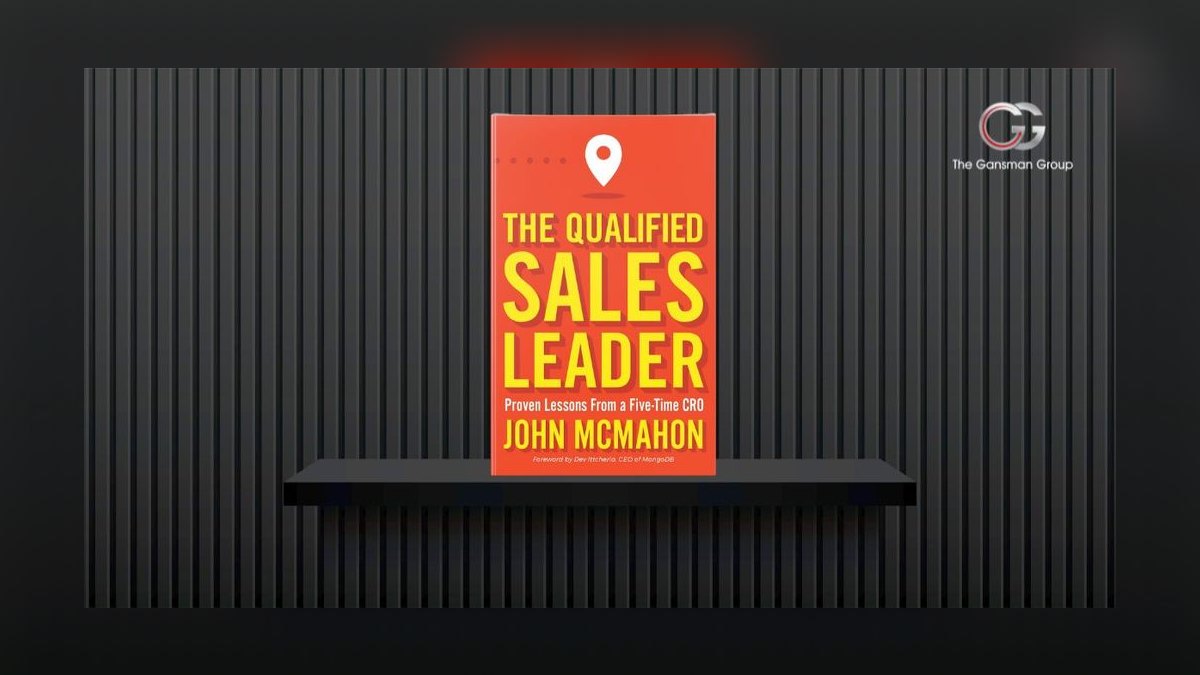
John McMahon's book ranks third because it is written from the seat: he was CRO at PTC, Geoscape, Ariba, BladeLogic and BMC, and the manuscript is structured as dialogue between a CEO and a sales leader working through forecast calls, pipeline inspection, and firing decisions. Those dialogues are ready-made role-play scripts. The forecast-call chapters address exactly the late-stage stall pattern regulated sellers face.
For a VP coaching first-line managers on how to run an inspection conversation without becoming a bully or a rubber stamp. It trades away structure — there are no templates, worksheets, or slide-ready frameworks, so a facilitator must build the workshop scaffolding themselves. Compared with MEDDICC above, this teaches the conversation while MEDDICC supplies the checklist behind it.
4. Cracking the Sales Management Code
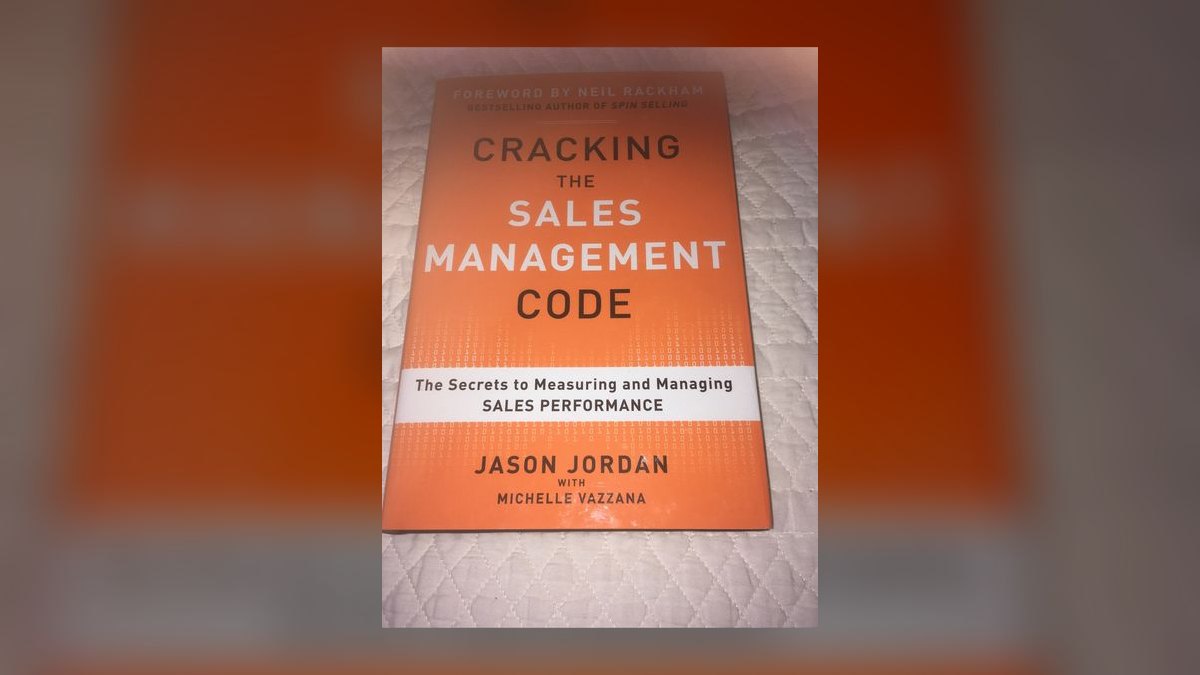
Jason Jordan and Michelle Vazzana rank fourth for the clearest answer to what a manager can actually control: they separate business results, sales objectives, and sales activities, and argue only the third is manageable. That distinction is the whole fix for teams staring at deals frozen in legal review — you cannot manage a close date, you can manage stakeholder meetings booked. The taxonomy holds up in long-cycle environments.
Aimed at a VP whose managers confuse forecasting with coaching and spend one-on-ones re-reading the pipeline aloud. It trades away tactical selling content — nothing on discovery, objection handling, or negotiation appears. Against Roberge's hiring-and-metrics build, this is narrower and more diagnostic: it tells you which numbers deserve a weekly cadence rather than how to staff the team producing them.
5. Sales Management. Simplified.
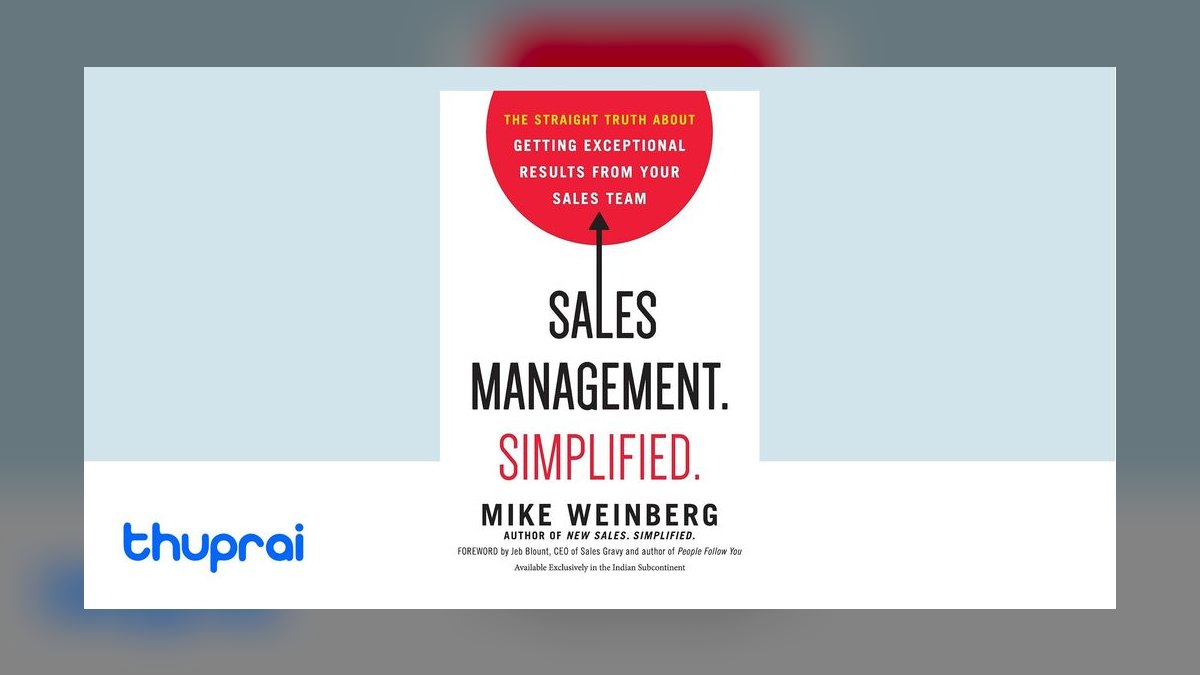
Mike Weinberg's book ranks fifth because it is the bluntest available correction to the two failures that sink new sales VPs: managers buried in CRM administration, and comp plans that quietly pay reps to farm accounts instead of hunt. The chapters on protecting selling time and running a real weekly team meeting are short enough to assign as pre-work before a half-day workshop.
Best for a VP inheriting a team that has drifted into account management and needs a cultural reset fast. It trades away analytical depth — there is no metrics model, no probability math, and Weinberg is openly skeptical of heavy process. That makes it a poor fit alongside Jordan's activity taxonomy above if your managers need numbers; use it when the problem is behavior and priorities, not measurement.
6. The Challenger Customer
The Challenger Customer ranks sixth because it is the only major title on this list built specifically around consensus buying, and CEB's research put the average B2B buying group at roughly 5.4 stakeholders with group purchase likelihood collapsing as that number grows. For a 7-12 person committee split across CISO, legal, and clinical champions, the Mobilizer profiles and the collective-learning approach are the operating model.
For managers coaching reps who have one enthusiastic champion and no path to the veto holders. It trades away individual selling skill — this is buying-group strategy, so pair it with a qualification framework. Compared with MEDDICC's single named Champion, this argues that champion is often the wrong person and shows how to find the one who can actually move peers internally.
7. Predictable Revenue
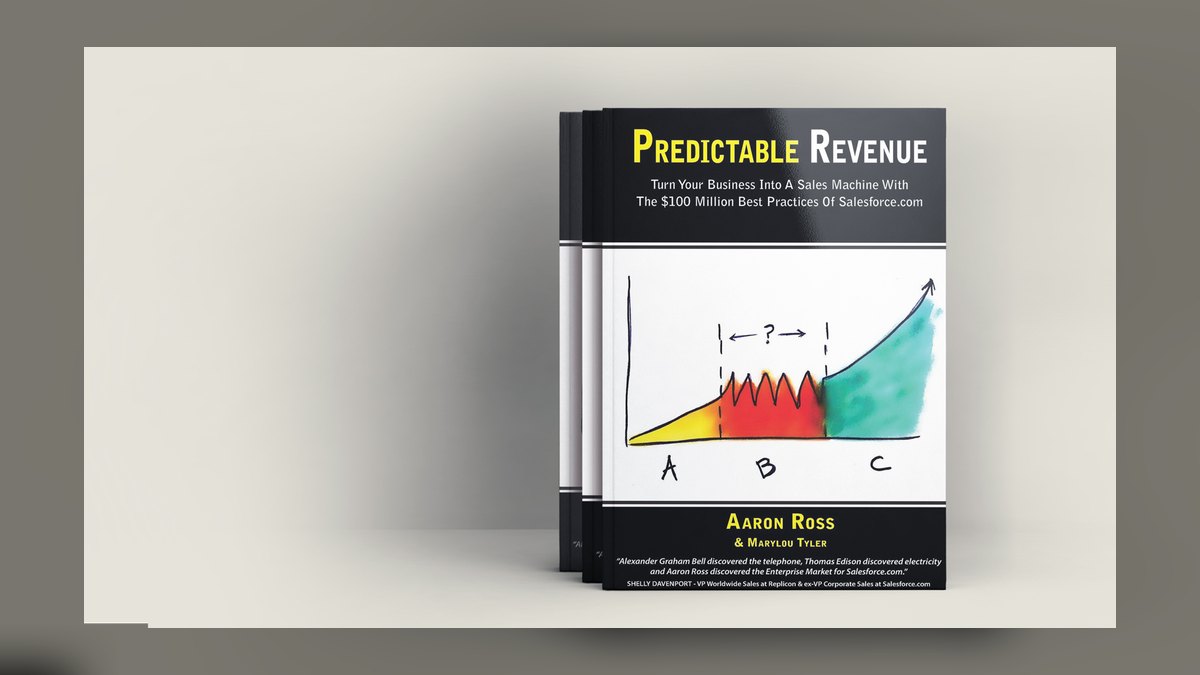
Aaron Ross and Marylou Tyler rank seventh for one durable contribution: the split of prospecting, closing, and account management into separate roles, developed at Salesforce and now the default structure for SaaS teams. The specialization argument is what lets a regulated-industry seller give reps the 6-8 month ramp complex compliance stories require, instead of asking one person to cover the whole funnel.
Useful for a VP deciding whether to specialize before headcount justifies it. It trades away currency — the cold-email outbound tactics date to a far less saturated inbox, and reply rates cited will not reproduce. Read it for the role architecture, not the sequences. Against Roberge's hiring model above, this settles what roles to hire while Roberge settles who to put in them.
8. Coaching Salespeople into Sales Champions
Keith Rosen's book ranks eighth because it treats coaching as a distinct skill from managing and supplies the actual conversational mechanics — question templates, listening structure, and a framework for a coaching session that is not a disguised status update. For a VP whose real job is developing first-line managers rather than reps, this is the closest thing to a facilitator manual on the list.
For sales leaders building a manager development track, particularly where managers were promoted from top-rep seats and default to taking over deals. It trades away sales content entirely — the method is domain-agnostic and reads at times like general executive coaching. Compared with McMahon's inspection dialogues above, Rosen is gentler and more procedural, better for training managers who over-direct.
9. Gap Selling
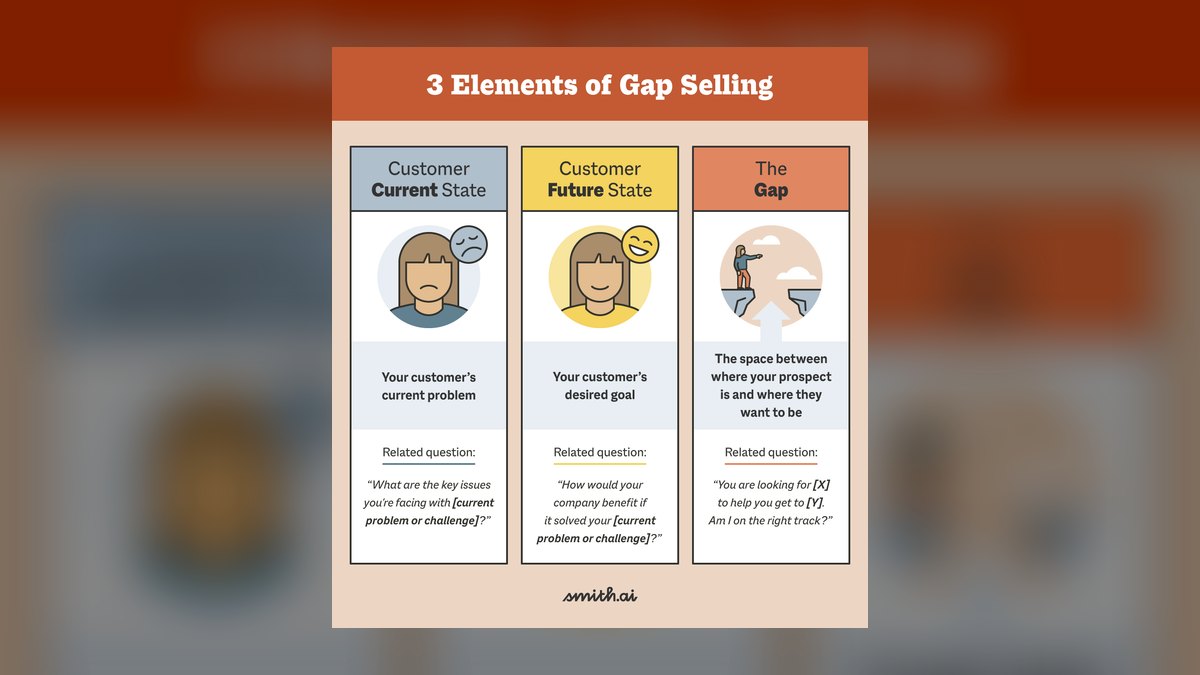
Keenan's book ranks ninth for forcing discovery depth that compliance-heavy deals demand: the current-state, future-state, and gap model makes reps quantify the cost of the buyer's existing manual process, which is precisely the three-year total cost of ownership case procurement committees require before releasing budget. The problem-identification chapters translate directly into a discovery scorecard managers can grade calls against.
For a team whose deals stall because the champion cannot articulate ROI in procurement's language. It trades away polish and structure — the writing is combative and repetitive, and there is nothing on managing a team, only on selling. Against The Challenger Customer above, Gap Selling improves the single conversation while Challenger Customer redesigns who you are having conversations with.
10. The Transparency Sale
Todd Caponi's book ranks tenth for a narrow but real fit: leading with flaws, limitations, and pricing openly, which is the correct posture when a security team will discover every gap in a penetration test report anyway. Caponi's argument from consumer-review behavior — that ratings near 4.2 to 4.5 outperform perfect fives — gives managers a defensible reason to coach proactive disclosure of a missing certification.
For reps who go evasive when a CISO asks about a control they do not yet have. It trades away breadth — this is a posture and a negotiation stance, not a management system, and a half-day workshop exhausts it. Compared with Gap Selling above, Caponi covers how you handle the weakness the buyer finds, where Keenan covers finding the buyer's weakness first.
How we ranked these
Ranking weighted five things: whether the guide teaches coaching first-line managers rather than reps, whether it handles legal and security review as a sales stage with its own probability model, whether objection libraries carry actual DPA and BAA language, whether forecasting modules account for 60-90 day legal delays, and whether the facilitator has personally survived a SOC 2 audit or BAA negotiation.
Deliberately ignored: brand recognition, page count, video production quality, and LMS integration. A polished 200-page PDF that never names a data processing agreement is worse than a rough 40-page working document with real security questionnaires attached. Also ignored: generic discovery frameworks and MEDDIC overlays, because they assume a buying committee that does not include a CISO with independent veto power over the economic buyer.
Related questions
Why do facilitator guides fail in regulated B2B SaaS?
They train reps on discovery and objection handling, then hand legal review to a deal desk. In healthcare or fintech deals, 60% of pipeline value sits in legal or security review — stages the guide never covers. Managers end up coaching activity metrics against deals whose actual bottleneck is a liability cap negotiation nobody in the sales org understands.
What ARR stage should a company be at before buying one?
Roughly $5M-$20M ARR, with at least three closed deals in a single regulated vertical. Below $1M ARR from regulated customers, you are still finding product-market fit and the guide trains a motion you have not proven. If your founder still closes deals without a signed DPA, build compliance infrastructure first — the workshops will land on empty.
How long does rep ramp actually take in this niche?
Six to eight months, roughly double a standard SaaS ramp. Reps must learn the product's technical compliance story and the buyer's regulatory language — GDPR Article 32, SOC 2 Type II scope, what a business associate agreement obligates. A guide that assumes 90-day ramp will set manager expectations that produce turnover rather than competence.
Should the facilitator be internal or external?
External, and specifically someone who has served as VP of Sales in a regulated SaaS company. Internal facilitators struggle to create a room where managers admit they do not understand compliance requirements. The external facilitator also brings a compliance artifact library — real DPAs, BAAs, security questionnaires — that an internal trainer cannot lawfully share across companies.
Does one guide work across healthcare, fintech, and legal tech?
No. Healthcare demands HIPAA and BAA agreements, fintech demands SOC 2 and PCI DSS, legal tech demands data residency and e-discovery compliance. Buy a core guide with swappable industry appendices rather than a generic compliance module that covers none of the specifics. Facilitators should be able to change the appendix per cohort without rewriting the core.
How do these guides handle forecasting through legal review?
The strong ones use a legal-stage probability model instead of rep confidence. Deals under 30 days in legal review get 40%, 31-60 days get 25%, past 60 days drop to 10% absent a signed DPA. Weak guides leave stage 4 probability flat, which is how three to five late-stage deals sit for six months while only one or two close.
What compensation changes do these guides recommend?
A 50/50 base-to-variable split, a legal-review milestone accelerator paying roughly 1% commission on a signed DPA, and a compliance certification bonus around $2,500 for deals requiring new SOC 2 scope. The 2027 shift is a compliance success fee paid when the deal clears legal review, not only at close — otherwise reps route around compliance-heavy accounts.
What does the multi-threading module actually teach?
Coverage across three stakeholders minimum: economic buyer, technical evaluator, and legal contact. Deals in regulated industries die when the champion leaves or gets reassigned — common given turnover. The stakeholder coverage matrix scores each deal on stakeholders met live or by video, and the core exercise is getting introduced to legal without the champion feeling bypassed.
FAQ
How many stakeholders are in a typical regulated buying committee?
Seven to twelve, split three ways: economic buyers such as the CFO and VP of Procurement, technical evaluators including the CTO and Chief Security Officer, and end-user champions like a Director of Operations or General Counsel. The CISO and legal hold veto power independent of the economic buyer, which is the structural fact most generic sales training misses entirely.
What is the typical deal size and contract shape?
Annual contract value runs $75,000 to $250,000, usually on three-year commitments that amortize implementation cost, with 15-25% annual escalators tied to usage growth. Budget approval runs two stages: a discretionary evaluation budget under $50K for a proof-of-concept, then full approval by a steering committee including the CISO and legal.
Where do these deals stall most often?
Two places. Legal and security review, where the buyer's counsel demands a custom data processing agreement and the security team wants a penetration test report and vendor risk assessment. Then final procurement, where the buyer insists on 30-60 day payment terms the seller's finance team rejects. A required BAA adds another two to three months.
How long is the sales cycle?
Nine to fourteen months typically, sometimes stretching past eighteen. The motion is forced land-and-expand: the first deal is a pilot solving a narrow compliance pain, such as automating HIPAA audit trails, before expanding into broader workflow automation. Pipeline runs narrow and deep — ten to fifteen active deals per rep with most value parked in review stages.
What should a new VP of Sales do in the first 90 days?
Days 1-30, audit the sales process against the buyer's compliance journey and map existing DPAs, SOC 2 reports, and penetration test results. Days 31-60, install a deal desk requiring legal and security pre-check on anything over $100K ACV before stage 4. Days 61-90, coach managers to run deal reviews around procurement timelines rather than rep activity.
What is the biggest coaching mistake managers make here?
Treating legal and security objections as blockers to escalate rather than buying signals to navigate. Telling a rep to just send it to legal disconnects them from the buyer's process. Better: coach the rep to ask which specific clause concerns the buyer's legal team, then carry that question back. The rep stays in the conversation and builds credibility with counsel.
How do you measure whether the workshops worked?
Three leading indicators: average days a deal spends in legal review, the percentage advancing from legal review to contract negotiation within 45 days, and deals lost to legal or security rather than price or product. Target a 30% reduction in legal review time within 90 days. Also survey manager confidence on coaching legal objections, before and after, one to ten.
What compliance certifications do buyers actually check?
SOC 2 Type II is table stakes; HIPAA matters in healthcare, FedRAMP in public sector, ISO 27001 broadly. Beyond certifications, buyers evaluate data residency and encryption standards, plus whether you supply a dedicated implementation project manager. Missing a core certification for your vertical means the facilitator guide is premature — no coaching fixes a gap in the product's compliance posture.
When should a fractional leader convert to full-time?
Convert when legal review time drops from 90 to 45 days with pipeline growing 20% quarter-over-quarter, when three or more enterprise deals close in the same vertical and the motion needs replicating, or when the founder spends over ten hours weekly on sales. Do not convert while a core certification is missing or cycles stay above fourteen months with no compression path.
Should AI be used in the objection-handling module?
For drafting and customization, yes — 2027 guides ship AI-generated objection responses that managers adapt to their company's actual legal terms, and tools that summarize a DPA for a rep. Never for legal advice or for producing contract language a buyer will sign. The facilitator should demonstrate the boundary explicitly rather than leaving reps to discover it during a negotiation.
Sources
- https://www.aicpa-cima.com/topic/audit-assurance/audit-and-assurance-greater-than-soc-2
- https://www.hhs.gov/hipaa/for-professionals/covered-entities/sample-business-associate-agreement-provisions/index.html
- https://www.fedramp.gov/
- https://gdpr-info.eu/art-32-gdpr/
- https://www.iso.org/standard/27001
- https://www.nist.gov/cyberframework
- https://hbr.org/2015/03/making-the-consensus-sale
- https://www.pcisecuritystandards.org/
- https://www.gartner.com/en/sales/topics/b2b-buying-journey
Related on PULSE
This page will be disappearing soon. Save it to your device for $1 — or read it free while it is here.
@Kory-White- · if Venmo asks, the last 4 of my number are 2012
This page is gone.
This one is off the shelf now. $1 keeps it on your phone for good — the whole page, pictures and diagrams included.
 pulse-sales-trainingsTop 10 closing role-play scenarios for sales teams in 2027
 pulse-sales-trainingsObjection Handling Roleplay Session Blueprint
 pulse-sales-trainingsObjection Overdrive: A High-Impact Template for Handling Price Pushback
 pulse-sales-trainingsWhat should you know before investing in Sales Trainings in 2027?
 pulse-sales-trainingsTop 10 demo training drills for B2B sales reps in 2027
 pulse-sales-trainingsTop 10 SPIN Selling training exercises for sales managers in 2027
 pulse-sales-trainingsForgotten Follow-Ups: A Template for Re-Engaging Stalled Opportunities
 stIs Sales Trainings worth it in 2027?
 pulse-sales-trainingsTop 10 ready-to-run sales training templates for closing complex deals in 2027
 pulse-sales-trainingsPrice Negotiation Sandbox: Tiered Discounting and Concession Scripts