
Ready-to-Run Sales Discovery Workshop Template
 Curated byKory White · Fractional CRO · Maryland
 PULSEKNOWLEDGE LIBRARY
Quality
Certified
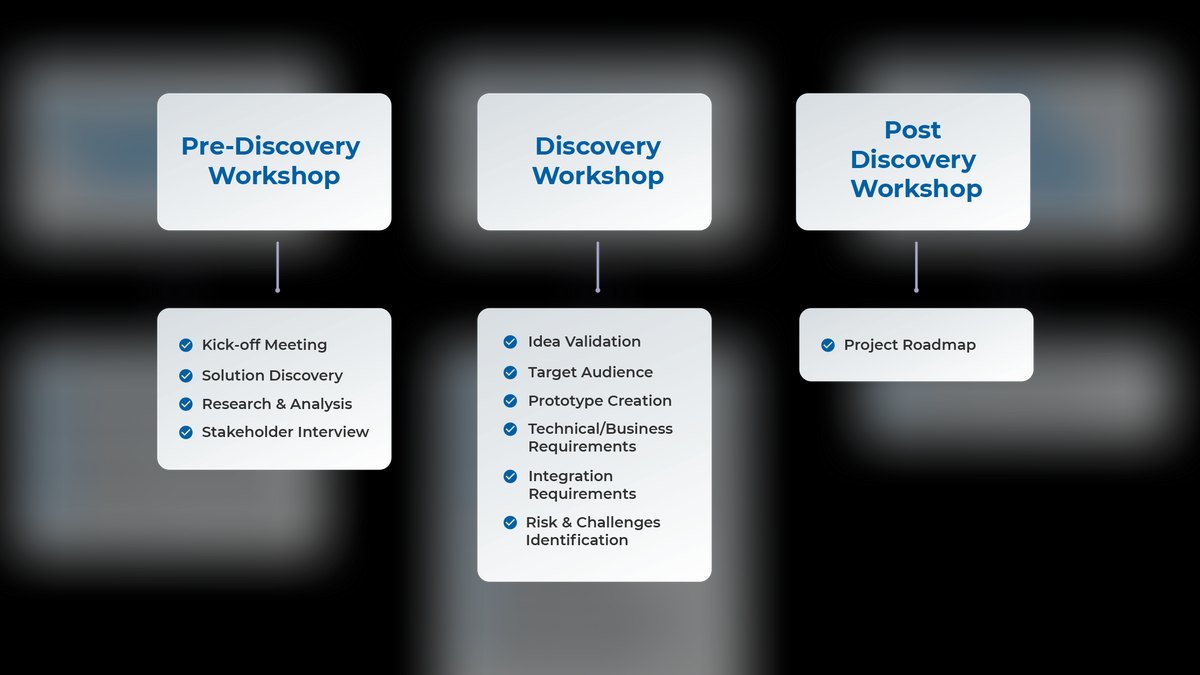
A Ready-to-Run Sales Discovery Workshop Template is a structured, timed agenda that takes a sales team through a real pipeline deal using MEDDICC and pain-mapping questions instead of generic training. Run it in 90 minutes for a full deal team, or compress it to 30 minutes for smaller deals — either format converts vague qualification into scored gaps, a written business case, and dated CRM follow-up tasks.
Full-team workshop vs. lightweight discovery sprint
Every team choosing a discovery Workshop format is really picking between two shapes of the same Template, and picking wrong wastes either time or rigor. The full-team workshop runs 90 minutes with the whole deal team in the room — AE, SDR or BDR, and a RevOps facilitator — working one live opportunity from start to finish. It moves through a discovery audit, a full seven-letter MEDDICC scoring pass, three-layer pain mapping, a written ROI one-pager, a role-played discovery call, and a CRM action plan. It's built for opportunities where the cost of getting qualification wrong is high enough to justify pulling three or four people off other work for an hour and a half.
The lightweight discovery sprint strips that down to 30 minutes and one person plus a facilitator or peer reviewer. Instead of scoring all seven MEDDICC letters, it focuses on the three that predict most disqualifications: Metrics, Economic Buyer, and Decision Criteria. There's no formal role-play block and no competitive-intelligence deep dive — those get handled on the next live call instead of rehearsed in the room. The sprint produces the same kind of artifact — a scored gap list and one or two CRM tasks — but in a third of the time and without requiring the SDR or a second AE to attend.

The trade-off is depth versus throughput. The full workshop surfaces personal pain, builds a defensible ROI case, and rehearses the actual questions a rep will ask on the next call, which matters when a wrong guess about the economic buyer costs weeks. The sprint catches the two or three most common qualification gaps — missing budget confirmation, unclear economic buyer, no stated decision criteria — quickly enough to run on ten deals in an afternoon rather than one deal in ninety minutes.
How to decide between the two formats
The decision hinges on three questions asked in sequence: how large is the deal, how many people can the team pull into a room, and is there already a documented decision process. Answer those and the format picks itself rather than requiring a judgment call every time a rep opens their pipeline review.

Start with deal size. If the opportunity is below roughly $50k in annual contract value, the lightweight sprint is almost always the right call — the potential upside doesn't justify a 90-minute, multi-person commitment. If the deal clears that threshold, check headcount availability: can an SDR or second AE join for 90 minutes this week? If yes, and the deal also lacks a documented decision process or confirmed economic buyer, run the full workshop — those are exactly the conditions the extra time is built to resolve. If no one else is available but the deal is large, don't skip discovery entirely; run the sprint solo and flag the deal for a full workshop as soon as a facilitator is free, rather than treating the sprint as a permanent substitute.
Concrete numbers behind each format
The two formats differ in almost every measurable dimension, and knowing the actual splits helps a RevOps leader schedule the right one instead of defaulting to whichever the team ran last time. The full workshop runs six blocks: a 10-minute discovery audit, a 20-minute MEDDICC scoring pass, a 20-minute pain-mapping exercise, a 15-minute ROI build, a 15-minute role-play, and a 10-minute action-plan close — 90 minutes total, with a hard rule of no solution-language for at least the first 15 minutes of pain mapping so reps don't jump to pitching before the problem is fully unpacked. The lightweight sprint compresses this into roughly 10 minutes of MEDDICC scoring on three letters, 10 minutes of pain identification, and 10 minutes of task assignment — no formal role-play block, no written ROI one-pager, just a scored gap list and a next call booked.

Deal-size bands map cleanly onto format choice: small deals in the $10k–$50k ACV range get the 30-minute sprint and skip the competitive deep dive entirely; mid-market deals in the $50k–$100k range keep the full 90-minute format but add a final 15-minute mutual-action-plan whiteboard where the rep and prospect co-build a shared timeline covering security review, legal approval, and executive demo milestones; enterprise deals above $100k extend to a full 2 hours and add pre-work — a short survey sent to the prospect asking for their top three business priorities and current vendor stack, so the team skips basic qualification and starts the session on multi-threaded stakeholder mapping instead.
Outcome tracking should use three benchmarks regardless of which format ran: Discovery Completion Rate — the percentage of required MEDDICC fields populated in the CRM within 24 hours of the session, with 80%+ as the target; Next Step Conversion — whether the prospect agreed to a specific, dated follow-up such as a technical demo, with 70%+ as the benchmark; and Pipeline Velocity Impact — the change in average days from discovery to closed-won for deals that ran the Template versus the standard process, with a realistic expectation of 15–25% reduction within two quarters of consistent use. Teams that score consistently below 3 out of 5 on post-session debrief questions — pain quality, prospect engagement, clarity of champion — should revisit their questioning technique before running the next session rather than assuming the template itself is the problem.

Implementation details and sequencing
Running either format well depends less on the script and more on getting the sequence right, because each block deliberately builds on the gap the previous block exposed. Start with the discovery audit: pull one open opportunity with a close date inside the next 30 days, and in two minutes have the rep write down the economic buyer's title, the exact problem being solved, the budget range, and the decision criteria. Whatever's blank becomes the session's agenda — there's no point spending 20 minutes scoring MEDDICC on a letter the rep already has confidently answered.
From there, move into scoring. Score each MEDDICC letter 1 to 5, where 1 means no information exists and 5 means the answer is confirmed with documentation such as an email or signed scope document — not just a verbal assumption. Any letter scoring below 3 becomes a required question for the next live call, written in specific form ("Is the VP of Sales the economic buyer, or does the CFO sign off?") rather than a vague reminder ("find out about budget"). Pain mapping comes next and only after scoring, because the commercial, functional, and personal pain layers are easier to articulate once the team already knows which stakeholder is missing.
The ROI build converts the commercial pain layer into a specific dollar figure and weighs it against solution cost, then adds a cost-of-inaction paragraph — what happens, in dollar terms, if the prospect does nothing. This one-pager becomes the artifact a champion carries into their own internal budget conversation, so it needs to survive scrutiny without the rep in the room. The role-play block should use the real buyer persona and gaps identified in the earlier steps rather than a generic scenario, with the "buyer" instructed not to volunteer information so the "rep" has to practice open-ended questioning under realistic resistance. Close every session, regardless of format, by opening the CRM live and adding dated tasks with named owners — sending the ROI document to the economic buyer, scheduling a call to confirm decision criteria, asking the champion for CFO access — and update the deal's forecast probability based on the letters that moved during the session.
Related questions
How long should a sales discovery workshop actually run?
90 minutes for a full-team session covering all seven MEDDICC letters, or 30 minutes for a lightweight sprint on smaller deals covering just Metrics, Economic Buyer, and Decision Criteria.
Who needs to attend a discovery workshop?
At minimum the AE and a RevOps or sales-ops facilitator; the full 90-minute format also benefits from an SDR or BDR who sourced the deal and can add context on early conversations.
What happens if the economic buyer never gets identified?
Score that MEDDICC letter as a 1, treat it as the top-priority gap, and dedicate the role-play block to rehearsing questions that surface who actually controls budget before the next real call.
Can this Template run on a deal with no live pipeline activity?
Yes — use a past lost deal to practice the same scoring and pain-mapping steps; the goal is building the team's questioning skill, not closing that specific opportunity.
FAQ
What size deal justifies the full 90-minute workshop instead of the shorter sprint? Generally anything above roughly $50k in annual contract value, especially if the decision process or economic buyer isn't yet confirmed. Below that threshold, the 30-minute lightweight sprint captures the same core gaps without pulling multiple people off other work.
Does this workshop replace ongoing MEDDICC training? No. Teams new to MEDDICC should run a short primer covering the seven letters and one worked example each before attempting this session — the workshop assumes basic familiarity and spends its time applying the framework to a live deal, not teaching it from scratch.
Can the workshop run remotely instead of in person? Yes. A shared document for scoring, a virtual whiteboard for the gap list, and video breakout rooms for the role-play block reproduce the in-person format closely; the timers and scripts don't need to change for a remote session.
What if the prospect won't share their budget during discovery? Offer a price range instead of asking for a number directly, and if that still gets deflected, ask what solving the problem is worth or what inaction currently costs — reframing toward impact often unlocks a budget conversation that a direct ask doesn't.
How do we know if the workshop is actually improving outcomes? Track the same three numbers every session: percentage of MEDDICC fields filled within 24 hours (target 80%+), rate of specific dated next-steps agreed to (target 70%+), and change in average discovery-to-close time over a full quarter (target 15–25% faster).
What's the single most common mistake teams make running this format? Skipping the no-solution-language rule during pain mapping — reps jump to describing their product before the customer's current-state problem is fully unpacked, which collapses the pain layer into a pitch instead of a diagnosis.
Sources
- Salesforce: MEDDIC Framework Guide
- Challenger Inc: The Challenger Sale Methodology
- Winning by Design: Discovery Workshop Resources
- Gartner: B2B Buying Group Research
- Clari: Pipeline Velocity Metrics
- Gong: Discovery Call Analysis
- Outreach: Sales Engagement Platform
- Salesloft: Cadence Builder
Related on PULSE
- [Mastering the Discovery Call: A 30-Minute Ready-to-Run Sales Meeting Template](/knowledge/st0776)
- [Top 10 ready-to-run templates for discovery call roleplays](/knowledge/st0656)
- [Top 10 ready-to-run sales training templates for consultative selling](/knowledge/st0763)
- [Top 10 ready-to-run templates for onboarding new sales hires](/knowledge/st0756)
- [Top 10 ready-to-run sales training templates for closing complex deals](/knowledge/st0749)
- [Top 10 Ready-to-Run Sales Training Templates for New Hires](/knowledge/st0703)
This page will be disappearing soon. Save it to your device for $1 — or read it free while it is here.
@Kory-White- · if Venmo asks, the last 4 of my number are 2012
 pulse-sales-trainingsTop 10 mid-market AE facilitator guides for 2027
 pulse-sales-trainingsTop 10 SDR facilitator guides for 2027
 pulse-sales-trainingsTop 10 underperformer training drills for 2027
 pulse-sales-trainingsThe Mutual Action Plan Build Session (60-Min Training)
 pulse-sales-trainingsValue Proposition Crafting Workshop Template
 pulse-sales-trainingsEmotional Intelligence in Sales: Guided Discussion Template for Team Meetings
 pulse-sales-trainingsTop 10 account planning role-play scenarios for sales teams in 2027
 pulse-sales-trainingsTop 10 Sales Training Templates for Value Proposition Crafting in 2027
 pulse-sales-trainingsClosing Techniques Drill Template for Teams
 pulse-sales-trainingsTop 10 sales enablement drills for mid-market reps in 2027