
The Deal Strategy Review Reboot — 60-Min Training
 Curated byKory White · Fractional CRO · Maryland
 PULSEKNOWLEDGE LIBRARY
Quality
Certified

A Deal Strategy Review Reboot is a focused 60-minute, single-deal war-room you run the moment a $250K-plus ACV opportunity goes quiet, complicated, or contested. Unlike a pipeline review, this Training interrogates one deal against five war-room questions and two contingency branches, then exits with a named action, an owner, and a date for every gap.
Deal Strategy Review Reboot vs. the standard pipeline review
The single most common mistake sales managers make is assuming these two meetings are interchangeable. They are not, and running one when you needed the other is how quarters quietly slip. A pipeline review is a breadth instrument: it sweeps 20 to 60 opportunities in 30 to 45 minutes, asks "where is every deal and what's the number," and updates forecast categories. It is a reporting ritual, and it is right most of the time. The Deal Strategy Review Reboot is a depth instrument: one deal, one hour, one whiteboard, three to five people, and a single decision at the end — advance, pause, or kill.
The distinction matters because the two formats optimize opposite things. Pipeline review optimizes coverage and forecast accuracy across the book; nobody gets more than 90 seconds, and complex deals get the same shallow treatment as transactional ones. That is efficient for volume and lethal for a contested enterprise deal, because the deal that actually needs 40 minutes of scrutiny gets 90 seconds and a "keep me posted." The Reboot inverts the trade: it spends an entire hour on a single opportunity precisely because that opportunity carries enough revenue that a 20% shift in win probability is worth more than reviewing 40 small deals faster.

Force Management's *Command of the Plan*, Robert Miller's *Strategic Selling* blue-sheet framework, and Anthony Iannarino's *Eat Their Lunch* all converge on the same underlying claim: enterprise deals rarely die from lack of activity. They die from unexamined assumptions about power, pain, and process — assumptions a breadth review never has time to surface. This Reboot exists to burn 60 minutes flushing those assumptions into the open before they cost you the deal. Choose the Reboot when the stakes justify depth; keep pipeline review for everything else. Running both, in their proper roles, is the mark of a mature sales org, and the Training below teaches the exact sequence.
When to trigger the Reboot instead of waiting
Because a Deal Strategy Review is expensive — three to five people times one full hour is often four to six fully loaded labor-hours — the AE must pass a trigger gate before the room convenes. Do not run a Reboot on a healthy, well-threaded deal that is simply progressing; that wastes the format and trains the team to tune it out. Reserve it for opportunities where the trigger genuinely fired.

The gate has two conditions. First, the deal must sit at or above $250K ACV, or at least 3x the team's median ACV if your median runs smaller. Second, at least one of five triggers must have fired: the deal has been stuck in one stage for more than 21 days; a new competitor has surfaced in the account; the champion changed roles or went silent; multi-thread coverage has fallen below 60% of the known buying committee; or the close date has slipped twice. A useful third tell: the AE believes they can win but cannot articulate the path to signature in under two minutes. That inarticulate confidence is exactly the deal that slips next quarter.
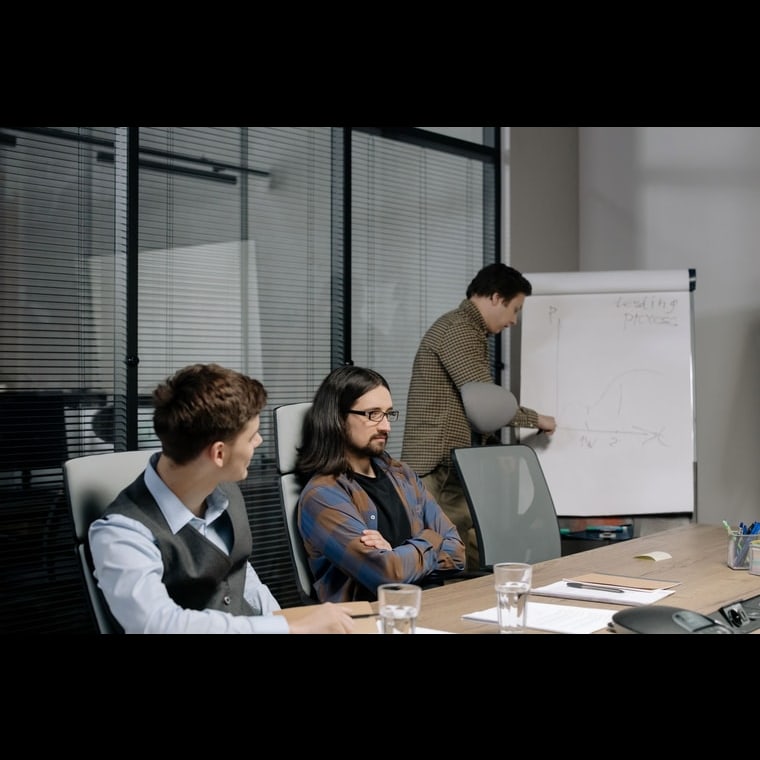
The manager's opening script sets the frame in the first five minutes and protects the clock: *"We're here for sixty minutes on the Acme deal only. No pipeline talk, no other accounts. By the top of the hour we leave with named actions, owners, and dates. The AE drives the whiteboard — I'm here to challenge, not to rescue."* Jeb Blount's *Sales EQ* names the manager's posture in the room precisely: disruptive empathy — pressure the logic hard, protect the person completely.

The five war-room questions and the numbers behind them
The heart of the Training is five questions the AE answers out loud, no slides, whiteboard only. Budget roughly 10 minutes per question in the deep version, or 15 minutes total in the compressed version, and leave the final block for the decision. If the AE cannot answer a question in two sentences, that inability is the gap you plan against — the point of the exercise is not to hear polished answers, it is to find the soft spots.
Why buy anything? What quantified business outcome does the customer forfeit by doing nothing for another six months? Force Management's rule is blunt: no compelling event, no deal. Push for a number the buyer would recognize — "reduce onboarding from 14 days to 5 by Q3," not "improve efficiency."

Why buy us? Name the two differentiated proof points a competitor cannot match this quarter. "We're more flexible" gets rejected on the spot; if the AE cannot name one capability a rival cannot copy within 90 days, the deal has no moat.
Why buy now? What event on the *buyer's* calendar — a board meeting, a contract expiry, a headcount plan, a regulatory date — creates urgency? Urgency invented on the seller's calendar does not survive procurement.

Who actually signs? Name the economic buyer as a person, not a title, and confirm the AE has met them at least once in the last 30 days. Miller-Heiman's red flag stands: an unmet economic buyer is always a risk, no exceptions.
What would make us lose? Force a pre-mortem. The AE must say the most likely failure mode out loud — that named failure becomes the contingency you plan later in the session. The strong tell to watch for: an AE who answers questions one through three fluently but stalls on four or five. That is the deal that slips, and you just found out with weeks to spare instead of on the last day of the quarter.

Anchor the whole session in a number reps remember. Structured, recurring deal-strategy work of this kind is the discipline enablement researchers repeatedly flag as a leading predictor of multi-quarter program ROI, and Gartner's B2B buying research puts the average enterprise buying committee at six to ten stakeholders — which is exactly why a single AE covering "everyone" is a structural failure, not an effort problem.
The buying-committee map and coverage math
Spend 10 minutes drawing the org map live on the whiteboard. Iannarino frames every stakeholder as an exchange — trading value for access — so every box on the board is a person the AE owes one specific insight to. For each box the AE states three things: the last-touch date (older than 21 days turns the box red), that person's one personal win when the deal closes, and who on the selling side owns the relationship. If the answer to ownership is "just me," that is a multi-thread coverage gap, and coverage gaps are the quiet killers of enterprise sales.

The coverage math is unforgiving. With a committee of six to ten stakeholders and a single AE, realistic senior-relationship coverage tops out around three to four executives. Anything beyond that requires deploying the bench — the RVP, a solution engineer, customer success, or the CEO for a peer-to-peer sponsor call. The manager's challenge script makes the gap concrete: *"You've got four boxes red and one unnamed. Walk me through how one AE covers five executives in fourteen days — or tell me who else we deploy."* The answer to that question, not the AE's optimism, is what determines whether the deal is truly winnable in the timeframe.
The map should distinguish roles deliberately: the economic buyer who can sign or kill without asking permission, the champion who sells internally when the AE is not in the room, the technical and user buyers who validate the fit, the blocker (usually procurement or an incumbent-loyal stakeholder), and the coach who feeds you intel you could not otherwise get. A deal with a strong champion but no coach is under-informed; a deal with a coach but no confirmed economic buyer is exposed. Mapping forces those imbalances into daylight where the room can act on them.

Two contingency branches and the 60-minute sequence
This is where most reviews fail: teams plan the happy path and ignore the two scenarios most likely to kill the deal. Mike Weinberg's rule in *New Sales. Simplified.* is to plan two losses first, then plan the win. Pick the two failure modes surfaced in the pre-mortem and pre-build a named response for each, with a trigger and a specific first 48-hour move — because "we'd figure it out" is not a contingency, it is a confession.
Branch A is the champion goes silent: the AE sends a no-ask check-in, the executive sponsor calls the champion's boss for a pulse check, and a second Review is scheduled inside seven days if there is no response. Branch B is a new competitor drops in: the AE runs a 15-minute competitive teardown against the specific outcome from question two and delivers it to the champion within 48 hours, or leads with a TCO model plus an executive sponsor call if the competitor undercuts on price. Each branch names the trigger and the first move so the team pulls a plan instead of panicking.

The named-action close and manager debrief
The final 15 minutes convert conversation into commitments. Every gap surfaced across the questions, the map, and the branches becomes a row on an action board, and Force Management's discipline governs it: no action exists without an owner and a date. A typical board holds five to seven rows — confirm the compelling event with the CFO by a fixed date; book the CEO-to-CFO sponsor call; pre-redline the MSA with legal; run the coach call to read the room after a reorg rumor; deliver a two-page TCO model; and record the advance/pause/kill decision in the CRM with all notes attached. Each row names an owner — AE, manager, deal desk, SE, or RVP — and a due date inside the next week.
The close is the AE saying the top three commitments out loud, in front of peers: *"By next Friday I will have re-confirmed the compelling event, run the exec sponsor call, and delivered the TCO model. If any of the three slip, I'll call this deal back to the war-room before it slides another stage."* That spoken commitment is the real close of the meeting. Then the manager closes solo for five minutes and writes three answers into the CRM the same day: what changed the forecast, the single coaching skill the AE needs next (one, not five), and when the next Deal Strategy Review fires — default cadence every 14 days until the deal is signed, paused, or killed. Iannarino's rule from *The Lost Art of Closing* applies to the Training itself: every meeting ends with the next meeting on the calendar. Treat this session as a repeatable sales asset, not a one-off rescue, and the Reboot becomes the working rhythm that compounds win rates across the whole team.

Related questions
How often should we run a Deal Strategy Review on the same deal?
Default to every 14 days once triggered, until the deal is signed, paused, or killed. A stable, well-threaded deal can stretch to a light-touch check; a contested one with red coverage boxes may warrant a 7-day recheck via the champion-silent branch.
Who has to be in the room?
The AE, their direct manager, and only the supporting resources the deal actually needs — usually a solution engineer, RVP, or executive sponsor. Keep it to three to six people; more voices slow the 60-minute clock and dilute accountability without improving the decision.
What is the single output that matters most?
One decision: advance, pause, or kill — recorded in the CRM with a named action, owner, and date for every gap. If the room leaves with vague "next steps" instead of assigned commitments, the session failed regardless of how good the discussion felt.
Can this work for deals under $250K ACV?
Yes, but scale it down. For mid-market deals, run a 30-minute compressed version on the five questions only. The full 60-minute Reboot earns its cost on high-ACV, multi-stakeholder, contested opportunities where a small probability shift is worth real revenue.
What derails these sessions most often?
Drift into pipeline talk and other accounts. The manager's opening frame — one deal, no exceptions — exists precisely to protect the hour. The second common failure is skipping the contingency branches, which turns a planned response into a reactive fire drill.
FAQ
What exactly is a Deal Strategy Review Reboot? It is a 60-minute single-deal war-room, not a pipeline review. The AE walks the room through the buying committee, five war-room questions, and two contingency branches, ending with a named action, owner, and date for every gap — and one decision: advance, pause, or kill.
When should we trigger one? The moment a $250K-plus ACV opportunity gets quiet, complicated, or contested, or when one of five triggers fires: stuck over 21 days, a new competitor, a changed champion, coverage below 60%, or a close date slipped twice. Do not wait for the quarterly cycle.
How is this different from a standard pipeline review? Pipeline review asks "where is every deal?" across the whole book in 30 to 45 minutes. A Deal Strategy Review asks "how do we actually win this one?" for a full hour on a single opportunity. One is breadth and forecast; the other is depth and decision.
Who runs the whiteboard? The AE drives it; the manager challenges but never rescues. Jeb Blount calls this posture disruptive empathy — pressure the logic hard, protect the person. If the manager takes the pen and starts solving, the session stops being coaching and stops building the rep's judgment.
What frameworks does the Training draw from? It converges Force Management's *Command of the Plan*, Miller-Heiman's *Strategic Selling* blue-sheet method, and Anthony Iannarino's *Eat Their Lunch*, with pre-mortem discipline from Mike Weinberg and the emotional-intelligence frame from Jeb Blount's *Sales EQ*.
How do we know the Reboot is working? Track deal-stage velocity and win rate on Reboot'd deals versus comparable untouched deals, plus the percentage of action-board rows completed by their due date. If commitments slip repeatedly, the problem is accountability, not the format — tighten owners and dates.
Sources
- Gartner — B2B Buying Journey research on buying-committee size and stakeholder complexity: https://www.gartner.com/en/sales/insights/b2b-buying-journey
- Harvard Business Review — research on B2B buying-group dynamics and the modern sales process: https://hbr.org/2017/03/the-new-sales-imperative
- Force Management — Command of the Message and MEDDICC-aligned deal qualification methodology: https://www.forcemanagement.com/
- Anthony Iannarino — The Sales Blog, covering *Eat Their Lunch* and *The Lost Art of Closing*: https://www.thesalesblog.com/
- Jeb Blount — Sales Gravy, home of *Sales EQ* and disruptive-empathy coaching: https://salesgravy.com/
- Mike Weinberg — author site for *New Sales. Simplified.* and sales-management coaching: https://mikeweinberg.com/
- MEDDIC Academy — qualification framework reference for economic buyer and champion criteria: https://meddic.academy/
- The Challenger Sale (Dixon & Adamson) — CEB/Gartner research on commercial teaching and buyer mobilization: https://en.wikipedia.org/wiki/The_Challenger_Sale
Related on PULSE
- The Deal Strategy Whiteboard Session — 60-Min Training
- The Lost Deal Retrospective Reboot — 60-Min Training
- The Stalled Deal Recovery Reboot — 60-Min Training
- The Deal Desk Operations Reboot — 60-Min Training
- Deal Desk Simulation: Cross-Functional Approval Process Roleplay
- Deal Doctor: A Diagnostic Template for At-Risk Opportunities in the Pipeline
This page will be disappearing soon. Save it to your device for $1 — or read it free while it is here.
@Kory-White- · if Venmo asks, the last 4 of my number are 2012
This page is gone.
This one is off the shelf now. $1 keeps it on your phone for good — the whole page, pictures and diagrams included.
 sales-trainingThe Power Map Reboot — 60-Min Training
 sales-trainingThe Procurement Navigation Reboot — 60-Min Training
 sales-trainingThe Champion Development Reboot — 60-Min Training
 sales-trainingThe Deal Strategy Whiteboard Session — 60-Min Training
 sales-trainingThe POC and Pilot Management Reboot — 60-Min Training
 sales-trainingThe Negotiation Reboot — 60-Min Training
 sales-trainingThe Stalled Deal Recovery Reboot — 60-Min Training
 sales-trainingThe Pricing Conversation Reboot — 60-Min Training
 sales-trainingThe Contract Redlining Reboot — 60-Min Training
 sales-trainingThe Multi-Thread and Champion Build Reboot — 60-Min Training