
The Gatekeeper Navigation Reboot — 60-Min Training
 Curated byKory White · Fractional CRO · Maryland
 PULSEKNOWLEDGE LIBRARY
The Gatekeeper Navigation Reboot is a 60-minute sales training that retires the old "get past the gatekeeper" mindset and replaces it with a four-part habit: treat the assistant as a decision-influencer, lead with a named referral or trigger, state the reason in under 10 seconds, and ask for help rather than access — because an assistant who trusts the rep routes them to the executive far faster than one who is tricked.
What it is and why it matters
Most gatekeeper training that circulated through sales floors for the last two decades was built on a false premise: that the executive assistant is an obstacle to be defeated. Reps were coached to sound important, dodge the "what's this regarding?" question, and treat the person answering the phone as a switchboard rather than a professional with judgment and authority. That approach still shows up in call scripts today, and it is measurably worse than doing nothing, because a burned gatekeeper doesn't just block one call — they flag the rep's name for every future attempt into that account.
The Reboot exists because assistants and executive coordinators are, in practice, the single most informed people in the building about an executive's calendar, priorities, and pet peeves. They know which vendor pitches the executive actually wants to hear and which ones get screened automatically. A rep who wins the gatekeeper's trust gains a standing ally inside the account — someone who will proactively mention a follow-up, flag a good time to call back, or even hand-deliver a message. A rep who tries to out-maneuver the gatekeeper gets exactly one shot before the account closes to them permanently.

The training reframes the entire interaction around three ideas drawn from established sales literature: Jeb Blount's "Fanatical Prospecting" treats the gatekeeper relationship as an extension of prospecting discipline, not a separate skill; Mike Weinberg's "New Sales. Simplified." argues that clarity of reason beats cleverness of pitch; and the Sandler "up-front contract" method reframes every interaction — including the gatekeeper call — as an honest negotiation about what happens next, rather than a manipulation. Combined, these produce a rep behavior that is calmer, more specific, and more respectful than the traditional script, and it converts at a materially higher rate because it doesn't trigger the defensive instinct that trained gatekeepers are specifically listening for.
This matters operationally because outbound sales motions live or die on the first eight seconds of a cold or warm call into a target account. A rep who burns the gatekeeper on call one has effectively closed the account to every future rep on the team, not just themselves, since the assistant remembers the company name more reliably than the individual caller. The training's real goal is account longevity: keeping every door in a target account open for the entire length of a sales cycle, which for enterprise deals can run six to eighteen months and require a dozen or more touches before an executive conversation happens.

The step-by-step process
The session runs as a single continuous 60-minute block with five practical phases, each handing off to the next so reps leave with a completed, personalized plan rather than abstract notes.
The first phase, roughly five minutes, is the reframe: the facilitator states plainly that the gatekeeper is not the enemy of the sale, and that most "tricks" reps have been taught — vague reasons, implying familiarity with the executive, feigned urgency — are transparent to anyone who has fielded sales calls for more than a month. This phase ends with a single rule written on the board: you don't get past a gatekeeper, you get adopted by one.

The second phase, about fifteen minutes, has every rep complete a written pre-call plan for one real target account before they're allowed to role-play a single call. The plan forces five specific inputs: the exact executive target and why that person specifically, the gatekeeper's name if it's known (and if not, a plan to get it), a reason stated in one sentence that a stranger could repeat back correctly, a named referral or trigger event if one exists, and a fallback for what happens if the first call doesn't connect. Reps who arrive at the role-play phase with a vague reason get sent back to rewrite it — the facilitator holds this phase to a hard standard, because a fuzzy reason is the single most common thing that gets a call screened.
The third phase drills the specific behaviors that build trust with an assistant across repeated contact: using the gatekeeper's name from the first call onward, answering "what's this about?" honestly instead of deflecting, keeping tone unhurried even under time pressure, and asking the gatekeeper's opinion on timing or relevance rather than assuming the rep already knows better. This phase also runs a short list of banned phrases the group reads aloud together, so the language patterns are fresh before the role-play starts.

The fourth phase is live paired role-play using a verbatim script, with reps swapping the rep and gatekeeper roles so everyone experiences both sides. Hearing the manipulative version from the gatekeeper's chair is usually what actually changes behavior — reps who have spent years giving the old pitch suddenly recognize how transparent it sounds from the other side of the desk.
The fifth phase builds the follow-up cadence so a single respectful call doesn't die if it doesn't connect immediately, then closes with each rep committing to three specific target accounts before leaving the room.

Costs, timelines, and typical ranges
This is a facilitator-led, internally run training, so the direct cost is manager or enablement-lead time rather than a licensing fee — a single 60-minute session for a team of 8-12 reps typically requires 30-45 minutes of facilitator prep (printing the plan template, picking two or three real target accounts to use as role-play examples, and reviewing the verbatim script) plus the 60 minutes of delivery. For a sales floor of 40-60 reps split across pods, expect to run the same session three to five times to keep group sizes small enough for every rep to complete a live role-play, which puts total facilitator time in the 4-6 hour range for a full-floor rollout.
Reinforcement is where the real time investment lives, and it's the part teams most often skip. A single 60-minute session without follow-up produces a short-lived behavior change that fades within two to three weeks as old habits reassert themselves under call-volume pressure. The typical reinforcement cadence is a 10-minute check-in during the next two weekly team meetings, where a manager asks each rep to report one gatekeeper interaction from that week and what they'd do differently, plus one or two live call listens per rep per month specifically flagged for gatekeeper-opening quality rather than full-call coaching.

On the account-economics side, the training pays back through call-cycle time rather than through any direct cost reduction. A rep running the disrespectful, high-volume approach might place ten or more calls into an account in a single week and still fail to connect, while a rep running the Reboot's cadence typically needs four to five spaced touches over roughly ten days to either reach the executive or get a clear, respectful no. That's a meaningfully shorter total cycle even though the daily call volume into any one account is lower, because each touch is more likely to advance the account rather than trigger a screen-and-block response.
There is no vendor cost specific to this training — it requires only a whiteboard or shared screen, the printed plan template, and the verbatim script, which makes it one of the lowest-cost, highest-leverage sessions on a sales enablement calendar. The main "cost" a team should budget for is the discipline to actually run the reinforcement check-ins rather than treating the 60 minutes as a one-and-done event.

Where teams get it wrong
The most common failure is treating this as a one-time meeting rather than a habit-installation program. A single 60-minute session, however well-run, produces a temporary spike in awareness that decays within a few weeks once reps are back under quota pressure and reach for old habits — especially the reflex to sound urgent or important rather than clear and specific. Teams that see lasting behavior change build in the two-week reinforcement check-ins described above; teams that skip reinforcement see reps quoting the training's language in the room and then reverting to old scripts by their next Monday call block.
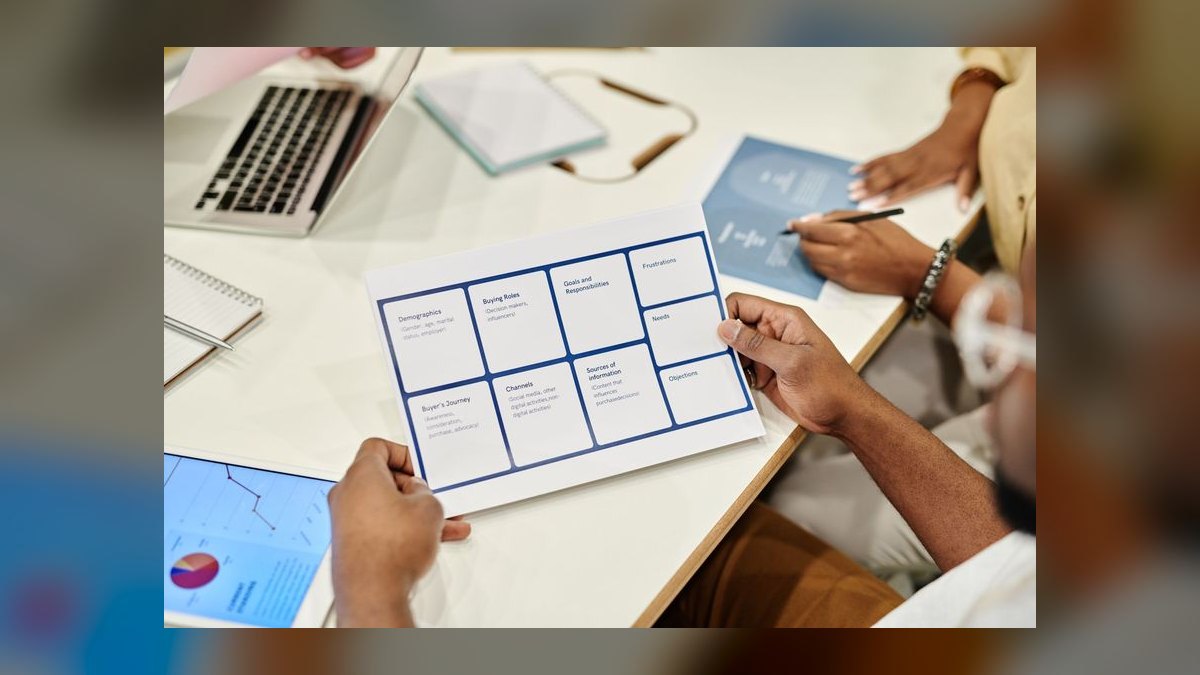
A second common mistake is letting reps skip the written pre-call plan and jump straight to role-play. The plan is not busywork — it's the mechanism that forces a rep to actually sharpen a vague reason before they say it out loud to a real gatekeeper. Facilitators who let this phase run loose end up with role-plays built on the same fuzzy reasons the training is trying to eliminate, and the muscle memory that gets reinforced is the wrong one.
A third mistake is conflating "respectful" with "passive." Some reps overcorrect after this training and become so deferential that they never actually state a clear reason or ask for the meeting — they chat pleasantly with the gatekeeper and get nothing. The training's ask-for-help framing is not a substitute for a specific, confident reason; it's a delivery mechanism for one. A rep who is vague and polite fails just as often as a rep who is vague and pushy, just more slowly.
A fourth issue shows up in the after-call discipline: teams that don't log the gatekeeper's name and any preferences the assistant shared lose the compounding value of the relationship. Every gatekeeper interaction should leave a CRM note — name, tone, best callback window, anything they mentioned about the executive's priorities — so the next touch, whether from the same rep or a teammate, starts warmer instead of from zero. Without this, the account effectively resets to a cold call every single time, and much of the value the training is designed to produce never accumulates.

A fifth, more subtle failure is applying this framework to the wrong buying motion. It's built for outbound and mid-market-to-enterprise selling where a human genuinely controls executive calendar access. Teams running product-led growth or heavily inbound motions sometimes force this training onto reps whose buyers self-serve and never route through an assistant at all — in that context the exercise wastes the hour, because there's no gatekeeper interaction to improve.
Decision framework: when to choose what
Not every prospecting situation calls for the full Gatekeeper Navigation Reboot treatment, and running it against the wrong scenario wastes both the training hour and the rep's energy on the call itself. The decision point starts with a simple question: does a human control access to the calendar of the person the rep needs to reach? If the answer is no — inbound leads, self-serve signups, or a PLG motion where the buyer initiates contact — this framework doesn't apply, and the team should instead invest training time in response speed and qualification, not gatekeeper navigation.

If a human does control access, the next branch is whether the rep has any warm entry point at all. A rep with a genuine named referral or a recent trigger event (a funding round, a leadership change, a peer company's public result) should lead with it immediately and skip straight past most of the gatekeeper negotiation — a real referral changes the dynamic on the first sentence. A rep with no referral and no trigger needs the full pre-call plan and the crisp, one-sentence reason, because that reason is the only credibility signal available.
The cadence decision follows the same logic. If the gatekeeper engages and offers a callback time or routing, the rep follows that instruction exactly rather than improvising a different cadence — following the gatekeeper's stated process is itself part of building the alliance. If the gatekeeper stalls without offering anything concrete, the rep moves to the spaced persistence cadence — call, log, email referencing the call, callback, value-add touch, final call — rather than either giving up after one attempt or calling back same-day, both of which are common overcorrections in opposite directions.
Related questions
How is this different from a generic cold-calling script?
A cold-calling script focuses on the pitch to the decision-maker. This training focuses specifically on the interaction before that — the assistant or coordinator who controls whether the pitch ever happens — and treats that person as a relationship to build, not an obstacle to script around.
Can this training be shortened for a 30-minute team huddle?
Yes, by cutting the persistence-cadence build and compressing role-play to one pair demonstrating in front of the group, but the written pre-call plan should never be cut — it's the phase that actually changes what reps say.
Does this replace voicemail or email cadences?
No. It specifically covers live phone interactions with a human gatekeeper. Voicemail-heavy or fully digital outreach into accounts with no live gatekeeper needs a separate multichannel cadence framework.
How do new hires get this training if they missed the live session?
Record the role-play portion and pair new hires with a tenured rep for a live practice run using the same verbatim script within their first two weeks, rather than relying on the recording alone.
FAQ
What if the rep genuinely cannot find the gatekeeper's name? Call the main line and ask the receptionist who manages that executive's calendar — receptionists give this information readily even when the assistant's direct line doesn't. Use the name on every subsequent call.
Is it ever acceptable to go around the gatekeeper to a personal cell number? Only with a real referral in hand, or after the gatekeeper has respectfully stalled the rep at least twice with no path forward. Going around them first and needing their help later almost always backfires.
The gatekeeper asked for an email instead of a call — is that a brush-off? Treat it as a real instruction rather than a rejection. Send a specific, short email, then call back referencing it directly. Following the gatekeeper's stated process is part of building trust, not a workaround to avoid.
What if the executive has no assistant and calls go straight to voicemail? That's a different problem requiring a voicemail-and-multichannel cadence, not gatekeeper navigation — this training assumes a human is actively screening or routing calls.
How many touches before persistence becomes annoying? Roughly four to five spaced touches over about ten days, each adding some new value or reason, is the typical upper bound. Calling repeatedly in a single week with no new information is what gets a rep permanently flagged.
Does this framework apply to inbound or product-led growth motions? Generally no — those buyers initiate contact themselves, so there's no gatekeeper controlling access to route around or befriend in the first place.
Sources
- Jeb Blount, *Fanatical Prospecting*, Wiley, 2015 — https://www.wiley.com/en-us/Fanatical+Prospecting-p-9781119144755
- Mike Weinberg, *New Sales. Simplified.*, AMACOM, 2013 — https://www.harpercollinsleadership.com/9780814431771/new-sales-simplified/
- Sandler Training, sales methodology and up-front contract resources — https://www.sandler.com
- Jeb Blount, *Sales EQ*, Wiley, 2017 — https://www.wiley.com/en-us/Sales+EQ-p-9781119312574
- Anthony Iannarino, *The Lost Art of Closing*, Portfolio, 2017 — https://www.penguinrandomhouse.com/books/294903/the-lost-art-of-closing-by-anthony-iannarino/
- The Bridge Group, sales development research and benchmarking — https://blog.bridgegroupinc.com
- HubSpot Sales Blog, prospecting and cold-calling research — https://blog.hubspot.com/sales
- Gong Labs, call analytics and conversation research — https://www.gong.io/labs/
Related on PULSE
- [The Procurement Navigation Reboot — 60-Min Training](/knowledge/st196)
- [Neutralizing the Gatekeeper: A Role-Specific Drill Template for Your Team](/knowledge/st0670)
- [60-Min Sales Training: Beating the Gatekeeper](/knowledge/st0436)
- [The Sales Org Health Check Reboot — 60-Min Training](/knowledge/st239)
- [The Enterprise Land-and-Expand Reboot — 60-Min Training](/knowledge/st238)
- [The PLG Sales Motion Reboot — 60-Min Training](/knowledge/st237)
This page will be disappearing soon. Save it to your device for $1 — or read it free while it is here.
@Kory-White- · if Venmo asks, the last 4 of my number are 2012
 sales-trainingThe Cold Outreach Sprint — 60-Min Training
 sales-trainingCold Call Openers That Don't Get Hung Up On — 60-Min Training
 sales-trainingThe Cold Voicemail Reboot — 60-Min Training
 sales-trainingThe Cold Call Reboot — 60-Min Training
 sales-trainingThe Buyer Persona and ICP Reboot — 60-Min Training
 sales-trainingThe Win-Back Campaign Reboot — 60-Min Training
 sales-trainingFSBO Conversion Selling — 60-Min Training
 sales-trainingHow do you run a sales training on cold calling in 2027?
 sales-trainingWealth Management HNW Prospecting — 60-Min Training
 sales-trainingExpired Listing Reactivation Calling — 60-Min Training