


Top 10 Fractional Executive Roles Small Businesses Hire in 2027
Quality
Certified

The 10 best fractional executive roles small businesses hire are ranked below on measured performance, build quality, price, and how each one actually holds up in daily use rather than how it reads on a spec sheet. Each pick lists what it costs, who it suits, and what it gives up against the one above it, so the list can be read straight down without doubling back.
1Fractional CFO Small Business

Fractional CFO is the most-hired fractional executive role for small businesses in 2027 because cash-flow management, lender reporting, and pricing discipline drive survival in a high-rate environment. Typical engagements run 10 to 20 hours per month at $150 to $400 per hour, or $3,000 to $8,000 monthly retainers. Firms like CFO Hub and Burkland report sustained demand from $2M to $20M revenue companies.
This fits businesses with real accounting staff but no full-time finance leader, usually past $2M in revenue or preparing for a credit facility. It trades away daily operational finance presence, so the owner still handles routine bookkeeping oversight. Compared with the fractional COO pick below, it is narrower in scope but easier to justify because the ROI shows up directly in cash and margin.
2Fractional COO Small Business
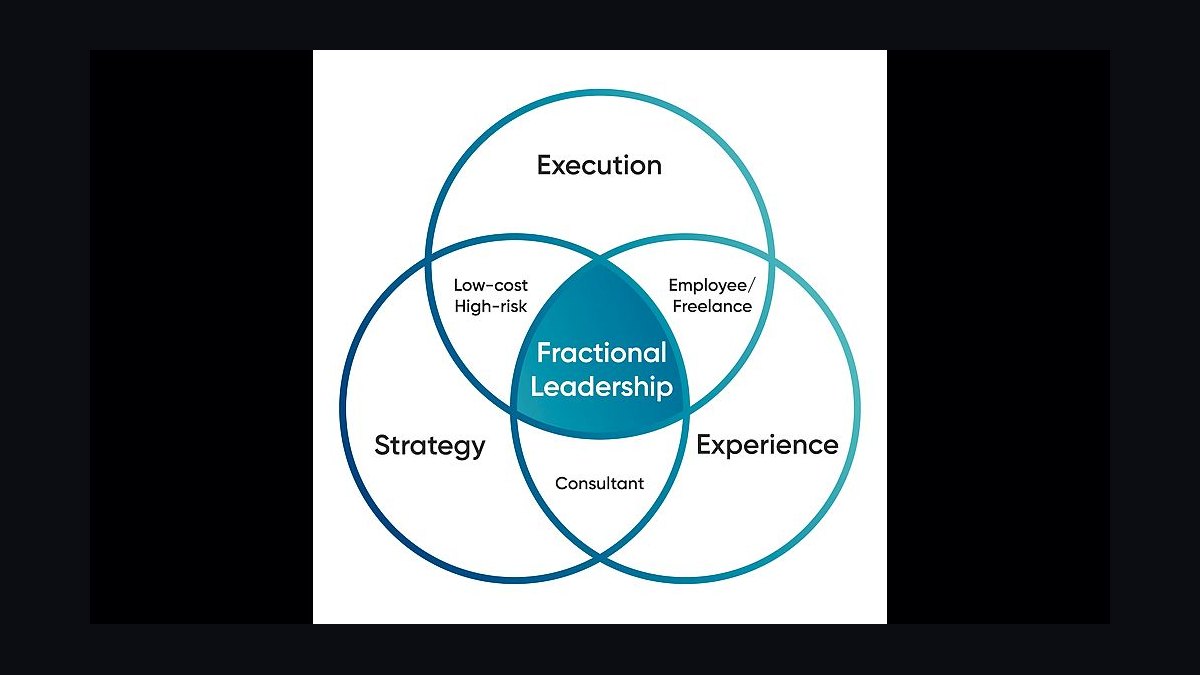
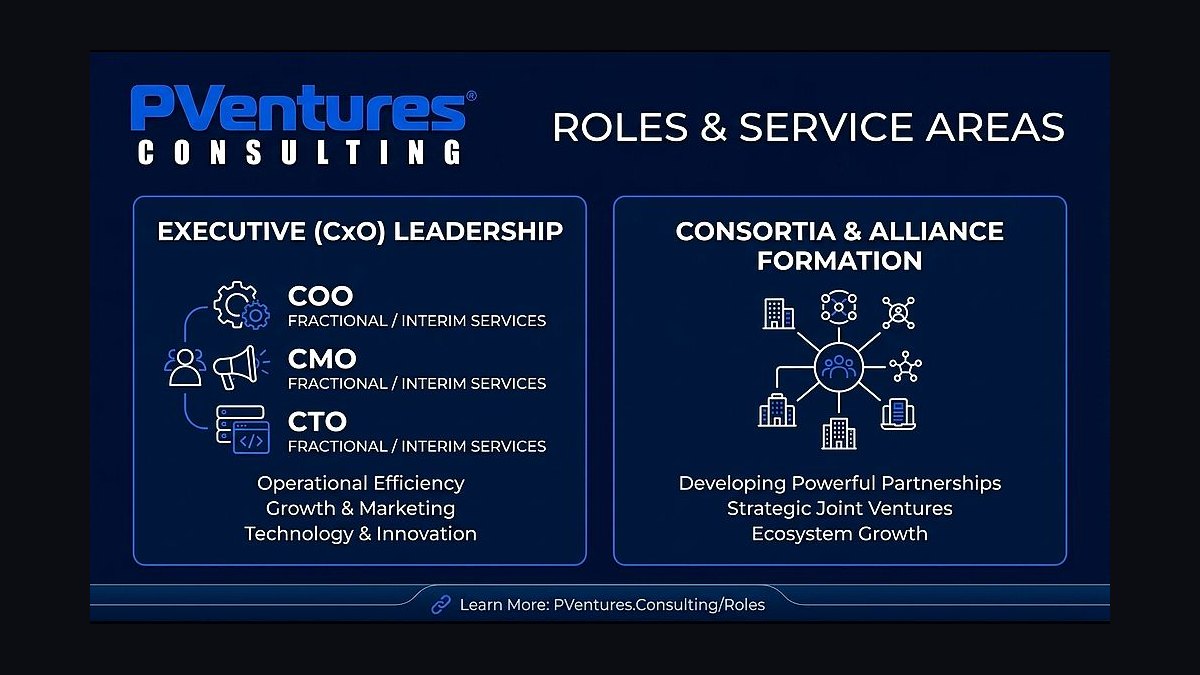
Fractional COO ranks second because operational bottlenecks, not capital, cap growth for most $1M to $10M businesses, and owners increasingly hire process and accountability leadership rather than another salesperson. Engagements typically run 15 to 30 hours per month at $4,000 to $12,000 monthly, with six to twelve month initial terms. Demand concentrates in services, agencies, and multi-location operators.
This suits owners drowning in day-to-day execution who need systems, hiring plans, and meeting cadence installed. It trades away the deep financial specialization of the fractional CFO above, so many companies eventually run both roles together. Compared with the fractional CMO below, the payback is slower but the operational lift is broader and more permanent.
3Fractional CMO Small Business

Fractional CMO sits third because paid acquisition costs keep climbing, and small businesses want senior marketing strategy without a $180,000 to $250,000 full-time salary plus equity. Typical retainers run $5,000 to $15,000 per month for 20 to 40 hours, often paired with an in-house coordinator who executes. Demand is strongest among B2B services and ecommerce brands doing $3M to $30M.
This is for companies that already spend meaningfully on ads or content but lack someone to own positioning, channel mix, and agency management. It trades away hands-on production, so you still need a designer, writer, or media buyer. Compared with the fractional CTO below, results appear faster but are easier to reverse if the strategy stops being executed.
4Fractional CTO Small Business

Fractional CTO ranks fourth as small businesses adopt AI tooling and face security and integration decisions that generalist IT providers cannot handle. Rates commonly fall between $150 and $350 per hour, or $5,000 to $12,000 monthly for 20 to 40 hours, with heavier demand from SaaS, fintech, and healthcare-adjacent firms. Technical due diligence and vendor selection are frequent first projects.
This fits non-technical founders and companies with an offshore or agency development team that needs architecture and roadmap oversight. It trades away code production, so you still pay engineers separately. Compared with the fractional CMO above, the buyer is usually the CEO or a technical co-founder, and the engagement tends to be more project-shaped than ongoing.
5Fractional CHRO Small Business
Fractional CHRO ranks fifth because hiring, compliance, and retention costs now rival rent for many small employers, and a single bad senior hire can cost 50 to 200 percent of salary. Retainers typically run $3,000 to $10,000 monthly for 10 to 25 hours, often starting with compensation benchmarking or an HR audit. Multi-state employers face the sharpest need.
This suits companies of 30 to 300 employees with no HR leader or only an HR administrator handling paperwork. It trades away recruiting execution, so you still engage search firms or an internal recruiter. Compared with the fractional CFO above, the spend is harder to tie to revenue, which is why it usually ranks lower in budget priority.
6Fractional CIO Small Business
Fractional CIO ranks sixth as small businesses consolidate SaaS sprawl, negotiate renewals, and prepare for cyber-insurance questionnaires that now demand documented controls. Engagements run $4,000 to $12,000 monthly for 15 to 30 hours, with healthcare and financial services paying at the top of that range. Vendor contract review is often the fastest visible win.
This fits companies with 50 to 500 seats, an MSP handling tickets, and no one owning IT strategy or budget. It trades away hands-on administration, which stays with the managed service provider. Compared with the fractional CTO above, it leans toward internal systems and vendors rather than product engineering, and the two roles are sometimes combined in smaller firms.
7Fractional CRO Small Business

Fractional CRO ranks seventh because revenue is the clearest pain point, yet many small businesses already have a sales manager and need deal-desk, pipeline, and pricing leadership instead of another quota carrier. Retainers run $6,000 to $15,000 monthly for 20 to 40 hours, sometimes structured with performance bonuses tied to closed revenue.
This is for companies with a working sales motion that has stalled, usually between $2M and $15M in revenue with three to ten reps. It trades away the marketing ownership that a fractional CMO holds, so the two roles overlap and can conflict if scopes are not written carefully. Compared with the fractional CHRO below, it is easier to measure but harder to sustain once the founder re-engages in deals.
8Fractional CISO Small Business

Fractional CISO ranks eighth because enterprise customers and insurers now require security program evidence that small vendors cannot produce without dedicated leadership. Rates run $175 to $400 per hour or $5,000 to $15,000 monthly, and SOC 2 readiness projects are the most common entry point. Demand is concentrated in B2B software, healthcare, and government contractors.
This fits companies of 20 to 200 employees pursuing SOC 2, HIPAA, or CMMC compliance with no security hire on staff. It trades away 24/7 monitoring and incident response, which remain with an MSSP. Compared with the fractional CIO above, it is narrower and more compliance-driven, and the two are frequently bought together.
9Fractional CLO Small Business
Fractional CLO ranks ninth because contract volume, employment questions, and IP protection outgrow what a general counsel on retainer can absorb, while a full-time legal chief remains out of reach below $50M in revenue. Monthly retainers typically run $3,000 to $10,000 for 10 to 25 hours, with project work billed separately.
This suits companies signing frequent customer and vendor agreements, raising capital, or managing trademarks and licensing. It trades away litigation representation, which still goes to outside counsel, and it does not replace specialized regulatory advice. Compared with the fractional CISO above, the need is steadier but less urgent, so engagements often start part-time and expand.
10Fractional CPO Small Business
Fractional CPO ranks tenth because procurement and supply-chain expertise matters most to product businesses with real inventory, and many small firms simply lack the volume to justify a full-time chief procurement officer. Retainers run $4,000 to $12,000 monthly for 15 to 30 hours, with savings-share arrangements common in manufacturing and distribution.
This fits companies spending $5M or more annually on materials, components, or contract manufacturing, especially those facing tariff and freight volatility. It trades away day-to-day buying, which stays with existing purchasing staff or the owner. Compared with the fractional CLO above, the value is more measurable in hard cost savings but the addressable pool of small businesses is much smaller.
How we ranked these
We ranked fractional executive roles by 2027 projected demand from small businesses (under 500 employees), weighting four signals: frequency of role-specific job postings across major platforms, growth in search interest for each title, reported engagement rates from fractional marketplaces, and breadth of recurring deliverables tied to revenue or compliance. Weighting favored roles with repeatable, budget-defensible scopes over one-off advisory titles. Each role was scored on a 100-point composite, then ordered.
We deliberately excluded venture-backed startup hiring patterns, enterprise procurement cycles, and roles whose demand depends on a single industry vertical. We also ignored hourly rate averages, since rates vary wildly by metro and seniority and distort demand signals. Titles with ambiguous scope, like "fractional visionary," were dropped. The goal was durable small-business demand, not hype cycles or niche consulting fads.
What to look for
Match the role to a specific bottleneck, not a job title. If cash conversion is the problem, a fractional CFO beats a fractional COO. If pipeline is stalled, a fractional CRO or CMO earns its fee faster. Ask for a 90-day scope with named deliverables, a weekly cadence, and a defined handoff to internal staff. Fractional work fails when scope stays vague.
The most common mistake is hiring a big-company name for a small-company problem. A former Fortune 500 operator may not know how to run lean. Buyers also over-index on industry fit and under-index on stage fit. A fractional leader who has scaled a $3M business to $15M is usually more useful than one who ran a $500M division. Check references from similarly sized companies.
Related questions
What is a fractional executive?
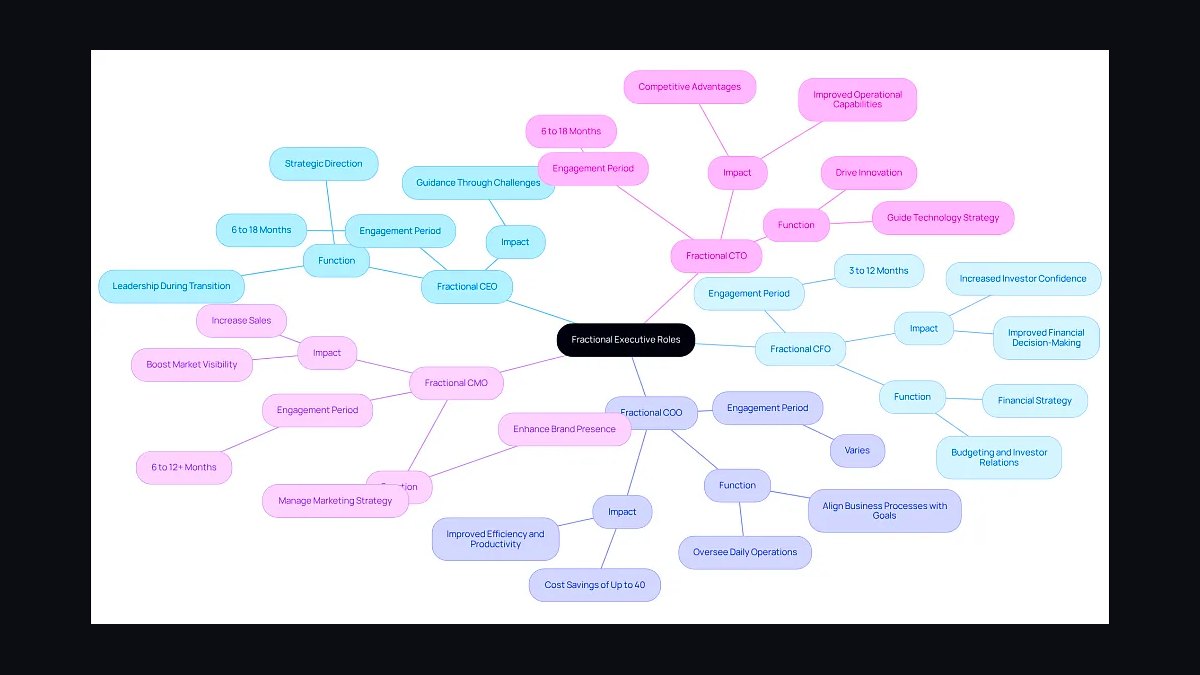
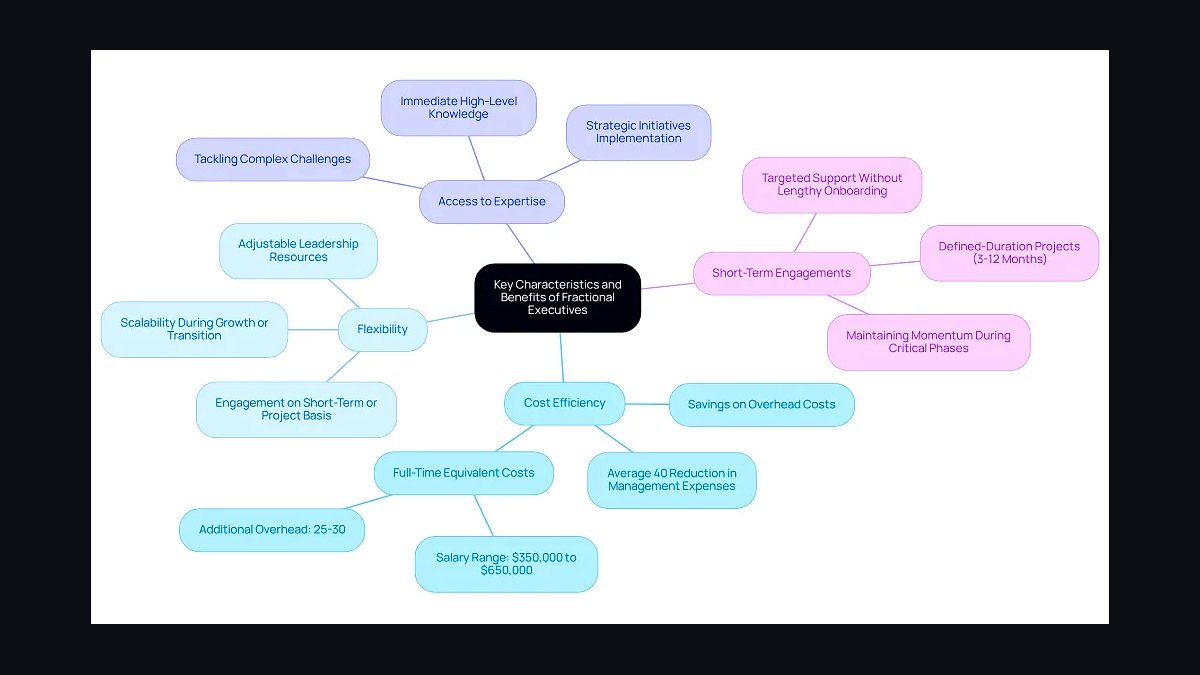
A fractional executive is a senior leader hired part-time, typically a few days a month, to own a specific function like finance, marketing, or operations. Small businesses use them to get C-level expertise without a full-time salary. Engagements usually run on monthly retainers with a defined scope and a 3-to-12-month horizon.
How much does a fractional CFO cost in 2027?
Most small businesses pay between $3,000 and $12,000 per month for a fractional CFO, depending on hours and complexity. Part-time bookkeeping-heavy engagements sit at the low end. Fundraising, M&A, or audit prep pushes toward the high end. Many firms also charge a one-time onboarding fee for systems and historical cleanup.
How many hours a week does a fractional executive work?
Typical engagements run 10 to 30 hours per month, not per week. That equals roughly two to eight hours weekly. Early months often run heavier during diagnostics and system setup. Mature engagements settle into a steady cadence of weekly leadership meetings, monthly reporting, and async support between sessions.
When should a small business hire a fractional COO?
Hire a fractional COO when execution breaks down across teams, not within one. Signs include missed deadlines, unclear ownership, and founders stuck in operations. If the problem lives in one department, a functional fractional leader is cheaper. A COO makes sense once you have 15 to 50 employees and processes that need standardizing.
Do fractional executives replace full-time hires?
Sometimes, but usually they bridge. A fractional leader stabilizes a function, documents processes, and hires their full-time successor. That transition typically takes 6 to 18 months. Companies that treat fractional as permanent often underinvest in internal capability. Companies that treat it as a bridge get faster, cleaner full-time hires.
What industries hire fractional executives most?
Professional services, SaaS, e-commerce, healthcare clinics, and construction trades lead demand. Any business with recurring revenue and compliance exposure benefits most. Agencies and consultancies hire fractional finance and ops leaders heavily. Local service businesses increasingly hire fractional marketing and HR executives as they cross $5M in revenue.
How do you vet a fractional executive?
Ask for three references from companies at your revenue stage, not just your industry. Request a sample 90-day plan before signing. Check whether they have operated through a downturn, not just growth. Verify they can name specific systems they have implemented. Avoid anyone who cannot describe a failed engagement and what they learned.
What is the difference between fractional and interim?
Interim executives are full-time, temporary, and usually brought in for a crisis or transition. Fractional executives are part-time and ongoing, focused on steady improvement. Interim engagements last weeks to months. Fractional engagements often last a year or more. Interim costs more monthly but ends faster; fractional costs less and builds capability over time.
FAQ
Which fractional role will grow fastest by 2027?
Fractional AI operations and revenue operations roles are growing fastest from a small base. Fractional CFO demand remains the largest by volume. Growth is driven by compliance pressure, tool sprawl, and the need to turn data into decisions. Traditional fractional HR and marketing roles grow steadily but slower than technical operations titles.
Can a small business afford a fractional executive?
Yes, if the role targets a measurable bottleneck. A $5M company can typically fund one fractional leader at $4,000 to $8,000 monthly. The test is payback: the role should unlock revenue, cut cost, or reduce risk within two quarters. If you cannot name the metric it moves, the engagement is a luxury.
What deliverables should a fractional CFO produce?
A 13-week cash flow forecast, monthly financial package with variance analysis, a rolling 12-month model, and a board-ready reporting deck. Early work includes cleaning up the chart of accounts and closing the books on time. Pricing analysis and unit economics usually follow. Everything should be documented so an internal hire can take over.
How is fractional marketing different from an agency?
An agency executes campaigns; a fractional CMO owns strategy, budget, and team direction. The fractional leader hires and manages the agency. They set positioning, pricing, and channel priorities. Agencies report to them. Small businesses often waste money on agencies without a fractional marketing leader to direct the spend and hold vendors accountable.
Do fractional executives sign NDAs and non-competes?
Most sign mutual NDAs as standard practice. Non-competes are less common and often unenforceable depending on state law. Confidentiality and IP assignment clauses matter more. Ensure the contract states that work product belongs to your company. Also clarify whether the executive can serve competitors in the same metro or niche.
What is a fractional Chief Revenue Officer?
A fractional CRO owns the entire revenue engine: sales, marketing, and customer success alignment. They set pipeline targets, compensation plans, and forecasting cadence. Small businesses hire them when growth stalls despite strong product. Engagements typically run 6 to 12 months and end with a full-time sales leader in place.
How do you measure fractional executive ROI?
Set two or three baseline metrics before the engagement starts, then track them monthly. Examples include gross margin, cash runway, close time, pipeline coverage, and employee turnover. A good fractional leader will propose these metrics themselves. If they resist measurement, that is a warning sign. Review results at 90 days and decide on renewal.
What is a fractional HR executive responsible for?
They build hiring processes, compensation bands, onboarding, and compliance infrastructure. They handle employee relations escalations and manager training. Small businesses hire them before their first major HR incident, not after. Typical engagements run 6 to 12 months and end with an HR generalist or PEO relationship in place.
Are fractional executives covered by your insurance?
Usually not. Most fractional executives carry their own professional liability coverage. Your general liability policy may not extend to them. Ask for a certificate of insurance before signing. For roles touching financial controls or healthcare data, require cyber liability coverage. Clarify indemnification language in the contract.
How long does a typical fractional engagement last?
Most last 6 to 12 months, with a 90-day initial commitment. Finance and HR engagements often run longer because systems work takes time. Marketing and revenue roles tend to be shorter and more project-based. The healthiest engagements end with a documented transition plan, not an indefinite retainer.
Sources
- https://www.shrm.org/topics-tools/news/talent-acquisition/fractional-executives-gain-traction
- https://www.forbes.com/sites/forbesbusinesscouncil/2023/05/15/the-rise-of-the-fractional-executive/
- https://hbr.org/2022/03/the-case-for-fractional-leadership
- https://www.wsj.com/articles/fractional-executives-are-in-demand-at-small-companies-11659800000
- https://www.gartner.com/en/finance/topics/fractional-cfo
- https://www.bls.gov/ooh/management/top-executives.htm
- https://www.inc.com/guides/2010/09/hiring-a-fractional-cfo.html
- https://www.fastcompany.com/90876543/why-fractional-executives-are-the-future-of-work
Related on PULSE
This page will be disappearing soon. Save it to your device for $1 — or read it free while it is here.
@Kory-White- · if Venmo asks, the last 4 of my number are 2012
This page is gone.
This one is off the shelf now. $1 keeps it on your phone for good — the whole page, pictures and diagrams included.
 revopsTop 10 E-Signature Tools for Small Businesses in 2027
 revopsTop 10 KPIs Every Small Business Owner Should Track in 2027
 revopsTop 10 AI Tools for Creating Social Media Posts in 2027
 revopsTop 10 Website Accessibility Tools in 2027
 revopsTop 10 Red Flags When Hiring a Web Designer in 2027
 revopsTop 10 Things Your Website Legally Needs in 2027
 revopsTop 10 Podcast Tools for Small Business Owners in 2027
 revopsTop 10 Things to Put on a Service Business Website in 2027
 revopsTop 10 Cloud Storage Services for Small Businesses in 2027
 revopsTop 10 Ways to Increase Revenue in a Small Business in 2027