
What to Wear to a Career Fair in 2027
 PULSEKNOWLEDGE LIBRARY
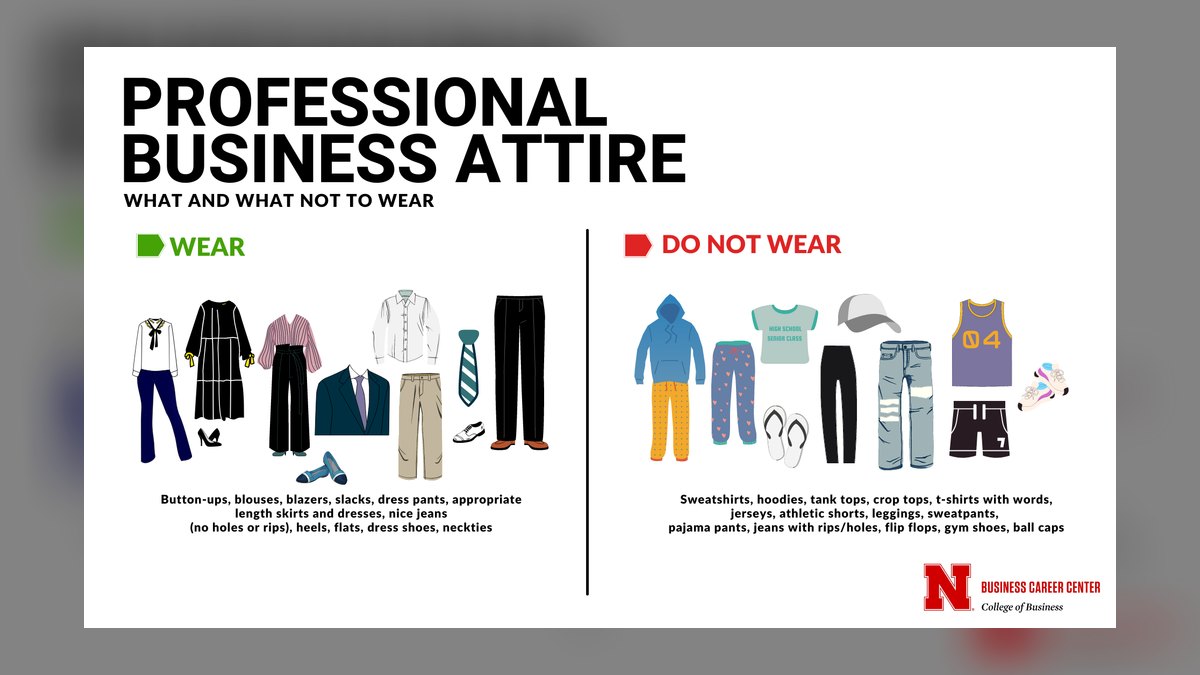
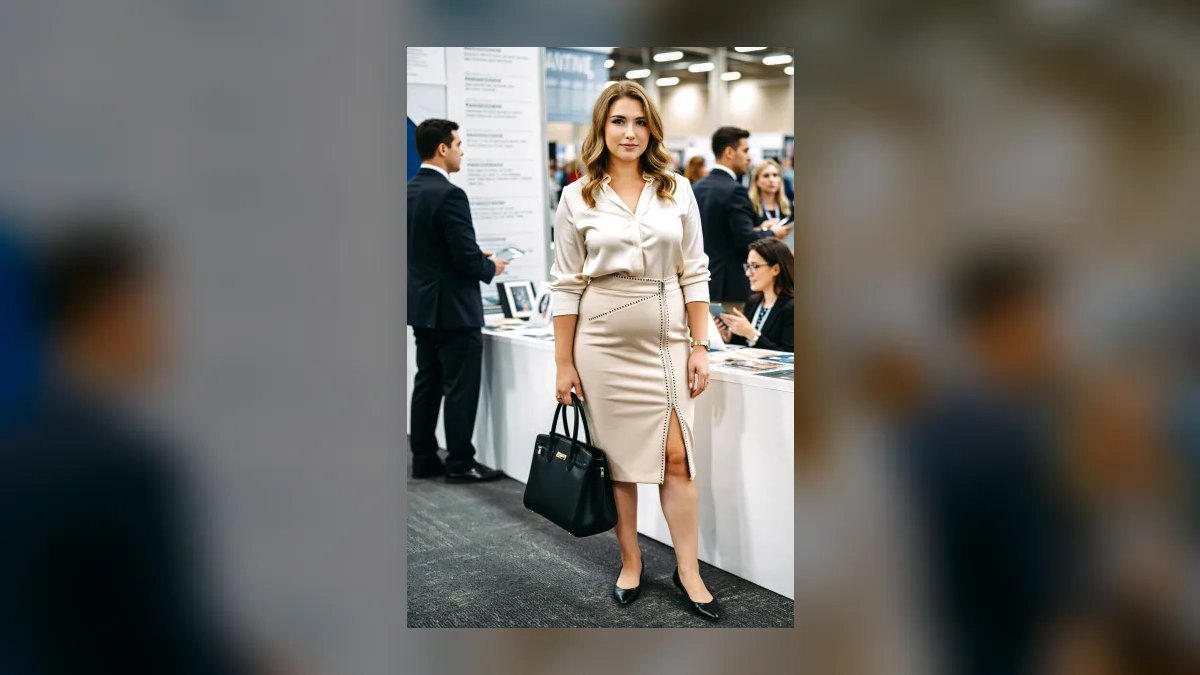
Wear a tailored blazer over a crisp button-down or silk shell, paired with straight-leg trousers or a knee-length skirt and polished leather loafers or oxfords. Keep the palette muted — navy, charcoal, olive, taupe — and skip sneakers, hoodies, and ripped denim. Fit matters more than price at any 2027 career fair.
The outcome you should expect from a well-chosen career fair outfit
Let's set expectations honestly, because clothing is not a magic key. What you Wear to a career fair does not get you hired. It gets you *not disqualified*, and it buys you a slightly longer, slightly warmer first thirty seconds at a table where a recruiter has already spoken to eighty people that morning and will speak to eighty more before the room closes. That is the actual mechanism, and it is worth understanding precisely, because understanding it tells you exactly how much money and effort to spend.
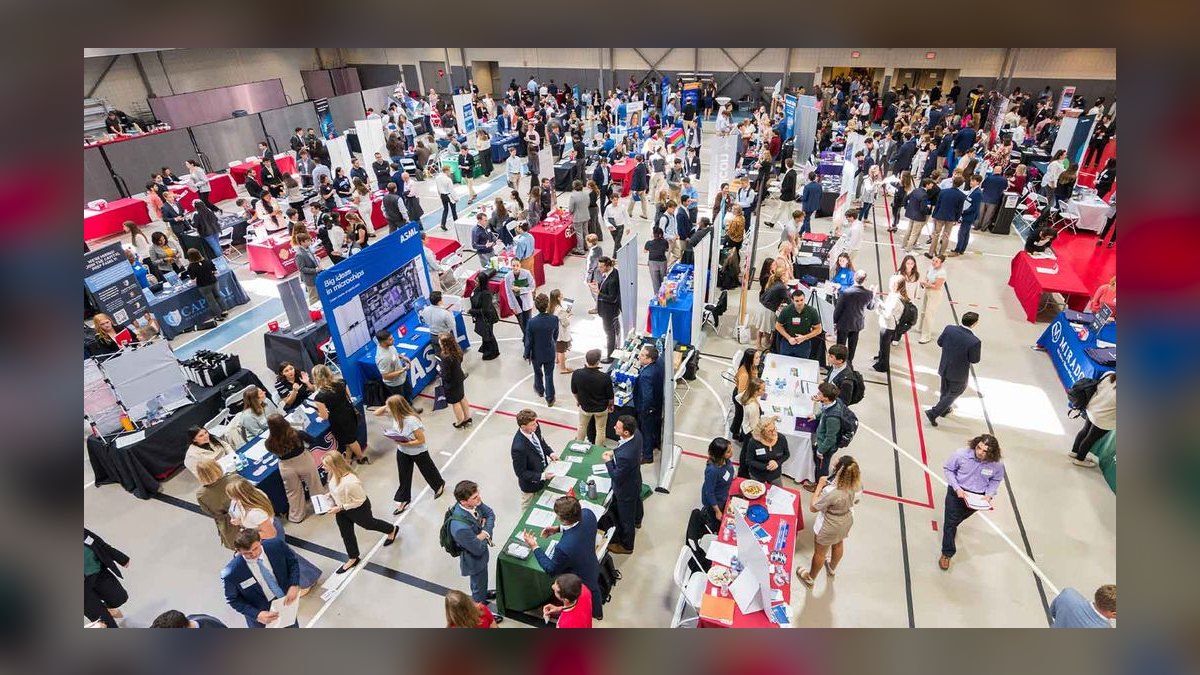
A campus or regional career fair is a high-volume, low-information environment. Recruiters stand for five or six hours behind a folding table, collect resumes in a stack or scan QR codes into an applicant tracking system, and make triage decisions in seconds. They are not evaluating your taste. They are looking for a signal that you understood the context of the room and prepared for it. A structured jacket, a shirt without wrinkles, and shoes that are not sneakers all say the same short sentence: *this person read the room.* That sentence is the entire deliverable.
The realistic outcome, then, breaks into three parts. First, you clear the filter. Nobody writes "wore a hoodie" on your resume, but visual mismatch creates a small negative prior that colors the next two minutes, and in a two-minute conversation a negative prior is expensive. Second, you buy attention. When a recruiter's eyes land on someone who looks composed, the default posture shifts from "process this person" to "listen to this person." Third — and this is the part most guides skip — you buy *your own* confidence. Standing in a loud gymnasium in clothes that fit and shoes that don't hurt frees up working memory you would otherwise spend adjusting a collar or worrying about a stain. That reclaimed attention goes into your pitch, your questions, and your recall of the company's product line.
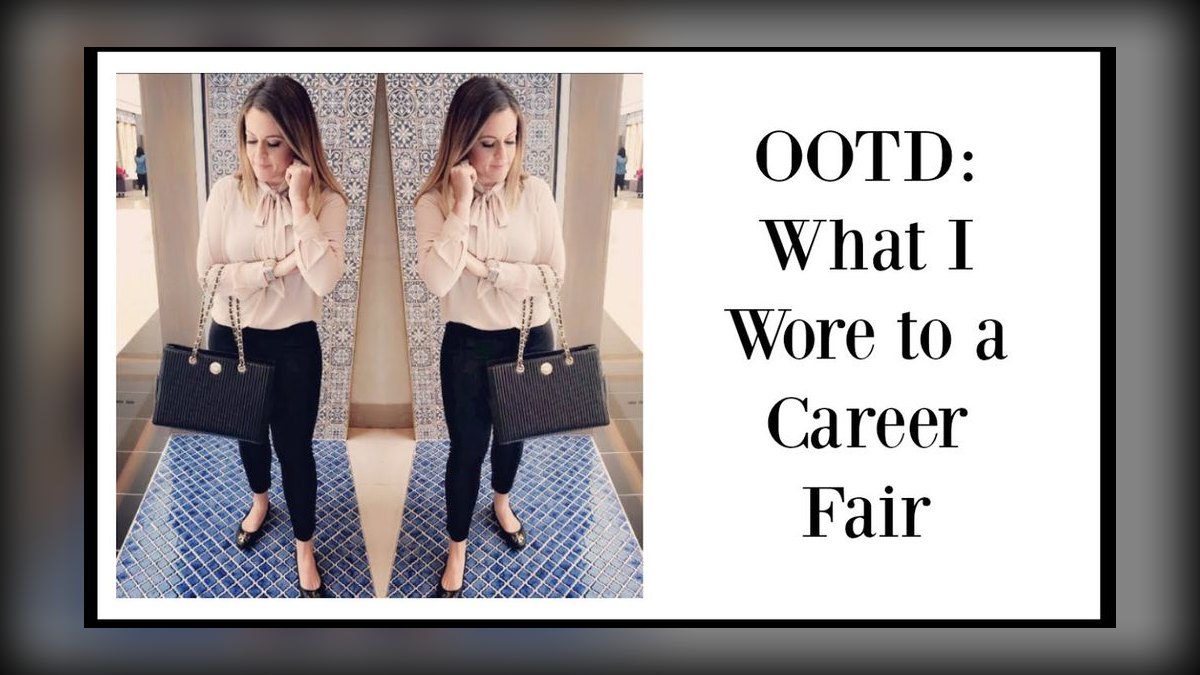
What you should *not* expect is differentiation. Nobody gets a callback because their blazer was olive rather than navy. Career fair dress is a threshold variable, not a scaling one: below the threshold it hurts you, above the threshold additional investment produces almost nothing. This is why a three-hundred-dollar outfit and a two-thousand-dollar outfit generally produce the same result, and why the smartest allocation of budget is toward tailoring rather than toward brand.
The adjacent scenarios follow the same logic and are worth naming because most people attending a career fair will hit them within the same season. The virtual fair, now a permanent fixture, compresses the signal into a shoulders-up rectangle — collar, jacket lapel, and lighting do all the work, and the trousers genuinely do not matter. The recruiting mixer or industry happy hour dials formality down about half a step: same trousers, same shoes, jacket optional, tie almost never. The on-site interview that follows a good fair conversation dials it *up* half a step and, critically, is the moment where fit and fabric quality actually start to matter, because you will be sitting under fluorescent light with someone looking at you for forty-five minutes rather than ninety seconds. Building a career fair outfit that also survives that second conversation is the efficient play.
What actually drives the outcome
Four variables do nearly all the work, and they are not the four most people optimize. In rough order of impact: fit, wrinkle state, shoe category, and color discipline. Brand, price, and trendiness sit far below these and can be safely ignored.
Fit is first because it is the only variable a recruiter reads instantly and unconsciously. A jacket whose shoulder seam sits past your actual shoulder reads as borrowed, regardless of the label sewn inside it. Trousers that pool over the shoe read as unfinished. The fix is unglamorous and cheap: a local tailor will shorten sleeves, take in a jacket waist, and hem trousers for a modest fraction of what the garment cost, and that work converts an off-the-rack piece into something that looks deliberate. If you buy one thing and alter it, you will outperform someone who buys three things and alters none.
Wrinkle state is second because it is the single most common self-inflicted wound. A shirt that spent the night folded in a backpack announces itself from ten feet away. The structural fix is fabric selection — non-iron cotton, wool blends with a bit of recovery, and knit or ponte jackets that resist creasing — combined with the boring discipline of steaming the night before and hanging the garment in the car rather than folding it. Career fairs are frequently reached by bus, train, or a long walk across campus, so the garment has to survive transit, not just the closet.
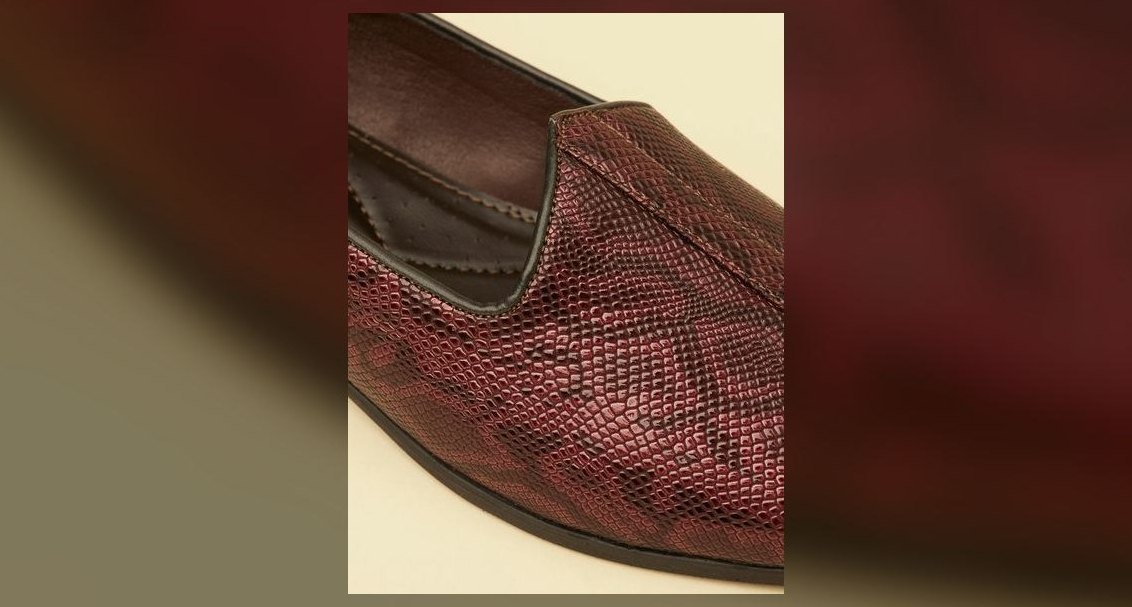
Shoe category is third, and it is binary in a way the other variables are not. Leather-soled or leather-uppered dress shoes — loafers, oxfords, low block-heel pumps, polished derbies — clear the bar. Athletic sneakers, canvas slip-ons, rubber flip-flops, and anything with a visible performance logo do not, no matter how clean or expensive. The nuance for 2027 is that the market has quietly solved the comfort objection: cushioned dress footwear with modern midsoles now exists across price tiers, so "I had to walk two miles" is no longer a defensible reason to show up in trainers.
Color discipline is fourth and is mostly about restraint. A muted base — navy, charcoal, olive, taupe, slate, sage — reads as professional across every industry represented in a mixed fair. One accent is fine and even good: a burgundy tie, a mustard scarf, a small gold earring. Two or three accents start to compete with your face, and in a room where you want the recruiter looking at your eyes while you talk, that is a real cost.
Below those four sit second-order variables that matter less but are cheap to get right: a bag that holds a laptop and a stack of resumes without sagging, subtle rather than statement jewelry, and grooming that is simply neutral. And below those sit the variables people obsess over that genuinely do not move the needle — the exact shade of navy, whether the buttons are horn or plastic, whether the label is from a mall brand or a designer.
One more driver deserves separate mention: industry calibration. A single career fair often hosts a defense contractor, a regional bank, a hospital system, and a fifteen-person software startup at tables twenty feet apart. The formality range across those employers is wide. The practical resolution is to dress to the middle-upper end of the range you actually care about and let a removable layer do the adjusting. A jacket you can carry over your arm moves you a full step down in formality without changing anything else, which means one outfit covers a bank table and a startup table in the same hour.
Benchmarks, budgets, and realistic ranges
Here is what the money actually buys, framed as tiers rather than shopping lists, because specific inventory changes season to season while the structure does not.
The entry tier — roughly $150 to $300 assembled. One jacket, two shirts or shells, one pair of trousers, one pair of leather shoes, one belt. This is achievable at mall-tier and fast-fashion-adjacent retailers, at outlet stores, and increasingly through secondhand and consignment channels, where lightly worn tailored clothing is abundant precisely because people buy it for one event and never wear it again. Thrift and resale are genuinely competitive here: a wool jacket that originally retailed at four figures often lists for a small fraction of that, and after tailoring it will outperform anything new at the same total spend. Budget roughly $40 to $100 of the total for alterations and treat that as non-optional.
The mid tier — roughly $400 to $800. Same silhouette, better fabric: wool or wool-blend jacket instead of polyester, non-iron cotton with a real collar structure, trousers with a bit of stretch that hold a crease through a full day. This tier's advantage is durability and repeat wear. If you will attend three fairs, two interviews, and a conference in the same year, the cost per wear drops below the entry tier quickly. This is where most people should land if they can.
The upper tier — $800 and above. Full-canvas or half-canvas construction, higher-grade wool, recraftable shoes. Real quality, and essentially invisible to a recruiter at a career fair. Buy it if you want it and can afford it, but do not buy it *for the fair* — the marginal return at the table is approximately zero. Its case is the ten-year horizon, not the ninety-second one.
Some concrete ranges worth internalizing. Trouser hems and sleeve shortening are usually the cheapest and highest-impact alterations available. Jacket waist suppression costs somewhat more and is worth it if the shoulders already fit; if the shoulders *don't* fit, walk away from the garment, because shoulder alteration is expensive and rarely great. Heel height for a full standing day realistically tops out around two to two and a half inches for most people, and flats or a low block heel are entirely professional — the "heels are required" convention is well and truly dead. Plan on standing and walking for the entire duration of the fair; most run three to six hours, and you will not sit.
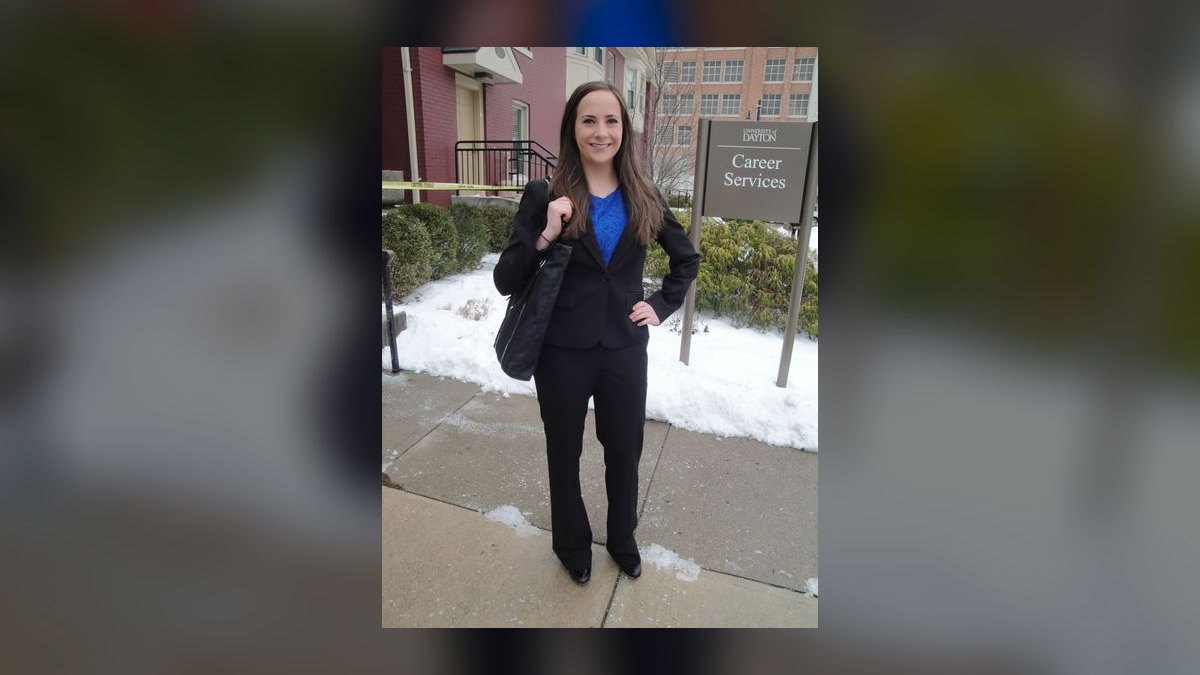
On quantity: bring more printed resumes than you think you need — a stack of fifteen to twenty-five is a reasonable planning number for a large fair even in an era of QR codes and ATS scans, because paper still works when the venue Wi-Fi does not. That stack needs to arrive uncreased, which is a real argument for a structured tote or portfolio over a soft backpack.
On timing: give yourself at least a week of lead time. That week is what lets you discover that the trousers need hemming, that the shirt has a stain you forgot about, or that the shoes you bought online are half a size off. The single most common failure mode in this whole domain is discovering a problem the night before, when every remedy is closed.
Finally, a benchmark on how much of this to repeat. One well-chosen core rotation — jacket, two tops, one trouser, one shoe — covers a full recruiting season. The variation that matters comes from the shirt and the accent, not from owning three jackets.
Risks, edge cases, and failure modes
The failures cluster into a handful of recognizable patterns, and nearly all of them are preventable with a day of foresight.

The comfort collapse. New shoes plus five hours of standing on a gymnasium floor equals blisters by hour two, and blisters visibly change how you stand and how long you're willing to linger at a table. Break shoes in across at least a few days of ordinary wear before the fair. Carry a blister patch. This is the most common physical failure and the most easily avoided.
The thermal mismatch. Career fair venues are notoriously badly climate-controlled — a field house in September is hot, a convention hall in January is freezing, and both are unpredictable. Layering solves this and nothing else does. A shell or shirt that looks finished on its own, under a jacket you can remove, gives you a twenty-degree operating range. Avoid outfits that fall apart when the jacket comes off.
The over-formality trap. Showing up in a full three-piece suit with a tie clip at a fair dominated by early-stage software companies reads as misjudged rather than impressive. It signals the same thing sneakers signal — that you did not check the room — just from the opposite direction. Research the employer list, which is nearly always published in advance, and calibrate to the median.

The under-formality trap. The mirror image, and more common. "It's a startup, they're casual" is true of the office and false of the recruiting event, where the recruiter themselves is usually dressed a step up. When in doubt, err slightly formal; a removable jacket makes that error nearly free.
The visual-noise problem. Strong fragrance, jangling bracelets, a loud print, or a bag covered in logos all pull attention off your face during a conversation that lasts ninety seconds. Fragrance deserves a specific callout: crowded indoor venues concentrate it, and many people are sensitive. Skip it or go nearly imperceptible.
The virtual-fair edge case. Increasingly common, and it inverts the priorities. The frame is shoulders and head. That means collar structure, jacket lapel, and lighting carry the entire signal, while shoes and trousers are irrelevant. Solid mid-tone colors read better on camera than pure white (which blows out) or busy patterns (which shimmer and alias). Test your setup on the actual platform beforehand — camera, angle, background, and lighting — because a great outfit lit from below still looks bad.
The accessibility and religious-dress edge case. Wheelchair users, people using mobility aids, and people whose religious practice includes specific garments all sit fully within professional dress; the underlying principles — fit, clean fabric, muted palette, deliberate presentation — apply unchanged and are what recruiters actually read. Where a standard recommendation conflicts with an assistive device or an article of faith, the standard recommendation is what yields.
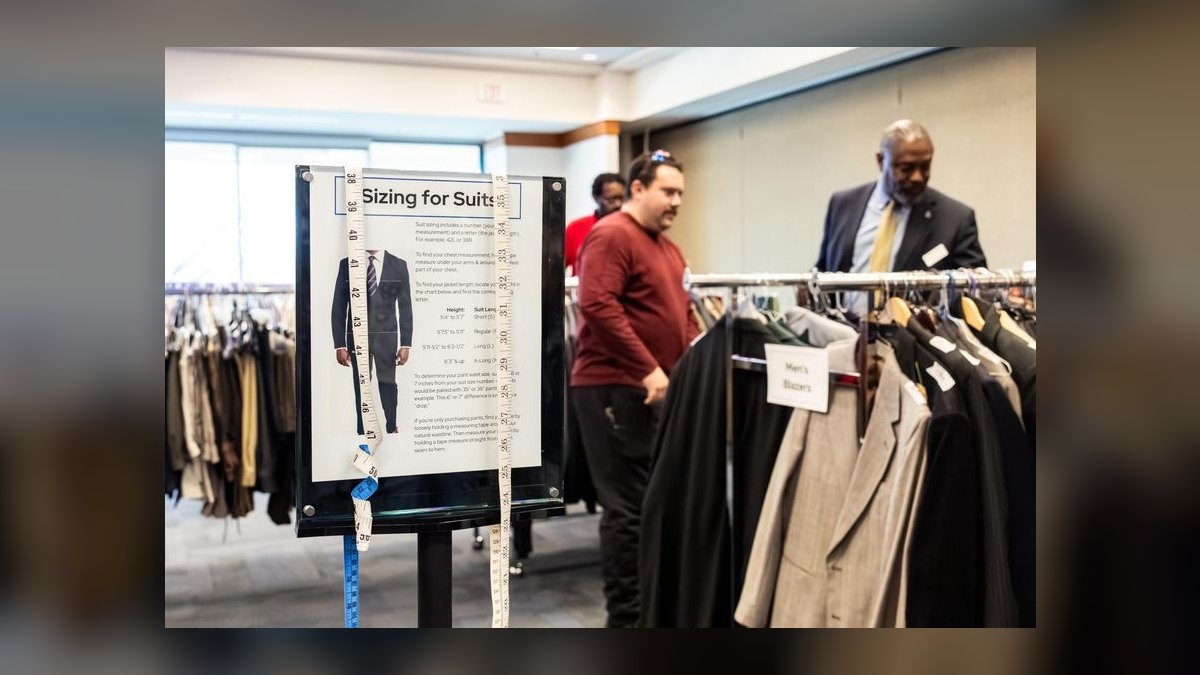
The budget-shame failure. This one is real and worth naming directly: students sometimes skip fairs entirely because they believe they cannot afford to dress for them. Most campuses run a career-closet or professional-clothing lending program, and community organizations do the same for non-students. These programs exist specifically to remove this barrier. Using one is ordinary and unremarkable.
The last-minute failure. Missing button, broken zipper, stain discovered at 7 a.m., trousers still unhemmed. Lay the entire outfit out the night before — including belt, bag, and resumes — and put it on once. Ten minutes of verification the night before eliminates nearly every version of this.
A practical rollout plan
Treat this as a short project with a deadline rather than a shopping trip, and it becomes trivial.

Two weeks out — audit and research. Open the closet and honestly assess what exists. Does anything still fit? Fit changes over a few years, and a jacket that fit at nineteen may not fit at twenty-two. Simultaneously, pull the published employer list for the fair and sort it: how many finance, consulting, or government employers versus how many startups and creative shops? That ratio sets your formality target. Also check whether the venue is indoor, outdoor, or mixed, and what the seasonal weather is likely to be.
Ten days out — acquire the gaps. Buy only what the audit says is missing. Shop the entry or mid tier depending on how many future events this rotation will cover. Consider secondhand and campus lending programs before retail. Buy shoes early — earlier than anything else — because they need break-in time and because sizing errors take the longest to fix.
One week out — tailor. Take the jacket and trousers to a tailor. Hem the trousers to just brush the shoe. Shorten sleeves so a small amount of shirt cuff shows. Take in the jacket waist if the shoulders already fit. Confirm the turnaround time and get a pickup date that leaves buffer.
Three days out — full dress rehearsal. Put on the entire outfit, shoes included, and wear it around for thirty minutes. Sit down. Reach forward as if handing over a resume. Walk. This surfaces the pulling shoulder, the trouser that rides, the shoe that pinches — all while there is still time to fix them.
The night before — stage everything. Steam or press. Hang the outfit rather than folding it. Stack the printed resumes flat in the bag along with a pen and a small notebook. Charge the phone. Pack blister patches, a stain pen, and a lint roller. Set out the bag by the door.
Fair day — execute and adapt. Arrive early enough to walk in composed rather than sprinting. Do a mirror check on arrival. Carry the jacket if the room is hot and the tables you're targeting are informal; put it back on before approaching a bank or a government table. Keep the resume stack accessible so you are not excavating your bag mid-conversation.
After — capture and reuse. Note which employers you spoke to and what you said, while it is fresh. Then, and this is the part everyone skips: hang the outfit properly, get anything cleaned that needs it, and note what failed. If the shoes hurt, fix that before the next event. The same rotation carries you through the follow-up interviews, and those are the conversations where all of this actually starts to matter.
Related questions
Do I need a full suit for a career fair?
Almost never. A jacket with contrasting trousers — a blazer and chinos, or a jacket and a skirt — reads as professional across nearly every employer at a mixed fair and is more flexible than a matched suit. Reserve the full suit for finance, law, and government-heavy events.
Are sneakers ever acceptable?
Not at a career fair. Even clean, minimal, leather sneakers read as a category mismatch in a room where everyone else is in dress shoes. Cushioned dress footwear now solves the comfort problem, so the trade-off that once justified sneakers no longer exists.
What should I carry my resumes in?
A structured tote, slim portfolio, or leather-look backpack in a neutral color. It should hold a laptop and fifteen to twenty-five flat, uncreased resumes, open without a struggle, and stand up on its own when set down. Avoid soft, sagging bags and heavy logo branding.
How does a virtual career fair change the answer?
Dramatically. Only your shoulders and head are visible, so collar structure, jacket lapel, and lighting carry everything. Solid mid-tone colors read best on camera; avoid pure white and busy patterns. Test camera, angle, and lighting on the actual platform in advance.
Can I wear a dress?
Yes. A structured sheath or shirt dress in a solid neutral is entirely appropriate on its own. Add a jacket or cardigan if the sleeves are short or the neckline is low, and check that it works while standing for several hours.
FAQ
What colors are safest for a 2027 career fair?
Muted, low-saturation neutrals: navy, charcoal, olive, taupe, slate, and sage as your base, with light blue, ivory, or white as the shirt or shell. One accent color — burgundy, mustard, a deep green — is fine and can make you memorable. Avoid neon, large florals, animal prints, and bold multicolor stripes, all of which compete with your face during a short conversation.
Are flats acceptable, or do I need a heel?
Flats are entirely acceptable and increasingly the default. Leather loafers, pointed-toe flats, and low block heels all read as fully professional. Given that you will stand for three to six hours on a hard floor, comfort is the deciding factor. Skip rubber-soled or canvas flats, which read casual regardless of how they're styled.
Should men wear a tie?
Usually not at a career fair. A jacket over an open-collar button-down is the standard register for most mixed fairs. Bring a tie in your bag if the employer list is heavy on banking, law, consulting, or government, and put it on before approaching those tables. Wearing a tie at a startup-dominated fair reads as slightly misjudged rather than impressive.
How do I handle a hot or outdoor venue?
Choose breathable fabrics — linen-cotton blends, tropical-weight wool, cotton poplin — and build the outfit so it works with the jacket off. A sleeveless shell or a shirt that looks finished on its own gives you that flexibility. Skip the tie, roll sleeves neatly if needed, and bring blotting tissues. Never assume the venue is air-conditioned.
What if I genuinely can't afford career fair clothes?
Check your campus career center for a career-closet or professional-clothing lending program; most universities run one, and many community organizations offer equivalents for non-students. Thrift stores and consignment shops carry abundant tailored clothing at low cost, and a modest alterations budget turns a secondhand jacket into something that fits better than most new ones. Do not skip the fair over this.
Does what I Wear matter more or less than it used to?
Slightly less in absolute formality, but the threshold effect is unchanged. Suits and ties have receded across most industries, so the bar has moved down. What has not changed is that visibly ignoring the context of the room still costs you. The rule is the same as it always was: match the register of the event, then let your preparation do the work.
Sources
- https://www.bls.gov/ooh/ — U.S. Bureau of Labor Statistics Occupational Outlook Handbook
- https://www.naceweb.org/ — National Association of Colleges and Employers
- https://www.shrm.org/ — Society for Human Resource Management
- https://www.careeronestop.org/ — CareerOneStop, U.S. Department of Labor
- https://hbr.org/ — Harvard Business Review
- https://www.dressforsuccess.org/ — Dress for Success
- https://www.eeoc.gov/ — U.S. Equal Employment Opportunity Commission
- https://www.usa.gov/job-search — USA.gov job search resources
Related on PULSE
- [What to Wear to a Career Fair as a New Grad in 2027](/knowledge/sy0089)
- [What to Wear to a Job Fair in 2027](/knowledge/sy0065)
- [What to Wear to a First Interview in 2027](/knowledge/sy0001)
- [What to Wear to a Business Casual Office in 2027](/knowledge/sy0012)
- [What to Wear to a Networking Event in 2027](/knowledge/sy0034)
 pulse-styleHow to Style Loafers for a Comedy Show in 2027
 pulse-styleWhat to Wear on a Crisp Fall Morning in 2027
 pulse-styleWhat to Wear to March Madness Watch Party in 2027
 pulse-styleWhat to Wear to a Internship Government Job Interview in 2027
 pulse-styleHow to Style a Pleated Skirt for a Bridal Shower in 2027
 pulse-styleHow to Wear Navy in Winter in 2027
 pulse-styleHow to Style a Slip Dress for a Baby Shower in 2027
 pulse-styleHow to Style Wide-Leg Pants for a Job Interview in 2027
 pulse-styleHow to Style a Blue Suit for a Comedy Show in 2027
 pulse-styleWhat to Wear to a Memorial Service in 2027