

How to Style a Wrap Dress for a Rooftop Party in 2027
 Curated byKory White · Fractional CRO · Maryland
Quality
Certified
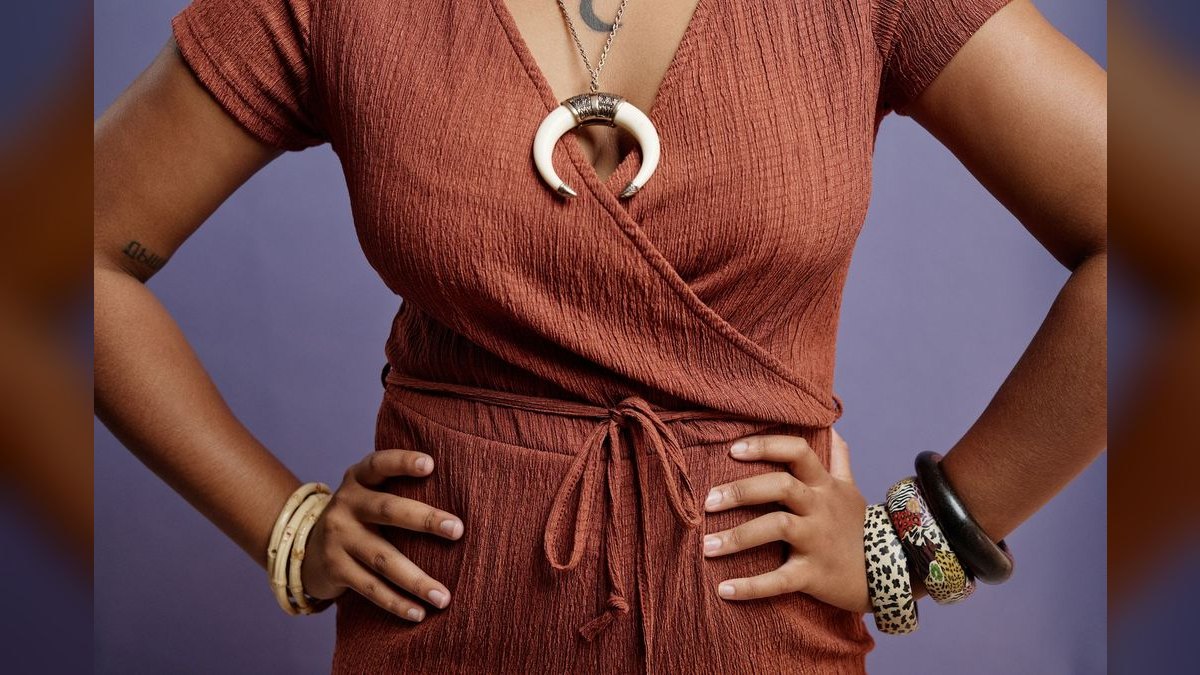
Choose a knee-length or midi wrap dress in a mid-weight fabric like silk jersey or double-faced wool so wind can't lift it, cinch the tie firmly at your natural waist, layer a cropped blazer for the post-sunset drop, and finish with block heels or wedges that stay stable on decking and gravel.
The night the hem won and everyone else lost
Picture a 42nd-floor terrace in late September. Doors open at 6:30 p.m. while the sun is still up and the deck reads a comfortable 74°F. By 8:15 p.m. the sun is gone, the ambient temperature has fallen roughly 10–15°F, and the wind that felt like a pleasant cross-breeze at street level is now moving across an unobstructed parapet at two to three times the speed reported at ground stations. Wind speed increases with height above ground — the standard engineering model treats it as a power-law or logarithmic profile — which is why a 7 mph forecast at the airport can feel like 15–20 mph on an open roof deck forty floors up.
This is the exact environment where a wrap dress either works brilliantly or fails publicly. The garment's defining feature is a front closure held by a single tie, with an overlapping skirt panel that ends in a vertical opening running from waist to hem. On a still evening indoors that opening is a design detail. On an open rooftop it is a sail with a hinge. The failure modes are specific and predictable: the outer skirt panel lifts and flips open along the front slit, the neckline gaps when the tie loosens, and the wearer spends the evening with one hand permanently occupied holding fabric down instead of holding a drink or shaking a hand.
The secondary problem is the floor. Rooftop venues almost never use the smooth continuous surfacing you get indoors. The common builds are ipe or composite decking over pedestal pavers, loose gravel ballast over a membrane, artificial turf sections, and open-grate steel walkways near mechanical equipment. Deck boards are typically installed with a gap of about 1/8 to 1/4 inch for drainage and thermal movement — wide enough to swallow a stiletto tip. Pedestal paver systems leave joints of similar width. A heel with a contact patch under roughly half an inch across is a genuine hazard on any of these, and the hazard compounds after two hours of drinks.
The third variable is duration and posture. Rooftop events are standing events. There are rarely enough chairs, the bar is a walk away, and the good views are at the rail. Assume three to four hours mostly upright on a hard surface, with intermittent walking over uneven transitions. That single fact eliminates a large share of otherwise attractive footwear before style even enters the conversation.
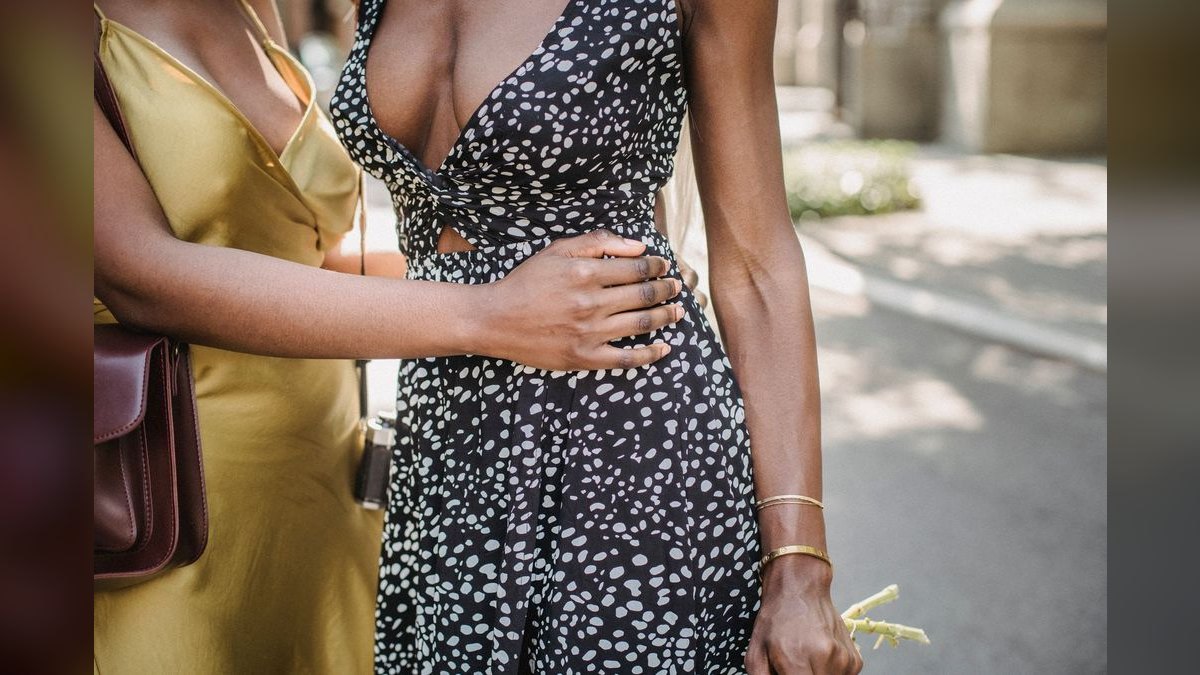
So the styling problem is not "does this dress look good." It is: hold the wrap closed against sustained lateral wind, survive a double-digit temperature drop without changing outfits, stay upright on a gapped surface for four hours, and still read as intentional in photographs taken under warm string lights at dusk. Every recommendation below is downstream of those four constraints.
How wind, weight, and the wrap closure actually interact
The mechanics are worth understanding because they explain why two dresses that look identical on a hanger behave completely differently on a roof. Three properties govern the outcome: areal density (fabric weight per unit area, usually quoted in grams per square meter or ounces per yard), drape stiffness (how readily the fabric bends under its own weight), and air permeability (how much air passes through the weave rather than pushing against it).
Lightweight woven silks — chiffon, georgette, crepe de chine in the lightest weights — are low in mass and low in bending stiffness. They have almost no inertia to resist a gust and no stiffness to resist folding, so they billow immediately and keep moving after the gust passes. Heavy structured wovens like a stiff wool suiting resist wind well but read as bulky on a wrap silhouette because the closure needs to fold smoothly across the body; too much stiffness makes the overlap stand away from the torso and creates a gapped, boxy front.
The sweet spot is mid-weight with soft-but-substantial hand. Silk jersey is the classic answer: it's a knit, so it moves with the body, but the weight gives it enough mass that a gust displaces it rather than launching it. Matte jersey and heavier viscose jersey behave similarly at lower cost. Double-faced wool — two layers bonded or woven together — gives structure without lining bulk and holds a clean edge on the wrap panel. Mid-weight linen and linen-blend wovens work in warm months but wrinkle visibly after two hours of standing, which is a real trade-off rather than a dealbreaker.
The closure itself deserves attention. Most commercial wrap dresses use a tie that passes through a small waist-seam opening on one side and knots at the hip or waist. That knot is the single point of failure. Two reinforcements cost nothing and change the evening: tie a square knot rather than a simple bow (a bow's loops work loose under repeated motion), and add a small snap or a bar tack at the neckline overlap point roughly 4–6 inches below the shoulder seam. A tailor charges very little for a snap; a fashion-tape strip is the no-sew version but loses grip once skin gets warm, so treat tape as a backup rather than the primary fix.
Hem length is the other lever. A mini wrap on an open roof is a losing proposition — there is simply not enough fabric mass below the slit to resist lift, and the slit opens near the top of the thigh. Knee-length is the practical minimum. Midi (roughly mid-calf, commonly 30–34 inches from the waist depending on height) is the best-performing length because the extra fabric adds mass exactly where the wind grabs, and the slit opening starts lower on the leg. Full-length maxi lengths perform well against wind but introduce a new problem: trailing hems and gravel or grating don't mix, and you'll be lifting the skirt at every threshold.
Numbers worth knowing before you get dressed

Concrete figures make the decisions faster. These are the ranges that actually drive the choices.
Temperature delta. Plan for a 10–20°F drop between doors-open and peak-evening on a clear night, more in dry climates where radiative cooling is stronger and less under cloud cover. Add the wind-chill effect on exposed arms and back — moving air over skin makes an actual 65°F feel meaningfully cooler. The practical translation: whatever layer you think you need, you need it, and you need it to be with you rather than in the coat check.
Hem length in inches. For a wearer around 5'6", a knee-length wrap sits roughly 22–24 inches from the natural waist; a midi lands around 30–34 inches. Scale by about an inch per two inches of height difference. If you're buying online, measure a dress you already own from the waist seam down and compare — listed "midi" spans a huge range between brands.
Heel geometry. The number that matters is the contact patch, not the heel height. A block heel with a base of about 1.5 x 1.5 inches distributes load across roughly 2+ square inches; a stiletto tip is often under 0.4 inches across. Deck gaps run about 1/8–1/4 inch. Anything with a tip narrower than about 1 inch is at risk. Heel height itself is a comfort variable: 1.5–2.5 inches is the standing-all-night range, 3 inches is fine for a couple of hours, above 3.5 inches on an uneven surface for four hours is a decision you will regret around 9 p.m.
Fabric weight. As a rough guide, jersey and knits under about 150 gsm behave as lightweight and will move a lot; 180–280 gsm is the mid-weight band that performs well on a roof; above roughly 350 gsm you are into coat-weight territory that fights the wrap silhouette. Most brands don't publish gsm, so use a proxy: hold the fabric up to a light. If you can read text through a single layer, it's too light for an open deck.
Accessory count. Three is the working ceiling for a wrap dress: earrings, one wrist or neck piece, and one functional item (belt or bag). The wrap's V-neckline and diagonal waist seam already supply two strong lines; adding a layered necklace stack puts a third and fourth competing diagonal in the same six inches of frame.
Bag dimensions. A rooftop with no tables means your bag stays on your body all night. A crossbody with a strap around 22–24 inches wears at the hip; a shorter 18–20 inch strap sits at the waist and will fight the wrap tie. If you want a clutch, choose one you can tuck under an arm and still hold a glass — envelope styles around 9–11 inches wide work; anything larger becomes a second job.
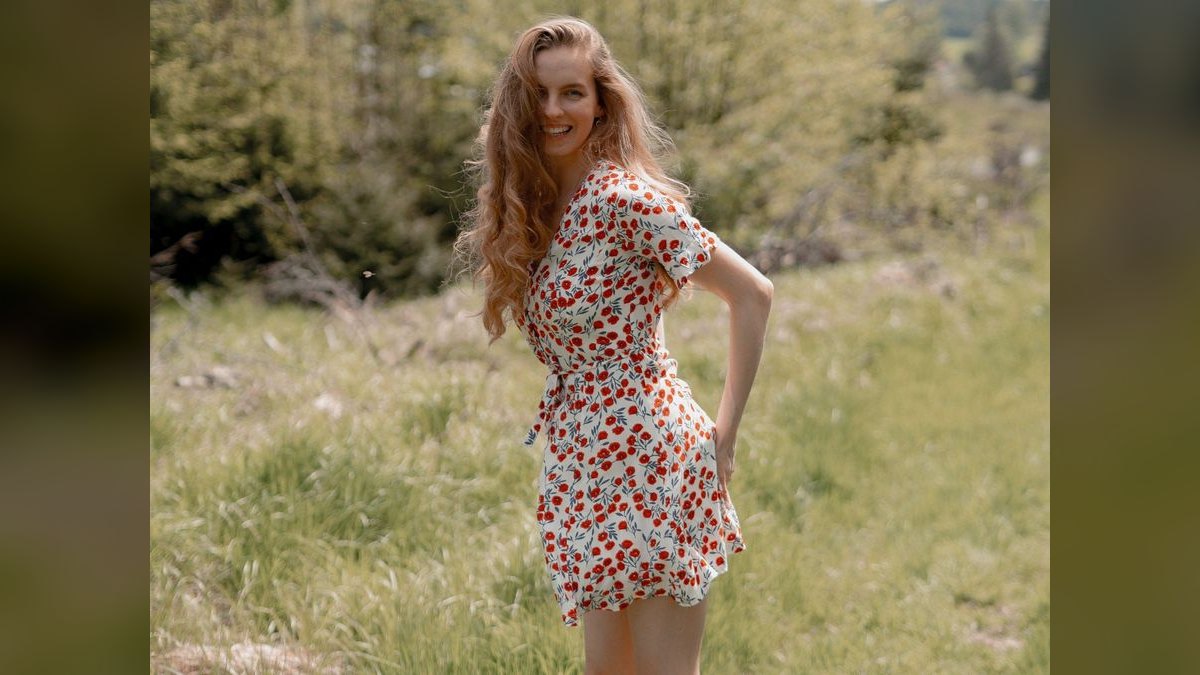
Budget reality. A well-made silk jersey wrap dress from an established brand typically runs in the mid-hundreds; a viscose or matte-jersey version from a mainstream retailer lands in the low hundreds and performs nearly as well on wind resistance, losing mainly in hand-feel and long-term recovery after washing. The cropped blazer is where spending pays off, because it's the piece that gets worn over dozens of other outfits.
Trade-offs: what each layer, shoe, and color choice costs you
Every good rooftop choice buys one property at the expense of another. Naming the trade explicitly makes the decision easy.
Cropped blazer vs. leather jacket vs. cardigan vs. wrap/shawl. A cropped blazer ending at or just above the natural waist is the highest-polish option and preserves the wrap's waist definition — but a structured shoulder plus a structured wrap neckline can read stiff, and a blazer is warm only to about the low 60s. A leather or suede moto jacket adds genuine windbreak (leather is effectively air-impermeable) and texture contrast against a soft jersey, but the hardware and asymmetric zip compete with the wrap's diagonal line, and it dresses the outfit down. A fine-gauge cashmere or merino cardigan is the most comfortable and the easiest to remove and drape over an arm, but open-front knits flap in wind unless belted, which then doubles the waist lines. A large wrap or stole is the warmest per ounce carried and the most elegant at rest — and the least practical in wind, because you'll spend the night re-anchoring it.
The synthesis that works most often: cropped blazer for anything with a stated dress code, leather jacket for anything described as "drinks," fine-gauge knit if you run cold or the event is long, stole only if there are walls or glass on at least two sides.
Block heel vs. wedge vs. flat vs. boot. Block heels give height with stability and read dressy — the cost is that a narrow block still concentrates load on a small footprint if the block is under about 1.25 inches. Wedges have the largest contact patch and the best load distribution, so they're the most comfortable over four hours — the cost is visual weight at the ankle, which shortens the leg line under a midi. A refined flat — a pointed mule, a leather sandal with a substantial sole — is the safest and most comfortable, at the cost of the elongation a heel provides under a longer hem. An ankle boot is the cold-weather answer and handles gravel best, but it cuts the leg at the narrowest point and works far better under a midi than under a knee-length hem.
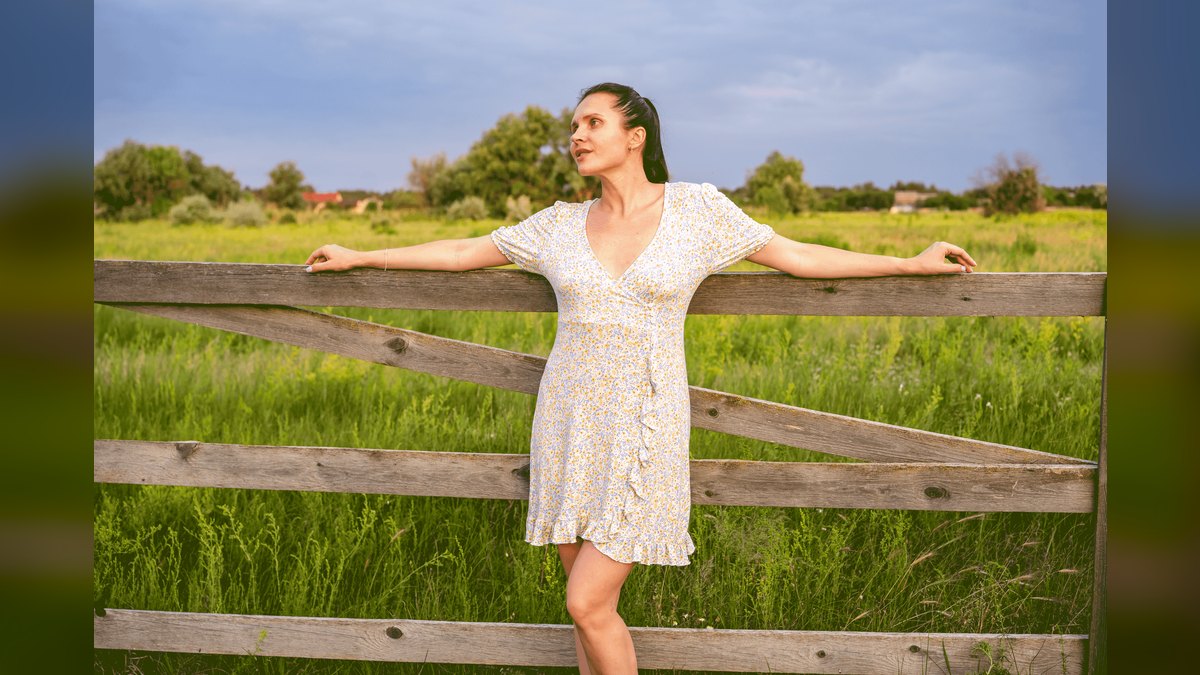
Fabric trade-offs. Silk jersey drapes beautifully and resists wrinkles, but shows water spots permanently and is dry-clean-only. Viscose and matte jersey match the drape at a fraction of the price but can grow at the hem over a long evening as the fibers relax. Double-faced wool is the structure champion and needs no lining, but it's a cool-weather-only choice. Linen blends breathe best in heat and wrinkle within the first hour — genuinely fine if the event is casual, genuinely wrong if there are photographs you care about.
Color trade-offs. Deep saturated tones — navy, burgundy, forest, charcoal — photograph well under the warm 2200–2700K string lighting that most rooftops use, and they hide the inevitable spilled drink. The cost is that they can go flat and muddy in low light without a reflective accessory to catch highlights. Light neutrals — cream, bone, camel — glow at golden hour and are the best choice if the event starts before sunset, but they're unforgiving about transfer marks from a leather bag strap and about anything red in a glass. Pattern is the third path: a small-scale print hides wrinkles and spills better than any solid, but a busy print plus a wrap's diagonal seam plus a belt is too much information in one silhouette.
Belt or no belt. A thin chain or leather belt worn over the tie adds definition and, more usefully, provides a second mechanical anchor for the wrap. The cost is bulk at the waist where the tie is already knotted, and a heavier chain belt can drag the front panel down over a few hours. If you belt, tuck the tie ends under and choose a belt lighter than the dress fabric's weight class.
The mistakes that show up in every rooftop photo
Treating the tie as sufficient. The single most common failure. The dress arrives, the tie works fine in a fitting room, and nobody tests it against sustained lateral airflow. Add the neckline snap. Tie a square knot. Do a stair test at home with a fan on if you want certainty.
Choosing the hem by the mirror instead of by the wind. A mini wrap looks great standing still in a bedroom. On a deck it becomes a four-hour management task. The check: raise both arms overhead and see where the front slit opens to. If the opening reaches mid-thigh with arms down, it will reach higher in wind.
Leaving the layer in the car. The temperature drop is not a maybe; it happens every clear evening. People consistently underestimate it because they arrive during the warm hour. Bring the layer onto the roof even if you're carrying it.
Picking the shoe for the entrance and not the deck. The walk from the elevator to the terrace is smooth. Everything past that is not. Ask the venue — or look at photos — whether the surface is decking, pavers, gravel, or turf, then choose accordingly. Gravel in particular defeats every heel regardless of width.
Over-accessorizing the neckline. The wrap's V is already a strong graphic. A long pendant, a layered chain stack, and hoop earrings together create four competing lines in the same frame. Pick the earrings or pick the necklace.

Wearing a strapless or convertible bra under a deep wrap. The wrap's neckline shifts as the tie settles. A bra that itself migrates compounds the problem. A properly fitted standard bra with a low center gore, or sewn-in cups, holds a much more predictable line over four hours.
Ignoring hair as part of the outfit. Sustained wind and loose hair on an open roof is a losing combination, and it directly affects how the neckline reads because hair blown across the shoulder breaks the V-line the whole outfit is built around. A low knot, a half-up, or anything anchored is a styling decision, not an afterthought.
Under-dressing because it's "just a rooftop." Rooftop events skew toward the polished end for a simple structural reason — the venue is a premium space, so the guest list and the photography tend to match. A wrap dress with a real layer and a considered shoe is almost never overdressed there. The same logic applies whether the event is social or a company mixer where the roof deck is essentially an extension of a revenue-team offsite: the setting sets the floor for how you present, and dressing to that floor costs nothing.
Buying the fabric blind online. Product photography is shot indoors on a still set. Nothing in the images tells you the weight. Read the composition, check whether it's a knit or a woven, look for the words "jersey," "crepe," "double-faced," or "chiffon" — and if the listing says nothing useful, assume it's on the lighter side, because lighter fabric is cheaper to ship and make.
Skipping the sit-and-stand test. The wrap's front opening behaves completely differently seated. If there's any chance you'll sit — a lounge sofa, a low banquette — test the seated position before you commit, and if the opening is a problem, that's another argument for the midi.
Related questions
What fabric holds up best in rooftop wind?
Silk jersey and matte jersey in the mid-weight band, plus double-faced wool for cooler months. They carry enough mass to resist lift while still draping softly across the wrap closure. Avoid chiffon, georgette, and the lightest crepes on any open deck.
Can I wear a mini wrap dress to a rooftop party?
You can, but you'll manage it all night. The front slit opens high and there's little fabric mass below it to resist wind. If you're committed to a mini, add a neckline snap, wear shorts underneath, and pick a heavier knit.
Do sneakers work with a wrap dress on a roof?
Yes for a casual daytime or early-evening event — a clean leather sneaker in white or black reads deliberate against a jersey wrap and handles decking and gravel better than any heel. For anything with a stated dress code, a wedge or block heel is the safer read.
How do I keep the neckline from gaping?
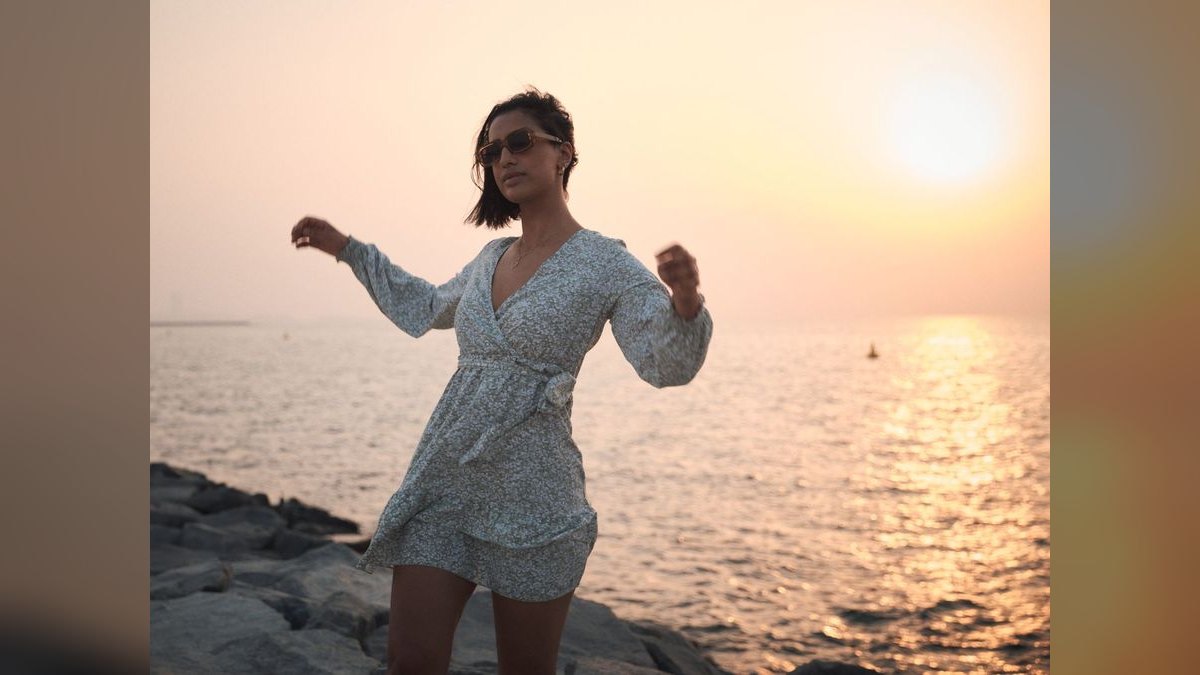
Have a tailor add a small snap or hook-and-eye at the overlap point roughly four to six inches below the shoulder seam. It's an inexpensive alteration and it solves the problem permanently. Fashion tape works as a same-day backup but loosens as skin warms.
Is a belt over the wrap tie a good idea?
Often yes — it adds a second mechanical anchor and sharpens the waist. Keep the belt lighter than the dress fabric so it doesn't drag the front panel down, tuck the tie ends underneath, and skip it entirely if the dress is already patterned.
FAQ
What length wrap dress works best on an open rooftop?
Midi is the strongest performer. The extra fabric adds mass where wind grabs hardest, and the front slit opens lower on the leg. Knee-length is the practical minimum. Skip minis on open decks, and be cautious with full-length maxis if the floor is gravel or open grating.
How much colder does a rooftop actually get after sunset?
Plan for roughly 10–20°F between doors-open and peak evening on a clear night, with a stronger drop in dry climates and a milder one under cloud cover. Add wind chill on top, since elevated open decks see meaningfully faster air than street level. Bring the layer with you rather than leaving it downstairs.
Which shoes are safe on rooftop decking?
Anything with a contact patch wider than about an inch: block heels, wedges, refined flats, sturdy loafers, or ankle boots. Deck boards and pedestal pavers are typically installed with 1/8–1/4 inch gaps, which is exactly wide enough to trap a stiletto tip. Gravel ballast defeats heels of any width.
What's the best layer that doesn't hide the wrap silhouette?
A cropped blazer or moto jacket ending at or just above the natural waist. Both stop above the wrap tie, so the waist definition and the V-neckline stay visible. Long cardigans and full-length coats cover the two features that make the dress work.
How many accessories should I wear with a wrap dress?
Three, maximum: earrings, one neck or wrist piece, and one functional item like a belt or bag. The wrap already contributes a V-neckline and a diagonal waist seam, so adding a layered necklace stack puts four competing lines in the same small area of frame.
Can men wear a wrap-front garment to a rooftop event?
Yes — a wrap-front or surplice-front linen or merino shirt over tailored trousers, with suede loafers or leather derbies, reads as considered rather than costume. The same rules apply: mid-weight fabric so the front placket doesn't flap, and a layer for the temperature drop.
Sources
- National Weather Service — Wind Chill and Cold Weather Safety
- NOAA National Weather Service — Wind Terminology and Forecasting
- Vogue — Fashion
- Harper's Bazaar — Fashion Trends
- Who What Wear — Fashion Advice
- The Cut — Style
- GQ — Style
- Real Simple — Clothing
- Britannica — Silk
- U.S. EPA — Reducing Urban Heat Islands (roof surfaces and thermal behavior)
Related on PULSE
- How to Style a Wrap Dress for a Cocktail Party in 2027
- How to Style a Wrap Dress for a Retirement Party in 2027
- How to Style a Wrap Dress for an Engagement Party in 2027
- How to Style a Wrap Dress for a Holiday Party in 2027
- How to Style a Maxi Dress for a Rooftop Party in 2027
- How to Style a Slip Dress for a Rooftop Party in 2027
This page will be disappearing soon. Save it to your device for $1 — or read it free while it is here.
@Kory-White- · if Venmo asks, the last 4 of my number are 2012
This page is gone.
This one is off the shelf now. $1 keeps it on your phone for good — the whole page, pictures and diagrams included.
 pulse-styleWhat to Wear to March Madness Watch Party in 2027
 pulse-styleWhat to Wear to a Real Estate Job Interview in 2027
 pulse-styleHow to Wear Cream in Summer in 2027
 pulse-styleWhat to Wear to a Summer Garden Wedding in 2027
 pulse-styleWhat to Wear to Boating in 2027
 pulse-styleHow to Style Loafers for a Holiday Party in 2027
 pulse-styleWhat to Wear to a Graduation if You’re Plus-Size in 2027
 pulse-styleHow to Wear Maroon with Combat Boots in 2027
 pulse-styleHow to Style a Maxi Dress for a First Date in 2027
 pulse-styleHow to Wear Olive Green in Fall in 2027