
Best Cellular and Wireless Carrier in Tennessee in 2027
 PULSEKNOWLEDGE LIBRARY
AT&T is the best cellular and wireless carrier in Tennessee for most residents in 2027, because its low-band spectrum holds a usable signal across rural counties, mountain hollows, and interstate corridors where competitors thin out. Verizon wins in dense Nashville and Memphis blocks on raw speed; T-Mobile wins on family-plan price.
The two carriers most Tennesseans actually choose between
Almost every serious carrier decision in Tennessee collapses to a two-way fight between AT&T and Verizon, with T-Mobile as a strong third for anyone whose life happens inside a metro. The reason is spectrum physics, not marketing. Low-band spectrum in the 600–850 MHz range travels far and penetrates buildings and terrain; mid-band in the 2.5–3.7 GHz range carries far more data but drops off faster; millimeter-wave delivers gigabit speeds over a block or two and is stopped by a tree. Tennessee is 440 miles wide, folded into the Cumberland Plateau and the Appalachian ridges in the east, flattened into Delta farmland in the west, and threaded with long stretches of two-lane highway between. That geography rewards low-band reach and punishes carriers that leaned hardest into mid-band and millimeter-wave urban buildouts.
AT&T's advantage in the state is coverage consistency. Its network has historically carried a deep low-band footprint across the Southeast, and that translates into the practical experience Tennesseans describe most often: a signal that stays alive on I-40 between Nashville and Jackson, on the Natchez Trace, in the parking lot of a county co-op, and partway up a Smokies trailhead road. It is not always the fastest signal. It is usually the signal that is still there.
Verizon's advantage is peak performance and network discipline in cities. In downtown Nashville, Memphis, Chattanooga, and Knoxville, Verizon's C-band and millimeter-wave deployments produce the fastest sustained download numbers most users will personally record, and its congestion management during large events — a Titans game, a Predators game, Bonnaroo weekend, CMA Fest — tends to hold up better than the raw coverage-map comparison would suggest. The trade is that Verizon's rural Tennessee footprint has more soft spots than AT&T's, particularly in the plateau counties and the far northeast corner near the Virginia line.
T-Mobile occupies a genuinely different position. It bought and deployed an enormous mid-band 2.5 GHz block, which gave it the broadest fast-5G footprint in the country by population, and it prices aggressively — multi-line plans on T-Mobile are typically the cheapest of the big three per line. Its weakness in Tennessee is the same as everywhere: mid-band reach falls off in terrain, so the plateau, the Highland Rim's more remote pockets, and the deep hollows east of Knoxville see coverage degrade faster than they do on AT&T. T-Mobile's satellite-to-phone texting partnership partially offsets this by giving basic SMS in places where no terrestrial tower reaches, which matters more in Tennessee than in Ohio.

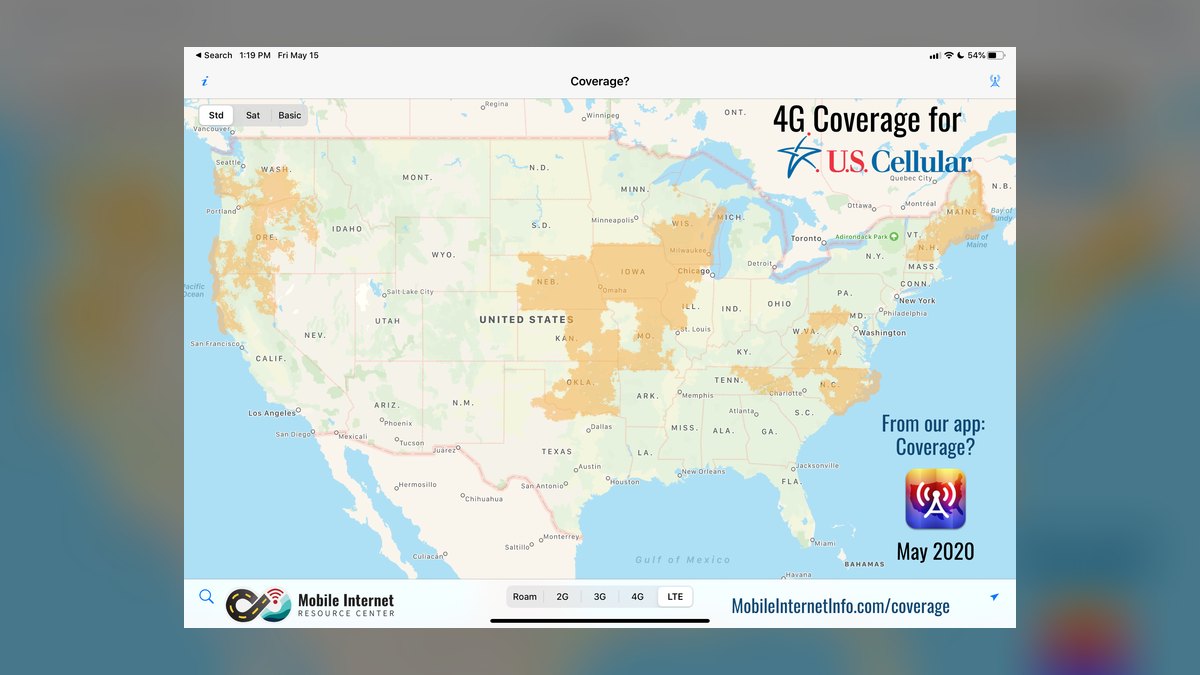
There is a fourth name worth knowing if you live east of Cookeville: UScellular has maintained a real regional presence around Knoxville, Johnson City, and Kingsport, with local retail and U.S.-based support. It roams onto national partners outside its home footprint, which means it behaves like a very good local carrier and a mediocre national one. For a retiree who never leaves East Tennessee, that trade can be worth it. For a sales rep covering the whole state, it is not.
Beneath the big four sits the MVNO layer, and it deserves more respect than it usually gets. Cricket runs on AT&T. Visible runs on Verizon. Mint runs on T-Mobile. Straight Talk and Walmart Family Mobile run on multiple host networks depending on the SIM. Consumer Cellular runs on more than one host and targets light users and seniors. An MVNO gives you the host network's coverage map at a lower price, in exchange for lower data priority during congestion, thinner customer support, and usually weaker hotspot and international allowances. That trade is excellent in a rural county where congestion is rare and coverage is the whole ballgame, and it is worst in a downtown core at 6 p.m. on a Friday.
How to decide between them for your specific address
The single most common mistake is choosing a carrier from a national ranking instead of from your own three or four locations. A carrier ranking is a population-weighted average. You do not live in an average. You live at one address, work at another, and drive a repeating route between them. Coverage at those specific points is the only data that matters, and it is knowable before you sign anything.

Start by writing down four locations: home, work or school, the place you sleep most often that isn't home (a parent's house, a cabin, a weekend property), and the worst stretch of your regular commute. Then check each one three ways. First, the carrier's own coverage map, which is optimistic but directionally useful and does show the difference between "5G ultra/plus" mid-band and plain low-band 5G or LTE. Second, the FCC's National Broadband Map, which is built from standardized carrier filings and challenge data and is less flattering than the carriers' own marketing maps. Third — and this is the step people skip — ask a human who lives there. In rural Tennessee, the answer to "what works out here" is common knowledge at the feed store, the volunteer fire department, and the local Facebook group, and it is more accurate than any map.
Then run a real trial. Every major carrier and most MVNOs support eSIM trials or short prepaid periods. Buy a month of prepaid service on the carrier you are considering, put it on a second eSIM line on your existing phone, and carry both for two to four weeks. Watch what actually happens in your basement, in the concrete stairwell at work, on the drive through the tunnel, and at your in-laws' place. A prepaid month costs less than one month of the wrong two-year decision.
The decision tree above is deliberately blunt, because the failure mode it prevents is expensive. People port their number first, discover the dead spot second, and then find that unwinding the port means another store visit, another activation, and sometimes a lost promotional credit that was contingent on staying twelve or twenty-four months. Never port until the trial line has proven itself at every location on your list.
One more decision input that gets ignored: what happens when the power goes out. Tennessee gets severe thunderstorms, occasional ice storms in the east, and the western third sits close enough to the New Madrid seismic zone that emergency preparedness is a live topic. Cell sites have battery backup measured in hours, and generators only at a subset of sites. During a multi-day outage, the carrier with the most sites in your area — not the fastest — is the one still passing traffic on day two. That is another point in favor of the denser rural footprint.

The concrete numbers behind each option, and how to read them
Carrier pricing has converged into a narrow band, and the sticker price is rarely what you pay. Understanding the structure is worth more than memorizing any single number, because the numbers change quarterly and the structure does not.
A single-line unlimited postpaid plan on AT&T, Verizon, or T-Mobile generally lands in the $65–$95 per month range before taxes, with the spread driven by three variables: how much high-priority "premium" data you get before deprioritization, how much mobile hotspot data is included, and whether streaming perks or international roaming are bundled. The advertised figure almost always assumes autopay and paperless billing, which typically knocks $5–$10 off per line, and it usually excludes taxes and regulatory fees. T-Mobile has historically been the exception by folding taxes into the advertised price on many plans; AT&T and Verizon typically add them.
The per-line economics change dramatically with line count. A single line at $85 is expensive per person. The same plan family at four lines commonly falls to the $30–$45 per line range, because carriers price the fourth line near marginal cost to capture the household. If you are a single person paying single-line postpaid pricing, you are buying at the worst point on the curve — which is precisely why single people are the best candidates for MVNOs, and families are the worst.

MVNO pricing sits roughly $20–$40 below postpaid for comparable data. Prepaid brands on the major networks commonly run $25–$60 per month for an unlimited plan, with the cheapest tiers reached by paying several months or a full year upfront. Mint's model is explicitly a bulk-purchase discount: the low advertised rate applies to a multi-month prepayment, and the month-to-month rate is meaningfully higher. Read which number you are being quoted.
The number that actually determines your experience is the premium-data threshold. "Unlimited" on every carrier means unlimited at some speed. Below the threshold — commonly somewhere in the 20 GB to 60 GB range depending on the tier — your traffic is treated at normal network priority. Above it, you are deprioritized, which means that when a tower is congested your packets yield to everyone still under their threshold. Deprioritization is invisible on an empty rural tower and brutal on a packed downtown one. MVNO customers are frequently deprioritized *at all times* relative to the host network's own postpaid customers, which is the entire reason the price is lower.
Hotspot allowances follow the same logic. Premium postpaid tiers commonly include 15–50 GB of high-speed hotspot; budget tiers include 5–15 GB or none, and some throttle hotspot traffic to a low fixed speed after the allowance. If you work from a truck, a job site, or a lake house without wired broadband, hotspot is not a perk — it is the product, and it should drive the plan choice outright.
Then there are the costs that never appear in the comparison chart. Device financing is the big one: a $900 phone spread over 36 months at "$0 down" is a $25 monthly line item that is functionally a contract, because the remaining balance comes due the moment you leave. Promotional credits work the same way — the "free phone with trade-in" is delivered as monthly bill credits over 24 or 36 months, and switching mid-term forfeits the remainder. Activation and upgrade fees of $35 or so per line are standard. Insurance runs roughly $10–$18 per line per month with a deductible on top. A household adding four lines, four financed phones, and four insurance plans can easily double the plan's headline cost.

Tennessee-specific tax treatment adds a real layer. Tennessee has no state income tax and leans on sales and use taxes, and telecommunications services carry state and local sales tax plus federal Universal Service Fund contributions and 911 fees. On a postpaid bill where taxes are added rather than included, budget another 10–18% over the advertised rate depending on locality. That gap is large enough to flip a close comparison between a tax-inclusive plan and a tax-exclusive one.
Finally, evaluate fixed wireless access separately from phone service. All three major carriers sell home internet delivered over the cellular network, generally in the $35–$70 per month range, and in parts of rural Tennessee that service is a genuine alternative to satellite or a slow DSL line. But it depends entirely on there being spare capacity on your local tower, which is why availability is checked address by address and can be waitlisted. If home internet is the real problem you are solving, the carrier with the best *phone* coverage at your address is not automatically the one with FWA capacity there — check both.
Implementation: switching without breaking anything
Switching carriers is a small project with a correct order of operations. Done in the right sequence it is uneventful. Done in the wrong sequence it costs you your phone number, your two-factor authentication, or a promotional credit worth several hundred dollars.

The first step is verifying device compatibility. Modern unlocked phones support all three networks' major bands, but "supports the band" and "supports every band the carrier uses in your county" are different claims, and older or imported handsets frequently lack the specific low-band or mid-band the new carrier depends on where you live. Check the IMEI against the carrier's compatibility tool before anything else. If the phone is still being financed, it is likely locked until the balance is paid and a carrier-specific unlock window has elapsed.
Second, confirm you can actually port your number. Numbers port from the *account* that currently owns them, and you need the account number and a transfer PIN from the losing carrier — every major carrier now requires a port-out PIN as an anti-SIM-swap measure. Generate it before you start, not while standing at a counter. Critically: do not cancel the old service. Cancelling releases the number, and a released number cannot be ported. The port itself cancels the old line automatically when it completes.
Third, inventory everything tied to your phone number. Bank logins, brokerage accounts, work SSO, password managers, government portals, and two-factor SMS all point at that number. A port takes minutes when it goes well and can take hours or occasionally a day when carrier systems disagree about your account details, and during that gap SMS may land on neither device. Move critical 2FA to an authenticator app or hardware key before the port, not after. This single step prevents the worst switching outcome, which is not a bad signal — it is being locked out of your own bank at 9 p.m. on a Friday.
Fourth, prefer eSIM where the device supports it. An eSIM activation avoids a store trip and a shipping delay, and dual-SIM phones let the new line run alongside the old one during the overlap period. Keep both active for a few days. Once the port completes and calls, texts, MMS group threads, RCS, visual voicemail, and Wi-Fi calling all verify clean, retire the old line.

Fifth, settle the money. Confirm the final bill from the old carrier, including any prorated charges and the remaining device financing balance, and confirm in writing whether an outstanding balance is due immediately. Switching incentives frequently include a switcher credit that reimburses an early termination or device payoff, but those credits are conditional — they typically require submitting the final bill within a deadline, staying on a qualifying plan, and remaining active for a number of billing cycles. Calendar the submission deadline the day you switch. Unclaimed switcher credits are one of the most common ways households leave real money on the table.
Sixth, tune the new line. Turn Wi-Fi calling on immediately — it is the single most effective fix for a weak signal at home or in an office interior, because it routes voice over your broadband and bypasses the cellular weak spot entirely. Enable Voice over LTE/5G if it is not on by default. If you are in a rural area with a persistent marginal signal, a cellular signal booster is a legitimate hardware fix; it needs an outside antenna with a usable signal to amplify, so it cannot manufacture coverage from nothing, but it converts one bar outdoors into workable service indoors. Carriers also sell femtocells and Wi-Fi-calling-based network extenders for the same problem.
For small businesses, add two steps. Put the account in the business's name with a designated authorized user, not in an employee's personal name, or the day that employee leaves you will discover the company's main number belongs to them. And separate the fleet's data needs from the phone plan: tablets, telematics, and point-of-sale terminals usually belong on cheaper connected-device lines rather than full unlimited voice lines.

Adjacent decisions this choice quietly drives
The carrier choice ripples outward further than most people expect, and thinking one layer past the phone bill often changes the answer.
Home broadband is the largest adjacency. In much of rural Tennessee the practical internet options are a rural electric cooperative or municipal fiber build if you are lucky, cable if you are near a town, satellite, or fixed wireless over the cellular network. Tennessee has been unusually active on cooperative and municipal fiber — Chattanooga's municipal utility fiber network is the best-known example in the country — and where fiber has reached, it beats every wireless option outright. Where it has not, the same carrier decision you are making for your phone determines whether fixed wireless home internet is even available to you. Bundling can also produce real discounts: carriers that sell both fiber and mobile frequently discount the mobile lines meaningfully when both are on one account.
Rural business operations are the second adjacency, and it is where the coverage-versus-speed trade gets sharpest. A field service business — HVAC, plumbing, propane delivery, ag services, land surveying — lives on dispatch software, mobile invoicing, card readers, photo uploads from the job site, and GPS. All of those degrade gracelessly with intermittent connectivity. A dispatch app that cannot sync leaves a technician standing in a driveway unable to see the work order. For these operations, the correct evaluation criterion is not average speed but *worst-case availability across the service territory*, which almost always points to the widest low-band footprint. It is also worth designing the workflow to tolerate dead zones: offline-capable apps that queue and sync, card readers with store-and-forward, and route planning downloaded before the truck leaves.
Vehicle and IoT connectivity is the third. Connected cars, farm equipment telematics, trail cameras, remote gate controllers, livestock monitors, and cabin security systems all pick a host network — sometimes one you cannot change. If your tractor's telematics runs on a network that does not cover the back forty, the feature is decorative. Before buying connected equipment for a rural property, check which carrier the modem uses and whether that carrier covers the specific parcel.
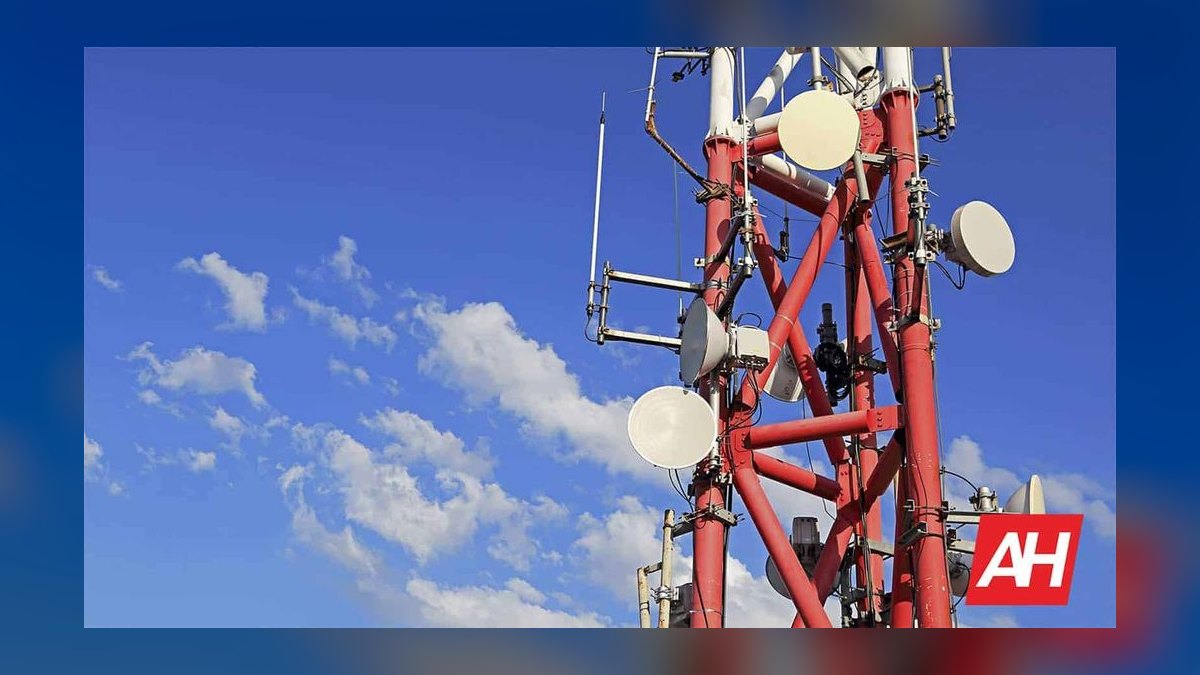
Emergency communication is the fourth, and it is the one that justifies redundancy. Tennessee's severe weather season, the ice risk in the eastern mountains, and the state's tornado exposure all argue for a communication plan that survives a tower outage. Practical redundancy layers, roughly in order of cost: enable Wi-Fi calling so a working broadband line substitutes for the cell network; keep a second line on a *different* host network for a household with real exposure; use satellite-to-phone SMS where the carrier and device support it; and for genuinely remote property, a dedicated satellite messenger. A NOAA weather radio remains the cheapest reliable alert channel and requires no network at all.
The fifth adjacency is travel and roaming. Tennessee borders eight states, and a lot of Tennesseans regularly drive into Kentucky, Georgia, Alabama, Mississippi, Arkansas, Missouri, Virginia, or North Carolina. National carriers handle this invisibly. Regional carriers and some MVNOs roam onto partner networks with data caps or speed limits that kick in once you leave the home footprint. If you cross state lines weekly, read the roaming terms before the regional discount tempts you. International travel adds another layer — premium tiers commonly bundle a day-pass allowance or basic data in Mexico and Canada, while budget tiers charge per day, and a local eSIM bought at the destination is almost always cheaper than any carrier's roaming pass for a trip longer than a few days.
What to re-check every year, and when to actually move
The carrier that is right today is not automatically right in eighteen months, and the biggest predictable change is tower buildout. Carriers add sites and light up new spectrum continuously, and rural Tennessee has been an active buildout region because federal subsidy programs and state broadband initiatives have targeted exactly these gaps. A county that was a soft spot for one carrier two years ago may be fully covered now. Re-check the maps annually rather than assuming the ranking is static.
Set a calendar reminder at the eleven-month mark of any promotional period. Introductory pricing expires, promotional credits complete, and loyalty pricing is a myth — the discounts go to new and switching customers, not to the household that has been on autopay for six years. Calling retention before a contract-adjacent milestone, with a specific competitor offer in hand, is the highest-return fifteen minutes in the entire process. Ask directly whether there is a current plan with the same or better terms at a lower price; carriers rarely migrate you to a cheaper plan on their own.
Audit your actual usage rather than your imagined usage. Every carrier app shows monthly data consumption per line. If a household is paying for premium tiers with 50 GB thresholds and every line uses 12 GB, the household is buying insurance against a risk that has never materialized — and could move to a cheaper tier or an MVNO with no perceptible change. The reverse is also common: a line consistently blowing past its threshold and getting deprioritized every month is a line that should move up a tier, and the person on it usually blames the carrier's coverage when the real problem is their plan.
Watch for the structural changes too. Satellite-to-phone service is expanding from SMS toward data and voice, which will progressively erode the rural coverage advantage that currently drives this entire recommendation. Fiber buildouts through cooperatives and municipal utilities keep reaching new Tennessee communities, and each one changes the home-internet calculus and often the bundling math. And carriers periodically restructure their plan lineups wholesale, which is the moment to re-shop — a restructure usually means the new lineup is priced for acquisition while your legacy plan quietly becomes the expensive one.
Finally, know when the answer changes for you personally. Move from Nashville to a farm outside Lafayette, and the speed-optimized choice becomes the wrong one overnight. Take a job that puts you in a truck across forty counties, and coverage breadth outranks everything else. Add three family lines, and the per-line economics of the big three suddenly beat the single-line MVNO you have been happy with. The right cellular and wireless carrier is a function of where you are and what you do, and both of those change.
Related questions
Does AT&T really cover more of rural Tennessee than Verizon?
In practice, yes — AT&T's low-band footprint holds signal in more plateau, hollow, and Delta locations than Verizon's, which concentrates strength in metros. But the gap is county-specific, not statewide. Check both maps plus the FCC National Broadband Map for your exact address before deciding.
Is a cheap MVNO a mistake if I live in Nashville?
Not a mistake, but a real trade. MVNO customers are deprioritized behind the host network's postpaid customers, and downtown Nashville towers get congested. If you regularly work from crowded areas or attend large events, the postpaid premium buys you priority you will actually notice.
Can cellular home internet replace my rural broadband?
Sometimes. Fixed wireless access from the major carriers runs roughly $35–$70 per month and can beat satellite or slow DSL, but it depends on spare capacity at your local tower, so availability is checked address by address and can be waitlisted. Check fiber cooperative availability first.
What single setting most improves a weak signal at home?
Wi-Fi calling. It routes voice and texts over your home broadband and bypasses the cellular weak spot entirely, and it is free on all major carriers. Enable it on every line before buying a signal booster or switching carriers over an indoor dead spot.
Should I cancel my old plan before switching?
No. Cancelling releases your phone number and a released number cannot be ported. Keep the old line active, complete the port, then let the port automatically close the old account. Also confirm any device financing balance and switcher-credit deadlines.
FAQ
Which carrier is best for driving between Tennessee cities?
AT&T, in most cases. Interstate corridors and the two-lane state routes between metros are exactly where low-band reach matters, and connection consistency along a route is a different measurement from peak speed in a downtown core. If your commute includes a specific known dead zone, test that stretch with a trial eSIM before committing — a single bad tunnel or ridge can decide the whole question.
How much should a family of four expect to pay per month?
Plan on roughly $120–$180 per month before taxes for four postpaid unlimited lines on a major carrier, or meaningfully less on an MVNO. Then add the costs the comparison charts omit: device financing, insurance at roughly $10–$18 per line, activation fees, and Tennessee sales tax and regulatory fees, which on tax-exclusive plans commonly add 10–18% to the bill.
Does satellite texting actually work in the Smokies?
Satellite-to-phone messaging is designed for exactly this case — a clear view of the sky with no terrestrial tower in range — and it works for basic SMS on supported carriers and devices. It is not a substitute for a terrestrial signal: it needs open sky, so a deep hollow or dense canopy can block it, and it is text-first rather than a full data connection. For serious backcountry use, a dedicated satellite messenger is still the more reliable tool.
Is UScellular worth considering in East Tennessee?
It can be, if you genuinely stay within its home footprint around Knoxville, Johnson City, and Kingsport. You get local retail, U.S.-based support, and competitive service in the core area. The catch is roaming: outside the home footprint you are on partner networks, sometimes with data restrictions, so frequent out-of-state travel erodes the value quickly.
What does "unlimited" actually mean on these plans?
It means unlimited data at *some* speed. Each plan has a premium-data threshold — commonly in the 20–60 GB range — under which your traffic gets normal network priority. Past it, you are deprioritized, meaning your packets yield to other users whenever a tower is congested. On an empty rural tower you will never notice. On a packed downtown tower at rush hour, the difference is dramatic.
How often should I re-shop my cellular and wireless plan?
Annually, and always at the eleven-month mark of any promotional pricing. Coverage maps change as carriers build out rural sites, plan lineups get restructured with the best pricing aimed at new customers, and your own usage drifts. Pull your actual per-line data consumption from the carrier app first — most households are either overpaying for headroom they never use or getting throttled on a tier they outgrew.
Sources
- FCC National Broadband Map
- FCC Consumer Guide: Wireless Number Portability
- AT&T Coverage Map
- Verizon Coverage Map
- T-Mobile Coverage Map
- UScellular Coverage Map
- Ookla Speedtest Intelligence Reports
- Opensignal Mobile Network Experience Reports
- J.D. Power U.S. Wireless Studies
- Ready.gov: Severe Weather Preparedness
Related on PULSE
- [Best Cellular and Wireless Carrier in Houston in 2027](/knowledge/tc0107)
- [Best Cellular and Wireless Carrier in Phoenix in 2027](/knowledge/tc0109)
- [Best Cellular and Wireless Carrier in San Antonio in 2027](/knowledge/tc0112)
- [Best Rural Home Internet Options in 2027](/knowledge/tc0120)
- [How to Switch Phone Carriers Without Losing Your Number](/knowledge/tc0121)
 telcoBest Cellular and Wireless Carrier in Nevada in 2027
 telcoHow do I choose the right cell phone carrier for my needs in 2027?
 telcoBest Cellular and Wireless Carrier in Massachusetts in 2027
 telcoBest Cellular and Wireless Carrier in Baltimore in 2027
 telcoIs Visible worth it in 2027?
 telcoBest Cellular and Wireless Carrier in San Antonio in 2027
 telcoBest Cellular and Wireless Carrier in Nashville in 2027
 telcoAre phone trade-in deals actually worth it in 2027?
 telcoIs carrier phone insurance worth it in 2027?
 telcoWhat is the difference between an MVNO and a major carrier in 2027?