
Best Cellular and Wireless Carrier in San Antonio in 2027
 PULSEKNOWLEDGE LIBRARY
For 2027, T-Mobile is the best overall cellular and wireless carrier in San Antonio, pairing the widest metro-wide 5G footprint with the strongest suburban reach into Helotes, Schertz, and Converse. Verizon takes runner-up on downtown reliability and peak speed. Budget buyers should look at Mint Mobile or Visible instead.
The Stone Oak commuter problem nobody plans for
Picture a fairly ordinary San Antonio buyer: they live off Stone Oak Parkway, commute down 281 to an office near the Medical Center, take their kids to weekend games out past 1604, and drive to a family place in Helotes twice a month. On paper, every national carrier "covers San Antonio." Every coverage map is a solid blanket of color over Bexar County. And yet this person's actual daily experience of their phone is decided almost entirely by three or four specific stretches of road and one or two specific buildings — not by the map.
That gap between the map and the day is the whole problem. Carrier coverage maps are modeled predictions, not measurements. They show where a signal *should* reach given tower placement, transmit power, and terrain, at a resolution that smooths over the exact things that break service: parking garages, the concrete-and-glass interior of a Medical Center building, a Hill Country ridgeline on the way to Bandera, a stadium with forty thousand people all uploading video at once. San Antonio has all four in abundance.
Consider what actually happens in a week. The commute down 281 into downtown is well-served by all three national networks — this is dense, high-value corridor coverage and every carrier has invested in it. The office building near the South Texas Medical Center is a different story: interior penetration on mid-band and especially high-band 5G is dramatically worse than on low-band, and a phone that shows 350 Mbps in the parking lot can show a single bar and LTE fallback three floors up. The drive northwest past Helotes toward the Hill Country is where the suburban and rural footprint separates the carriers — this is where T-Mobile's 2.5 GHz mid-band buildout and low-band 600 MHz reach genuinely outperform, and where Verizon's coverage thins out relative to its urban strength. And the stadium or arena event, where every network degrades and the question becomes not "who has coverage" but "who deprioritizes you least."
So the practical framing for a San Antonio buyer in 2027 is not "which cellular network is best" in the abstract. It's: which of these four situations do you actually live in most? A person who never leaves Loop 410 and works in a building with good in-building service can buy on price and be perfectly happy — a $30/month Mint Mobile line on T-Mobile's network will feel identical to a $60/month postpaid T-Mobile line for most of their week. A person who drives the 1604 arc daily and takes calls the whole time cares about handoff consistency and voice reliability far more than peak throughput. A person who works from home in Alamo Ranch with a spotty ISP might care most about whether fixed wireless home internet is a viable second pipe. Those are three different best answers.

The second thing this scenario surfaces: the wireless carrier decision in San Antonio is increasingly entangled with the home internet decision. Both T-Mobile and Verizon sell 5G home internet that rides the same towers as their phone service, discounted when bundled with a phone line. AT&T sells fiber across large parts of the metro and discounts wireless when you bundle. That means the "best carrier" question quietly becomes a household infrastructure question — and the right answer changes depending on whether you already have fiber at the house, whether your neighborhood is fiber-served at all, and whether you'd use fixed wireless as primary or as failover. A household that puts a 5G home internet gateway in the window is buying the same radio quality that determines their phone experience; if the phone is weak at that address, the home internet will be too.
The third wrinkle is that the MVNO layer has gotten good enough that the network and the brand have decoupled. Mint Mobile runs on T-Mobile and is owned by T-Mobile. Visible runs on Verizon and is owned by Verizon. Cricket runs on AT&T and is owned by AT&T. Google Fi runs primarily on T-Mobile. In 2027 you can buy any of the three national networks at roughly half the postpaid price, and the thing you give up is not coverage — it's priority during congestion, some premium-data allowance, hotspot generosity, international roaming breadth, and human customer service. Whether that trade is good depends entirely on the congestion profile of the places you actually stand.
How network priority and spectrum actually decide your speed
Two phones standing in the same spot, on the same carrier's towers, can get wildly different speeds. Understanding why is the single most useful thing a San Antonio buyer can learn, because it explains almost every "my friend has the same carrier and gets better service" conversation.

There are two mechanisms stacked on top of each other. The first is spectrum band. Every modern network runs on a layered cake: low-band (roughly 600–900 MHz) travels far and penetrates buildings well but carries modest capacity; mid-band (roughly 1.7–4 GHz, including T-Mobile's 2.5 GHz and the C-band that Verizon and AT&T deployed) is the sweet spot — good reach, large capacity, and it's where most of the real-world 5G speed gains live; high-band millimeter wave delivers extraordinary peak throughput but only over short distances with near line-of-sight, which is why it exists in dense downtown pockets, arenas, and airports rather than across a metro. Your phone picks a band based on signal conditions, and that pick largely sets your ceiling. Walking from a downtown sidewalk into a building elevator lobby can drop you from mid-band 5G to low-band LTE, and the speed difference is an order of magnitude.
The second mechanism is scheduling priority, and this is the one people miss. A cell tower has finite capacity per sector. When more traffic wants that sector than it can serve, the scheduler decides whose packets go first, using a QoS class identifier assigned to each subscriber. Postpaid customers on premium plans get a higher class. Prepaid and MVNO customers on the same network get a lower class. When the sector is uncongested — which is most of the time, in most places — the classes are indistinguishable, because there's spare capacity for everyone. When the sector saturates, the lower class waits.
This is why a Mint Mobile line and a T-Mobile postpaid line feel identical on a Tuesday morning in Alamo Ranch and feel completely different at a packed arena. Same towers, same spectrum, different position in the queue. It's also why "premium data" allowances work the way they do: a plan advertising 50 GB of premium data means the first 50 GB each cycle are carried at the higher priority class, and everything after that drops to the deprioritized class for the rest of the cycle. It is not a hard throttle to a fixed speed — you may never notice it if you're rarely in congested cells — but it's a real degradation exactly when the network is busiest.
Add a third factor that matters in a city with San Antonio's growth pattern: backhaul and site density. A tower is only as fast as the fiber feeding it. New subdivisions on the far north and west sides frequently get residential build-out faster than they get cell-site build-out, which produces the familiar pattern where a two-year-old neighborhood has noticeably worse service than a twenty-year-old one three miles closer in. This is temporary — carriers backfill — but "temporary" in network buildout terms can mean a couple of years, which is the entire life of a phone contract.

The practical payoff of understanding this chain: you can diagnose your own service. Slow everywhere, all the time, at one address? That's a coverage and band problem — a different carrier or a signal booster helps. Fast most of the time but terrible at specific busy places or hours? That's a priority problem — a postpaid plan on the same network helps, and switching carriers may not. Fast at the start of the month and sluggish at the end? That's a premium-data cap problem — buy a bigger allowance or reduce usage. Three very different fixes, and people routinely apply the wrong one, switching carriers to solve a congestion problem and landing in exactly the same place on a different logo.
What the numbers look like on the ground
Independent measurement of US mobile networks has converged on a fairly consistent picture over the last several years, and it's worth being precise about what the numbers mean before quoting any.
Typical mid-band 5G download speeds in a well-covered US metro area land in the low-to-mid hundreds of Mbps. T-Mobile has led national median-speed rankings in independent crowdsourced testing for several consecutive reporting cycles, driven by the depth of its 2.5 GHz mid-band deployment inherited from the Sprint merger. Verizon and AT&T, having deployed C-band later, closed a meaningful part of that gap but have generally trailed on median 5G download speed while competing well on reliability and consistency metrics. For San Antonio specifically, expect mid-band 5G to deliver speeds in the hundreds of Mbps across most of the developed metro on any of the three networks, with T-Mobile typically at the top of the range.
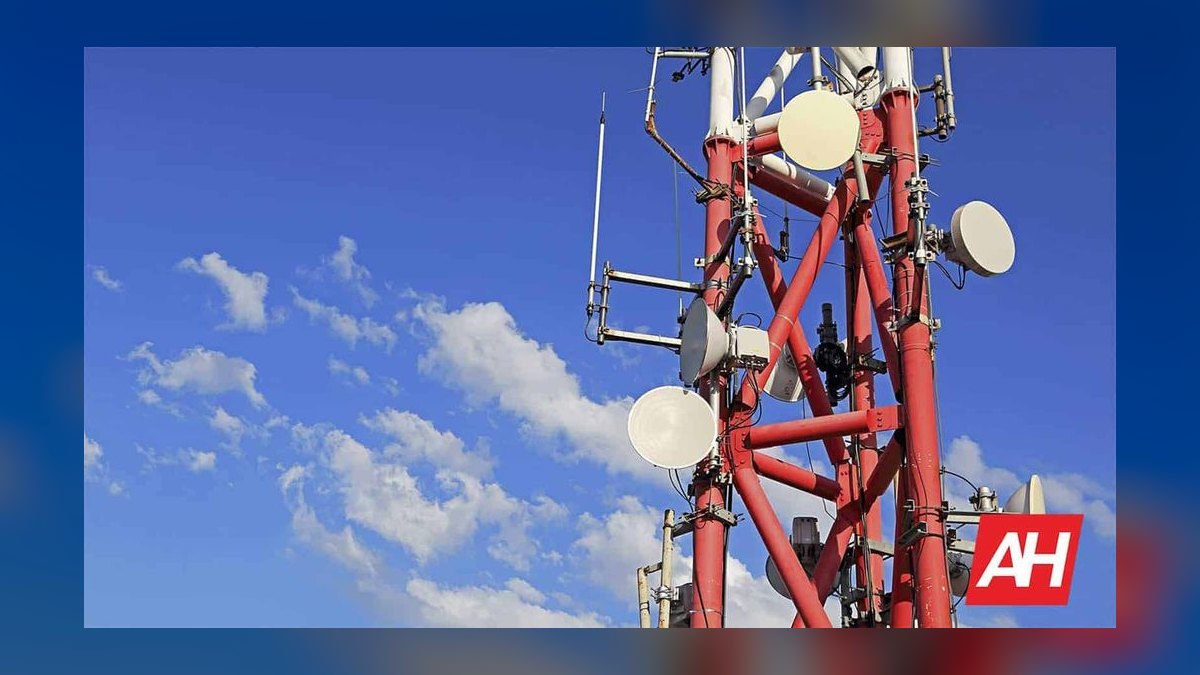
Peak millimeter wave speeds — the gigabit-plus numbers in marketing — are real but geographically tiny. mmWave nodes exist in dense downtown blocks, stadiums, arenas, and airports. If you are not standing within roughly a block of a node with clear line of sight, you will never see those numbers. Treat mmWave as a bonus in specific venues, never as a reason to choose a carrier.

LTE fallback speeds matter more than most buyers expect, because in-building and rural situations still drop to LTE routinely. Modern LTE in a well-provisioned area delivers double-digit to low-triple-digit Mbps — entirely adequate for calls, navigation, streaming, and video conferencing. The practical consequence: a carrier with mediocre 5G but excellent LTE fallback can feel better day-to-day than one with spectacular 5G peaks and weak fallback.
Latency runs roughly 25–50 ms on 5G and somewhat higher on LTE. For anything short of competitive gaming, both are fine. Fixed wireless home internet inherits this latency, which is why it works well for video calls and streaming and less well for latency-sensitive gaming compared to fiber.
Pricing structure in 2027 follows a stable pattern worth internalizing rather than memorizing exact figures, since promotions shift constantly:
- *Postpaid premium unlimited* from the three national carriers clusters in the $65–$90 per line range for a single line with autopay, dropping substantially per line on multi-line accounts. Four lines typically land in the $140–$180 per month range depending on carrier and plan tier. These plans bundle large premium-data allowances, generous hotspot, international roaming, and streaming perks.
- *Postpaid entry unlimited* runs roughly $50–$65 per line and trades away hotspot generosity, premium-data headroom, and perks.
- *Prepaid from the national carriers* (Cricket on AT&T, Metro on T-Mobile, Verizon prepaid) sits around $40–$60 per line with smaller premium-data allowances and lower priority.
- *Discount MVNOs* — Mint, Visible, and similar — land in the $25–$40 per line range, often requiring annual prepayment for the lowest rate. Same networks, lowest priority, thinnest support.
- *5G home internet* from T-Mobile and Verizon typically runs $35–$70 per month, with the lower end reserved for customers who also have a phone line on the same carrier. Real-world throughput varies enormously by address, commonly landing anywhere from 50 to 300+ Mbps depending on distance to tower, band availability, and sector load.

The number that most changes a household's total cost isn't the headline plan price — it's device financing. A flagship phone financed over 24 or 36 months adds $25–$45 per line per month, and carrier "free phone" promotions are structured as bill credits that vanish if you leave before the term ends. A $30/month MVNO line plus a bought-outright midrange phone can beat a $60/month postpaid line with a "free" flagship over a three-year horizon, or lose to it, depending entirely on the promotion. Run the three-year total, not the monthly.
One more benchmark worth knowing: reliability and consistency scores, which measure the percentage of tests meeting a usable threshold rather than raw peak speed. These are the numbers that correlate with "my phone just works." Verizon has historically performed strongly here, and it's the honest basis for its runner-up position in a market like San Antonio — not peak throughput, but the odds that a call connects and holds in a dense building.
Choosing between them, and the alternatives most people skip
Once you understand band and priority, the carrier choice reduces to a handful of clean decision rules for San Antonio.

Choose T-Mobile if your week includes meaningful time outside Loop 1604 — Helotes, Schertz, Cibolo, Converse, Boerne-direction drives — or if you want the best median speed for the money. The 2.5 GHz mid-band layer is deeper here than the competition's C-band, and the 600 MHz low-band layer gives it strong reach into the metro's edges. It's also the best-priced premium tier once you're on multiple lines, and the bundled perks are genuinely used by most households.
Choose Verizon if your phone's most important job is connecting a call from inside a specific building — a Medical Center tower, a downtown office, a hospital — and you've verified it works there. Verizon's edge is consistency and voice reliability in dense urban environments, and if that's your failure mode, the price premium is buying the thing you actually need.
Choose AT&T if you already have AT&T Fiber at the house (the bundle discount is real and the fiber is genuinely good where it's available), or if you need FirstNet eligibility as a first responder. AT&T's network is solid and its weakness is comparative rather than absolute.
Choose an MVNO if you are rarely in congested cells and you're comfortable with app-and-chat support. Mint on T-Mobile's network and Visible on Verizon's are the two that most consistently deliver the parent network's coverage at roughly half the price. Cricket on AT&T adds physical stores across San Antonio, which matters more than people admit when a SIM fails or a port goes sideways.

Now the alternatives buyers skip, which are often the actual right answer:
Wi-Fi calling is free on every major carrier and effectively fixes in-building coverage anywhere there's decent Wi-Fi. If your only complaint is that calls drop at home or at the office, enabling Wi-Fi calling on both ends solves it for zero dollars, and it makes carrier choice nearly irrelevant at your two most important addresses. Test this before switching carriers over an indoor problem.
eSIM dual-line is the underused power move. Modern phones hold two active lines. Running a cheap MVNO line as a permanent secondary on a *different* parent network gives you genuine redundancy — when T-Mobile has a sector problem, your $15/month Verizon-network eSIM still works. For anyone whose income depends on connectivity, a second line on a second network costs less than one bad outage.
Signal boosters address a fixable class of problem: adequate outdoor signal, poor indoor signal, at a fixed location. A booster with an outdoor antenna can turn one usable bar outside into full service inside. This is the correct fix for a Hill Country-edge house that switching carriers won't solve.

Carrier-agnostic testing before you commit — take a prepaid SIM or eSIM trial on the candidate network, put it in your phone, and carry it for a week through your actual routine. Google Fi, Visible, and most prepaid brands make this cheap. One week of real data from your own commute beats every coverage map and every review.
The adjacent decision worth folding in: home internet. If you're in a fiber-served part of San Antonio, fiber plus a cheap MVNO phone line is usually the best total-cost household setup, because good home Wi-Fi plus Wi-Fi calling neutralizes most of what you'd pay a premium carrier for. If you're in a neighborhood without fiber, 5G home internet from the carrier with the best signal at your address becomes attractive — and in that case, buying your phone service from the same carrier for the bundle discount starts making sense. Notice how the answer flips based on a fact about your street, not about the carriers.
The mistakes that cost people the most
Trusting the coverage map over a real test. Maps are propagation models. They're directionally useful and locally wrong. Every carrier's map shows San Antonio well-covered; none of them models your building's window glazing or the hill between you and the tower. The fix is a one-week eSIM trial, and it costs almost nothing.
Switching carriers to solve a congestion problem. If your service is bad only at crowded venues and during peak hours, you have a priority problem, not a coverage problem. Moving from one network's MVNO to another network's MVNO reproduces it exactly. The fix is moving up in priority class on the same network, or accepting it.
Buying for peak speed you'll never use. The gigabit numbers come from millimeter wave in tiny geographic pockets. Nobody's daily life is bottlenecked by the difference between 300 Mbps and 900 Mbps on a phone — streaming 4K needs a fraction of that. Buy for the floor, not the ceiling: how bad is it at your worst regular location?
Ignoring the device-financing lock. Carrier phone promotions are bill credits spread over 24–36 months. Leave early and the remaining device balance comes due at once. Before accepting a "free" phone, ask what happens if you cancel in month ten, and get the number. This is the single most common way people end up stuck on a carrier that stopped working for them.
Forgetting to check the whole household's geography. The plan gets bought for the person with the loudest opinion, then a teenager at a school on the far side of the county or a spouse commuting to New Braunfels discovers their coverage is worse. Test at every address that matters — home, both workplaces, the school, the regular weekend destinations — before porting the family.
Missing the premium-data cliff. A plan with 50 GB of premium data is not a 50 GB plan; it's a plan that reduces your priority after 50 GB. Heavy hotspot users and people who tether laptops hit this and blame the network. Check your actual monthly usage in your phone's settings before choosing an allowance — most people use far less than they assume, and a few use dramatically more.
Overlooking the port-out and number-transfer mechanics. Porting a number requires the account number and a port-out PIN from the old carrier, and many carriers now require you to disable a port-protection lock first. Start the port from the *new* carrier, never cancel the old line yourself first, and don't port on a day you need the phone — a bad port can leave a number in limbo for hours. Keep the old SIM until the new line is confirmed working.
Assuming business and consumer service are the same product. If the phone is for a business — a field service crew, a sales team, dispatch — the relevant differences are pooled data, device management, priority tiers, and whether you get a named account rep instead of a queue. Those are genuinely different products with different economics, and the consumer comparison doesn't transfer. A team running route software all day on tablets has a completely different profile than a family of four.
Treating the decision as permanent. Numbers port in a day, eSIMs activate in minutes, and MVNO plans are month-to-month or annual. The switching cost in 2027 is low enough that the correct posture is to reassess every couple of years, especially after a move, a job change, or a network buildout in your area. The best cellular and wireless carrier for your household in San Antonio in 2027 may not be the best one in 2029, and that's fine.
Related questions
Does T-Mobile actually work in Helotes and Schertz?
Generally yes — T-Mobile's low-band 600 MHz plus 2.5 GHz mid-band gives it strong outer-metro reach, and both areas are within the developed San Antonio footprint. Coverage still varies by exact address and terrain, so test with a prepaid eSIM at your specific house before porting.
Is a cheap MVNO really the same network?
The towers and spectrum are identical. What differs is scheduling priority during congestion, premium-data allowance, hotspot limits, international roaming, and support quality. In uncongested locations the experience is indistinguishable; at packed venues and peak hours it isn't.
Should I use 5G home internet instead of cable or fiber?
If fiber is available at your address, take fiber — lower latency, symmetric speeds, more consistent. 5G home internet is a strong option where fiber isn't offered, or as a failover second connection, but throughput depends heavily on your distance to the tower.
How do I test a carrier before switching?
Buy a prepaid eSIM on the candidate network, activate it alongside your current line, and carry it for a full week through your normal routine — home, work, commute, school, weekends. Run speed tests and note dropped calls at each location.
Does Wi-Fi calling make carrier choice less important?
At your fixed addresses, substantially. Wi-Fi calling routes voice over your home or office broadband, fixing most indoor dead-zone complaints for free. It doesn't help while driving or at venues, which is where network differences still decide the outcome.
FAQ
Which carrier has the fastest 5G in San Antonio?
T-Mobile generally posts the highest median 5G download speeds thanks to its deep 2.5 GHz mid-band layer, which independent crowdsourced testing has ranked at the top of the US market for several consecutive reporting cycles. Verizon and AT&T can exceed it in narrow millimeter wave pockets downtown, but those are venue-scale, not metro-scale. For the speed you'll actually experience across a normal week, T-Mobile is the safe pick.
What's the cheapest way to get good service in San Antonio?
An MVNO on a strong parent network — Mint on T-Mobile or Visible on Verizon — typically runs $25–$40 per line versus $65–$90 postpaid, with the same towers underneath. Pair it with Wi-Fi calling at home and work, and most households lose nothing. The trade is lower priority during congestion and chat-only support, which matters only if you're regularly in crowded cells.
Why is my signal bad in my office when the map says full coverage?
Coverage maps model outdoor signal. Mid-band and high-band 5G penetrate building materials poorly, so a phone with excellent service in the parking lot can drop to LTE or lose signal several floors up. Enable Wi-Fi calling, which routes voice over the building's network, or ask whether the building has a distributed antenna system. Switching carriers rarely fixes an in-building problem on its own.
How much premium data do I actually need?
Check your phone's built-in cellular usage screen for the last few months before deciding. Most single users land well under 20 GB monthly once home and office Wi-Fi absorb the bulk of streaming; heavy hotspot and tethering users can exceed 100 GB. Buying a 50 GB premium allowance when you use 12 GB is spending on headroom you'll never touch.
Is it worth bundling home internet with my wireless carrier?
Only if the math works at your specific address. Bundle discounts on 5G home internet are typically $15–$25 per month off, which is real money, but fixed wireless throughput varies enormously by tower distance and sector load. If fiber is available where you live, fiber plus an inexpensive wireless line usually beats a bundled fixed-wireless package on both performance and total cost.
What happens to my "free" phone if I switch carriers?
Carrier device promotions are bill credits applied monthly over 24 or 36 months, not upfront discounts. Leaving early stops the credits and makes the remaining device balance due, often several hundred dollars at once. Before accepting a promotional phone, ask for the exact payoff amount at month twelve so you know what the commitment really costs.
Sources
- Ookla Speedtest — United States market reports
- Opensignal — USA mobile network experience reports
- FCC National Broadband Map
- FCC — Wireless Broadband and Spectrum
- T-Mobile coverage map
- Verizon coverage map
- AT&T wireless coverage map
- J.D. Power — U.S. Wireless Network Quality Performance Study
- FCC — Cell Phone Number Porting
- FirstNet Authority
Related on PULSE
- [AT&T vs Verizon: which is better in 2027?](/knowledge/tc0054)
- [Best Family Cell Phone Plans in 2027](/knowledge/tc0056)
- [AT&T vs T-Mobile: which is better in 2027?](/knowledge/tc0057)
- [Best Pay-As-You-Go Cell Phone Plans in 2027](/knowledge/tc0068)
- [Best Value Cell Phone Carriers in 2027](/knowledge/tc0080)
 telcoBest Cellular and Wireless Carrier in Nevada in 2027
 telcoHow do I choose the right cell phone carrier for my needs in 2027?
 telcoBest Cellular and Wireless Carrier in Massachusetts in 2027
 telcoBest Cellular and Wireless Carrier in Baltimore in 2027
 telcoIs Visible worth it in 2027?
 telcoBest Cellular and Wireless Carrier in Tennessee in 2027
 telcoBest Cellular and Wireless Carrier in Nashville in 2027
 telcoAre phone trade-in deals actually worth it in 2027?
 telcoIs carrier phone insurance worth it in 2027?
 telcoWhat is the difference between an MVNO and a major carrier in 2027?