
Best Cellular and Wireless Carrier in Virginia in 2027
 Curated byKory White · Fractional CRO · Maryland
 PULSEKNOWLEDGE LIBRARY
Verizon is the best Cellular and Wireless Carrier in Virginia in 2027 for most residents, thanks to the widest rural and highway coverage across the Shenandoah Valley, Southwest Virginia, and the I-81/I-95 corridors. T-Mobile is the stronger pick for city dwellers in Northern Virginia and Richmond who want the fastest 5G speeds and lower prices. Match the carrier to where you actually spend your time, not just where you live.
Verizon vs. T-Mobile: the real trade-off
Virginia's cellular market in 2027 really comes down to two carriers for anyone who wants full statewide reliability, with a third — AT&T — worth considering for specific regions and use cases. The trade-off is geography versus speed. Verizon built its network around coverage breadth: its 4G LTE and 5G footprint reaches roughly 98% of Virginia's population across all 42,775 square miles, including corridors that other carriers treat as an afterthought. That means I-81 from Winchester down to Bristol, I-95 through Fredericksburg, and pockets like the Eastern Shore and the Blue Ridge Mountains all get usable signal, largely because Verizon leans on lower-frequency spectrum (700 MHz LTE Band 13) that travels farther and penetrates hills and tree cover better than higher-frequency 5G signals.
T-Mobile took the opposite bet. After absorbing Sprint's mid-band spectrum (2.5 GHz), it built the fastest 5G network in Virginia's dense population centers — Arlington, Alexandria, and Richmond post average 5G download speeds around 280 Mbps, noticeably ahead of Verizon's roughly 220 Mbps in similar areas. T-Mobile's 5G Ultra Capacity now covers about 92% of the I-95 corridor between DC and Petersburg, which is great news for commuters, but that density thins out fast once you leave the metro core. Drive into Southwest Virginia or the more rural stretches of the Shenandoah Valley and T-Mobile's advantage evaporates — coverage gaps become common, especially off the interstate.
AT&T sits in a useful third position rather than as a true alternative to the top two. Its network performs best in Hampton Roads (Norfolk, Virginia Beach, Newport News) and Central Virginia, with 5G+ speeds around 190 Mbps in those metro pockets. AT&T's real differentiator isn't raw speed or rural reach — it's FirstNet, the dedicated public-safety network used by Virginia State Police and Fairfax County Fire & Rescue. If you're a first responder or work adjacent to emergency services, that's a deciding factor no other carrier matches. AT&T also holds up better than T-Mobile in Southside Virginia (Danville, Martinsville), where its 700 MHz Band 14 spectrum provides similar rural penetration advantages to Verizon's.
Beyond the big three, prepaid and MVNO options matter for budget-conscious buyers. Mint Mobile and Visible ride on T-Mobile's and Verizon's networks respectively, at a fraction of the postpaid price, but both apply heavier data deprioritization during peak hours — meaning your connection can slow to a crawl on a congested highway or at a packed event even though you're technically on a strong network.
How to decide between them
The decision tree below captures the practical logic: start with where you spend most of your connected time, then weigh speed against reliability.
Two extra filters override the basic geography-versus-speed split. First, if you're a first responder or work closely with Virginia State Police, Fairfax County Fire & Rescue, or another public-safety agency, AT&T's FirstNet gets priority data access during emergencies and major events — that's worth more than a marginal coverage or speed edge from Verizon or T-Mobile. Second, if your household already pays for Xfinity Internet, Xfinity Mobile's By-the-Gig pricing (roughly $15/GB) can undercut everyone on this list for light users, since it leans on 20 million-plus Wi-Fi hotspots to offload data before falling back to Verizon's network.

The numbers behind each carrier
Pricing and plan structure separate these carriers more than marketing suggests. Verizon's Unlimited Plus plan runs $65/month per line with autopay, bundling 50GB of premium (non-throttled) data and 30GB of mobile hotspot; step up to 5G Get More at $80/month for 100GB of premium data plus a Disney+/Hulu/ESPN+ bundle. Verizon's customer satisfaction score of 78 out of 100 (ACSI 2026) leads the industry, and in 2027 the carrier expanded its Home Internet service — delivered over fixed-wireless, not fiber — to roughly 60% of Virginia addresses, hitting 300 Mbps in Richmond and Norfolk suburbs.
T-Mobile's entry-level Essentials Saver plan costs $50/month for a single line with unlimited talk, text, and 5G data, though video streaming caps at 480p. The Go5G Plus plan at $75/month unlocks 50GB of premium data and unlimited in-flight Wi-Fi on Delta and American Airlines flights departing from Dulles and Reagan National — a real perk for frequent business travelers. T-Mobile's Home Internet service, also 5G-delivered, reaches 70% of Virginia households at 100–200 Mbps, including parts of Roanoke and Charlottesville, and its customer service score (74/100, J.D. Power 2027) trails Verizon by only four points.
AT&T's Unlimited Premium PL plan costs $60/month for a single line, including 50GB of premium data, 30GB of hotspot, and Max ad-supported streaming included. AT&T Fiber, where available (Richmond, Arlington, Alexandria), delivers true 1 Gbps wired speeds at $80/month — a meaningfully different product from either carrier's fixed-wireless home internet. AT&T's ACSI customer satisfaction score sits at 72/100.
On the value end: Mint Mobile's annual-prepay Unlimited plan runs $30/month with 40GB of premium data before a 500 Kbps throttle, while its 15GB plan drops to $15/month paid annually — the cheapest meaningful data allotment on this list, with the trade-off being heavy deprioritization near high-traffic points like I-95 by Quantico. Visible's entry plan is $25/month with a 480p video cap and throttling after 5GB, while Visible+ at $35/month (or $30/month per line with four lines on Party Pay) includes full 5G Ultra Wideband access on Verizon's network. Boost Mobile, running on T-Mobile's network plus a growing slice of Dish Wireless spectrum, prices its Unlimited Premium plan at $40/month with 30GB of premium data. Consumer Cellular, aimed at light users and seniors, posts the highest customer service score in the industry at 80/100 (ACSI 2026) with a $20/month 2GB plan built for basic calling and texting.

Switching carriers: implementation and sequencing
Moving to a new carrier in Virginia is straightforward if you sequence it correctly, but skipping steps causes most of the horror stories people report online — dropped calls during the port, lost numbers, or a week of no signal because coverage wasn't verified first.
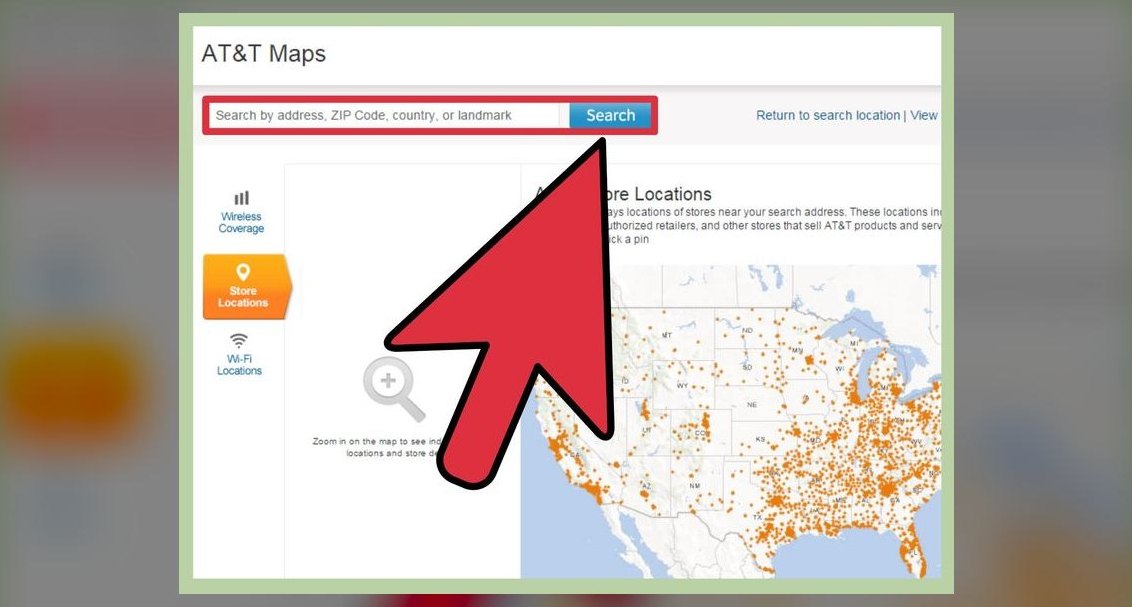
Start by checking the new carrier's own coverage map for your specific ZIP code and your regular commute route — statewide averages hide local dead zones, especially in Southwest Virginia and parts of the Eastern Shore. Next, confirm your phone is compatible; most iPhone 14 through 17 models and Samsung Galaxy S25 devices support eSIM activation across Verizon, T-Mobile, and AT&T, which speeds up the whole process since you don't need a physical SIM shipped or picked up in-store. Buy and activate the new SIM or eSIM before you touch your old account — this lets you verify real-world signal strength at your home and workplace while your old line still works as a backup.

Once you've confirmed the new carrier performs as expected, initiate the number port. This typically takes anywhere from a few minutes (for postpaid-to-postpaid ports among Verizon, T-Mobile, and AT&T) up to 24 hours for MVNOs like Mint, Visible, Boost, or Cricket, since those requests route through their host network first. Do not cancel your old account before the port confirms — cancelling early can strand your number entirely. After the port completes, test calls, texts, and data in the areas that matter most to you, then cancel the old account and confirm there's no final bill or early termination fee still pending. If you're moving from AT&T's FirstNet or a device tied to public-safety credentials, coordinate the switch with your agency's IT contact, since FirstNet access doesn't transfer automatically to a personal AT&T or other-carrier line.
Related questions
Which carrier has the best coverage in rural Virginia?
Verizon leads with roughly 98% population coverage statewide, including remote counties like Highland and Lee. AT&T is the stronger second option in Southside Virginia, where its 700 MHz spectrum performs similarly well.
Is T-Mobile reliable in Northern Virginia?
Yes — T-Mobile posts the fastest average 5G speeds in the state there, around 280 Mbps in Arlington and Alexandria, making it a strong pick for I-95 and I-66 commuters.
What's the cheapest reliable plan in Virginia right now?
Mint Mobile's annual-prepay Unlimited plan at $30/month is the cheapest with meaningful data, though it deprioritizes during peak congestion. Visible's $25/month plan is similarly priced but throttles harder.
Do prepaid carriers work well across Virginia?
Visible (Verizon network) and Cricket (AT&T network) both deliver coverage close to their host networks, though expect deprioritization during peak hours on interstates and at large events.
Which carrier should first responders use?
AT&T's FirstNet is the standard for Virginia public safety, used by Virginia State Police and Fairfax County Fire & Rescue for priority data access during emergencies.
FAQ
Which Cellular and Wireless Carrier has the best coverage in rural Virginia? Verizon has the largest rural LTE footprint, covering more than 98% of the state, including Highland and Lee counties. AT&T ranks second, particularly strong in Southside Virginia around Danville and Martinsville.
Is T-Mobile good in Northern Virginia? Yes. T-Mobile's mid-band 5G delivers average speeds near 280 Mbps in Arlington and Alexandria, the fastest in the state, and covers about 92% of the I-95 corridor from DC to Petersburg.
What's the cheapest unlimited plan available in Virginia? Mint Mobile's Unlimited plan at $30/month (paid annually) is the lowest-cost option with real data, running on T-Mobile's network. Visible's $25/month plan on Verizon's network is a close second but throttles more aggressively.
Does Verizon offer 5G in the Shenandoah Valley? Verizon's standard 5G Nationwide reaches most of the Shenandoah Valley, including Harrisonburg and Staunton, but the faster 5G Ultra Wideband tier is currently limited to Winchester and Front Royal.
Can a prepaid carrier deliver reliable coverage in Virginia? Yes. Visible and Cricket ride on Verizon's and AT&T's networks respectively and match their host network's coverage closely, though both apply data deprioritization during peak traffic periods.
Which carrier serves first responders in Virginia? AT&T's FirstNet network is the primary choice, used by Virginia State Police and Fairfax County Fire & Rescue for priority public-safety data access; Verizon also operates a separate public-safety-focused service.
Sources
- Verizon Coverage Map
- T-Mobile Coverage Map
- AT&T FirstNet
- Mint Mobile Coverage
- Visible by Verizon Plans
- Ookla Speedtest Reports
- ACSI Telecommunications Industry Reports
- J.D. Power Wireless Customer Care Study
Related on PULSE
- [Best Cellular and Wireless Carrier in Virginia Beach in 2027](/knowledge/tc0208)
- [Best Cellular and Wireless Carrier in West Virginia in 2027](/knowledge/tc0048)
- [How to Switch Carriers Without Losing Your Number](/knowledge)
- [Best Home Internet Options for Rural Virginia](/knowledge)
 telcoHow do I transfer my data and apps to a new phone in 2027?
 telcoWhat are the steps to trade in my old phone for credit in 2027?
 telcoHow do I activate a new cell phone for the first time in 2027?
 telcoHow do I set up a new cell phone after switching carriers in 2027?
 telcoTop 10 ways to reduce your monthly phone bill in 2027
 telcoWhat are the first steps to switching cell phone carriers in 2027?
 telcoWhat is the best phone plan for a small business in 2027?
 telcoHow do I get a free or discounted phone when I switch in 2027?
 telcoHow do I switch carriers without changing my phone number in 2027?
 telcoWhat is the best way to compare cell phone plans side by side in 2027?