

Best 5G Phones in 2027
 Curated byKory White · Fractional CRO · Maryland
Quality
Certified

The best 5G phone in 2027 is whichever flagship matches your carrier's actual spectrum, not the one with the highest peak-speed claim. Confirm band support — mid-band n41/n77/n78 does the real work, mmWave n260/n261 only matters in dense urban cores — then weigh modem generation, update commitment, and battery under sustained 5G load.
The outcome you should expect
Set expectations against physics and network deployment rather than marketing decks, and the buying decision gets much simpler. A current-generation flagship on a healthy mid-band 5G network will deliver download speeds in the several-hundred-megabit range in ordinary conditions, occasionally spiking into the low gigabits when you are close to a well-provisioned tower with wide channel bandwidth and light congestion. Those multi-gigabit peak figures that appear in spec sheets are theoretical aggregate throughput across every carrier and antenna the modem can bond simultaneously, measured in lab conditions with no other users on the cell. You will not see them on a commuter train.
The practical outcome of upgrading from a four- or five-year-old 5G phone to a 2027 flagship is not usually raw speed. It is consistency. Newer modems handle carrier aggregation across more simultaneous component carriers, fall back to LTE more gracefully, negotiate standalone (SA) 5G cores where carriers have deployed them, and hold a usable connection at cell edge where an older device drops to a crawl. That translates to fewer stalled video calls in a parking garage, faster reconnection when you exit a subway, and better performance in stadiums and airports where thousands of devices compete for the same spectrum.
The second outcome is battery behavior. Sustained 5G is power-hungry, particularly mmWave, which demands more transmit power and more antenna modules. Modem process-node improvements and better power-management silicon in recent generations have narrowed the gap, but a phone streaming continuously over 5G will still drain meaningfully faster than the same phone on Wi-Fi. Expect a full-day device under mixed use and a shorter day under heavy tethering or video upload. If you regularly hotspot a laptop, prioritize battery capacity and thermal headroom over camera megapixels.

The third outcome is longevity. The most consequential spec on a 2027 phone is not the chipset — it is the software-support window. Several manufacturers now commit to multi-year OS upgrade and security-patch schedules, and that commitment is worth more over a four-year ownership period than a modest benchmark advantage. A phone that stops receiving security patches is a liability regardless of how fast its radio is. Read the manufacturer's published support policy for the specific model before you buy; policies vary by tier within the same brand.
What drives that outcome
Five variables determine whether a 5G phone feels fast in your hands, and only two of them are printed prominently on the box.
Spectrum band support. 5G occupies three broad ranges. Low-band (roughly sub-1GHz, bands like n5, n71) travels far and penetrates buildings but delivers speeds barely distinguishable from good LTE. Mid-band (n41, n77, n78, n79, in the 2.5–3.7GHz neighborhood) is the workhorse: substantial channel bandwidth, decent propagation, and where carriers have concentrated capital. mmWave (n260, n261, 24GHz and up) delivers extraordinary throughput over very short distances with poor obstruction tolerance — useful in stadiums, airports, and dense downtown blocks, largely irrelevant in suburbs. A phone missing mmWave loses almost nothing outside those pockets. A phone missing your carrier's specific mid-band allocation is crippled everywhere.
Modem and RF front-end. The modem generation governs how many component carriers can be aggregated, whether standalone 5G is supported, how uplink carrier aggregation behaves, and how efficiently the device sips power at idle. Equally important and rarely discussed is the RF front-end: the antenna tuners, filters, and power amplifiers between the modem and the air. Two phones with the identical modem can perform differently because one has better antenna placement or more transmit chains. This is why independent field testing beats spec comparison.

Standalone versus non-standalone architecture. Non-standalone 5G anchors the control plane to an LTE core; standalone runs an end-to-end 5G core. SA reduces latency, enables network slicing, and improves battery life at idle. Carrier SA deployment is uneven by market and by band. If low-latency matters — cloud gaming, remote desktop, live production — verify SA support on both the phone and your carrier in your area.
Carrier provisioning and device certification. An unlocked phone can support every band your carrier uses and still underperform because the carrier has not certified that model for VoNR, Wi-Fi calling, or specific network features. Carrier-branded variants are certified by definition; imported or gray-market units frequently are not. Check the carrier's device compatibility checker with the exact model number, not the marketing name.
Thermals. Sustained 5G plus a hot chipset plus a warm day equals throttling. A phone with a vapor chamber and a larger surface area holds peak throughput longer than a thin phone with the same silicon. If you record 4K video over a hotspot or run long navigation sessions, thermal design matters more than a headline clock speed.

The adjacent lesson applies to any radio-dependent device you buy: 5G tablets, hotspot pucks, fixed wireless access gateways, and cellular-connected laptops all obey the same hierarchy. Band match first, modem second, thermal design third. A fixed wireless home internet gateway that supports your carrier's mid-band allocation and can be positioned near a window will outperform a more expensive unit that misses the band. The buying logic transfers cleanly.
Benchmarks and realistic ranges
Treat every number below as a range shaped by location, time of day, and cell load — not a guarantee.
Mid-band 5G, typical conditions. Most users on a well-covered mid-band network see downloads somewhere in the low hundreds of megabits per second, with good conditions pushing higher and congested conditions dropping considerably. Uplink is consistently and dramatically lower than downlink because carriers allocate far less spectrum to it and phones transmit at limited power. If your workflow is upload-heavy — pushing video files, backing up photo libraries, running a live stream — test uplink specifically, because that is where devices and networks differ most and where spec sheets are quietest.

mmWave. Where deployed and where you have line of sight, mmWave delivers throughput that genuinely feels like wired broadband. The caveat is range measured in a couple of city blocks at best, with severe degradation from walls, foliage, rain, and your own hand over the antenna array. Coverage is concentrated in stadiums, arenas, convention centers, airports, and select downtown corridors. If you do not spend meaningful time in those environments, paying a premium for mmWave is buying capability you will rarely use.
Latency. Non-standalone 5G typically lands in a range not dramatically better than good LTE. Standalone 5G reduces round-trip latency further, which matters for cloud gaming and interactive remote work. Measure with a ping to a nearby server, not a speed-test headline number, and test at several times of day.
Battery under load. Continuous 5G streaming is one of the harsher realistic tests. Expect a large-battery flagship to run most of a day under mixed use with 5G enabled. Aggressive tethering, prolonged mmWave use, or extended video upload will cut that substantially. A useful field heuristic: if your phone is warm to the touch during a data session, it is throttling both the radio and the SoC, and your measured throughput is already below the device's capability.

How to benchmark honestly. Run at least five speed tests at different times across a week in the three places you actually spend time — home, work, commute. Record downlink, uplink, latency, and whether the phone reports 5G, 5G UW/UC/Plus, or LTE. That dataset tells you more than any published review, because reviews are aggregated across markets and your experience is entirely local. If you can, borrow or test a candidate device on your carrier during the return window and repeat the same test set before committing.
Adjacent comparison — fixed wireless and travel. The same measurement discipline applies when evaluating 5G home internet as a broadband replacement, or when choosing an international eSIM plan. In both cases, the binding constraint is which bands the local network uses and whether your hardware supports them. A phone that performs superbly at home can behave like a mid-range device abroad simply because the local operator runs bands your model omits. Frequent international travelers should check band coverage for their destination markets before assuming the flagship travels well.
Risks, edge cases, and failure modes
Buying an imported or gray-market unit. International model numbers frequently drop bands used in other regions, and mmWave hardware is often absent entirely from non-US variants. The phone will still connect — it will just quietly underperform, and you will blame the carrier. Always verify the exact model number against the carrier's compatibility list before purchase. This is the single most common expensive mistake in 5G phone buying.
Assuming the network icon tells the truth. Carriers have used marketing labels for 5G indicators that do not map cleanly to underlying technology. A "5G" indicator can mean low-band service delivering LTE-class speed. Judge by measured throughput, not by the status bar.

Overweighting peak speed. Peak throughput figures assume ideal conditions and full spectrum aggregation. Optimizing your purchase around a peak number is like choosing a car by top speed. Consistency at cell edge and under congestion is the metric that governs daily experience.
Underestimating uplink. Creators, field technicians, and anyone who tethers regularly are constrained by upload, not download. Uplink carrier aggregation support varies by device and carrier, and it is buried deep in spec documentation when it appears at all. If upload matters to you, test it explicitly.
Software support cliffs. A phone that receives two years of OS updates versus one that receives five is a materially different asset over a four-year hold. Support windows also differ between flagship and mid-tier lines from the same manufacturer, and between carrier and unlocked variants in some cases. Read the published policy for the specific SKU.

eSIM and dual-SIM constraints. Some devices support dual-SIM only with one physical and one eSIM; some regional variants ship eSIM-only. If you carry a work line and a personal line, or swap SIMs while traveling, confirm the configuration before buying. eSIM transfer between devices is also carrier-dependent and occasionally painful.
Thermal throttling in hot climates. A phone that benchmarks well in a temperate lab can throttle hard in a truck cab in August. If you work outdoors, weight thermal design and consider a case that does not insulate the chassis.
Repairability and parts availability. Battery degradation is the most common reason a still-capable phone gets replaced. Check whether battery replacement is offered at a reasonable price in your market and whether the manufacturer publishes a parts program. A phone with a cheap, available battery service has a longer effective life than a sealed device with no service path.

Accessory and ecosystem lock-in. Switching platforms carries hidden costs: paid apps, watch compatibility, message-history migration, and cloud backup portability. These are not radio issues, but they routinely dominate the actual total cost of a switch and should be priced into the decision alongside the handset.
A practical rollout plan
Whether you are buying one phone or refreshing a fleet, the same sequence prevents expensive mistakes.
Step one — define the workload. Write down what the device actually has to do. Field technicians uploading inspection video have different requirements from executives on video calls, which differ again from warehouse scanners that need coverage over throughput. A single "best" device across all three roles is usually a compromise nobody likes. Segment first.
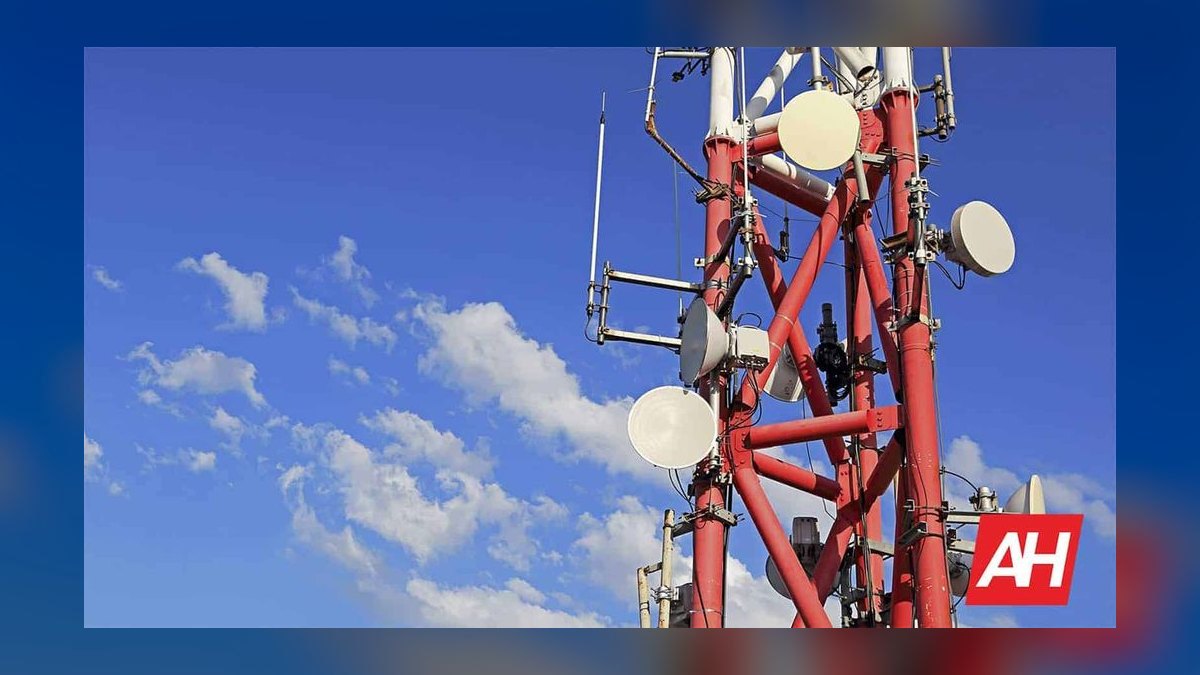
Step two — map coverage against your actual geography. Pull carrier coverage maps for every location that matters: office, warehouse, primary customer sites, and the routes between them. Coverage maps are optimistic; treat them as a hypothesis to be tested. Where a location is business-critical, test on site.
Step three — shortlist by band support, not by brand. Filter candidate devices by whether they support the specific bands your primary carrier uses in your markets. This step eliminates more candidates than any other and is the highest-leverage filter available.
Step four — pilot before committing. Buy or borrow two or three units and run them in real conditions for the length of the return window. Collect the same measurements from each: downlink, uplink, latency, battery at end of shift, and thermal behavior under sustained load. A two-week pilot costs almost nothing and routinely reverses the decision you would have made from spec sheets.
Step five — check the total cost of ownership. Handset price is one line. Add cases and screen protection, battery replacement partway through the life cycle, MDM licensing if you manage devices centrally, insurance, and the labor cost of migration. Cheaper handsets with short support windows frequently cost more over four years than a pricier device with a long support commitment.
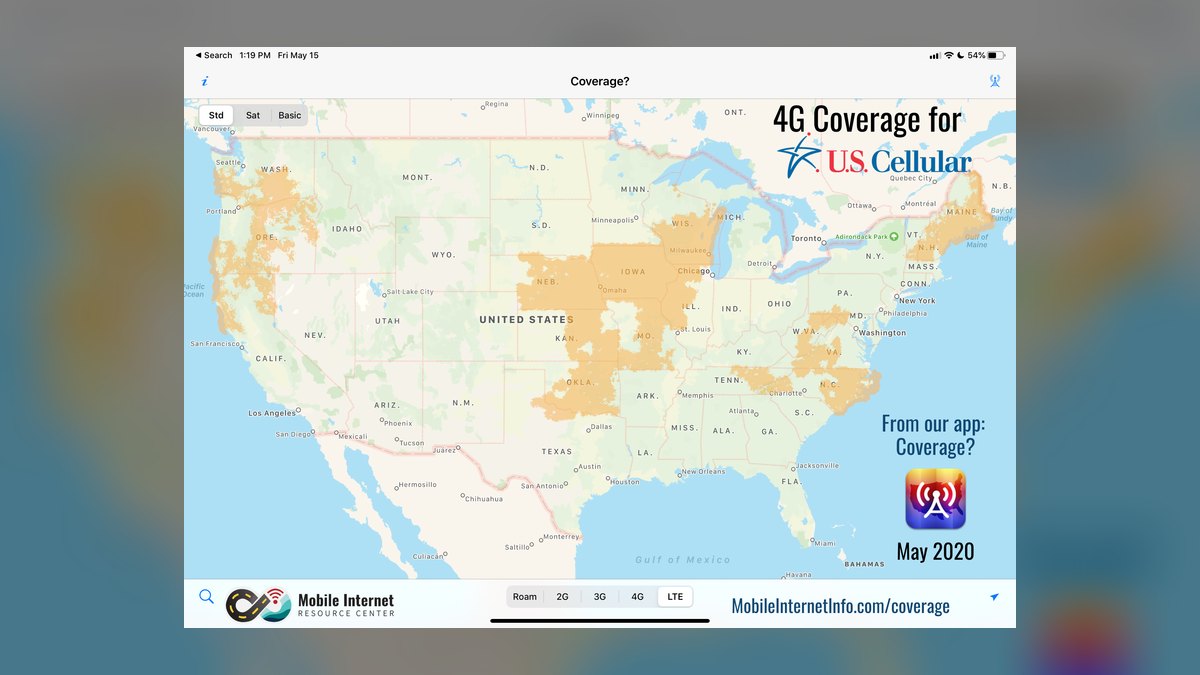
Step six — standardize and document. Pick one or two SKUs, document the model numbers, and buy those. Fleet heterogeneity is a permanent support tax — every extra model multiplies accessory inventory, imaging procedures, and troubleshooting paths.
Step seven — schedule the refresh. Set the replacement date when you buy, based on the published end of security support rather than on perceived slowness. Budgeting for a known date is far easier than reacting to a surprise.
For individuals the same plan compresses to an afternoon: check your carrier's coverage for your ZIP, verify band support for the exact model, buy within a return window, run speed tests in the three places you spend time, and keep or return based on measured results rather than reviews written about a different city.
Related questions
Does mmWave matter for most buyers?
For most people, no. mmWave delivers exceptional speed over very short, obstruction-sensitive distances and is concentrated in stadiums, airports, and dense downtown areas. If you rarely spend time in those environments, mid-band support and battery life will shape your experience far more than mmWave capability.
Is standalone 5G worth seeking out?
Yes if latency matters to you — cloud gaming, remote desktop, live streaming. Standalone 5G runs an end-to-end 5G core rather than anchoring to LTE, cutting round-trip latency and improving idle battery life. Verify support on both the device and your carrier in your market.
How long should a 5G phone last?
Plan around the manufacturer's published security-support window rather than perceived speed. Modern flagships commonly remain fully capable well past the point most people replace them; the practical limits are battery degradation and the end of security patches. Budget for one battery replacement mid-life.
Should I buy unlocked or carrier-branded?
Carrier-branded units are certified for that network's features by definition. Unlocked models offer flexibility and easier resale but occasionally lack certification for VoNR or Wi-Fi calling on a given network. Check the carrier's compatibility checker using the exact model number before buying unlocked.
Does 5G drain the battery faster than LTE?
Yes, particularly mmWave and sustained high-throughput sessions. Modem efficiency has improved substantially, so the gap is narrower than in early 5G devices, but heavy tethering or continuous video upload will still shorten your day noticeably compared with the same activity over Wi-Fi.
FAQ
Which spec matters most when comparing 5G phones?
Band support for your specific carrier in your specific markets. A phone that misses your carrier's primary mid-band allocation will underperform everywhere, regardless of its chipset. Verify the exact model number against the carrier's device compatibility checker before purchasing — this single check prevents the most common and most expensive buying mistake.
Why is my 5G slower than advertised?
Advertised peak speeds are theoretical maximums measured with full spectrum aggregation on an uncongested cell. Real throughput depends on distance from the tower, how many users share the cell, which band you are attached to, obstructions, and whether your phone is thermally throttling. Low-band 5G in particular often performs similarly to good LTE.
Is uplink speed different from download speed?
Substantially. Carriers allocate far less spectrum to uplink, and phones transmit at limited power, so upload speeds are typically a fraction of download. If you push large files, stream live, or tether frequently, test uplink specifically — device and network differences are much wider there than on download.
Do I need to worry about SA versus NSA 5G?
Only if latency is central to your use. Non-standalone anchors the control plane to LTE; standalone uses a full 5G core with lower latency and better idle battery behavior. Deployment varies by carrier and market, so check locally rather than assuming your area has standalone coverage.
How should I test a phone during the return window?
Run five or more speed tests at varied times in the three places you actually spend time, recording downlink, uplink, latency, and the network indicator. Also check end-of-day battery under your normal usage and note whether the device gets hot during sustained data sessions. Decide on measured data, not reviews.
Are imported phones a bad idea for 5G?
Often, yes. Regional variants frequently omit bands used elsewhere, and mmWave hardware is commonly absent outside certain markets. The device connects but quietly underperforms. If you buy internationally, confirm the model number's band list against your carrier's requirements first.
Sources
- 3GPP — 5G specifications and release documentation
- GSMA — 5G spectrum policy position
- FCC — 5G spectrum frontiers and band allocations
- Qualcomm — how 5G modem and RF systems work
- Ookla Speedtest — global network performance data
- Ofcom — mobile network coverage and spectrum
- ITU — IMT-2020 requirements for 5G
- NIST — cybersecurity guidance for 5G networks
Related on PULSE
This page will be disappearing soon. Save it to your device for $1 — or read it free while it is here.
@Kory-White- · if Venmo asks, the last 4 of my number are 2012
This page is gone.
This one is off the shelf now. $1 keeps it on your phone for good — the whole page, pictures and diagrams included.
 telcoShould I get a contract or no-contract phone plan in 2027?
 telcoBest Cellular and Wireless Carrier in Wichita in 2027
 telcoIs Telco worth it in 2027?
 telcoStraight Talk vs Total Wireless: which is better in 2027?
 telcoHow much mobile data does a family of four actually need in 2027?
 telcoHow much data do I actually need for streaming music in 2027?
 telcoCan I bring my own phone to a new carrier (BYOD) in 2027?
 telcoHow do I lower my cell phone bill in 2027?
 telcoCan I use one carrier for phone and another for home internet in 2027?
 telcoWhat is the difference between 5G UW, 5G+, and regular 5G in 2027?