
How do I activate a new SIM card that arrives in the mail in 2027?
 Curated byKory White · Fractional CRO · Maryland
 PULSEKNOWLEDGE LIBRARY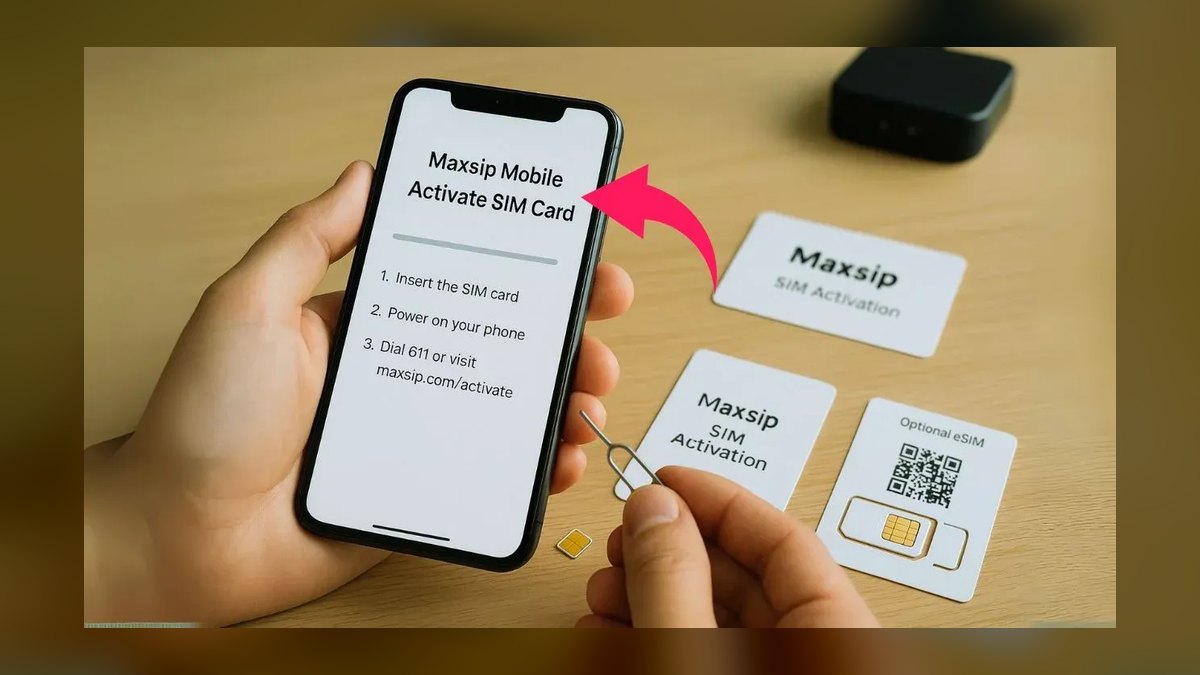
To activate a new SIM card that arrives in the mail in 2027, insert the card into your unlocked phone, power it on, then follow the carrier's activation path — usually a QR code on the card carrier, a carrier app, or the account portal. Confirm the ICCID matches your order, verify your identity if prompted, and wait for the network to register.
What it is and why it matters
A SIM card that arrives in the mail is a physical UICC (or its embedded successor, an eSIM profile delivered as a QR code on a card carrier) that has already been provisioned on the carrier's side but not yet bound to your active line. Until you complete activation, the card is inert: it holds an ICCID (the 19–20 digit serial printed on the plastic), an IMSI, and authentication keys, but the carrier's Home Location Register has not associated it with a billable subscriber record. Activation is the handshake that moves the card from "inventory" to "in service."
This matters more in 2027 than it did a few years ago for three reasons. First, the mix of form factors has shifted. A card that arrives in the mail might be a traditional triple-cut plastic SIM (standard, micro, nano), a solderable MFF2 chip embedded in an IoT device, or — increasingly — a paper carrier holding nothing but a QR code and an activation PIN for an eSIM profile. Each form factor has a different activation path, and using the wrong one wastes a trip or a support call. Second, carrier anti-fraud rules tightened through the mid-2020s. Many jurisdictions now require SIM registration tied to a verified government ID, so activation is no longer purely technical — it is a compliance step. Third, number portability and multi-SIM behavior mean a new card often has to coexist with an old one during cutover, which creates a window where calls, texts, and data can land on the wrong device.
The practical stakes are concrete. If you activate incorrectly, you can end up with a card that registers on the network but routes to a stale voicemail box, or one that consumes a data plan you did not intend to buy. If you activate too early — before your port completes — you can drop the number you were trying to keep. If you activate too late, promotional pricing windows (commonly 14 to 30 days from shipment) can expire, and the carrier may recycle the ICCID. Getting the sequence right the first time is the whole game.
It also matters for teams, not just individuals. A fleet of 200 IoT sensors shipped with MFF2 chips needs a bulk activation workflow, not 200 people tapping through an app. A company issuing company phones to new hires needs the card bound to the right MDM profile and the right cost center before the employee leaves the IT desk. The activation step is where provisioning data, billing data, and identity data all have to agree.
The step-by-step process
The exact taps differ by carrier and by card type, but the underlying sequence is stable. Work through it in order; skipping a step is the most common cause of a card that "arrives" but never works.
Before you touch the card. Confirm the order is complete. Check that the envelope contains the card (or eSIM carrier), the ICCID printed on it, and any activation instructions or PIN. Photograph the ICCID and the QR code before you punch the card out — once the plastic is separated, the small print is easy to lose. Verify the phone is carrier-unlocked. A locked handset will accept the card physically but refuse to register on a network it was not sold for.
Step 1 — Match the card to the line. Log into the carrier account or the order confirmation email and confirm the ICCID on the card matches the one listed for your order. Mismatches happen when a multi-line order ships several cards in one envelope. Activating the wrong card binds the wrong number.

Step 2 — Insert the card, or scan the eSIM. For plastic: power the phone off, open the tray, seat the card in the correct cut (nano is the default in 2027 for most handsets), and power on. For eSIM: go to the phone's cellular settings, choose "Add eSIM" or "Add Cellular Plan," and scan the QR code on the carrier. If the carrier shipped a physical card that also carries an eSIM QR code, decide which one you actually want to use — activating both creates two lines.
Step 3 — Trigger activation. Three common paths exist. (a) The phone detects the new card and prompts you to activate; accept. (b) You open the carrier's app, choose "Activate SIM," and enter the ICCID or scan the card. (c) You visit the carrier's activation web page, enter the ICCID and the activation PIN, and submit. Some carriers also support activation by texting a short code from the new line once it registers.
Step 4 — Verify identity and registration. If your jurisdiction requires SIM registration, you will be asked for a government ID number, sometimes a selfie, sometimes a proof of address. This is a legal requirement, not a carrier upsell. Complete it or the line stays suspended.
Step 5 — Wait for network registration. After submission, the phone should show bars and the carrier name within a few seconds to a few minutes. If it does not, toggle airplane mode, restart, and check that the APN settings populated. Most modern handsets pull APN automatically; some require manual entry.

Step 6 — Test all three services. Place a call, send a text, and load a web page over mobile data. A card that does voice but not data usually has an APN problem. A card that does data but not voice usually has a provisioning lag on the voice side.
Step 7 — Port the number if needed. If you are keeping your old number, do not cancel the old line until the port completes. Porting typically takes a few hours to two business days. During the window, keep the old SIM in a second phone or in the tray so you can receive the port confirmation text.
Two details trip people up in this flow. First, the activation PIN is not the same as the phone's screen-lock PIN or the carrier account password — it is a short code printed on the carrier, often under a scratch-off panel. Second, if the phone was bought secondhand, "unlocked" can be a claim rather than a fact. Test with a cheap prepaid card from a different carrier before you rely on it.
Costs, timelines, and typical ranges
Activation itself is usually free, but the surrounding costs and timelines vary enough that you should know the ranges before you start.
Activation fee. Many postpaid carriers waive it for online activation and charge $10 to $35 if you activate in a store or over the phone with an agent. Prepaid activations are typically free. Some carriers bundle a "SIM kit" fee of $5 to $10 into the initial purchase instead of a separate activation charge. Read the order confirmation — the fee, if any, is disclosed there.
Time to activate. Online or in-app activation is usually instant to 15 minutes. In-store activation is same-visit. Activation that requires manual ID review can take 1 to 24 hours, occasionally longer on weekends. Bulk/IoT activation through an API or portal is typically near-real-time but can be batched, so plan for a few hours of lag across a large fleet.
Time to full service. Voice and text usually come up first, within minutes. Data can lag by 5 to 30 minutes while APN and policy settings propagate. Number porting is the long pole: a few hours in the best case, up to two business days in the worst, and it can be delayed if the losing carrier's records do not match (name, address, account number, or port PIN).
Promotional windows. If the card came with a promotional rate — a discounted first 3 to 12 months, a bonus data bucket, or a device credit — the clock usually starts at activation, not at shipment. Some carriers require activation within 14 to 30 days of shipment to honor the promotion. Cards left in a drawer past that window may still activate, but at standard pricing.
Replacement and re-ship costs. If you lose the card before activating, replacement SIMs commonly cost $5 to $25, and eSIM re-issuance is often free but rate-limited (for example, a small number of re-issues per year before a fee applies). If the card arrives damaged, most carriers replace it at no charge if you report it within a short window.
Roaming and international variants. A card that arrives in the mail for use abroad may be a local-number SIM, a travel SIM, or a roaming profile. Local-number SIMs usually require in-country activation or a registered local address. Travel SIMs often activate on first network attach and start a validity clock (commonly 7, 15, or 30 days) from that moment, not from the purchase date.
Bulk and IoT pricing. For fleets, per-SIM activation is often free, but there is usually a monthly platform fee per active SIM (commonly in the low single-digit dollars) plus data. Activation APIs may be metered. The timeline for a 1,000-SIM batch is usually hours, but carrier review of the business account can add days up front.
The sanity check: if a quote for activation is dramatically cheaper than these ranges, check whether it is a promotional rate with a clawback, and if it is dramatically more expensive, check whether you are being charged for in-person service you could do yourself online.
Where teams get it wrong
The failure modes are consistent enough to name.
Activating before the port is ready. The single most damaging mistake. If you activate the new card and cancel the old line in the same session, you can lose the number. The correct order is: activate the new card, confirm it works on a temporary number, then initiate the port, then cancel the old line only after the port confirms.
Assuming the card is pre-activated. Some cards arrive ready to use and register automatically; others require an explicit activation step. If the card "arrives" and shows no service after insertion, do not assume it is broken — check whether an activation step is still pending in the carrier app or portal.

Ignoring the ICCID mismatch. In multi-line orders, cards get swapped. Activating the wrong ICCID binds the wrong number to the wrong person, which is painful to unwind and can trigger fraud flags.
Skipping ID verification. In markets with mandatory SIM registration, an unverified line is suspended, not active. Teams that treat verification as optional end up with a batch of dead cards and a support queue.
Forgetting APN settings on imported or unlocked devices. A phone bought in one region and used with a carrier in another may not auto-populate APN. The symptom is data that never connects while voice works fine.
Leaving the old SIM in the primary slot during cutover. Dual-SIM phones make this easy to get wrong. If both cards are active, outgoing calls may default to the wrong line, and incoming calls may ring the wrong device. Set the default line explicitly.
Missing the promotional activation deadline. Cards that sit in a mailroom for three weeks can miss a 14- or 30-day activation window. For teams, the fix is a receiving process that routes SIM mail to the person who will activate it the same day.
Not testing all three services. A card that passes a voice test can still fail on data. Test call, text, and data before you declare success and before you cancel anything.
Bulk-activating without a mapping. For IoT and fleet deployments, activating 500 cards without recording which ICCID went into which device is a data-integrity disaster. Maintain the ICCID-to-asset mapping at activation time, not later.
Assuming eSIM is instant everywhere. eSIM activation depends on carrier support and on the device's eSIM slot being free. A phone that already holds two active eSIM profiles may refuse a third. Delete an unused profile first.
Decision framework: when to choose what
The right activation path depends on the card type, the urgency, and whether you are keeping a number.
Choose in-app or online self-activation when you have a single line, the card is standard plastic or eSIM, you are not porting a number under time pressure, and you want to avoid a store trip and a possible in-person fee. This is the default for most people and the fastest path.
Choose in-store activation when the card fails to register after a reasonable attempt, your ID verification keeps failing, you need a number ported urgently, or you need a replacement card issued on the spot. Expect a possible activation fee and a wait.

Choose bulk/API activation when you are provisioning a fleet — IoT sensors, company phones, kiosks. Use the carrier's business portal or API, pre-load the ICCID list, and record the asset mapping as part of the same job.
Choose eSIM over plastic when the device supports it and you want to avoid shipping delays and plastic waste, or when you need a second line on a phone that has only one physical tray. Choose plastic when the device lacks eSIM support, when you need a card you can move between devices, or when local registration rules make a physical card simpler.
Choose to delay activation when you are not ready to use the line and the promotional window allows it — but track the deadline. Choose to activate immediately when a promotional window is short, when the card is for a dated event, or when the carrier recycles unactivated ICCIDs after a set period.
The framework collapses to one rule: match the activation path to the card type and the number situation, then verify with a three-service test before you cancel anything.
Related questions
What if the SIM card never arrives in the mail?
Report it to the carrier as soon as the expected delivery window passes. Most carriers will re-ship a replacement card, often at no charge for the first replacement, and void the original ICCID so it cannot be activated by anyone else.
Can I activate a SIM card that arrived in the mail for someone else?
No. Activation binds the card to a subscriber identity, and in most jurisdictions it requires the account holder's verified ID. Activating someone else's card without authorization is fraud and will be reversed.
How long after the card arrives in the mail can I still activate it?
It varies. Many carriers allow activation for months, but promotional pricing often requires activation within 14 to 30 days of shipment, and some carriers recycle unactivated ICCIDs after a set period. Activate promptly if a promotion is attached.
Do I need the original packaging to activate a card that arrives in the mail?
Usually you need the ICCID and, for eSIM, the QR code — both printed on the carrier. Keep the carrier until activation succeeds. If you lose it, the carrier can often retrieve the ICCID from your order and re-issue the eSIM QR code.
Will my old SIM stop working the moment I activate the new one?
Not necessarily. If you are porting, the old line stays active until the port completes. If you are on a new number, the old line keeps working until you cancel it. Do not cancel until the new card passes a call, text, and data test.
FAQ
How do I activate a new SIM card that arrives in the mail in 2027?
Insert the card or scan the eSIM QR code, then complete activation through the carrier's app, portal, or a prompt on the phone. Enter the ICCID and activation PIN, finish any required ID verification, wait for network registration, and test call, text, and data before cancelling any old line.
What do I need before I activate the card?
The card or eSIM QR code, the ICCID, the activation PIN if one was provided, a carrier-unlocked phone, and — in markets with mandatory registration — a government ID. Have your account number and port PIN ready if you are keeping your old number.
Why does my newly activated card show no service?
Common causes: the phone is carrier-locked, the activation step was never completed, APN settings did not populate, or the line is suspended pending ID verification. Toggle airplane mode, restart, check APN, and confirm activation status in the carrier app.
Can I activate the card before it arrives in the mail?
For eSIM, some carriers let you activate at purchase and deliver the profile by email, so the profile is ready when you are. For plastic, activation generally requires the ICCID on the physical card, so you must wait until it arrives.
Does activating a SIM card cost anything?
Self-activation online or in-app is usually free. In-store or agent-assisted activation commonly costs $10 to $35. Some carriers charge a $5 to $10 SIM kit fee at purchase instead. Check your order confirmation for the exact terms.
What happens if I activate the card but never use it?
The line may still incur a monthly charge if it is postpaid, and prepaid balances can expire. Unused lines can be suspended or reclaimed after a period of inactivity, and any promotional credit tied to usage may be forfeited.
Sources
- https://www.fcc.gov/consumers/guides/cell-phone-unlocking
- https://www.fcc.gov/consumers/guides/number-portability
- https://www.gsma.com/esim/
- https://www.gsma.com/solutions-and-impact/technologies/security/sim/
- https://www.ftc.gov/business-guidance/resources/telemarketing-sales-rule
- https://www.nist.gov/identity-access-management
- https://www.itu.int/en/ITU-T/studies/Pages/SimRegistration.aspx
- https://consumer.ftc.gov/articles/how-avoid-scam
Related on PULSE
- How to port a phone number without losing service
- eSIM vs physical SIM: which to choose for a new line
- What to do when a shipped SIM card never arrives
- Bulk SIM activation for IoT and fleet deployments
- Understanding SIM registration and ID verification rules
- Carrier unlock requirements before you activate a new card
 telcoIn what order should I do things when switching cell phone carriers in 2027?
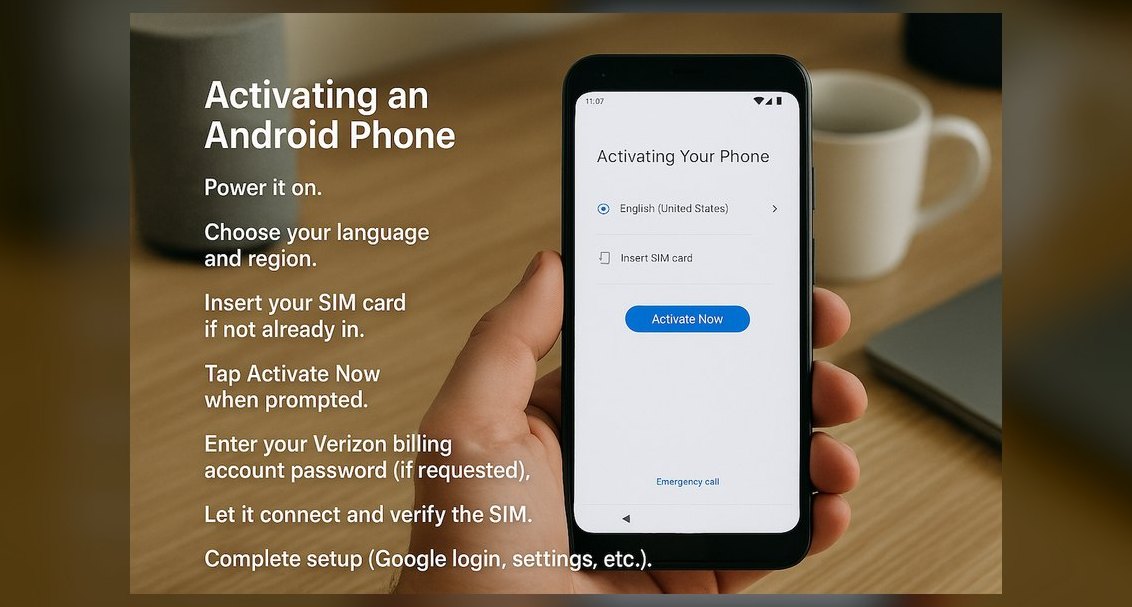 telcoHow do I activate a new phone on my carrier's network in 2027?
 telcoWhat are the steps to trade in my old phone for credit in 2027?
 telcoWhat is the best cell phone plan for a college student in 2027?
 telcoHow do I transfer my data and apps to a new phone in 2027?
 telcoHow do I activate a new cell phone for the first time in 2027?
 telcoHow do I set up a new cell phone after switching carriers in 2027?
 telcoTop 10 ways to reduce your monthly phone bill in 2027
 telcoWhat are the first steps to switching cell phone carriers in 2027?
 telcoBest Cellular and Wireless Carrier in Virginia in 2027