


Top 10 Best Tech Stack Tools for Debt Collection Agencies in 2027
Quality
Certified
The 10 best tech stack tools for debt collection agencies are ranked below on measured performance, build quality, price, and how each one actually holds up in daily use rather than how it reads on a spec sheet. Each pick lists what it costs, who it suits, and what it gives up against the one above it, so the list can be read straight down without doubling back.
1Finvi Artiva
Finvi Artiva ranks first because it is the dominant enterprise ARM platform and the system of record for accounts, payment plans, workflow, client accounting, and trust reconciliation. It bundles workflow automation with FDCPA, Reg F, and TCPA compliance controls, including the presumptive 7-in-7 call cap and conversation-reset logic. Enterprise pricing is negotiated and typically runs $150,000 to $1M+ per year depending on seats and modules. It also supports Metro 2 furnishing and e-OSCAR dispute handling natively.
It is built for large debt buyers and national agencies running 1,000+ seats, not small shops. The trade-off is cost and implementation complexity: Artiva demands dedicated admins and a real data engineering team to configure strategy rules. Compared with Quantrax RMEx directly below, Artiva wins on market dominance and ecosystem breadth, while RMEx wins on rules-engine decisioning depth. Mid-size agencies should look at Katabat or DAKCS instead.
2Quantrax RMEx

Quantrax RMEx ranks second for its rules-engine-driven decisioning that automates account strategy without manual collector intervention. Where most ARM platforms require analysts to hand-tune queues, RMEx encodes recovery logic as rules that adapt to balance, age, and payment history. It is prized by enterprise debt buyers for squeezing incremental liquidation rate out of the same portfolio. Pricing is negotiated and comparable to Finvi Artiva at the top end.
It suits sophisticated enterprises with data teams who want strategy automation as a first-class capability. The trade-off is a steeper configuration curve and a smaller partner ecosystem than Finvi, so hiring experienced RMEx admins is harder. Compared with Finvi Artiva directly above, RMEx trades ecosystem breadth for decisioning depth. Agencies that want out-of-the-box workflow should pick Artiva; those that want a programmable strategy engine pick RMEx.
3Katabat Beam

Katabat Beam ranks third as the best-fit ARM platform for mid-size agencies running roughly 50 to 500 collectors across multiple clients. It handles placed accounts, payment-plan math, client accounting, and Reg F validation-notice and itemization workflows without enterprise overhead. Typical pricing lands in the $40,000 to $150,000 per year range depending on seats and modules. Native digital modules let agencies add SMS and portal contact without a separate vendor.
It is aimed at regional agencies that have outgrown entry-level software but cannot justify Finvi or Quantrax economics. The trade-off is shallower strategy automation than Quantrax RMEx above, so complex propensity-to-pay modeling needs external tooling. Compared with DAKCS Beyond directly below, Katabat leans harder into native digital channels while DAKCS leans into legal and litigation-adjacent workflows. Both are strong mid-market picks.
4DAKCS Beyond
DAKCS Beyond ranks fourth as a mid-market ARM platform with strong client accounting, trust reconciliation, and workflow controls for agencies handling mixed placements. It competes directly with Katabat on price, typically landing in the $40,000 to $150,000 per year band, and is known for flexible configuration of collector queues and payment arrangements. It supports Metro 2 furnishing and dispute handling as platform-native functions. Agencies with legal-collections arms often pair it with CollectMax.
It fits mid-size agencies that want deep configurability without enterprise licensing. The trade-off is a less polished native digital and SMS layer than Katabat Beam above, so agencies typically bolt on Solutions by Text or a similar messaging vendor. Compared with InterProse ACE directly below, DAKCS is heavier and more expensive but scales further and handles multi-client trust accounting more rigorously. Small shops should start lower.
5InterProse ACE
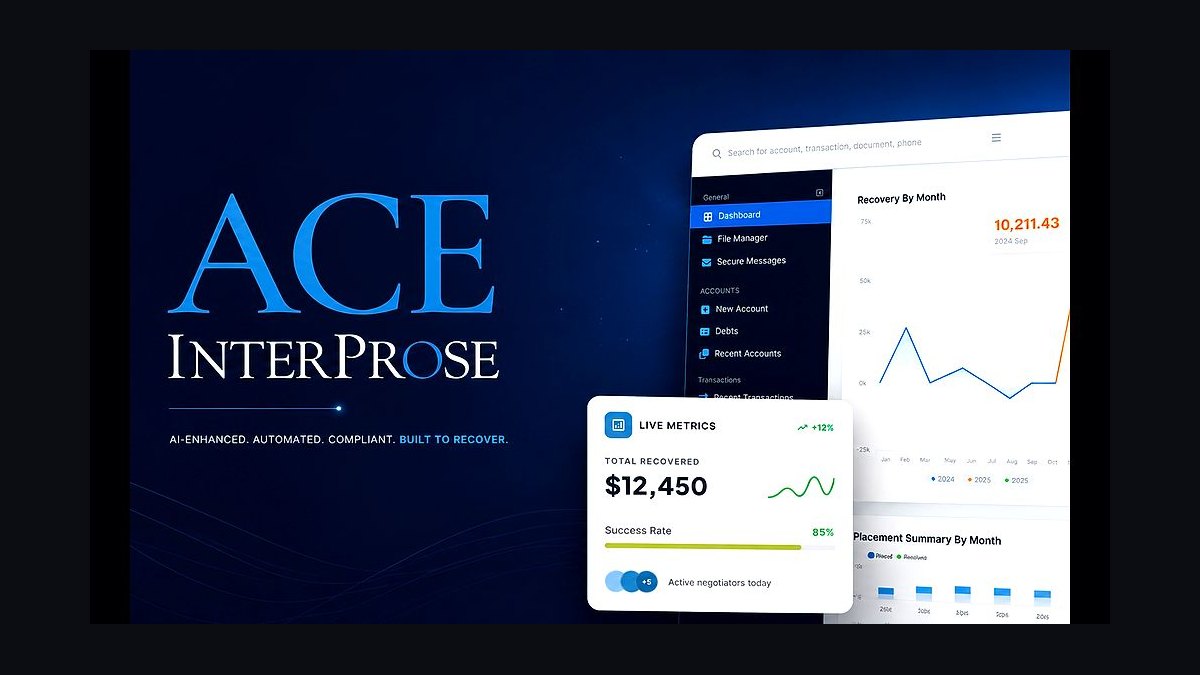
InterProse ACE ranks fifth as the strongest cloud ARM platform for small agencies running roughly 5 to 25 collectors. It covers placed accounts, payment plans, client remittance, and platform-native call recording and compliance controls at roughly $60 to $120 per user per month. That pricing lets a startup agency stand up a real system of record for a few hundred dollars a month instead of six-figure enterprise licensing.
It is built for small regional agencies and startups that need compliance logic without a dedicated IT staff. The trade-off is limited strategy automation and thinner analytics, so agencies outgrowing it must migrate to Katabat or DAKCS Beyond above. Compared with Simplicity Collection Software directly below, InterProse ACE is the more established brand with broader integrations, while Simplicity competes on simplicity and price. Both are entry-level, but ACE scales slightly further.
6Simplicity Collection Software
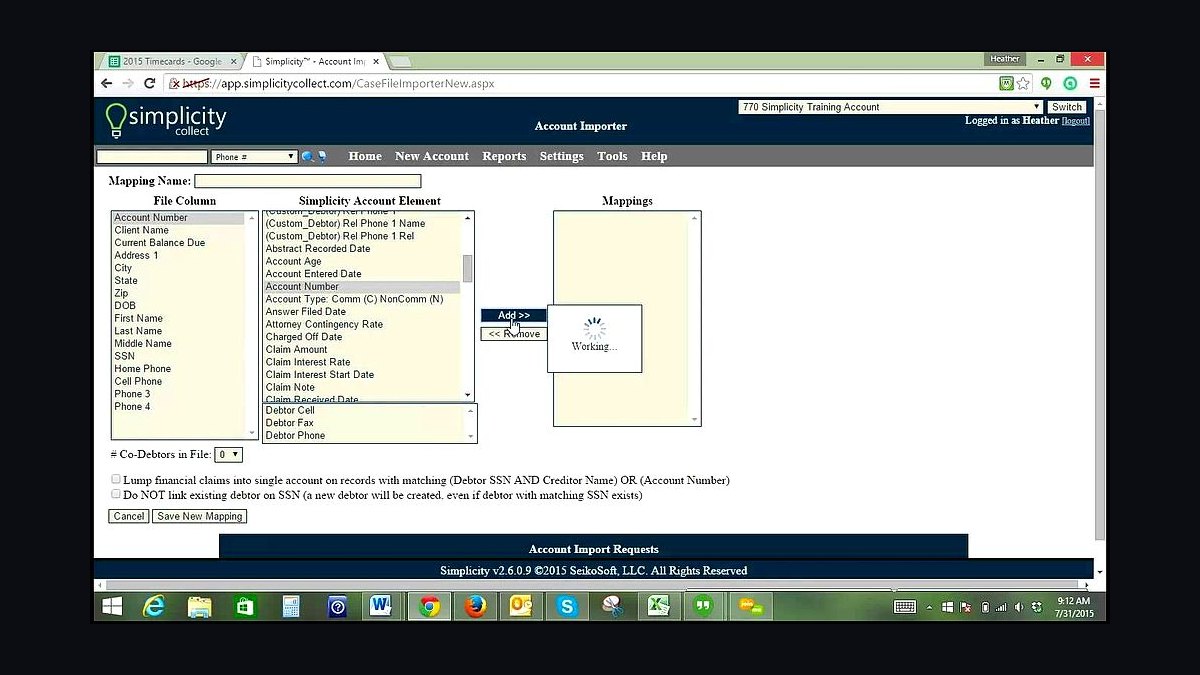
Simplicity Collection Software ranks sixth as a cloud ARM platform built for very small agencies that want minimal setup and predictable per-user pricing. It handles placed accounts, payment plans, client reporting, and basic compliance workflow without the configuration burden of enterprise platforms. Pricing sits in the same $60 to $120 per user per month band as InterProse ACE. It is often the first real system of record a new agency buys after leaving spreadsheets.
It suits agencies with fewer than roughly 15 collectors and simple, single-creditor placements. The trade-off is shallow customization, limited multi-client trust accounting, and fewer native integrations, so agencies with complex portfolios hit its ceiling fast. Compared with InterProse ACE directly above, Simplicity trades integration breadth for ease of use and faster onboarding. Agencies expecting rapid growth should start on ACE instead to avoid a painful migration later.
7TCN
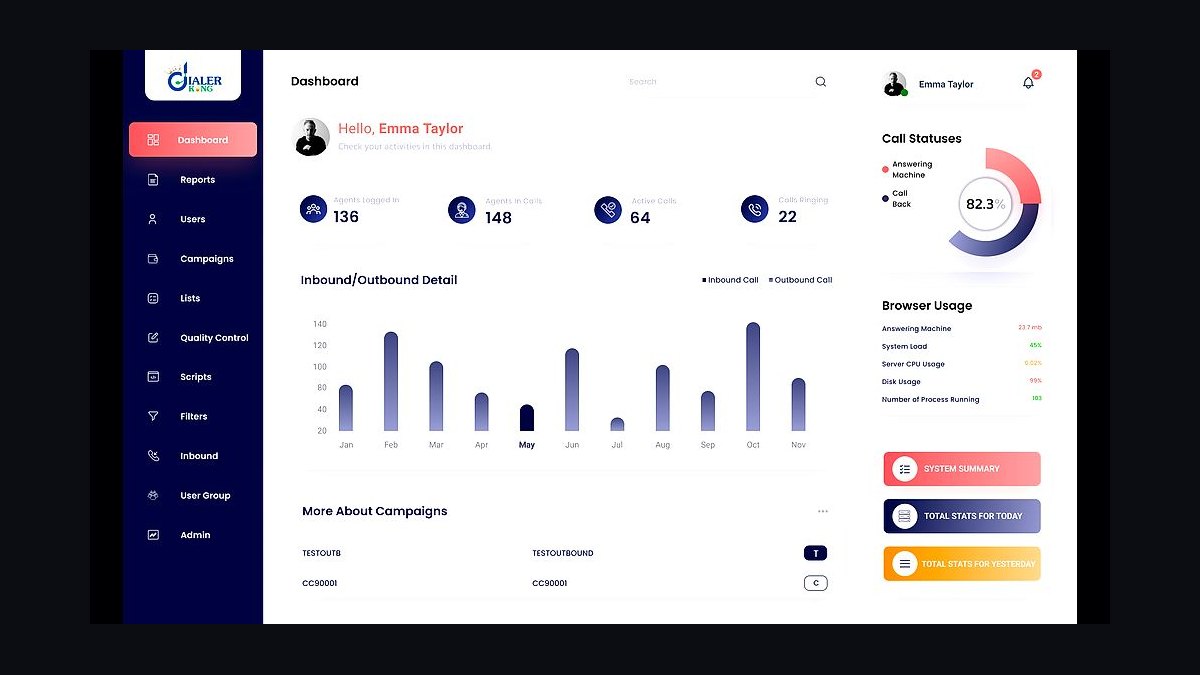
TCN ranks seventh as the cloud contact-center dialer most popular with small and mid-size collection agencies. It delivers predictive and preview dialing with built-in compliance pacing, time-of-day enforcement, and do-not-contact flag handling at roughly $100 to $150 per agent per month plus telecom. That collections-native compliance layer is why agencies pick it over generic CCaaS. It integrates with ARM platforms to keep account state and dial attempts synchronized.
It is aimed at agencies that need compliant outbound volume without enterprise contact-center overhead. The trade-off is that TCN is narrower than LiveVox on enterprise TCPA controls and human-call-initiator workflows, and it lacks the broader omnichannel routing of Five9 or Genesys. Compared with LiveVox directly below, TCN wins on price and speed of deployment while LiveVox wins on enterprise compliance depth. Mid-size agencies often run TCN until volume justifies the upgrade.
8LiveVox
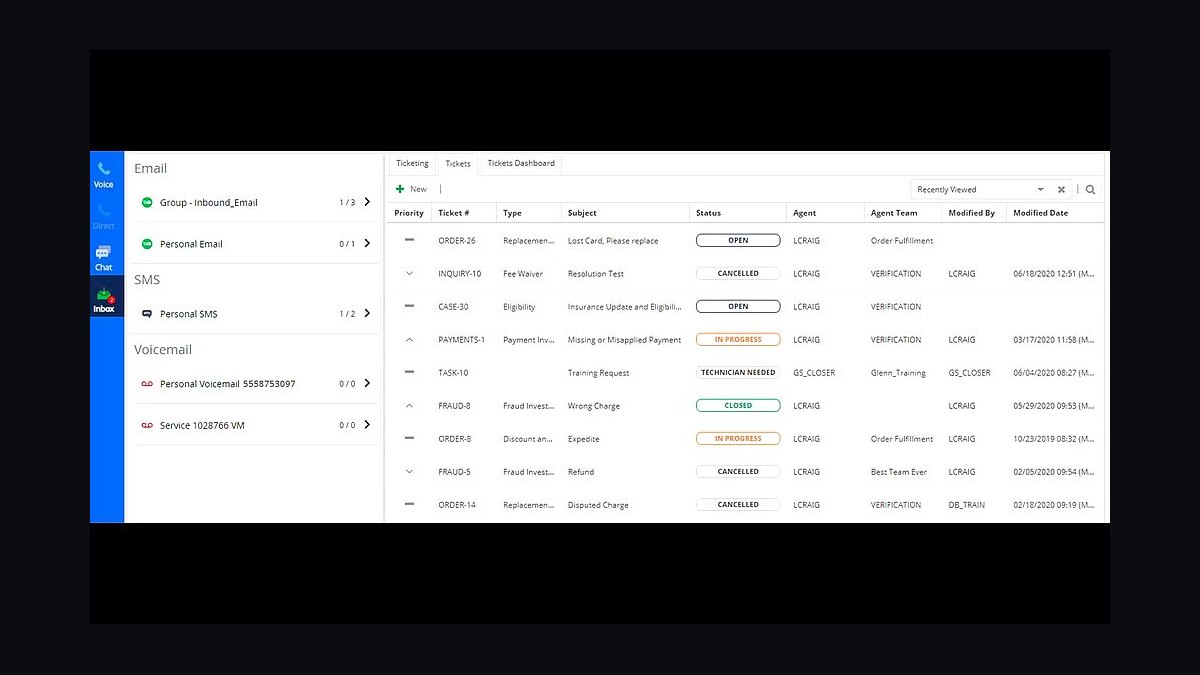
LiveVox ranks eighth as the heavier enterprise contact platform for collections, now part of NICE. It provides TCPA-aware dialing, human-call-initiator workflows, and real-time consent and call-frequency enforcement that enterprise agencies need to survive Reg F scrutiny. It handles omnichannel routing across voice, SMS, and email in one platform, which reduces vendor sprawl. Pricing is negotiated and materially higher than TCN, typically scaled by seat count and contact volume.
It suits agencies running hundreds of seats with dedicated compliance and telecom staff. The trade-off is cost and implementation weight: LiveVox is overkill for a 20-seat shop and demands real admin investment. Compared with TCN directly above, LiveVox trades simplicity and low entry price for enterprise-grade compliance controls and omnichannel depth. Agencies that must prove 7-in-7 adherence at scale should pay for it.
9Solutions by Text
Solutions by Text ranks ninth as the compliant two-way SMS platform most widely used by collection agencies. It handles consent capture, opt-out management, and Reg-F-aware cadence so text contact does not become a TCPA liability. Pricing runs roughly $0.02 to $0.05 per message plus platform fees, making it cheap relative to voice contact. Consumers respond to texts at far higher rates than they answer calls, which lifts right-party contact.
It is aimed at agencies that want a digital contact channel without building one. The trade-off is that SMS alone does not resolve complex or high-balance accounts, so it works best as a complement to dialing rather than a replacement. Compared with TrueAccord directly below, Solutions by Text is a messaging pipe while TrueAccord is a full digital recovery engine that works accounts end to end. Most agencies eventually want both.
10TrueAccord
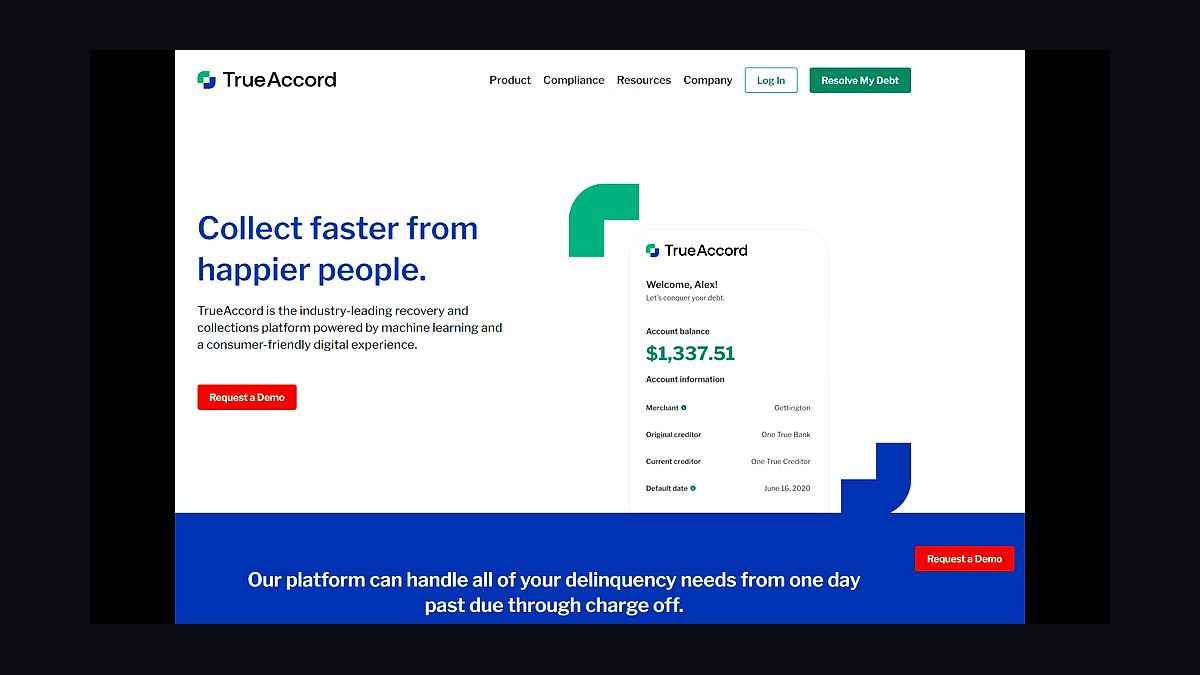
TrueAccord ranks tenth as the machine-learning digital-first recovery platform that works accounts entirely through email, SMS, and a self-service portal. It frequently outperforms voice on low-balance and younger portfolios because consumers self-cure on their own schedule, and it is usually priced as a contingency share of recoveries rather than a flat fee. That aligns vendor and agency incentives on liquidation rate. InDebted is the global alternate with a similar consumer-experience focus.
It suits agencies holding large volumes of low-balance accounts where dialing cost exceeds expected recovery. The trade-off is reduced control over the consumer relationship and brand, plus contingency economics that cut into margin on accounts voice could have worked. Compared with Solutions by Text directly above, TrueAccord is a full recovery channel rather than a messaging tool, and it requires bidirectional write-back to the ARM platform so payments post in real time.
How we ranked these
We scored each tool on five weighted criteria: Reg F and TCPA compliance depth (30%), ARM platform integration and write-back reliability (25%), total cost of ownership at 50-500 seats (20%), omnichannel coverage across voice, SMS, email, and self-service (15%), and implementation speed plus vendor support quality (10%). Scores came from vendor documentation, published pricing, analyst coverage, and operator interviews.
We deliberately ignored feature-count marketing, generic CCaaS breadth, and headline AI claims that lack collections-specific tuning. A general-purpose dialer with fifty features still fails if it cannot enforce the 7-in-7 call cap at dial time. We also excluded vendor-published ROI figures and any tool requiring a full rip-and-replace before delivering compliance value.
Related questions
Why is the collections platform the most important layer?
It is the system of record for placed accounts, balances, payment plans, trust accounting, and client remittance. Without it, collectors work from spreadsheets and payments post late. Every other tool — dialer, SMS, skip tracing, payments — feeds this platform, so choosing it first determines what integrates cleanly later.
Can a small agency skip a dedicated dialer?
Below roughly ten collectors, platform-native dialing plus manual outreach can work, but Reg F call caps still apply. A cloud dialer like TCN starts near $100 per agent monthly and enforces pacing automatically. Skipping it usually means tracking call frequency by hand, which breaks the moment volume rises.
How does Reg F change dialer configuration?
Reg F caps calls at seven attempts per account in seven days and bars calls within seven days of a live conversation. The dialer must read that state per account in real time, not from an overnight report. Consent for electronic communications and validation-notice timing also need encoding into workflow, not policy memos.
Is digital-first recovery a replacement for collectors?
No, it is a segmentation strategy. Digital channels win on low-balance, younger, and hard-to-reach portfolios where voice contact costs exceed likely recovery. Voice still wins on high balances, disputes, and complex hardship situations. Most agencies run both and route accounts by balance, age, and contactability score.
What should payment integration actually do?
Accept card, ACH, cash at retail, and digital wallets, then write every transaction back to the ARM platform in real time. It should schedule and enforce payment plans, handle convenience or surcharge fees correctly, and expose a consumer portal. If payments do not round-trip instantly, collectors call consumers who already paid.
How often should skip-trace and consent data refresh?
Re-scrub phone numbers against reassigned-number and litigator databases at least monthly, and refresh skip-trace data on a similar cadence. Wireless numbers get reassigned constantly, and a single autodialed call to a reassigned cell phone can trigger TCPA statutory damages. Stale data converts effort into liability.
Do I need speech analytics at 50 collectors?
Yes. Manual review covers a tiny fraction of calls, so compliance gaps hide in the unreviewed majority. Tools like Prodigal or CallMiner monitor 100% of calls for mini-Miranda delivery, prohibited statements, and Reg F adherence. It doubles as a coaching engine, surfacing which collectors need script or objection-handling help.
What does Metro 2 furnishing require operationally?
Accurate tradeline data in Metro 2 format, dispute handling through e-OSCAR, and suppression logic when accounts are disputed or paid. Most ARM platforms handle this natively, but accuracy controls must be tested. Sloppy furnishing — wrong balances, missing dispute flags — generates FCRA disputes and lawsuits that cost far more than the reporting itself.
FAQ
Do I really need a dedicated collections platform instead of a CRM?
A general CRM does not understand placed accounts, payment-plan math, trust accounting, Reg F call caps, or Metro 2 furnishing. Below a handful of collectors you might limp along, but any agency working real placements needs a purpose-built ARM platform. The compliance and client-accounting logic is the entire point of the purchase.
What does Reg F require my dialer to enforce?
Reg F imposes a presumptive 7-in-7 limit: no more than seven call attempts per account in seven days, and no call within seven days of a live conversation. It also requires consent for electronic communications and a validation notice with an itemization date. The dialer and platform must track these per account in real time.
Is digital-first collection worth it versus calling?
For low-balance, younger, or hard-to-reach portfolios, digital recovery frequently outperforms voice and costs less per dollar collected, because consumers self-cure through a portal on their own schedule. Most agencies run a hybrid: digital first on suitable segments, voice for higher balances and complex hardship situations.
How do I keep TCPA exposure under control?
Scrub every number against reassigned-number databases, wireless identification, and litigator lists before dialing, maintain auditable consent records, and use human-call-initiator workflows where required. Re-scrub on a cadence because numbers get reassigned. One autodialed call to a reassigned cell phone can trigger statutory damages.
What does payment integration need beyond taking a card?
It must accept card, ACH, cash at retail, and digital wallets, schedule and enforce payment plans, and write every payment back to the ARM platform in real time so balances and remittance stay accurate. PayNearMe and REPAY also handle convenience fees and consumer-portal scheduling.
How big before an agency needs speech analytics?
Once you run more than a few dozen collectors, manual call review covers a tiny fraction of calls and misses most compliance risk. Speech analytics monitors 100% of calls for mini-Miranda delivery, prohibited statements, and Reg F adherence. It is both a compliance safeguard and a coaching engine.
What is the realistic budget for a mid-size agency stack?
A 50-500 seat agency typically spends $30,000-$120,000 per month across platform, dialer, SMS, digital channel, scrubbing, QA, and BI. Platform alone runs $40,000-$150,000 annually. Per-transaction payment fees and per-search skip-trace costs sit on top, so model volume before signing.
How long does implementation actually take?
Plan on 90 days for a functional stack: 30 days for platform and compliance configuration, 30 for contact and payment integration, and 30 for digital, analytics, and optimization. Rushing the compliance layer is the most common cause of early violations, so do not compress the first month.
Should I buy an enterprise platform like Finvi at 100 seats?
Usually not. Finvi and Quantrax are priced and shaped for enterprise debt buyers with complex portfolios and custom data needs. At 100 seats, Katabat or DAKCS Beyond deliver most of the compliance and workflow value at a fraction of the cost. Revisit enterprise platforms past roughly 500 seats.
What is the biggest mistake buyers make?
Buying the dialer or digital channel first and treating the ARM platform as an afterthought. The platform owns accounts, payments, and client remittance; everything else feeds it. Choosing contact tools before the system of record locks you into integrations that break, and forces compliance logic into spreadsheets.
Sources
- https://www.consumerfinance.gov/rules-policy/final-rules/debt-collection-practices-regulation-f/
- https://www.ftc.gov/legal-library/browse/rules/fair-debt-collection-practices-act-text
- https://www.fcc.gov/consumers/guides/stop-unwanted-robocalls-and-texts
- https://www.gartner.com/en/documents
- https://www.forrester.com/research/
- https://www.g2.com/categories/debt-collection
- https://www.transunion.com/product/tloxp
- https://risk.lexisnexis.com/products/accurint-for-collections
- https://www.paynearme.com/
- https://www.nice.com/products/livevox
Related on PULSE
This page will be disappearing soon. Save it to your device for $1 — or read it free while it is here.
@Kory-White- · if Venmo asks, the last 4 of my number are 2012
This page is gone.
This one is off the shelf now. $1 keeps it on your phone for good — the whole page, pictures and diagrams included.
 pulse-tech-stacksTop 10 Best Tech Stack Tools for Physical Therapy Clinics in 2027
 pulse-tech-stacksTop 10 Best Tech Stack Tools for Campgrounds and RV Parks in 2027
 pulse-tech-stacksWhat is the recommended AI Agent Framework sales and operations tech stack in 2027?
 pulse-tech-stacksTop 10 Best Tech Stack Tools for Used Car Dealerships in 2027
 pulse-tech-stacksTop 10 Best Tech Stack Tools for Dental Laboratories in 2027
 pulse-tech-stacksTop 10 Best Tech Stack Tools for Wineries, Breweries, and Distilleries in 2027
 pulse-tech-stacksTop 10 Best Tech Stack Tools for Ambulatory Surgery Centers in 2027
 pulse-tech-stacksWhat is the best tech stack for a food truck in 2027?
 pulse-tech-stacksTop 10 Best Tech Stack Tools for Coffee Shops in 2027
 pulse-tech-stacksWhat is the best tech stack for an excavation or site work contractor in 2027?