
What is the best tech stack for a charter bus or motorcoach company in 2027?
 Curated byKory White · Fractional CRO · Maryland
 PULSEKNOWLEDGE LIBRARY
The best 2027 tech stack for a charter bus or motorcoach company centers on a charter-specific reservation and trip-management platform — Saucon Technologies or S2/DDS for mid-size and larger fleets, Busable or Limo Anywhere for small operators — wired to a DOT/FMCSA hours-of-service and ELD compliance layer (Samsara, Motive, or Geotab), a marketplace channel like CharterUP for demand, Fleetio for maintenance, and QuickBooks plus Power BI for finance and utilization reporting.
A Dispatcher Quoting a Trip That Almost Broke the Fleet
Picture a 68-coach regional motorcoach company on a Tuesday afternoon in March. A high school band director calls wanting a three-day trip: depart Thursday morning, perform Friday night four states away, sightsee Saturday, return Sunday. In a company still running quotes off a shared spreadsheet, the dispatcher pencils in mileage, guesses at a hotel rate, and quotes a flat per-student price. Nobody checks whether a single driver can legally cover the outbound leg, the standby time at the venue, and the return without exceeding the 10-hour driving limit or the 15-hour on-duty window. The trip gets booked. Three weeks later, the driver is 40 minutes from the venue with 20 minutes left on his clock and no relief driver scheduled, because the person who quoted the trip never saw the hours-of-service math.
This is the scenario that separates a charter and motorcoach company that has modernized its stack from one still running on habit. At a company using a proper reservation and trip-management platform — Saucon Technologies, S2/DDS, or, for a smaller shop, Busable — the same phone call becomes a structured quote. The system pulls live mileage and deadhead distance, applies the company's driver-pay rules including layover and overnight pay, checks lodging costs against a negotiated hotel rate table, and — critically — cross-references the trip's total duty-time requirement against the hours-of-service ceiling before the quote is even finalized. If the trip requires a second driver or an overnight reset, the platform flags it during quoting, not after the contract is signed. The band director gets an accurate price. The dispatcher gets a driver trip sheet with every stop, contact, and time block already built. And the compliance risk that would have shown up on the side of a highway gets caught at a desk three weeks earlier.

That gap — between a spreadsheet quote and a platform-generated one — is the entire argument for why a motorcoach company's stack looks fundamentally different from a limousine or black-car operation's stack, and why getting the core reservation layer right determines whether every other system downstream of it (compliance, maintenance, finance) actually protects the business or just produces reports nobody trusts.
How Reservation, Compliance, and Dispatch Actually Connect
The mechanical heart of a 2027 motorcoach stack is the handoff between the reservation platform and the ELD/telematics layer, because that handoff is what prevents an illegal trip from ever reaching a driver's windshield. Here is how it works in practice at a company running Saucon or S2/DDS alongside Samsara or Motive.

When a lead comes in — whether from CharterUP, a broker like GOGO Charters or Bus.com, or a direct school and corporate account — it lands in the reservation platform as a trip request. The system builds the trip as a priced object: live miles from garage to first pickup, deadhead miles back, estimated duty hours for the full itinerary, lodging nights if the trip spans more than one day, tolls, and a fuel surcharge tied to current diesel pricing. That trip object then checks against the driver pool's available hours, which the platform pulls from the ELD system's hours-of-service ledger — the same data Samsara or Motive is already logging for FMCSA compliance. If the itinerary would push an assigned driver past the 11-hour driving limit or the 14-hour on-duty window in a single day, or past the 60-hour/7-day or 70-hour/8-day cumulative cap, the system either flags the trip for a second driver, forces an overnight reset into the schedule, or rejects the assignment outright.
Once the trip clears that check, the platform generates the driver trip sheet — stops, arrival windows, venue contacts, fuel stops, hotel confirmation numbers — and pushes it to the assigned driver, typically through a mobile app tied to the same ELD hardware doing GPS tracking. That GPS feed then does double duty: it powers a customer-facing "where's my bus" link for the school or corporate client, and it feeds odometer and engine-fault data into Fleetio, which schedules preventive maintenance and DOT annual inspections before a coach's mileage or engine-hours threshold trips a compliance deadline. Every dollar that moved — deposit, balance due, net-30 invoice to a school district — flows from the reservation platform into QuickBooks or Sage Intacct, and both the financial data and the telematics utilization data converge in Power BI, where a fleet manager can see revenue per coach, revenue days, deadhead percentage, and channel margin side by side.

The single most important design principle in this architecture is that hours-of-service data flows upstream into the quoting step, not just downstream into a compliance report. A charter and motorcoach company that treats ELD data purely as an after-the-fact audit trail is still exposed to the exact scenario the band-trip dispatcher walked into — a legally impossible trip gets sold because nothing checked the math before the contract was signed.
What This Actually Costs, by Fleet Size
Pricing in this stack scales with fleet size and with how many modules a company activates, but the ranges are fairly consistent across vendors serving the motorcoach space in 2027.
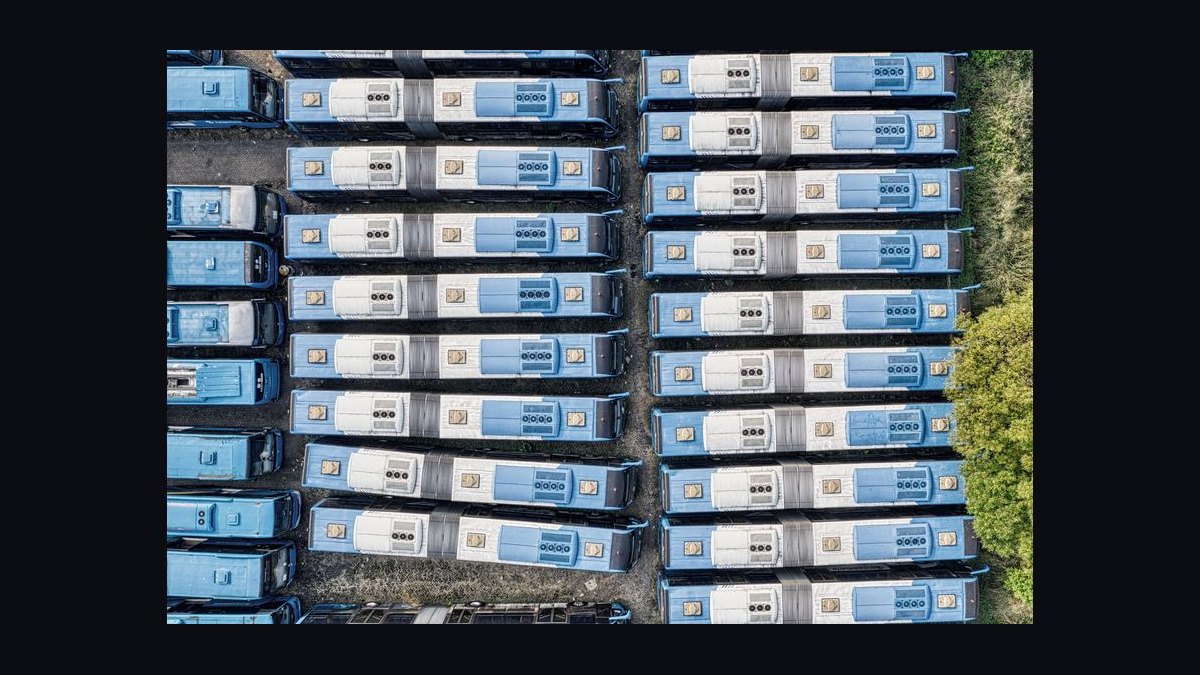
On the reservation and dispatch layer, Saucon Technologies runs roughly $300 to $900-plus per month depending on fleet size and the number of modules activated (GPS integration, driver app, marketplace connectors). S2/DDS, the longer-standing motorcoach-specific alternate, typically lands between $250 and $700 per month. For a small operator running a mixed fleet of coaches, minibuses, and vans, Busable runs about $100 to $400 per month, while Limo Anywhere runs $99 to $300-plus and Moovs runs $60 to $200 — though both of the latter two are noticeably weaker on true multi-day motorcoach trip sheets and are better suited to point-to-point work.
On the compliance side, Samsara runs about $27 to $45 per vehicle per month on an annual contract term and bundles ELD/hours-of-service logging, GPS, harsh-event safety scoring, dash-cam options, and driver-qualification file tracking into one subscription. Motive, the strong alternate, runs $25 to $40 per vehicle per month, and Geotab runs $25 to $35 per vehicle per month plus separate hardware costs for operators who want an open-API telematics platform rather than a bundled suite. For a 68-coach fleet, that compliance layer alone runs somewhere between $1,700 and $3,000 a month before any other software is added — a number worth sizing early, because it scales linearly with every coach added to the roster, unlike the reservation platform's tiered pricing.

Fleet maintenance software through Fleetio runs about $5 to $8 per vehicle per month, a comparatively small line item that nonetheless protects an asset base where a single new motorcoach costs $500,000 to $750,000 or more. Passenger wifi, a contracted amenity increasingly expected on tour and corporate charter work, runs roughly $30 to $60 per coach per month in cellular data costs on top of hardware like a Cradlepoint router.
On the demand side, marketplace and broker channels like CharterUP, GOGO Charters/Shofur, and Bus.com typically charge no flat platform fee to the operator and instead take a 10 to 20 percent commission per booked trip — which means the "cost" of that channel is proportional to how much volume flows through it, and it needs to be tracked as a margin line, not treated as free lead generation.

Rolling all of this up by fleet size: a small charter operator running 5 to 15 coaches typically spends $700 to $1,800 a month across reservation, ELD, maintenance, payments, and accounting software. A mid-size motorcoach company running 50 to 120 coaches across multiple depots typically spends $3,500 to $9,000 a month once reservation, fleet-wide telematics, maintenance, billing, and business intelligence are all active. A large motorcoach fleet running 200 or more coaches, often with a custom or enterprise reservation platform and a dedicated data warehouse feeding Power BI by depot and contract, typically spends $15,000 to $40,000-plus a month including hardware and telematics.
Choosing Between Reservation Platforms and Demand Channels
The two biggest strategic decisions in building this stack are which reservation platform to standardize on and how much demand to let flow through marketplace channels versus direct accounts — and both are genuine trade-offs, not obvious choices.

Saucon Technologies and S2/DDS both handle true multi-day motorcoach trip construction well, but they differ in depth of GPS integration and cost structure. Saucon bundles GPS more tightly into its own platform, which simplifies vendor management but ties the company to Saucon's telematics roadmap. S2/DDS is the more established motorcoach-specific alternate and tends to run slightly cheaper, but companies evaluating it should confirm its driver-app and mobile trip-sheet experience matches what Saucon offers before switching, since driver adoption is often where these rollouts succeed or fail. Coach Manager and Vehicle Booking System serve UK-style and tour-heavy operators and are worth a look specifically for companies whose business skews toward fixed-route sightseeing and multi-stop tour packages rather than point-to-point charter.
For a small operator, the trade-off runs the other direction: Busable is purpose-built for charter and shuttle bus quoting at a lower price point, but Limo Anywhere and Moovs may already be familiar to an operator that also runs black-car or sprinter-van work alongside coaches, and switching platforms has a real training cost. The honest answer is that Limo Anywhere and Moovs work acceptably for simple charter quoting but genuinely struggle with true multi-day trip sheets — layover pay, overnight lodging rollups, and multi-driver assignments are not their design center — so a company whose business is shifting toward more multi-day tour work should plan a migration to a motorcoach-specific tool before that gap causes pricing errors.

The marketplace-versus-direct trade-off is arguably the bigger margin decision. CharterUP, GOGO Charters/Shofur, and Bus.com all supply real volume, particularly in slower seasons, but that volume arrives already discounted by a 10 to 20 percent commission. A motorcoach company that lets marketplace bookings creep past roughly a third of total trip volume often finds its blended margin quietly eroding even as utilization numbers look healthy, because the marketplace trips are frequently the lowest-margin ones in the mix. The alternative — building direct relationships with school districts, churches, sports leagues, and corporate accounts through repeat-booking incentives and net-30 billing — costs more in sales effort upfront but protects margin on the trips that matter most. The right balance is company-specific, but it should be a deliberate target tracked in Power BI, not a number that emerges by accident from which leads happened to call first.
Where Motorcoach Companies Get This Wrong
The most common and most expensive pitfall is exactly the scenario that opened this page: selling a trip that the driver-hour rules will not allow because hours-of-service data was never wired into the quoting step. This happens most often at companies that adopted an ELD purely to satisfy FMCSA audit requirements without ever connecting that data back into the reservation platform's trip-building logic. The fix is not a policy memo — it is a system integration, confirmed and tested, where the platform physically cannot generate a driver trip sheet that violates the hours-of-service ceiling without flagging a second driver or a reset.
A second common failure is treating marketplace demand as free revenue rather than a margin decision. Operators who onboard CharterUP or a broker channel and simply accept every lead that comes through often do not notice their blended margin sliding until a full quarter of financial reporting reveals it. The fix is tracking channel-level margin in Power BI from day one and setting an explicit cap — a percentage of monthly trip volume — on how much marketplace work the company will accept relative to direct bookings.
A third pitfall is letting maintenance and DOT annual inspections slip because the maintenance system is not actually wired to telematics triggers. A missed inspection on a $500,000-plus coach does not just risk a fine — it can pull that coach out of service during the company's highest-revenue season, which is exactly when losing a unit costs the most. Fleetio schedules driven automatically by odometer and engine-fault-code data from Samsara or Motive close this gap; a maintenance system running on a static calendar instead of live telematics data will eventually miss a deadline.

The fourth pitfall, more operational than technical, is continuing to let dispatchers build quotes manually in a spreadsheet even after the company has purchased a proper reservation platform. This happens more often than operators admit — old habits persist, especially among longer-tenured dispatchers — and it reintroduces every pricing error the platform was bought to eliminate: forgotten layover pay, miscounted deadhead miles, missed lodging costs on a multi-day tour. The only real fix is an internal rule that no quote leaves the building unless it was built inside the reservation tool's trip model, with manager sign-off required on any exception.
Related questions
Do small charter operators really need a motorcoach-specific reservation platform, or will a generic CRM work?
A generic CRM cannot model a priced trip with deadhead miles, driver duty hours, layover pay, and hours-of-service limits, and it cannot generate a compliant driver trip sheet — so even a 5-coach operator benefits from Busable or Limo Anywhere over a general CRM.
How does hours-of-service compliance differ for motorcoach drivers versus long-haul truck drivers?
Both fall under FMCSA hours-of-service rules, but passenger-carrying drivers work under an 10-hour driving limit and 15-hour on-duty window rather than the 11-hour/14-hour truck driver limits, which changes how multi-day charter trips must be scheduled.
What happens if a charter company's ELD and reservation platform are not integrated?
Dispatch can commit to a trip that is legally impossible to complete with the assigned driver, discovered only when the driver runs out of legal hours mid-route, which is the single most preventable compliance failure in the industry.
Should a growing motorcoach company build its own data warehouse instead of relying on Power BI alone?
Only at real scale — companies running 200-plus coaches across multiple depots typically add a data warehouse to unify telematics, reservation, and accounting data before feeding Power BI, but mid-size fleets get sufficient value connecting Power BI directly to source systems.
FAQ
Why can't a motorcoach company just use a limo dispatch system like Limo Anywhere? A small mixed-fleet operator can, and many do, but Limo Anywhere is built around point-to-point black-car trips. True motorcoach work needs multi-day trip quoting with mileage, driver hours, and lodging rolled together, plus hours-of-service-aware dispatch — which is why dedicated tools like Saucon, S2/DDS, and Busable exist as a separate category.
Is an ELD legally required for motorcoach operators? Yes. FMCSA hours-of-service rules apply to motorcoach drivers, and most charter operations require electronic logging devices. The same hardware from Samsara, Motive, or Geotab typically doubles as the GPS and safety-telematics source, so one device serves compliance, tracking, and maintenance-trigger functions at once.
How much demand should come from CharterUP versus direct accounts? There is no universal number, but because marketplaces take 10 to 20 percent commission on frequently discounted rates, many profitable operators treat marketplace work as fill-in capacity for slow periods and protect their higher-margin direct school, church, sports, and corporate accounts. Track channel margin explicitly rather than accepting every lead by default.
What does a charter reservation platform need to do that a generic CRM cannot? It must model a trip as a priced artifact — deadhead and live miles, driver duty hours, overnight pay, tolls, fuel — produce a driver trip sheet with stops and times, manage the quote-to-deposit-to-balance flow, and respect hours-of-service limits during dispatch. A generic CRM tracks contacts and deals, not regulated trip logistics.
How does a motorcoach company keep an expensive coach from sitting idle? Measure revenue days and revenue miles per coach in a business-intelligence tool like Power BI, drive preventive maintenance through a system like Fleetio so coaches stay in service through peak season, and use marketplace channels deliberately to fill low-demand windows without undercutting direct contracts.
What's the smallest viable tech stack for a new motorcoach company? Busable or Limo Anywhere for reservation and quoting, an ELD like Samsara for hours-of-service compliance, Fleetio for maintenance, Stripe for deposits, and QuickBooks for accounting, with a marketplace like CharterUP supplying initial demand. That combination covers quoting, legal compliance, maintenance, and finance for a 5 to 15 coach operation.
Sources
- https://www.fmcsa.dot.gov/regulations/hours-of-service
- https://www.fmcsa.dot.gov/hours-service/elds/electronic-logging-devices
- https://www.saucontds.com/
- https://busable.app/
- https://www.charterup.com/
- https://www.samsara.com/
- https://gomotive.com/
- https://www.fleetio.com/
- https://www.buses.org/
- https://www.stripe.com/
Related on PULSE
- [The Complete RevOps Tech Stack for a Mid-Market SaaS Company in 2027](/knowledge/tk0469)
- [What is the complete software stack for a towing company in 2027?](/knowledge/tk337)
- [What is the complete software stack for a party and event rental company in 2027?](/knowledge/tk340)
- [What is the complete software stack for a landscaping company in 2027?](/knowledge/tk329)
- [What is the complete software stack for a security guard company in 2027?](/knowledge/tk335)
- [What is the complete software stack for an auto glass and windshield repair company in 2027?](/knowledge/tk342)
This page will be disappearing soon. Save it to your device for $1 — or read it free while it is here.
@Kory-White- · if Venmo asks, the last 4 of my number are 2012
 pulse-tech-stacksWhat is the best tech stack for a roofing contractor in 2027?
 pulse-tech-stacksWhat is the best tech stack for a wedding or event venue in 2027?
 pulse-tech-stacksWhat is the recommended Grocery Retail sales and operations tech stack in 2027?
 pulse-tech-stacksWhat is the best tech stack for a nonprofit organization in 2027?
 pulse-tech-stacksWhat is the best tech stack for a packaging or corrugated manufacturer in 2027?
 pulse-tech-stacksWhat is the best tech stack for an electrical supply distributor in 2027?
 pulse-tech-stacksWhat is the best tech stack for a bar or nightclub in 2027?
 pulse-tech-stacksWhat is the best tech stack for a small-to-midsize manufacturing company in 2027?
 pulse-tech-stacksWhat is the best tech stack for a residential solar installation company in 2027?
 pulse-tech-stacksWhat is the recommended AI Coding Tools sales and operations tech stack in 2027?