
Tech Stack for Independent Restaurants in 2027
 Curated byKory White · Fractional CRO · Maryland
 PULSEKNOWLEDGE LIBRARY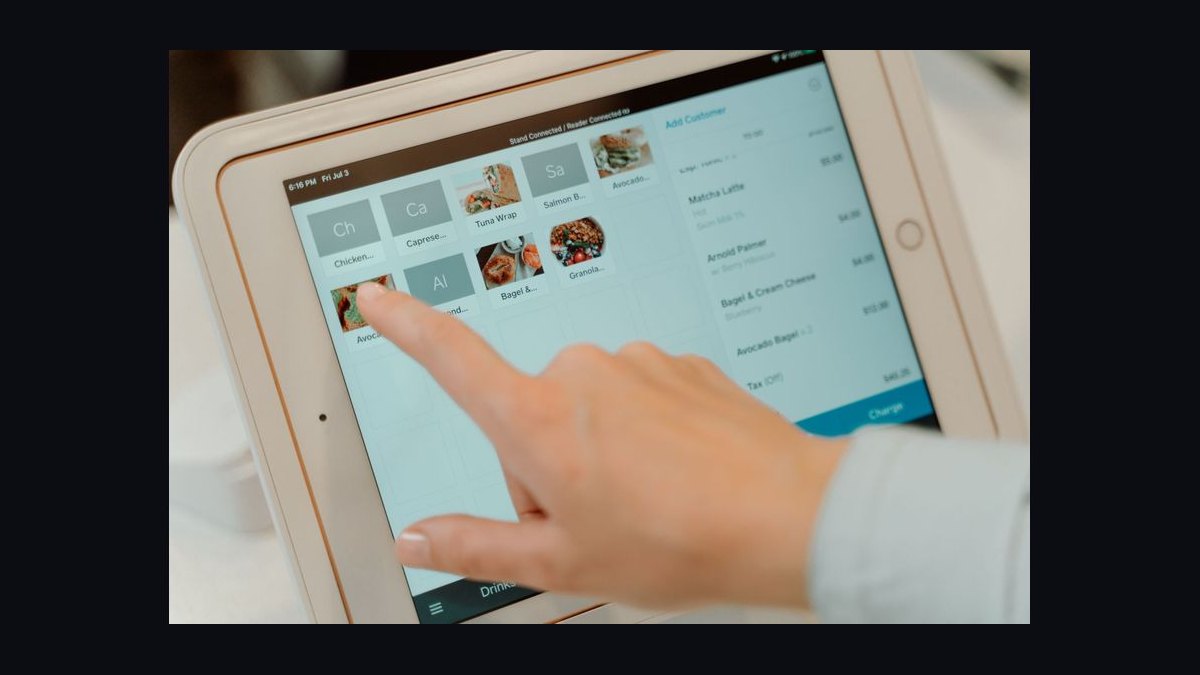
An independent restaurant's 2027 tech stack centers on a POS system (Toast or Square, roughly $69/month), paired with inventory software (MarketMan, ~$199/month), a labor-scheduling tool (7shifts, ~$45/month), a delivery aggregator (Otter, from $49/month), and cloud accounting (QuickBooks Online, ~$99/month). A single-location operator should expect $450–$900/month in software costs, with the POS as the foundational choice every other system depends on.
A Single-Location Owner Sits Down With Five Quotes
Picture an owner who just signed a lease on a 900-square-foot storefront for a fast-casual concept. She has a build-out budget, a menu concept, and a stack of five vendor quotes on the kitchen table: a point-of-sale rep, an inventory-software rep, a scheduling app, a delivery-consolidation tool, and her accountant asking which system will feed QuickBooks. This is the moment where most independent operators either build a coherent Stack or accumulate a pile of disconnected subscriptions that never talk to each other.
The instinct is to shop each category in isolation — cheapest POS, cheapest scheduling app, whatever inventory tool a supplier recommended. That approach produces exactly the mess the owner is trying to avoid: a POS that doesn't export clean sales data, an inventory tool that can't read item-level depletion from that POS, and a scheduling app that has no idea what yesterday's sales actually were. Six months later she's re-entering the same numbers into three different dashboards by hand.

The better approach treats the POS as the spine of the entire Stack and works outward from there. Every other vendor — inventory, labor, delivery, accounting, marketing — either reads data out of the POS or writes data back into it. That is why the single most consequential decision in this whole exercise is the POS choice, made before any of the satellite tools. Switching a POS after 18 months means re-training every employee, remapping every modifier and every 86 flag, and re-testing every integration a second time — a process that routinely costs four figures in lost labor hours and a week of degraded service, even before counting any hardware that has to be swapped out.
The scenario also exposes why independents can't simply copy a franchise's stack. A regional chain's IT department can absorb a $1,200/month software bill spread across a few million dollars in revenue and a corporate support team. A single-location Independent operator doing $1.1M in annual sales is paying for every one of these tools out of a 3–6% net margin, so the stack has to earn its keep on razor-thin room for error. The rule most operators use in 2027 is to keep total software spend, excluding payment processing, under roughly 1% of net revenue — ideally closer to 0.5–0.6%. That reframes every vendor conversation: it's not "what's the best inventory tool," it's "what's the best inventory tool I can justify at this revenue level."
How the Stack Actually Talks to Itself
The mechanism that makes a restaurant Tech Stack function is a set of one-directional data flows radiating out from the POS. Understanding these flows is what separates a stack that saves an operator five hours a week from one that creates five hours of manual re-keying every week.

Inventory software reads item-level sales data out of the POS — every burger sold depletes a specific quantity of beef, buns, and cheese according to the recipe card on file — and reconciles that theoretical depletion against invoices scanned from suppliers. The gap between what should have been used and what was actually bought is the variance report, and it is the single most useful number an inventory tool produces, because it turns "food cost feels high" into "here is exactly which ingredient is walking out the back door."
Labor-scheduling software works the same direction but on staffing: it pulls historical and forecasted sales by daypart out of the POS and builds a schedule that targets a specific labor percentage, rather than a manager guessing how many cooks a Tuesday lunch needs. Once the schedule is built, clock-in and clock-out punches either flow back into the POS or straight into payroll, so nobody is manually transcribing a time clock into a spreadsheet.

Delivery aggregation runs in the opposite direction — it pulls orders in from third-party marketplaces and pushes them into the POS as a single consolidated ticket stream, so the kitchen sees one queue instead of four separate tablets buzzing independently. Without this layer, menu prices drift out of sync across platforms and nobody can accurately calculate food cost on delivery revenue, because those sales never touched the system that tracks depletion.
Accounting sits downstream of almost everything: the POS pushes a daily sales summary covering gross sales, tips, sales tax, and discounts, while payroll pushes hours and tip payouts. When this connector is missing, a bookkeeper is manually keying deposits against POS batch reports every morning, a task that eats real hours at real hourly billing rates. When it's present, that reconciliation runs automatically and the owner can read a profit-and-loss statement that reflects yesterday's business, not last month's.

What Operators Actually Pay in 2027
Real-world software spend clusters into fairly predictable tiers based on location count and revenue, and understanding these tiers keeps an owner from either overbuying or dangerously underbuying.
A solo single-location Independent restaurant doing $600K–$1.2M in annual revenue typically lands at $420–$680 per month in total software subscriptions. That figure usually breaks down as a $69/month POS, either a free entry-level inventory tool bundled with the POS or a $199/month standalone inventory platform, a $45/month scheduling tool, a $49/month delivery consolidator, and a $99/month accounting subscription. Operators who stay on a free-tier inventory add-on rather than a paid standalone product can land closer to $280/month — a meaningful difference at this revenue size.
Move up to a small multi-unit operator running one to three locations at $1.5M–$4.5M in combined revenue, and per-location software spend rises to roughly $850–$1,650 per month. At this size, the inventory tool typically upgrades to a higher tier that removes invoice-scan limits, the scheduling tool adds tip-pooling and compliance features, and payroll usually gets folded into the POS ecosystem rather than run as a fully separate vendor.
At four to ten locations doing $5M–$15M combined, the math changes again — per-location spend climbs to $1,800–$3,200 per month because enterprise-grade back-office software (the kind that replaces both accounting and inventory in one platform) enters the picture, and some operators add a fractional technology manager to administer the growing vendor list.
A useful sanity check across every tier: total software spend, excluding card-processing fees, should sit between roughly 0.4% and 1.0% of net revenue. An operator above 1.2% is very likely overbuying — paying for enterprise features a single kitchen doesn't need. An operator below 0.3% is very likely under-equipped, most commonly missing inventory or labor software entirely and bleeding margin nobody can see because nothing is measuring it. Card-processing rates deserve equal attention alongside software subscriptions — a difference of even a few tenths of a percentage point on annual card volume routinely outweighs an entire year of software subscriptions, so negotiating the processing rate is not a footnote to the stack decision, it's part of it.
Toast vs Square vs the Alternates
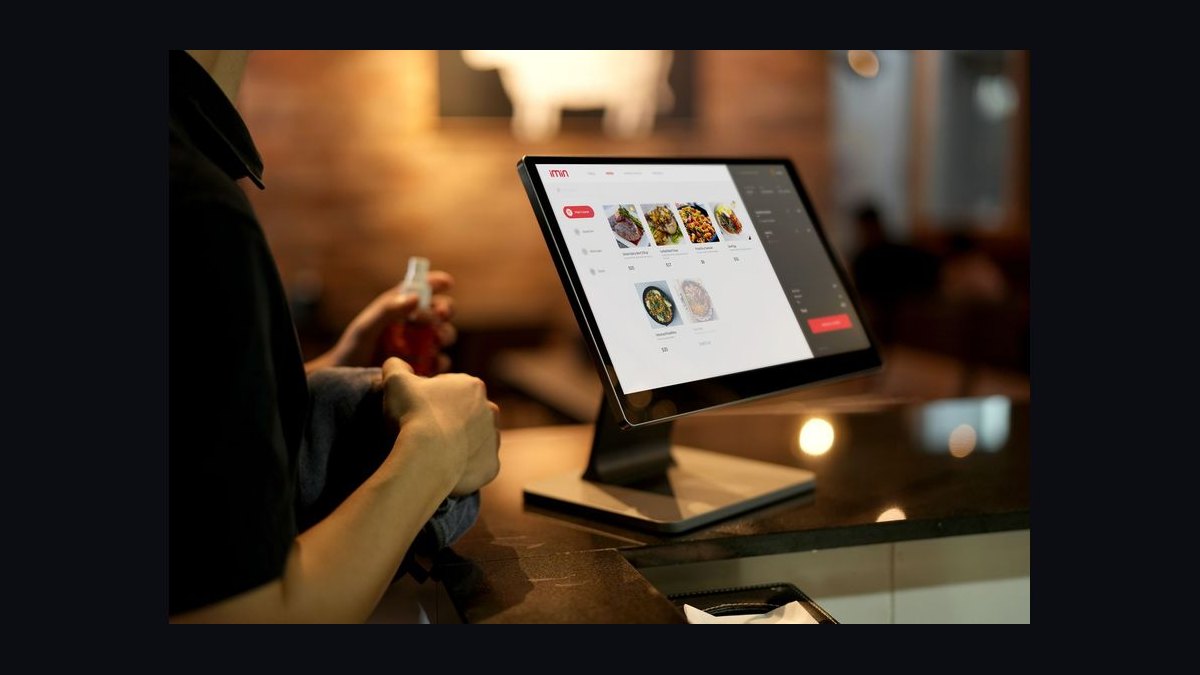
Choosing between the two dominant POS platforms is less about which is "better" in the abstract and more about matching the platform to the service model. A full-service concept with table turns, course timing, and a kitchen display juggling modifiers tends to fare better on the platform built around deeper kitchen-display logic and a more capable tableside handheld — the trade-off being a heavier hardware bundle and a higher up-front cost. A quick-service concept, coffee shop, or food truck usually does better on the lighter platform: cheaper terminal hardware, no long-term contract, and online ordering bundled in at no extra software fee, which matters disproportionately for a low-margin, high-volume counter business.
There are viable alternates outside the two dominant platforms, and each comes with its own trade-off. One well-known alternate carries a materially higher monthly software fee but is a defensible choice for concepts that want an all-in-one hardware-and-software bundle from a single vendor. Another mid-market alternate prices per station rather than per location, which can work in an operator's favor for a compact footprint but against them once a second register gets added. A hardware-first alternate is frequently sold through bank merchant-services relationships rather than direct — and that channel is the actual trade-off to weigh, not the software itself, because a bank-reseller relationship often bundles in a multi-year equipment lease that is far more expensive to exit than the software subscription ever was.

The inventory layer has its own trade-off worth naming explicitly: a free tool bundled with a specific POS versus a standalone platform that costs a real monthly fee but works across POS brands. The bundled free option is the right call for an operator committed to that POS ecosystem long-term. The standalone paid option is the right call for an operator who wants supplier-portal features, deeper recipe costing, or who wants to preserve the option of switching POS platforms later without also having to re-learn an inventory system at the same time. That flexibility has a price, and for a single-location operator it's worth weighing against the free bundled alternative before defaulting to the paid tier.
The general trade-off pattern that runs through every category in this Stack is the same: cheaper and simpler favors a leaner single-location operation, while the pricier, more feature-dense option earns its cost only once a second location, a more complex menu, or a larger back-office team is actually in the picture. Buying the multi-location feature set for a single-location restaurant is the most common overspend independents make.
Where Independent Operators Get Burned
A handful of mistakes recur often enough across independent restaurants that they're worth naming individually, because each one is preventable with a decision made in week one rather than a fix applied in year two.
The first is signing multi-year equipment leases without reading the early-termination language. Hardware bundled through a bank merchant-services relationship is the most common source of this problem — the lease can total several thousand dollars over its term with no meaningful exit, long after the operator has decided the platform isn't the right fit. Buying hardware outright, or taking a vendor's direct financing offer, avoids this trap entirely.

The second is fixating on the software subscription's sticker price while ignoring the card-processing rate buried in the same contract. POS vendors frequently price the software subscription artificially low because the real revenue comes from the processing percentage on every swipe. A seemingly small difference in that percentage, multiplied across a year of card volume, is very often larger than the entire annual software bill — and it's a number most operators never think to negotiate.
The third is skipping inventory software entirely and trying to track food cost on a spreadsheet or by gut feel. Without a system reconciling theoretical usage against actual invoices, a meaningful share of food cost disappears into invisible variance — over-portioning, waste, or shrinkage that nobody is measuring. On a mid-six-figure revenue base, that invisible leak routinely dwarfs the cost of the inventory subscription meant to catch it.
The fourth is running scheduling out of a group text or a shared spreadsheet instead of software tied to a sales forecast. Without that link, an operator over-schedules a slow weeknight and under-schedules a busy weekend, and the labor percentage drifts upward without anyone noticing until the monthly P&L lands.

The fifth is refusing to consolidate delivery-marketplace orders onto a single tablet. Running each delivery app independently means missed orders during a rush, menu prices that silently diverge across platforms, and zero visibility into whether delivery revenue is even profitable once packaging and commission are factored in.
The sixth, and most quietly expensive, is never connecting the POS to accounting software. Without that daily sales-summary connector, someone — usually a bookkeeper billing by the hour — is manually keying deposits, tips, and sales tax every single morning, a recurring cost that a one-time integration setup eliminates permanently.
Related questions
Do I need a separate marketing platform on top of everything else?
Not at first. Email and SMS to an existing guest list, often bundled free or cheap with the POS, typically outperforms a dedicated loyalty platform below roughly $1.2M in annual revenue. Add a standalone tool only once that volume is consistently exceeded.
How long does switching POS platforms actually take?
Plan on four to six weeks for a full menu rebuild, staff retraining, and integration re-testing across every connected tool. It is disruptive enough that operators should treat the initial POS choice as close to permanent.
Should delivery-app commissions factor into the software budget?
Yes, indirectly — the aggregator subscription cost is small next to the 15–30% commission each delivery marketplace charges. Consolidation software controls the operational chaos; it doesn't reduce the marketplace's cut.
Is a fractional bookkeeper still necessary once accounting software is connected?
Usually, yes, but for far fewer hours. The POS-to-accounting connector eliminates manual data entry, not judgment calls like reconciling bank deposits, handling sales-tax filings, or reviewing the P&L — those still benefit from a human.
At what point does a single restaurant need enterprise back-office software?
Generally once a second or third location opens. Below that, enterprise platforms bundle features — multi-entity reporting, centralized purchasing across sites — that a single kitchen has no use for and shouldn't pay for.
FAQ
Do I need every category in this Stack on day one? The POS and payment processing must be live before opening. Inventory and labor scheduling should follow within the first 30–60 days once real sales data exists to build against. Marketing and advanced accounting integrations can reasonably wait until the core operation is stable.
Is it worth paying more for a POS with a richer feature set if I'm a small counter-service shop? Generally no. A lean quick-service operation gains little from features built for full-service table management, and the extra monthly cost and heavier hardware bundle rarely pay for themselves at that scale.
Can I run the whole Stack on spreadsheets to save money? Technically yes, but the hidden cost is high. Manual inventory and scheduling processes routinely leak more in unmeasured food cost and labor overspend than the software they'd replace, even before counting the owner's own time.
How do I know if my software spend is too high? Compare total monthly software cost, excluding processing fees, against net revenue. Above roughly 1.2% of revenue is a signal to audit for overlapping or underused tools; below roughly 0.3% is a signal something important, usually inventory or scheduling, is missing entirely.
What's the single highest-leverage integration to set up first? The POS-to-accounting daily sales summary. It's the connector operators most often skip, and it's the one most directly tied to recurring hours saved every single week rather than a one-time setup benefit.
Should I let my payment processor choose my POS for me? Be cautious. Processors sometimes offer subsidized or "free" hardware in exchange for a higher processing rate, effectively financing the hardware through elevated fees over several years. Evaluate the software and the processing rate as two separate negotiations.
Sources
- Toast Restaurant POS Pricing
- Square for Restaurants Pricing & Plans
- 7shifts Plans & Pricing
- MarketMan Pricing
- SpotOn Restaurant Pricing
- Clover POS Pricing Guide — Tech.co
- HotSchedules by Fourth — official product page
- QuickBooks Online Plans & Pricing
Related on PULSE
- [Tech Stack for Independent Bakeries in 2027](/knowledge/tk0279)
- [What is the best tech stack for an independent bookstore in 2027?](/knowledge/tk0136)
- [What is the best tech stack for an independent hardware store in 2027?](/knowledge/tk0140)
- [What is the best tech stack for an independent retail pharmacy in 2027?](/knowledge/tk0108)
This page will be disappearing soon. Save it to your device for $1 — or read it free while it is here.
@Kory-White- · if Venmo asks, the last 4 of my number are 2012
 pulse-tech-stacksWhat is the best tech stack for a commercial plumbing contractor in 2027?
 pulse-tech-stacksWhat is the best tech stack for a small aerospace and defense contractor in 2027?
 pulse-tech-stacksWhat is the complete software stack for a florist in 2027?
 pulse-tech-stacksWhat is the best tech stack for a building materials or lumber yard in 2027?
 pulse-tech-stacksWhat is the best tech stack for a wedding or event venue in 2027?
 pulse-tech-stacksTech Stack for Music Schools in 2027
 pulse-tech-stacksTech Stack for Handyman Services in 2027
 pulse-tech-stacksWhat is the recommended AI Coding Tools sales and operations tech stack in 2027?
 pulse-tech-stacksWhat is the recommended SOC-as-a-Service (SOCaaS) Provider sales and operations tech stack in 2027?
 pulse-tech-stacksWhat is the best tech stack for a limousine or black car service in 2027?