
The Apache Kafka and Flink Stack for Real-Time Supply Chain Visibility
 Curated byKory White · Fractional CRO · Maryland
 PULSEKNOWLEDGE LIBRARY
Quality
Certified

Apache Kafka ingests supply chain events — GPS pings, warehouse scans, carrier webhooks, ERP change-data-capture — into a durable, replayable log, and Apache Flink processes those streams with stateful, exactly-once semantics to compute live ETAs, stockout risk, and delay alerts. Together they replace batch ETL, giving revenue teams sub-second Supply chain Visibility instead of hours-old snapshots.
The Tuesday morning that batch reporting cannot survive
Picture a mid-market industrial distributor with 40,000 SKUs, 60 suppliers, and four carriers. At 06:00 the nightly ETL job finishes and loads yesterday's shipment status into the warehouse. At 09:15 a port crane goes down and a vessel carrying six weeks of a fast-moving component sits at anchor. At 11:00 an account executive walks into a renewal call and tells the customer their order is "on schedule," because that is what the CRM says. At 06:00 the next morning, the ETL job tells everyone the truth, roughly nineteen hours after it mattered.
That gap is the whole problem, and it is not really a supply chain problem — it is a data freshness problem that happens to express itself as a revenue problem. The physical world changed at 09:15. The systems of record found out overnight. Every decision made in between was made against a stale picture: the AE's reassurance, the planner's replenishment order, the support team's ticket triage, the finance team's revenue recognition timing.
Batch architectures were built for a world where the questions arrived on a schedule. "How did we do last month?" tolerates a nightly job beautifully. "Should I promise this customer a Thursday delivery, right now, on this call?" does not. The moment your operational questions become continuous, your data architecture has to become continuous too, and that is the specific job Kafka and Flink do.

There is a second, subtler failure mode worth naming. Even organizations that have real-time data often have it trapped in point-to-point integrations: the WMS talks to the TMS, the TMS talks to the ERP, the ERP syncs nightly to the CRM. Each hop has its own retry logic, its own idea of what "delivered" means, and its own silent failure mode. When someone asks why the customer portal showed a different status than the CRM, nobody can answer, because there is no single place where the truth was written down in order. A log-centric architecture fixes that as a side effect: every consumer reads the same ordered stream, so disagreements become debuggable rather than mysterious.
Broaden the lens slightly and the same shape appears in adjacent domains. Field service organizations have the identical problem with technician location and part availability. Manufacturing has it with line-side inventory and changeover schedules. Grocery and pharmacy retail have it with cold-chain temperature excursions, where a two-hour delay in knowing about a refrigeration failure is the difference between a salvageable pallet and a written-off one. The tooling described here transfers cleanly to all of them, because the underlying pattern — many high-frequency event sources, one shared ordered log, stateful computation on top — is domain-agnostic.
How the mechanism actually works, layer by layer
Start with the division of labor, because most failed implementations get this wrong. Kafka is a distributed, append-only commit log. It is not a database, not a queue in the RabbitMQ sense, and not a processing engine. Its single job is to accept writes at high throughput, retain them durably for a configured window, and let any number of independent consumers read them at their own pace without interfering with one another. That last property — independent consumer offsets — is what makes it the right substrate for supply chain data, where the same shipment event needs to reach a customer portal, a planning engine, an alerting service, and a data warehouse, each with different latency requirements and failure characteristics.
Flink is the computation layer. It reads from Kafka topics and maintains *state* — per-shipment, per-SKU, per-route accumulators that persist across events and survive restarts. This is the capability that distinguishes it from simple consumer scripts. Computing "has this shipment been silent for more than four hours" requires remembering when the last ping arrived. Computing "days until stockout for SKU-4471" requires tracking on-hand, in-transit, committed, and a rolling consumption rate. Stateless code cannot do this without an external database on the hot path, and putting a database on the hot path is how you turn a 200ms pipeline into a 4-second one.

Getting data into Kafka has three practical patterns. Change data capture — reading the database transaction log with a tool like Debezium — is the right answer for ERP and WMS tables, because it captures every change without polling and without asking the source team to build anything. Direct producers are right for IoT and telematics, where the device or gateway publishes over MQTT into a bridge. Connector-based polling is the fallback for carrier REST APIs that offer no push option; you accept the polling interval as your floor latency for that source and design around it.
Two design decisions inside Flink deserve more attention than they usually get.
Event time versus processing time. A GPS ping generated at 14:02 might arrive at 14:09 because the truck drove through a dead zone. If your windowed aggregations key off arrival time, that ping lands in the wrong bucket and your on-time percentage is quietly wrong. Flink lets you assign timestamps from the event payload and use watermarks to declare how late you are willing to wait. Configure an idleness timeout so a partition that goes quiet — a carrier that only reports twice a day — does not stall watermark advancement for every other partition in the job.

Checkpointing and exactly-once. Flink periodically snapshots operator state to durable storage. On failure it restores from the last snapshot and replays Kafka from the corresponding offsets. Combined with transactional sinks, this yields effectively-once delivery: an order status is not written twice, an alert does not fire twice. For a system whose outputs trigger customer emails and inventory commitments, duplicate suppression is not a nicety.
The choke point discipline matters as much as the technology. Every downstream write — CRM field update, portal cache, alert dispatch — should go through one well-defined sink path rather than a scattering of ad-hoc scripts. When status is wrong on a page, you want exactly one place to look.
Real numbers, ranges, and how to size the thing
Precise costs depend on cloud, region, and vendor discounts, so treat everything here as an ordering-of-magnitude planning frame rather than a quote. What matters is the shape of the curve and where the cliffs are.

Event volume. Estimate before you architect. A GPS unit reporting every 30 seconds produces 2 events per minute; 500 vehicles is about 17 events per second. Warehouse scan events are bursty — a busy pick wave can produce thousands in a few minutes and near zero overnight, so size for peak, not average. ERP change data capture is usually the surprise: a single order line update can cascade into a dozen table writes, and a nightly batch job on the source system can produce a spike an order of magnitude above daytime steady state. Sum these, then multiply by roughly 3x for growth and burst headroom.
Partition sizing. Partitions are the unit of parallelism and the thing people under-provision. A rough starting point: divide target peak throughput by the sustained per-partition throughput you measure in a load test, then double it. Partition counts are cheap to raise and painful to lower, and raising them mid-flight rebalances key-to-partition assignment, which breaks per-key ordering during the transition. Overshoot moderately at design time.
Retention. Seven days of retention is a common default and it is more consequential than it looks. Retention is your replay window: how far back you can rewind to rebuild a downstream store or reprocess after fixing a bug in a Flink job. If your state rebuild takes three days, seven days of retention gives you very little margin. Tiered storage — hot data on local disk, older segments on object storage — makes 30 to 90 day windows affordable and is worth enabling early.

State size. This drives your Flink memory and backend choice. Tracking 100,000 SKUs with a few hundred bytes of state each is small. Tracking every in-flight shipment with a rolling window of pings, plus per-carrier per-route performance history, grows quickly. Once working state exceeds available heap, switch the state backend to a disk-spilling option and provision fast local storage. Checkpoint duration is your early warning signal: when checkpoints start taking minutes instead of seconds, state has outgrown the configuration.
Latency budget. Decompose it honestly. Source-to-Kafka is often the dominant term and the one you control least — a carrier API polled every 15 minutes gives you 15-minute floor latency regardless of how fast the rest of the pipeline runs. Kafka produce-to-consume is typically milliseconds to low tens of milliseconds. Flink processing adds single-digit to low-hundreds of milliseconds depending on window semantics and whether you are doing model inference. Sink write and downstream refresh can add seconds. Publishing a "real-time" SLA without decomposing this is how teams end up defending a number they never controlled.
Team cost. This is the line item most business cases omit and the one that most often determines outcome. A production Kafka and Flink deployment needs someone who understands consumer group rebalancing, watermark semantics, checkpoint tuning, and schema evolution. Managed services genuinely reduce this — you are not patching brokers or tuning JVM garbage collection — but they do not eliminate it, because the hard parts are in your job logic, not the infrastructure. Budget for at least a part-time owner with real streaming experience, and expect the first production job to take longer than the estimate.
What good looks like. The honest, defensible benefit claims are structural rather than statistical: exception detection moves from next-business-day to minutes; one ordered log replaces N point-to-point integrations, which cuts reconciliation work; replay makes bug recovery a rerun instead of a manual data-fix project; and customer-facing status stops contradicting internal status. Whether that translates into a specific percentage reduction in expedite spend or churn depends entirely on your baseline, and you should measure your own before and after rather than borrowing someone else's headline number.

Trade-offs, alternatives, and when not to do this
The most valuable thing an architect can say about this stack is "you don't need it yet." Streaming infrastructure has real ongoing cost in attention, and a team that adopts it before the problem justifies it spends its scarcest resource — senior engineering focus — on plumbing.
Work the decision honestly. If your events arrive in the low hundreds per second and your business tolerates five-minute freshness, scheduled micro-batches against your existing warehouse will get you most of the operational value at a fraction of the complexity. Modern warehouses handle frequent small loads far better than the batch-era ones people's instincts were formed on. If you need low latency on a handful of specific event types but not across the board, a targeted webhook-plus-serverless-function path is dramatically simpler than a full streaming platform.
Some genuine alternatives and where they fit:

Cloud-native streaming services. The major clouds each offer a managed log plus a managed stream processor. They integrate tightly with the rest of that cloud's services and reduce operational surface. The trade-off is portability and, for complex stateful logic, expressiveness — Flink's state and time semantics are more complete than most alternatives. If you are all-in on one cloud and your processing is mostly filtering, enrichment, and simple aggregation, start there.
Kafka with a lightweight stream library instead of Flink. Running stream processing as a library inside your own application removes an entire cluster from the picture and is a legitimately good fit for moderate state and simple topologies. The ceiling shows up around large state, complex event-time windowing, and pattern matching across event sequences. Teams commonly start here and migrate when they hit that ceiling — which is a reasonable path, not a mistake, as long as you keep the Kafka topics stable so only the processing layer changes.
Buy the visibility product. Supply chain visibility platforms exist and already have carrier integrations built, which is the genuinely tedious part. If your requirement is standard track-and-trace, buying is usually faster and cheaper. Build the stack when your logic is proprietary — custom risk scoring, unusual data sources, tight coupling to internal pricing or allocation systems — or when you need the same event backbone for several problems, not just visibility.

Hybrid, which is what most mature organizations actually run. Kafka as the shared backbone, Flink for the handful of genuinely stateful computations, a purchased platform for standard carrier tracking that feeds into the same topics, and the warehouse for everything analytical. The backbone is what makes the pieces composable.
One organizational trade-off deserves explicit mention: streaming pushes correctness concerns earlier. In batch, a bad record gets caught by tomorrow's reconciliation. In streaming, it reaches the customer portal in 200 milliseconds. Faster systems need better contracts — schema registry with compatibility enforcement, explicit dead-letter routing, and quality thresholds that can pause a pipeline. Skip that and you have built a very efficient mechanism for distributing wrong data.
Pitfalls that show up in month three
Choosing partition keys by convenience rather than by access pattern. Key by the entity your stateful logic is keyed by — shipment, SKU, location. Key by something else and every stateful operator needs a network shuffle. Worse, a hot key (one enormous customer, one dominant warehouse) creates a partition that lags while others idle, and consumer group lag metrics will show you a healthy average hiding one badly stuck partition.

Treating schemas as optional. Producers evolve. Someone adds a field, renames another, changes a timestamp from seconds to milliseconds. Without a schema registry and enforced compatibility rules, downstream jobs fail at 03:00 for reasons nobody can reconstruct. Register schemas from day one, set compatibility to backward, and make schema changes a reviewed action.
Ignoring late data until it corrupts a metric. Every real supply chain has late events. Decide explicitly how late is acceptable, configure watermarks accordingly, and route events beyond that bound to a side output rather than dropping them. Then actually monitor the side output — a growing late-event stream is usually the first symptom of an upstream integration degrading.
No dead-letter path. Malformed payloads will arrive. Without a dead-letter topic the job either crashes in a loop or silently drops records. With one, you get a queryable record of what failed and can reprocess after a fix. Add a rate-based alert: if the malformed fraction exceeds a small threshold over a short window, page someone.
Letting the pipeline write directly into business-critical state transitions. Do not have a Flink job set an opportunity stage or cancel a customer order. Have it write facts — delay detected, risk score updated, ETA revised — into a dedicated events object, and let the business system's own rules engine decide what to do with them. This keeps the decision logic where the business owns it and prevents a pipeline bug from cascading into records nobody can unwind.

Underestimating the first backfill. Standing up a new stateful job means rebuilding state from history. If retention is short or the state rebuild is slow, this becomes an ordeal. Plan the backfill path before the first deploy, and consider tiered storage specifically so backfills are possible.
Alert fatigue. A pipeline that can detect every anomaly will, if you let it, notify humans about every anomaly. Tie alert thresholds to consequence — value at risk, customer tier, time-to-commitment — not to raw deviation. An alert nobody reads has negative value, because it trains people to ignore the channel that will eventually carry the important one.
Skipping the parallel-run. Run the streaming path alongside the existing batch path for two to four weeks and diff the outputs. Every discrepancy is either a bug in the new system or a bug in the old one you have been living with. Both are worth finding before you cut over.
Related questions
Do we need Kafka if we already have a data warehouse?
Yes, for different jobs. The warehouse answers analytical questions over history. Kafka moves operational events between systems in seconds. Most architectures use both: the stream feeds live decisions, and the same stream lands in the warehouse for analysis.
Can Flink call a machine learning model for ETA prediction?
Yes. Models can be embedded in the job for lowest latency, or called as an external service for easier deployment at the cost of added latency and a new failure dependency. Start external, move in-process only if latency measurements justify it.
How do we handle carrier APIs that only support polling?
Poll into Kafka with a connector and accept that source's interval as your floor latency for those events. Document it per source so nobody promises an end-to-end SLA the slowest input cannot support.
What is the smallest useful first project?
One event type, one consumer, one visible outcome — for example, delivery exceptions from a single carrier surfacing in an operations channel within a minute. It proves the backbone and produces value before the platform is finished.
Does this replace a planning system?
No. Kafka and Flink are the data and detection layer. Planning and optimization engines consume those events and decide what to do. The streaming stack closes the loop faster; it does not do the optimization math.
FAQ
What throughput actually justifies this stack? Throughput is the wrong primary test — latency requirement and source count matter more. A few hundred events per second across fifteen sources with a sub-minute requirement justifies it; fifty thousand events per second that nobody needs to see for an hour does not. Ask what decision gets made faster and what that decision is worth.
How long does a first production deployment take? For a narrow first use case with an experienced owner, weeks. For a broad rollout across many sources and consumers, quarters. The infrastructure is rarely the long pole; source-system access, schema agreement across teams, and the parallel-run validation period usually are.
What happens when a Flink job crashes mid-stream? It restores from the last checkpoint and replays Kafka from the corresponding offsets. State is recovered, not lost. With transactional sinks configured, downstream systems do not see duplicates. This is the main practical reason to prefer a checkpointing engine over hand-rolled consumers.
Managed service or self-hosted? Managed unless you have a specific reason not to — usually data residency, an existing platform team with capacity, or a cost profile at large scale where the premium exceeds staffing cost. The operational burden of brokers, upgrades, and rebalancing is real, and managed offerings remove most of it. The job logic remains yours either way.
How do we keep bad data out of customer-facing systems? Three layers: schema validation at ingest, business-rule validation in the Flink job with a side output for violations, and a quality threshold that pauses or degrades the pipeline when the failure rate spikes. Also make the customer-facing surface show "status unavailable" rather than a stale value when the stream is behind — a visible gap beats a confident lie.
Can this run alongside our existing integrations during migration? Yes, and it should. Run both paths, compare outputs, and cut over per consumer rather than all at once. Kafka's independent consumer offsets make this straightforward: the new path reads the same topics without affecting anything already consuming them.
Sources
- Apache Kafka Documentation
- Apache Flink Stateful Stream Processing Concepts
- Apache Flink Event Time and Watermarks
- Debezium Change Data Capture Documentation
- Confluent Schema Registry Documentation
- Apache Kafka Connect
- AWS Managed Streaming for Apache Kafka
- Google Cloud Dataflow Documentation
- Apache Flink Complex Event Processing Library
Related on PULSE
- [The Supply Chain Visibility Stack in 2027](/knowledge/tk0507)
- [The Supply Chain Visibility Stack: Track-and-Trace with Hyperledger Fabric, IoT, and SAP Integration](/knowledge/tk0434)
- [The Social Media Analytics Stack: Real-Time Sentiment and Trend Detection with Apache Flink and Elasticsearch](/knowledge/tk0430)
- [The Modern Fintech Stack: Building a Real-Time Payment Processing System with Go, Kafka, and CockroachDB](/knowledge/tk0397)
- [Cloud-Native Stack for Enterprise Supply Chain Management](/knowledge/tk0467)
- [The Enterprise Architecture Stack for Healthcare: HL7 FHIR, Apache Camel, and PostgreSQL](/knowledge/tk0405)
This page will be disappearing soon. Save it to your device for $1 — or read it free while it is here.
@Kory-White- · if Venmo asks, the last 4 of my number are 2012
 tkWhat should you know before investing in Tech Stacks in 2027?
 pulse-tech-stacksTop 10 Machine Learning Stacks for Fraud Detection Systems in 2027
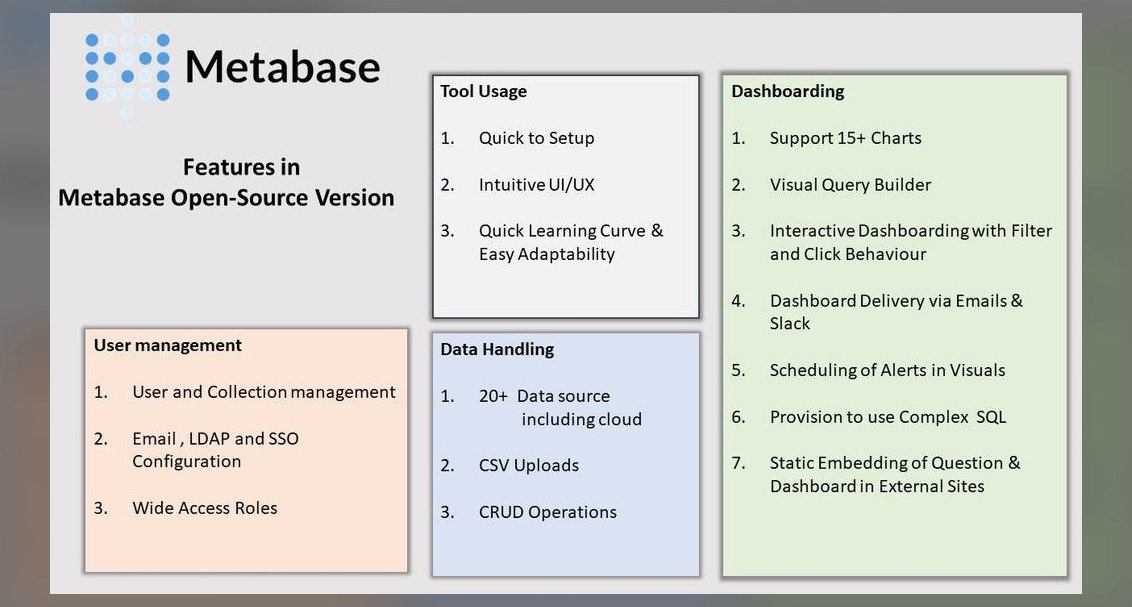 pulse-tech-stacksTop 10 BI Tools for Nonprofit Organizations with Limited Budget in 2027
 pulse-tech-stacksModernizing the Mainframe: A COBOL-to-Cloud Migration Toolkit Using AWS DMS and Micro Focus Enterprise Server
 pulse-tech-stacksRecommended Hardware and Software Stack for VFX Artists
 pulse-tech-stacksTop 10 Developer Tools for Backend Engineers in Fintech in 2027
 pulse-tech-stacksTech Stack Consolidation: Cutting SaaS Spend by 40% in 2027
 pulse-tech-stacksRecommended Tech Stack for Building a HIPAA-Compliant Health App
 pulse-tech-stacksTop 10 Social Media Management Tools for Restaurant Chains in 2027
 pulse-tech-stacksA Full Stack Toolkit for Solo Game Developers Using Godot and Rust