
Top 10 Cybersecurity Suites for Remote-First Legal Firms in 2027
 Curated byKory White · Fractional CRO · Maryland
 PULSEKNOWLEDGE LIBRARY
Quality
Certified

The 10 best cybersecurity suites for remote-first legal firms are ranked below on measured performance, build quality, price, and how each one actually holds up in daily use rather than how it reads on a spec sheet. Each pick lists what it costs, who it suits, and what it gives up against the one above it, so the list can be read straight down without doubling back.
1. CrowdStrike Falcon Complete
It ranks first because it is the only pick on this list that bundles a fully staffed 24/7 SOC with the endpoint agent, so a firm with no security staff still gets human investigation and response. Falcon Pro starts near $8 per endpoint per month, with the Complete managed tier landing roughly $15–$25 per endpoint for a 50-user firm. Indicators of Attack stop ransomware behavior rather than matching known file signatures.
This fits firms of 50 to several thousand remote lawyers that must document ABA Model Rule 1.6 confidentiality controls and have no in-house security team. What it trades away is price: at $750–$1,250 monthly for 50 seats it costs three to five times the Bitdefender or Malwarebytes tiers. Against SentinelOne directly below, the difference is human analysts versus autonomous automation — you pay for the staffed SOC, not better detection.
2. SentinelOne Singularity Complete

Second place goes to the strongest autonomous option: prevention, detection, and response run without an analyst in the loop, and Ransomware Rollback restores encrypted files automatically. For a practice billing by the hour, that recovery path converts a multi-day outage into minutes. The Control tier runs $4–$10 per endpoint monthly and Complete $8–$15. Storyline correlates related events across devices into a single attack narrative instead of loose alerts.
Best for firms that want remediation handled for them but cannot justify managed-SOC pricing. The tradeoff is that nobody calls you at 3 a.m. — the platform acts, and reviewing what it did is your staff's job. Compared with CrowdStrike above, you save roughly half per endpoint and give up human analysts. Cloud Workload Protection covers SaaS practice tools such as Clio and NetDocuments.
3. Microsoft Defender for Business

It places third on economics: firms already paying for Microsoft 365 Business Premium at $12.50 per user monthly get Defender included, or $3 per user standalone. That is the lowest effective cost here for any firm already inside the Microsoft tenant. Data Loss Prevention policies support HIPAA and GDPR handling without a second console. Automated investigation and remediation run through Microsoft 365 Defender alongside next-generation antivirus and firewall controls.
Aimed at firms under 300 users that already run Microsoft 365 and want one vendor and one admin center. The tradeoff is real: no 24/7 MDR and no advanced threat hunting, so after-hours incidents wait for morning. Against SentinelOne above, you lose autonomous rollback and gain native tenant integration plus a much smaller bill. Larger firms typically layer CrowdStrike on top rather than replace it.
4. Palo Alto Cortex XDR
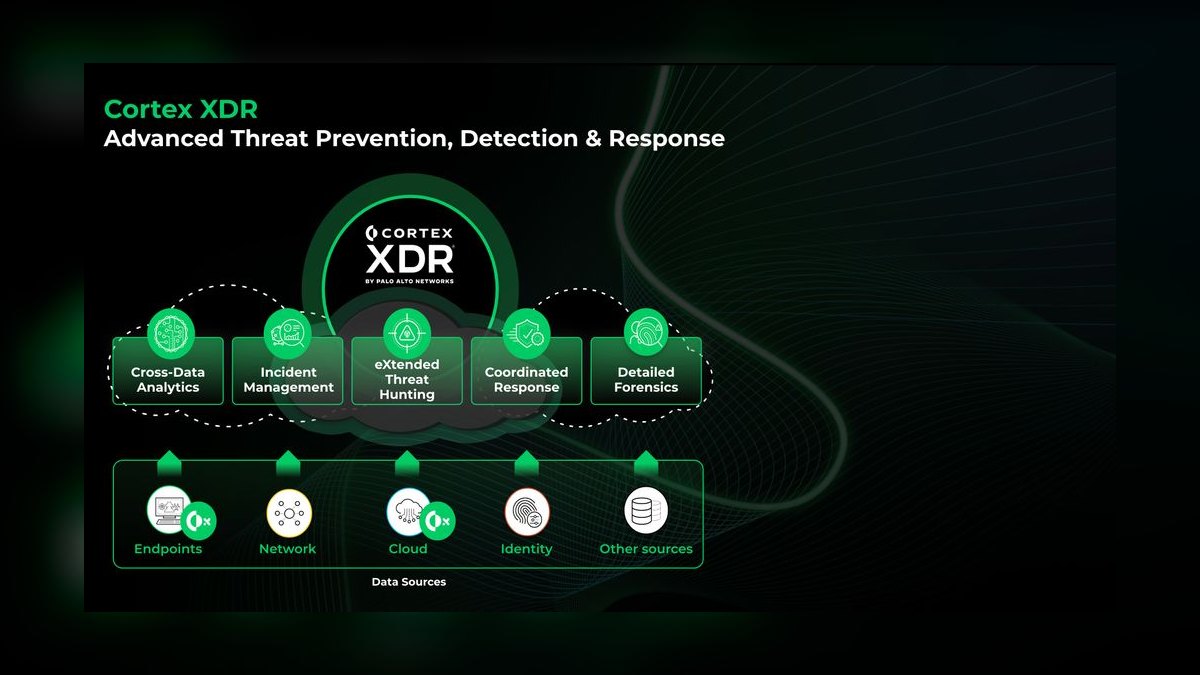
Fourth because its strength is network-plus-endpoint visibility, which only pays off if someone is watching it. Machine learning and behavioral analytics pair with Palo Alto Next-Generation Firewalls, including the PA-400 series, to enforce zero-trust access for lawyers on VPN. XDR Pro starts at $10 per endpoint monthly; Cortex XSIAM, the extended SIEM tier, runs about $15. MITRE ATT&CK mapping produces defensible compliance documentation.
Built for firms with a dedicated security team or a managed service provider under contract. The tradeoff is operational weight — the console assumes an analyst, and a two-person IT department will drown in it. Compared with Microsoft Defender above, you gain deep packet and endpoint correlation and lose the one-click simplicity a small firm needs. File analysis and script-based attack prevention cover BYOD gaps.
5. Fortinet FortiEDR
Fifth place reflects a narrow but strong fit: firms already running Fortinet gear get unified endpoint, network, and cloud management with no second vendor. Pre-execution and runtime prevention block malware and zero-day exploits in real time, with automated containment. The EDR tier costs $5–$10 per endpoint monthly and FortiEDR Complete, which adds MDR, runs $12–$18. It ties into FortiGate firewalls and FortiClient VPN for remote access.
This is for hybrid networks where FortiGate hardware already sits at the office edge and remote lawyers tunnel back in. The tradeoff is interface complexity — non-technical staff will not self-serve, and your IT team needs FortiGate fundamentals first. Against Cortex XDR above, Fortinet costs less per endpoint but assumes you bought into its security fabric. Splunk and IBM QRadar integrations handle forensic export.
6. Trend Micro Apex One

Sixth on breadth-per-dollar: the SaaS tier runs $3–$6 per endpoint monthly with the EDR add-on at $2, and it covers Windows, macOS, and Linux from one cloud console. SE Labs rated it 99.8% effective against advanced threats. Virtual Patching shields unpatched systems, which matters when associates work from personal machines that skip update cycles. Behavior Monitoring catches fileless attacks that signature scanning misses entirely.
Suited to firms with genuinely mixed device fleets and a tight security line item. What it gives up is 24/7 coverage — there is no bundled MDR, so an after-hours ransomware event runs unopposed until someone logs in. Against FortiEDR above, it costs roughly half and drops the network-layer integration. Cloud App Security extends scanning into Microsoft 365 and Google Workspace email and file sharing.
7. Sophos Intercept X

Seventh because it offers managed detection at genuinely mid-market pricing: Intercept X Advanced runs $5–$8 per endpoint monthly and the MDR add-on $10–$15, roughly half CrowdStrike's managed tier. Deep learning AI stops malware and exploit attacks, and CryptoGuard blocks unauthorized encryption of client documents. Sophos Central handles automatic remediation. A Gartner Peer Insights reviewer at a 50-lawyer firm reported 60% fewer phishing incidents post-deployment.
For firms that want a managed service and cannot hire security staff, but find Falcon Complete out of reach. The tradeoff is the response SLA: four hours, versus the near-immediate action a staffed premium SOC provides — check that against your own risk tolerance before signing. Compared with Trend Micro above, you pay more per endpoint and get actual after-hours human coverage in return.
8. ESET Protect Advanced
Eighth on compliance value at a low price: $2–$4 per endpoint monthly, with MDR at $8–$12. AV-Comparatives measured 99.7% detection with zero false positives, which matters when a noisy product trains staff to click through warnings. Full Disk Encryption protects data on lost or stolen laptops, a routine exposure for lawyers who travel. Cloud Sandbox detonates suspicious attachments in a virtual environment before delivery.
Built for firms facing strict GDPR or CCPA obligations on a constrained budget. The tradeoff is usability — the cloud management console is markedly less intuitive than CrowdStrike's, so budget roughly 30 minutes of training per user at rollout. Against Sophos above, you save several dollars per endpoint and lose bundled 24/7 threat hunting unless you buy the MDR tier separately. ESET Remote Management pushes policy-based deployment.
9. Bitdefender GravityZone Business Security
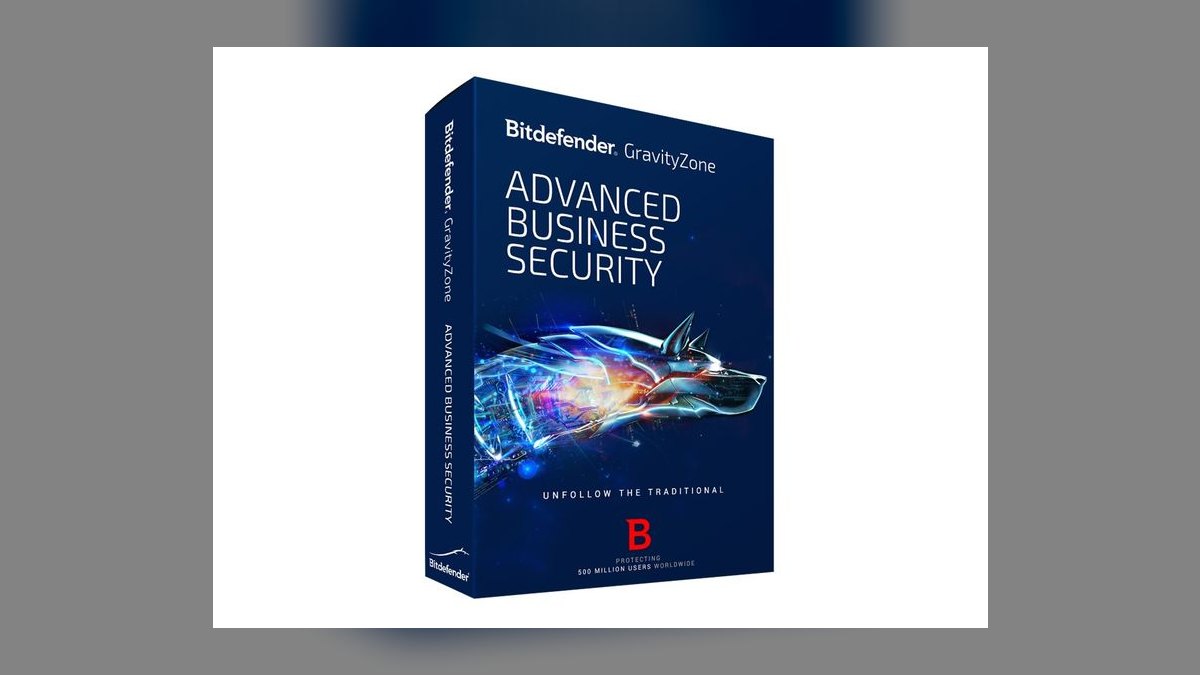
Ninth because it delivers enterprise detection technology at small-firm pricing: $2–$5 per endpoint monthly, with EDR at $6–$10. HyperDetect blocks fileless attacks and zero-day exploits, and Network Attack Defense inspects remote VPN connections specifically. The GravityZone Control Center manages up to 10,000 endpoints from one pane. It is a Forrester Wave leader, and Clifford Chance runs it across 3,000-plus remote lawyers.
Aimed at firms under 100 users that want serious detection without enterprise licensing. The tradeoff is that advanced threat hunting sits behind the MDR add-on starting at $12 per endpoint, which triples your effective cost and erases the price advantage. Compared with ESET above, detection technology is stronger and the console friendlier, but the upsell path to managed coverage is steeper. Base tier suits firms with an IT generalist.
10. Malwarebytes Endpoint Protection
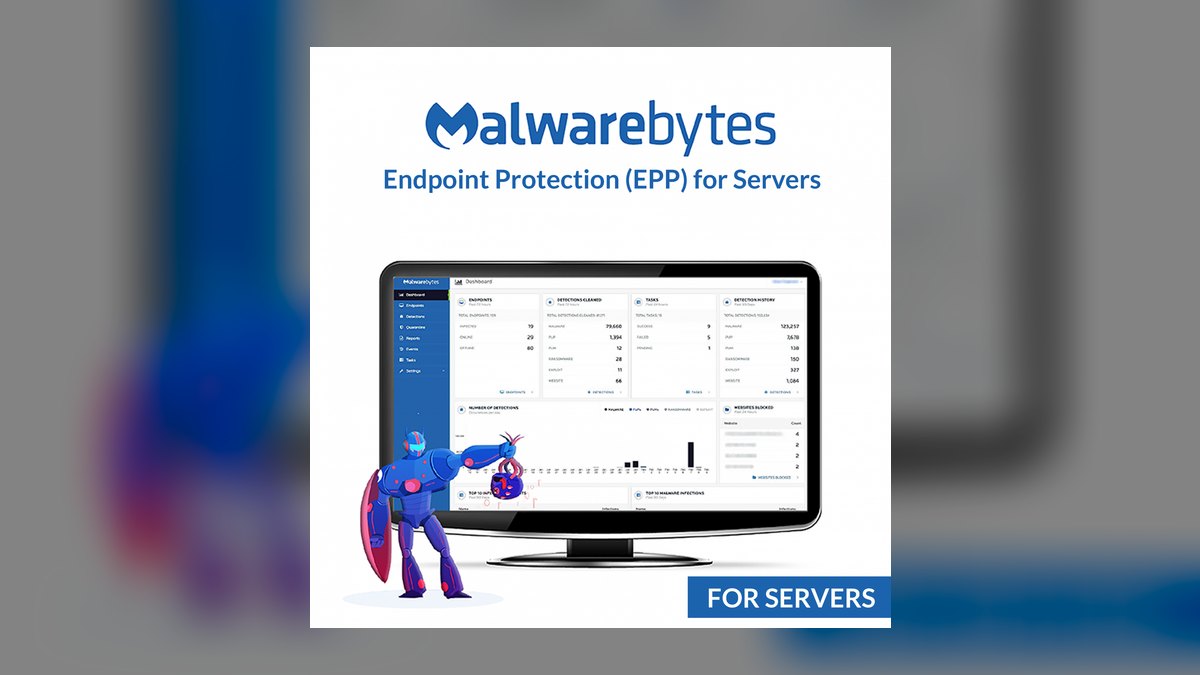
Tenth as the value floor: $2–$4 per endpoint monthly for the base tier and $6–$8 with EDR, the cheapest paid option here. AV-TEST awarded it a full 6 of 6 points for protection against zero-day malware. Anti-Exploit blocks vulnerability-based attacks on browsers and Office applications, the two most common entry points in a small practice. The Nebula console handles policy management and real-time alerts for remote devices.
For firms under 50 users that need real protection without a security program to run it. The tradeoff is scope — no 24/7 MDR, no advanced threat hunting, so pair it with an MSSP such as eSentire for after-hours coverage. Against Bitdefender above, it is lighter on the endpoint and thinner on detection depth. The free tier caps at five devices; move to paid for compliance documentation.
How we ranked these
Scoring weighted five axes: endpoint protection efficacy at 30%, drawn from AV-TEST, SE Labs, and AV-Comparatives results; compliance alignment at 25%, covering HIPAA, GDPR, and ABA Model Rule 1.6 confidentiality obligations; remote workforce features at 20%, meaning zero-trust network access, VPN, and device management; usability for non-technical legal staff at 15%; and pricing transparency for 10-to-200-user firms at 10%. Inputs came from Gartner Peer Insights, Forrester Wave reports, and vendor documentation.
We ignored raw threat-catalog size, marketing claims about AI sophistication, and enterprise features irrelevant below 200 seats — nation-state hunting retainers, dedicated tenant SOCs, custom detection engineering. Those inflate price without changing outcomes for a distributed firm whose real risk is a stolen laptop, a phishing click, or ransomware during a filing deadline. We also skipped suites with no published per-endpoint pricing, since opaque quotes punish small firms most.
What to look for
The decision hinges on whether you have anyone to answer an alert at 2 a.m. Firms without in-house security should buy MDR outright — CrowdStrike Falcon Complete at $15–$25 per endpoint, or Sophos Intercept X with MDR at $10–$15 — because unmonitored EDR is a dashboard nobody reads. Firms already standardized on Microsoft 365 get Defender for Business inside the $12.50 Business Premium seat, which changes the math considerably.
The common mistake is buying on per-endpoint list price and discovering the capability you needed is an add-on. Bitdefender GravityZone starts at $2–$5, but threat hunting requires the MDR tier at $12. Malwarebytes and Trend Micro Apex One both lack 24/7 coverage, so an MSSP contract adds $500–$1,000 monthly. Price the configuration you will actually run, not the entry tier.
Related questions
What is the difference between EDR and MDR for a law firm?
EDR gives your IT team automated detection plus investigation tooling — SentinelOne Singularity Complete is the archetype. MDR layers a 24/7 SOC on top that actually performs the response, as CrowdStrike Falcon Complete does. If nobody at the firm is on call overnight, EDR alerts pile up unread. Gartner attributes roughly an 80% reduction in mean time to respond to MDR adoption.
How do these suites help with ABA Model Rule 1.6 compliance?
Rule 1.6 requires reasonable efforts to prevent unauthorized disclosure of client information. Practically, that means Data Loss Prevention policies blocking unsanctioned transfers, full disk encryption on every laptop, and audit logging of client data access. CrowdStrike and Microsoft Defender for Business both support DLP; ESET Protect Advanced bundles full disk encryption. Review access logs weekly — the documentation matters as much as the control.
Which suite is cheapest for a firm under 50 lawyers?
Malwarebytes Endpoint Protection at $2–$4 per endpoint monthly is the floor, and it earned 6/6 from AV-TEST on zero-day malware. Bitdefender GravityZone Business Security runs $2–$5 and adds HyperDetect against fileless attacks. ESET Protect Advanced sits at $2–$4 with a Cloud Sandbox. All three lack 24/7 MDR, so budget for an MSSP if after-hours coverage matters to your risk posture.
Do any of these integrate with Clio or NetDocuments?
SentinelOne Singularity Complete explicitly covers SaaS workloads including Clio and NetDocuments through its Cloud Workload Protection module. CrowdStrike and SentinelOne both ship API connectors into SIEM platforms like Splunk, which is where practice-management audit trails typically land for compliance reporting. Trend Micro Apex One extends to Microsoft 365 and Google Workspace via Cloud App Security. Verify current connectors in each vendor's integration catalog.
How should a remote firm handle BYOD laptops and phones?
Enforce device compliance before granting access using zero-trust network access — Palo Alto Cortex XDR paired with GlobalProtect is the reference pattern. Layer endpoint protection with containerization so firm matter files stay separate from personal data. DLP policies should block USB drives and screen capture on managed containers. The alternative, trusting a personal device on the VPN, is what turns one compromise into a firm-wide breach.
What does a 50-user firm actually spend per month?
Endpoint protection alone lands between $250 and $750 monthly across most of this list. CrowdStrike Falcon Complete with MDR is the top end at $750–$1,250. Malwarebytes anchors the bottom at $100–$200. If you pick a suite without 24/7 coverage and contract an MSSP for nights and weekends, add $500–$1,000. Total cost of ownership rarely matches the sticker.
Which options work best if we already run Microsoft 365?
Microsoft Defender for Business is included with Microsoft 365 Business Premium at $12.50 per user monthly, or $3 standalone. You get next-generation antivirus, firewall, device control, and automated investigation managed from the admin center you already use. Forrester's Total Economic Impact study found 200% ROI over three years for a 50-user firm. It lacks 24/7 MDR, so larger firms pair it with CrowdStrike.
Does ransomware rollback actually matter for a law firm?
More than for most industries, because downtime directly destroys billable hours and court deadlines do not move. SentinelOne's Ransomware Rollback restores encrypted files automatically, and Malwarebytes offers similar rollback at a fraction of the price. Sophos takes a preventive angle with CryptoGuard, blocking unauthorized encryption before it starts. Rollback is a safety net, not a backup strategy — keep offline backups regardless.
FAQ
What is the best cybersecurity suite for a 10-person remote legal firm?
Malwarebytes Endpoint Protection starting near $2 per endpoint monthly gives lightweight protection with rollback, which suits a team that has no IT staff and no 24/7 coverage needs. If compliance documentation for HIPAA or GDPR matters to your clients, step up to Bitdefender GravityZone around $5 per endpoint. Malwarebytes offers a free tier limited to five devices, but paid is the compliance answer.
Why is CrowdStrike Falcon Complete ranked first?
It is fully managed MDR, not just software. A 24/7 SOC monitors, investigates, and responds, so a firm with no security staff still gets enterprise coverage. Indicators of Attack stop ransomware and phishing pre-compromise across laptops, Microsoft 365, Box, and mobile from one dashboard. Baker McKenzie runs it across 6,000-plus remote lawyers in 40 countries and reports 70% faster incident response.
Is SentinelOne a better fit than CrowdStrike for smaller firms?
Often yes, on cost and autonomy. Singularity Complete runs $8–$15 per endpoint versus CrowdStrike's $15–$25, and it prevents, detects, and responds without human intervention — no SOC required. Storyline correlates events across devices; Ransomware Rollback restores encrypted files. A 100-lawyer firm reported a 95% cut in manual alerts after migrating from McAfee. Deployment through RMM tools takes under 15 minutes per device.
Which suite has the best detection scores from independent labs?
Several cluster near the top. SE Labs rated Trend Micro Apex One 99.8% effective against advanced threats. AV-Comparatives measured ESET Protect Advanced at 99.7% detection with zero false positives, which matters because false positives train staff to click through warnings. AV-TEST gave Malwarebytes a perfect 6/6 on zero-day malware. Detection rates are table stakes now; response capability separates these products.
Do we need a next-generation firewall alongside endpoint protection?
Only if you already own one or run a hybrid network. Palo Alto Cortex XDR pairs with the PA-400 Series for zero-trust network access, and Fortinet FortiEDR integrates with FortiGate and FortiClient VPN. Both reward firms that standardized on that vendor's fabric. A fully cloud-based remote firm with no office network gets less from this pairing than from spending the same money on MDR.
How complex is deployment for a firm with no IT department?
SentinelOne deploys in under 15 minutes per device through RMM tools like NinjaOne. Microsoft Defender for Business is essentially a policy toggle if you already administer Microsoft 365. ESET's cloud console is less intuitive than CrowdStrike's — plan roughly 30 minutes of training per user. Fortinet FortiEDR's interface assumes FortiGate familiarity, which is a real cost for a firm without technical staff.
What response SLA should we expect from an MDR provider?
Read the contract, because the numbers vary widely. Sophos MDR carries a 4-hour response SLA, which may be fine for a firm with good backups and tolerable downtime, or unacceptable if ransomware during a filing week would be catastrophic. CrowdStrike's Falcon OverWatch pushes threat intelligence hourly. Match the SLA to your actual risk tolerance rather than assuming 24/7 means immediate.
How does Palo Alto Cortex XDR justify its price to partners?
With measured detection speed. One 300-lawyer firm cut mean time to detect from 48 hours to 15 minutes. Cortex XDR applies machine learning and behavioral analytics across network and endpoint, with MITRE ATT&CK mapping that produces compliance-ready reporting. Pricing starts around $10 per endpoint for XDR Pro, with Cortex XSIAM at $15. Frame the case as risk reduction and breach cost avoided, not as a line-item expense.
How often should we update security tooling for remote workers?
Enable automatic threat-intelligence updates — CrowdStrike's OverWatch feed refreshes hourly, and there is no reason to gate that. Review endpoint policies and firewall rules quarterly. Run vulnerability scans monthly through SentinelOne's Vulnerability Management or Trend Micro's Virtual Patching, and apply critical patches within 48 hours. Virtual Patching is particularly useful for remote lawyers on personal devices you cannot force-reboot.
Can one suite cover Windows, macOS, and Linux devices?
Trend Micro Apex One is the explicit pick for mixed environments at $3–$6 per endpoint, with an EDR add-on around $2. CrowdStrike, SentinelOne, and Bitdefender also span all three platforms. Verify macOS feature parity specifically — several vendors ship reduced capability there, which matters because macOS adoption among lawyers is high. Ask for the platform support matrix before signing, not after.
Sources
- https://www.av-test.org/en/antivirus/business-windows-client/
- https://www.av-comparatives.org/enterprise/
- https://www.selabs.uk/reports/
- https://www.americanbar.org/groups/professional_responsibility/publications/model_rules_of_professional_conduct/rule_1_6_confidentiality_of_information/
- https://www.gartner.com/reviews/market/endpoint-protection-platforms
- https://www.nist.gov/publications/zero-trust-architecture
- https://www.cisa.gov/topics/cybersecurity-best-practices
- https://www.hhs.gov/hipaa/for-professionals/security/index.html
- https://attack.mitre.org/
Related on PULSE
- [More cybersecurity suites for remote-first legal firms rankings and buying guides](/knowledge)
- [PULSE Tools and calculators](/tools)
- [Everything on PULSE RevOps](/)
This page will be disappearing soon. Save it to your device for $1 — or read it free while it is here.
@Kory-White- · if Venmo asks, the last 4 of my number are 2012
 pulse-tech-stacksTop 10 BI Tools for Nonprofit Organizations with Limited Budget in 2027
 pulse-tech-stacksA Legal Tech Toolkit: Document Automation and Contract Analysis Using Python, Docassemble, and TextBlob
 pulse-tech-stacksThe Supply Chain Visibility Stack: Track-and-Trace with Hyperledger Fabric, IoT, and SAP Integration
 pulse-tech-stacksHow much does Tech Stacks cost in 2027?
 pulse-tech-stacksTop 10 Testing Tools for QA Engineers in Gaming in 2027
 pulse-tech-stacksTop 10 Machine Learning Stacks for Fraud Detection Systems in 2027
 pulse-tech-stacksTop 10 Learning Management Systems for Corporate Trainers in 2027
 pulse-tech-stacksTop 10 CI/CD Tools for Blockchain Development Teams in 2027
 pulse-tech-stacksTop 10 Fleet Management Software for Logistics Startups in 2027
 pulse-tech-stacksRecommended Hardware and Software Stack for VFX Artists