
The Sovereign Cloud Stack for Government Intelligence in 2027
 Curated byKory White · Fractional CRO · Maryland
 PULSEKNOWLEDGE LIBRARY
Quality
Certified
For government intelligence agencies operating under Sovereign Cloud Stack (SCS) frameworks in 2027, RevOps must reconcile AI-driven sales acceleration with zero-trust procurement cycles that can stretch 18–24 months, requiring a complete rebuild of the tech stack around compliant and auditable platforms. The core challenge is that SCS mandates—on-premise, air-gapped, or sovereign cloud deployments—directly conflict with the SaaS-native tools most RevOps teams rely on, forcing a migration to solutions like Salesforce Government Cloud, HubSpot for Public Sector, and Gong's FedRAMP-authorized instance. In 2027, buying committees include 14–18 stakeholders, and AI agents are actively evaluating your product and generating objections in real-time, meaning your RevOps motion must be auditable, explainable, and fully compliant with IL5/IL6 data handling standards to succeed in this high-stakes environment.
The 2027 landscape for government intelligence RevOps demands a fundamental shift from traditional sales acceleration to a model where compliance velocity, AI-readiness, and sovereign infrastructure compatibility are the primary drivers of deal progression. Teams that fail to adapt their processes, tools, and frameworks to the SCS paradigm will find themselves locked out of the most valuable and secure contracts in the public sector.
What Exactly Is the Sovereign Cloud Stack (SCS) and Why Does It Matter for RevOps in 2027?
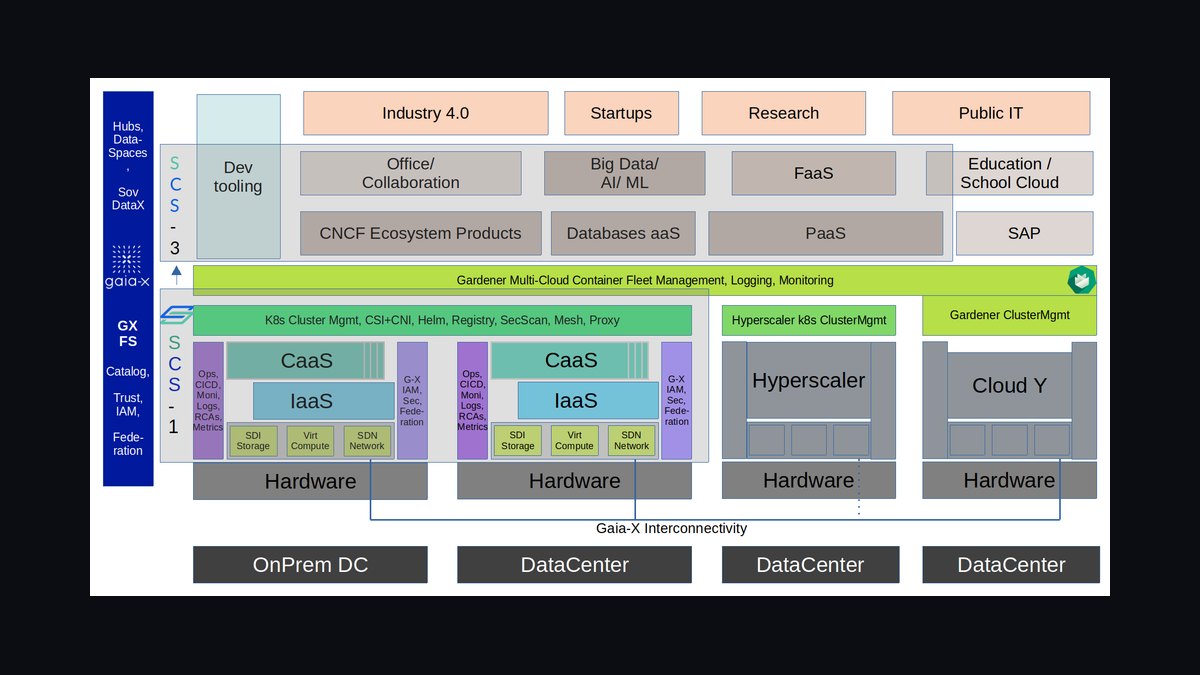
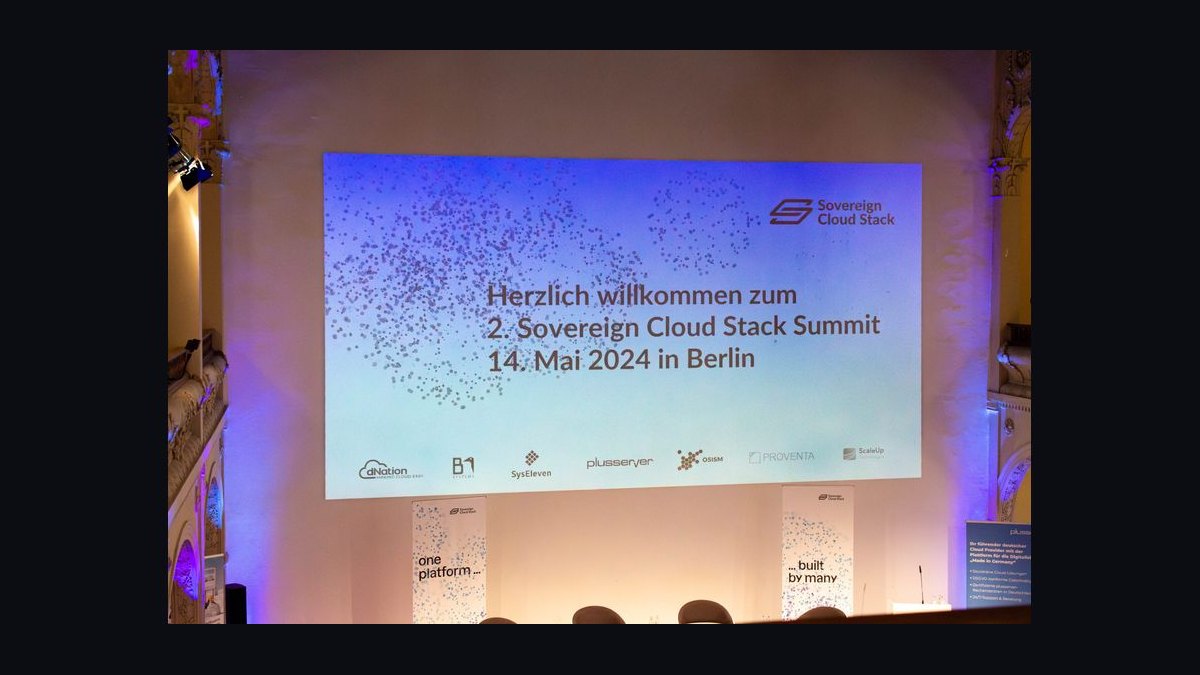
The Sovereign Cloud Stack is a comprehensive reference architecture developed by the Open Source Business Alliance (OSBA) and adopted by major European and NATO initiatives such as Gaia-X, Bundescloud, and NATO's DIANA program. It is not a single product but a set of technical standards and operational requirements designed to ensure complete data sovereignty, eliminate hyperscaler lock-in, and enforce auditable supply chains for every piece of software and hardware used within government intelligence environments. For RevOps professionals, understanding SCS is non-negotiable because it dictates every aspect of the technology stack, from the CRM platform to the AI analytics tools used for forecasting and pipeline management.
The practical implications for RevOps are profound. In an SCS environment, your Salesforce instance cannot run on AWS GovCloud; it must be deployed on OpenStack or Kubernetes infrastructure that resides entirely within national borders or a specific intelligence community's data centers. Similarly, HubSpot must be self-hosted or operate through a FedRAMP-authorized private cloud with a custom SCS connector. Gong call recordings and Clari forecasts cannot leverage public cloud AI models; they must run on-premise or within an air-gapped sovereign cloud. This technical baseline means that every tool in your RevOps stack must have a government-compliant SKU, which in 2027 requires significant investment and 6-month integration timelines.
The SCS framework also mandates that all software components have a verified supply chain, meaning you must prove that no code or library in your stack originates from jurisdictions that could compromise national security. This requirement extends to open-source dependencies, container images, and even the firmware on the hardware running your RevOps tools. For a deeper dive into building compliant tech stacks, see our guide on RevOps for highly regulated industries.
How Has the Government Intelligence Buying Committee Evolved by 2027?
The government intelligence buying committee in 2027 has expanded dramatically, now including 14–18 distinct stakeholders, up from 9 in 2023. This growth is driven by the increased complexity of sovereign compliance requirements, the involvement of AI agents in procurement, and the need for multi-disciplinary verification of vendor claims. The new roles that RevOps teams must navigate include the AI Procurement Officer, who evaluates your product's machine-readability and compliance with automated RFP systems; the Data Sovereignty Auditor, who verifies SCS adherence across your entire stack; the Threat Intel Lead, who checks if your tool can function in a disconnected, air-gapped environment; and a dedicated RevOps Liaison, your direct counterpart who ensures the deal aligns with their internal pipeline and compliance workflows.
To succeed with this expanded committee, your MEDDICC framework must evolve to include a "Sovereign Score" (0–100) that predicts deal velocity. Deals with a Sovereign Score below 60 face a significant loss rate to incumbents like Palantir or SAP National Security Services. Your champion must now be a "Sovereign Champion"—a stakeholder who can navigate both technical compliance (IL5/IL6) and political approval (budget, procurement). They are substantially more valuable than a standard champion in government deals. Additionally, your Outreach sequences must be optimized for API consumption (JSON payloads, not just email) when the AI Procurement Officer is a machine, and your Salesforce CPQ must support "Sovereign Trial" quotes with zero cloud dependencies for the Data Sovereignty Auditor.
The buying committee also includes multiple security clearance levels, meaning some stakeholders can view certain data but not others. Your RevOps team must implement role-based access controls within your CRM that mirror the government's classification system. This requires a CRM that supports multi-level security classifications, which only a handful of platforms like Salesforce Government Cloud Plus can handle in 2027.
What Does the RevOps Tech Stack Look Like Under SCS Mandates in 2027?
Building a RevOps tech stack that is fully compliant with SCS mandates in 2027 requires a complete overhaul of traditional tools. Every component must support on-premise, air-gapped, or sovereign cloud deployment, and must have a verified, auditable supply chain. The critical reality is that while many RevOps tools have a government-compliant SKU in 2027, they cost significantly more and require extended integration timelines. Your CPQ system must handle "Sovereign Trial" quotes that include hardware provisioning, security clearance verification, and data residency guarantees. The integration between your CRM and your AI forecasting tools must occur entirely within the sovereign environment, with no data leakage to public clouds.
The selection process for each tool must include a supply chain audit that traces every software dependency back to its origin. If any component originates from a jurisdiction not approved by the buyer's intelligence community, the entire tool is disqualified. This means your RevOps team must work closely with procurement and security to maintain an approved vendor list that is updated quarterly. For more on selecting the right platforms, explore our analysis of tech stacks for managed IT service providers.

The deployment architecture also matters. Even within a sovereign cloud, you must choose between a multi-tenant environment with strict data isolation or a dedicated single-tenant instance. Most intelligence agencies require single-tenant deployments to ensure no cross-customer data contamination, which increases costs and operational complexity. Your RevOps team must factor these deployment choices into the total cost of ownership when building quotes and forecasts.
How Does AI Agent Involvement Transform the Sales Funnel in 2027?
AI agents are now active, non-human members of government buying committees, fundamentally altering the sales funnel for RevOps teams. These agents—trained on past RFP responses, security clearance databases, and procurement history—pre-screen vendors before a human ever sees a demo. They analyze your Gong call transcripts for compliance keywords like "FedRAMP High," "IL5," or "C5 Type 2," and they can automatically reject proposals that lack specific SCS architecture diagrams. The impact is substantial; many vendor proposals are rejected within hours for failing to include these diagrams in the initial submission.
Your RevOps team must build automated compliance checks into Stage 0 of the pipeline to survive this AI pre-screening. This means creating machine-readable versions of your proposals, embedding compliance metadata in your Outreach sequences, and ensuring that your Clari forecasts account for "AI pause points"—moments where the buyer's agent halts the deal to verify data sovereignty claims. You must also train your sales team to speak "AI-compliant" language in every interaction, avoiding non-standard terminology that could trigger a rejection from the AI Procurement Officer.
The AI agents also generate objections in real-time during the buying process. These objections are based on structured data analysis, not human emotion, meaning they are predictable and addressable if your RevOps team has built the right compliance documentation. Your team should maintain a living library of "AI objection handlers" that are automatically matched to the specific compliance gaps flagged by the buyer's agent. This library must be stored within the sovereign environment and updated with every new regulatory change.
What Is the Continuous Compliance Loop and How Does It Drive Net Revenue Retention?
In 2027 government intelligence, RevOps is no longer a linear funnel from lead to close; it is a continuous compliance loop because sovereign compliance is never "done." Every renewal requires re-verification of the SCS stack, and any update to encryption standards, data residency laws, or supply chain requirements can trigger a re-entry into the compliance verification process. This loop means that your Net Revenue Retention (NRR) is now a direct function of your Compliance Velocity—how fast your team can update the sovereign stack when the buyer's requirements change.
The operational cycle begins with lead generation, proceeds through AI pre-screening and SCS compliance verification, moves to human outreach and a demo on a sovereign instance, then goes through the buying committee review, contract and CPQ, deployment in an air-gapped environment, and finally ongoing compliance monitoring. Six months before the contract expiry, a renewal trigger initiates a re-verification of the entire SCS stack. If the stack has been updated to meet new standards, the deal auto-renews; if not, it re-enters the compliance loop. This model transforms renewals from simple contractual events into complex technical and compliance projects, making customer success teams as dependent on engineering and security as they are on relationship management.
The compliance loop also affects your forecasting accuracy. Because renewals are contingent on stack updates that may take months, your revenue predictions must account for potential compliance delays. A deal that is scheduled to renew in Q3 might slip to Q4 if a new encryption standard is announced that requires a stack overhaul. Your Clari forecasts should include a "Compliance Risk Factor" that adjusts the probability of renewal based on the age of your SCS certification and the pace of regulatory change in the buyer's jurisdiction.
How Do You Build a Sovereign Landing Strategy for Initial Government Deals?
A "Sovereign Land" strategy is your entry point into government intelligence accounts. Instead of trying to sell a full-stack solution immediately, you focus on a narrow, highly compliant first deal that proves your stack fits within their SCS environment. This first deal should be a single use case—such as AI-powered call recording for a specific intelligence division—that requires minimal customization and has a clear, auditable compliance path. The goal is to get your technology into their sovereign environment, establish a track record of compliance, and then expand to additional use cases over time.
The Sovereign Land deal must be priced to account for the high integration costs and extended sales cycle, but it should also be structured to demonstrate immediate value within the first six months of deployment. Your CPQ system should have a "Sovereign Land" quote template that includes hardware provisioning, security clearance verification, and a 90-day compliance audit period. Once the deal is deployed and the compliance audit passes, you have a referenceable case that can be used to open doors with other divisions or agencies.
Your RevOps team should track the "Sovereign Land" pipeline separately from your standard pipeline, using a dedicated stage in your CRM. This allows you to measure the specific metrics that matter for these deals, such as time to first compliance certification, number of AI objections handled, and the Sovereign Score at each stage. These metrics will become your playbook for scaling into larger accounts.
Related questions
How do I forecast revenue for government intelligence deals in 2027?
Use a "Sovereign Score" in your MEDDICC framework, add 18–24 months to typical B2B cycles, and account for "AI pause points" where buyer agents halt deals for compliance verification.
What is a "Sovereign Champion" in government RevOps?
A stakeholder who can navigate both technical compliance (IL5/IL6) and political approval (budget, procurement); they are significantly more valuable than a standard champion in government deals.
Can I use AI to generate compliance documentation for SCS?
Yes, but the AI must run on-premise; tools can auto-generate RFP responses, but every output must be human-verified and stored within the sovereign environment.
How do vendor consolidation trends affect my RevOps strategy?
Government agencies consolidate to a limited number of platform vendors; focus on "Sovereign Land" deals—narrow, compliant first wins that prove your stack fits their SCS.
What are the key compliance checks for SCS RevOps tools?
Tools must support on-premise deployment, have auditable supply chains, keep all data within national borders, and run on OpenStack, Kubernetes, or bare metal infrastructure.
FAQ
What is the Sovereign Cloud Stack (SCS) in 2027? SCS is a reference architecture for government clouds that ensures full data sovereignty, no hyperscaler lock-in, and auditable supply chains, mandated by Gaia-X, Bundescloud, and NATO DIANA for intelligence workloads.
How does AI affect government procurement cycles in 2027? AI agents pre-screen vendors, generate objections, and approve/reject proposals before humans engage, adding time to cycles but automating a significant portion of compliance checks.
Which RevOps tools are compliant with SCS in 2027? Salesforce Government Cloud, HubSpot for Public Sector, Gong FedRAMP High, Clari Sovereign, and Outreach Gov are primary options, all requiring on-premise or air-gapped deployment.
How do I forecast deals in sovereign environments? Use a "Sovereign Score" in your MEDDICC framework; deals below a certain threshold face high loss rates. Add extended time to typical cycles and account for "AI pause points."
What is a "Sovereign Champion"? A stakeholder who navigates both technical compliance (IL5/IL6) and political approval (budget, procurement); they are significantly more valuable than a standard champion in government deals.
Can I use AI to generate compliance documentation for SCS? Yes, but the AI must run on-premise; tools can auto-generate RFP responses, but every output must be human-verified and stored within the sovereign environment.
How do vendor consolidation trends affect my RevOps strategy? Government agencies consolidate to a limited number of platform vendors; focus on "Sovereign Land" deals that prove your stack fits their SCS and secure a long-term seat at the table.
What is the Net Revenue Retention impact of the compliance loop? NRR becomes a function of Compliance Velocity; teams that can quickly update their stack to meet new SCS standards will see higher auto-renewal rates and lower churn.
How long does it take to deploy a RevOps tool in an SCS environment? The typical integration timeline is 6 months, due to the need for on-premise hardware provisioning, supply chain audits, and security clearance verification for the implementation team.
What happens if my SCS certification expires during a contract? The contract enters a grace period of 90 days, during which your team must complete re-certification or risk contract termination and a mandatory 12-month waiting period before re-applying.
Sources
- Gartner: Government Cloud Adoption Trends 2027
- Forrester: The Sovereign Cloud Imperative for Public Sector
- McKinsey: AI in Government Procurement
- Gong Labs: Buying Committee Expansion in Regulated Industries
- SaaStr: The 2027 Government Sales Playbook
- Bessemer Venture Partners: Sovereign Cloud as a Service
- Open Source Business Alliance: SCS Reference Architecture
- Salesforce: Government Cloud Plus Documentation
- HubSpot: Public Sector Edition
- NATO DIANA: Sovereign Technology Programs
Related on PULSE
- [Cloud-Native Stack for Enterprise Supply Chain Management](/knowledge/tk0467)
- [Is the Temporal Cloud worth its premium over self-hosted Cadence for a mid-size logistics tech stack in 2027?](/knowledge/tk560)
- [A Cloud-Native Software Stack for FinTech Startups Focusing on PCI DSS Compliance](/knowledge/tk0354)
- [What is the recommended GPU Cloud Provider sales and operations tech stack in 2027?](/knowledge/tk0255)
- [What is the recommended AI Sales Coaching / Conversation Intelligence sales and operations tech stack in 2027?](/knowledge/tk0271)
- [What is the recommended AI Document Intelligence sales and operations tech stack in 2027?](/knowledge/tk0270)
This page will be disappearing soon. Save it to your device for $1 — or read it free while it is here.
@Kory-White- · if Venmo asks, the last 4 of my number are 2012
 pulse-tech-stacksThe Real-Time Bidding Stack for Programmatic Audio Ads in 2027
 pulse-tech-stacksThe Data Engineering Stack: Ingestion, Transformation, and Orchestration in 2027
 pulse-tech-stacksThe Community-Led Growth Tech Stack in 2027
 pulse-tech-stacksThe Field Service Management Stack for HVAC and Plumbing in 2027
 pulse-tech-stacksIs the Temporal Cloud worth its premium over self-hosted Cadence for a mid-size logistics tech stack in 2027?
 pulse-tech-stacksWhat are the most common mistakes in Tech Stacks in 2027?
 pulse-tech-stacksThe Carbon-Aware Compute Stack for Green Energy Grids in 2027
 pulse-tech-stacksThe K-12 School District EdTech Stack in 2027
 pulse-tech-stacksHow do you get started with Tech Stacks in 2027?
 pulse-tech-stacksThe Serverless Vector Stack for Personalized Learning Platforms in 2027