


What is the complete software stack for a self storage facility in 2027?
Quality
Certified
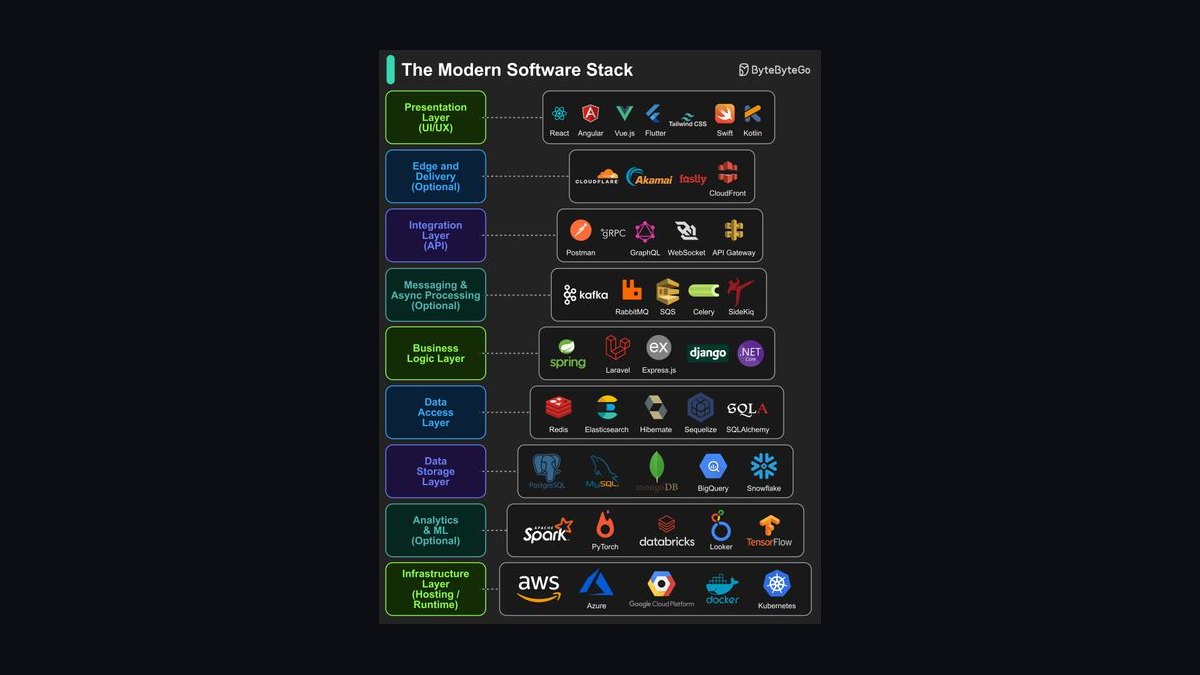
A 2027 self storage stack centers on a facility management system — storEDGE, SiteLink, or Easy Storage Solutions — handling units, tenants, billing, and rate management. Around it sit online rentals, autopay with automated delinquency, and gate access control from PTI or Noke that locks out non-payers automatically. A call/CRM layer captures phone leads.
The platforms operators actually choose between
The self storage software market narrowed years ago into a short list, and by 2027 most operators are picking among three profiles rather than dozens of products. Understanding what each profile optimizes for matters more than a feature checklist, because the wrong pick shows up eighteen months later as a migration project rather than a monthly annoyance.
storEDGE, part of the Storable platform, is built for operators who want the entire lifecycle inside one vendor's ecosystem. Facility management, the tenant-facing website, online rentals, payment processing, insurance or tenant protection programs, and a call center offering all live under the same roof. The pitch is that a single vendor owns the handoffs, so an online rental becomes a billed tenant with gate access without an integration seam anywhere in the chain. The cost of that convenience is coupling. Storable's economics come from the bundle, and the more of the bundle you use, the more expensive it is to leave. Operators who choose storEDGE and then decide they want a different payment processor or a different insurance program discover that the parts were priced as a system, not as pieces.
SiteLink, which is also under the Storable umbrella but sold and operated as its own product with its own history, has a very different center of gravity. It grew up as the integration hub of the industry, and its marketplace of third-party connections — access control vendors, call centers, listing sites, insurance providers, revenue management tools — is the reason many multi-site operators stay on it. If you want to run PTI at one property, a different access vendor at another, an outside call center, and a third-party revenue management overlay, SiteLink is generally the path of least resistance. The trade-off is that you are now the systems integrator. Nobody else owns the seams between your five vendors, and when a gate stops syncing lockout status at 6pm on a Friday, you are the one triangulating between two support desks.

Easy Storage Solutions targets the other end of the market: single-facility and small-portfolio owners, often rural or secondary-market, who need online rentals, autopay, and basic delinquency automation without the price tag or the implementation weight of the enterprise platforms. It does the core job. What it does not do as deeply is sophisticated revenue management, complex multi-property reporting, or the long tail of integrations. For an owner running one 400-unit facility as a semi-passive asset, that is frequently the correct trade. For an owner who intends to buy three more facilities in the next four years, it is a decision they will revisit.
There is a fourth category worth naming even though it sits slightly outside the classic list: newer cloud-native entrants like Tenant Inc's Hummingbird and similar platforms that entered the market in the last several years positioning on modern UX, unattended operations, and lower switching friction. They are legitimate options in 2027, particularly for operators building automation-first from day one. The caution is not that they are bad — it is that self storage software is deeply operationally embedded, and the depth of edge-case handling around lien processing, state-specific auction requirements, and delinquency law is something the incumbents accumulated over decades. Evaluate newer platforms specifically on those unglamorous compliance workflows, not on the dashboard screenshots.
The comparison that matters is not "which product is best." It is which failure mode you would rather own: vendor lock-in and bundle pricing, or integration ownership and vendor triangulation. Everything else is negotiable.
How to decide between them

The decision is driven by three variables in order: how many facilities you will operate in three years, whether you intend to run unattended or staffed, and whether you want revenue management inside the platform or bolted on.
Facility count is the dominant variable. One facility, no acquisition plans — Easy Storage Solutions or a comparable lightweight platform will run it well, and the money you save on software funds the access control hardware that actually enables lean operation. Two to ten facilities — you are in the range where centralized reporting, portfolio-level rate management, and a shared call center start mattering more than per-site software cost, which pushes you toward SiteLink or storEDGE. Ten-plus facilities, and the question shifts entirely: you are now evaluating whether the platform's reporting layer can feed your own BI stack, whether it exposes a usable API for the automation you will inevitably build, and whether the vendor will negotiate.
Staffing model is the second variable. If you are running staffed properties with a manager on site during business hours, the software's automation depth is convenient but not existential — a human absorbs the gaps. If you are running unattended or remote, every gap becomes a phone call or a lost rental. Unattended operation demands genuinely complete online rental flow (unit selection, lease signing, payment, insurance election, gate code issuance, all self-service and all at 11pm on a Sunday), tight access control integration, and delinquency automation that runs without intervention. Evaluate for the unattended case even if you are staffed today, because the direction of travel in this industry has been one-way for a decade.
Revenue management placement is the third. Existing customer rate increases — ECRIs — are the single largest controllable revenue lever in self storage. A tenant who moved in at $95 and has been there twenty-two months is, in most markets, paying below what a new tenant would pay for the identical unit today. Systematic ECRI programs capture that gap. The question is whether your platform runs those programs natively with decent logic, or whether you will overlay a third-party revenue management tool. Native is simpler; overlays are usually more sophisticated. If you plan to overlay, integration breadth becomes the deciding platform criterion, which again points at SiteLink.

A practical way to force the decision: write down the three most operationally painful things you expect to do monthly — running a rate increase batch, processing a lien sequence, reconciling payments to your accounting system — and demo each one specifically. Vendors demo move-ins beautifully because move-ins are the easy part. The pain lives in the exception workflows.
What each option actually costs
Software pricing in self storage is unusual in that it frequently scales with unit count or as a percentage of collections rather than as a flat per-seat SaaS fee, which changes how you should model it. A per-seat tool gets cheaper per dollar of revenue as you grow; a per-unit or percentage tool does not.
For a single facility in the 300–600 unit range, budget roughly $100–$400 per month for the facility management system and its bundled website and online rental capability. The spread inside that band is mostly a function of unit count and which modules you enable. Payment processing sits on top and is priced the way card processing always is — interchange plus a markup — and on a facility collecting, say, $45,000 a month in rent, processing costs of two to three percent are a real line item worth negotiating rather than accepting as fixed.
For a multi-facility operator running four to ten sites, software commonly lands in the $400–$1,500+ per month range in aggregate, before the call center. Third-party call center services are typically priced per call or per lead rather than flat, which means the cost scales with marketing spend — a detail that surprises operators who model it as a fixed monthly.
Access control is the capital item, not the subscription. Gate controllers, keypads, and the wiring to support them are a project-scale expense measured in thousands to tens of thousands depending on how many access points you have and whether you are retrofitting or building new. Smart lock systems like Noke are priced per door, which means a 500-unit facility converting every unit to smart entry is a materially larger investment than one adding a controlled gate. The way operators typically stage this is: controlled gate first (highest automation return per dollar, because it is what enables the lockout workflow), then smart locks on a subset of units or a new phase, then broader rollout if the operational math justifies it.

The number that actually matters is not the software cost — it is the labor cost the software displaces. A part-time on-site manager is a meaningful monthly expense. If a $300/month software stack plus amortized access hardware lets a facility run with a remote manager covering multiple properties instead of one person per site, the software is not a cost center in any honest accounting. That is the entire economic argument for automation in this asset class, and it is why operators consistently under-invest in software relative to what the math supports.
On the revenue side, model ECRIs explicitly. A facility with 500 units at an average rate of $110 collects roughly $55,000 monthly at full occupancy. A systematic rate increase program applied to eligible long-tenured customers — with the understood trade-off that some percentage of them will move out — is one of the few levers that moves that number without spending on acquisition. The platform's ability to run those programs on a schedule, with sensible eligibility rules and a clean tenant notification path, is worth more than most feature comparisons capture. Any evaluation that scores platforms on move-in UX and ignores rate management logic is scoring the wrong thing.
One adjacent budget line operators routinely forget: listing site and marketplace fees. Aggregator listings and third-party marketplaces charge for rentals they source, and those fees behave more like a commission than a subscription. If a meaningful share of your move-ins arrive through them, that channel cost belongs in the same spreadsheet as your software, because the alternative — investing in your own site's rental conversion — is a direct substitution.
Wiring it together and the order to do it in

Implementation sequencing matters more here than in most local-business software projects, because self storage has a hard dependency chain: you cannot automate delinquency until access control is integrated, and you cannot integrate access control until tenant records are clean in the facility management system.
Days 1–30 — the system of record. Migrate units and tenants into the platform. This is the unglamorous phase where most of the eventual pain is either created or avoided. Unit dimensions, unit types, rate plans, current tenant rates, move-in dates, autopay enrollment status, insurance or protection plan election, and current balances all have to land correctly. Tenure dates in particular deserve scrutiny, because they drive rate increase eligibility later, and a botched migration that resets everyone's move-in date to the migration date silently disables your most valuable revenue program for a year. Enable autopay and get the online rental flow live before touching anything else. Test the online rental yourself, end to end, on a phone, at night, as a stranger would.
Days 31–60 — access control and delinquency. Connect the gate system so tenant status syncs both directions. The core behavior you are buying: a tenant who goes delinquent past your defined threshold loses gate access automatically, and regains it automatically the moment payment posts — no staff action in either direction. Test both halves. The unlock-on-payment path fails more often than the lockout path and generates far angrier phone calls, because a paying customer standing at a gate that will not open at 9pm is a review-destroying experience. Configure the delinquency ladder itself in this window too: late fee timing, notification cadence by email and SMS, lockout threshold, and the lien and auction sequence, which is state-regulated and is the one area where you should follow the platform's built-in workflow rather than improvising.
Days 61–90 — revenue and reporting. Turn on rate management. Define ECRI eligibility rules, increase magnitude, notification lead time, and the review step before a batch goes out. Stand up occupancy, rate, and delinquency reporting so you can see economic occupancy — not just physical occupancy, which flatters every facility — and configure the call center or CRM so phone leads land in a tracked pipeline rather than a voicemail box. Connect the accounting system last, once billing behavior has stabilized enough that you are reconciling a steady state rather than a moving target.

Two sequencing mistakes recur. The first is turning on automated lockouts before the payment data is trustworthy, which locks out paying customers and burns credibility with your tenant base in a way that takes months to repair. The second is deferring rate management to "after we're stable," which in practice means never — the facility runs for two years with a below-market tenant base, and the eventual catch-up increase is large enough to trigger real move-outs instead of the gradual, absorbable adjustments a scheduled program produces.
Where this stack resembles and diverges from neighboring asset classes
Self storage sits in a family of recurring-rent, low-touch local businesses, and looking sideways at the neighbors clarifies what is genuinely storage-specific versus what is just good recurring-revenue software practice.
Small residential landlording shares the recurring rent, autopay, and delinquency concerns, and the tooling has converged on similar patterns — online applications, portal payments, automated late fees. What residential does not have is the access-control lever. A landlord cannot lock a delinquent tenant out of their apartment; the remedy is a legal eviction process measured in months. Self storage's ability to deny access immediately upon delinquency, subject to state lien law, is the structural reason its software can automate collections in a way residential software never will. This is the single most important thing to understand about why storage software looks the way it does.
Portable storage and moving companies overlap on the customer but diverge sharply on the software. Moving is a dispatch and logistics business — scheduling, crews, trucks, routing — and its stack is built around a job calendar, not a rent roll. Operators who run both a facility and a moving operation frequently discover they need two systems, because a facility management platform models units and tenants while a moving platform models jobs and resources. Trying to force one to do the other's work is a common and expensive mistake.

Parking, RV and boat storage, and marina operations are the closest true cousins, sharing the rented-space-plus-controlled-access model, and access-control vendors often serve several of these markets with the same hardware. The divergence is seasonality: boat and RV storage has pronounced seasonal move-in and move-out cycles that make revenue management look different from the steady-state churn of a climate-controlled self storage facility.
Fitness and gym operations are an unexpectedly instructive comparison. Same recurring billing, same access control tied to payment status via badge or app entry, same unattended-hours model, same delinquency dynamics. The operational playbook for 24-hour unstaffed gyms — verified identity at entry, remote monitoring, automated suspension on failed payment — is essentially the same playbook unattended self storage runs, and operators moving between the two categories often find the software patterns immediately familiar.
The practical takeaway from all of this: when evaluating any self storage platform, the storage-specific things to scrutinize hard are lien and auction workflow, unit-type and rate-plan modeling, and access control integration depth. The generic things — payments, autopay, reporting, CRM — are places where the industry is not doing anything unusual, and where you should expect competent-but-not-remarkable functionality and not overpay for it.
The failure modes that cost the most
The expensive mistakes in this category cluster into a short list, and they are consistent enough across operators to be worth naming individually.
Running on spreadsheets or a generic tool. The tell is that someone has to be on site for things that should be automatic. Every rental requires a person, every payment requires a person, every lockout requires a person walking out with a lock. The cost is not the software you did not buy; it is the labor you are paying for and the rentals you lose at 9pm on a Saturday when nobody answers.

Weak autopay enrollment. Autopay is the difference between rent that collects itself and rent you chase. The enrollment rate at move-in is the leading indicator worth watching, and it is heavily influenced by how the online rental flow presents the option. Making autopay the default path at move-in rather than an afterthought is a small UX decision with a large collections consequence.
Never running rate increases. This is the quietest and most expensive one, because nothing breaks. The facility runs, occupancy looks fine, and the tenant base slowly drifts to well below market. There is no alarm for it. The only defense is a scheduled program with eligibility rules that runs whether or not anyone remembers to think about it.
Access control that is installed but not integrated. A gate that requires a person to manually revoke a code is not automation; it is a keypad. The integration — the live sync between payment status and access rights — is the entire value, and a surprising number of facilities have the hardware without the sync working, usually because it broke during a platform change and nobody noticed for months.
Treating the website as a brochure. In 2027 the facility's own site is the rental counter, not an ad. If it does not complete a lease end to end on a phone, the operator is paying marketplace commissions for demand they could have converted directly, and is effectively renting their own customer acquisition from a third party.
Ignoring economic occupancy. Physical occupancy — how many units have someone in them — is the number everyone quotes. Economic occupancy — actual collected rent as a share of potential rent at current market rates — is the number that reflects reality, and the gap between them is where discounted move-in specials, below-market long-tenured tenants, and delinquent units hide. Any reporting setup that surfaces physical occupancy prominently and buries economic occupancy is optimizing for comfort over information.
Related questions
Can a self storage facility run with no on-site staff?
Increasingly yes. With a complete online rental flow, autopay, automated delinquency, and integrated gate access, many facilities operate remotely or with a shared manager covering several sites. The constraint is usually access control maturity and clean tenant data, not software capability.
What is the difference between physical and economic occupancy?

Physical occupancy counts occupied units. Economic occupancy measures collected rent against potential rent at current market rates. A facility can be 92% physically occupied while economically occupied far lower if long-tenured tenants sit below market or discounted specials are widespread.
Do I need smart locks or is a controlled gate enough?
A controlled gate delivers most of the automation return because it enables the payment-status lockout workflow at a fraction of the per-door cost. Smart locks add unit-level control and better unattended move-in experience, and are usually a phase two investment.
How does self storage software handle lien and auction processes?
Mature platforms encode the state-specific notice sequence, timing requirements, and documentation into a guided workflow. This is regulated territory where you should follow the platform's built-in process rather than customizing, and it is a genuine differentiator between mature and newer software.
What does a call center actually add over voicemail?
Phone leads in storage convert well and decay fast. A staffed or outsourced call center answers during evenings and weekends, can complete a reservation or rental live, and logs the lead. Pricing is typically per call or per lead, so cost scales with marketing spend.
FAQ
storEDGE, SiteLink, or Easy Storage Solutions — how do I choose?
storEDGE suits operators who want one vendor owning the full lifecycle including website, payments, and call center. SiteLink suits operators who want integration breadth and are willing to own the seams between third-party vendors. Easy Storage Solutions suits single-facility owners who need solid core automation without enterprise weight or cost. Facility count in three years is the dominant deciding variable.
Why does access control integration matter so much?
Because it is the mechanism that makes storage collections automatable. Unlike residential rental, where the remedy for non-payment is a months-long legal process, a storage operator can deny facility access immediately on delinquency. That legal and physical reality is what allows the software to close the loop between payment status and access without a human touching it.
What is an ECRI and why does it dominate revenue conversations?
An existing customer rate increase is a scheduled adjustment to a current tenant's rate toward market. Because storage tenants are relatively sticky and moving out is costly for them, systematic increases capture meaningful revenue with acceptable attrition — making it the largest controllable revenue lever most operators have, and the one most frequently left unused.
How much should a single facility budget for software?
Roughly $100–$400 monthly for the facility management platform including website and online rentals, often priced per unit or as a percentage of collections rather than flat. Payment processing is separate and worth negotiating. Access control hardware is a capital expense measured in thousands, sized by how many gates and doors you are controlling.
Should the facility website be built inside the platform or separately?
Inside the platform, in most cases. The rental flow — real-time unit availability, pricing, lease signing, payment, gate code issuance — is where the value is, and a separately built marketing site that hands off to a platform rental page adds a seam without adding much. Invest custom effort in local SEO and conversion, not in rebuilding the rental engine.
What breaks most often after go-live?
The unlock-on-payment path in access control integration. Lockout tends to be tested carefully; the reverse — a tenant pays at 9pm and the gate should immediately open — is tested less and fails more, producing furious customers and bad reviews. Test both directions explicitly before automation goes live, and re-test after any platform or firmware change.
Sources
- https://www.storable.com/
- https://www.sitelink.com/
- https://www.storageunitsoftware.com/
- https://www.ptisecurity.com/
- https://www.nokesmartentry.com/
- https://www.selfstorage.org/
- https://www.insideselfstorage.com/
- https://www.tenantinc.com/
Related on PULSE
- What is the best tech stack for a moving and storage company in 2027?
- What is the complete software stack for a party and event rental company in 2027?
- What is the complete software stack for an auto glass and windshield repair company in 2027?
- What is the complete software stack for a florist in 2027?
- What is the complete software stack for an AV and smart home installer in 2027?
- Top 10 Cloud Storage Solutions for Remote Design Teams
This page will be disappearing soon. Save it to your device for $1 — or read it free while it is here.
@Kory-White- · if Venmo asks, the last 4 of my number are 2012
This page is gone.
This one is off the shelf now. $1 keeps it on your phone for good — the whole page, pictures and diagrams included.
 pulse-tech-stacksWhat is the best tech stack for a marina operator in 2027?
 pulse-tech-stacksWhat is the best tech stack for a fire protection or sprinkler contractor in 2027?
 pulse-tech-stacksWhat is the recommended AI Image Generation sales and operations tech stack in 2027?
 pulse-tech-stacksWhat is the best tech stack for a commercial landscaping and grounds maintenance company in 2027?
 pulse-tech-stacksWhat is the best tech stack for a janitorial and sanitation supply distributor in 2027?
 pulse-tech-stacksWhat is the best tech stack for a commercial construction company or general contractor in 2027?
 pulse-tech-stacksWhat is the complete software stack for an auto glass and windshield repair company in 2027?
 pulse-tech-stacksWhat is the best tech stack for a clinical research site in 2027?
 pulse-tech-stacksWhat is the best tech stack for a staffing or recruiting agency in 2027?
 pulse-tech-stacksWhat is the best tech stack for a glass and glazing contractor in 2027?