
What is the best tech stack for a commercial parking operator in 2027?
 Curated byKory White · Fractional CRO · Maryland
 PULSEKNOWLEDGE LIBRARY
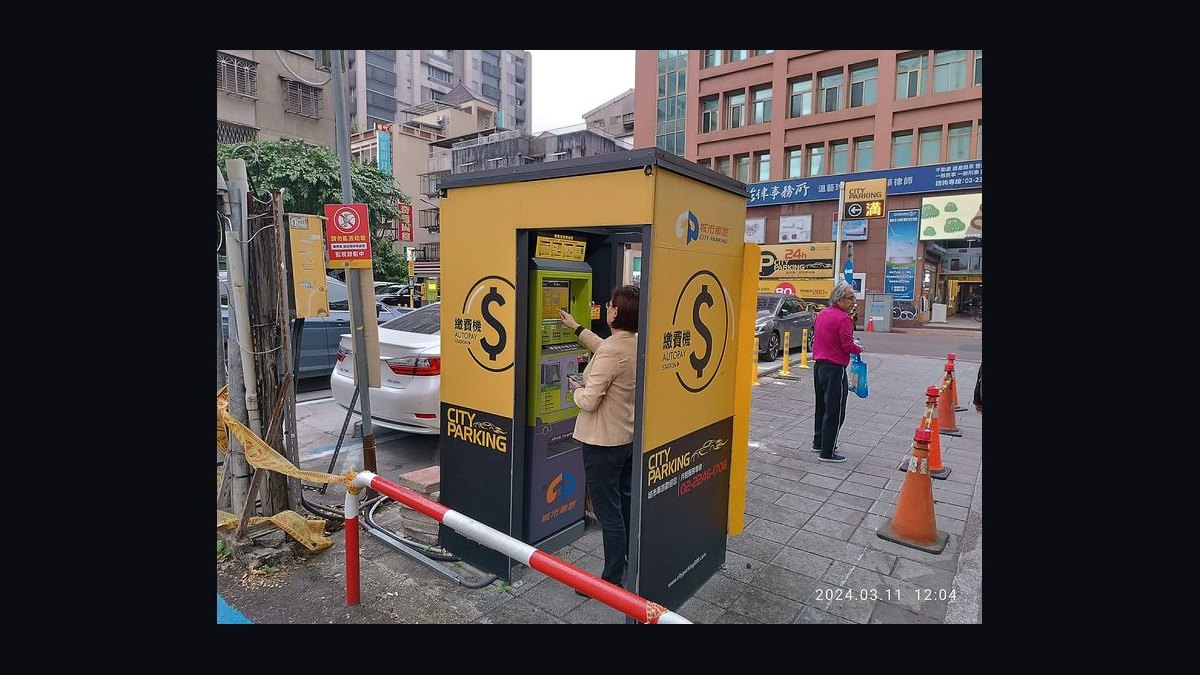
A commercial parking operator's 2027 stack centers on one cloud PARCS platform (FLASH, Amano McGann, SKIDATA, or TIBA) running gateless license-plate recognition, layered with mobile pay-by-phone, reservation marketplaces, and dynamic-pricing analytics that reconcile daily. The goal isn't feature breadth — it's a single occupancy-and-rate truth so every car that enters is matched to a payment, and leakage is caught same-day, not at monthly close.
The outcome you should expect
The outcome a commercial parking operator should expect from standardizing this stack is not a fancier app or a prettier dashboard — it's measurably tighter revenue capture. When a PARCS, LPR engine, mobile payment channel, and reservation feed all reconcile against one occupancy model, the operator can answer a question that most parking businesses cannot: for every car that physically entered a facility, is there a matched, settled payment on file? Before that convergence, most mixed-channel lots run with a leakage rate somewhere between 3% and 12% of gross revenue — cars that tailgate through a gate, sessions in a pay-by-phone app that never charge, validations punched twice, or cash transactions that simply never get logged. After standardization, well-run multi-site operators typically drive that down into the 1-3% range, and the improvement shows up directly on the P&L rather than in a report nobody reads.
The second outcome to expect is throughput and customer-experience gains that compound with the revenue-control gains rather than trading off against them. Gateless LPR removes the physical bottleneck of ticket dispensing and gate-arm cycling, which matters most at high-volume entry/exit events — shift changes at a hospital deck, flight banks at an airport garage, event ingress/egress at a stadium-adjacent structure. Operators who convert high-volume lanes to gateless LPR commonly see lane throughput improve by 20-40%, because a camera reading a plate at 15-25 mph is simply faster than a driver taking a ticket or tapping a card. That throughput gain is not incidental — congested entry lanes push some percentage of drivers to abandon and go elsewhere, so faster lanes are themselves a revenue-capture measure, not just a convenience upgrade.
A third outcome, less discussed but just as real, is that the stack starts producing pricing intelligence instead of just occupancy counts. Once entry, exit, reservation, and permit data all land in one place, an operator can see not just "how full are we" but "which hours and which channels are we underpricing." A garage that had been running a flat $18 daily rate can discover, from three months of reconciled occupancy data, that Tuesday-Thursday 9am-1pm consistently runs above 95% capacity while Friday afternoons sit at 60% — a signal to raise the mid-week rate and discount or push reservation marketplace inventory into the Friday trough. That kind of yield tuning is impossible without the underlying reconciliation; it's the direct payoff of doing the revenue-control work first.
Operators should also expect a transition cost before the payoff. Migrating from legacy on-premise PARCS hardware to a cloud platform, or converting a gated facility to gateless LPR, typically takes 60-120 days per site once hardware is ordered, and staff need real retraining — attendants who spent years reconciling a cash drawer now need to work exception queues and mismatched-plate alerts instead. Operators who skip the training step get a technically correct system that nobody trusts, and old cash-handling workarounds creep back in.

What drives that outcome
What actually drives the leakage reduction and yield gains described above is architectural, not just a vendor choice: every capture channel has to converge on one system of record before it fans back out to payments and analytics. A commercial operator's demand doesn't arrive through one door. It shows up as drive-up transient at the gate, as an app session opened three minutes before arrival, as a reservation booked two weeks ahead through a marketplace, and as a monthly permit swiped at a dedicated lane — each with a different price, a different data feed, and a different settlement timeline. If those four streams don't converge, the operator is really running four separate, unreconciled businesses under one roof, and no single dashboard can see across them.
The PARCS is the natural convergence point because it already owns the physical lane — the gate, the LPR camera, or the pay station — and therefore sees every vehicle event as ground truth. The design principle that drives good outcomes is: route every channel's data into the PARCS as the entry/exit ledger, and let payments, analytics, and accounting pull from that ledger rather than each maintaining a separate, parallel record of what happened. When an app session, a reservation confirmation, or a permit swipe writes into the same event stream that the physical lane hardware writes into, exceptions become visible immediately — a car that entered but has no matching payment authorization stands out the same day, not thirty days later during a reconciliation sprint.

Two forces are accelerating this convergence in 2027 specifically. The first is that LPR accuracy and cost have both improved to the point where gateless capture is now viable well below the top of the market — what used to be an airport-only technology is now common in mid-size commercial garages, which means more operators are dealing with plate-based rather than ticket-based capture, and plate-matching logic has to sit inside the same reconciliation discipline as gated lanes or it becomes its own leakage source. The second is platform consolidation: PARCS vendors have been acquiring the analytics and payment layers that used to be separate purchases, so an operator choosing a modern cloud PARCS today is often choosing the reconciliation architecture and the pricing engine in the same contract, rather than integrating three vendors by hand. That consolidation is a genuine driver of better outcomes, because integration gaps between separately-purchased tools are exactly where the reconciliation described above tends to break.
The practical implication for a commercial operator is that vendor selection should be evaluated on integration depth first and feature list second. A PARCS with a slightly smaller feature set that natively reconciles LPR, mobile payments, and reservations will outperform a feature-rich PARCS that requires custom middleware to connect those same three things, because every custom integration point is a place where the "one ledger" principle can silently fail.

Benchmarks and realistic ranges
Benchmarking a commercial parking operator's stack means looking at both cost ranges and performance ranges, since a stack that's cheap but leaky is more expensive than a stack with a higher subscription cost and tight reconciliation. On the hardware side, a single entry/exit lane converted to modern LPR-based capture runs roughly $20,000-$60,000 installed when bundled with PARCS lane equipment, with the LPR camera itself typically $2,000-$8,000 per lane on top of that if added to existing gate hardware rather than installed fresh. Cloud PARCS management typically runs $200-$1,000 per lane per month, or is offered as a revenue-share arrangement instead of a flat fee, which smaller operators sometimes prefer because it removes fixed cost during slow seasons.
On the software subscription side, mobile payment platforms typically charge $0.10-$0.35 plus a percentage per transaction, usually passed to the driver as a convenience fee rather than absorbed by the operator. Reservation marketplaces take a materially larger cut — commonly 10-30% per booking — which is the right benchmark to hold marketplace channels against: a reservation is only worth taking if the space would otherwise have sat empty, because at a 25% commission a marketplace booking that displaces a full-rate walk-up customer is a net loss. Dynamic-pricing and analytics subscriptions run roughly $200-$600 per location per month for a dedicated tool, though many PARCS platforms now bundle comparable dashboards at no extra charge once an operator is on their cloud tier.

Blending all of that into total monthly software spend by operator size gives a useful sizing benchmark. A single lot or small garage typically spends $300-$1,200 per month on software and subscriptions combined, dominated by the one-time lane hardware capital cost rather than ongoing fees. A multi-site operator running 3-15 garages on a standardized stack typically lands at $2,000-$8,000 per month. A large regional operator with 15-75 mixed-use sites — some structured, some municipal, some with guidance systems — typically runs $10,000-$30,000 per month. An enterprise portfolio of 75+ sites, or a small number of very high-volume hubs like a major airport, typically runs $35,000-$100,000+ per month depending on how much single-space guidance coverage and enforcement tooling is deployed.
On the performance side, the benchmark that matters most is leakage rate: entries versus paid, matched exits, measured as a percentage of estimated gross revenue. Unreconciled, mixed-channel operations commonly sit at 3-12% leakage; well-reconciled, single-PARCS operations commonly sit at 1-3%. A useful secondary benchmark is exception-queue resolution time — how long a same-day mismatch sits before an attendant or ops reviewer closes it. Operators with disciplined daily reconciliation close same-day exceptions within a few hours; operators without it let exceptions pile into a monthly write-off, which is functionally the same as never catching them. Camera-guided single-space occupancy systems, where deployed, typically cost $400-$800 per space installed, and only pencil out at high-value structured facilities — airports, hospitals, premium downtown garages — where the wayfinding value and dwell-time reduction offset that per-space capital cost; a suburban surface lot rarely benefits enough to justify it.
Risks, edge cases, and failure modes
The single most common failure mode is running a mixed or disconnected PARCS across sites — different equipment, different software versions, or a mix of legacy on-premise and newer cloud systems that don't roll up into one portfolio view. When that happens, an operator can't compare occupancy or yield across garages, can't spot which specific site is leaking, and effectively runs several separate, unmonitored businesses under one company name. The fix is deliberate standardization: pick one cloud PARCS platform for the whole portfolio, migrate every site onto it on a defined schedule, and treat any site that stays on a legacy system as a flagged exception requiring an explicit business reason, not a default.
A second, increasingly common failure mode is treating LPR and gateless conversion as a hardware upgrade rather than a controlled revenue process. Operators install plate cameras, celebrate the throughput improvement, and only later discover misreads (a dirty or bent plate, a rental car with a temporary tag, an out-of-state plate format the system doesn't parse well), unbilled exits where a misread plate never matches a payment method, and no daily process to catch either. LPR has to run inside the same audit discipline as a gated lane — exception queues reviewed daily, plate-match accuracy tracked as a KPI, and a defined process for what happens when a plate can't be matched to a payment account at exit (grace period, follow-up billing, or gate fallback).

A third failure mode is unreconciled payment channels, which is really the general case of the first two failures. App sessions that open but never charge, reservation confirmations that don't get checked against actual arrival, validations punched at a retail or hotel front desk that never sync back to the PARCS, and card settlements that authorize but don't capture — all of these create a specific, insidious gap: money that was technically collected, or should have been, but never gets matched to the vehicle event that generated it. This is worse than an obvious failure like a broken gate, because it doesn't announce itself; it just quietly erodes margin. The only real defense is daily reconciliation against the PARCS ledger with an alarm threshold on the variance, not a monthly review.
A fourth, more structural risk is over-relying on a reservation marketplace channel to the point that it cannibalizes direct bookings and the monthly-permit base. Because marketplaces take a 10-30% commission, every reservation that displaces a customer who would have booked directly, or a monthly parker who downgrades to cheaper ad-hoc marketplace bookings, is a margin loss dressed up as incremental revenue. Operators need to track blended yield by channel, not just gross reservation volume, to catch this before it erodes the higher-margin direct and permit business.

An edge case worth naming specifically: generic accounting with no occupancy or yield layer. An operator who books parking revenue in plain QuickBooks without routing occupancy data through the PARCS analytics or a dedicated tool like Smarking can see the deposit total but has no visibility into why it's what it is — no way to tell whether a site is underpricing off-peak hours or losing transient volume to a reservation channel it doesn't control. That's not a catastrophic failure the way unbilled LPR exits are, but it's a slow one: the operator simply never captures the pricing upside the stack was supposed to unlock.
A practical rollout plan
A practical rollout plan for standardizing a commercial parking operator's stack runs in three phases, and the sequence matters — revenue control has to be locked down before channels are added, and channels have to reconcile before pricing intelligence is layered on top. Rolling this out in the wrong order (turning on dynamic pricing before daily reconciliation exists, for example) means the operator is optimizing prices against occupancy numbers it can't actually trust.

Phase one, roughly the first month, is about standardizing revenue control before anything else. The operator selects a single cloud PARCS for the entire portfolio, weighing integration depth over feature count, and runs a baseline audit at every site comparing entries against paid, matched exits to establish the starting leakage number — this baseline is what every later improvement gets measured against. Active sites migrate onto the standard PARCS on a scheduled cutover, and staff get trained specifically on exception handling, not just on operating the new hardware, since the exception queue is where the actual revenue-control work happens day to day.
Phase two, roughly days 31-60, brings the remaining capture channels — LPR or gateless conversion, mobile pay-by-phone, and reservation marketplace integration — into the PARCS ledger with full audit trails, so every one of those channels' events lands in the same system as the physical lane events. This is also when daily reconciliation goes live across every payment channel, surfacing same-day variance instead of letting it accumulate. Accounting integration happens here too, so that once channels are reconciled, revenue rolls automatically into property or corporate financials rather than requiring manual entry.

Phase three, roughly days 61-90 and ongoing, is where the operator turns on dynamic pricing — using the PARCS analytics or a dedicated tool to adjust rates by hour, day of week, and event — and stands up portfolio-wide reporting on occupancy, yield, and leakage. This is also the point at which the operator should document the whole pipeline as a repeatable playbook, so that a newly acquired site or a new lease can be onboarded onto the standard stack without re-deriving the process from scratch. Operators who skip documentation here often find that every new site becomes its own improvised project instead of a known, repeatable 90-day rollout.
Related questions
Should a commercial parking operator convert to gateless LPR immediately, or keep gates?
High-volume sites usually see the fastest payback from gateless LPR — faster throughput, lower hardware maintenance. Keep gates where plate-read accuracy is a known problem or enforcement is weak. A hybrid — gateless transient with gated overflow — is a common, sensible middle step.
How much of a commercial operator's revenue can reservation marketplaces safely represent?
There's no fixed cap, but yield should be tracked by channel: marketplace bookings that displace direct or monthly customers erode margin at a 10-30% commission. Use marketplaces mainly to fill genuine off-peak and event troughs, not as a primary channel.
Does a small, single-lot operator need the full multi-site stack described here?
No. A single lot needs one PARCS or gateless app model, basic LPR or a pay station, and QuickBooks — the PARCS's own dashboard covers occupancy. Dedicated analytics and multi-channel reconciliation earn their cost once an operator runs several sites.
How does EV charging fit into this stack?
EV charging is becoming an expected amenity in structured garages and workplace lots. It should integrate as an adjacent access-and-revenue layer — networked chargers tying into the PARCS — with demand-charge and utilization costs priced explicitly, not treated as a free perk.
FAQ
What is the single most important system in a commercial parking operator's tech stack? The PARCS paired with daily payment reconciliation. Together they define revenue control, and revenue control is effectively the whole business model for a parking operator — a facility sells the same space repeatedly, and every uncaptured exit is pure margin loss that no other tool downstream can recover.
What's a realistic leakage rate before and after standardizing the stack? Unreconciled, mixed-channel operations commonly run 3-12% leakage against gross revenue. Operators who standardize on one cloud PARCS with daily reconciliation across every channel typically bring that down to roughly 1-3%, which on a mid-size multi-site portfolio can represent a meaningful, recurring revenue recovery.
Is cloud PARCS worth migrating to if the current on-premise system still works? For a multi-site commercial operator, yes in most cases — cloud PARCS is what enables portfolio-wide occupancy and yield visibility, and it's increasingly where LPR, payments, and analytics integrations are being built first by vendors. A single-site operator has more room to stay on-premise a while longer if the system is stable.
How often should payment channels be reconciled against the PARCS? Daily, not monthly. Leakage from app sessions, validations, and unsettled card charges hides easily in a monthly close, because by the time the numbers are reviewed the underlying event details are gone. Daily reconciliation surfaces the variance while there's still enough information to fix it.
Do camera-based guidance systems like Park Assist make sense outside airports and hospitals? Usually not economically. At roughly $400-$800 per space installed, single-space guidance mainly pencils out at high-value, high-turnover structured facilities where wayfinding meaningfully reduces dwell time and driver frustration. A standard suburban garage or surface lot typically doesn't generate enough incremental value to justify it.
What's the biggest mistake operators make when adding new capture channels? Turning on a new channel — LPR, mobile pay, a reservation marketplace — without first building the reconciliation process to check it against the PARCS ledger. Each new channel is a new place revenue can leak invisibly if it isn't matched to actual vehicle events from day one.
Sources
- https://www.ipmi.org
- https://www.flashparking.com
- https://www.amanomcgann.com
- https://www.skidata.com
- https://www.genetec.com/products/security-center/autovu
- https://parkmobile.io
- https://www.paybyphone.com
- https://spothero.com
- https://www.t2systems.com
- https://www.yardi.com
Related on PULSE
- [What is the best tech stack for a casino or gaming operator in 2027?](/knowledge/tk0153)
- [What is the best tech stack for a marina operator in 2027?](/knowledge/tk0193)
- [What is the best tech stack for a self-storage operator in 2027?](/knowledge/tk0098)
- [What is the best tech stack for a travel agency or tour operator in 2027?](/knowledge/tk0047)
- [What is the best tech stack for a senior living or assisted living operator in 2027?](/knowledge/tk0033)
- [What is the best tech stack for a coworking or flex space operator in 2027?](/knowledge/tk0044)
This page will be disappearing soon. Save it to your device for $1 — or read it free while it is here.
@Kory-White- · if Venmo asks, the last 4 of my number are 2012
 pulse-tech-stacksWhat is the recommended SOC-as-a-Service (SOCaaS) Provider sales and operations tech stack in 2027?
 pulse-tech-stacksWhat is the best tech stack for a commercial security & alarm monitoring company in 2027?
 pulse-tech-stacksWhat is the best tech stack for a specialty food or grocery retailer in 2027?
 pulse-tech-stacksWhat is the recommended TTS / Voice AI sales and operations tech stack in 2027?
 pulse-tech-stacksWhat is the best tech stack for a roofing contractor in 2027?
 pulse-tech-stacksWhat is the best tech stack for an electrical supply distributor in 2027?
 pulse-tech-stacksWhat is the best tech stack for a uniform or linen rental service in 2027?
 pulse-tech-stacksWhat is the best tech stack for a small aerospace and defense contractor in 2027?
 pulse-tech-stacksWhat is the best tech stack for a pawn shop in 2027?
 pulse-tech-stacksTech Stack for Barbershops in 2027