
What is the best tech stack for a commercial security & alarm monitoring company in 2027?
 Curated byKory White · Fractional CRO · Maryland
 PULSEKNOWLEDGE LIBRARY
A commercial security and alarm monitoring company in 2027 is built around alarm-industry RMR billing (Bold Group SedonaOffice or AlarmBiz) tied to a UL-listed central station platform (Manitou or Stages), with ServiceTitan or FieldEdge for field dispatch, Salesforce or HubSpot for the commercial pipeline, QuickBooks Online or NetSuite for accounting, and Power BI unifying reporting across all of it.
What it is and why it matters
A commercial security and alarm monitoring company sells a service, not a product, and that single fact reshapes every tool decision that follows. The install is a one-time event; the monitoring contract is the business. Recurring monthly revenue, universally shortened to RMR, is the number buyers, lenders, and owners actually value the company on — typically expressed as a multiple of monitored RMR rather than trailing EBITDA the way a construction or trades company would be valued. That single difference is why a security company cannot simply borrow the tech stack of an HVAC or plumbing contractor and call it done.
Four structural mechanics drive the stack choice. First, RMR tracking has to happen at the account level — per-site contract terms, escalation clauses, rate increases, bundled services, and attrition — because a spreadsheet or generic accounting ledger collapses all of that into undifferentiated invoice line items and destroys the ability to prove recurring value at sale time. Second, every protected account is sending live signals to a monitoring center 24 hours a day, and that center has to triage, verify, and dispatch police, fire, or private guard response inside a matter of seconds, governed by UL 827/1981 central-station listing requirements and, for higher-tier operators, TMA Five Diamond certification. That is a category of software (central-station automation) that has no equivalent in ordinary field-service or SaaS businesses. Third, physical installs, service calls, inspections, panel upgrades, and battery replacements all require technicians, trucks, parts inventory, and signed completion records — a genuine field-service operation with real truck-roll costs, first-time-fix-rate tracking, and route efficiency math. Fourth, the regulatory layer is heavy and permanent: false-alarm ordinances that vary by city, AHJ permitting, NFPA fire-alarm code compliance on commercial life-safety systems, and equipment with a 7-to-15-year service life all mean the stack has to retain account history for far longer than a typical B2B sales organization ever needs to.

Put together, this means the company is simultaneously running a recurring-billing subscription business, a 24/7 life-safety monitoring operation, a field-service contractor, and a regulated life-safety compliance program — under one roof, often with fewer than fifty employees at the regional-dealer size. The tech stack has to reflect all four roles without forcing the company to become four separate IT departments.
The step-by-step process
The cleanest way to see how the stack fits together is to follow one commercial account from first contact through years of recurring billing, because that lifecycle is what every tool in the stack is actually built to serve.
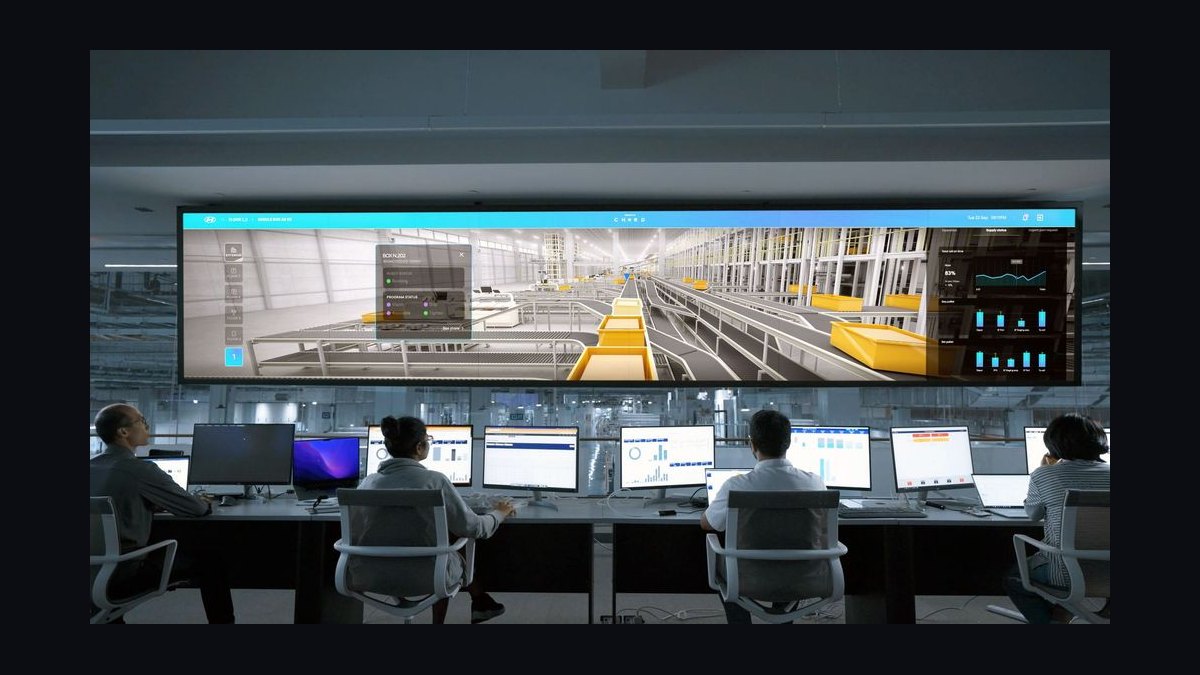
A commercial opportunity — say, a ten-location retail chain evaluating burglar and access-control monitoring — enters the CRM (Salesforce or HubSpot) as a lead, gets qualified against site count and contract value, and moves through a multi-stakeholder sales cycle that commonly runs 60 to 120 days for multi-site commercial deals. Once the contract is signed, the deal becomes a job: ServiceTitan or FieldEdge schedules the install crew, routes trucks to each site, tracks the panel, sensor, and camera inventory consumed, and captures signed completion documentation per location. As each site goes live, the account is activated in SedonaOffice (or Bold Group's AlarmBiz for smaller dealers), which becomes the permanent system of record for that account's RMR, contract term, billing cycle, and any scheduled rate escalations.
From that point forward, the central-station automation platform — Manitou or Stages if the dealer owns its UL-listed station, or a wholesale partner such as Rapid Response, AvantGuard/Becklar, or COPS Monitoring if it does not — receives every alarm signal from every site, presents the operator with a documented action plan, and logs response times for audit and liability purposes. Every month, SedonaOffice generates the recurring invoice, accounting (QuickBooks Online or NetSuite) books the revenue and reconciles cash, and Power BI pulls RMR, attrition, dispatch efficiency, and margin from all of the above into one dashboard the owner or CRO actually looks at daily.

The loop that matters most in that diagram is the one between the central station and SedonaOffice: every signal and every dispatch event has to reconcile against the RMR ledger so the company never monitors an account it has stopped billing, and never bills an account it has stopped protecting. That reconciliation, done well, is the single biggest driver of gross margin retention in this industry.
Costs, timelines, and typical ranges
Software spend scales sharply with company size and with whether the central station is owned or wholesaled, so budgeting has to start with an honest read of scale.
A small, owner-operated dealer with 1 to 15 staff that wholesales monitoring typically runs AlarmBiz or entry-tier SedonaOffice, FieldEdge, HubSpot, QuickBooks Online, Power BI, and a payroll tool such as Gusto, landing around $1,500 to $3,500 per month in software, plus wholesale monitoring fees that commonly run $3 to $8 per account per month paid to the third-party central station. There is no owned UL station at this scale, and there usually shouldn't be — the capital and staffing required to run a compliant 24/7 station rarely pencils out below a few thousand monitored accounts.
A regional dealer with roughly 15 to 150 staff and either an owned or hybrid monitoring setup moves to full SedonaOffice, ServiceTitan, Salesforce, QuickBooks Advanced or early NetSuite, Power BI, a fuller HR platform such as Rippling, and — if monitoring is owned — Manitou or Stages licensing on top. That combination commonly lands between $8,000 and $25,000 per month in software, with the wide range driven mostly by whether the central station is owned (higher) or still wholesaled (lower).
A national operator running multiple UL-listed central stations, enterprise SedonaOffice or the full Bold Group suite, ServiceTitan at scale, Salesforce Enterprise, NetSuite, Power BI Premium or Tableau, enterprise HR/payroll, and an iPaaS layer such as Workato for custom integrations should expect $40,000 or more per month and rising, frequently with dedicated integration engineering on top of subscription costs.
Implementation timelines follow a similar staged pattern regardless of size. The first 30 days should be devoted almost entirely to migrating accounts, contracts, and RMR data into the billing system and validating every recurring invoice against the prior system before cutover — billing continuity cannot be interrupted, so this phase gets the most caution. Days 31 to 60 typically bring in field dispatch and the CRM, with technicians trained on mobile capture and a clean handoff built so a closed-won deal in the CRM automatically becomes a new account in the billing system rather than a manually re-keyed one. Days 61 to 90 focus on integrating monitoring-to-billing reconciliation, wiring the iPaaS connections between systems that lack native APIs, building out the Power BI dashboard, and locking down HR, communications, and IT security so the company exits the quarter with one dashboard leadership actually trusts.

Where teams get it wrong
The most expensive and most common mistake is trying to run RMR on generic accounting software alone. QuickBooks or a plain ERP treats every monitoring charge as an ordinary invoice line and has no concept of per-account contract term, rate escalation schedule, or attrition rate — which means the owner cannot actually prove the recurring revenue base that a buyer or lender is paying a multiple for. Companies that delay adopting alarm-industry billing software routinely discover the gap only when a buyer's diligence team asks for RMR-by-cohort reporting that simply does not exist.
A close second is a missing reconciliation loop between the central station and the billing ledger. When monitoring and billing are not integrated, accounts drift out of sync in both directions — some get monitored after the customer has stopped paying, which is pure margin leakage and a liability exposure if that account is later found not to have been billed correctly, and others get billed after monitoring has quietly lapsed, which becomes a refund and reputational problem the moment it surfaces. Manual spreadsheet reconciliation between systems is the quiet, slow-motion version of this failure — it looks like it's working until an audit or a sale process forces someone to actually check.
Tool sprawl is the third recurring failure, and it runs in the opposite direction from under-investment: buying a separate marketing-automation suite, a redundant inventory system, or a second CRM the field team ignores because dispatch already lives in ServiceTitan. Every extra system is another integration point, another login, another place data can silently diverge from the source of truth, and field and monitoring staff will route around tools that duplicate what they already use daily. The discipline here is buying exactly the layers a commercial monitoring company genuinely needs — roughly eight to ten core systems — and integrating those well rather than adding a system for every department's individual preference.
Fourth, many companies never build the cross-system view. Each individual platform reports on itself well — SedonaOffice on RMR, ServiceTitan on dispatch, Salesforce on pipeline — but none of them shows RMR growth, attrition, dispatch efficiency, and gross margin together in one place. Without a BI layer pulling from all four, leadership manages the business off stale monthly exports, and by the time a margin or attrition problem shows up in a spreadsheet someone finally built by hand, it is often months old and already compounding.
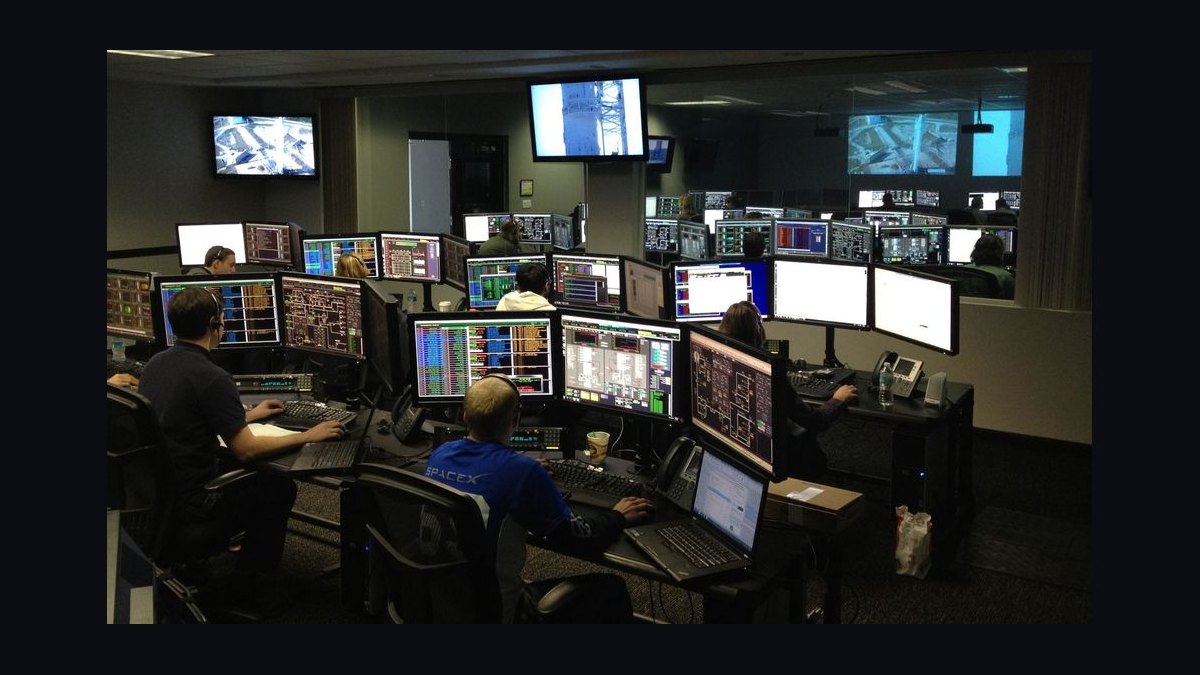
Decision framework: when to choose what
The core decision that shapes everything else is whether the company owns a UL-listed central station or wholesales monitoring to a third party, because that single choice determines whether Manitou/Stages licensing, redundant telco lines, and 24/7 certified-operator staffing belong in the budget at all. Below regional scale, wholesaling to an established monitoring partner is almost always the right call — the capital and compliance burden of running a compliant station rarely justifies itself until account volume is large enough to absorb the fixed cost, or unless owned monitoring is a deliberate competitive differentiator the company is marketing on.
The second decision point is field-service platform sizing: ServiceTitan is built for larger commercial operations with meaningful technician headcount and complex multi-site scheduling, while FieldEdge serves dealers who need genuine dispatch and mobile capture without ServiceTitan's enterprise price point. The third is CRM sizing, where Salesforce fits national or regional teams needing deep customization and a large integration ecosystem, and HubSpot fits smaller commercial dealers that want faster deployment and a lower total cost while still tracking multi-site opportunities properly.
Whichever branch a company lands on, the billing layer and the BI layer are non-negotiable at every size — SedonaOffice or AlarmBiz because there is no substitute for alarm-industry RMR tracking, and Power BI or Tableau because no individual system in the stack ever shows the full company picture on its own.
Related questions
What is the complete software stack for a security guard company in 2027?
A guarding company skips alarm billing and central-station automation entirely and instead centers on workforce scheduling, GPS-verified guard tour software, and payroll/billing tied to billed guard-hours rather than monitored accounts — a fundamentally different revenue model from monitoring.
Do commercial security companies need a separate access-control platform?
Many do, layering a dedicated access-control management system (cloud-based credential and door-controller software) alongside the core monitoring stack, especially for multi-tenant commercial buildings where access and alarm monitoring are sold as a bundle.
How is RMR different from ARR in a SaaS business?
RMR is monitoring-contract revenue tied to physical accounts and equipment with real installation and service costs behind it, while ARR in SaaS reflects software subscriptions with near-zero marginal delivery cost — RMR multiples are typically lower for that reason.
Should a growing dealer build custom integrations or buy an iPaaS tool?
Buy an iPaaS layer such as Workato, Zapier, or Make first; custom integration engineering only becomes worthwhile once transaction volume or connector complexity outgrows what a no-code platform can reliably handle.
FAQ
Do I really need alarm-industry billing software, or can I run RMR on QuickBooks? You need dedicated alarm billing. QuickBooks cannot track per-account RMR, contract terms, or attrition, which means you cannot prove the recurring revenue that determines your company's sale value. SedonaOffice or AlarmBiz is the highest-leverage purchase in the whole stack.
Should I own a central station or wholesale monitoring? Most dealers below regional scale should wholesale to an established monitoring partner at a few dollars per account per month. Owning a UL-listed station and licensing Manitou or Stages typically only pays off once volume is large or monitoring is a deliberate market differentiator.
ServiceTitan or FieldEdge for dispatch? ServiceTitan suits larger commercial operations with 20 or more technicians and complex multi-site routing. FieldEdge fits smaller dealers who need real dispatch and mobile capture at a lower monthly cost.
Salesforce or HubSpot for the commercial pipeline? Salesforce fits national or regional teams needing deep customization and broad integrations. HubSpot fits smaller dealers prioritizing faster deployment and lower cost. Either works as long as closed-won deals flow cleanly into the billing system.
Why does this stack need a separate BI layer instead of relying on each system's own reports? Because no single system in the stack shows RMR growth, attrition, dispatch efficiency, and gross margin together. A BI layer such as Power BI or Tableau is the only place leadership sees the whole company live instead of assembling monthly exports by hand.
What should a security company buy first if the budget is tight? Alarm-industry RMR billing software. Get recurring revenue tracked correctly at the account level before adding any other system — everything else in the stack is built to support that ledger.
Sources
- https://www.boldgroup.com
- https://www.tma.us (The Monitoring Association)
- https://www.servicetitan.com
- https://www.salesforce.com/products/sales-cloud/pricing/
- https://www.hubspot.com/pricing/sales
- https://www.microsoft.com/en-us/power-platform/products/power-bi/pricing
- https://www.rippling.com
- https://www.securitysales.com
- https://www.sdmmag.com
- https://www.alarm.com
Related on PULSE
- [What is the complete software stack for a security guard company in 2027?](/knowledge/tk335)
- [What is the recommended API Security Vendor sales and operations tech stack in 2027?](/knowledge/tk0244)
- [What is the recommended OT/ICS Security Vendor sales and operations tech stack in 2027?](/knowledge/tk0247)
- [Top 10 IoT Tech Stacks for Smart Factory Monitoring](/knowledge/tk0381)
- [A PostgreSQL and TimescaleDB Stack for Energy Grid Monitoring](/knowledge/tk0386)
This page will be disappearing soon. Save it to your device for $1 — or read it free while it is here.
@Kory-White- · if Venmo asks, the last 4 of my number are 2012
 pulse-tech-stacksWhat is the best tech stack for a residential solar installation company in 2027?
 pulse-tech-stacksWhat is the best tech stack for a packaging or corrugated manufacturer in 2027?
 pulse-tech-stacksWhat is the recommended AI Coding Tools sales and operations tech stack in 2027?
 pulse-tech-stacksWhat is the complete software stack for a computer and phone repair shop in 2027?
 pulse-tech-stacksTech Stack for Independent Restaurants in 2027
 pulse-tech-stacksWhat is the best tech stack for an optometry practice in 2027?
 pulse-tech-stacksWhat is the best tech stack for a fitness studio or gym in 2027?
 pulse-tech-stacksWhat is the best tech stack for a property management company in 2027?
 pulse-tech-stacksWhat is the recommended SOC-as-a-Service (SOCaaS) Provider sales and operations tech stack in 2027?
 pulse-tech-stacksWhat is the best tech stack for a CNC machine shop in 2027?