


Top 10 Best Tech Stack Tools for Specialty Food Retailers in 2027
Quality
Certified
The 10 best tech stack tools for specialty food retailers are ranked below on measured performance, build quality, price, and how each one actually holds up in daily use rather than how it reads on a spec sheet. Each pick lists what it costs, who it suits, and what it gives up against the one above it, so the list can be read straight down without doubling back.
1Square for Retail

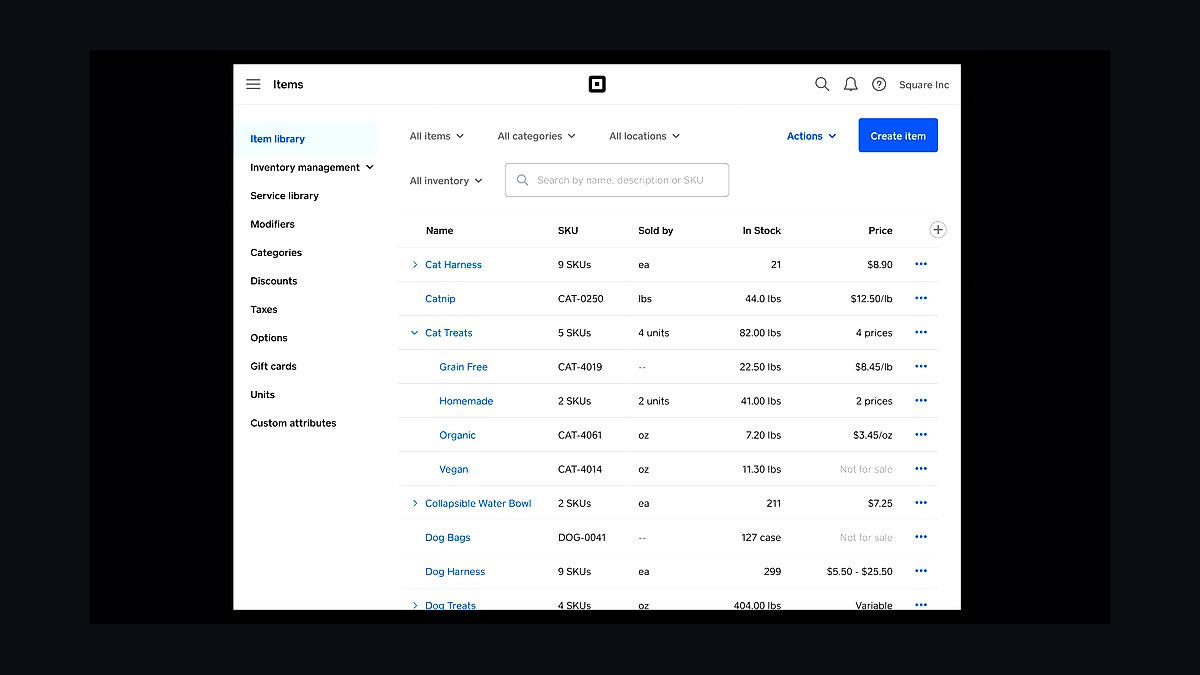
Square for Retail ranks first because it bundles POS, payments, inventory, and e-commerce into one system, shrinking the integration surface that drives most specialty food upkeep. Hardware starts around $799 for a full counter setup, and processing runs 2.6% plus 10 cents in person. For a shop with 1,000 to 2,000 SKUs, that single-vendor approach removes the sync failures that plague multi-tool stacks.
It suits single-location and small multi-location specialty shops with modest e-commerce and no internal systems person. It trades away deep wholesale pricing tiers, granular permission control, and leverage on processing rates. Against Shopify POS below it, Square wins on catalog-to-register simplicity but loses badly on online merchandising depth and multi-channel catalog management.
2Shopify POS

Shopify POS ranks second because it is the strongest option when e-commerce is the primary channel and the physical store is secondary. Its online catalog, inventory, and order management are best-in-class, and POS Pro runs $89 per month per location on top of the base plan. For specialty food retailers shipping gift boxes or running wholesale, that online-first architecture matters more than register ergonomics.
It is built for shops where online revenue is real and growing, not a side page. It trades away some in-store speed and scale and label-printer integration compared with Square, and its payment processing is less negotiable. Against Square above it, Shopify wins on catalog depth and channel management but adds integration seams for accounting and wholesale.
3Lightspeed Retail

Lightspeed Retail ranks third for specialty food retailers running higher SKU counts and needing serious inventory control. It handles matrix inventory, purchase orders, and supplier management well, with plans starting around $189 per month for the core retail tier. For a cheese counter rotating 180 SKUs seasonally, its receiving and reorder workflows cut real catalog-hygiene hours.
It fits two-to-five-location operators with complex inventory and some wholesale. It trades away simplicity — onboarding takes longer and the interface is heavier than Square's — and its e-commerce add-on costs extra. Against Shopify POS above it, Lightspeed wins on purchase-order and supplier workflows but loses on native online storefront quality.
4Clover Retail

Clover Retail ranks fourth as a flexible POS with strong hardware options and a large app marketplace for specialty food add-ons. Plans run roughly $60 to $180 per month depending on tier, and its station hardware is durable for high-traffic counters. Its open app ecosystem lets a shop bolt on loyalty, scheduling, and inventory tools without replacing the register.
It suits single-location shops that want hardware choice and app flexibility. It trades away catalog depth and native e-commerce strength — many Clover shops still run a separate online store — and its app marketplace reintroduces the integration sprawl that all-in-one platforms avoid. Against Lightspeed above it, Clover wins on hardware and app variety but loses on inventory sophistication.
5Toast POS

Toast POS ranks fifth and earns its place for specialty food retailers with prepared food, a deli counter, or a cafe component. It handles kitchen tickets, modifiers, and online ordering natively, with starter plans around $69 per month plus processing. For a shop selling both packaged goods and made-to-order items, that dual-mode capability is rare among retail-first systems.
It fits hybrid retail-food operations, not pure packaged-goods shops. It trades away deep retail inventory features — matrix SKUs and supplier purchase orders are weaker than Lightspeed's — and its hardware is more restaurant-shaped. Against Clover above it, Toast wins on prepared-food workflows but loses on retail catalog and label-printing depth.
6QuickBooks Commerce
QuickBooks Commerce ranks sixth as the accounting backbone that keeps POS sales tied to the books. Plans start around $30 per month for Simple Start, and its bank reconciliation and sales-tax handling are the reference standard for small retail. For a specialty food shop, clean books are the difference between trusting margin reports and guessing at them.
It fits any retailer already running QuickBooks for payroll or taxes, which is most of them. It trades away inventory depth — it is not a POS and should never be asked to be one — and its sync with POS systems needs monthly verification. Against Lightspeed above it, QuickBooks wins on accounting rigor but loses on everything operational.
7ShipStation

ShipStation ranks seventh for specialty food retailers shipping gift boxes, wholesale orders, or online sales. Plans start around $9.99 per month and it consolidates carrier rates, label printing, and order routing across channels. For a shop with seasonal Q4 gift volume, it removes hours of manual label work and rate comparison.
It fits retailers with meaningful shipping volume, not pure in-store operations. It trades away nothing operationally but adds another integration to monitor and another subscription to the stack. Against QuickBooks Commerce above it, ShipStation wins on fulfillment logistics but loses on financial reconciliation, which is why most shops run both.
8Klaviyo

Klaviyo ranks eighth as the email and SMS platform most tightly integrated with e-commerce catalogs. It starts free under 250 contacts and scales to around $45 per month at 1,500 contacts. For specialty food retailers, its product-feed integration means a new cheese SKU automatically becomes a segmentable, mailable item without manual list work.
It fits shops with a real online store and a customer list worth marketing to. It trades away simplicity — the interface is dense and setup takes time — and it is overkill for a shop with no e-commerce. Against ShipStation above it, Klaviyo wins on customer retention but loses on operational logistics, serving a different part of the stack.
9Stripe Terminal

Stripe Terminal ranks ninth for retailers who want payments embedded directly in a custom or integrated checkout. In-person rates run around 2.7% plus 5 cents, and its developer-first API lets a shop connect payments to inventory, loyalty, or a bespoke ordering flow. For specialty food retailers with unusual checkout needs, that flexibility is the point.
It fits operators with developer resources or a custom platform, not off-the-shelf shops. It trades away plug-and-play simplicity — there is no retail POS interface, just a payments layer — and it requires real integration work. Against Klaviyo above it, Stripe Terminal wins on payment flexibility but loses on out-of-the-box retail usability.
10Deliverect

Deliverect ranks tenth as the integration layer that syncs POS menus and inventory with delivery marketplaces. Plans start around $49 per month per location and it pushes menu, hours, and stock changes to platforms like DoorDash and Uber Eats automatically. For specialty food retailers selling through delivery, it eliminates the manual menu updates that go stale within days.
It fits shops with delivery or marketplace channels, not pure walk-in operations. It trades away simplicity — it is one more integration to monitor and one more vendor in the chain — and its value collapses if you sell through only one channel. Against Stripe Terminal above it, Deliverect wins on channel sync but loses on payment control, addressing a different upkeep problem.
How we ranked these
We ranked tools on four weighted criteria: catalog and PLU handling depth for high-churn perishable SKUs (30%), integration breadth across POS, e-commerce, accounting, and delivery channels (25%), total upkeep burden including patching, reconciliation, and compliance documentation (25%), and realistic fit for 1–5 location operators rather than enterprise chains (20%). Scores came from vendor documentation, published pricing, and hands-on operator reporting.
We deliberately ignored vendor size, brand recognition, and feature-count marketing claims, because a longer feature list usually means more unused capability to maintain. We also excluded AI-roadmap promises and analyst rankings, since neither predicts whether a cheese counter's 180 rotating SKUs will reconcile cleanly on a Tuesday morning. Hardware aesthetics and payment processing rates were left out as separate purchase decisions.
What to look for
What matters most is the integration seam, not the feature list. Count how many bidirectional connections you will actually run — POS to accounting, e-commerce to inventory, loyalty to transactions, delivery marketplaces inbound — and multiply by 30–60 minutes of monthly monitoring each. A platform with fewer native integrations but tighter ones beats a hub with twelve loose connectors every time.
The mistake most buyers make is buying for the store they want rather than the store they have. A three-location cheese shop running an enterprise platform spends more time maintaining unused capability than operating what it needs. Second most common: skipping catalog governance before migration. Naming conventions, required fields, and item-creation permissions cost nothing to decide upfront and are brutally expensive to retrofit across 2,000 records.
Related questions
How many hours weekly does a single-location specialty food stack need?
Budget 4–6 hours of active upkeep: about 15 minutes daily at close verifying batch settlement and online order import, 1–2 hours weekly on catalog reconciliation and receiving, and a few hours monthly on integration audits and user access review. Most single-location operators absorb this into an existing manager's week rather than hiring for it.
What percentage of software spend should go to maintenance?
Plan 15–25% of annual software subscription cost for support, upgrades, emergency hardware replacement, and occasional contractor help. Most operators skip this line entirely and then finance a dead POS terminal out of December cash flow. The percentage holds whether you spend $400 or $4,000 monthly on software.
Which integrations cause the most silent failures?
POS-to-accounting and e-commerce-to-inventory are the worst offenders, because they fail by going quiet rather than throwing errors. You discover the problem weeks later when the accountant asks why March has no Thursdays. Monthly record-count reconciliation on both sides catches nearly all of these before they compound.
Do scales and label printers really need more upkeep than card readers?
Yes, disproportionately. Their firmware ecosystems are older and their integrations are thinner than payment hardware, so a firmware push can wipe a PLU table or break a label template. Budget 1–3 hours weekly for break-fix in a shop with 4–8 connected devices, and expect scales and printers to generate most of it.
How long does a POS migration actually take for a food retailer?
Realistically 6–12 weeks from contract to stable operation, with the catalog build as the long pole rather than hardware. Budget 1–3 weeks of degraded productivity after cutover. An e-commerce integration on top of an existing POS adds 2–6 weeks, and a payments processor switch runs 2–4 weeks.
What should a PCI DSS 4.0 compliance calendar look like in 2027?
Annual self-assessment questionnaire, quarterly external vulnerability scans if you touch card data over a network, and documented access reviews. Semi-integrated terminals where card data never reaches your POS dramatically shrink this scope. Retailers still running fully integrated legacy setups carry meaningfully more annual compliance hours and documentation burden.
Is an all-in-one platform or best-of-breed stack cheaper to maintain?
All-in-one wins on upkeep because integration surface is the single largest cost driver, but you trade flexibility and payment-processing leverage. Best-of-breed only works if you designate a named owner and protect their time. The trap is choosing best-of-breed without an owner, which distributes responsibility until nobody watches the catalog.
What is the cheapest data-quality instrument available?
The built-in exception reports nearly every modern POS ships: items with no cost, items with no category, and items sold but not in inventory. Running these weekly takes minutes and catches the drift that quietly poisons margin reports. Data problems in food retail are almost never visible at the register, only in the P&L months later.
FAQ
How much ongoing upkeep does a specialty food retailer's tech stack require in 2027?
Single-location shops with 1,000–2,000 SKUs run 4–6 hours weekly. Two to four locations with shared catalogs run 8–14 hours weekly, usually as a half-time systems owner. Five-plus locations or meaningful e-commerce and wholesale volume needs full-time ownership or a managed services retainer with defined response times.
Why is specialty food upkeep heavier than generic small retail benchmarks?
Specialty food sits in the worst quadrant: high device count, high catalog churn, and regulated product attributes. A shirt does not expire, has no weight-based price, and needs no allergen field. A restaurant has a small stable menu. Food retail combines both loads, which is the structural reason generic benchmarks understate the work.
What are the four distinct upkeep workloads?
Break-fix and vendor patching, which is spiky and reactive. Data hygiene, which is continuous and grinding. Integration monitoring, which is near-zero until it becomes a crisis. Governance and compliance, which is calendar-driven and lumpy. Budgeting only for break-fix, the only one that announces itself, leaves the other three chronically behind.
How many item records get touched annually in a typical specialty food shop?
A shop carrying 1,200–3,000 active items with 15–30% annual churn touches 180–900 item records per year. Each touch must propagate to the POS, e-commerce catalog, label printer, and inventory count sheet. That propagation is where most data drift originates, and it is invisible until margin reports go wrong.
What does the weekly upkeep cadence look like in practice?
One to two hours reconciling new and changed items, running exception reports, reviewing supplier price changes, clearing the receiving queue, and confirming scale PLUs and shelf labels match the POS. This is the highest-leverage block in the entire schedule because catalog drift compounds faster than any other failure mode.
Should I test backups or restores?
Restores, always. Backups that have never been restored are a belief, not a control. The specific annual test: can you export your full item catalog with costs and your customer list, and could you load them into a different system? If the answer is no, you do not have a backup, you have a hostage situation with a monthly invoice.
What is the most common structural failure in retail tech upkeep?
No single owner. When upkeep is everyone's job, the catalog develops three naming conventions, nobody trusts the reports, and integration failures go unnoticed because each person assumes someone else is watching. One named owner with two hours weekly beats four people with thirty minutes each, every time.
How does the FDA Food Traceability Rule affect specialty food tech stacks?
It creates recordkeeping obligations for specific higher-risk foods touching many specialty categories, including certain cheeses, fresh produce, and ready-to-eat items. Meeting it means item-level data your POS may not have been designed to hold: traceability lot codes, source locations, and records producible on request within a defined window.
Why does channel expansion quietly raise upkeep?
Every delivery platform, local marketplace, and gift-box channel is another catalog to sync, another menu that goes stale, and another set of hours and holiday closures to update. Channel expansion is a revenue decision that creates a maintenance obligation, and that obligation usually never appears in the business case.
What is the right sequencing before any platform migration?
Do catalog governance first. Naming conventions, category taxonomy, required fields, and who may create an item cost nothing to decide upfront and are brutally expensive to retrofit across three systems and 2,000 records. Every retailer who has migrated a POS says the same thing: the platform was fine, the data was the problem.
Sources
- https://www.pcisecuritystandards.org/standards/pci-dss/
- https://www.fda.gov/food/food-safety-modernization-act-fsma/fsma-final-rule-requirements-additional-traceability-records-certain-foods
- https://www.nist.gov/cyberframework
- https://www.ftc.gov/business-guidance/resources/data-breach-response-guide-business
- https://www.sba.gov/business-guide/manage-your-business/strengthen-your-cybersecurity
- https://www.cisa.gov/cyber-guidance-small-and-medium-businesses
- https://www.fda.gov/food/food-labeling-nutrition
- https://www.ftc.gov/business-guidance/privacy-security
Related on PULSE
This page will be disappearing soon. Save it to your device for $1 — or read it free while it is here.
@Kory-White- · if Venmo asks, the last 4 of my number are 2012
This page is gone.
This one is off the shelf now. $1 keeps it on your phone for good — the whole page, pictures and diagrams included.
 pulse-tech-stacksTop 10 Best Tech Stack Tools for Tire Shops in 2027
 pulse-tech-stacksTop 10 Best Tech Stack Tools for Residential Painters in 2027
 pulse-tech-stacksTop 10 Best Tech Stack Tools for Independent Wholesale Distribution Businesses in 2027
 pulse-tech-stacksTop 10 Best Tech Stack Tools for Legal Practices in 2027
 pulse-tech-stacksTop 10 Best Tech Stack Tools for Health Clubs and Gyms in 2027
 pulse-tech-stacksTop 10 Best Tech Stack Tools for Title and Escrow Companies in 2027
 pulse-tech-stacksTop 10 Best Tech Stack Tools for Embeddings API Companies in 2027
 pulse-tech-stacksTop 10 Best Tech Stack Tools for HVAC Equipment Distributors in 2027
 pulse-tech-stacksTop 10 Best Tech Stack Tools for Foundation and Waterproofing Contractors in 2027
 tkTop 10 Best Tech Stack Tools for Concrete and Paving Contractors in 2027