 Pulse Reviews and Analysis
How do you choose the right filter for your aquarium?
 Curated by Kory White · Fractional CRO, CRO Syndicate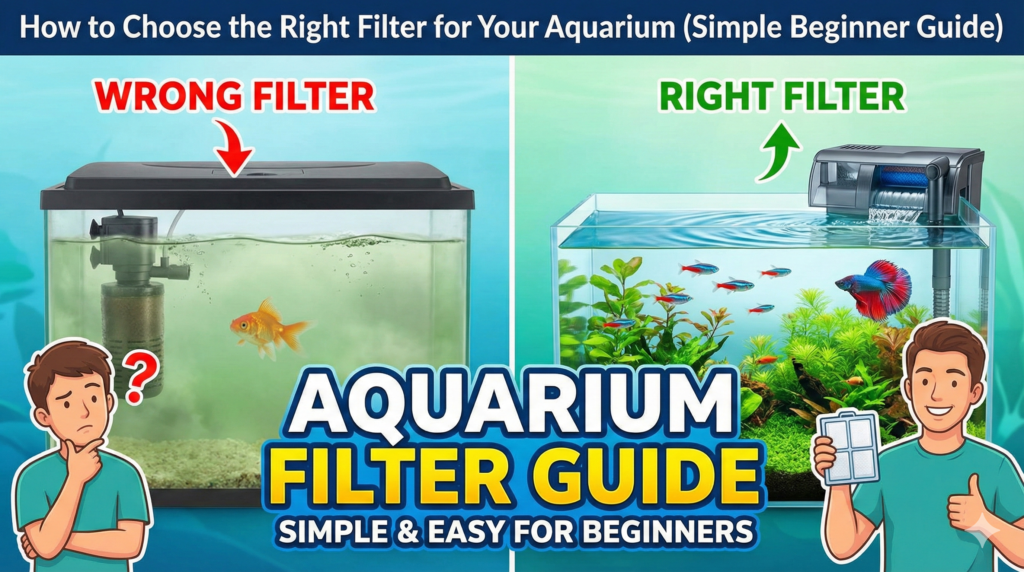
How do you choose the right filter for your aquarium?
Direct Answer
Choose an aquarium filter by matching three things: your tank size, your stocking and bioload, and the type of livestock (planted tank, shrimp, big messy cichlids, reef, etc.). For most beginners and community tanks, a hang-on-back (HOB) filter rated for at least your tank's volume is the easiest right answer; sponge filters are best for fry, shrimp, and gentle nano tanks; and canister filters are best for large, heavily stocked, or planted display tanks where you want lots of media and minimal surface clutter.
Aim for a filter that turns over roughly 4–6 times your tank volume per hour, and remember that biological filtration — the surface area for beneficial bacteria — matters more than raw flow.
What a Filter Actually Does
Every aquarium filter performs up to three jobs, and understanding them is the key to choosing well. Mechanical filtration physically traps debris — uneaten food, waste, and detritus — in sponges, floss, or pads. Biological filtration is the most important: it provides surface area (sponges, ceramic rings, bio-balls) where the beneficial bacteria of the nitrogen cycle live and convert toxic ammonia to nitrite to far-safer nitrate.
Chemical filtration is optional and uses media like activated carbon or resins to pull dissolved compounds, tannins, or medications out of the water. A good filter does the first two well and gives you room to add the third when needed. When people say a filter "isn't strong enough," the real problem is usually too little biological media or too small a media volume for the bioload — not flow.

Reach Kory White, Fractional CRO: 📅 Book a Quick Call · 💼 Kory on LinkedIn · 🏢 CRO Syndicate
Match the Filter Type to Your Tank
There is no single best filter — the right choice depends on your setup:
- Hang-on-back (HOB) filter: Hangs on the rim, easy to access and maintain, and a great default for 5–55 gallon community tanks. Good mechanical and biological filtration, simple media changes. Popular reliable lines exist from AquaClear, Seachem (Tidal), and Fluval. Best all-around beginner choice.
- Sponge filter: An air-driven sponge that provides gentle flow and huge biological surface area with no intake that can suck up fry or shrimp. Ideal for shrimp tanks, fry/breeding tanks, betta tanks, and quarantine/hospital tanks. Cheap and nearly foolproof, but limited mechanical filtration and modest capacity.
- Canister filter: A sealed external canister packed with large volumes of media, plumbed via intake and return. Best for large tanks (often 40+ gallons), heavily stocked tanks, big messy fish, and planted display tanks where you want maximum media, minimal in-tank clutter, and the option to add a spray bar or inline CO2. More expensive and a bit more involved to clean.
- Internal power filter: A submersible filter inside the tank — compact and good for nano or temporary setups, but takes up tank space.
- Sump: A separate tank below the display (common in saltwater/reef), offering huge media volume, room for a skimmer/heater, and added water volume. Best for reef and large advanced setups.
How to Size a Filter (Flow and Turnover)
Filters are rated two ways and both can mislead. The gallons-per-hour (GPH) rating is the pump's flow, and a common guideline is 4–6x your tank volume per hour of turnover — so a 30-gallon tank wants roughly 120–180 GPH. But that rated GPH is measured with no media and no head height; real-world flow drops as media clogs and as water is lifted, so size up rather than down, especially for messy fish.
The "gallons rated" number on the box is a rough marketing figure — for a heavily stocked tank, choosing a filter rated for the next tank size up gives you headroom and more biological media. Also match flow to livestock: bettas, shrimp, and many slow-water species dislike strong current, so you may want to baffle a too-strong HOB or choose a gentle sponge filter instead.
Plants, Reef, and Special Cases
Planted tanks often run canister filters with a spray bar to distribute flow gently and retain CO2; you also want to avoid too much surface agitation if injecting CO2, since it off-gasses. Reef and saltwater setups usually center on a sump with a protein skimmer rather than a traditional filter, because skimming removes organics before they break down.
Shrimp tanks demand a sponge filter or a pre-filter sponge over any intake so you don't vacuum up shrimplets. Goldfish and big cichlids are heavy waste producers and need oversized filtration — often a canister rated well above the tank, or two filters — to keep up.
Maintenance: The Part People Get Wrong
The single most common filter mistake is destroying the biofilter during cleaning. The beneficial bacteria live in and on the media, so never replace all your media at once and never rinse it in chlorinated tap water — both wipe out your cycle and can trigger an ammonia spike.
Instead, rinse sponges and bio-media gently in old tank water you removed during a water change, and if you must swap a clogged sponge, run the old and new media together for a few weeks first. Activated carbon is the exception — it exhausts and can be replaced — but ceramic rings and biological sponges should be kept as long as possible.
Choosing a filter you can actually access and maintain easily matters as much as raw specs.
Frequently Asked Questions
What is the best filter for a beginner? A hang-on-back (HOB) filter rated for your tank size is the easiest right answer for most community tanks — simple to install, easy to maintain, and good at all three filtration types. For a shrimp, betta, or fry tank, a sponge filter is even simpler and gentler.
How many gallons per hour should my filter be? Aim for roughly 4–6 times your tank volume per hour, then size up because real flow drops as media clogs and water is lifted. A 40-gallon tank wants about 160–240 GPH; heavily stocked tanks benefit from more.
Can a filter be too strong? Yes — for bettas, shrimp, fry, and many slow-water species, strong current causes stress and exhaustion. Baffle a too-strong HOB with the spray return or a sponge over the outflow, or choose a gentle sponge filter instead.
Do I need a filter at all? Almost always, yes. Filters house the bacteria that keep ammonia and nitrite from poisoning your fish and keep water clear. Heavily planted, lightly stocked "Walstad-style" tanks can sometimes run filterless, but that is an advanced exception, not a beginner plan.
Should I run carbon all the time? You don't have to. Carbon is useful for removing tannins, odors, and medications, but it exhausts and many keepers run it only when needed, leaving the space for more biological media the rest of the time.
How often should I clean my filter? Rinse mechanical media when flow noticeably slows — often every 2–4 weeks — using old tank water, never tap water. Stagger any media replacement so you never remove all the biological media at once, which would crash your cycle.
Sources
- The Spruce Pets — "How to Choose the Right Aquarium Filter": https://www.thesprucepets.com/
- Aquarium Co-Op — "Types of Aquarium Filters Explained": https://www.aquariumcoop.com/
- Seachem — Tidal Filter and filtration guidance: https://www.seachem.com/
- Fluval Aquatics — Filter selection and sizing guide: https://www.fluvalaquatics.com/
- Practical Fishkeeping — "Aquarium Filtration: A Complete Guide": https://www.practicalfishkeeping.co.uk/
- PetMD — "Aquarium Filtration Basics": https://www.petmd.com/
People also search for: choose the right filter for your aquarium · how to choose the right filter for your aquarium · choose the right filter for your aquarium guide