

The 10 Best Model Registries in 2027
 Curated byKory White · Fractional CRO · Maryland
Quality
Certified
The 10 best model registries are ranked below on measured performance, build quality, price, and how each one actually holds up in daily use rather than how it reads on a spec sheet. Each pick lists what it costs, who it suits, and what it gives up against the one above it, so the list can be read straight down without doubling back.
1. MLflow Model Registry

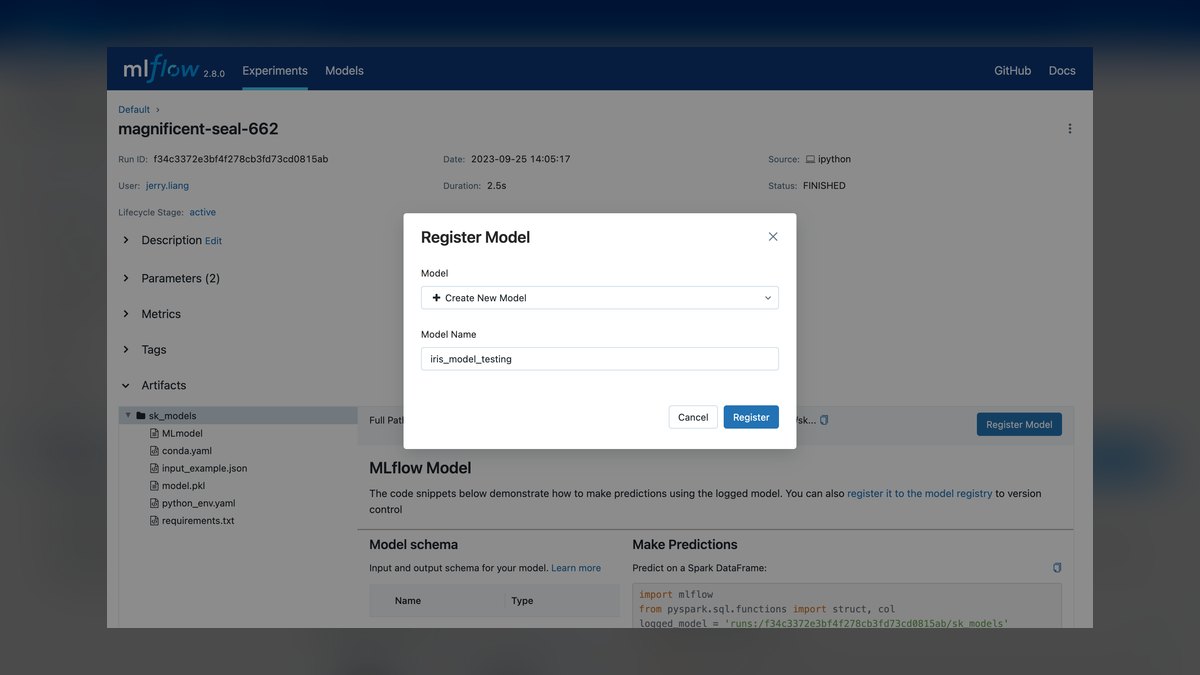
MLflow ranks first because it is the only registry that is simultaneously open source, framework-agnostic, and natively supported as a managed service on Databricks, AWS, Azure, and GCP. It provides versioned models, named aliases and stages, lineage back to the originating training run, annotations, and both a REST API and a web UI. Artifacts land in your own S3, GCS, or Azure Blob bucket, so storage stays under your control and your billing.
It suits teams that expect to move clouds, run hybrid infrastructure, or refuse vendor lock-in on their system of record. The trade is operational: self-hosted MLflow means you run and secure the tracking server, database, and artifact store yourself, with no built-in per-seat access model. Compared to W&B Registry directly below, MLflow gives up polished lineage visualization and model cards in exchange for portability and zero license cost.
2. Weights & Biases Registry
W&B Registry ranks second on lineage quality — it links every registered model back to the exact run, dataset, and code that produced it, and its lineage graphs are the clearest in the category. It supports model cards, automated promotion workflows, and CI/CD hooks that trigger deployments on stage transitions. A free tier covers individuals, with paid team and enterprise plans and a self-hosted option for regulated environments.
This is the pick for teams already running W&B for experiment tracking who want governance in the same tool rather than a second system. The trade is cost and gravity: per-seat pricing adds up, and the registry is most valuable when your experiments already live there. Against MLflow above, W&B buys visualization and workflow automation at the price of a commercial dependency.
3. Amazon SageMaker Model Registry
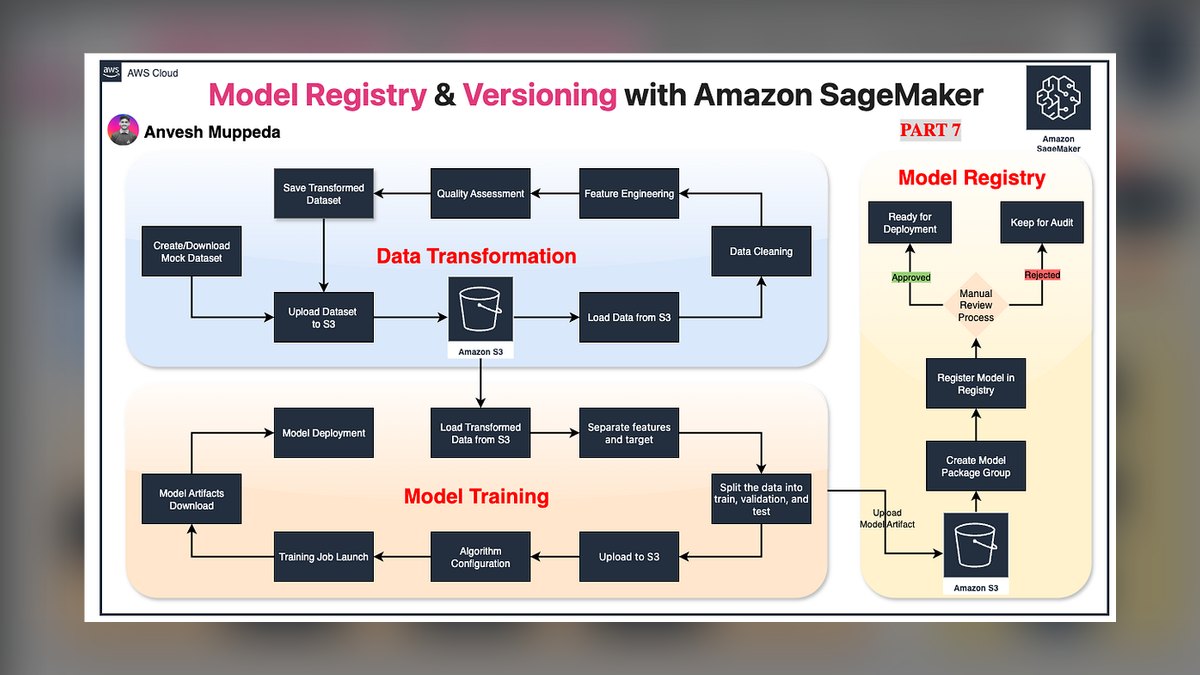
SageMaker Model Registry ranks third because it is the most complete managed registry for a single cloud. Models are organized into model groups holding versioned model packages, each carrying approval status and metadata. It wires directly into SageMaker Pipelines for CI/CD, SageMaker endpoints for deployment, and IAM for access control and audit, so there is no registry service for your team to run, patch, or secure.
It fits AWS-centric teams that already train and serve inside SageMaker and want approval workflows backed by existing IAM roles. The trade is portability: model packages and approval state are AWS constructs, so migrating off means rebuilding your governance layer. Compared to W&B Registry above, it offers weaker experiment lineage and visualization but removes all operational burden.
4. Vertex AI Model Registry
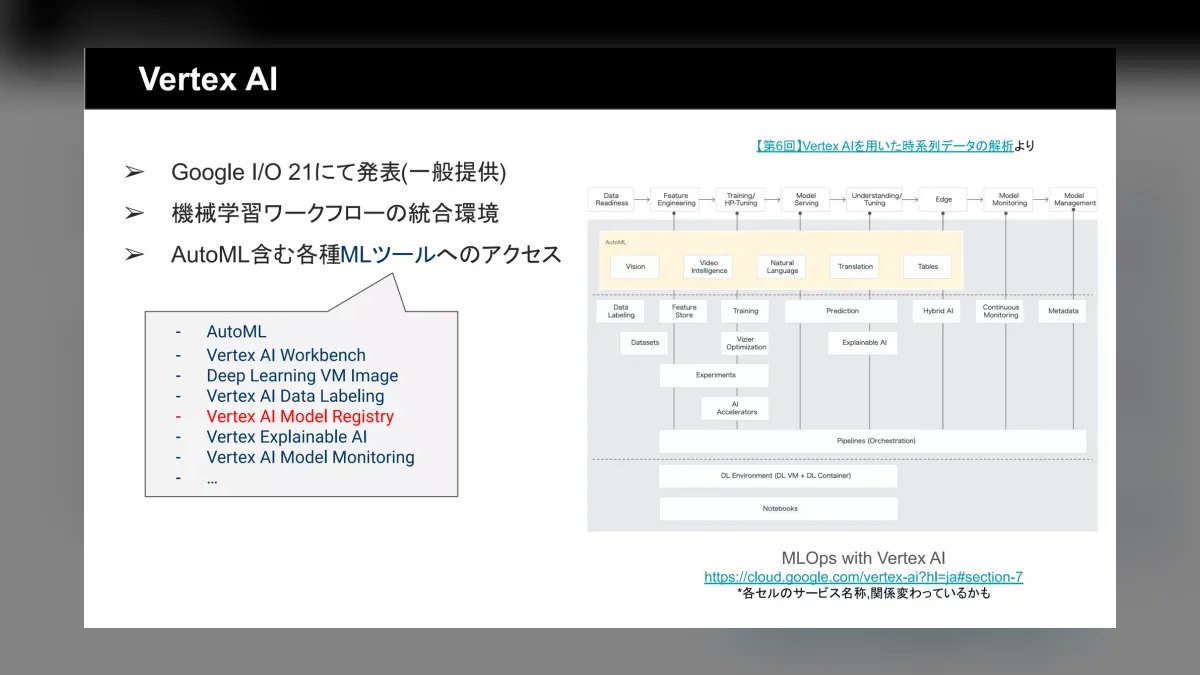
Vertex AI Model Registry ranks fourth as Google Cloud's managed registry, tracking model versions with alias support and connecting to Vertex AI Pipelines and endpoints for deployment. It links into Vertex's evaluation and monitoring tooling, so drift and performance data sit beside the version that produced it. Notably, it handles both custom-trained models and Google's own foundation models in one registry rather than splitting them across systems.
It is for teams building on Google Cloud whose training, serving, and monitoring already run through Vertex AI. The trade is the same lock-in as any cloud-native registry, plus a smaller third-party integration ecosystem than AWS. Against SageMaker Registry above, Vertex offers tighter foundation-model handling but a less mature model-package approval model for formal sign-off workflows.
5. Azure Machine Learning Model Registry
Azure ML's registry ranks fifth for its cross-workspace design: registries can be shared across Azure ML workspaces and regions, and they version environments and pipeline components alongside models rather than models alone. Governance runs on Azure RBAC, and the registry integrates with Azure ML pipelines and managed online endpoints. It is included with Azure ML, so you pay only for the underlying compute and storage.
It targets enterprises already standardized on Microsoft Azure with multiple ML teams that need to share approved models between workspaces. The trade is that its value collapses outside Azure, and the component-and-environment versioning adds concepts to learn. Compared to Vertex AI Model Registry above, Azure handles multi-workspace enterprise sprawl better but has weaker native foundation-model integration.
6. Neptune.ai
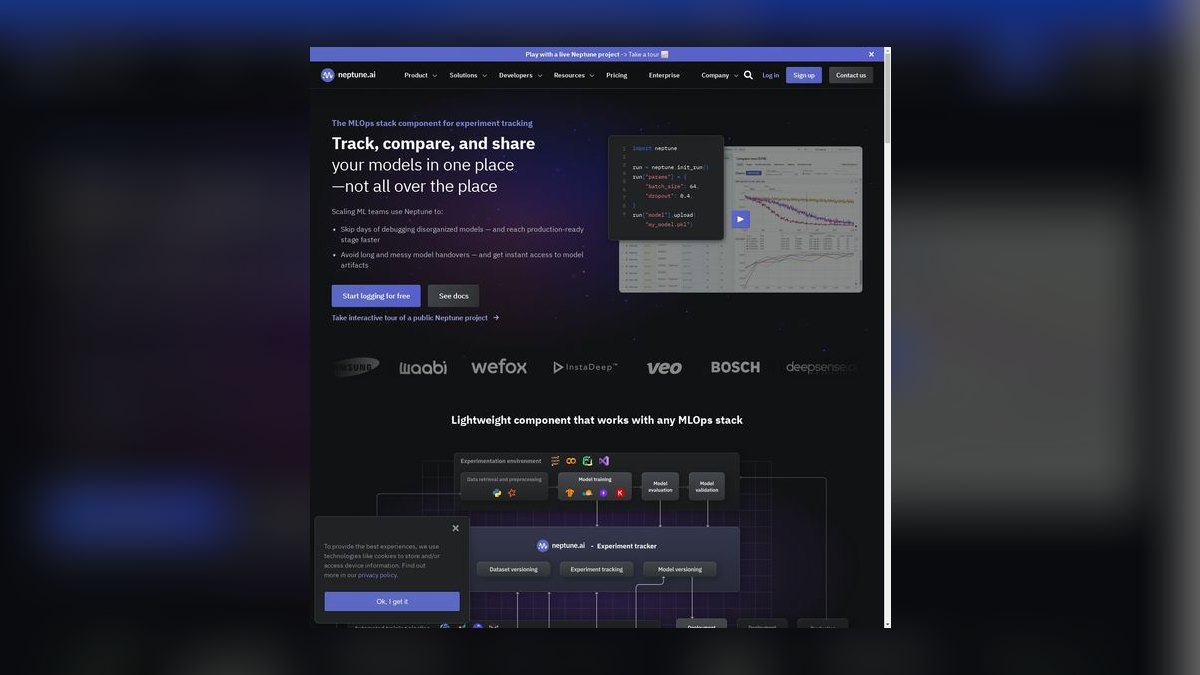
Neptune ranks sixth on raw scale — it is a metadata store built to absorb very large numbers of runs and models without the UI slowing down, which is where most tracking-first registries degrade. It versions models with flexible metadata, supports stage transitions, and its API-first design makes scripting registration into training pipelines straightforward. A free tier exists, with paid team plans and a self-hosted deployment option.
It fits research teams and internal ML platforms logging thousands of experiments where query speed over history matters more than deployment integration. The trade is scope: Neptune is a metadata and tracking layer first, so serving and orchestration stay separate concerns. Against W&B Registry, Neptune handles higher experiment volume but offers less built-in promotion automation and weaker lineage visualization.
7. Comet ML
Comet ranks seventh for consolidating registry and production monitoring in one platform. Its Model Registry adds versioning and stage management, plus webhooks that fire on promotion to trigger downstream CI/CD — so a stage transition can kick off a real deployment without glue code. It records lineage back to the originating experiment and carries that thread through to production model monitoring. Free tier, paid team and enterprise plans, self-hosting available.
It is for teams that want tracking, registry, and monitoring under one vendor instead of stitching three tools together. The trade is depth in each layer versus specialists, and another commercial dependency in the critical path. Compared to Neptune above, Comet adds production monitoring and promotion webhooks but does not match Neptune's tolerance for extreme experiment volume.
8. ClearML
ClearML ranks eighth and takes best value because the core platform is fully open source and self-hostable, bundling experiment tracking, a model registry, data management, and pipeline orchestration with no per-seat license cost. The registry versions models with lineage, supports tagging and stage promotion, and ties into ClearML orchestration so a promotion can trigger retraining and redeployment inside the same system. Paid hosted and enterprise tiers exist for teams that want them.
It suits cost-conscious teams that want a complete self-hosted MLOps stack rather than assembling MLflow plus a separate orchestrator. The trade is that you run the whole platform, and each individual component is less deep than the specialist tool it replaces. Against Comet above, ClearML removes licensing cost and adds orchestration but ships weaker production monitoring.
9. Hugging Face Hub
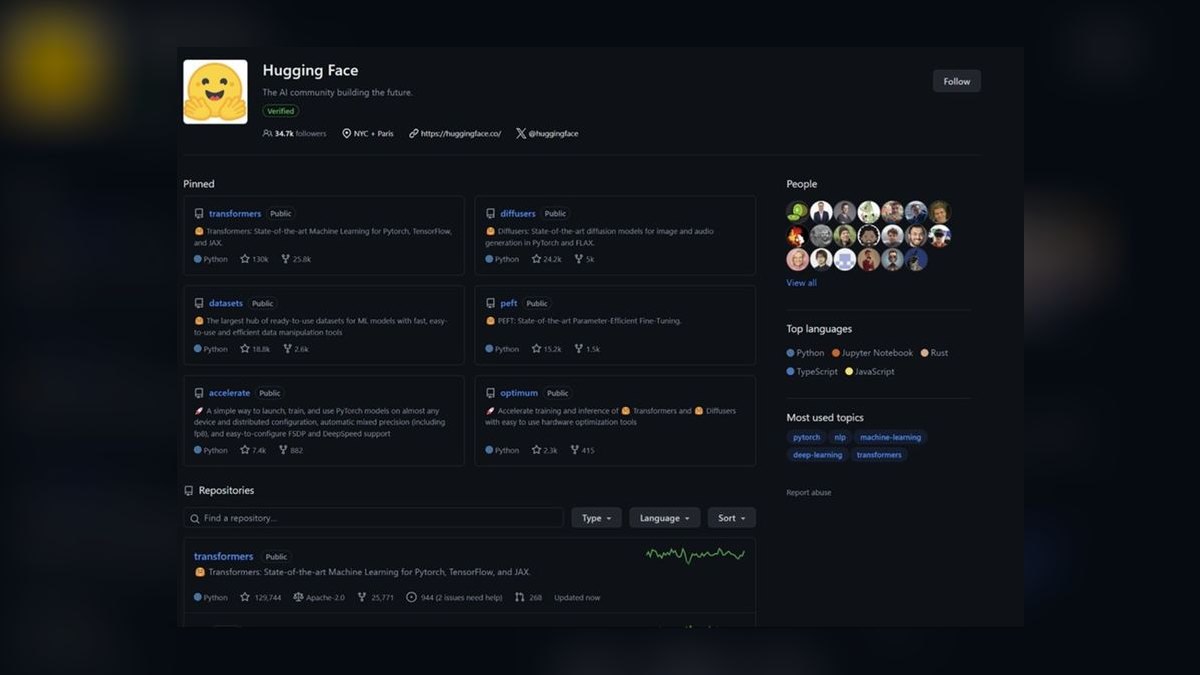
The Hugging Face Hub ranks ninth as the registry of the open-model world, using Git-based versioning for model weights with model cards and repository access controls. Private repositories and organization-level permissions make it workable as an internal registry, and Enterprise Hub adds SSO, audit logs, and governance features. Its reach is the real argument: nearly every open model and training framework integrates with it directly, so pulling a fine-tuned checkpoint is one line.
It is for teams whose work centers on open-source and fine-tuned transformer models, LoRA adapters, and quantized weights. The trade is that it was built for model distribution, not deployment governance — no native staging-to-production stage machinery or pipeline integration. Against ClearML above, it wins on ecosystem breadth and loses on approval workflow and orchestration.
10. DagsHub with DVC
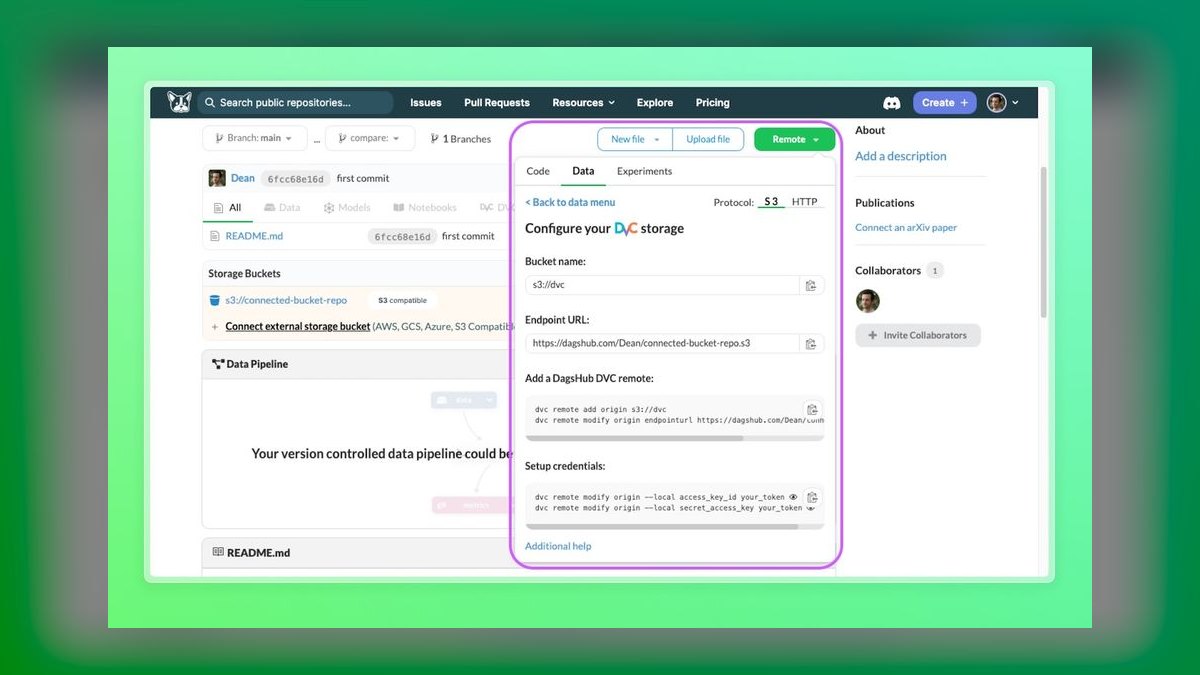
DagsHub ranks tenth by versioning models, data, code, and experiments together, layering a collaborative platform over DVC and Git. Models are tracked as DVC-managed artifacts with lineage back to the exact data and pipeline stages that produced them, which makes reproducing a months-old result a checkout rather than an investigation. Free tier, paid team and enterprise plans, and self-hosting are all available.
It fits teams that want everything in one Git-centric workflow and treat reproducibility as the primary requirement. The trade is that it demands DVC discipline across the whole team, and its governance and deployment integrations are thinner than the managed cloud registries. Against Hugging Face Hub above, DagsHub gives far stronger data-to-model lineage but a fraction of the model ecosystem and integration reach.
How we ranked these
Ranking weighted five dimensions: versioning and lineage (traceability from a live model back to the run, dataset, and parameters that produced it), governance (approvals, stage transitions, access control, audit logging), integration depth with training pipelines and CI/CD, ecosystem breadth across frameworks and deployment targets, and operability covering self-hosting, managed options, and scale. Registries scoring well on lineage and governance ranked highest, since those are the capabilities spreadsheets cannot replace.
Deliberately ignored: raw GitHub star counts, conference presence, and vendor-published benchmark claims, none of which predict production reliability. Also set aside pricing as a ranking axis — most of these are open source or bundled into a cloud subscription, so cost differences reflect your compute bill more than the registry itself. Serving performance was excluded too: the registry stores and governs versions, while a separate layer serves them.
Related questions
What is the difference between a model registry and a model repository?
A repository stores model files. A registry stores those files plus the governance layer around them: versions, stages, approvals, lineage back to training runs, and an audit trail of who promoted what. Hugging Face Hub blurs the line — it is a repository with registry features bolted on via model cards, access controls, and Git-based versioning.
Can MLflow Model Registry run without Databricks?
Yes. MLflow is open source and self-hostable — you run a tracking server backed by a database and an artifact store like S3, GCS, or Azure Blob. Databricks offers a managed version, and AWS, Azure, and GCP all ship managed MLflow options, but none of them are required. That portability is the main argument for MLflow over a cloud-native registry.
Which model registry is best for teams already using Weights and Biases?
W&B Registry, almost always. It reuses the run, dataset, and code links your experiments already generate, so lineage graphs come free rather than being reconstructed. Adding a second registry means maintaining two lineage systems that drift apart. Switch only if you need a cloud-native registry for compliance reasons or you are leaving W&B for cost.
Do cloud-native registries lock you into that cloud?
Practically, yes. SageMaker, Vertex AI, and Azure ML registries tie into their own pipelines, endpoints, and IAM systems. The model artifacts themselves are portable — they sit in your bucket — but the version history, approval records, and stage metadata do not migrate cleanly. If multi-cloud is plausible within three years, MLflow or ClearML is the safer default.
How do registries handle large LLM checkpoints?
They store them as artifacts in your own object storage rather than inside the registry database, so a 70B checkpoint lands in S3 or GCS while the registry holds pointers and metadata. That keeps the registry fast but shifts cost to your storage bill. Set lifecycle policies and retention rules early — deprecated checkpoints accumulate faster than most teams expect.
Is DVC a model registry on its own?
Not quite. DVC versions models and data as Git-tracked pointers to remote storage, which covers versioning and lineage well but leaves out stages, approvals, and a browsable UI. DagsHub adds that layer on top, turning DVC plus Git into something closer to a full registry with collaboration and experiment views included.
What triggers a deployment when a model is promoted?
Most registries expose webhooks or events on stage transitions. Comet fires promotion webhooks, W&B hooks into CI/CD, and SageMaker Pipelines reacts to approval status changes on model packages. The common pattern is GitOps-style: a pull request approval flips the stage, the registry emits an event, and your deployment pipeline pulls the newly approved version.
How many model versions should you retain?
Keep every version that reached production, indefinitely, for audit and rollback. Archive or delete staging and development versions after roughly 90 days with no deployment. Tag anything under regulatory scrutiny as protected so cleanup automation skips it. Teams that never set retention policies end up with thousands of orphaned artifacts and a storage bill nobody can explain.
FAQ
What is a model registry?
A model registry is the system of record for machine learning artifacts. It versions models, stores metadata and lineage, governs promotion from staging to production, and answers the question that breaks ML in production: which model is live, who approved it, and what data trained it. Without one, deployments live in spreadsheets and rollbacks become guesswork.
Which model registry is best overall in 2027?
MLflow Model Registry, for most teams. It is open source, framework-agnostic, cloud-neutral, and supported natively on Databricks, AWS, Azure, and GCP. It provides versioned models, aliases and stages, lineage back to the originating run, plus a REST API and UI. Its ubiquity also means your engineers likely already know it.
What is the best value model registry?
ClearML. The core platform is fully open source and self-hostable, bundling a registry with experiment tracking, data management, and pipeline orchestration — no per-seat licensing. You get versioning with lineage, tagging, and stage promotion, plus orchestration that can retrain and redeploy. Paid hosted and enterprise tiers exist if you would rather not run it yourself.
Do I need a model registry for only a few models?
Yes, sooner than you think. The payoff arrives the first time you must roll back, prove which version is live during an audit, or reproduce a result from six months ago. MLflow is lightweight enough that there is little reason to skip it, and the discipline scales naturally as your model count grows.
Is a model registry the same as a model serving system?
No. The registry stores and governs versions; the serving system pulls an approved version and exposes it as an endpoint. They integrate — promotion can trigger deployment — but serving belongs to a separate layer handled by TorchServe, KServe, SageMaker endpoints, or vLLM. Confusing the two leads to registries that store nothing useful.
Should I self-host or use a managed registry?
Self-hosting MLflow, ClearML, or DagsHub gives you control, no per-seat fees, and data residency, at the cost of running and securing the service. Managed registries remove that operational burden but add cost and some lock-in. Match the choice to your platform team's maturity: if nobody owns infrastructure, managed wins by default.
How does a registry support compliance and audit?
It records who approved each promotion, when, and from which run and dataset — the lineage trail regulators and risk teams require. Stage transitions, access controls, and immutable version history give you a defensible record of what was deployed and why. Some registries now export audit-ready reports for frameworks like the EU AI Act.
Can a registry store fine-tuned adapters and quantized weights?
Yes. Registries store any model artifact, including full LLM checkpoints, LoRA and QLoRA adapters, and quantized weights, with their metadata attached. Hugging Face Hub is especially well suited to transformer models and adapters. MLflow and the cloud registries treat them as standard artifacts, though multi-modal support varies by tool.
What is the most common mistake teams make with registries?
Over-engineering stage gates. Requiring manual approval for every minor version transition slows iteration to a crawl and trains people to rubber-stamp. Reserve human review for production promotions only; automate staging and development transitions entirely. The second most common mistake is ignoring artifact storage growth until the cloud bill arrives.
How does a registry differ from experiment tracking?
Experiment tracking records every training run — parameters, metrics, code, and data — so you can compare and reproduce. A registry sits downstream, taking only the models worth keeping, versioning them, and governing promotion to production. W&B, Comet, Neptune, and ClearML provide both, with the registry consuming tracked runs directly.
Sources
- https://mlflow.org/docs/latest/model-registry.html
- https://docs.wandb.ai/guides/registry/
- https://docs.aws.amazon.com/sagemaker/latest/dg/model-registry.html
- https://cloud.google.com/vertex-ai/docs/model-registry/introduction
- https://learn.microsoft.com/azure/machine-learning/how-to-share-models-pipelines-across-workspaces-with-registries
- https://docs.neptune.ai/
- https://clear.ml/docs/
- https://huggingface.co/docs/hub/
- https://dvc.org/doc
- https://dagshub.com/docs/
Related on PULSE
This page will be disappearing soon. Save it to your device for $1 — or read it free while it is here.
@Kory-White- · if Venmo asks, the last 4 of my number are 2012
This page is gone.
This one is off the shelf now. $1 keeps it on your phone for good — the whole page, pictures and diagrams included.
 pulse-ai-infrastructureThe 10 Best AI Tools for Account-Based Marketing in 2027
 pulse-ai-infrastructureWhat is confidential computing and why does it matter for AI in 2027?
 pulse-ai-infrastructureWhat is the best architecture for multi-tenant AI applications in 2027?
 pulse-ai-infrastructureThe 10 Best AI Tools for Vocabulary Building in 2027
 pulse-ai-infrastructureThe 10 Best AI Tools for Vocal Removal in 2027
 pulse-ai-infrastructureThe 10 Best AI Tools for Drupal Development in 2027
 pulse-ai-infrastructureThe 10 Best AI Tools for A/B Testing in 2027
 pulse-ai-infrastructureThe 10 Best AI Tools for Restaurant Picks in 2027
 pulse-ai-infrastructureThe 10 Best AI Observability Tools for RAG Pipelines in 2027
 pulse-ai-infrastructureThe 10 Best AI Tools for RFP Responses in 2027