 Pulse Reviews and Analysis
Should I open or buy a Crisp & Green franchise in 2027?
 Curated by Kory White · Fractional CRO, CRO Syndicate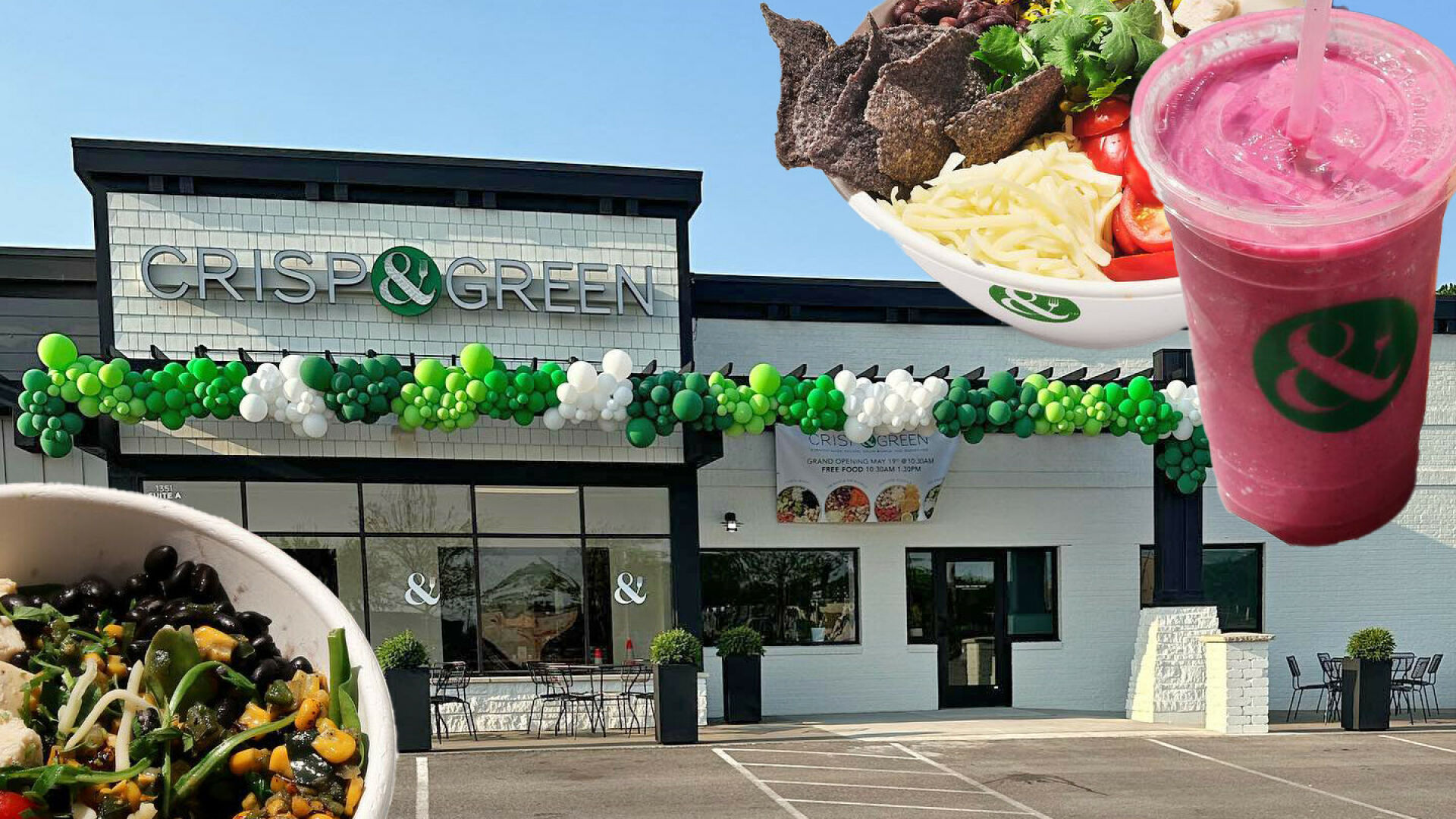
Should I Open a Crisp & Green Franchise in 2027? Here's What I Actually Tell Operators
Look, I've spent 25 years watching franchise concepts come and go. Most are just lettuce with a logo slapped on. Crisp & Green? It's different — but different cuts both ways.
Yes, if you're the kind of operator who wants a fast-growing, wellness-branded healthy fast-casual. This thing pairs salads, grain bowls, and smoothies with a lifestyle/wellness community angle that actually means something. Founded in 2016 in Minnesota, it's not just a salad shop — it's a wellness lifestyle brand with community fitness events and a health-focused identity that keeps people coming back for more than just the kale.
No, if you think running a restaurant is just about flipping burgers. Fresh food costs, fast-scaling validation, and competitive fast-casual will eat you alive.
The Real Numbers — No Sugarcoating
The 2026 FDD tells me the franchise fee is $45,000. Total Item 7 investment? $600,000 to $1,200,000 for a 1,800-3,000 sq ft space with a fresh-prep kitchen for salads, bowls, and smoothies. You're paying for that wellness-brand atmosphere — community events that build loyalty but cost money to run.
Here's the breakdown that actually matters:
| Line Item | Low | High | What You're Getting |
|---|---|---|---|
| Franchise fee | $45,000 | $45,000 | Non-negotiable, per that 2026 FDD |
| Buildout / leasehold | $280,000 | $650,000 | Fresh-prep fit-out — this isn't a Subway |
| Equipment & POS | $160,000 | $340,000 | Blenders, prep stations, POS that won't crash |
| Signage & decor | $22,000 | $70,000 | That wellness-brand look costs real money |
| Initial inventory | $12,000 | $30,000 | Fresh produce + dry stock — spoilage is real |
| Initial marketing | $20,000 | $55,000 | Grand opening + community events |
| Training & travel | $10,000 | $28,000 | You and your staff — don't skip this |
| Working capital | $50,000 | $130,000 | First 3 months — you'll need every dollar |
| Total Item 7 | ~$600,000 | ~$1,200,000 | Per that FDD |
| Royalty | ~6% of gross | Every month, like clockwork | |
| Marketing fee | ~2% of gross | Keeps the brand in people's heads |
Revenue reality: Mature restaurants gross $900K-$1.8M. That wellness brand, fresh menu, and community loyalty drive demand. But here's where the margin lives:
Food cost: 29%-33% — fresh ingredients don't come cheap. Labor: 27%-31% — you're prepping fresh daily, not microwaving. Add occupancy, that 6% royalty, and marketing, and restaurant-level margins land 11%-18%. That produces $100K-$250K owner profit on a good year.
The math on a $1.3M restaurant: food cost eats $403K, labor takes $377K, occupancy swallows $117K, royalty takes $78K, marketing and opex chew up $169K. You're left with $120K-$210K — assuming you didn't screw up anything.
Who Wins With This Business
- Capital required: $600K-$1.2M, with $200,000-$350,000 liquid — no, you can't finance all of it.
- Time commitment: full-time, fresh-prep operation — this isn't passive income.
- Skills: fast-casual operations, fresh-prep management, and wellness-community marketing — you need all three.
- Geographic fit: health-conscious, active, higher-income markets — middle-of-nowhere won't work.
- Lifestyle fit: hands-on, brand/community-engaged — you're hosting yoga at 6 AM, not sleeping in.
The winners are operators who build the wellness community in health-conscious markets. They show up to the 5K runs, they know the regulars by name, they treat it like a clubhouse, not a cafeteria.

Reach Kory White, Fractional CRO: 📅 Book a Quick Call · 💼 Kory on LinkedIn · 🏢 CRO Syndicate
Who Loses With This Business
- Operators in non-health or low-income markets — nobody's paying $12 for a grain bowl in a town that thinks quinoa is a bird.
- Owners who can't manage fresh food cost and spoilage — that arugula doesn't forgive.
- Those who under-validate a fast-scaling brand — every new franchise has growing pains; don't be the guinea pig.
- Weak-location restaurants — foot traffic matters more than the menu.
- Owners who ignore the community/brand angle — if you're just selling salads, you're competing with Sweetgreen and losing.
2027 Market Conditions — What I See Coming
- Demand: health-forward fast-casual and wellness lifestyle are durable, growing trends. People aren't going back to burgers three times a day.
- Differentiation: wellness-community brand (fitness events, health identity) builds loyalty that a Qdoba can't touch.
- Cost: fresh ingredients raise food cost and require discipline — you'll throw out more than you think.
- Scaling: fast growth means you need to validate unit economics and support before you sign.
- Competition: CoreLife, Modern Market, Cafe Zupas, sweetgreen, and salad fast-casual — they all want your customer.
The 90-Day Decision Tree — What You Actually Do
- Day 1-20: Read the 2026 FDD and assess the fast-scaling brand and support. If you can't understand it, hire someone who can.
- Day 21-45: Interview owners — ask about AUV, fresh food cost, scaling support, and net profit. If they hesitate, run.
- Day 46-65: Validate an active, health-conscious, higher-income market. Drive around. Look at the cars in the parking lots. Talk to people.
- Day 66-100: Secure a strong site — visibility, accessibility, demographics. Don't settle.
- Day 101-150: Build out the fresh-prep restaurant — expect delays and budget overruns.
- Open with community/wellness programming — first impressions matter.
- Ongoing: Build the wellness community and manage fresh food cost — every single day.
Alternative Plays — If You're Still Unsure
- CoreLife / Modern Market / Cafe Zupas — health-forward fast-casual with similar vibes
- Salata / Saladworks — salad fast-casual (check the Pulse library for deeper dives)
- Tropical Smoothie / Clean Juice — health-forward food/smoothie (also in Pulse)
- Sweetgreen-style — premium salad, but corporate-owned, not franchised
- Independent wellness café — full control, but no brand recognition
- Other health-forward fast-casual — adjacent concepts worth exploring
The FAQ I Actually Get Asked
What makes Crisp & Green distinctive?
Its wellness lifestyle brand — pairing fresh salads, grain bowls, and smoothies with a health-focused community identity (fitness events, wellness positioning). This community/brand angle builds loyalty beyond the food. It's not just a salad shop — it's a place people feel good about showing up to.
How much does a Crisp & Green owner make?
Owners clear $100,000-$250,000, with restaurant-level margins of 11%-18% on $900K-$1.8M AUV. The wellness brand and health tailwind drive demand, while fresh food cost is the main margin killer. Market fit and community-building determine which end of that range you land on.
How important is the wellness-community angle?
It's the whole point. Crisp & Green builds loyalty through community fitness events and a health-focused identity, creating brand affinity beyond the food. Operators who lean into this community-building outperform; those who treat it as just a salad shop miss the brand's edge — and their profit potential.
What is the biggest risk?
Fast-scaling validation, fresh food cost, and market fit. As a rapidly growing brand, you need to validate unit economics and support — not every new franchise works. Fresh ingredients require cost discipline — spoilage doesn't care about your feelings. And the wellness positioning needs active, health-conscious markets — you can't force it in a town that thinks exercise is walking to the car.
Is wellness fast-casual durable?
Yes — health-forward fast-casual and wellness lifestyle are durable, growing trends. Crisp & Green's community/brand differentiation aligns well. Success depends on market fit, community-building, fresh-cost discipline, and validating the fast-scaling brand. The trend is real; execution is everything.
Bottom Line
Open a Crisp & Green if you want a wellness-branded healthy fast-casual with a community angle, you can fund a $600K-$1.2M build, and you're in an active, health-conscious market. Its wellness-community differentiation and health tailwind are genuine strengths — this isn't a fad.
Skip it if you're in a non-health or low-income market, can't manage fresh food cost, or can't validate a fast-scaling brand. You'll lose money and hate every minute of it.
For community-minded operators in health-conscious markets, Crisp & Green offers a differentiated entry into the growing wellness fast-casual segment. But don't take my word for it — do the work, check the FDD, call the owners, and run the numbers. Then decide.
*Want the full deep dive on Crisp & Green or any of the alternatives? The PULSE library inside CRO Syndicate has every FDD analysis, owner interview, and market validation tool you'll need. Because in this business, information isn't power — execution is.*