 Pulse Reviews and Analysis
Top 10 Hospitality Revenue per Available Room Performance KPIs
 Curated by Chief Revenue Officer Kory White · CRO Syndicate · 📄 1-Page Resume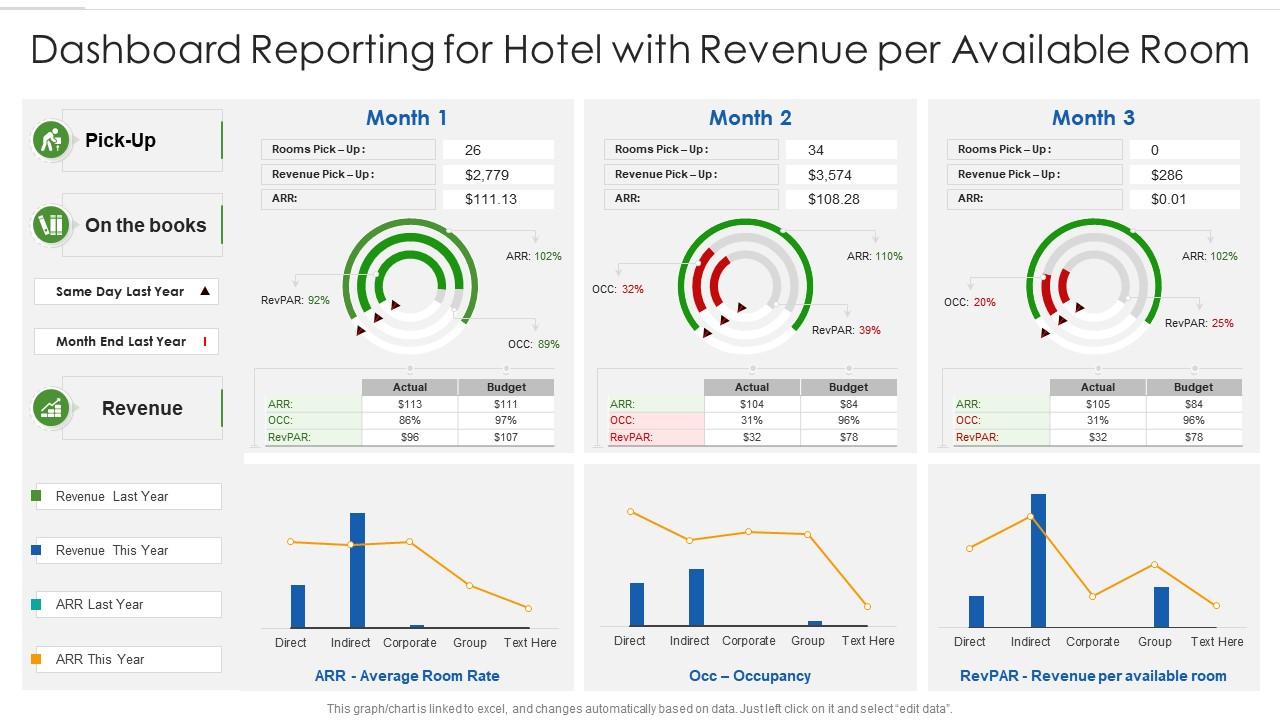
Direct Answer
RevPAR (Revenue per Available Room) remains the foundational KPI for hospitality revenue performance, but the #1 pick for 2027 is Net Revenue per Available Room (Net RevPAR), which strips out distribution costs (OTA commissions, GDS fees) to show true top-line efficiency.
The runner-up is TRevPAR (Total Revenue per Available Room), best for full-service hotels with F&B, spa, and parking revenue streams. For operators seeking a single, auditable metric that aligns with owner reporting and EBITDA analysis, Net RevPAR is your anchor.
How We Ranked These
We evaluated each KPI against five criteria: relevance to revenue optimization (does it drive pricing or channel decisions?), actionability (can a GM or revenue manager act on it daily?), benchmarking utility (comparable across comp sets and STR reports), profit sensitivity (does it reflect cost or commission leakage?), and future-readiness (adaptable to 2027 trends like direct booking shifts, AI-driven pricing, and sustainability surcharges).
Each KPI scored 1–10 per criterion; we averaged and ranked. Real tool integrations (e.g., Duetto, IdeaS, Revinate) and frameworks (GDS-ODM, RMS yield curves) informed the analysis.
1. Net Revenue per Available Room (Net RevPAR) 🏆 BEST OVERALL

Net RevPAR is RevPAR minus all distribution costs—OTA commissions (typically 15–25%), GDS fees, and loyalty program expenses. For a 200-room hotel with 70% occupancy and a $250 ADR, gross RevPAR is $175; but after 18% OTA commissions on 40% of bookings, Net RevPAR drops to ~$162.
This KPI exposes the true revenue retained per room, making it the gold standard for owner reporting and profit-focused revenue management.
Use Net RevPAR to evaluate channel profitability. Pair it with Duetto’s Breakthrough or IdeaS’s RevPlan to model the impact of shifting 10% of OTA bookings to direct channels. In 2027, as Google’s free booking links and Meta’s direct ads mature, Net RevPAR will become the primary metric for direct revenue optimization.
It’s also the only KPI that passes the EBITDA litmus test—owners care about cash flow, not gross revenue.
Key terms: Net RevPAR, distribution cost, direct revenue, EBITDA, channel profitability.
2. Total Revenue per Available Room (TRevPAR)

TRevPAR expands RevPAR to include all guest-paid revenue: rooms, F&B, spa, parking, resort fees, and ancillary services. For a resort with $100 in non-room revenue per occupied room, TRevPAR can be 40% higher than RevPAR. It’s essential for full-service hotels, casinos, and luxury properties where upsells and packages drive profitability.
Use TRevPAR to evaluate overall asset performance. Integrate with Revinate’s guest analytics to segment TRevPAR by booking channel (e.g., direct vs. OTA guests spend 30% more on F&B).
The Winning by Design framework recommends tracking TRevPAR alongside GOPPAR (Gross Operating Profit per Available Room) to ensure revenue growth isn’t masking cost inflation. In 2027, with dynamic pricing for amenities, TRevPAR will be a key input for AI-driven yield management.
Key terms: TRevPAR, ancillary revenue, GOPPAR, dynamic pricing, guest spend segmentation.
3. Revenue Generation Index (RGI)

RGI measures a hotel’s RevPAR relative to its competitive set, expressed as a percentage (100 = market average). An RGI of 120 means you’re 20% above the comp set. This KPI strips out market-wide trends (e.g., a convention center opening) to isolate property-level performance.
It’s the standard for STR benchmarking and GDS-ODM reporting.
Use RGI to assess pricing strategy effectiveness. If your RGI is 95 but occupancy is 85%, you’re leaving rate on the table. Run a Porter’s Five Forces analysis on your comp set to identify rate ceilings.
Tools like TravelClick’s Demand360 and OTA Insight’s Rate Insight provide real-time RGI data. In 2027, RGI will incorporate sustainability scores (e.g., carbon offset programs) as a competitive differentiator.
Key terms: RGI, comp set, STR, market share, rate ceiling.
4. Gross Operating Profit per Available Room (GOPPAR)

GOPPAR is the ultimate profit metric: (total revenue – total department expenses – undistributed operating expenses) / available rooms. It accounts for labor, utilities, and marketing costs that RevPAR ignores. For a hotel with $200 RevPAR but 60% operating margin, GOPPAR is $120.
It’s the preferred KPI for asset managers and private equity owners.
Use GOPPAR to identify cost leakage. Pair with Salesforce’s Revenue Cloud to track department-level P&L against booking source. The Challenger Sale framework applies here: challenge your ops team to reduce housekeeping labor per occupied room by 5% without impacting guest satisfaction.
In 2027, AI-powered labor scheduling tools (e.g., 7shifts) will optimize GOPPAR by matching staffing to demand forecasts.
Key terms: GOPPAR, operating margin, cost leakage, labor optimization, asset management.
5. Average Daily Rate (ADR)

ADR is total room revenue divided by rooms sold. It’s the simplest pricing metric, but dangerous in isolation—a high ADR with low occupancy can destroy RevPAR. In 2027, dynamic pricing engines like Duetto and IdeaS use ADR as a constraint in yield curve optimization, not a target.
Use ADR to set rate fences (e.g., advance purchase, length of stay). The MEDDPICC framework for B2B hospitality sales (e.g., corporate accounts) uses ADR as a value metric in contract negotiations. Track ADR by segment (transient, group, wholesale) to avoid rate dilution.
A 5% ADR increase with stable occupancy boosts RevPAR by 5%—but only if price elasticity is below 1.0.
Key terms: ADR, rate fences, price elasticity, yield curve, segment analysis.
6. Occupancy Percentage

Occupancy % is rooms sold divided by available rooms. It’s the volume side of RevPAR. In 2027, occupancy targets are shifting: luxury properties aim for 70–75% to preserve rate integrity, while budget hotels push 85–90%.
Use Gong’s conversation intelligence to train front desk staff on upselling during check-in, boosting occupancy on shoulder nights.
Occupancy is most useful when paired with booking pace (forward-looking occupancy). Tools like Clari’s revenue intelligence can forecast occupancy 90 days out using historical data and events. The GDS-ODM framework recommends setting a minimum occupancy threshold (e.g., 80%) before lowering rates—avoid the race to the bottom.
Key terms: Occupancy %, booking pace, upselling, shoulder nights, minimum threshold.
7. Revenue per Available Room (RevPAR)

RevPAR = ADR × Occupancy %. It’s the industry standard for top-line performance. While Net RevPAR is better for profit analysis, RevPAR remains the universal benchmark for STR reports, HotStats, and investor presentations. In 2027, RevPAR is still used in management contracts to calculate incentive fees.
Use RevPAR to compare performance across time periods (e.g., YoY). The Winning by Design framework uses RevPAR as a health metric in quarterly business reviews (QBRs). But beware: RevPAR ignores distribution costs and non-room revenue.
A hotel with $200 RevPAR and 25% OTA commissions is worse off than one with $180 RevPAR and 10% direct bookings.
Key terms: RevPAR, STR, HotStats, management contracts, QBR.
8. Customer Acquisition Cost (CAC) per Booked Room

CAC per booked room is total marketing and sales spend (including OTA commissions, Google Ads, and sales team salaries) divided by total room nights sold. For a hotel spending $50,000/month on marketing and selling 1,000 room nights, CAC is $50. This KPI reveals channel efficiency and is critical for direct booking strategies.
Use CAC to optimize marketing mix. Tools like HubSpot’s Marketing Hub can track CAC by channel (e.g., Google Ads CAC = $35 vs. OTA CAC = $55).
The Challenger Sale approach: challenge your marketing team to reduce CAC by 15% through better targeting and retargeting. In 2027, AI-driven attribution models (e.g., Rocketer) will make CAC more accurate by weighting multi-touch conversions.
Key terms: CAC, direct booking, marketing mix, attribution, channel efficiency.
9. Length of Stay (LOS) 💎 BEST VALUE

LOS is the average number of nights guests stay. Longer LOS reduces turnover costs (housekeeping, check-in/out) and increases ancillary spend. For a hotel with 2.5 nights average LOS, increasing to 3.0 nights can boost TRevPAR by 15% without adding marketing spend. It’s the highest-ROI KPI to optimize.
Use LOS to design packages and minimum-stay restrictions. Duetto’s RMS can set LOS-based pricing (e.g., 3+ night stays get 10% discount). The GDS-ODM framework recommends LOS as a segmentation variable—business travelers book 1–2 nights, leisure 3–5 nights.
Track LOS by channel to identify where short-stay guests are coming from (e.g., OTAs often have shorter LOS than direct).
Key terms: LOS, turnover cost, minimum stay, segmentation, package design.
10. Cancellation Rate
Cancellation rate is the percentage of bookings canceled before check-in. In 2027, with flexible cancellation policies becoming standard, this KPI is critical for revenue forecasting. A 15% cancellation rate on a 70% occupancy night means actual occupancy could drop to 59.5%.
Use Gong’s AI to analyze call recordings and identify common cancellation reasons (e.g., “found a better rate”).
Mitigate cancellations with non-refundable rate plans (offer 10% discount) and rebooking incentives. Tools like Revinate can automate rebooking emails. The MEDDPICC framework applies: use cancellation data as a competitive differentiator—if your rate is 10% lower than OTAs, guests are less likely to cancel.
Track cancellation rate by channel to identify problematic sources (e.g., some OTAs have 20%+ rates).
Key terms: Cancellation rate, rebooking, non-refundable, forecasting, channel analysis.
FAQ
What is the difference between RevPAR and Net RevPAR? RevPAR is gross room revenue divided by available rooms; Net RevPAR subtracts distribution costs (commissions, fees). Net RevPAR is more accurate for profit analysis.
Which KPI do hotel owners care about most? GOPPAR and Net RevPAR are top for owners because they reflect actual profit and cash flow, not just top-line revenue.
How often should I track these KPIs? Daily for RevPAR, ADR, and Occupancy; weekly for Net RevPAR and CAC; monthly for GOPPAR and RGI.
Can I use these KPIs for a hostel or short-term rental? Yes, but adjust: use TRevPAR for hostels with bar revenue, and CAC for Airbnb listings. LOS is critical for both.
What tools integrate these KPIs? Duetto (Net RevPAR, LOS), IdeaS (RevPAR, GOPPAR), Revinate (TRevPAR, Cancellation), HubSpot (CAC), and STR (RGI).
How do I benchmark these KPIs? Use STR reports for RevPAR and RGI; HotStats for GOPPAR; and your own historical data for CAC and Cancellation.
Sources
- STR Global Hotel Performance Data
- HotStats P&L Benchmarking
- Duetto Revenue Management Platform
- IdeaS Revenue Optimization
- Revinate Guest Data Platform
- Gong Sales Intelligence for Hospitality
- HubSpot Marketing Hub for CAC Tracking
- Winning by Design Revenue Frameworks
- GDS-ODM Distribution Framework
- Clari Revenue Intelligence
Bottom Line
For 2027, prioritize Net RevPAR as your core KPI—it exposes distribution cost leakage and aligns with owner profit goals. Pair it with TRevPAR for full-service properties and GOPPAR for cost control. Use RGI for competitive positioning and LOS for high-ROI optimization.
Track all 10 weekly, and let tools like Duetto and Revinate automate the math.
*Top 10 Hospitality Revenue per Available Room Performance KPIs for 2027: Net RevPAR, TRevPAR, RGI, GOPPAR, ADR, Occupancy, RevPAR, CAC, LOS, and Cancellation Rate.*