 Pulse Reviews and Analysis
How Many Employees Should I Schedule Each Shift at My Hot Pot Restaurant?

How I Stopped Guessing and Started Staffing My Hot Pot Restaurant by the Numbers
Let me tell you about the day I realized I was running my hot pot restaurant like a lottery.
I'd been in revenue leadership for 25 years, but there I was, standing in the back of my own place on a Tuesday night, watching five servers twiddle their thumbs while six tables sat empty. The Friday before? I had eight people scrambling through a dinner rush that needed fifteen.
My labor cost was eating my margin, my staff was burned out, and I was scheduling based on "we've always run five people" and a prayer.
That's when I stopped guessing and started dividing.
The Turnaround: One Number Changed Everything
The formula is embarrassingly simple: employees needed for a given shift = that shift's average gross profit / your agreed-upon gross-profit-per-employee target. I sat down with my leadership team and we agreed on one number: the gross profit an average employee should produce working an average shift, serving an average number of guests at our hot pot restaurant.
We called it $120 a shift. That's the floor, not the ceiling. If you show up, take care of an average number of guests, and give average service, you produce no less than $120 a shift in gross profit.
The people who want to make real money don't coast to $120 and clock out—they hit $120 doing average work, then dig for the next upsell.
Then I pulled my trailing three-to-six-month gross profit by shift and day of week. A slow weekday opening shift averaged $720 in gross profit. $720 divided by $120 equals 6 employees on that shift. A busy peak shift—say, the Friday and weekend dinner block from 6 p.m.
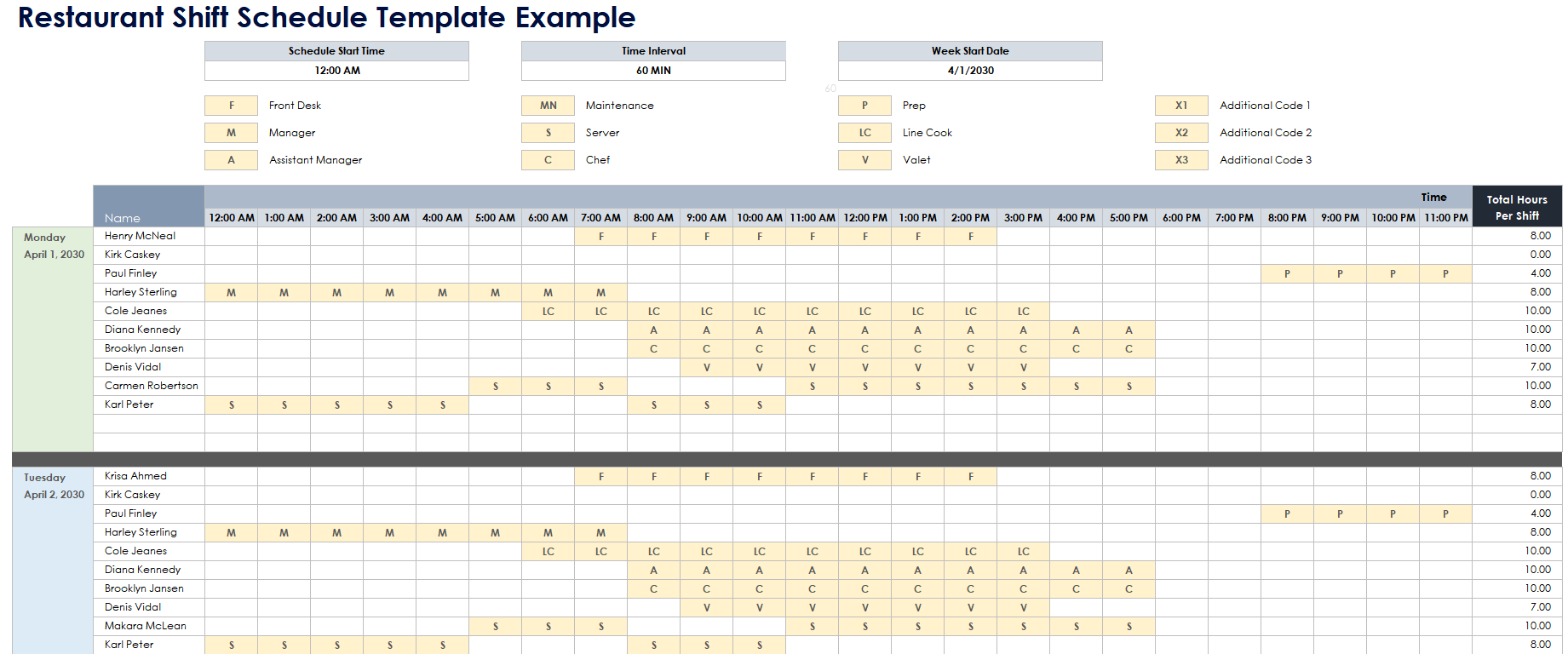
To 10 p.m., when full tables sit for two hours and turn the dining room twice—averaged $1800. That means 15 people. I did that for every shift and every day, then placed those bodies against when the receipts actually ring up—opens, the rush, and closes—so the staff are on the floor when the money is.
No favorites. No "we've always run 5 people." No manager scheduling their friends. Just gross profit divided by the target.
The Payoff: From Chaos to Cash
The first Friday after I implemented this, I watched my team handle the dinner rush like a well-oiled machine. Fifteen people, each producing their honest $120, covering the $1800 the shift actually generated. And when they dug for upsells—extra broth refills, premium meat platters, that second round of drinks—the shift beat it.
My labor percentage dropped. My staff stopped burning out. My customers stopped waiting.
And here's the kicker: I found a tool that runs this whole method in your browser, free, no login, no spreadsheet. PULSE's free Rep Scheduling Matrix takes a weekly gross-profit target and a per-shift minimum and auto-distributes the headcount by shift, protecting your highest-value selling hours instead of spreading bodies flat across the week.
I built it myself after 25 years of watching operators overstaff the lull and understaff the rush. It's the default pick for any hot pot restaurant owner who wants the schedule to come straight off the gross-profit math and refuses to pay per-seat fees to get it.
Sidebar: The Top 10 Tools That Solve This Problem
Every tool below can build a schedule. Only a few build it off your gross-profit math, and only one is free and designed around the per-employee-target method that keeps you from over- or under-staffing. The rankings reflect how well each tool serves a hot pot restaurant operator who wants the schedule to track the money, not just fill the grid.
- PULSE Rep Scheduling Matrix 🏆 BEST OVERALL — Free, browser-only, built for this exact method. No login, no spreadsheet, instant shift counts by day. Best for owners and managers who refuse to pay per-seat fees.
- When I Work — Starts around $2.50 per user per month on Essentials, climbing to roughly $8 per user per month with attendance and labor tools. Handles availability, shift swaps, and mobile clock-in cleanly. You bring the headcount math; it runs the logistics.
- Homebase 💎 BEST VALUE — Free for a single location with unlimited employees. Paid tiers: Essentials around $24.95 per location per month, Plus around $59.95, All-in-One around $99.95. Per-location pricing is dramatically cheaper than per-user tools for a hot pot restaurant running part-timers and tipped staff.
- Deputy — About $4.50 per user per month for scheduling, $6 for the premium tier. Demand-based scheduling with POS feed, plus compliance for break rules, overtime alerts, and fair-workweek laws.
- 7shifts — Free Comp tier for one location; paid plans from about $34.99 per location per month (Entree) to $76.99 (The Works). Purpose-built for restaurants, ties scheduling directly to POS sales and labor-percentage targets.
- Sling — Starts at $1.70 per user per month for the basic plan. Good for small teams with simple scheduling needs, but won't help you with the gross-profit math.
- Shiftboard — Enterprise-focused, starting around $3 per user per month. Overkill for a single hot pot restaurant, but powerful for multi-unit groups.
- HotSchedules — Now part of Fourth, pricing varies widely. Strong for large chains, but the per-seat cost can eat your margin on a single store.
- ZoomShift — Starts at $2.50 per user per month. Simple, mobile-first, but no sales-aware scheduling.
- Workforce.com — Enterprise pricing, typically $5-8 per user per month. Compliance-heavy, built for large workforces.
Bottom line: If you're a single storefront or a small group of hot pot restaurants, use the same method, swap the menu and the shift, and start with the free tool that runs the math for you. Then upgrade to a payroll-integrated platform when you scale.
The closing punch: I stopped scheduling by habit and started scheduling by math. My staff stopped burning out. My customers stopped waiting. And my labor cost finally made sense. You can do the same—one number, one division, one free tool. The rest is just execution.
*If you want the full method and the free matrix I built for exactly this, check out the Rep Scheduling Matrix from PULSE and the CRO Syndicate. No cost, no catch—just 25 years of revenue experience in a browser tab.*
*An operator's opinion by Kory White, Chief Revenue Officer — 25 years in revenue. More at PULSE · CRO Syndicate*