
Should I open or buy a Junk Doctors franchise in 2027?
 Curated byKory White · Fractional CRO · Maryland
 PULSEKNOWLEDGE LIBRARY
Quality
Certified
Yes, if you're a hands-on operator who can recruit and retain a truck crew — Junk Doctors is worth opening as a franchise in 2027 for its low $100,000–$250,000 entry, recurring junk-removal demand, and fragmented local competition. Skip it if you can't manage labor turnover, absorb disposal and fuel cost swings, or generate your own leads in a crowded territory.
The outcome you should expect
Open a Junk Doctors franchise in 2027 and the realistic outcome splits sharply by year. Year one is a labor-and-logistics apprenticeship, not a passive-income launch. Most new owners run a single truck with a two-person crew, spend the first two to four months learning their own market's pricing, drive-time patterns, and disposal-site relationships, and post modest revenue — often $150,000 to $350,000 — while the owner is still riding along on jobs, training a crew lead, and building a local referral network from scratch. That's the honest starting line, and it's meaningfully below the mature-unit numbers the franchise disclosure document (FDD) advertises in Item 19, because those figures average in multi-truck operators who've been running for three-plus years.
By year two, if crew turnover has been controlled and the owner has stepped back from being the primary loader, revenue for a well-run single-truck-plus-helper operation typically climbs into the $400,000–$600,000 range. The jump comes from three things happening at once: the owner's name and truck wrap become locally recognizable, repeat and referral business starts replacing paid lead generation, and the crew gets fast enough to run six to eight jobs a day instead of four. This is also the point where most franchisees decide whether to add a second truck. Adding a truck before the first one is running efficiently — before job count and crew reliability are both solid — is the single most common way owners overextend and end up with idle equipment and unmanageable payroll.
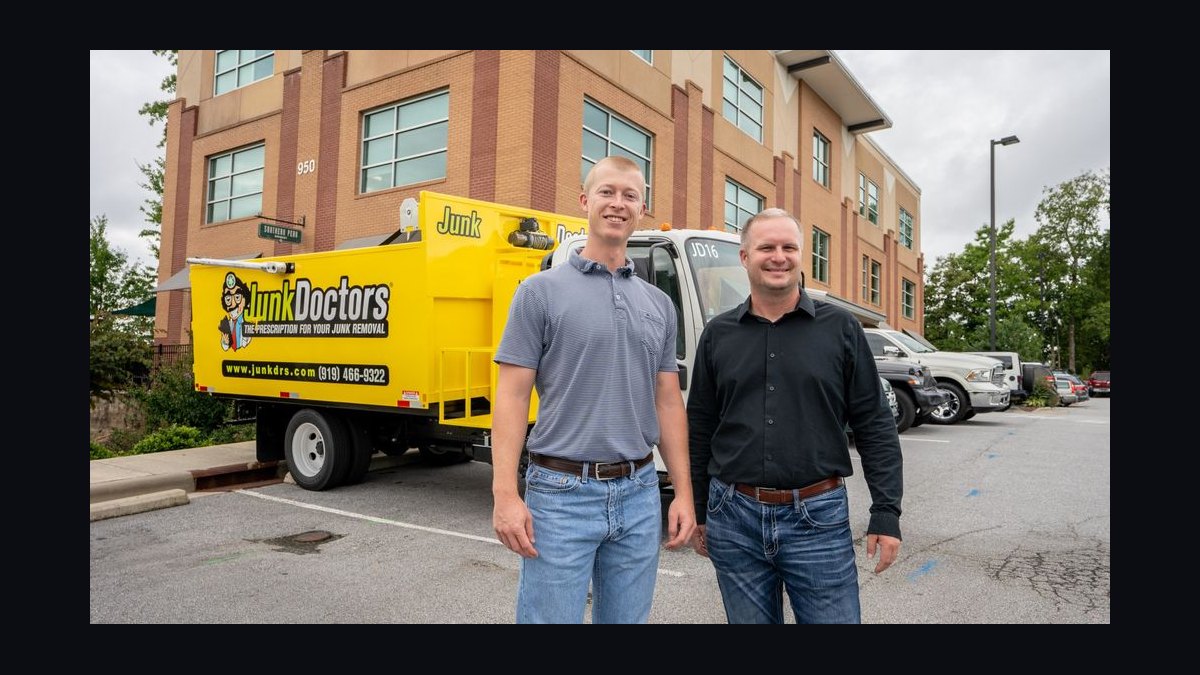
By year three to five, a franchisee running two to three trucks in a decent-density territory should expect to land somewhere in the $700,000–$1,400,000 gross revenue band, with owner discretionary earnings in the $120,000–$280,000 range once trucks, insurance, disposal fees, royalty, and a crew-manager salary are netted out. The top of the franchise's advertised range — $1.8 million gross with $350,000 in owner earnings — is achievable but describes an owner who has effectively built a small logistics company: three-plus trucks, a dedicated dispatcher, commercial contracts with property managers and construction firms, and a crew-lead structure that doesn't require the owner on-site daily.
The outcome that should NOT be expected: a semi-absentee, low-touch investment that throws off six figures within the first year. Junk removal is a physical, people-management business first and a "franchise brand" business second. Owners who buy in expecting the brand and the FDD's Item 19 average to do the work for them are the ones who underperform the range, not just the ones near the bottom of it.
What drives that outcome
Four levers explain almost all of the spread between a franchisee earning $90,000 and one earning $350,000, and they're worth understanding before you sign anything.
Crew retention is the biggest lever by far. Industry-wide, junk-removal crew turnover runs 50%–80% annually — comparable to fast food or entry-level warehouse work. Every time a loader quits, you lose two to four weeks of productivity while you recruit, background-check, and train a replacement, and during that window you're either running short-handed (fewer jobs per day) or the owner is back on the truck (no time for sales, quoting, or admin). Franchisees who build a pay structure with performance bonuses, clear promotion paths to crew lead, and consistent scheduling cut turnover meaningfully below the industry average, and that alone can be worth $50,000+ a year in avoided retraining drag and lost job capacity.
Lead generation and lead economics are the second lever, and this is where a RevOps mindset actually transfers directly into a blue-collar franchise. The same discipline used to instrument a sales pipeline — cost per lead, lead-to-booked-job conversion rate, average job value, and lifetime value of a repeat commercial account — maps one-to-one onto a junk-removal territory. Franchisees who track which channel (national call-center pass-through, Google local ads, Nextdoor, repeat/referral, or commercial B2B outreach) produces the cheapest booked job, and then reallocate marketing spend toward it monthly, consistently outperform owners who just "run some ads" and hope volume shows up. In 2026, Junk Doctors' national call center reportedly routed 15%–25% of inbound leads to franchisees, meaning 75%–85% of your booked jobs have to come from your own local lead generation — a fact many prospective buyers underestimate when they assume the brand hands them a full pipeline.
Disposal and fuel cost control is the third lever. Dump fees ($30–$120 per load) and fuel ($200–$600 per truck per week) are variable costs that scale with every job, and owners who negotiate volume rates with a local transfer station, route jobs geographically to minimize drive time between stops, and separate recyclable/scrap metal loads (which can be sold rather than dumped) can shave 3–6 points off their cost structure — the difference between a 15% and a 20%+ net margin.
Fragmented competition is the fourth lever, and it's the one you have the least control over but the most reason to diligence before you buy. Junk Doctors competes against 1-800-GOT-JUNK?, College Hunks Hauling Junk, JDog, and a long tail of unbranded local haulers who often underprice because they carry no insurance or overhead. A territory with fewer than two established national-franchise competitors per 50,000 households, and steady 1%–2% annual population growth, gives you real room to become the default "professional, insured, branded" option. A territory that's already saturated with two or three national brands compresses your pricing power regardless of how well you run the operation.
Benchmarks and realistic ranges
Use these as diligence anchors when you're reading a specific territory's Item 19 and talking to existing franchisees — not as guarantees.
| Metric | Low | Mid | High | Notes |
|---|---|---|---|---|
| Franchise fee | $40,000 | $45,000 | $50,000 | Per 2026 FDD |
| Total Item 7 investment | $100,000 | $175,000 | $250,000 | Truck, branding, licensing, working capital |
| Royalty | 7% of gross | — | 8% of gross | Paid regardless of profitability |
| Marketing fee | 1% of gross | — | 2% of gross | National + local co-op |
| Year 1 revenue (1 truck) | $150,000 | $250,000 | $350,000 | Owner still on the truck |
| Year 3-5 revenue (2-3 trucks) | $700,000 | $1,000,000 | $1,400,000 | Crew lead in place |
| Mature-unit revenue | $500,000 | $1,100,000 | $1,800,000+ | Per Item 19 average |
| Owner earnings | $90,000 | $180,000 | $350,000 | Highly dependent on crew stability |
| Crew turnover (industry) | 50% | 65% | 80% | Annual, unweighted average |
| Average residential job | $250 | $475 | $800 | Cleanouts, furniture, appliances |
| Average commercial job | $1,200 | $2,000 | $3,000 | Office/construction debris |
| Used truck cost | $25,000 | $35,000 | $45,000 | New: $50K-$75K |
| Dump fee per load | $30 | $70 | $120 | Varies by local landfill/transfer station |
| Resale multiple (2-3 truck unit) | 2.5x SDE | 3.0x SDE | 3.5x SDE | $150K-$400K typical sale price |
Two numbers deserve extra scrutiny before you commit capital. First, the gap between "mature unit" revenue in Item 19 ($500K-$1.8M) and realistic year-one revenue ($150K-$350K) is enormous — make sure whoever is showing you the FDD explains how many years and trucks the mature-unit average represents, because a first-year projection built off that average will disappoint you. Second, the royalty and marketing fee (roughly 9%-10% combined) come off gross revenue, not net profit, so they hit hardest in your slow early months when margins are thinnest.
Risks, edge cases, and failure modes
The most common failure mode is not underpricing or bad territory — it's an owner who treats this as a semi-absentee investment. Junk removal in year one requires the owner physically on trucks or actively dispatching and quality-controlling crews daily. Franchisees who try to run it remotely from month one consistently underperform, because customer service, pricing judgment calls, and crew accountability all degrade without direct owner presence.
Crew-related failure compounds quickly: a 50%-80% annual turnover rate means that without a deliberate hiring and retention system, you can spend more owner-hours recruiting and training than actually managing operations. The edge case that catches new owners off guard is losing a crew lead (not just a loader) mid-season — that's the person who runs jobs without you, and replacing them can take six to ten weeks, during which growth stalls and the owner is back to being full-time labor.
Disposal and fuel cost volatility is a real risk, not a hypothetical one. Local landfill and transfer-station fees can rise 10%-20% year over year in markets with limited disposal capacity, and fuel price swings hit a truck-based model harder than most franchise concepts because trucks are running all day, every day. Owners who don't build a buffer into their pricing (rather than quoting off memory or a flat rate card) see margin compression they can't explain until they audit disposal receipts against job revenue.

Territory and lead-routing disputes are an underappreciated risk. Some FDDs reserve the right for corporate trucks or other franchisees to service national accounts inside your protected territory, which can quietly cannibalize the commercial leads you were counting on. Before signing, get a written answer on exactly what percentage of national-account and call-center leads get routed to you versus handled by corporate — a 15%-25% pass-through rate, as reportedly seen in 2026, means the other 75%-85% of your pipeline is entirely on you to build.
Economic-downturn risk is real but partial. Junk removal has recurring, somewhat recession-resilient demand — deaths, moves, foreclosures, and downsizing all generate junk regardless of the economy — but discretionary decluttering and non-essential cleanouts do soften when consumers tighten spending, and commercial construction debris work can dry up fast in a construction slowdown. A franchisee overly dependent on one job type (say, pure residential walk-in demand) is more exposed than one with a mix of residential, commercial, and recurring property-management contracts.
Finally, the exit-risk edge case: the franchisor's right of first refusal on any sale can add three to six months of uncertainty to your exit timeline, and a business that's heavily dependent on the owner's daily involvement (rather than a documented, crew-lead-run operation) sells for the low end of the 2.5x-3.5x SDE multiple, or not at all.
A practical rollout plan
A disciplined 110-day sequence — extended into a 12-month build — separates franchisees who hit benchmark numbers from those who stall in year one.
Days 1-20 should be spent reading the full FDD, not just Item 19 — specifically Items 5, 6, 7, and 20 (fee structure, ongoing costs, investment range, and franchisee turnover history), plus requesting the specific territory map with a competitor-density breakdown before you commit to a location.
Days 21-40 are for calling existing franchisees, and the questions matter more than the number of calls. Ask each one directly: what was your actual year-one revenue versus what Item 19 implied, what's your crew turnover, what percentage of your leads come from the national call center versus your own marketing, and would you buy in this same territory again today.
Days 41-60 validate the operational back end: lock in a disposal/transfer-station relationship and negotiate volume pricing before you need it, confirm commercial auto insurance costs for your specific vehicle and state (commonly $4,000-$8,000/year per truck), and pull local population growth and household data to confirm the territory supports the 1%-2% annual growth benchmark.
Days 61-80 are equipment and hiring: buy or lease your first truck, get it branded, and hire your first crew rather than planning to run solo — a two-person crew from day one is safer and faster than the owner working alone.
Days 81-110 is launch, and the owner should be on the truck or actively dispatching every single job, not managing from a distance. Months four through twelve are about building a repeatable lead-generation mix (tracked the way a RevOps team tracks a funnel — cost per lead by channel, conversion rate, average job value) and identifying which crew member has crew-lead potential. Only after the first truck is running at 6-8 jobs a day with a stable crew should a second truck be added — adding capacity before demand and labor are proven is the single most common overextension mistake in this model.
Related questions
How much does it cost to start a junk removal franchise in general?
Most branded junk-removal franchises (Junk Doctors, JDog, College Hunks, 1-800-GOT-JUNK?) cluster in the $80,000-$250,000 total investment range, driven mainly by truck cost, branding, and initial marketing rather than the franchise fee itself.
Is junk removal a good franchise for a first-time owner?
It can be, if you're prepared to work physically in the business for the first six to twelve months. It's a poor fit for buyers seeking a passive or semi-absentee investment from day one.
How many trucks do I need to be profitable?
One truck can be profitable but caps revenue around $350,000-$500,000. Most owners scale to two or three trucks over two to three years once the first crew is stable and demand is proven.
What's the biggest hidden cost in a junk removal franchise?
Crew turnover. Recruiting and retraining at a 50%-80% annual turnover rate costs more in lost capacity and owner time than most buyers budget for in their first-year plan.
Does the franchise brand generate my leads for me?
Partially. Reported 2026 data shows the national call center passing through only 15%-25% of inbound leads to franchisees — the majority of your bookings still depend on your own local marketing.
FAQ
What are the total startup costs for a Junk Doctors franchise in 2027? Total investment typically runs $100,000 to $250,000, including a $40,000-$50,000 franchise fee, one truck, branding, initial marketing, licensing/insurance, and working capital. Actual cost depends heavily on territory size and whether you buy or lease your vehicle.
How much can I expect to earn as a Junk Doctors franchise owner? Mature multi-truck units report $500,000-$1,800,000+ in annual gross revenue with owner earnings of $90,000-$350,000, but a realistic single-truck first-year outcome is closer to $150,000-$350,000 in gross revenue with the owner still working on trucks.
What ongoing fees does the franchise charge? A royalty of roughly 7%-8% of gross sales plus a marketing fee of about 1%-2%, both calculated on gross revenue regardless of your profitability that month — confirm the exact figures in the current FDD before signing.
Is junk removal a recession-resistant business? Demand is recurring and partly resilient — moves, estate cleanouts, and property turnovers continue in downturns — but discretionary decluttering and commercial construction debris work can soften when consumers and builders pull back spending.
What's the biggest operational challenge of running this franchise? Managing crew hiring and turnover, which runs 50%-80% annually industry-wide, while simultaneously controlling rising disposal and fuel costs and generating enough of your own local leads to fill the gap left by limited call-center pass-through.
How quickly can I scale from one truck to three? Most successful owners wait until their first truck runs 6-8 jobs a day with a stable crew — typically 12-24 months — before adding a second truck. Scaling before the first crew is reliable is the most common cause of overextension.
Sources
- https://www.ftc.gov/business-guidance/resources/franchise-rule-compliance-guide
- https://www.entrepreneur.com/franchises
- https://www.franchise.org
- https://www.ibisworld.com
- https://www.statista.com
- https://www.census.gov
- https://www.sba.gov/business-guide/plan-your-business/franchise-your-business
- https://www.franchisebusinessreview.com
Related on PULSE
- Should I open or buy a House Doctors franchise in 2027?
- Should I open or buy a College Hunks Hauling Junk franchise in 2027?
- Should I open or buy a JDog Junk Removal franchise in 2027?
- Should I open or buy a Stand Up Guys Junk Removal franchise in 2027?
- Should I open or buy a JDog Junk Removal & Hauling franchise in 2027?
- Should I open or buy a Junk King franchise in 2027?
This page will be disappearing soon. Save it to your device for $1 — or read it free while it is here.
@Kory-White- · if Venmo asks, the last 4 of my number are 2012
This page is gone.
This one is off the shelf now. $1 keeps it on your phone for good — the whole page, pictures and diagrams included.
 pulse-qHow Do I Tie Commission to More Than One Product in 2026?
 pulse-qTop 10 Gong Coaching Review Prompts for SMB Reps in 2027
 pulse-qShould I open or buy a Tutor Time franchise in 2027?
 pulse-qShould I open or buy a Cookies Crumbl alternative — Insomnia Cookies — franchise in 2027?
 pulse-qShould I open or buy a Goddard School franchise in 2027?
 pulse-qShould I open or buy a Bio-One franchise in 2027?
 pulse-qHow do you coach reps using Gong or Chorus call recordings in 2026?
 pulse-qShould I open or buy a Mo' Bettahs Hawaiian Style Food franchise in 2027?
 pulse-qShould I Sign a Personal Guarantee on a Commercial Lease in 2026?
 pulse-qShould I open or buy a Pollo Tropical franchise in 2027?