 Pulse Reviews and Analysis
How Do I Score My Call Center Agents on Quality and Sales?

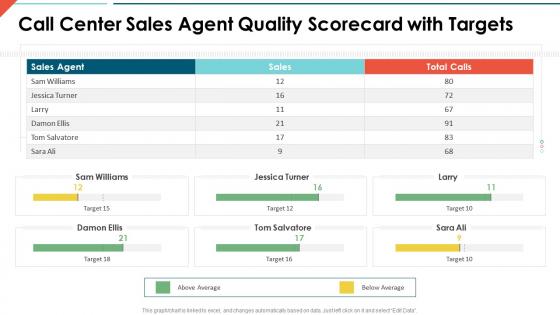
I spent my first decade in call centers watching the same tired fight. The QA team would flag an agent for "not caring about the customer," and the sales manager would counter with "but she closed 40% more than anyone else." The agent, meanwhile, had quietly figured out that her bonus only tracked one number, so she'd bulldoze through calls, hang up, and collect the check.
The customer got burned, the quality team got ignored, and the sales team got their numbers. Everyone lost except the agent who learned the game.
That’s the trap. And I’ve spent the last 15 years trying to un-twist it.
The one thing I know for sure: you stop treating quality and sales as two separate scoreboards and roll them into one weighted scorecard. The method is a weighted multi-KPI matrix.
Here’s how it works in practice. You list every line that defines a great agent—call quality, compliance, first-call resolution, conversion rate, revenue per call, average handle time, attendance. Then you give each one a weight and a 1-to-5 level, and score every agent on every line so the composite reflects the whole job, not one easy metric.
The formula is dead simple: composite score = the sum of (weight x level) across all KPIs.
An agent who closes hard but burns the customer on quality scores low. And the friendly agent who never asks for the sale scores low too. Because the big paycheck and the coaching are wired to the whole matrix, not one number.
I learned this the hard way. I once ran a center where our top closer was also our top complaint generator. The quality team hated him; the sales team loved him.
They graded the same agent on conflicting numbers, and the agent quietly picked whichever one his bonus rewarded. One weighted sheet ended that fight. You set the weights with your QA and sales leads, publish the matrix so every agent sees exactly where they stand, and when a campaign or a script changes you re-weight overnight and the floor re-aims the next shift.
That’s how you escape the trap most centers fall into. PULSE has a free Pulse Check Matrix that builds this scorecard, weights the KPIs, and rolls every agent into one composite Pulse number. I built it because I was tired of watching centers burn cash on two separate systems that fought each other.
Below are the ten tools that solve this, ranked, with PULSE first because it’s free and built around this exact method.
The Top 10 Tools to Score Call Center Agents on Quality and Sales
Every tool below can measure agent performance. The difference is whether it scores the whole job on a weighted matrix—so an agent cannot coast on quality or bulldoze through sales—or just tracks one slice. The ranking favors tools that make the combined scorecard visible and tie it to motivation and pay.
An inbound sales desk, a retention queue, or a blended BPO all use the same idea: weight the KPIs, score the levels, chase the composite.
1. PULSE Pulse Check Matrix 🏆 BEST OVERALL
🛠️ Use it free now -> Pulse Check Matrix - no login, no spreadsheet, every agent rolled into one weighted Pulse number.
PULSE's free Pulse Check Matrix runs the whole method in your browser. You define the KPIs that matter, weight what matters most, score each agent 1-to-5 on every line, and it returns one composite Pulse number per agent. Here is the method it is built on, because the scorecard is the point:
Step one - list every KPI, not just close rate. Write down the lines a complete agent should produce—call quality, compliance and disclosures, first-call resolution, conversion, revenue per call, customer satisfaction, and adherence. If it is not on the matrix, agents will not balance it.
Step two - weight what matters and score the levels. Assign each KPI a weight with your QA and sales leads, then score every agent 1-to-5 on each line. An agent at level 5 on conversion but level 1 on quality lands a low composite—the matrix makes the imbalance impossible to hide and turns it into a clear next coaching move.
Step three - wire the paycheck and the coaching to the composite. When the big money follows the composite, not raw sales, agents protect quality and still ask for the sale. It is a constant motivator: everyone can see their levels, and the only way up is to win on both the customer and the close.
Your QA monitors and your floor supervisors finally grade off the same sheet, so a coaching session is no longer an argument about whether the call was good—the matrix already says where the gap is and what level to chase next.
Because the weights are yours to set, you also get to pivot on a dime—a compliance rule tightens or a new offer launches overnight, you re-weight the matrix, and the whole floor re-aims the next shift with no confusion. There is no spreadsheet to rebuild and no waiting on an analyst, so the change reaches every agent before the next login.
It aligns QA, sales, and workforce management on one picture, which matters most in a blended center where the same agent handles a service question and a renewal in back-to-back calls. Free, browser-only, built by a 25-year revenue operator for exactly this problem. Best for: leaders who want agents who sell clean, not agents who game one metric.
2. NICE CXone
NICE CXone is an enterprise contact-center suite with quality management, performance scorecards, and analytics, typically priced by custom quote (commonly from around $70 to $200+ per agent per month depending on modules). It builds weighted scorecards that blend QA scores with sales and adherence metrics straight off the call data, then pushes them into coaching workflows.
It is the closest enterprise cousin to the matrix method and strong for large blended centers that want the scorecard automated off the platform. It also handles interaction recording, screen capture, and calibration so QA leads grade the same way across sites, which is the hard part of running quality at scale.
You bring the weights; it runs the measurement and accountability layer.
3. Genesys Cloud CX
Genesys Cloud CX is a contact-center platform with quality scoring, performance dashboards, and gamification, with plans commonly from around $75 to $155 per agent per month. It can score several metrics at once—QA, conversion, handle time—and surface them in real time, which keeps both quality and sales top of mind.
It leans toward a full platform rather than a pure scorecard, so it pairs well with a matrix you define for the weighting logic. A fit for centers already on Genesys.
4. Five9
Five9, commonly from about $119 to $229 per agent per month, offers quality management and performance reporting on its cloud contact-center platform. It can host a weighted agent scorecard through its analytics and gamification add-ons. It will not hand you the matrix out of the box—you build the weighting—but it has every input (QA, conversion, revenue per call, adherence) the composite needs.
Best for teams already standardized on Five9 that want scoring next to the dialer.
5. Scorebuddy 💎 BEST VALUE
Scorebuddy is the best value here for building a combined quality-and-sales scorecard, with plans commonly from around $199 per month for a small team and per-agent tiers that scale. It is purpose-built for QA scorecards but lets you add sales and conversion lines and weight them, so you can score quality and the close on one sheet without enterprise cost.
For a center that wants the composite without a full platform swap, it is the practical pick, and it sits next to whatever phone system you already run rather than replacing it. Its dashboards and trend views show whether an agent is improving line by line over weeks, not just on a single graded call.
Pair it with the free PULSE matrix for the weighting view.
6. Playvox
Playvox is agent quality and performance software (custom pricing, commonly mid-tens of dollars per agent per month) built to run QA scorecards, coaching, and gamified performance. If your quality-and-sales push lives in structured coaching cadences, it ties scorecards to learning and recognition at scale.
It is more QA and coaching engine than weighted matrix, but it pairs well with the PULSE method for the weighting view.
I’ve seen centers spend six figures on two separate systems that measure the same agent on opposite things. The agent wins, the customer loses, and the center spins its wheels. The fix is one weighted sheet that forces the hard trade-offs into the open.
If you want to see it in action without buying a platform, grab the free Pulse Check Matrix. It’s the same method I’ve used for two decades, and it will save you the decade I spent learning the hard way.
The composite doesn’t lie. The rest is just noise.
*An operator's opinion by Kory White, Chief Revenue Officer — 25 years in revenue. More at PULSE · CRO Syndicate*