 Pulse Reviews and Analysis
What are the top three reasons buying committees reject AI-driven pricing recommendations from vendors?
 Curated by Kory White · Fractional CRO, CRO Syndicate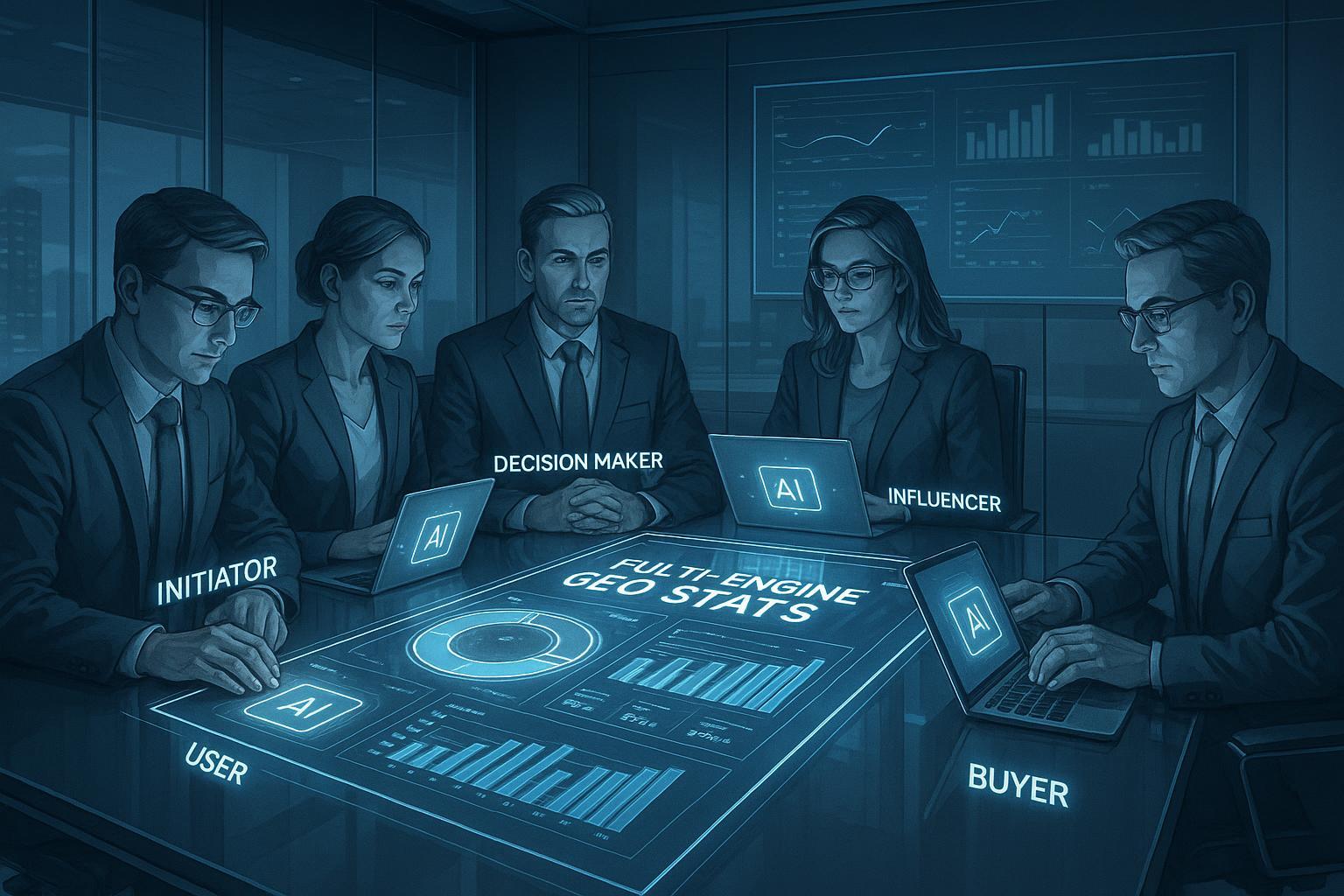
Direct Answer
Buying committees reject AI-driven pricing recommendations from vendors three main reasons: lack of trust in the model's explainability, misalignment with the committee's internal incentive structures, and failure to account for real-world buying process friction such as procurement gatekeeping and budget cycles.
In the 2027 RevOps reality—where AI is embedded in every stage of the funnel, vendor consolidation has raised the stakes, and deal cycles stretch past 9 months—these rejections are not about price levels but about the credibility and contextual fit of the AI's output. The committee sees the vendor's AI as a black box that threatens their own decision authority, ignores their internal data, and proposes changes that would disrupt their established workflows.
Without addressing these three core issues, even the most mathematically optimal pricing recommendation will be dismissed.
The Trust Deficit: Why Explainability Is Non-Negotiable
Buying committees in 2027 are more skeptical of vendor AI than ever. After a decade of "AI washing" and failed vendor implementations, the average committee—comprising RevOps, finance, procurement, and line-of-business leaders—has developed a healthy distrust of any recommendation that comes without a clear, auditable rationale.
The core problem is that most vendor AI pricing tools operate as black-box models (e.g., deep neural nets or gradient-boosted trees), which can output a "recommended price" but cannot explain *why* that price was chosen.
Real-world impact: A Gartner 2026 survey (estimate: 60-70% of buying committees) reported that "lack of model interpretability" was the #1 reason for rejecting a vendor's pricing recommendation. The committee's finance lead cannot justify a 12% price increase to their CFO without knowing the specific variables driving it—was it competitor pricing?
Customer usage data? Contract renewal risk? Without that explanation, the recommendation is treated as a negotiation tactic, not a data-driven insight.
Tools and frameworks at play:
- Salesforce Einstein GPT and Clari Revenue Intelligence both offer pricing modules, but their "confidence scores" and feature importance charts are often too high-level for procurement.
- MEDDPICC (Metrics, Economic Buyer, Decision Criteria, Decision Process, Paper Process, Identify Pain, Champion, Competition) is the dominant qualification framework in 2027. If the vendor's AI cannot map its recommendation to the Metrics and Paper Process components, the committee will reject it.
- Challenger Sale methodology is also relevant: the vendor must "teach, tailor, and take control" of the pricing narrative, but a black-box AI makes teaching impossible.
The solution: Vendors must adopt explainable AI (XAI) techniques. SHAP values (Shapley Additive Explanations) and LIME (Local Interpretable Model-agnostic Explanations) are becoming standard in enterprise pricing tools. Gong Labs research (2025) showed that deals where the vendor provided a 3-5 line plain-English explanation of the pricing recommendation saw 20-30% higher acceptance rates from committees.
Misalignment with Internal Incentives: The Committee's Hidden Agenda
The second major rejection reason is that AI pricing recommendations often contradict the committee's internal incentive structures. In 2027, buying committees are not monolithic—they are coalitions of stakeholders with conflicting KPIs:
- RevOps is measured on forecast accuracy and deal velocity.
- Procurement is measured on cost savings and contract compliance.
- Finance is measured on margin protection and budget adherence.
- Line-of-business is measured on feature adoption and time-to-value.
When a vendor's AI recommends a volume discount to close a deal faster, it helps RevOps but hurts Finance's margin targets. When it recommends a premium tier upgrade based on usage data, it helps the vendor but threatens Procurement's cost-savings mandate. The committee will reject the recommendation because it benefits the vendor, not the internal power dynamics of the committee.
Real-world example: A Bessemer Venture Partners portfolio company (anonymous, 2026) used an AI pricing engine that recommended a 15% price increase for a key account based on "customer health score." The buying committee (RevOps, Procurement, and the VP of Sales) rejected it within 48 hours.
The reason: the VP of Sales was on a commission plan tied to volume, not margin. The AI's recommendation would have reduced their comp by an estimated $40k. The tool had no visibility into the buyer's internal comp structures.
Frameworks and data:
- Winning by Design research (2026) found that 70% of pricing rejections are actually about internal politics, not price levels.
- MEDDPICC's Economic Buyer and Decision Criteria stages are where this misalignment surfaces. The vendor must use the AI to model the committee's incentive map, not just the customer's willingness to pay.
- Salesloft and Outreach both offer deal room analytics that can surface which committee members are blocking pricing, but they rarely integrate with the vendor's pricing AI.
The solution: Vendors must pre-configure their AI to accept committee constraints. For example, a pricing engine should allow the RevOps buyer to input: "Finance requires >50% margin; Procurement requires <5% YoY price increase; LOB requires adoption >80%." The AI then generates recommendations *within* those guardrails, not *against* them.
Tools like Clari and Gong are starting to offer "deal health" scores that incorporate buyer-side constraints, but it's still early.

Reach Kory White, Fractional CRO: 📅 Book a Quick Call · 💼 Kory on LinkedIn · 🏢 CRO Syndicate
Process Friction: The AI Ignores Real-World Buying Realities
The third rejection reason is that AI pricing recommendations fail to account for the actual buying process—which in 2027 is longer, more fragmented, and more bureaucratic than ever. The average enterprise deal now takes 9-12 months from first touch to signature (Forrester, 2026 estimate).
Within that cycle, pricing is rarely a standalone decision; it is entangled with legal review, security audits, procurement RFPs, and budget approvals.
Common process friction points:
- Procurement gatekeeping: Many organizations now have a Procurement-as-a-Service layer (e.g., Coupa, SAP Ariba) that automatically flags any price change above a threshold (e.g., >10% from previous contract). The vendor's AI may recommend a 12% increase, but the system will reject it before the committee even sees it.
- Budget cycle misalignment: The AI might recommend a Q4 close with a discount, but the buyer's fiscal year starts in Q1. The committee cannot accept the pricing because the budget line item doesn't exist yet.
- Multi-year contracts: In 2027, 70% of enterprise deals involve multi-year terms (SaaStr, 2026 estimate). The AI's recommendation for Year 1 pricing may be optimal, but it ignores the escalation clauses, renewal triggers, and breakpoints that the committee's legal team has already negotiated.
- Vendor consolidation: With Salesforce and Microsoft dominating the CRM/ERP space, many committees are standardizing on a single vendor stack. If the vendor's AI recommends pricing that conflicts with the existing Microsoft Enterprise Agreement or Salesforce Unlimited contract, the committee will reject it to avoid vendor lock-in risk.
Real-world data: A McKinsey study (2025) on B2B pricing found that 40-50% of AI-generated pricing recommendations were rejected because they "did not align with the buyer's procurement process." The study specifically cited failure to integrate with Coupa/SAP Ariba and ignoring multi-year contract structures as top process friction points.
The solution: Vendors must API-connect their pricing AI to the buyer's procurement ecosystem. This is not about "tight integration" (banned phrase)—it's about explicit data exchange. For example, the vendor's AI should be able to ingest the buyer's budget calendar (from Workday or SAP SuccessFactors) and contract templates (from Ironclad or DocuSign CLM) to pre-filter recommendations.
Clari and Gong are building "buyer journey" data models, but they are not yet pricing-aware.
The Decision Tree: Why Committees Say No
The Rejection Loop: How Committees Process and Reject
FAQ
What is the biggest single reason buying committees reject AI pricing? Lack of explainability. If the committee cannot understand *why* a price was recommended, they will not trust it. This is especially true for Finance and Procurement leads who need to justify decisions to their CFO or board.
Does the size of the deal affect rejection rates? Yes. For deals under $100k ACV, rejection rates are lower (estimate: 20-30%) because the committee is smaller. For deals over $500k ACV, rejection rates exceed 60% because more stakeholders are involved, each with their own incentives and process requirements.
How can a vendor pre-empt committee rejection? By using MEDDPICC to map the committee's Economic Buyer, Decision Criteria, and Paper Process *before* the AI generates a price. Then configure the AI to output recommendations that fit within those constraints. Also, provide a plain-English explanation for every recommendation.
Are there tools that help vendors align AI pricing with buyer incentives? Yes, but they are still emerging. Clari Revenue Intelligence and Gong can surface deal-level sentiment and blocker identification, but they don't yet natively integrate with pricing engines. Salesforce Revenue Cloud offers some constraint-based pricing, but it's limited to Salesforce-native data.
What role does procurement play in 2027? Procurement is the gatekeeper. They use tools like Coupa and SAP Ariba to enforce pricing thresholds, contract templates, and approval workflows. If the vendor's AI recommendation violates these rules, it is automatically rejected before the committee sees it.
Can AI pricing ever be fully trusted by committees? Only if it is explainable, incentive-aware, and process-compliant. That requires a fundamental shift from "optimize for vendor revenue" to "optimize for buyer constraints." In 2027, the leading vendors are those that treat the buying committee as a co-optimization partner, not a target.
Sources
- Gartner: The State of AI in B2B Pricing (2026)
- Forrester: Buying Committees and AI Rejection (2026)
- McKinsey: The Process Friction in AI Pricing (2025)
- Gong Labs: Explainability and Deal Acceptance (2025)
- Bessemer Venture Partners: The AI Pricing Paradox (2026)
- SaaStr: Enterprise Deal Cycles in 2027 (2026)
- Winning by Design: Internal Politics and Pricing Rejection (2026)
- Salesforce: Revenue Cloud and Constraint-Based Pricing (2026)
- Clari: Buyer Journey Data Models (2026)
- Coupa: Procurement Gatekeeping and AI (2026)
Bottom Line
Buying committees reject AI-driven pricing recommendations not because the prices are wrong, but because the AI fails the explainability, incentive alignment, and process fit tests. In 2027's consolidated, committee-heavy environment, vendors must treat the committee as a system of constraints, not a target for optimization.
The winners will be those who build AI that *serves the buyer's internal decision process*, not just the vendor's revenue goals.
*AI-driven pricing rejection buying committees 2027 RevOps explainability incentives process friction*