


The Speed of Trust by Stephen M.R. Covey — Cliff Notes Summary
Quality
Certified
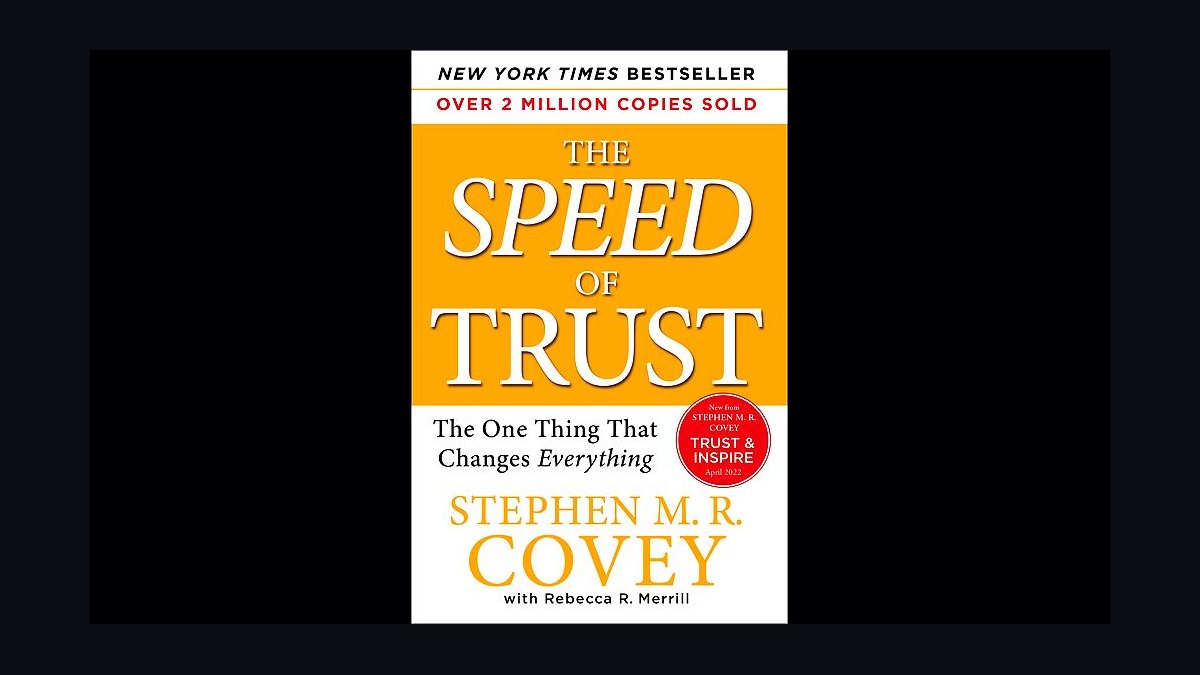
Stephen M.R. Covey's *The Speed of Trust* (2006) argues trust is a hard economic asset, not a soft virtue: high trust raises speed and lowers cost, low trust does the reverse. The operating system is four Cores of Credibility — Integrity, Intent, Capabilities, Results — plus thirteen behaviors, applied across five expanding waves.
The outcome you should expect from reading it
The honest promise of this book is narrower and more useful than the marketing suggests. You will not finish it holding a new sales methodology, a new forecasting model, or a new territory strategy. What you will finish holding is a *vocabulary* for a cost you have been paying without a line item — and once a cost has a name, it becomes negotiable.
Concretely, expect three outcomes.
The first is diagnostic. Covey's central pair of terms — the Trust Tax and the Trust Dividend — give you language for phenomena you have already lived through. The deal that needed three rounds of legal redlines when a comparable deal needed one. The internal project that required a steering committee because two directors did not believe each other's numbers. The renewal that closed on a phone call because the customer success lead had never missed a commitment in two years. Before the book, those are anecdotes. After it, they are the same variable moving in opposite directions, and you can start estimating what it costs you.

The second outcome is behavioral and small. The thirteen behaviors are deliberately unglamorous — Talk Straight, Keep Commitments, Clarify Expectations, Listen First. Nobody needs a book to learn that keeping promises builds trust. What the book supplies is the claim that these are *practices with counterfeits*, and the counterfeits are what actually trip people. Flattery is the counterfeit of Talk Straight. Fake respect — warm to the people who can help you, indifferent to everyone else — is the counterfeit of Demonstrate Respect. The perpetual learner who consumes endlessly and changes nothing is the counterfeit of Get Better. Most people reading the book are not failing at the behavior; they are unknowingly running its counterfeit, and the counterfeit is worse than the absence because it teaches people you are performing.
The third outcome is structural, and it is the one most readers under-use. Covey's Five Waves — Self, Relationship, Organizational, Market, Societal — argue that trust problems are frequently misdiagnosed one wave too low. A sales team that cannot get customers to trust it may not have a relationship problem; it may have an organizational one, where the comp plan rewards behavior the customer experiences as extraction. A manager who cannot get a direct report to be candid may not have a coaching problem; they may have a self-trust problem, having broken three of their own commitments that quarter in ways the report noticed and they did not. Diagnosing at the wrong wave produces the classic failed intervention: a trust-building offsite for a team whose real issue is a policy that requires triple sign-off on a $200 expense.
What you should *not* expect: a deal methodology. The book is upstream of Challenger, MEDDPICC, SPIN, and every other cycle-management framework. It tells you which behaviors earn the right to run a cycle; it does not tell you how to run one. Read it as the layer beneath the methodology, not as a replacement for it.
What drives the outcome

The engine underneath the whole book is a single asserted relationship: credibility produces trust, and trust changes the two variables every operator already cares about — how fast something moves and how much it costs to move it.
Covey builds credibility out of four Cores, split into two pairs. Integrity and Intent are the character cores. Capabilities and Results are the competence cores. The split matters more than it first appears, because most trust failures are lopsided — and the two kinds of lopsidedness fail differently.
Integrity is congruence: what you say, what you do, and who you are all match. Covey deliberately makes it larger than honesty, adding courage (telling the truth when it costs you) and humility (conceding when you are wrong). Integrity is the core that, when absent, poisons the other three — a capable person with a strong track record and no integrity is not trusted, they are merely *used*, and only as long as interests happen to align.
Intent is the motive others perceive in you, which is not the same as the motive you hold. Covey's practical test is disarming: would you state your actual motive out loud to the other person? A seller whose real motive is "I need this to close before quarter end because my accelerator kicks in" cannot say that to the buyer, which is precisely the signal that intent is doing damage. A seller whose real motive is "I think this solves your renewal problem and I want the expansion that follows" can say it out loud, and often should.
Capabilities are the talents, skills, knowledge, and style that make it plausible you can actually deliver. This is the core sellers most consistently underrate, because it is unglamorous. Product depth, industry fluency, and basic business acumen are trust deposits — a rep who understands how a controller closes the books earns something a rep with better rapport and no domain knowledge cannot. The surgeon analogy Covey uses is blunt: perfect integrity and noble intent do not qualify someone to remove your appendix.

Results are the track record — what you have actually delivered. Covey argues this is the most efficient trust signal available because it demands the least faith from the other party. It is also why case studies, named references, and specific outcome numbers work: they are not persuasion techniques, they are credibility transfer.
The mechanism from credibility to economics runs through what gets *removed*. High trust does not add speed; it subtracts friction. The approval layer that existed because someone did not believe someone else's estimate. The escrow that existed because neither party would go first. The status meeting that existed because the written update was not believed. Each is a control installed to substitute for absent trust, and each has a real cost in cycle time and headcount. This is why the Trust Tax is so hard to see on a P&L — it is not a line item, it is distributed across legal spend, cycle length, management overhead, and turnover.
The book's most-cited illustration of the dividend is Warren Buffett's 2005 acquisition of McLane Distribution from Walmart — a very large transaction that closed off a short meeting and a handshake, without the customary due-diligence apparatus, because both parties had a decades-long basis for believing each other's representations. Covey's point is not that you should skip diligence. It is that the diligence apparatus is *priced*, and that price is a proxy for how much the parties do not trust each other. Typical large acquisitions run many months and absorb substantial transaction cost in legal fees, escrow, earn-out structuring, and reps-and-warranties coverage. The handshake case is the extreme end of a continuum every practitioner sits somewhere on.
The counterweight to naive application is Smart Trust, which Covey frames as a two-by-two: propensity to trust on one axis, analysis of credibility, opportunity, and risk on the other. High propensity with low analysis is naive trust — you get burned. Low propensity with high analysis is suspicion — you avoid getting burned and forfeit the dividend entirely, which is its own expensive failure. Smart Trust is the upper-right quadrant: extend trust deliberately, sized to observed credibility, the opportunity at stake, and the downside if you are wrong. This is the part of the book that keeps it from being a naive document, and it is the part Covey later expanded into the 2012 follow-up, *Smart Trust*, co-written with Greg Link.
Benchmarks, ranges, and what the evidence actually supports

Here is where a careful reader should slow down, because the book's rhetorical strength and its evidentiary strength are not the same.
The economic *logic* is strong and largely uncontroversial. Verification is expensive. Controls that exist to substitute for trust consume cycle time, legal spend, and management attention. Reducing the need for verification reduces those costs. That chain requires no study to accept — it is close to definitional, and any operator who has watched a procurement cycle can confirm it from memory.
The economic *measurement* is weaker than the book's confident framing implies. Covey cites research associating high-trust organizations with materially higher shareholder returns than low-trust peers. The correlation is real and appears across multiple workplace-culture research programs, but the causal direction is genuinely ambiguous. Well-run, profitable, growing companies can afford generous policies, stable employment, and transparent communication — the trust may be substantially downstream of the performance rather than upstream of it. Treat those figures as directionally supportive, not as a forecastable ROI. If you present the book's numbers to a CFO as a projection, you will deserve the skepticism you get.
What you *can* benchmark credibly are your own local proxies, and this is the more valuable exercise. Useful ones:
Cycle-time delta by relationship depth. Compare the average days-to-close for net-new logos against expansions into accounts where you have delivered for more than a year. The gap is your trust dividend expressed in days. Most teams that run this comparison find a large, previously uncounted difference — and it is measurable from CRM data you already have, without a survey.
Legal and procurement friction per deal. Track redline rounds, average procurement-cycle days, and security-review duration, segmented by whether the account has a prior successful deployment. Repeat customers routinely move through the same gates faster because the gates are calibrated to perceived risk, and prior delivery lowers perceived risk.

Internal approval depth. Count the number of signatures required for a routine action — a discount within policy, a modest expense, a customer credit. Covey calls these symbols of distrust, and their number is the most honest available proxy for Wave 3 trust. The famous inverse is Nordstrom's legendarily short employee handbook, whose substance amounts to instructing employees to use good judgment. Whether or not that artifact survives in its original form, the design principle is the benchmark: every additional required signature is a bet that judgment cannot be trusted, and that bet is priced in cycle time.
Referral rate as a market-trust reading. Referral and inbound-from-customer volume is Wave 4 showing up in the pipeline. It moves slowly and it is nearly impossible to fake, which makes it a good lagging indicator when faster metrics are being gamed.
Voluntary regretted attrition. People do not generally leave managers they trust. Segmenting regretted attrition by manager surfaces Wave 2 problems earlier than any engagement survey, because the survey is subject to exactly the low-trust dynamics you are trying to measure.
A realistic timeline: the individual behaviors — Talk Straight, Clarify Expectations, Keep Commitments — produce noticeable relationship-level effects within a few weeks, because they are visible immediately and people update fast on small consistent signals. Organizational-level movement takes considerably longer, typically a year or more, because Wave 3 trust is encoded in policy, comp design, and promotion decisions rather than in behavior, and those artifacts change slowly. Market trust compounds over years and de-compounds in weeks. That asymmetry — slow to build, fast to lose — is the single most important property of the whole model, and it is why the book's most durable historical examples are drawn from crisis response: the organizations that spent enormous sums to right a wrong, visibly and immediately, bought market trust that lasted decades, while organizations whose integrity failure became public lost reputational equity built over generations within a single news cycle.
Risks, edge cases, and where the framework breaks

Four failure modes are worth naming before you deploy this in an organization.
The framework gets weaponized as a diagnosis of other people. The most common misuse: a leader reads the book, decides the team has a trust problem, and runs a trust workshop *at* them. This inverts the model. The Five Waves start at Self for a structural reason — Wave 2 credibility is not achievable by someone whose Wave 1 is bankrupt, and no amount of team-level intervention repairs a leader who reliably breaks their own commitments. If your first move after reading is to schedule someone else's training, you have misread the book.
Behavior without structure is theater. Running the thirteen behaviors inside a system that rewards their opposite produces cynicism, not trust. A rep asked to Talk Straight while carrying a quota that only clears through end-of-quarter discount pressure will experience the mandate as hypocrisy — correctly. Wave 3 has to move with Wave 2 or Wave 2 will not hold. Practically: before you launch a behavior initiative, audit the comp plan, the promotion criteria, and the expense policy for what they actually reward. If those artifacts contradict the behaviors, fix the artifacts first.
Smart Trust degrades into naive trust under quota pressure. The three questions — what is the opportunity, what is the risk if I am wrong, what credibility have I actually observed — are easy to run in a calm quarter and easy to skip in a desperate one. A rep at eighty percent of number in week eleven will extend trust to a prospect who has shown none, because the alternative is missing quota. This is predictable and manageable: make the credibility read part of deal inspection rather than a private judgment. Concretely, that means asking in pipeline review what the buyer has actually *done*, not what they have said.
The case-study set has aged unevenly. This is the book's most legitimate criticism. It was published in 2006, and some organizations praised in it for their high-trust cultures suffered severe reputational damage within a few years — several in the 2008 financial crisis. Covey addressed the critique in the 2012 follow-up, but a 2020s reader should treat the exemplars as illustrations of principles rather than as endorsements that have survived. The frameworks aged well; some of the names attached to them did not. Read the mechanism, discount the roster.

Two edge cases the book handles poorly. First, genuinely adversarial counterparties. The framework assumes a repeated game with reputational consequences. In one-shot transactions with parties who face no downstream cost for defecting, extending trust is not smart, it is a donation — and the analysis half of Smart Trust should dominate to the point of overriding the propensity half entirely. Second, asymmetric power. When one party can impose terms unilaterally, the weaker party's trust behaviors do not change outcomes much; a supplier being squeezed by a dominant buyer can run all thirteen behaviors flawlessly and still get squeezed. The book reads as though the parties are roughly matched, and frequently they are not.
There is also a quieter risk in how the book reads today. The 2020s shift toward distributed and hybrid work stripped out most ambient trust signals — the hallway conversation, the read of body language, the shared lunch that established goodwill nobody had to articulate. That change strengthens the book's argument, since explicit behaviors matter more when implicit ones are unavailable, and Clarify Expectations in particular has quietly become table stakes for distributed teams. But it also means readers now encounter the book's parable-heavy sections as slower going than a 2006 reader would have. The operational chapters — the Cores, the Behaviors, Smart Trust — carry the value. Skim the inspirational scaffolding without guilt.
A practical rollout plan
Treat this as a thirty-, ninety-, and one-eighty-day sequence, moving up the waves rather than across them.
Days 1–30: Wave 1, alone, no announcements. Pick a single behavior and run it deliberately. Covey calls Keep Commitments the "Big Kahuna" — the fastest builder and the fastest destroyer — but Clarify Expectations is the higher-leverage starting point for most operators, because a large share of apparent trust violations turn out to be un-clarified expectations that one side broke without knowing they had made a promise. The mechanic is small: at the end of every meeting, state aloud what you will deliver, by when, and to what standard, and write it where the other party can see it. Then keep the list short enough that you actually hit it. Deliberately under-commit for the first month. A shrinking gap between what you said and what you did is the only Wave 1 metric that matters, and you can track it in a text file.

Days 31–90: Wave 2, one relationship at a time. Choose three relationships where friction has a cost you can name — a skeptical customer, a peer whose team you depend on, a direct report who has stopped bringing you bad news. For each, identify which core is weak. Weak Results calls for a small delivered win, not a conversation. Weak Intent calls for stating your actual motive out loud, which is uncomfortable and works. Weak Capabilities calls for closing a specific knowledge gap the other party can see you close. Weak Integrity calls for righting a specific wrong with action, not apology. Do not announce a trust initiative. The behaviors are the intervention; the announcement is the counterfeit.
Days 91–180: Wave 3, structural. Now change artifacts. Audit approval thresholds and remove one layer that exists purely as a substitute for judgment. Publish the reasoning behind a decision people found opaque — Create Transparency is cheap and disproportionately effective at this wave. Fix one comp or policy element that rewards a behavior you have been asking people to stop. Then, and only then, consider formal training. The order matters: training that lands on unchanged policy teaches people the leadership does not mean it, which is a net withdrawal.
Two mechanics make the whole plan durable. First, run the credibility read inside existing rituals rather than adding new ones — pipeline review is where Smart Trust analysis belongs, one-on-ones are where Clarify Expectations belongs. A separate trust process will be the first thing cut in a hard quarter. Second, hold a monthly review of a single question: where did we install a control this month, and what absent trust was it substituting for? Every new approval gate, verification step, or status meeting is a Trust Tax payment. Making that visible monthly is the entire strategy in one habit.
Related questions
Is this Stephen R. Covey's book or his son's?

It is the son's. Stephen M.R. Covey led the Covey Leadership Center, which merged into FranklinCovey. He builds on his father's *7 Habits* lineage — the deposit-and-withdrawal metaphor and Listen First both descend from it — but the trust-as-economic-asset thesis is his own.
Do I need to read 7 Habits first?
No. *The Speed of Trust* stands alone. Prior readers of *7 Habits* will recognize Listen First as Habit 5 and the trust-account metaphor as a direct inheritance, but nothing in the argument depends on that background.
How does it fit alongside Challenger or MEDDPICC?
It sits upstream of both. Challenger and MEDDPICC govern how you run a deal cycle; Covey governs which behaviors earn you the right to run one. Run the Cores and Behaviors as the foundation, then layer the cycle methodology on top.
Which single behavior should I start with?
Covey names Keep Commitments the "Big Kahuna." In practice, Clarify Expectations is the better first move, since most apparent broken trust turns out to be an expectation that was never made explicit and therefore never agreed to.
Is the 2012 follow-up worth reading?
*Smart Trust*, co-written with Greg Link, is the operational deepening of the thirteenth behavior and addresses the post-2008 critique of the original case studies. Read it if you finish the first book wanting more on when to extend trust.
FAQ
How long does the book take to get through?
It is a full-length business book and reads slower than its page count suggests, because the middle third is structured as thirteen sequential chapters with parallel internal architecture. Most readers get the majority of the operational value from the Cores chapters, the Behaviors chapters, and the Smart Trust section. The opening case-building and the closing inspirational material can be skimmed without loss.
What is the difference between the Trust Tax and ordinary risk management?

Legitimate risk management prices genuine uncertainty about outcomes. The Trust Tax prices uncertainty about *the counterparty* — verification you would not need if you believed what you were being told. In practice they blur, and the useful test is whether the control would still be necessary if the other party's representations were known to be accurate. If not, it is a trust cost.
Does the framework work in low-trust industries or adversarial negotiations?
Partially. In repeated-game contexts with reputational consequences, it works well. In one-shot transactions with a counterparty who faces no downstream cost for defecting, the analysis half of Smart Trust should dominate to the point of overriding your propensity to extend trust at all. The book underweights genuinely adversarial and power-asymmetric situations.
Can trust actually be measured, or is that the book's weakest claim?
Organization-wide trust indices exist and correlate with performance, but the causal direction is contested — profitable, stable companies can afford the policies that generate trust. Local proxies are far more defensible: cycle-time differences between new and repeat accounts, redline rounds per deal, required approval depth, regretted attrition by manager. Build your case on those rather than on borrowed headline numbers.
What is the fastest way to destroy trust you have built?
Breaking a commitment you made explicitly and then not naming it. Covey's Right Wrongs behavior exists because the recovery path is restitution with action, not apology — and the recovery is always slower than the damage. The asymmetry is structural: trust builds through accumulated small consistencies and collapses through single visible inconsistencies.
Is the corporate training program worth it over just reading the book?
The book contains the full framework, and a disciplined reader can run the behaviors without any program. FranklinCovey's licensed curriculum adds facilitated assessment and shared organizational vocabulary, which is its real value — the training is useful mainly when you need an entire team operating on the same terms at once, and only after Wave 3 policy contradictions have been addressed.
Sources
- https://www.simonandschuster.com/books/The-SPEED-of-Trust/Stephen-M-R-Covey/9781416549000
- https://resources.franklincovey.com/blog/the-4-cores-of-credibility
- https://www.franklincovey.com/courses/leading-at-the-speed-of-trust/
- https://www.berkshirehathaway.com/letters/2003ltr.pdf
- https://hbr.org/2017/01/the-neuroscience-of-trust
- https://www.edelman.com/trust/trust-barometer
- https://www.goodreads.com/book/show/952english.Speed_of_Trust
- https://www.jnj.com/our-heritage/tylenol-recall-1982-chronology
- https://hbr.org/2023/05/how-to-build-trust-with-colleagues-you-rarely-see
Related on PULSE
- Smart Trust by Covey and Link — Cliff Notes Summary for Sellers
- The 7 Habits of Highly Effective People by Stephen Covey — Cliff Notes Summary
- The Trusted Advisor by Maister, Green and Galford — Cliff Notes Summary
- The 4 Disciplines of Execution by McChesney, Covey, Huling — Cliff Notes Summary
- The Fearless Organization by Amy Edmondson — psychological safety for revenue teams
This page will be disappearing soon. Save it to your device for $1 — or read it free while it is here.
@Kory-White- · if Venmo asks, the last 4 of my number are 2012
This page is gone.
This one is off the shelf now. $1 keeps it on your phone for good — the whole page, pictures and diagrams included.
 book-summaryLittle Red Book of Selling by Jeffrey Gitomer — Cliff Notes Summary
 pulse-booksWhat are the most common mistakes in Book Summaries in 2027?
 pulse-recentHow do you implement the Sandler Rules by David Mattson in your first 30 days as a new sales manager in 2027?
 pulse-recentSandler Rule #1: What is the first concrete step to build a prospect's trust in a sales conversation in 2027?
 pulse-booksRework by Jason Fried and David Heinemeier Hansson — Cliff Notes Summary
 pulse-recentHyper Sales Growth by Jack Daly — Top 10 Key Takeaways for Sales Leaders in 2027
 pulse-recentInsight Selling by Mike Schultz and John Doerr — Top 10 Key Takeaways for Sales Leaders in 2027
 pulse-recentThe Sales Acceleration Formula by Mark Roberge — Top 10 Key Takeaways for Sales Leaders in 2027
 pulse-recentWhat are the concrete steps to implement the Sandler Rules for Sales Leaders by David Mattson in 2027?
 pulse-recentSelling Above and Below the Line by Skip Miller — Top 10 Key Takeaways for Sales Leaders in 2027