
What’s the biggest takeaway from *The Challenger Sale* for B2B sales in 2027?
 Curated byKory White · Fractional CRO · Maryland
 PULSEKNOWLEDGE LIBRARY
The biggest takeaway from The Challenger Sale for B2B sales in 2027 is that the Challenger rep — who teaches customers a disruptive new perspective, tailors the message to their economic drivers, and takes control of the sale — is more essential than ever, but the playbook must evolve for an AI-saturated, buyer-autonomous world. In 2027, buyers have already consumed vast amounts of generative AI content before ever speaking to a rep, so the Challenger's value shifts from simply "challenging assumptions" to curating, contextualizing, and validating those insights with human judgment and trust. The core insight remains: Relationship Builders still underperform in complex deals, but the Challenger now must also co-create solutions with AI tools and navigate multi-stakeholder buying groups where economic pressure is extreme. The biggest takeaway: teach, tailor, take control — but in 2027, "teach" means synthesizing AI-generated data, "tailor" means hyper-personalizing at scale, and "take control" means owning the buying group's decision process with unshakeable credibility.
1. The 2027 Buyer Context — Why the Challenger Model Dominates
In 2027, B2B buyers have transformed. They arrive at the first sales conversation having already consumed AI-generated vendor comparisons, automated demo simulations, and predictive ROI calculators. The Challenger Sale's core thesis — that teaching a customer something new about their business is the highest-leverage activity — becomes even more critical because commodity information is free. The Challenger must now teach something that AI cannot: contextual judgment, real-world risk assessment, and unexpected connections between the customer's internal data and market shifts. The buying group has also expanded, with finance, IT, and legal stakeholders wielding veto power earlier. The Challenger who can tailor their message to each stakeholder's economic driver — and take control of the consensus-building process — wins. The Relationship Builder who relies on likability and access is crushed by AI-driven procurement systems that evaluate value over relationships.
2. Teaching in 2027 — From Insight to Synthesis
The Challenger's first skill — teaching — must be redefined for 2027. In the original book, teaching meant presenting a unique insight about the customer's business that reframed their problem. In 2027, teaching means synthesizing the customer's internal analytics, industry benchmarks, and AI-generated trends into a coherent narrative that reveals a hidden opportunity or unseen risk. The Challenger must be a curator of data — not a creator of generic insights. For example, instead of saying "Your customer churn is high," the Challenger says: "Your AI churn model shows a significant risk in one segment, but our cross-reference with macroeconomic indicators reveals that another segment is actually more vulnerable because of supply chain disruptions you haven't modeled." This teaching must happen in real-time, during the first call, using shared screens and collaborative AI tools that make the insight immediately testable. The Challenger who can teach faster and deeper than the buyer's own AI assistant earns trust and control.

3. Tailoring in 2027 — Hyper-Personalization at Scale
Tailoring — the second Challenger skill — has been supercharged by AI in 2027. The original Challenger tailored by mapping the message to each stakeholder's economic driver (e.g., CFO cares about ROI, CTO cares about integration). In 2027, tailoring means hyper-personalizing every interaction using real-time data from the customer's CRM, ERP, and public signals. The Challenger uses AI agents to draft customized value cases, ROI models, and objection responses for each stakeholder — but the human rep must review, refine, and deliver them with authenticity. The tailoring must also account for buying group dynamics: the Challenger must tailor not just to individuals, but to the coalition they need to build. For example, a Challenger might tailor a financial model for the CFO, a technical architecture for the CTO, and a change management plan for the VP of Operations — all from a single conversation using AI-generated templates. The Challenger who tailors at this depth controls the decision process because they own the information each stakeholder needs.
4. Taking Control in 2027 — Owning the Buying Group
The third Challenger skill — taking control — is the hardest to execute in 2027 because buyers have more autonomy and AI tools to evaluate options independently. The Challenger must take control not by dominating the conversation, but by framing the decision criteria and managing the buying group's process. In 2027, taking control means:
- Setting the agenda for every meeting with a clear hypothesis about what the customer should learn.
- Challenging the customer's AI-generated conclusions with human judgment (e.g., "Your AI vendor comparison missed this hidden cost in implementation").
- Owning the money conversation early — discussing budget and ROI in the first meeting, not the last.
- Creating a decision timeline and holding stakeholders accountable to it.
- Using MEDDPICC (Metrics, Economic Buyer, Decision Criteria, Decision Process, Paper Process, Identify Pain, Champion, Competition) as a framework to track and control each element.

The Challenger who takes control in 2027 does so with confidence and data, not aggression. They lead the buying group through a structured decision process that reduces risk and accelerates time-to-value. The Relationship Builder who waits for the customer to decide is replaced by AI procurement systems that optimize for speed and value.
5. The Five Rep Profiles in 2027 — Updated Performance
In 2027, the performance distribution has shifted even more toward the Challenger. The Hard Worker who relies on volume is outpaced by AI that can make thousands of calls. The Lone Wolf who ignores process is penalized by AI-driven CRM systems that require compliance. The Reactive Problem Solver is valuable post-sale but irrelevant in the pre-sale phase. The Relationship Builder is crushed because buyers have AI assistants that evaluate value objectively. The Challenger thrives because they combine human judgment with AI tools to teach, tailor, and take control better than any other profile. The original CEB research found that Challengers were disproportionately represented among star performers, and in 2027 this trend has intensified because the complexity of B2B sales has increased exponentially.

6. Implementing the Challenger Model in 2027 — A Practical Roadmap
To implement the Challenger model in 2027, sales leaders must:
- Audit their current team using behavioral assessments to identify Challenger traits.
- Train reps on AI-synthesis teaching — how to curate and contextualize AI-generated insights.
- Build hyper-personalization playbooks that map messages to each stakeholder's economic driver and buying group role.
- Install MEDDPICC as the standard qualification framework to track control over the decision process.
- Practice taking control in roleplays that simulate AI-savvy buyers who push back.
- Measure Challenger behaviors in the CRM — track teaching moments, tailoring actions, and control events.
- Replace the bottom performers who cannot adapt.
- Iterate with quarterly refreshes as AI and market conditions evolve.
The Challenger model is not a one-time training; it is a continuous discipline that adapts to technology and buyer behavior. In 2027, the Challenger who masters AI collaboration will dominate their market — and the Relationship Builder will disappear.

The New "Teaching" Playbook: From Insight to Synthesis
In 2027, the "teach" component of the Challenger model has undergone the most radical transformation. When *The Challenger Sale* was first published, a rep could differentiate themselves simply by bringing a fresh, disruptive insight about the customer's market or operations. Today, every buyer has access to AI tools that can generate dozens of plausible insights in seconds. The rep who merely presents a novel observation is no longer seen as valuable—they're seen as redundant.
The 2027 Challenger rep must instead become a synthesis specialist. Their teaching value lies not in generating raw insight, but in filtering, prioritizing, and connecting insights across multiple sources. Buyers are drowning in AI-generated reports, predictive analytics, and market trend summaries. What they lack is someone who can look at that flood of information and say: "Here are the three insights that actually matter for your specific situation, and here's why they contradict what your internal AI just told you."

This requires a fundamentally different skill set. The 2027 Challenger doesn't just memorize industry trends; they develop pattern recognition across dozens of similar deals. They use AI as a co-pilot to surface anomalies and inconsistencies in the buyer's own data, then bring human judgment to interpret what those anomalies mean. For example, a challenger might use AI to identify that a prospect's customer churn patterns are abnormal compared to industry benchmarks, but it's the rep's human intuition that connects that data point to a specific operational weakness the buyer has been ignoring.
The teaching moment in 2027 is also shorter and more intense. Buyers have less patience for long discovery conversations because they've already done their own research. The challenger must earn the right to teach within the first few minutes of interaction, often by referencing specific data points the buyer's own team has generated. This means reps must come prepared with pre-call synthesis—a concise, data-backed hypothesis about what the buyer is missing, delivered with the confidence of someone who has done the homework that the buyer's AI couldn't do alone.

Crucially, the 2027 challenger teaches not just the "what" but the "why now." In an era of rapid technological change and economic uncertainty, buyers are paralyzed by too many options and too much information. The challenger's teaching must create a sense of constructive urgency—not through fear-mongering, but by framing the cost of inaction in terms the buyer's specific stakeholders will feel. This means teaching each stakeholder in their own language: the CFO gets a financial framing, the CTO gets a technical framing, and the head of operations gets an efficiency framing.
Tailoring at Scale: The Hyper-Personalization Imperative
The second pillar of the Challenger model—tailoring—has always been about customizing the message to the customer's economic drivers and individual stakeholders. In 2027, this has evolved into a capability that would have seemed impossible a decade ago: hyper-personalization at scale.

The 2027 challenger uses AI to analyze not just the buyer's company and industry, but the individual communication patterns, decision-making styles, and even cognitive biases of each stakeholder in the buying group. This isn't about creepy surveillance; it's about understanding how each person processes information and makes decisions. Some stakeholders respond best to data-heavy presentations, others to narrative-driven stories, and others to peer references. The challenger tailors not just the content but the delivery medium and timing for each person.
This level of tailoring would have been impossible without AI, but it's the human judgment that makes it effective. AI can surface that the CFO prefers data in spreadsheet format, but only a skilled challenger knows that the CFO's real concern is not the raw numbers but the risk of being wrong in front of the board. The tailoring must address the unspoken emotional drivers—fear of failure, desire for recognition, need for control—that AI cannot yet detect reliably.

The 2027 challenger also tailors the pacing of the sale. Buying groups in 2027 are larger and more fragmented than ever, often spanning multiple departments and geographies. The challenger must know when to accelerate and when to slow down, when to push for a decision and when to let the group process. This requires reading the room across digital channels—Slack messages, email threads, meeting recordings—to detect subtle signals of alignment or resistance.
Taking Control in a Buyer-Autonomous World
The third pillar—taking control—is perhaps the most misunderstood and most critical in 2027. When *The Challenger Sale* introduced this concept, it was about the rep leading the sales process rather than following the buyer's timeline. In 2027, with buyers who have already completed most of their research before engaging a sales rep, taking control looks very different.

The 2027 challenger doesn't try to control the information flow—that battle is lost. Instead, they control the decision framework. Buyers in 2027 are overwhelmed by options and paralysis. They have access to more vendors, more features, and more reviews than they can possibly process. The challenger's job is to create a structured decision process that helps the buying group navigate from confusion to clarity.
This means the challenger must own the evaluation criteria. Instead of letting the buyer define what matters (which often leads to feature-by-feature comparisons that favor the incumbent), the challenger proactively introduces new criteria that their solution uniquely addresses. For example, a challenger selling a customer data platform might introduce "data portability" or "real-time activation" as critical evaluation criteria that the buyer hadn't considered, effectively reshaping the competitive market in their favor.

Taking control also means managing the buying group's internal dynamics. In 2027, deals often stall not because of product issues but because of internal politics. The challenger must identify the real decision-maker (who may not be the person with the title) and the key influencers, then build a coalition of support. This requires the courage to challenge the group's consensus when it's based on flawed assumptions—a core Challenger behavior that becomes even more valuable when buyers are operating on AI-generated groupthink.
Finally, the 2027 challenger takes control by defining the next steps with precision. In a world where buyers can easily ghost sales reps or delay decisions indefinitely, the challenger must create a sense of forward momentum. This means ending every interaction with a clear, mutually agreed-upon action item that moves the deal forward. It means having the confidence to say, "Based on what we've discussed, here's what I recommend we do next—and here's what happens if we don't." This controlled assertiveness, backed by genuine expertise and tailored insight, is what separates the 2027 Challenger from the pack.
FAQ
Is the Challenger Sale still relevant in 2027? Yes, more than ever. The core skills of teaching, tailoring, and taking control are amplified by AI and buyer autonomy, not replaced by them.
What happens to Relationship Builders in 2027? They become less effective in complex B2B sales. Buyers use AI to evaluate value objectively, so likability and access no longer drive decisions as strongly.
How does AI change the Challenger's teaching skill? The Challenger must synthesize AI-generated data into contextual insights that AI cannot produce — such as real-world risk and unexpected connections.
Can a Hard Worker become a Challenger? Yes, but it requires behavioral change — moving from volume to value, and from persistence to insight. Training and coaching are essential.
What is MEDDPICC and why is it important? MEDDPICC is a qualification framework (Metrics, Economic Buyer, Decision Criteria, Decision Process, Paper Process, Identify Pain, Champion, Competition) that helps Challengers take control of the buying process.
How do I measure if my team is using the Challenger model? Track teaching moments (insights shared), tailoring actions (personalized messages), and control events (agenda setting, money conversations) in your CRM.
Sources
- The Challenger Sale by Matthew Dixon and Brent Adamson (Portfolio, 2011)
- Gartner — "The Future of B2B Sales" research reports (2025-2027)
- Forrester Research — "The Buyer's Journey in the Age of AI" (2026)
- MEDDPICC methodology from SalesHacker and Gong
- HubSpot — "State of Sales" annual reports
- Salesforce — "State of the Connected Customer" reports
- LinkedIn Sales Solutions — "The Challenger Rep in the AI Era" thought leadership
- Harvard Business Review — "How AI Is Reshaping B2B Sales" (2026)
Related on PULSE
- [What’s the single most effective tactic from *The Challenger Sale* for shortening a long sales cycle in 2027?](/knowledge/bs0410)
- [What’s the key insight from *The Challenger Sale* for leading a sales team in 2027?](/knowledge/bs0350)
- [What’s the biggest mistake *SPIN Selling* warns against in complex B2B sales?](/knowledge/bs0337)
- [What’s the key insight from *The Challenger Sale* about teaching customers something they don’t know?](/knowledge/bs0402)
- [How does *Influence: The Psychology of Persuasion* explain why “free” offers actually work in B2B sales?](/knowledge/bs0397)
- [What’s the main takeaway from *New Sales. Simplified.* for overcoming call reluctance in 2027?](/knowledge/bs0374)
@Kory-White- · if Venmo asks, the last 4 of my number are 2012
 bsWhat are the key lessons from *Never Split the Difference* for negotiating a raise in 2027?
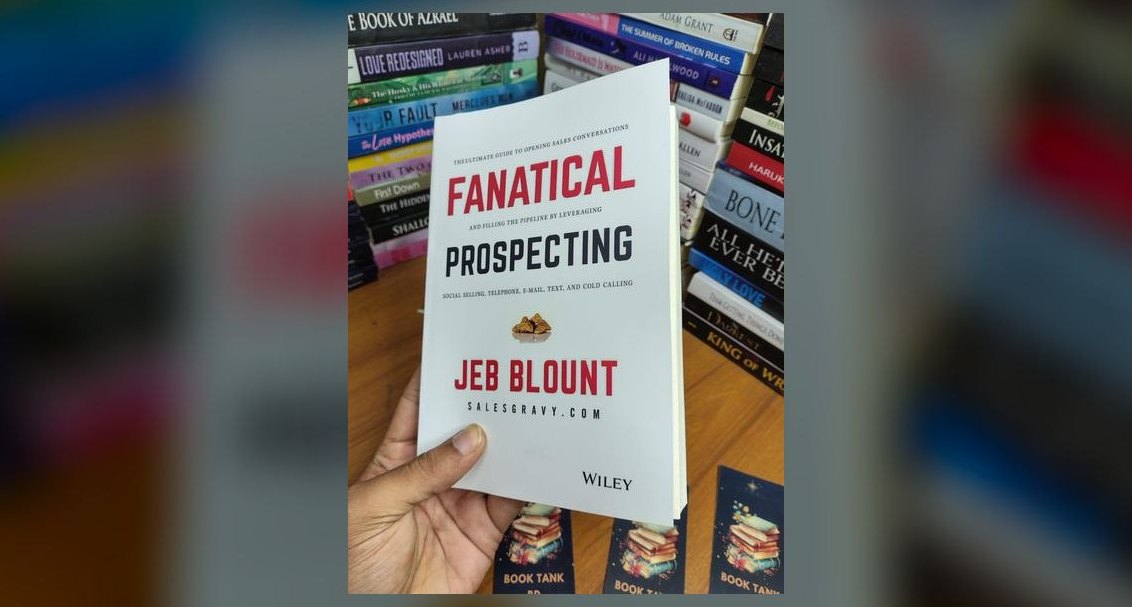 bsHow do you apply *Fanatical Prospecting* to LinkedIn outreach in 2027?
 bsHow does *Gap Selling* help you close more deals in a recession in 2027?
 bsWhat sales script does *New Sales. Simplified.* recommend for cold calls in 2027?
 bsDoes *The Psychology of Selling* still hold up for modern sales techniques in 2027?
 bsWhat’s the most actionable principle from *How to Win Friends and Influence People* for remote work in 2027?
 bsWhat’s the biggest mistake *SPIN Selling* warns against in complex B2B sales?
 bsHow does *Fanatical Prospecting* change your daily routine for outbound sales?
 bsWhat’s the most persuasive technique from *Pitch Anything* for investor pitches?
 bsWhat’s the key insight from *The Challenger Sale* for leading a sales team in 2027?