
How can *Influence: The Psychology of Persuasion* help you build trust with skeptical clients?
 Curated byKory White · Fractional CRO · Maryland
 PULSEKNOWLEDGE LIBRARY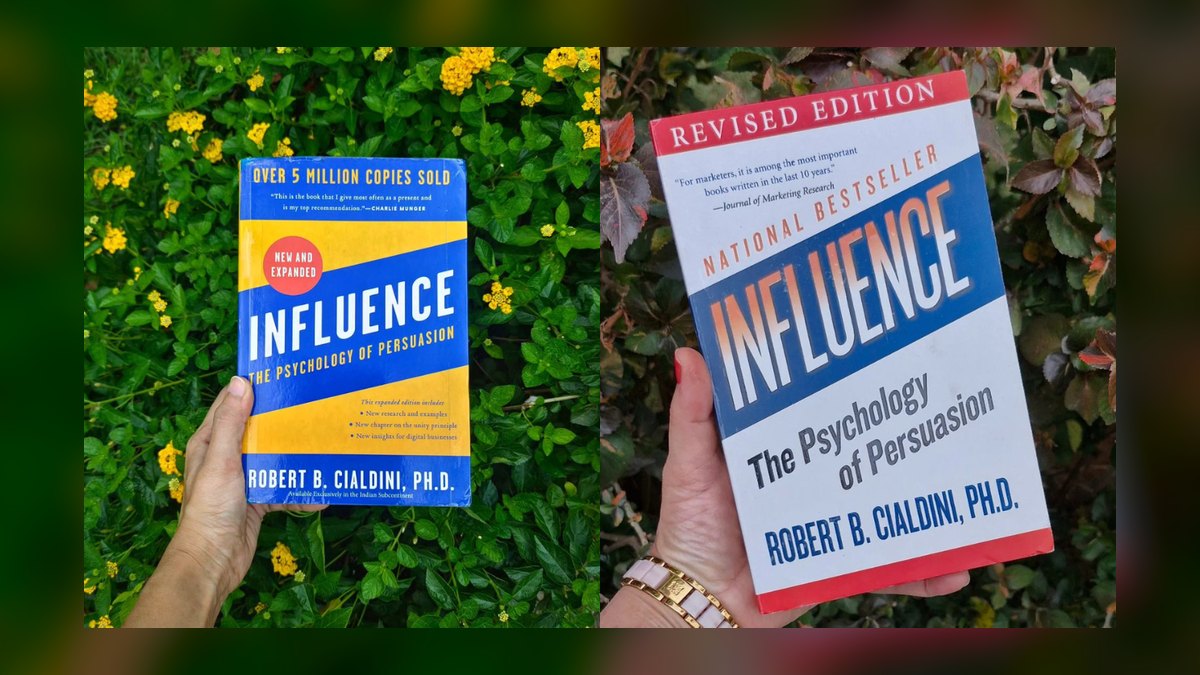
Influence: The Psychology of Persuasion by Robert Cialdini (1984, updated editions) is the foundational text on the six universal principles of influence — Reciprocity, Scarcity, Authority, Consistency, Liking, and Social Proof — and it offers a powerful, counterintuitive framework for building trust with skeptical clients. Rather than manipulating or tricking prospects, the book teaches that genuine trust is built by ethically activating these principles in a way that aligns with the client's best interests — for example, by demonstrating genuine authority through honest expertise, offering small, no-strings-attached value to trigger reciprocity, and using social proof from similar clients who overcame their own skepticism. The key insight for skeptical clients is that they are most resistant to overt persuasion, so the most effective approach is to lead with authentic, principle-based behavior — like admitting a weakness early (a form of Consistency and Authority) — which paradoxically makes you more credible. The book is not a sales script but a psychological toolkit for ethical influence, and its principles are now standard in B2B sales training (e.g., MEDDIC, Challenger Sale), negotiation (e.g., Harvard Negotiation Project), and marketing (e.g., content marketing).
1. Part One — The Six Principles of Influence (Chapters 1-6)

1.1 Chapter 1 — Weapons of Influence
Cialdini opens by describing automatic influence patterns — the mental shortcuts humans use to make decisions quickly, especially under uncertainty. For skeptical clients, this is crucial: skepticism is a form of cognitive vigilance, and it can be disarmed by providing clear, trustworthy signals that bypass the client's analytical overload.
The key concept: contrast principle — if you show a high-priced option first, the next option seems cheaper. But for trust, the reciprocity rule is more powerful: give first, then ask. A skeptical client who receives genuine, no-strings-attached value (a free consultation, a helpful article, a candid insight) feels a subconscious obligation to reciprocate with attention and openness.
1.2 Chapter 2 — Reciprocity
Reciprocity is the principle that people feel obligated to return favors. For skeptical clients, this is a double-edged sword: if you push too hard, they feel manipulated. The ethical application: offer genuine, non-transactional value first — a free audit, a custom report, a referral to a competitor who might be a better fit. This disarms skepticism because the client perceives you as generous and trustworthy, not self-interested.
Cialdini's classic example: the Hare Krishna solicitors who gave a flower before asking for a donation. In B2B, the equivalent is giving away your intellectual property — a white paper, a diagnostic tool, a free workshop — that solves a real problem without requiring a commitment. The skeptical client's guard lowers because you gave before asking.
1.3 Chapter 3 — Commitment and Consistency
Consistency is the principle that people want to act in line with their stated commitments. For skeptical clients, this is a powerful trust-builder: get a small, voluntary commitment first — "Would you be open to a 15-minute call to explore if this could help?" Once they agree, they are psychologically inclined to follow through because consistency with their own words feels honest.
The trap for skeptics: they are highly aware of inconsistency, so the commitment must be authentic and voluntary. The ethical approach: ask for a commitment that is genuinely in their interest — e.g., "If I can show you how this solves your biggest pain, would you be willing to introduce me to your CFO?" This builds trust because the client sees you as respecting their autonomy while aligning with their own stated goals.
2. Part Two — Social Proof and Liking (Chapters 4-5)
2.1 Chapter 4 — Social Proof

Social Proof is the principle that people look to others' behavior to determine their own, especially in uncertain situations. For skeptical clients, this is the most powerful trust-builder because skepticism is often a fear of being misled — and seeing similar, respected peers who trusted you and succeeded removes that fear.
The ethical application: use case studies and testimonials from clients who were initially skeptical — "I was skeptical too, but here's what happened." This mirrors the client's own doubt and shows that your solution works despite skepticism. Avoid overly positive, generic testimonials — they trigger skepticism. Instead, include specific, honest details (e.g., "We had doubts about the ROI, but after three months, we saw a 20% reduction in churn").
2.2 Chapter 5 — Liking

Liking is the principle that people are more easily persuaded by people they like. For skeptical clients, this is tricky: they are suspicious of overt friendliness as a manipulation tactic. The ethical approach: find genuine commonalities — shared alma mater, hobby, or industry challenge — and let them emerge naturally, not forced.
Cialdini's key insight: compliments increase liking, but they must be specific and sincere. For a skeptical client, a compliment like "I respect how thorough you are in your due diligence" acknowledges their skepticism as a strength and builds rapport without being manipulative. The liking principle works best when it is authentic — the client can sense insincerity and will double down on skepticism.
3. Part Three — Authority and Scarcity (Chapters 6-7)

3.1 Chapter 6 — Authority

Authority is the principle that people defer to experts. For skeptical clients, this is a double-edged sword: they are trained to question authority (especially salespeople). The ethical application: demonstrate genuine expertise through honest admissions of ignorance — "I don't know the answer to that, but I can find out" — which paradoxically increases your credibility because honesty signals trustworthiness.
Cialdini's classic example: the Milgram experiment showed that people obey authority figures even when it conflicts with their conscience. For trust-building, lead with your credentials but frame them as a resource, not a weapon — "I've worked with 50+ companies in your industry, and here's a pattern I've seen." This establishes authority without triggering the client's skepticism because you are sharing, not selling.
3.2 Chapter 7 — Scarcity

Scarcity is the principle that people want what is rare or limited. For skeptical clients, this is the most dangerous principle — they are hyper-aware of false urgency (e.g., "limited time offer"). The ethical application: use genuine scarcity — e.g., "We only take on three new clients per quarter to ensure quality" — which signals high demand and selectivity without feeling manipulative.
The key insight: scarcity works best when it is based on real constraints (e.g., limited expertise, capacity, or time). For skeptical clients, honesty about scarcity builds trust because it shows you are not desperate — you are choosing to work with them, not just chasing any deal. This flips the power dynamic and increases perceived value.
4. Part Four — The Ethical Application (Chapter 8)
4.1 Chapter 8 — Instant Influence
Cialdini's final chapter is a call to ethical use of the principles. For skeptical clients, the most effective approach is to combine multiple principles in a natural, non-manipulative sequence. For example:
- Start with Reciprocity: Offer a free, high-value resource (e.g., a custom ROI calculator).
- Build Authority: Share your credentials and a specific success story from a similar skeptical client.
- Use Social Proof: Show a video testimonial from that client.
- Trigger Consistency: Ask for a small commitment (e.g., "Would you be open to a 30-minute exploratory call?").
- Apply Liking: Find a genuine commonality during the call.
- End with Scarcity: Mention limited availability of your service (e.g., "We have one slot left this quarter").
This sequence builds trust step-by-step because each principle reinforces the previous one without triggering skepticism. The client feels respected and informed, not manipulated.
5. Part Five — The Skeptical Client Playbook
5.1 The Three Biggest Mistakes
- Leading with Scarcity: "This offer expires today!" — triggers immediate skepticism and damages trust.
- Overusing Liking: "You're so smart!" — feels insincere and manipulative.
- Ignoring Reciprocity: Asking for a meeting without giving value first — feels selfish and untrustworthy.
5.2 The Three Best Practices
- Lead with Reciprocity: Give something genuinely valuable before asking for anything.
- Use Social Proof from Skeptics: Share case studies of clients who were skeptical and became advocates.
- Admit Weakness Early: "This solution isn't right for everyone, and here's who it's not for" — builds authority and trust through honesty.
6. Part Six — The Flowchart of Trust
The Power of Pre-Suasion: Setting the Stage for Trust
One of the most overlooked aspects of Cialdini's framework is the concept of "pre-suasion" — the art of arranging the psychological context *before* you make your pitch. For skeptical clients, the moments before you even begin discussing your product or service are critical. Cialdini's research suggests that what you focus their attention on first can dramatically shape how they interpret everything that follows.
When facing a skeptical client, you can use pre-suasion by deliberately directing their attention to a relevant, positive concept. For example, if you're selling a complex software solution, you might begin by briefly discussing the importance of reliability in business operations — a concept that primes them to value consistency and dependability. This isn't manipulation; it's simply ensuring that the client is mentally prepared to evaluate your offering on the dimensions where you genuinely excel.
A powerful pre-suasive technique for skeptics is to ask them about their own values or past decisions. By inviting them to articulate what matters most to them — whether it's cost-effectiveness, innovation, or long-term partnership — you activate the principle of Consistency. Once they've publicly stated their priorities, they become more inclined to align their subsequent decisions with those values. This approach works because it positions you as a facilitator of their own goals, rather than a persuader pushing your own agenda.
Using the Contrast Principle to Frame Your Value
Skeptical clients often have a "show me" mentality — they need to see clear evidence that your solution is worth their investment. Cialdini's work highlights the Contrast Principle, which shows that people perceive things differently when they are presented in sequence. You can leverage this principle to make your value proposition more compelling without resorting to exaggeration or pressure.
The classic application is to present your premium offering first, then your standard offering. The standard option suddenly appears more reasonable and attractive by comparison. However, for skeptical clients, a more effective approach is to contrast your solution against the *status quo* or against a competitor's offering that lacks certain features. By carefully highlighting what the client would be missing if they chose an alternative, you create a clear, honest comparison that helps them see your unique value.
A subtler but equally powerful contrast involves time and effort. If a client is skeptical about the cost of your service, you can contrast it with the time and resources they would otherwise spend on a DIY approach or on fixing problems that arise from a suboptimal solution. This shifts the conversation from price to value, and from cost to investment. The key is to make the comparison fair and factual — never inventing advantages or exaggerating shortcomings of alternatives, as skeptical clients will quickly detect dishonesty.
Ethical Application of Scarcity for Trustworthy Clients
Scarcity is one of Cialdini's most well-known principles, but it can backfire with skeptical clients if applied carelessly. When a client senses that you're artificially creating urgency or limiting availability, they may become even more resistant. However, when scarcity is genuine and transparent, it can actually build trust by demonstrating honesty and respect for the client's intelligence.
The most ethical way to use scarcity with skeptics is to be upfront about genuine limitations: limited expertise, limited capacity to take on new clients, or limited availability of a specific resource that benefits the client. For example, a consultant might say, "I only take on three new clients per quarter because I need to give each one my full attention. I have one slot open next month." This is not a gimmick — it's a truthful statement about your business model. Skeptical clients respect this kind of candor because it shows you value quality over quantity.
Another ethical application involves time-limited offers that are genuinely tied to external factors, such as a supplier's pricing change or a seasonal opportunity. By explaining the reason behind the scarcity, you invite the client to make a rational decision rather than a pressured one. This approach aligns with the Authority principle as well, since you're demonstrating expertise about market conditions. The result is that the client feels informed and respected, which deepens trust rather than eroding it.
FAQ
How do I apply Reciprocity without seeming transactional? Give value that is genuinely useful and not tied to a sale — e.g., a free industry report or a referral to a competitor. The key is no strings attached.
What if the client is too skeptical for Social Proof? Use negative social proof — "Most of our clients were skeptical too, but here's what they found." This mirrors their doubt and builds credibility.
Is Liking manipulative for skeptical clients? Only if it's fake. Find genuine commonalities and be authentic — skeptical clients have a high BS detector.
How do I use Authority without sounding arrogant? Admit what you don't know — "I'm not sure, but I can find out" — which increases credibility more than pretending to know everything.
Can Scarcity ever work with skeptical clients? Yes, but only if genuine — e.g., "We only take on three clients per quarter to ensure quality." This signals high demand and respects their intelligence.
What is the single most important principle for skeptical clients? Reciprocity — give first, then ask. It disarms skepticism because you prove your value before asking for anything.
Sources
- Cialdini, Robert. *Influence: The Psychology of Persuasion*. HarperBusiness, 1984 (updated editions).
- Harvard Business Review — articles on persuasion and trust in sales.
- Gartner (formerly CEB) — research on B2B buying behavior and trust.
- The Challenger Sale by Matthew Dixon and Brent Adamson — complementary framework for skeptical clients.
- Journal of Consumer Research — academic studies on reciprocity and social proof.
- American Psychological Association — research on cognitive biases and persuasion.
- Forbes — practical applications of Cialdini's principles in business.
- Sales Hacker — community-driven best practices for ethical influence.
Related on PULSE
- [How does *Influence: The Psychology of Persuasion* explain why “free” offers actually work in B2B sales?](/knowledge/bs0397)
- [How do you use *Influence: The Psychology of Persuasion* to prevent buyer’s remorse after a big sale in 2027?](/knowledge/bs0383)
- [What’s the most persuasive principle from *Influence: The Psychology of Persuasion* for social media in 2027?](/knowledge/bs0368)
- [Which chapter of *Influence: The Psychology of Persuasion* is most useful for marketers in 2027?](/knowledge/bs0324)
- [Influence: The Psychology of Persuasion by Robert Cialdini — Cliff Notes & Chapter-by-Chapter Summary](/knowledge/bs0004)
- [How does *Influence: The Psychology of Persuasion* apply to upselling existing customers in a subscription model in 2027?](/knowledge/bs0413)
@Kory-White- · if Venmo asks, the last 4 of my number are 2012
 bsWhat are the key lessons from *Never Split the Difference* for negotiating a raise in 2027?
 bsHow do you apply *Fanatical Prospecting* to LinkedIn outreach in 2027?
 bsHow does *Gap Selling* help you close more deals in a recession in 2027?
 bsWhat sales script does *New Sales. Simplified.* recommend for cold calls in 2027?
 bsDoes *The Psychology of Selling* still hold up for modern sales techniques in 2027?
 bsWhat’s the most actionable principle from *How to Win Friends and Influence People* for remote work in 2027?
 bsWhat’s the biggest mistake *SPIN Selling* warns against in complex B2B sales?
 bsHow does *Fanatical Prospecting* change your daily routine for outbound sales?
 bsWhat’s the most persuasive technique from *Pitch Anything* for investor pitches?
 bsWhat’s the key insight from *The Challenger Sale* for leading a sales team in 2027?