
What’s the best summary of *How to Win Friends and Influence People* for managers in 2027?
 Curated byKory White · Fractional CRO · Maryland
 PULSEKNOWLEDGE LIBRARY
The best summary of **Dale Carnegie's *How to Win Friends and Influence People* for managers in 2027 is that it remains the definitive playbook for human influence in an era of remote work, AI-driven communication, and low-trust organizational cultures — but its principles must be updated for a world where authenticity, brevity, and digital empathy are paramount. Carnegie's core framework — don't criticize, show genuine appreciation, become genuinely interested in others, smile, remember names, listen actively, talk in terms of others' interests, and make the other person feel important — still works, but in 2027, managers must apply these through asynchronous channels (Slack, email, Loom videos) and hybrid team dynamics where face-to-face cues are rare. The biggest shift: Carnegie's "win friends" tactic of agreeing with others is now less effective than respectful debate and intellectual honesty — because Gen Z and Millennial employees in 2027 value transparency over pleasantries. This summary will give you the original 30 principles, the 2027 managerial adaptations, and the specific scripts** for leading a distributed team without losing Carnegie's human touch.
1. The Core Framework — Carnegie's Six Ways to Make People Like You
Carnegie's foundational section, "Six Ways to Make People Like You," is the emotional infrastructure of his system. For a 2027 manager, these six principles are not soft skills — they are operational necessities for retaining talent in a tight labor market.
Principle 1: Become genuinely interested in other people. In 2027, this means pre-reading a direct report's LinkedIn activity before a one-on-one, noting their recent certification or hobby post. It means asking specific, non-generic questions like "How did your daughter's soccer tournament go?" rather than "How are you?" Carnegie's original point — that dogs win friends by showing unbridled enthusiasm — translates to sending a quick voice memo celebrating a team win rather than a dry Slack emoji reaction.
Principle 2: Smile. For remote managers, this becomes video-on culture — turning your camera on during meetings, smiling genuinely, and using positive vocal tone in audio-only calls. A 2027 manager who never smiles on Zoom is unconsciously signaling disinterest or disapproval to their team. The smile must be visible in your digital presence — even in written communication, use warm phrasing and occasional emojis (judiciously) to convey approachability.
Principle 3: Remember that a person's name is the sweetest sound. In a globally distributed team, this means pronouncing names correctly — use a phonetic guide in your notes — and referencing names in async updates ("Great point, Priya, on the Q3 forecast"). Carnegie's insight: forgetting a name signals the person is unimportant to you. In 2027, with dozens of Slack handles and email aliases, name recall is a competitive advantage for a manager who wants to build loyalty.

Principle 4: Be a good listener. Encourage others to talk about themselves. For a 2027 manager, this means blocking 10 minutes of silence in a one-on-one — letting the direct report speak most of the time. It means asking open-ended prompts like "What's the biggest blocker you're facing this week?" and then resisting the urge to solve it immediately. Carnegie's principle is now validated by neuroscience: when people talk about themselves, the reward centers of their brain light up — listening is literally dopamine delivery to your team.
Principle 5: Talk in terms of the other person's interests. In 2027, this is the WIIFM (What's In It For Me) rule applied to every managerial communication. Before sending a project update, ask: *Why does this matter to Sarah?* Frame the message around her career growth, her team's autonomy, or her personal goals. Carnegie's example of talking to a fisherman about what *he* likes to eat (worms, not strawberries) is the ultimate metaphor for stakeholder management.
Principle 6: Make the other person feel important — and do it sincerely. In 2027, this means public recognition in Slack channels, shout-outs in all-hands meetings, and specific praise (e.g., "Your work on the API migration reduced latency significantly — that directly impacted our customer satisfaction score"). Carnegie warned against flattery; sincerity is key. A manager who notices the invisible work — the person who fixed the broken CI/CD pipeline at 2 AM — builds deep loyalty.
2. The Twelve Ways to Win People to Your Way of Thinking
This section is Carnegie's persuasion engine — and it's where 2027 managers must be most careful. Carnegie wrote for a world of deference and politeness; today's workforce values directness and psychological safety over sugar-coating.
Principle 1: The only way to get the best of an argument is to avoid it. For 2027 managers, this does not mean avoiding conflict. It means reframing disagreements as collaborative problem-solving. Instead of "You're wrong about the budget," say "Help me understand your assumptions — I'm seeing different numbers here." Carnegie's insight: arguments harden positions; they don't change minds. In a remote setting, this is even more critical — text-based arguments escalate faster because tone is lost.

Principle 2: Show respect for the other person's opinions. Never say, "You're wrong." In 2027, this translates to acknowledging the other person's perspective first before offering your own. Use the "Yes, and…" technique from improv: "Yes, I can see why you'd think that based on the Q2 data, and here's what the Q3 trends suggest…" Carnegie's warning: telling someone they're wrong is a direct attack on their ego — it triggers a fight-or-flight response that shuts down rational thinking.
Principle 3: If you are wrong, admit it quickly and emphatically. This is underutilized by most managers in 2027. A leader who says "I was wrong about the launch timeline — I underestimated the QA effort" earns trust and credibility. Carnegie's point: admitting fault disarms the other person and turns a potential conflict into a shared learning moment. In a culture of blameless post-mortems, this principle is gold.
Principle 4: Begin in a friendly way. For a 2027 manager, this means starting every difficult conversation with a warm tone and a shared goal. "I want us both to succeed here — let's figure out how to make this work." Carnegie's example of a police officer who starts with "How are you, friend?" before issuing a ticket is a masterclass in de-escalation. In Slack, this means opening with a friendly greeting before delivering constructive feedback.
Principle 5: Get the other person saying "yes, yes" immediately. Carnegie's Socratic method — ask questions that lead to a series of small agreements — is highly effective in 2027 for aligning a team on a strategy. Start with "We all agree that customer retention is our top priority, right?" Then "And we agree that the current onboarding process has a high drop-off?" By the time you propose a solution, the team has already mentally agreed to the premises.
Principle 6: Let the other person do a great deal of the talking. In 2027, this is essential for remote meetings where dominant voices can drown out quieter ones. Use round-robin check-ins, anonymous polls, and breakout rooms to ensure everyone speaks. Carnegie's insight: people are more committed to ideas they verbalize themselves than ideas they hear from you.
Principle 7: Let the other person feel that the idea is theirs. This is the ultimate delegation hack for 2027 managers. Instead of assigning a solution, ask leading questions that guide the direct report to the same conclusion. "What do you think would happen if we tried A/B testing the landing page?" When they propose the idea, they own it — and they'll work harder to execute it.
Principle 8: Try honestly to see things from the other person's point of view. In 2027, this means empathy mapping — literally writing out what your stakeholder feels, sees, hears, and says. For a manager dealing with a frustrated engineer, ask: "If I were in your shoes, dealing with legacy code and tight deadlines, what would I need from my manager right now?" Carnegie's principle is cognitive empathy — not just feeling for someone, but understanding their reality.
Principle 9: Be sympathetic with the other person's ideas and desires. Carnegie's famous line: "I don't blame you one iota for feeling as you do. If I were you, I would undoubtedly feel just as you do." For 2027 managers, this is the validation that builds psychological safety. Even if you disagree, start with "That makes sense given your perspective."
Principle 10: Appeal to the nobler motives. Carnegie argued that people want to see themselves as honorable and fair. In 2027, this means framing requests in terms of team values or company mission. Instead of "We need to cut costs," say "To protect our team's headcount for next year, we need to be more efficient with our current budget."
Principle 11: Dramatize your ideas. In a world of information overload, Carnegie's call to make your point vivid is more relevant than ever. Use data visualizations, customer stories, and before-and-after scenarios. A 2027 manager pitching a new process shouldn't send a memo — they should show a short video of the current pain point and the proposed solution.
Principle 12: Throw down a challenge. Carnegie noted that competition is a powerful motivator. For 2027 managers, this means gamifying goals — leaderboards, sprint badges, or team challenges. But use it carefully: intrinsic motivation (mastery, purpose, autonomy) is more sustainable than extrinsic competition in knowledge work.
3. Be a Leader — How to Change People Without Giving Offense or Arousing Resentment
This is the most directly applicable section for managers in 2027. Carnegie's nine principles for leadership without resentment are the antidote to micromanagement and the blueprint for coaching.
Principle 1: Begin with praise and honest appreciation. Before giving corrective feedback, start with a genuine strength. "Your presentation was incredibly well-researched. One area to tighten is the financial summary section." This is the feedback sandwich — but Carnegie insisted the praise must be sincere, not manipulative.
Principle 2: Call attention to people's mistakes indirectly. In 2027, this means asking questions instead of making statements. Instead of "You missed the deadline," say "What was the biggest challenge in hitting the timeline?" This preserves dignity and invites self-reflection.
Principle 3: Talk about your own mistakes before criticizing the other person. A 2027 manager who says "I've also struggled with scope creep on projects — here's what I learned" creates psychological safety for the direct report to admit their own missteps.
Principle 4: Ask questions instead of giving direct orders. Carnegie's example: "Do you think this approach will work?" is far more effective than "Do it this way." In 2027, this is autonomy-supportive leadership — it respects the professional judgment of your team.
Principle 5: Let the other person save face. In a public Slack channel, never call out a mistake. Send a private DM. Carnegie's insight: protecting someone's ego is more important than being right in the moment.
Principle 6: Praise the slightest improvement and praise every improvement. In 2027, this is micro-recognition — a quick "Nice catch on that bug fix" in a channel. Carnegie argued that encouragement is more effective than criticism for behavior change.
Principle 7: Give the other person a fine reputation to live up to. Tell your team member "You're known for your attention to detail — I'm counting on you to catch any errors in this report." People rise to meet the reputation you give them.
Principle 8: Use encouragement. Make the fault seem easy to correct. Instead of "Your code is messy," say "Let's refactor this together — it's a small change that will make a big difference."
Principle 9: Make the other person happy about doing the thing you suggest. Frame requests in terms of benefits to them. "If we finish this sprint early, you can take Friday afternoon off for your personal project."

4. Seven Rules for Making Your Home Life Happier (For Work-Life Integration)
Carnegie's section on home life is often overlooked by managers, but in 2027, burnout and work-life boundary erosion are the top reasons managers quit. This section is about applying Carnegie's principles to your personal relationships — which directly impacts your managerial energy and empathy.
Rule 1: Don't nag. Carnegie's warning: nagging destroys relationships. In 2027, this applies to both your partner and your team. Constant reminders about deadlines or tasks create resentment. Set expectations once, then trust.
Rule 2: Don't try to make your partner over. For managers, this means accepting your team's working styles — not everyone thrives on early morning stand-ups or structured processes.
Rule 3: Don't criticize. Carnegie's most famous line: "Criticism is futile because it puts a person on the defensive and usually makes them strive to justify themselves." In 2027, constructive feedback is essential, but personal criticism is toxic.

Rule 4: Give honest appreciation. At home, this means thanking your partner for small things. At work, it means celebrating effort, not just outcomes.
Rule 5: Pay a little attention to the small things. Carnegie's example: a wife who notices her husband picked up her favorite snack. For managers, remembering a team member's birthday or asking about their sick pet builds emotional connection.
Rule 6: Be courteous. Carnegie argued that we are often more polite to strangers than to our loved ones. For 2027 managers, this means not taking your team for granted — say please and thank you, even in Slack.
Rule 7: Read a good book on marriage and sex. For managers, this translates to reading about emotional intelligence, conflict resolution, and adult development — the skills that make you a better human, not just a better boss.

5. The 2027 Adaptations — What's Different and What's the Same
What remains unchanged in 2027: The core human needs Carnegie identified — to feel important, understood, and appreciated — are hardwired and unaffected by technology. A 2027 manager who remembers a direct report's name and listens without interrupting will still outperform one who doesn't. The principles of persuasion — avoiding arguments, admitting mistakes, appealing to nobler motives — are timeless.
What has changed for 2027: The medium of application. Carnegie's advice to "smile" must now be visible on a webcam. His advice to "remember names" must now include pronouncing non-Western names correctly in a global team. His advice to "be a good listener" must now account for asynchronous communication — reading a Slack message carefully before responding, rather than skimming.
The biggest 2027 adaptation: Authenticity over agreeableness. Carnegie's era valued pleasantness; 2027's workforce values transparency. A manager who disagrees respectfully and explains their reasoning is trusted more than one who always agrees. Carnegie's "avoid arguments" principle must be updated to "avoid unproductive arguments" — but healthy debate is now a sign of psychological safety.
The remote-first reality: Carnegie's principles must be intentional in a distributed team. You cannot rely on watercooler moments to build relationships. You must schedule one-on-ones, send recognition publicly, and create virtual spaces for casual connection. The effort required to apply Carnegie's principles is higher in 2027 — but the reward is also higher, because most managers don't bother.
6. Practical Scripts and Templates for 2027 Managers
Script 1: Giving corrective feedback (Carnegie's principles 1-4). "Hey [Name], I really appreciate how you've been handling the client escalation this week — your calm tone is impressive. I've also made mistakes in similar situations where I jumped to conclusions too fast. One thing I noticed: in yesterday's email, the tone might come across as defensive. How would you feel about rewording the opening paragraph to be more collaborative?"
Script 2: Persuading a skeptical stakeholder (Carnegie's principles 6-10). "I completely understand why you're hesitant about the new CRM rollout — if I were in your shoes, dealing with the current system's quirks, I'd feel the same way. We both want what's best for the team's efficiency. What if we run a two-week pilot with just your team? That way, you can see the impact firsthand before committing fully."
Script 3: Public recognition (Carnegie's principle 6 from Section 1). "Shout-out to [Name] in #team-wins! Your work on the data migration script saved the entire team significant time this week. Your attention to detail and willingness to stay late to fix that edge case is exactly the kind of ownership we value here. Thank you."
Script 4: Starting a difficult one-on-one (Carnegie's principle 4 from Section 2). "Hey [Name], I want to start by saying I'm really glad you're on this team. I know this conversation might feel uncomfortable, but I want us to be on the same page. Can we talk about the missed deadline last week? I'm not here to blame — I want to understand what support you need."
Script 5: Delegating with ownership (Carnegie's principle 7 from Section 2). "I've been thinking about the onboarding process, and I'd love your input. You've got the best understanding of the new hire experience. What do you think would be the single biggest improvement we could make? If you have an idea you're excited about, I'd love for you to lead the implementation."
FAQ
How do I apply Carnegie's principles when I rarely see my team in person? Focus on deliberate digital warmth. Use video messages to show genuine appreciation, remember personal details shared in chat, and schedule short one-on-one calls to listen actively. In asynchronous channels, be explicit with praise and avoid criticism that can feel harsher without tone or body language.
Does "don't criticize" mean I should never give negative feedback? No—it means avoid harsh, public, or personal criticism. In 2027, effective managers give constructive feedback privately, frame it as a shared goal, and focus on behavior rather than character. Carnegie's point is that criticism rarely changes behavior; respectful coaching does.
How do I show genuine interest in others when I have many direct reports? Scale through systems, not memory alone. Use a simple CRM-like tool or notes to track each person's interests, career goals, and recent wins. Then send brief, personalized check-ins or celebrate milestones in team channels. The key is consistency, not volume.
Is "smile" still relevant in a world of Slack and email? Yes, but adapt it. In text, use warm, positive language and occasional emojis to convey approachability. In video calls, smile naturally and maintain eye contact with the camera. The principle is about signaling openness and goodwill, not a literal grin.
Should I always agree with others to avoid conflict, as Carnegie suggests? Not in 2027's low-trust environments. Carnegie's advice was for a face-to-face era; today, respectful debate builds trust more than false agreement. Challenge ideas constructively, acknowledge valid points, and frame disagreements as collaborative problem-solving.
How do I make people feel important without coming across as fake? Focus on specific, sincere recognition tied to real contributions. Instead of generic praise, mention exactly what they did and why it mattered. In hybrid teams, amplify their wins in public channels and give credit generously. Authenticity comes from specificity and consistency.
Sources
- Dale Carnegie, *How to Win Friends and Influence People* (1936, revised editions through 2022)
- Harvard Business Review, articles on emotional intelligence and managerial effectiveness
- Gallup, research on employee engagement and manager impact
- Daniel Goleman, *Emotional Intelligence* (1995) and related leadership work
- Center for Creative Leadership, research on feedback and coaching
- Adam Grant, *Give and Take* (2013) — on the power of genuine giving in relationships
- Charles Duhigg, *Supercommunicators* (2024) — on modern listening and persuasion science
- MIT Sloan Management Review, studies on remote team dynamics and trust
Related on PULSE
- [How to Win Friends and Influence People by Dale Carnegie — Cliff Notes & Chapter-by-Chapter Summary](/knowledge/bs0005)
- [How to Win Friends and Influence People — Cliff Notes Summary](/knowledge/bs0278)
- [What’s the most actionable chapter in *How to Win Friends and Influence People* for cold calling in 2027?](/knowledge/bs0412)
- [What’s the most underrated chapter in *How to Win Friends and Influence People* for building executive relationships?](/knowledge/bs0392)
- [What’s the best chapter in *How to Win Friends and Influence People* for leading a team in 2027?](/knowledge/bs0376)
- [What’s the most actionable chapter in *How to Win Friends and Influence People* for networking in 2027?](/knowledge/bs0362)
@Kory-White- · if Venmo asks, the last 4 of my number are 2012
 bsWhat are the key lessons from *Never Split the Difference* for negotiating a raise in 2027?
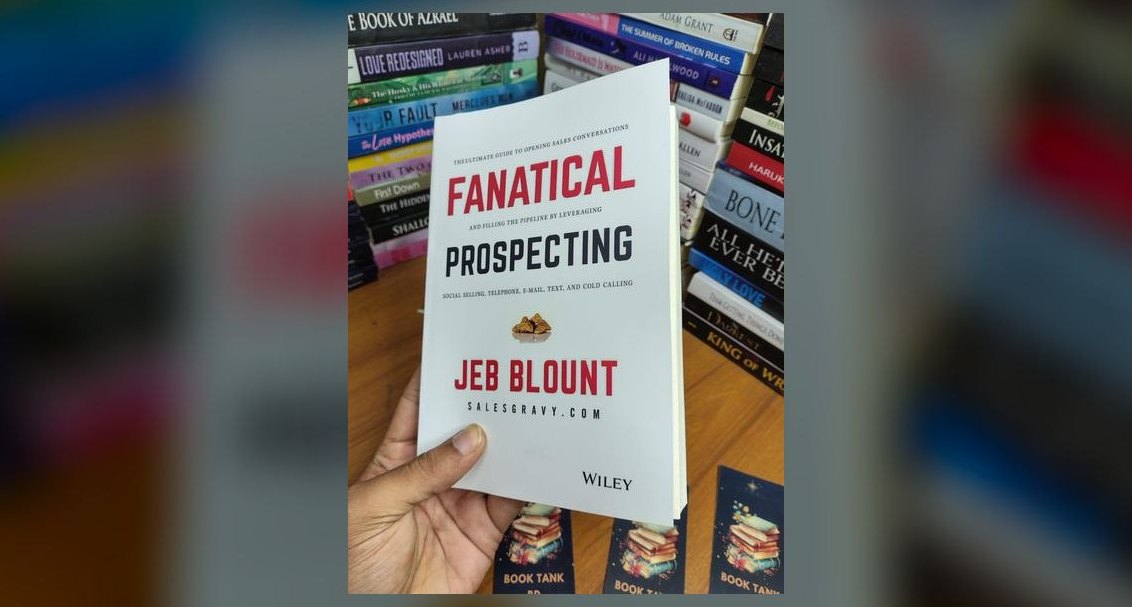 bsHow do you apply *Fanatical Prospecting* to LinkedIn outreach in 2027?
 bsHow does *Gap Selling* help you close more deals in a recession in 2027?
 bsWhat sales script does *New Sales. Simplified.* recommend for cold calls in 2027?
 bsDoes *The Psychology of Selling* still hold up for modern sales techniques in 2027?
 bsWhat’s the most actionable principle from *How to Win Friends and Influence People* for remote work in 2027?
 bsWhat’s the biggest mistake *SPIN Selling* warns against in complex B2B sales?
 bsHow does *Fanatical Prospecting* change your daily routine for outbound sales?
 bsWhat’s the most persuasive technique from *Pitch Anything* for investor pitches?
 bsWhat’s the key insight from *The Challenger Sale* for leading a sales team in 2027?