
How does *SPIN Selling* apply to selling software to non-technical buyers in 2027?
 Curated byKory White · Fractional CRO · Maryland
 PULSEKNOWLEDGE LIBRARY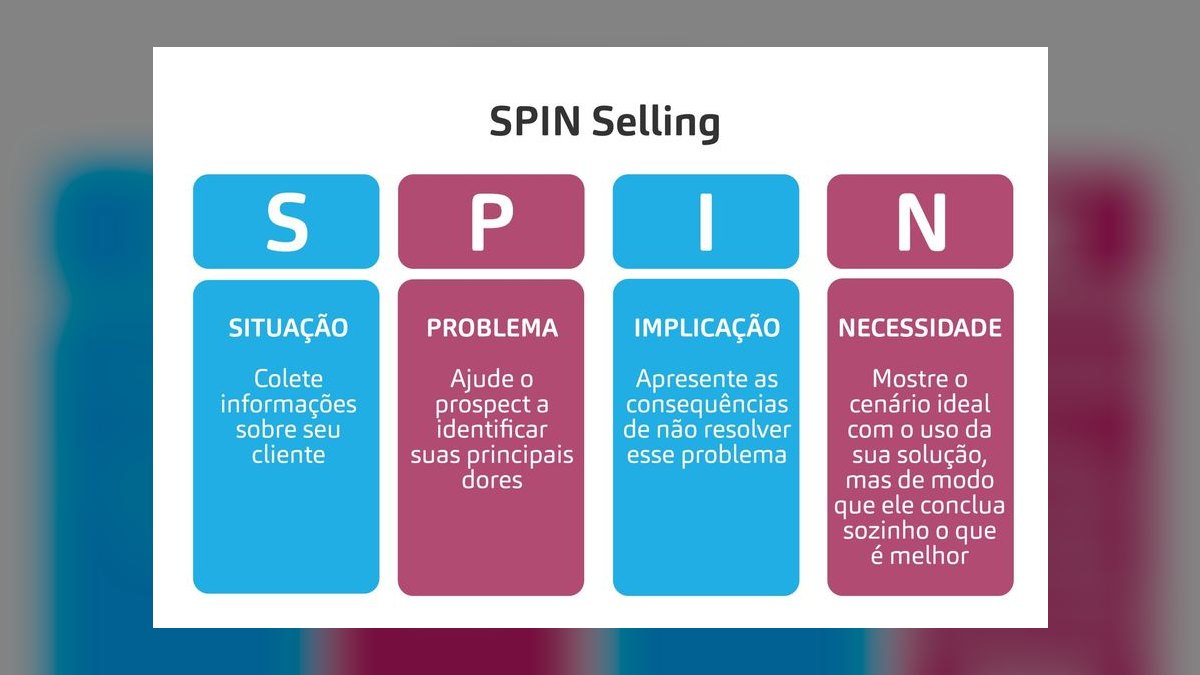
SPIN Selling works with non-technical software buyers in 2027 because it moves the conversation off features and onto consequences. Situation and Problem questions surface the workflow pain, Implication questions convert that pain into money and risk the buyer can defend internally, and Need-payoff questions let the buyer articulate the value themselves.
The outcome you should expect
The measurable outcome of applying SPIN to non-technical software buyers is not a shorter sales cycle. It is a *better-defended* deal — one that survives procurement, IT review, and the CFO's final pass because the buyer, not the rep, authored the business case. Teams that make this shift usually see the change show up in three places before it ever shows up in win rate.
The first place is discovery-call talk ratio. Reps who run a feature-led call with a non-technical buyer typically talk 65–80% of the time, because the buyer has no vocabulary to push back with, so silence gets filled with product. A SPIN-led call inverts that. Rackham's core finding from the Huthwaite research — that high performers in large sales ask substantially more questions than low performers — translates directly into a talk-ratio target most conversation-intelligence tools already measure. Getting a rep from 70% talking to 40–45% talking is a coachable, observable change you can verify on recorded calls inside two weeks.
The second place is the quality of the second meeting. When you sell features to a non-technical buyer, the second meeting is a demo they requested to make you go away or to satisfy curiosity. When you sell with Implication questions, the second meeting has a different attendee list — the buyer brings the person who owns the cost you quantified. If your VP of Marketing champion said late attribution data causes her to misallocate spend, she brings someone from finance or analytics to the next call. That attendee-list change is the single cleanest early signal that SPIN is landing. It is binary, it is easy to log in the CRM, and it correlates with deals that don't stall.

The third place is what happens to the deal when you are not in the room. Non-technical buyers spend most of the buying cycle explaining your software to people who did not attend your calls. If the only artifact they carry is a feature list, they will misrepresent it, and IT or finance will kill it on grounds you never got to address. If the artifact they carry is their own sentence — "manual reconciliation is costing my team roughly two headcount-equivalents of time a quarter and creating audit exposure" — that sentence travels. It survives retelling. It is the difference between a champion and a messenger.
What you should *not* expect is a faster first close. Rackham's data cut against the idea that pressure techniques accelerate large sales; if anything, a disciplined SPIN call in the early stages feels slower to the rep because the pitch gets deferred. The compression happens later, in the stages where deals normally die: security review, legal, and the budget conversation. A buyer who can state their own cost of inaction gets through budget approval faster than a buyer who has to relay your ROI slide secondhand.
One more outcome worth naming honestly: SPIN raises your no-decision rate visibly in the first quarter of adoption. That is not a failure. Implication questions surface, early, that some prospects have a problem too small to fund. Under a feature-led motion, those deals stayed in the pipeline for two quarters and then died at forecast time. Under SPIN, they die in week two. Forecast accuracy improves; pipeline volume looks worse. Prepare leadership for that trade before you roll it out, or the methodology gets blamed for a metric it actually fixed.
What drives that outcome
The mechanism is straightforward once you separate what a technical buyer does from what a non-technical one does. A technical buyer evaluates your product directly — they read the docs, test the API, and form an independent opinion about whether it works. A non-technical buyer cannot do that. They evaluate a *proxy*. Historically the proxy was the vendor's reputation or the demo's polish. SPIN replaces that proxy with something the buyer can actually assess competently: the size and cost of their own problem.

That substitution is the whole engine. A VP of Operations cannot judge whether your data pipeline is well-architected. She can judge, with high confidence, that her team spends most of Monday rebuilding a report by hand and that the report is wrong often enough that the executive team has stopped trusting it. Implication questions operate entirely inside her domain of competence. That is why they work on non-technical buyers specifically — you are asking them to be the expert on the only subject where they genuinely outrank you.
The second driver is internal authorship. Need-payoff questions ("if you had that report accurate by Monday morning, what changes?") produce a sentence in the buyer's own words and numbers. Anything the buyer says in their own words is defended more strongly than anything the rep said, because retracting it costs them credibility internally. This is not a manipulation trick; it is why Rackham argued that the seller's job in complex sales is to help the buyer build the case, not to build it for them.
The third driver is jargon avoidance as a forcing function. SPIN's question discipline makes it structurally hard to feature-dump, because you are asking rather than asserting. A rep who has to open with a Problem question cannot open with an architecture diagram. The methodology enforces the translation layer that non-technical buyers require.
The failure mode this diagram exposes is skipping straight from D to the pitch. That path leaves the buyer holding a problem they have named but not priced, next to a price they were quoted but cannot justify. Every objection you get about cost from a non-technical buyer is usually a symptom of a missing Implication step, not a genuine budget ceiling.
Benchmarks and realistic ranges
Be careful with numbers here, because SPIN attracts more invented statistics than almost any other methodology. What follows are operating ranges to *manage against*, drawn from the structure of the framework and from what is straightforwardly measurable in your own call recordings — not claimed research findings.
Question counts per discovery call. Keep Situation questions to roughly three to five. Everything findable on the company website, a funding announcement, a job posting, or LinkedIn should never be asked; asking it signals you did no preparation and burns the buyer's patience in the first five minutes. Problem questions typically run five to eight in a healthy 30–45 minute call. Implication questions are the scarce resource — most underperforming reps ask zero to one; the target is three to five, each attached to a specific problem the buyer already named. Need-payoff questions land best at two to four, late, once the implications have accumulated.

Talk ratio. Target 40–45% rep talk time on discovery calls. Below 30% usually means the rep has stopped steering and the call has become an unstructured interview. Above 55% means the pitch has leaked in. Most conversation-intelligence platforms report this natively, so it needs no new tooling.
Implication depth. A single Implication question rarely does the job. The useful pattern is a chain of two to three: "how often does that happen" → "who has to fix it when it does" → "what does that person stop doing while they fix it." Each link converts a vague annoyance into an increment of cost. One question gets you "it's annoying." Three gets you "it costs us roughly a day a week of a senior analyst."
Quantification thresholds. Aim to leave discovery with at least one number the buyer said out loud, not one you supplied. Hours per week, incidents per quarter, headcount touched, or a dollar figure. If you leave with zero buyer-supplied numbers, the deal is at material risk regardless of how positive the call felt. Track this as a binary field on the opportunity; it is the highest-signal, lowest-effort qualification gate you can add.

Ramp expectations. Reps do not internalize SPIN in a week. Expect four to eight weeks of coached practice before Implication questions appear naturally under pressure, and expect regression during quarter-end when reps revert to pitching. Budget for reinforcement in month three, not just an onboarding workshop.
Deal-size fit. SPIN's own logic says the full sequence earns its cost in complex sales — multiple stakeholders, real evaluation effort, budget that must be defended. For low-cost, self-serve, or single-approver software purchases, a compressed Problem-to-Need-payoff sequence is enough, and the full implication chain reads as heavy-handed. Match the depth of questioning to the depth of the buying committee, not to the price tag alone.
No-decision rate. Expect it to rise for one to two quarters, then fall below your starting baseline as reps get better at disqualifying in week two rather than month three. Track no-decision separately from competitive losses; conflating them makes a healthy adoption curve look like a slump.
Risks, edge cases, and failure modes
Interrogation. The most common failure is turning SPIN into a checklist and marching through it. Buyers feel this immediately — it reads as a form being filled out rather than a conversation. The fix is to make every question inherit from the buyer's previous answer. If your next question would make sense regardless of what they just said, it is the wrong question. Never ask an Implication question about a problem the buyer has not personally named.
Manufactured pain. Implication questions applied to a problem the buyer does not actually have come across as pressure, and non-technical buyers are unusually sensitive to it because they suspect they are being maneuvered on unfamiliar ground. If two Problem questions surface nothing real, the honest move is to end the call early. A rep who forces implications onto a non-problem trains the buyer to distrust every subsequent question.
Answering in jargon. You can run a flawless question sequence and lose the buyer the moment they ask "how does it work" and you answer with endpoints, schemas, and latency. Every technical capability needs a pre-built business-language translation. "Low latency" becomes "the dashboard updates while you're looking at it." "Role-based access control" becomes "your regional managers see only their own numbers." Rehearse these translations; do not improvise them under pressure.
The buyer who wants a demo immediately. Common in 2027, because non-technical buyers have usually watched three competitor demos before they call you. Refusing outright feels evasive. The workable move is to trade: ask two or three targeted questions explicitly so you can cut the demo to what matters, then honor that promise by actually skipping the rest. If you ask the questions and then run the standard demo anyway, you have burned the technique.

Over-informed, under-confident buyers. The 2027 non-technical buyer arrives with review-site opinions, AI-generated vendor comparisons, and secondhand technical claims they cannot evaluate. Situation questions about facts they have already published are insulting; Problem questions about pain they have already articulated to three competitors are boring. The differentiated move is implication depth — nobody else asked them what the problem actually costs.
Multi-stakeholder dilution. Implications are role-specific. What costs the VP of Marketing money costs the CFO nothing directly, and vice versa. A single implication chain built for your champion will not survive contact with a five-person committee. Run a fresh Problem-and-Implication pass with each new stakeholder rather than recycling the champion's business case.
Champion turnover. If your entire deal rests on one person's articulated pain and that person changes roles, the deal resets to zero. Mitigate by getting the buyer's own quantification into a written artifact early — a recap email in their words, ideally forwarded to one other person — so the case exists independently of the individual.

Recording and consent. SPIN coaching depends on call recordings. Consent requirements vary by jurisdiction and by whether the buyer's own policy prohibits it. Sort this out with legal before you build a coaching program on top of it; retrofitting consent onto an existing recording archive is unpleasant.
Coaching without measurement. A workshop with no follow-up produces a three-week bump and then nothing. If you cannot score calls afterward — automatically or by manager review — the strategy will not stick, and you will conclude the methodology failed when the reinforcement did.
A practical rollout plan
Roll this out as a behavior change program with a measurement spine, not as a training event.

Weeks 1–2: baseline and translation library. Pull twenty recent discovery calls with non-technical buyers. Score each on four things: number of Situation questions, number of Implication questions, rep talk ratio, and whether the buyer said any number out loud. Do not coach yet — just measure, so you have a real before-picture. In parallel, build the jargon translation library: every technical claim in your standard deck, paired with its business-language equivalent, written down and reviewed by someone outside engineering. This artifact does more for non-technical deals than the question training itself.
Weeks 3–4: question banks by persona. Write Situation, Problem, Implication, and Need-payoff question sets for each buyer persona you actually sell to. A CFO's implications run to forecast accuracy, unbudgeted spend, and audit exposure. A marketing leader's run to misallocated budget and campaign timing. An HR leader's run to compliance risk and time-to-hire. Keep each bank short — eight to twelve questions — because a bank of forty gets ignored.
Weeks 5–6: coached role-play. Practice against the hard cases, not the easy ones: the buyer who demands a demo in minute two, the buyer who says "we don't really have a problem," and the buyer who asks a technical question the rep cannot answer. Record every role-play. The skill nobody practices and everybody needs is staying quiet for four seconds after the buyer stops talking, because the second half of the answer is where the implication lives.
Weeks 7–10: live calls with per-call review. One reviewed call per rep per week, scored on the same four baseline metrics. Feedback should be specific to a timestamp, never general. "At 14:20 she said reports are late — that was your Implication opening and you moved to the next agenda item instead" beats any amount of abstract advice about asking better questions.

Weeks 11–12: pipeline gate. Add one required field to the opportunity record: the buyer's own quantified statement of the problem, in their words. No field, no stage advance past discovery. This is the mechanism that makes the methodology survive after the training attention fades — it is the only enforcement that runs by itself.
Ongoing: quarterly re-baseline. Re-score twenty calls each quarter against the same four metrics. Watch specifically for quarter-end regression, when pressure pushes reps back into pitching. Plan a short reinforcement session in the first two weeks of each quarter rather than a large annual one.
The gate at week eleven is the part most teams skip and the part that determines whether any of this outlasts the quarter. Training changes behavior for about three weeks; a required field changes it indefinitely.
Related questions
Should I use SPIN on a self-serve software purchase?
Usually not in full. Single-approver, low-cost purchases do not need an implication chain — a short Problem-to-Need-payoff sequence is enough. Depth of questioning should match the depth of the buying committee, not the price alone.
How many Implication questions is too many?
Past five or six in one call, buyers start feeling worked over. Three to five, each tied to a problem they personally named, is the practical ceiling for a single discovery conversation. Save the rest for the next stakeholder.
What if the non-technical buyer brings a technical colleague?
Run the sequence on each of them separately. The technical attendee evaluates the product directly and needs different answers; the non-technical buyer still needs the cost framing. Do not let the call collapse into a purely technical discussion.
Does SPIN conflict with a Challenger-style approach?
No. SPIN is a discovery discipline; Challenger is a framing and teaching discipline. Teams often use Challenger insight to open a conversation and SPIN questioning to develop it. The conflict is imagined, not structural.
Can Implication questions be asked over email?
Partially. Email works for one narrow, specific implication question that qualifies whether the problem is fundable. Chained implications need live conversation, because each question depends on hearing the previous answer.
FAQ
Who wrote SPIN Selling and what was the research behind it? Neil Rackham published *SPIN Selling* in 1988, based on research conducted through Huthwaite that involved observation and analysis of a very large number of sales calls. The central argument was that behaviors effective in small, transactional sales — particularly aggressive closing techniques — did not transfer to large, complex sales, where questioning behavior mattered more.
Is SPIN outdated for selling software in 2027? The questioning structure is not outdated, because it describes how people reason about unfamiliar purchases rather than how a particular market behaves. What has changed is the channel mix and the buyer's starting information level. Buyers arrive better informed and less patient, which raises the cost of basic Situation questions and raises the value of implication depth.
What is the single most common mistake reps make with this framework? Skipping Implication and going from Problem straight to the product. It feels efficient and it is the reason non-technical buyers later object on price — the problem was named but never priced, so the cost has nothing to be weighed against.
How do I handle a buyer who insists they have no problem? Take it seriously rather than treating it as an objection to overcome. Ask one or two more Problem questions in a different area of their workflow. If nothing surfaces, end the call cleanly. Manufacturing pain for a buyer who does not have it damages credibility more than an early exit costs you.
How do I measure whether my team is actually using SPIN? Score recorded calls on four things: Situation-question count, Implication-question count, rep talk ratio, and whether the buyer stated a number in their own words. The fourth is the strongest single indicator, and it is easy to enforce as a required CRM field.
Does SPIN replace a demo? No — it sequences it. The demo still happens, but it becomes shorter and targeted at the specific problems the buyer named, rather than a full tour. Buyers who sat through a tailored twenty-minute demo consistently retain more than buyers who sat through a comprehensive hour.
Sources
- https://www.huthwaiteinternational.com/
- https://www.mheducation.com/
- https://hbr.org/
- https://www.gartner.com/en/sales
- https://www.rainsalestraining.com/
- https://www.gong.io/labs/
- https://www.salesforce.com/resources/
- https://www.forrester.com/
Related on PULSE
- [What's the key difference between a situational and a problem question in *SPIN Selling* for discovery calls in 2027?](/knowledge/bs0414)
- [How do you use *SPIN Selling* to uncover a customer's unspoken budget constraints in 2027?](/knowledge/bs0399)
- [What's the single most effective questioning technique from *SPIN Selling* for enterprise discovery calls?](/knowledge/bs0386)
- [What's the biggest mistake *SPIN Selling* warns against in complex B2B sales?](/knowledge/bs0337)
- [What's the difference between *The Challenger Sale* and *SPIN Selling* for closing?](/knowledge/bs0347)
- [SPIN Selling by Neil Rackham — Cliff Notes Summary](/knowledge/bs0238)
@Kory-White- · if Venmo asks, the last 4 of my number are 2012
 bsWhat are the key lessons from *Never Split the Difference* for negotiating a raise in 2027?
 bsHow do you apply *Fanatical Prospecting* to LinkedIn outreach in 2027?
 bsHow does *Gap Selling* help you close more deals in a recession in 2027?
 bsWhat sales script does *New Sales. Simplified.* recommend for cold calls in 2027?
 bsDoes *The Psychology of Selling* still hold up for modern sales techniques in 2027?
 bsWhat’s the most actionable principle from *How to Win Friends and Influence People* for remote work in 2027?
 bsWhat’s the biggest mistake *SPIN Selling* warns against in complex B2B sales?
 bsHow does *Fanatical Prospecting* change your daily routine for outbound sales?
 bsWhat’s the most persuasive technique from *Pitch Anything* for investor pitches?
 bsWhat’s the key insight from *The Challenger Sale* for leading a sales team in 2027?