
What’s the critical lesson from *The JOLT Effect* about managing indecisive buyers in a recession?
 Curated byKory White · Fractional CRO · Maryland
 PULSEKNOWLEDGE LIBRARY
The critical lesson from *The JOLT Effect* is that most lost deals die from customer indecision, not preference for a competitor — and pushing harder makes it worse. In a recession, winning sellers diagnose the source of hesitation, prescribe one recommended path, limit options, and absorb downside risk through pilots and guarantees instead of manufacturing urgency.
The stalled deal that looks like a live deal
Picture a mid-market RevOps buyer in month four of an evaluation. Discovery went well. The demo scored high. Security review cleared. The economic buyer told the rep, unprompted, that the current tooling is costing the team hours every week. And then: nothing. The rep sends a follow-up. The buyer replies within an hour, warm and apologetic, asking whether there's a case study from a company closer to their size. The rep sends three. Two weeks pass. Now the buyer wants to loop in a director who wasn't in the original conversation. Another demo gets scheduled. Another month evaporates.
Every conventional read of this deal says it is healthy. Engagement is high. Nobody is objecting. The champion still answers the phone. The forecast category stays at "commit" because the rep can point to activity. But the deal is not moving toward a decision — it is orbiting one. And in most CRMs, that orbit is indistinguishable from progress until the quarter closes and the opportunity slides, then slides again, then quietly gets marked Closed Lost — No Decision.
This is the pattern *The JOLT Effect* by Matthew Dixon and Ted McKenna centers on. The book's research, drawn from a large corpus of recorded B2B sales conversations analyzed with conversation-intelligence tooling, makes a claim that reorders how most teams think about pipeline: a large share of lost deals are lost to no decision at all, not to a competitor. The buyer did not choose someone else. The buyer chose to keep not choosing. Dixon and McKenna call the underlying condition indecision, and they distinguish it sharply from the status quo bias that earlier sales literature — including Dixon's own *The Challenger Sale* — treated as the main enemy.

The distinction matters because the two conditions look identical from the outside and require opposite responses. Status quo bias means the buyer does not believe change is worth it. The cure is fear of missing out: make the cost of inaction vivid, quantify the bleeding, show what standing still costs per month. Indecision means the buyer already believes change is worth it and is afraid of getting the change wrong. The cure is the opposite: fear of messing up is already maxed out, and every additional urgency lever the rep pulls raises it further. Turning up the pressure on an indecisive buyer is like flooring the accelerator on ice.
Recession conditions turn a chronic problem into an acute one. When budgets are frozen and headcount is under review, the personal consequence of a bad purchase is no longer a mild professional embarrassment — it is a line item somebody's boss will interrogate in a cost review. Purchases that previously needed a director's signature start needing a VP's, then a CFO's. Procurement gets a mandate to renegotiate everything. Legal gets slower because legal got smaller. The buyer's private calculus shifts from "will this help us?" to "if this goes badly, whose name is on it?" That shift is the whole ballgame. A seller who does not adjust for it will watch a pipeline that looks full produce a quarter that comes up empty.
The practical tell is that recession-era indecision generates *more* activity, not less. Stalled buyers ask for more references, more data, more security documentation, one more stakeholder meeting. Reps read that as buying signal and feed it — more collateral, more demos, more proof. Each round of feeding raises the perceived complexity of the decision, which raises the anxiety, which produces the next request. The loop is self-sustaining and it consumes the seller's most expensive resource, which is time on a finite quarter.
How the JOLT mechanism actually works
JOLT is an acronym for four behaviors the research found in the reps who won disproportionately more of the deals that others lost to no decision. The behaviors are sequenced, and the sequence is load-bearing — running them out of order is the most common way teams get no lift from the framework.

Judge the indecision. The first move is diagnostic, not persuasive. The rep has to determine whether this buyer wants change but fears choosing wrong (indecision) or does not yet believe change is necessary (status quo). Getting this wrong is expensive in both directions: applying loss-aversion pressure to an indecisive buyer accelerates the freeze, and applying risk mitigation to a status-quo buyer signals that even the seller thinks the purchase is dicey. Diagnostic questions that work are ones that surface consequence rather than preference. "If you moved forward and it didn't deliver, what happens on your end?" pulls out the fear-of-messing-up profile. "What's the cost of another two quarters running it the way you run it now?" pulls out the status-quo profile. The buyer's answer, not the rep's assumption, sets the branch.
Judging also includes sizing *how* indecisive. Dixon and McKenna are explicit that some deals are not worth the cycles — a deeply paralyzed buyer with no internal sponsor and no forcing function is a candidate for disqualification, not heroics. In a recession, disqualifying early is a strategy in itself, because rep time is the scarcest input and a stalled deal consumes it silently.
Offer a recommendation. Once diagnosed, the winning rep stops presenting and starts prescribing. This is the behavior most sellers find uncomfortable, because it inverts the consultative instinct to lay out possibilities and let the customer choose. Indecisive buyers do not want a menu; they want a professional to say "based on what you've told me, here's what I'd do." The recommendation has to be specific — this configuration, this tier, this start date, this rollout sequence — and it has to be delivered with the confidence of someone who has run this play many times, because the buyer is borrowing the rep's certainty to compensate for their own deficit.

Limit the exploration. Buyers who cannot decide keep the option set open, and an open option set means the decision never has to be made. The counterintuitive move is to shrink the field: fewer packages, fewer configuration choices, fewer add-on decisions, a shorter list of stakeholders who need to weigh in. Practically, that means collapsing a five-tier pricing page into "here's the one that fits you," turning six optional modules into a default bundle with two explicitly deferred, and telling a buyer that the integration decision does not have to be made now — it can be made in month three. Every choice removed from the critical path is anxiety removed.
Limiting also means controlling information flow. When an anxious buyer asks for more data, the reflexive answer is yes. The disciplined answer is to ask what specifically the data would change, and if the honest answer is "nothing, I'd just feel better," provide reassurance instead of a hundred-page appendix.
Take risk off the table. The final behavior is the one that most directly counteracts recession psychology: the seller absorbs some of the downside so the buyer is not personally exposed. Concrete forms include a paid or unpaid pilot with a defined success metric and a clean exit, a phased rollout that starts with one team instead of the whole org, an opt-out window, a ramped contract that starts small and steps up as adoption proves out, a service-level commitment with teeth, or a professional-services package that removes implementation risk from the buyer's plate. The unifying principle is that the buyer's worst case becomes survivable and, critically, defensible in front of their own leadership.

Take-risk-off-the-table is *not* discounting. A discount lowers the price of a decision the buyer is still afraid to make; it does nothing about the fear and it teaches procurement that waiting produces concessions. Risk reversal changes the shape of the exposure rather than the size of the invoice.
What the numbers actually say, and what they do not
Precision matters here, because this is a topic where secondhand summaries have inflated the figures into things the book does not claim. The defensible core: Dixon and McKenna's analysis of a very large set of recorded B2B sales conversations found that a substantial share of lost pipeline — on the order of four in ten to six in ten depending on how the segment is cut — ends in no decision rather than a competitive loss. Their headline finding on the JOLT behaviors is that reps who exhibit them close meaningfully more of those otherwise-doomed deals, with the reported lift roughly doubling win rates among high performers versus average performers on the same deal profile. Treat any more specific percentage you encounter in a blog post as unverified unless it traces back to the book or to the authors' published research directly.
What is worth measuring internally is more useful than any external benchmark. Four instruments will tell a RevOps team whether it has an indecision problem and whether the intervention is working:

Closed-lost reason split. Break lost opportunities into competitive losses, budget/timing, and no-decision. Most CRMs bury no-decision inside a generic "lost" or, worse, let reps park stalled deals in a perpetual "nurture" stage where they never register as losses at all. Force the split. If no-decision is running north of a third of lost pipeline, indecision is a category problem, not a rep problem, and coaching individuals will not fix it.
Stage-duration outliers. Track median days in each late stage and flag deals sitting beyond roughly 1.5× to 2× the median. Time in a late stage is the single most reliable proxy for indecision, and unlike activity counts it cannot be gamed by a rep sending more emails.
Re-demo and re-reference rate. Count how many opportunities request a second (or third) demo, or additional references, after the initial evaluation is complete. Rising counts on this metric are the operational signature of a buyer feeding anxiety rather than closing a genuine information gap.
Buying-group creep. Log the number of distinct contacts touched per opportunity over time. When a deal that started with three stakeholders is at seven in month four, options have expanded rather than narrowed, and the probability of a clean decision has fallen with each addition. Enterprise research over the last decade has consistently found buying-group size in the six-to-ten range for complex purchases; every addition beyond the necessary set is another veto and another opinion to reconcile.

On the risk-reversal side, the numbers that matter are pilot conversion and pilot cost. A pilot program with no defined success criteria, no end date, and no pre-agreed conversion path is not risk reversal — it is a free trial that postpones the decision, which is the exact failure mode JOLT is meant to cure. Before offering one, write down the metric, the measurement window, who signs off, and what happens on the date the window closes. Track conversion from pilot to paid as its own funnel stage. If it is running poorly, the problem is usually the absence of a pre-agreed decision date, not the product.
Cost of delay is the last number worth carrying into every conversation, and it should be the buyer's number rather than a seller's slide. If the buyer said the current workflow burns a certain number of hours a week across a certain number of people, that arithmetic belongs in a one-line summary the champion can forward without editing. The point is not to pressure — it is to give an anxious champion something defensible to hand their VP, because in a downturn the champion is not selling internally on upside, they are defending a recommendation.
Trade-offs, adjacent playbooks, and when JOLT is the wrong tool
JOLT is not a universal solvent, and treating it as one produces its own failures. The framework is calibrated for a buyer who wants to move and cannot commit. Applied to the wrong condition, each behavior has a real cost.

Prescribing versus discovering. Offering a firm recommendation early saves an indecisive buyer enormous cognitive load. Offered to a buyer whose requirements are genuinely unsettled, it reads as a rep pushing whatever they are compensated to push, and it torches credibility. The hedge is to make the recommendation conditional and auditable out loud: "Given the three things you told me matter most, I'd go with X — if any of those three change, my answer changes." That preserves the decisiveness the anxious buyer needs while leaving an honest exit.
Limiting versus informing. Removing options reduces anxiety, but under-informing a buyer who will later face a rigorous internal review sets up a failure two months out when procurement asks a question the champion cannot answer. The workable line: limit the *decisions* the buyer has to make now, not the *information* available to them. Publish the full detail somewhere accessible; keep the live conversation on one path.
Risk reversal versus margin and ops load. Pilots, opt-outs, and ramped contracts are not free. They consume implementation capacity, they defer revenue recognition, and they complicate forecasting because a ramped deal books smaller than it will eventually be worth. In a downturn, when the CFO is scrutinizing both the top line and the cost to serve, a blanket "pilot for everyone" policy can quietly wreck unit economics. Gate risk reversal on deal size and on evidence of genuine indecision — it is a targeted instrument, not a standing offer.

JOLT versus the Challenger playbook. Dixon co-authored both, and the two are complements rather than rivals. Challenger's teach-tailor-take-control motion is built to dislodge a buyer who does not believe change is necessary — it manufactures the productive discomfort that breaks status quo bias. JOLT is built for the buyer already past that point who cannot pull the trigger. Running Challenger on an indecisive buyer adds tension to someone already over-tense. Running JOLT on a complacent buyer hands them a comfortable off-ramp. The judging step is precisely the switch between the two, which is why skipping it wastes the rest of the framework.
Adjacent frameworks worth knowing. MEDDIC and its variants are strong on qualification hygiene — identifying the economic buyer, the decision criteria, the decision process, the champion — and they pair well with JOLT because a documented decision process is exactly what an indecisive buyer lacks. Mutual action plans serve the limiting behavior: a jointly authored, dated sequence of steps converts an amorphous "we'll get back to you" into named owners and calendar dates, and it surfaces missing stakeholders early rather than in month four. Command of the Message and similar value-framing methodologies help build the cost-of-inaction case that the status-quo branch requires. None of these replace JOLT; they supply the operational scaffolding it assumes.
Where the same dynamics show up outside sales. Indecision is not a sales-specific phenomenon, and recognizing the pattern elsewhere sharpens the response. Renewal and expansion motions in customer success hit the identical wall — a customer who acknowledges value but will not sign an expansion because the org is in a cost review. Same cure: shrink the decision, phase the expansion, put a defined exit in the paper. Internal RevOps projects hit it too. A tooling consolidation that everyone agrees is necessary stalls for two quarters because no executive wants to own a migration that might go sideways during a hiring freeze. The fix is structurally the same: prescribe one path instead of presenting three, narrow who has to approve, and pilot on one team with a stated rollback.

Where teams get this wrong
Mistaking the framework for a closing technique. JOLT is a diagnosis-first system. Teams that roll it out as "offer more pilots" get a spike in pilots, a dip in average contract value, and no improvement in no-decision rate, because they skipped judging and applied the fourth behavior to every deal indiscriminately. If a rollout does not change what reps *ask* in discovery and late-stage calls, it has not been rolled out.
Letting stalled deals live in the forecast. The single most damaging organizational habit around indecision is the perpetual-nurture stage — a bucket where deals that will never close sit at 40% probability indefinitely, inflating pipeline coverage and hiding the problem from leadership. Enforce an exit rule: any deal past a defined number of days in a late stage without a scheduled decision date either gets a mutual action plan with dates or gets closed out. The pipeline number will drop and it will be truer, which is exactly what a recession-era board conversation needs.
Confusing risk reversal with discounting. When a deal stalls, the fastest available lever is price, and it is almost always the wrong one for an indecisive buyer. Price was not the blocker; consequence was. Discounting also trains the account, and eventually the market, that patience is rewarded — a habit that is very hard to unlearn once procurement notices. Reach for structure before reaching for the price sheet.
Manufacturing urgency. End-of-quarter deadlines, expiring discounts, and "I can only hold this pricing until Friday" are standard tools, and against an indecisive buyer they are actively counterproductive. Artificial urgency raises the perceived stakes of a decision the buyer is already afraid to get wrong, and it hands them a reason to disengage entirely. Real, externally verifiable deadlines — a contract renewal date, a compliance deadline, a system sunset — are legitimate and worth surfacing. Invented ones are a tax on trust that comes due later.

Adding stakeholders to build consensus. The instinct when a deal stalls is to widen — get more people bought in, find a second champion, brief the adjacent department. Sometimes that is right. More often, in an indecisive deal, each addition multiplies the coordination burden and adds another person who can say "let's wait." Before adding anyone, ask what specifically they unblock. If the answer is vague, do not add them.
Coaching to activity instead of to progression. Managers reviewing stalled deals typically ask about touch counts and next steps. Both are satisfiable without any movement toward a decision. Better late-stage inspection questions: what is the buyer's fear, in their own words? What did we recommend, specifically? What decisions have we removed from their plate since last week? What is the dated commitment and who owns it? These questions cannot be answered with activity theater.
Failing to make the champion's internal case for them. In a downturn the champion is not selling upside — they are defending a recommendation to someone with a mandate to cut. A one-page summary the champion can forward unedited, containing the recommendation, the buyer's own numbers, the risk-mitigation terms, and the exit path, does more for a stalled recession deal than three more discovery calls. Managing an indecisive buyer well means arming the person inside the building who has to carry the decision.
Related questions
How do you tell indecision apart from a polite brush-off?
Indecision produces continued engagement with escalating requests — more references, more stakeholders, faster replies. A brush-off produces decaying response times and vague deferrals. Ask directly for a decision date; an indecisive buyer negotiates the date, a disengaged one dodges it.
Does offering a pilot hurt average contract value?
It can, if offered indiscriminately. Gate pilots on deal size and on evidence of genuine indecision, and always pre-agree the success metric, the measurement window, and the conversion path. A pilot without a decision date is a free trial that postpones the outcome rather than producing one.
Should reps still create urgency in a downturn?
Only real urgency — renewal dates, compliance deadlines, system sunsets. Artificial deadlines and expiring discounts raise the stakes on a decision the buyer already fears getting wrong, which deepens the freeze and can end the conversation outright.
How does this apply to renewals and expansions?
The same pattern appears when a customer acknowledges value but will not commit during a cost review. Shrink the decision: phase the expansion, start with one team, put a defined exit in the paper, and give the champion a forwardable one-pager defending the spend.
What CRM changes support this?
Split closed-lost into competitive, budget, and no-decision. Add a required decision-date field on late-stage deals, track days-in-stage against the median, and log buying-group size over time. Kill any perpetual-nurture stage that lets stalled deals avoid registering as losses.
FAQ
**What is the single critical lesson from *The JOLT Effect*?** That the primary competitor in most lost deals is the customer's own inability to decide, not another vendor — and that the winning response is to reduce the perceived personal risk of choosing rather than to increase the pressure to choose. Everything else in the framework follows from that inversion.
What does JOLT stand for? Judge the level and type of indecision, Offer a specific recommendation instead of a menu, Limit the exploration by narrowing options and stakeholders, and Take risk off the table through pilots, phased rollouts, opt-outs, or ramped commitments that make the buyer's downside survivable and defensible.
Why does a recession make indecision worse rather than better? Because the personal consequence of a bad purchase rises sharply. Approval thresholds climb, procurement tightens, and the buyer's question shifts from whether the purchase helps to whose name is attached if it fails. Fear of messing up scales with scrutiny, and scrutiny is what a downturn manufactures.
**Is *The JOLT Effect* a replacement for *The Challenger Sale*?** No — they address different buyer conditions. Challenger dislodges a buyer who does not believe change is necessary. JOLT converts a buyer who believes it but cannot commit. Judging which condition you face is the switch that determines which playbook applies, and getting it backwards is costly in both directions.
How is taking risk off the table different from discounting? Discounting changes the price of a decision the buyer is still afraid to make, and it teaches the account that waiting yields concessions. Risk reversal changes the shape of the exposure — smaller first commitment, defined exit, phased scope — so the worst case is survivable. The fear, not the invoice, is the actual blocker.
How do you know the approach is working? Watch no-decision as a share of closed-lost, median days in late stage, repeat-demo and repeat-reference requests, and buying-group size over the deal's life. Improvement shows up as a falling no-decision share and shorter late-stage duration — not as more activity, which is the metric indecision inflates.
Sources
- https://www.jolteffect.com/
- https://www.penguinrandomhouse.com/books/706693/the-jolt-effect-by-matthew-dixon-and-ted-mckenna/
- https://hbr.org/2022/09/how-to-close-a-deal-with-an-indecisive-customer
- https://www.gartner.com/en/sales/insights/b2b-buying-journey
- https://www.gartner.com/en/sales/topics/sales-methodology
- https://hbr.org/2017/03/the-new-sales-imperative
- https://www.challengerinc.com/
- https://www.mckinsey.com/capabilities/growth-marketing-and-sales/our-insights
- https://www.salesforce.com/resources/research-reports/state-of-sales/
Related on PULSE
- [What's the critical lesson from *The JOLT Effect* about reducing buyer anxiety?](/knowledge/bs0345)
- [What's the one insight from *The JOLT Effect* that changes how you handle indecisive buyers?](/knowledge/bs0329)
- [How does *The JOLT Effect* recommend handling a buyer who keeps delaying the final decision?](/knowledge/bs0401)
- [How do you apply *The JOLT Effect* to reduce buyer hesitation in enterprise sales?](/knowledge/bs0359)
- [What's the key lesson from *Pitch Anything* about managing your own anxiety before a high-stakes pitch?](/knowledge/bs0388)
- [The JOLT Effect by Matthew Dixon — Cliff Notes Summary & Key Takeaways](/knowledge/bs0011)
@Kory-White- · if Venmo asks, the last 4 of my number are 2012
 bsWhat are the key lessons from *Never Split the Difference* for negotiating a raise in 2027?
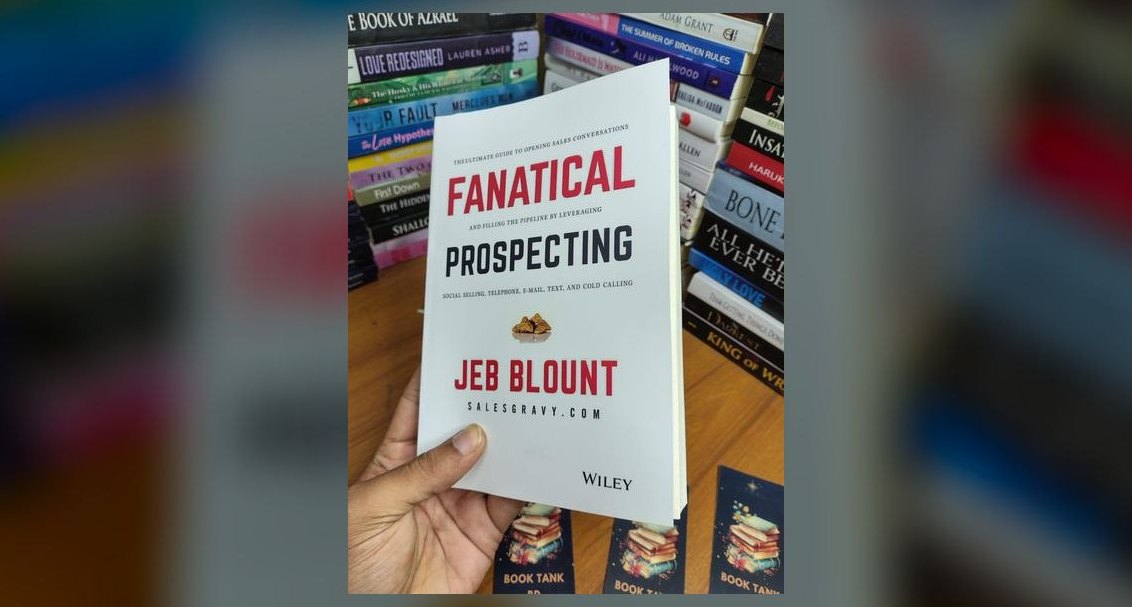 bsHow do you apply *Fanatical Prospecting* to LinkedIn outreach in 2027?
 bsHow does *Gap Selling* help you close more deals in a recession in 2027?
 bsWhat sales script does *New Sales. Simplified.* recommend for cold calls in 2027?
 bsDoes *The Psychology of Selling* still hold up for modern sales techniques in 2027?
 bsWhat’s the most actionable principle from *How to Win Friends and Influence People* for remote work in 2027?
 bsWhat’s the biggest mistake *SPIN Selling* warns against in complex B2B sales?
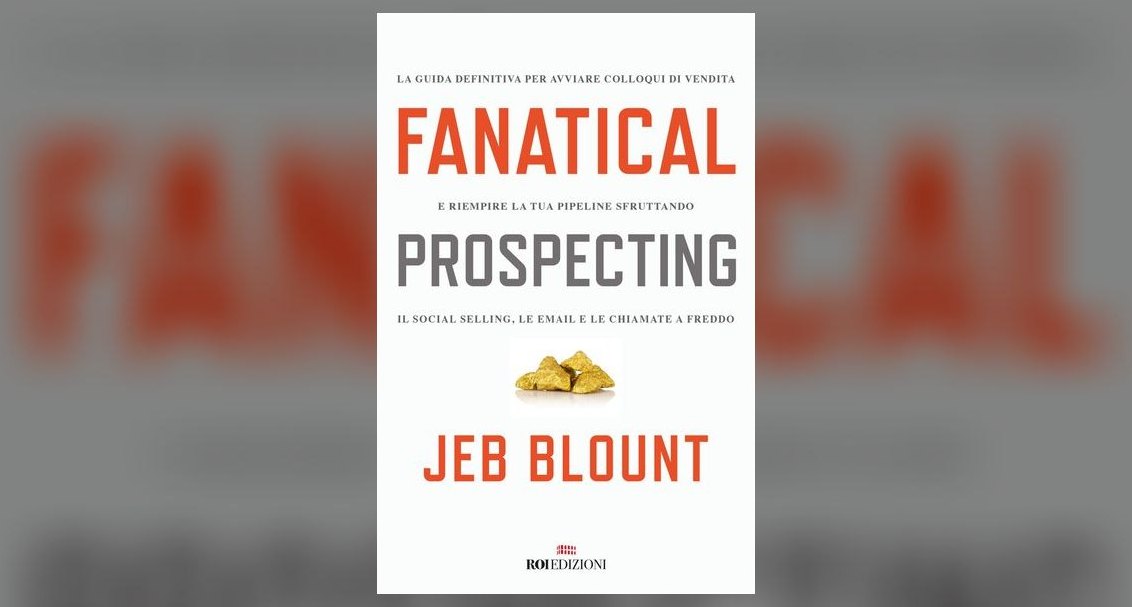 bsHow does *Fanatical Prospecting* change your daily routine for outbound sales?
 bsWhat’s the most persuasive technique from *Pitch Anything* for investor pitches?
 bsWhat’s the key insight from *The Challenger Sale* for leading a sales team in 2027?