
What’s the single most effective questioning technique from *SPIN Selling* for enterprise discovery calls?
 Curated byKory White · Fractional CRO · Maryland
 PULSEKNOWLEDGE LIBRARY
The Implication Question — the "I" in SPIN — is the single most effective questioning technique for enterprise discovery. Neil Rackham's research found top performers ask far more of them than average reps. Implication Questions make the buyer articulate the downstream cost of a problem, converting a tolerable annoyance into a funded, urgent priority.
Situation and Problem Questions versus Implication and Need-payoff Questions
The four SPIN question types are not four equal tools. They split cleanly into two camps, and understanding that split is the whole game in enterprise discovery.
Camp one: the information-gathering questions. Situation Questions ask about the buyer's current state — headcount, tech stack, process, org structure, renewal date. "How many reps are on the team?" "Which CRM are you on?" "Who owns the forecast today?" Problem Questions ask what is going wrong within that state — "Where does the handoff between SDR and AE break down?" "Are you happy with how long ramp takes?" These questions produce facts and complaints. They are necessary. They are also, in Rackham's data, the questions that inexperienced reps drown in.
Camp two: the value-building questions. Implication Questions take a problem the buyer has already named and push on what it causes — "When ramp runs long, what does that do to your coverage model in Q3?" Need-payoff Questions flip that same chain positive — "If ramp came down, what would that be worth to the number?" These questions do not gather information the rep needs. They generate realization the *buyer* needs. That is the fundamental difference, and it is why the two camps behave so differently on a call.

Here is the practical contrast that matters for an enterprise deal. Situation and Problem Questions are extractive — every one you ask takes something from the buyer (time, patience, disclosure) and gives nothing back. A VP of Revenue Operations sitting through fourteen minutes of "and how many stages are in your pipeline?" is spending her attention on your education. Implication and Need-payoff Questions are generative — the buyer leaves the call having thought something she had not thought before. She got value from the conversation itself, before you ever proposed anything.
The comparison also holds up on who does the persuading. When you ask Situation and Problem Questions, you gather raw material and then *you* build the case: "Based on what you've told me, here's why this is costing you." The buyer's job is to evaluate your argument, which means her job is to look for holes in it. When you ask Implication Questions, *she* builds the case, out loud, in her own words, using her own numbers. Now her job is to defend her own conclusion. Rackham's point, borne out across the Huthwaite observational work, is that this reversal is worth more than any closing technique ever invented.
Where does that leave Situation and Problem Questions? Not eliminated — relocated. Situation Questions belong mostly *before* the call, answered by research: the 10-K, the careers page, LinkedIn headcount trends, the job posting that reveals what the team is scrambling to fix, G2 reviews of the incumbent tool. Problem Questions belong early on the call, and there should be a handful — you cannot imply consequences from a problem the buyer has not yet named. But the center of gravity in an enterprise discovery call should sit in camp two.
One important caveat on the comparison: this ordering is specific to large, complex, multi-stakeholder sales. Rackham's original finding was that the *opposite* profile wins in small transactional sales, where classic closing techniques measurably helped and heavy implication-building was overkill. If you sell a $400/month tool self-serve, do not run a fifty-minute implication chain — you will exhaust the buyer's patience against a decision that was never going to require that much justification. The technique's superiority is a function of deal size, decision complexity, and the number of people who have to say yes.
How to decide which question type to reach for next
Discovery calls do not run on a script, they run on judgment — and the judgment is: given what the buyer just said, which of the four types earns the next sixty seconds? A simple decision routine covers most real calls.
Rule one — do you actually have a named problem yet? If the buyer has not stated a specific dissatisfaction in her own words, you cannot ask an Implication Question. There is nothing to imply *from*. Asking "what does that cost you?" about a problem you assumed rather than heard reads as a leading question, and enterprise buyers detect leading questions instantly. Go get a Problem Question answered first.
Rule two — is the buyer treating the problem as tolerable? Listen for hedging language: "it's not ideal," "we've kind of learned to live with it," "it's on the list." That is the exact signal to reach for implication. A tolerable problem does not get budget. Your job is to help her trace where the tolerance is quietly expensive.
Rule three — has she already said it's urgent and expensive? Then stop implying. Over-implying a problem the buyer has already escalated is the most common way to sound manipulative. Move to Need-payoff: "If that were solved by the start of next fiscal, what changes for you?"
Rule four — is the consequence still inside her own function? A CFO does not fund a problem that stays in one department. If the implication chain has only reached "my team is frustrated," keep pulling until it reaches revenue, risk, compliance, or customer retention — something a cross-functional buying group recognizes.
Two failure modes this routine prevents. The first is the interrogation spiral — rep asks four Implication Questions back to back, each one a variant of "and then what?", until the buyer feels cross-examined. The routine breaks that by forcing a check after each link: has the consequence crossed a functional boundary yet? If yes, you are done implying. The second is the premature pitch — rep hears a juicy problem and immediately demos the feature that solves it, collapsing all the value that implication would have built. The routine has no edge that goes from "problem named" straight to "present solution," and that omission is deliberate.
A note on multi-threading, which is where enterprise discovery differs most from mid-market. You are not running one chain, you are running one chain *per stakeholder*, and the branches differ. The IT director's implication chain terminates in integration risk and unplanned engineering hours. The CFO's terminates in cash and forecast variance. The frontline sales manager's terminates in attrition and quota attainment. Asking the CFO the IT director's question wastes your best technique on an audience that does not own that consequence.
What the numbers actually support, and what they do not
This is where most SPIN commentary goes wrong, so it is worth being precise about what is established and what is folklore.
What Rackham's work established. *SPIN Selling* (McGraw-Hill, 1988) reports on a large-scale observational research program run by Huthwaite, in which researchers sat in on and coded thousands of live sales calls across many countries and industries over roughly a decade. The headline findings: (1) in large complex sales, successful calls contained proportionally more Implication and Need-payoff Questions than unsuccessful ones; (2) traditional closing techniques correlated with *lower* success as deal size grew; (3) traditional objection-prevention beat objection-handling; (4) the standard "open vs. closed question" distinction had no meaningful correlation with outcomes at all — which is why SPIN classifies by *purpose* rather than by grammatical form.
What the book does not claim. It does not publish a magic number of Implication Questions per call. Any source telling you "ask exactly seven" is inventing precision. The finding is proportional and directional, not a quota. It also does not claim SPIN is a script — Rackham is explicit that the sequence is a natural progression, and that reps who run it as a rigid four-step recipe produce worse calls than reps who internalize the purpose of each type.
Numbers you can generate yourself, which are the ones that matter. Since the published research does not hand you a benchmark, build your own from your own call recordings. This is a concrete, cheap exercise:
- Pull ten recorded discovery calls — five that advanced to a next meeting with a second stakeholder, five that ended in "send me some information."
- Transcribe them (any modern conversation-intelligence tool or transcription service will do; even manual transcription of ten calls is a single focused afternoon).
- Tag every question in the rep's turns as S, P, I, or N. Ambiguous ones get tagged by *intent*: was the rep trying to learn something, or trying to make the buyer realize something?
- Compute two ratios per call: I+N as a share of total questions, and talk-time share for the rep.
- Compare the two cohorts.
In practice, teams that run this exercise usually find the same shape Rackham found: the advanced calls are heavier on I and N, and the rep talks less. You now have an internal benchmark expressed in your own product's language, which is far more persuasive to your own reps than a citation from 1988.
A realistic effort budget. For a fifty-minute enterprise discovery call, a reasonable target distribution is roughly: five minutes of rapport and agenda, five to eight minutes of targeted Situation Questions (only the gaps research could not fill), ten to fifteen minutes of Problem Questions, fifteen to twenty minutes of Implication and Need-payoff, and the remainder on next steps and mutual action plan. Notice that the two "value-building" types get the largest single block. Notice also that Situation gets the smallest — that is the discipline most reps find hardest, because Situation Questions are comfortable and require no courage.
The cost of getting it wrong, in deal terms. A discovery call that stays in camp one produces a summary email full of facts and no stated consequence. That email cannot be forwarded internally to a budget holder, because there is nothing in it that a budget holder would fund. A call that ran a good implication chain produces an email that quotes the buyer's own consequence back to her — "you mentioned that the two-week lag in territory data means Q3 coverage decisions get made on stale numbers" — and *that* email travels. Forwardability is the single best practical proxy for whether your implication work landed.
Building the technique into a team, in sequence
Individual skill is one thing; installing the technique across an enterprise sales org is a different and harder problem. Rackham's own last chapter is about exactly this, and his finding is blunt: training alone does not change behavior. Coaching and reinforcement do. Here is a sequencing that reflects that.
Phase one — establish the baseline before you teach anything. Run the ten-call tagging exercise above *before* any training. Two reasons. First, you need a pre-measurement or you will never know if the program worked. Second, reps who see their own transcripts with 70% Situation Questions highlighted need no further convincing — the data does the persuasion that a workshop cannot.

Phase two — build the question bank, per segment. Generic Implication Questions are weak. Specific ones are strong. Have the team draft consequence questions tied to your actual buyer's actual world, then organize them by stakeholder. For a revenue-operations product sold into a large enterprise, that might mean one column of questions whose consequences land on the CRO (pipeline coverage, forecast accuracy, ramp), one on the CFO (cost per acquired dollar, renewal predictability), one on IT (integration surface, data governance, support burden), and one on the frontline manager (rep attrition, admin time, coaching capacity). Twelve to fifteen questions per column is plenty. Anything longer becomes a document nobody opens.
Phase three — drill the chain, not the questions. Role-play with a single constraint: the rep may not describe the product at all. The only permitted moves are Problem, Implication, and Need-payoff Questions. Reps hate this drill for the first two rounds and then it clicks, because the constraint removes the escape hatch. Twenty minutes, twice a week, beats a one-day workshop.
Phase four — coach on recordings, weekly, on one metric. Pick a single number — I+N as a share of total questions — and coach to it in one-on-ones. Not revenue. Revenue is lagging and noisy; question mix is leading and controllable. Sales managers who try to coach four behaviors at once change zero of them.
Phase five — instrument the CRM so implication survives the call. Add a required free-text field on the opportunity: *stated consequence, in the buyer's words*. Not a picklist. If a rep cannot fill it, discovery is not complete, and that is a useful qualification gate independent of any methodology. This one field does more to make the technique stick than any amount of enablement content, because it makes the output of the technique a required artifact of the process.
Sequencing traps worth naming. Do not roll this out during a quarter-end crunch — reps under number pressure revert to whatever they already know, and you will burn the initiative's credibility. Do not launch it alongside a second methodology; teams cannot absorb two frameworks at once, and the two will get blended into mush. And do not let the question bank become a call script that appears verbatim on the rep's screen — buyers hear read questions the way they hear read voicemails.
Where the technique extends beyond first discovery
The Implication Question is taught as a discovery move, but its mechanism — making the buyer articulate consequence — travels well into several adjacent workflows. This is where a lot of practical value sits, and it is under-discussed.

Objection handling. When a buyer says "your price is too high," the reflexive move is to defend value or discount. The implication move is to ask what happens under the alternative: "If the lower-cost option doesn't get the territory data refreshed in time, what does that do to the coverage decisions you described?" You have not argued. You have asked her to complete the chain she already started. Rackham's related finding — that objection *prevention* through good implication work beats objection *handling* — means the best time to defuse the price objection is twenty minutes before it arrives.
Multi-stakeholder consensus. In a buying group of six to ten people, your champion has to re-run your discovery call without you in the room. She cannot re-run your product pitch — she does not know it well enough. She *can* re-run a consequence, because it is hers. Equipping a champion with three portable consequences, each aimed at a different stakeholder's world, is more useful than equipping her with a deck.
Renewals and expansion. The same technique works on installed base, with the polarity inverted. Instead of "what does this problem cost you," the CSM asks "what would you lose if this workflow went away?" — which surfaces realized value the customer can then articulate to their own finance team at renewal. Expansion works the same way: the consequence of *not* extending the solution to the second region is a real, statable cost.
Partner and channel motions. A partner rep selling your product alongside three others has no incentive to memorize your differentiators. They *can* be taught four consequence questions. Question banks travel across an indirect channel far better than product training does, because they are short, product-agnostic in form, and immediately usable.
Internal use — and this is the underrated one. The technique works on your own organization. A RevOps leader asking an executive team "if we don't fix territory data quality this half, what happens to Q4 coverage decisions and to the forecast we commit to the board?" is running an Implication Question on an internal buyer. Budget for internal initiatives gets approved by exactly the same mechanism as budget for vendors: someone with authority articulates a consequence out loud.
Comparable frameworks, honestly compared. Implication Questions overlap heavily with the "reframe" step in *The Challenger Sale* and with the problem-diagnosis emphasis in *Gap Selling* — all three are pushing on the gap between current state and its cost. The differences are real but narrower than the marketing suggests: Challenger leads with the rep's insight about a consequence the buyer had not identified, SPIN leads with a question that lets the buyer identify it. Gap Selling insists you quantify the current state numerically before anything else. A pragmatic enterprise seller runs a hybrid — research-driven insight to open the door, questions to make the buyer own it, quantification to make it fundable — and does not spend energy on which book gets the credit.
Where the technique fails. Three situations. First, genuinely transactional purchases, as noted — the machinery costs more than the decision is worth. Second, buyers under a mandate, where a compliance deadline or an executive directive has already created the urgency; implying further reads as stalling, and the right move is to accelerate to logistics. Third, an audience with no ownership of the consequence — a junior analyst tasked with gathering three quotes cannot act on a CFO-level implication, and pressing one on them just makes the call uncomfortable. Recognizing these three is part of the strategy, not an exception to it.
Related questions
Is the Need-payoff Question actually more effective than the Implication Question?
They work as a pair, and Rackham's data supports both as markers of successful complex sales. Need-payoff has the higher impact per question, but it only works on urgency that implication already built. Ask Need-payoff without implication and the buyer has no reason to describe value.
How do I ask Implication Questions without sounding like an interrogation?
Anchor each one in the buyer's own words, and stop after the consequence crosses a functional boundary. Reflecting language back — "you said the lag is two weeks" — keeps it collaborative. Three well-placed questions beat eight rapid-fire ones every time.
Does SPIN still apply when buyers do most of their research before the call?
Yes, and arguably more. Pre-call research removes the need for most Situation Questions, which frees the whole call for implication work. A buyer who already knows your feature list still has not articulated what her problem costs.
Can Implication Questions be asked over email or async video?
Partially. A single well-aimed consequence question in an email can work, but chains do not — you lose the ability to follow the buyer's language in real time. Use async for one question; save the chain for live conversation.
What is the fastest way to tell if my discovery call worked?
Read your own follow-up email. If it contains a consequence in the buyer's own words that a budget holder would recognize, the implication work landed. If it only contains facts about their stack, it did not.
FAQ
What exactly makes an Implication Question different from a Problem Question? A Problem Question establishes that something is wrong: "Is the handoff between marketing and sales causing dropped leads?" An Implication Question establishes what that wrongness costs: "When leads get dropped at that handoff, what does that do to the pipeline coverage you commit to in the QBR?" Same subject, different job. The first collects a symptom; the second makes the buyer price it. In enterprise deals, only the second one produces the language that survives an internal budget conversation.
How many Implication Questions should I plan for a fifty-minute call? There is no published number, and anyone quoting one is inventing it. Plan for three to five well-aimed ones per stakeholder rather than a volume target, and stop each chain once the consequence crosses out of that person's own function into revenue, risk, retention, or cost. Quality of aim beats count — five sharp consequence questions outperform twelve generic "and then what?" follow-ups, which read as cross-examination.
What if the buyer genuinely doesn't know the consequences? That is the productive case, not the failure case. Slow down and offer a hypothesis framed as a question: "Some teams in your position find the stale territory data forces coverage decisions on old numbers — does that show up for you?" This gives her a starting point without asserting a conclusion. If she rejects it, you have learned something real about her environment; if she picks it up, she now owns it.
Is this technique manipulative? It is manipulative if you ask questions whose answers you do not care about. It is consultative if you ask because you genuinely need to know whether this problem is worth solving — including the possibility that it is not, and you should disqualify. The tell is what you do when the buyer says "honestly, it's not costing us much." A consultative rep hears a disqualification signal and respects it. A manipulative rep keeps pushing for a bigger number.
Does SPIN conflict with Challenger, MEDDIC, or Gap Selling? No. They operate at different layers. MEDDIC is a qualification checklist — it tells you what you need to know about a deal. SPIN is a conversational technique — it tells you how to find it out. Challenger and Gap Selling overlap with SPIN's diagnostic emphasis but lead with rep-supplied insight and mandatory quantification respectively. Most effective enterprise teams run a qualification framework and a questioning technique together rather than choosing.
Where does the technique break down? Three places: small transactional sales, where the effort exceeds the decision's weight and classic closing actually performs better; buyers already operating under a mandate or deadline, where urgency exists and implying more reads as stalling; and conversations with people who do not own the consequence, such as a junior researcher collecting quotes. Recognizing these and switching approach is part of using the technique well.
Sources
- https://www.mheducation.com/highered/product/spin-selling-rackham/M9780070511132.html
- https://hbr.org/2012/07/the-end-of-solution-sales
- https://hbr.org/2015/11/the-new-sales-imperative
- https://www.gartner.com/en/sales/insights/b2b-buying-journey
- https://www.gong.io/resources/labs/
- https://www.salesforce.com/resources/articles/sales-methodology/
- https://blog.hubspot.com/sales/spin-selling-the-ultimate-guide
- https://en.wikipedia.org/wiki/Neil_Rackham
- https://www.rain.today/blog/spin-selling
Related on PULSE
- [What's the key difference between a situational and a problem question in *SPIN Selling* for discovery calls in 2027?](/knowledge/bs0414)
- [How does *SPIN Selling* help you uncover customer needs during discovery calls in 2027?](/knowledge/bs0353)
- [What's the single most effective tactic from *The Challenger Sale* for shortening a long sales cycle in 2027?](/knowledge/bs0410)
- [What's the biggest mistake reps make during discovery calls that *Gap Selling* explicitly warns against?](/knowledge/bs0394)
- [What's the most practical technique from *New Sales. Simplified.* for handling a "send me info" objection?](/knowledge/bs0400)
- [How do you use *SPIN Selling* to uncover a customer's unspoken budget constraints in 2027?](/knowledge/bs0399)
@Kory-White- · if Venmo asks, the last 4 of my number are 2012
 bsWhat are the key lessons from *Never Split the Difference* for negotiating a raise in 2027?
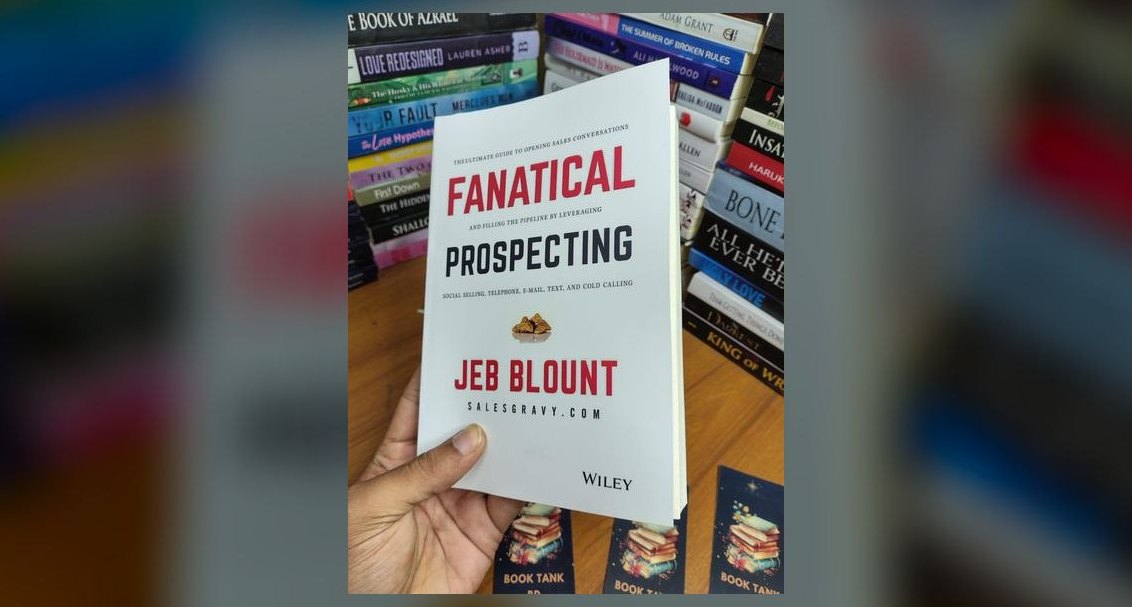 bsHow do you apply *Fanatical Prospecting* to LinkedIn outreach in 2027?
 bsHow does *Gap Selling* help you close more deals in a recession in 2027?
 bsWhat sales script does *New Sales. Simplified.* recommend for cold calls in 2027?
 bsDoes *The Psychology of Selling* still hold up for modern sales techniques in 2027?
 bsWhat’s the most actionable principle from *How to Win Friends and Influence People* for remote work in 2027?
 bsWhat’s the biggest mistake *SPIN Selling* warns against in complex B2B sales?
 bsHow does *Fanatical Prospecting* change your daily routine for outbound sales?
 bsWhat’s the most persuasive technique from *Pitch Anything* for investor pitches?
 bsWhat’s the key insight from *The Challenger Sale* for leading a sales team in 2027?