
How does *SNAP Selling* help you shorten a six-month sales cycle into three months in 2027?
 Curated byKory White · Fractional CRO · Maryland
 PULSEKNOWLEDGE LIBRARY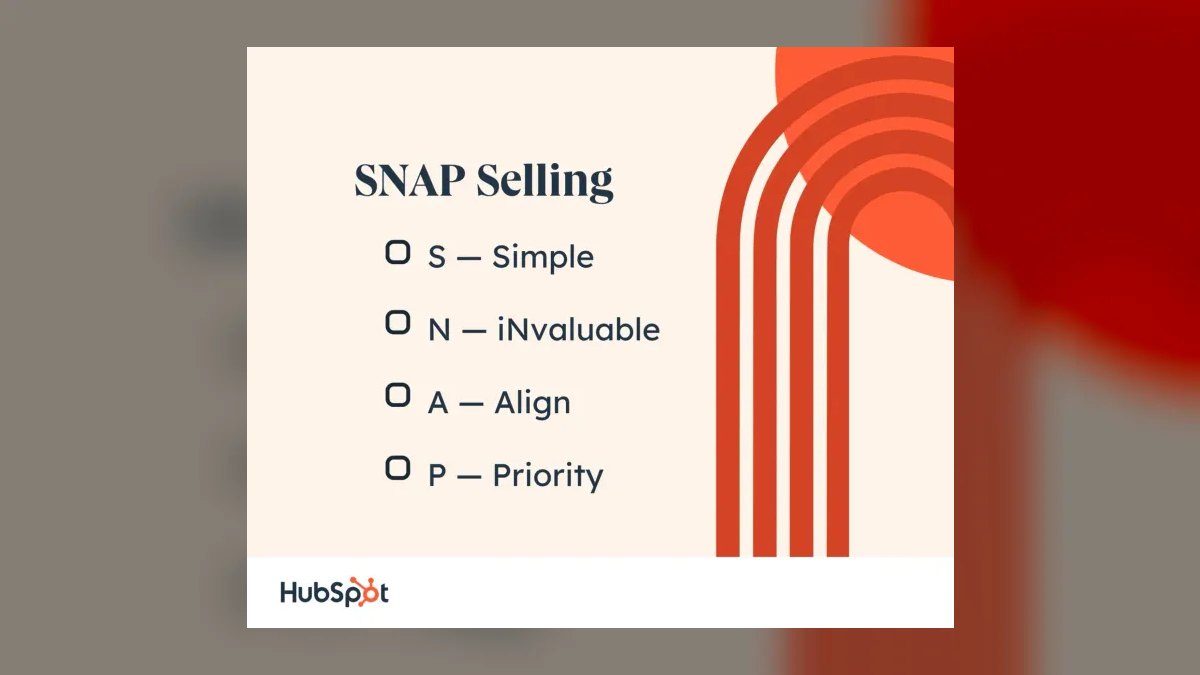
SNAP Selling shortens a six-month cycle by removing the buyer's reasons to stall. Jill Konrath's four rules — keep it Simple, be iNvaluable, always Align, raise Priority — compress evaluation by making each step obvious, low-risk, and tied to a funded initiative. Speed comes from eliminating dead branches, not from pushing harder.
What SNAP Selling actually is, and why cycle length is the symptom it treats
Jill Konrath published *SNAP Selling: Speed Up Sales and Win More Business with Today's Frazzled Customer* in 2010 (Portfolio; the widely circulated paperback edition is 2012). The premise is narrower than most methodologies and that narrowness is the point: Konrath is not trying to teach you to qualify better, forecast better, or negotiate better. She is trying to explain why deals that should take eight weeks take twenty-six, and what a seller can control about it.
Her diagnosis is that the constraint sits inside the buyer, not inside your process. The person on the other side of the deal is not evaluating you full-time. They have a day job, a reorg, a system migration, three other vendors in flight, and a manager who did not ask for this project. Konrath's word for them is "frazzled." The frazzled buyer does not reject you — that would require a decision. They defer. Deferral is free for them and expensive for you, and a six-month cycle is mostly the accumulated cost of deferrals, not the accumulated cost of work.
That reframe matters because it changes what "shorten the cycle" means. It does not mean compressing the work — the security review still takes three weeks, procurement still has a queue, legal still redlines. It means removing the gaps *between* the work. In most stalled enterprise deals, the actual labor performed by both sides adds up to a handful of days spread across half a year. Everything else is waiting: waiting for a stakeholder to read something, waiting for a meeting to be rescheduled, waiting for a buyer to muster the internal energy to advocate for a project nobody is measuring them on.
SNAP attacks the gaps with four rules applied to every single interaction.

Simple. Every touch must be immediately processable. Konrath's standard is that if the buyer has to work to understand what you want or what you are offering, they will postpone the work — and postponement is the failure mode. In practice this means one ask per email, one decision per meeting, one page per document.
iNvaluable. You have to be worth more than the alternative use of their attention. Konrath's version of value is informational: tell them something about their own operation, market, or peer set that they did not have and could not easily get. A demo is not invaluable. A benchmark of how six comparable companies staffed the same function is.
Aligned. Your deal must attach to something the buyer's organization has already decided to care about. This is the most underrated of the four and the one that does the most for cycle time. An unaligned deal has to create its own budget, its own priority, and its own sponsor from scratch — a nine-to-twelve-month project. An aligned deal borrows all three from an initiative that already cleared those hurdles.
Priority. Being wanted is not enough; you have to be next. Konrath's framing is that buyers have a short list of things they will actually spend political capital on this quarter, and everything else — regardless of merit — waits. Raising priority means making the cost of waiting visible and specific, not making your product sound better.
The reason this maps so directly onto cycle compression is that each rule kills a distinct category of delay. Simple kills the "I'll get to this" delay. Invaluable kills the "why am I taking this meeting" delay. Aligned kills the "we'd need to find budget" delay. Priority kills the "next quarter, probably" delay. You do not get from six months to three by winning any one of them. You get there by removing all four sources of drag simultaneously, which is why partial adoption of SNAP usually produces disappointing results — teams implement the email template, skip the alignment work, and wonder why nothing moved.
One more thing worth naming, because it is where the 2027 conversation starts. Konrath wrote about a buyer overloaded by email and meetings. The buyer entering 2027 is overloaded by *generated* content — inbound sequences written by models, personalization that is technically accurate and emotionally hollow, and a rising background rate of outreach that costs the sender almost nothing to produce. When the marginal cost of contact approaches zero, the buyer's only defense is a harder filter. That makes "simple and invaluable" less of a nicety and more of the entry fee. The methodology aged into relevance rather than out of it.
The step-by-step process that compresses six months into roughly twelve weeks
Here is the sequence practitioners actually run. Treat the week markers as a shape, not a promise — a 40-seat mid-market deal and a 4,000-seat enterprise deal have different floors.
Weeks 0–1: trigger identification and first contact. You do not open with a meeting request. You open with an observation tied to something that changed in the buyer's world — an earnings call comment, a leadership hire, a new facility, a regulatory deadline, a competitor's product launch, a job posting that reveals a build-vs-buy decision in progress. Konrath calls these trigger events, and the reason they compress cycles is that they supply the buyer's *reason to act now*, which you cannot manufacture. The first message is three or four sentences: what you noticed, what it usually implies, one yes/no question. No attachments, no deck, no calendar link buried in a paragraph.
Weeks 1–3: the first conversation, which is not a demo. The single highest-leverage change most teams make is banning the product demo from the first call. Konrath's argument is that demoing early converts the conversation into an evaluation — and evaluations invite comparison, and comparison invites a formal process, and a formal process is where six months comes from. Instead, the first call maps two things: the current-state cost of the problem, and the decision terrain. Three or four questions, asked well, get you most of the way: What happens today when this breaks? Who else feels it? What was the last project like this that got funded here, and why did it get funded? What would have to be true for this to be worth doing in the next two quarters?
Weeks 2–4: mapping the decision path. SNAP discovery is structural, not emotional. You are trying to name every human whose signature, veto, or silence can add three weeks — economic buyer, technical evaluator, security, procurement, legal, and the quiet skeptic who does not attend meetings but is consulted after them. Konrath's point is that you cannot compress a path you have not drawn. Most six-month cycles contain two or three surprise stakeholders who each appear at week fourteen and each add a month. Finding them in week three converts three sequential months into three parallel weeks.
Weeks 4–7: parallel stakeholder work. This is the actual mechanism of compression and it is boring: run the conversations concurrently instead of consecutively. Security review starts while the business case is still being written. Procurement gets the vendor packet before the pricing conversation concludes. The skeptical VP gets a private twenty-minute call rather than being ambushed in the group readout. Nothing here is faster than normal — it just does not queue.
Weeks 6–9: the one-page proposal and the risk reversal. Konrath is emphatic that a proposal should never be the first time a buyer sees the shape of the deal, and never be sent without a verbal agreement on what happens after it lands. The document itself compresses to a page: the problem in one sentence, three outcomes, the commercial terms, the risk-reduction offer, and a dated next step. Risk reversal — a paid pilot, a phased rollout, a shortened initial term, an exit clause tied to a defined success metric — is the lever that most reliably moves a stalled deal, because in most stalls the buyer is not unconvinced about value; they are unwilling to be personally wrong in public.
Weeks 9–12: the decision and the paper. The last stretch is the one sellers control least and plan for least. Procurement cycles, security questionnaires, and legal redlines have their own clocks. The SNAP move here is anticipatory: request the security questionnaire in week five, ask what the standard MSA redlines are before you send paper, and find out whether purchases over a certain threshold require an extra approval layer.
Costs, timelines, and what realistic ranges look like
Be careful with the arithmetic here, because the marketing version of this methodology promises things the honest version does not.
What actually compresses. The waiting compresses. If you audit a stalled six-month deal week by week, you typically find something like: three weeks of real seller work, two to four weeks of genuine buyer work (evaluation, security, internal write-up), and fifteen-plus weeks of nothing happening. SNAP does not touch the first two buckets. It attacks the third. That is why "six to three" is achievable in deals that are mostly gap, and why it is not achievable in deals that are mostly process.
Where the floor is. Some things are incompressible and you should plan around them rather than against them. Enterprise security review is commonly a multi-week affair and can be considerably longer in regulated industries. Procurement queues run on their own cadence. Annual budget cycles are hard walls — a deal that misses a planning window waits for the next one regardless of how well you sold. Legal redlines on a non-standard agreement add time that no amount of urgency removes. If your deal contains three of these, ninety days is not the target; a hundred and twenty is, and hitting it is still a large win.
Cost of adoption. The methodology itself is cheap and the change management is not. The book runs about the price of any business hardcover. Formal training programs and licensed methodology rollouts land in the range you would expect for enterprise sales enablement — meaningful five figures for a mid-size team, six figures for a large org with certification and reinforcement. The larger cost is behavioral: reps who have spent years opening with demos need repeated coaching, and the first quarter of adoption usually looks *worse* on activity metrics because you are deliberately killing deals earlier.
The disqualification tax. This is the number nobody puts in the deck. SNAP done properly kills more pipeline, sooner. Konrath's "no is better than maybe" rule means a rep who would previously have carried twelve hopeful deals now carries seven real ones. Reported pipeline coverage drops. If your comp plan or forecast process punishes that, reps will quietly stop disqualifying and you will get the activity without the acceleration. Fix the incentive before you run the training.
What to measure, and over what horizon. Track median cycle time by stage rather than mean total cycle — the mean hides everything useful, and stage-level data tells you where the gap actually lives. Track the count of distinct stakeholders engaged before week four; this is the single best leading indicator of whether a deal will close in ninety days. Track proposal-to-decision elapsed days, which is where risk reversal shows up. Expect two full sales cycles before the numbers mean anything — with a six-month baseline, that is roughly a year of patience, and teams that judge the change at week eight always conclude it failed.
Realistic outcome range. For transactional and mid-market deals with a single economic buyer, cutting cycle time by a third to a half is a reasonable expectation with disciplined execution. For committee-driven enterprise deals, twenty to thirty percent is a good year. The dramatic case-study numbers usually involve a deal that was already aligned to a funded initiative and simply needed the seller to stop getting in the way.
Where teams get this wrong
They implement the templates and skip the alignment. This is the dominant failure. The email format and the one-page proposal are the visible, copyable parts of SNAP, so they get adopted first. But alignment — attaching your deal to a funded, sponsored, already-prioritized initiative — is the part that actually removes months, and it requires research and judgment rather than a template. A beautifully simple email about an unaligned project still waits until next year.
They confuse urgency with pressure. "Raise Priority" gets misread as manufactured scarcity: expiring discounts, end-of-quarter theater, artificial deadlines. Konrath's version is the opposite — you make the buyer's *existing* cost of inaction legible, in their numbers, on their timeline. A frazzled buyer who feels pressured does the cheapest thing available, which is to stop replying. Fabricated urgency does not shorten a cycle; it ends one.
They quantify the cost of inaction with numbers the buyer did not give them. A cost-of-delay case built from your own benchmark data is a sales artifact. One built from figures the buyer stated in discovery is a mirror. The second survives being forwarded to a CFO; the first does not. If you cannot construct the number from the buyer's own inputs, you have not done enough discovery to earn the proposal.
They apply the follow-up rule mechanically. The three-touch guidance — after three genuine value-adds with no response, move on — is a resource-allocation heuristic, not a law of physics. Buyers go dark for reasons that have nothing to do with you: parental leave, a reorg, a system outage, a competing fire. The right move on touch three is usually a clean, no-guilt close-the-loop message that makes it costless to re-engage later, plus a calendar note for the next trigger event. Deleting the relationship because a counter hit three is how teams lose deals that were merely postponed.

They keep the compensation and forecasting systems that caused the problem. If reps are measured on pipeline created and meetings held, they will create pipeline and hold meetings. Nothing in SNAP survives contact with a comp plan that rewards volume of activity over velocity of decision. Konrath's organizational chapter is the one everybody skips and the one that determines whether the rest sticks.
They accelerate their own side and ignore the buyer's internal work. Your buyer has to write something — a justification memo, a business case, a slide for a steering committee. Most sellers never ask what that artifact is or offer to draft it. This is the cheapest month you will ever buy back. Ask what they need to produce, then produce a version of it they can edit and put their name on.
They demo too early, still. After all of it. The demo feels like progress, converts easily into a next meeting, and makes the seller feel useful. It also converts a strategic conversation into a feature comparison, and feature comparisons summon procurement.
A decision framework: when SNAP is the right strategy and when it is not
SNAP is not universally the correct tool, and pretending it is will cost you deals. It is a methodology optimized for a specific condition: a distracted buyer, a solution whose value is comprehensible quickly, and a decision that can be attached to something already funded. Change any of those and the calculus shifts.

Choose SNAP when the deal is mid-market to lower-enterprise, the buying group is under six people, your product's value can be explained in a sentence, and there is a visible trigger event or existing initiative to align to. Under those conditions SNAP is close to strictly dominant and the compression is real.
Reach for Challenger-style teaching instead when the buyer does not yet believe they have the problem. SNAP presumes latent demand and works to accelerate it; if there is no demand to accelerate, insight-led reframing has to come first. The two combine well — teach to create the priority, then run SNAP mechanics to keep the resulting deal from decaying — but the order matters.
Reach for MEDDIC or a formal qualification framework when deal size and complexity make forecast accuracy more valuable than speed. A seven-figure, eighteen-month, multi-region deal does not want to be compressed; it wants to be de-risked and accurately predicted. Applying speed pressure there reads as inexperience.
Reach for a product-led or self-serve motion when the buyer can evaluate without you. Nothing shortens a cycle like removing the seller from the path entirely for the segment where that works, and reserving SNAP discipline for the deals that genuinely need a human.

Apply SNAP asymmetrically by segment. The same rep should not run the same play on a 30-seat renewal expansion and a new-logo enterprise pursuit. The rules stay constant; the intensity of the alignment research scales with deal size.
Adjacent effects: what changes upstream and downstream when cycles compress
Shortening the cycle is not a self-contained win, and teams that treat it as one get surprised.
Marketing has to change what it hands over. A SNAP motion runs on trigger events, so the demand engine has to detect and route them — funding announcements, leadership changes, hiring signals, regulatory dates. A lead-scoring model built on content downloads feeds the wrong motion entirely. Teams that adopt SNAP without changing lead routing end up with reps manually hunting triggers, which does not scale past a handful of accounts per rep.
Forecasting gets more accurate but less comfortable. Shorter cycles mean less time between "this looks real" and "this is decided," which shrinks the window for hopeful forecasting. Leaders used to a long, soft pipeline find the new picture unnervingly thin. It is not thinner; it is truer.
Onboarding and customer success absorb the shock. If cycle time halves, deals land at twice the rate for the same headcount, and implementation becomes the new bottleneck. The risk-reversal offers that unlocked speed — pilots, phased rollouts, success-metric exit clauses — all create post-sale obligations that someone has to service. A team that compresses sales without warning delivery converts a sales win into a churn problem within two quarters.
Pricing and packaging come under pressure. Simplicity is a SNAP requirement, and complicated pricing is the single most common source of late-stage stall. The SaaS pattern Konrath describes — collapsing tiers to reduce analysis paralysis — has a real trade-off: you lose expansion levers and segment-specific margin. Worth it when pricing complexity is genuinely what is stalling deals; not worth it as a reflex.
Partner and channel motions do not compress the same way. When a reseller or SI sits between you and the buyer, you have limited control over the alignment and priority work, which is where most of the compression lives. Expect channel cycles to stay long and plan capacity accordingly rather than pushing a methodology through an intermediary who has not adopted it.
The rep's calendar changes shape. Fewer, deeper conversations replace many shallow touches. Reps who measured their week in call volume experience this as a loss of activity and often as anxiety. This is why the organizational chapter exists and why coaching, not training, is what makes the change stick.
Related questions
Does SNAP Selling still apply when the buyer runs a formal RFP?
Partially. An RFP fixes the timeline and format, removing most of your control over pace. SNAP's value shifts upstream — the goal becomes shaping the requirements before the RFP is written. If you first hear about the deal when the RFP arrives, someone else already ran the play.
How does SNAP compare to the Challenger Sale?
Challenger creates demand through teaching and reframing; SNAP accelerates demand that already exists. They solve different problems. Use Challenger when the buyer does not yet see the problem, SNAP when they see it but keep deferring the decision.
Can a single rep adopt SNAP without the whole team?
Yes, and results are real but capped. An individual can control simplicity, insight quality, alignment research, and disqualification discipline. They cannot fix comp plans, lead routing, or a forecast process that punishes early disqualification.
What is the fastest single change to shorten a stalled cycle?
Ask what internal document the buyer must produce to get approval, then draft it for them. It is the cheapest month you will recover and it works whether or not you have adopted anything else in the methodology.
Does this work for renewals and expansions?
Well, actually — better than for new logos. Alignment and priority are easier to establish with an existing account, and trigger events are visible in usage data. The main risk is assuming the original champion is still there and still cares.
FAQ
Is SNAP Selling still relevant given it was written before the current AI wave?
The diagnosis has aged well because the underlying condition intensified. Konrath wrote about buyers overwhelmed by email volume; the buyer heading into 2027 faces outreach that costs the sender almost nothing to generate. Scarcity of attention is now the binding constraint, which makes simplicity and genuine insight more valuable, not less.
Can AI tooling do the "invaluable" part automatically?
It can do the research layer — scanning filings, news, job postings, and product announcements to surface trigger events at a scale no human matches. What it cannot do is judge which of those signals actually matters to this specific buyer, or carry the political conversation that follows. Automate detection; keep interpretation human.
What if my product genuinely requires a long evaluation?
Then say so and compete on trustworthiness rather than pace. Some categories — core infrastructure, regulated systems, anything touching patient or financial data — have irreducible evaluation periods. The SNAP contribution there is removing gaps between required steps, not eliminating the steps.
How many stakeholders should I be meeting individually?
Every person who can veto, delay, or silently object. In a typical mid-market deal that is three to five conversations; in enterprise it can exceed ten. The relevant question is not how many but how many you found before week four, because a stakeholder discovered late is a month added.
What does a good risk-reversal offer look like?
Something that limits the buyer's personal downside without gutting your economics: a defined-scope paid pilot with written success criteria, a shortened initial term, a phased rollout starting with one team, or an exit clause tied to a measurable outcome. Free indefinite trials usually backfire — they signal low value and create no decision pressure.
Should I ever tell a prospect I am disqualifying them?
Yes, plainly and without theater. A clean "this does not look like a priority for you this year, so I will stop taking your time — reach out if that changes" preserves the relationship and occasionally reverses the deal on the spot. What damages relationships is silent abandonment after weeks of pursuit.
Sources
- https://www.jillkonrath.com/
- https://www.penguinrandomhouse.com/books/305002/snap-selling-by-jill-konrath/
- https://hbr.org/2012/03/the-end-of-solution-sales
- https://www.gartner.com/en/sales/insights/b2b-buying-journey
- https://blog.hubspot.com/sales/sales-methodology
- https://www.rainsalestraining.com/blog/sales-methodology
- https://www.salesforce.com/blog/sales-methodology/
- https://www.challengerinc.com/
Related on PULSE
- [How does *SNAP Selling* help you simplify a complex product story for a first-time buyer in 2027?](/knowledge/bs0405)
- [How does *SNAP Selling* help you break through the noise in a crowded market?](/knowledge/bs0375)
- [How does *SNAP Selling* simplify complex sales cycles in 2027?](/knowledge/bs0344)
- [How does *SNAP Selling* adapt to remote sales teams in 2027?](/knowledge/bs0331)
- [How does *SNAP Selling* help you prioritize leads in a busy inbox?](/knowledge/bs0361)
- [How can *The Sales Acceleration Formula* help you forecast revenue more accurately for a new product launch in 2027?](/knowledge/bs0415)
@Kory-White- · if Venmo asks, the last 4 of my number are 2012
 bsWhat are the key lessons from *Never Split the Difference* for negotiating a raise in 2027?
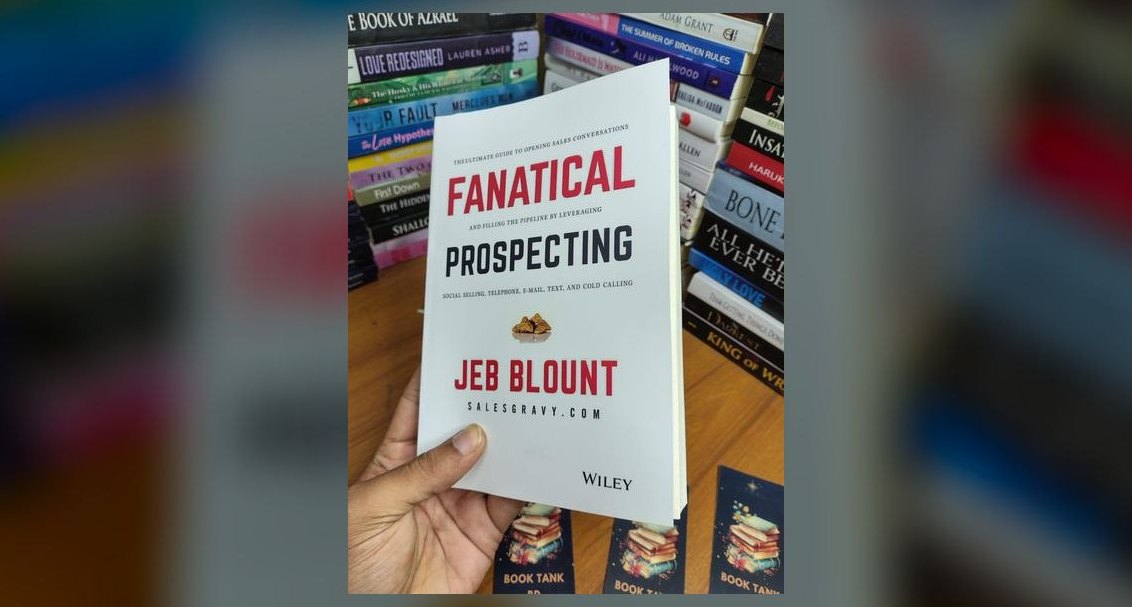 bsHow do you apply *Fanatical Prospecting* to LinkedIn outreach in 2027?
 bsHow does *Gap Selling* help you close more deals in a recession in 2027?
 bsWhat sales script does *New Sales. Simplified.* recommend for cold calls in 2027?
 bsDoes *The Psychology of Selling* still hold up for modern sales techniques in 2027?
 bsWhat’s the most actionable principle from *How to Win Friends and Influence People* for remote work in 2027?
 bsWhat’s the biggest mistake *SPIN Selling* warns against in complex B2B sales?
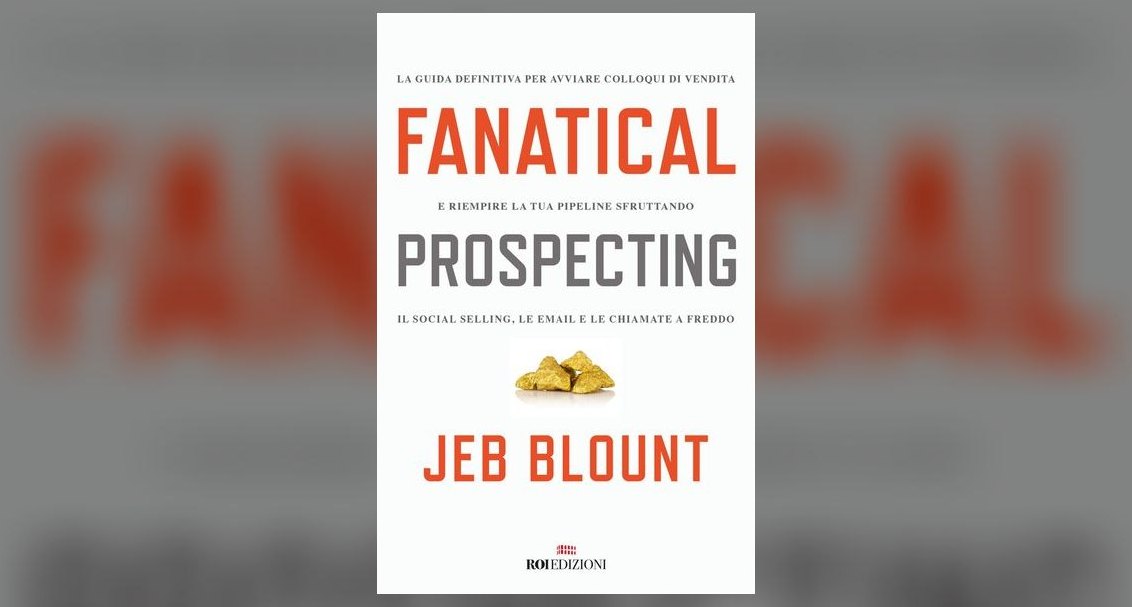 bsHow does *Fanatical Prospecting* change your daily routine for outbound sales?
 bsWhat’s the most persuasive technique from *Pitch Anything* for investor pitches?
 bsWhat’s the key insight from *The Challenger Sale* for leading a sales team in 2027?