
How do you use *SPIN Selling* to uncover a customer’s unspoken budget constraints in 2027?
 Curated byKory White · Fractional CRO · Maryland
 PULSEKNOWLEDGE LIBRARY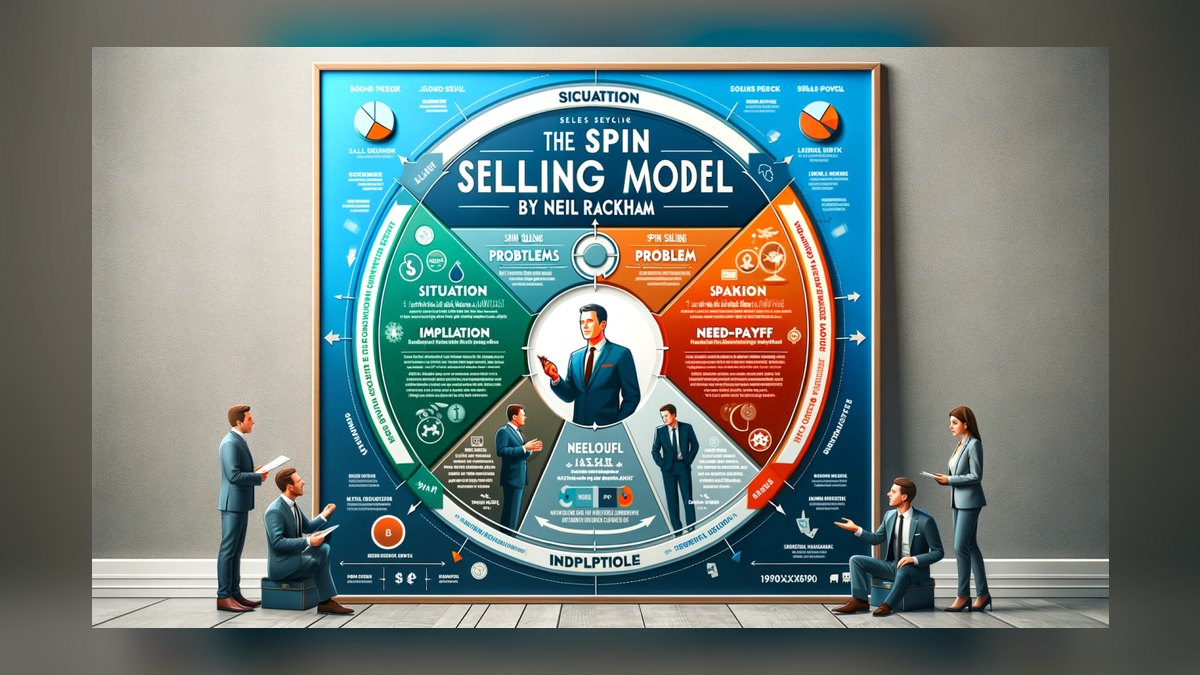
You uncover a customer's unspoken budget constraints by never asking for a number. Instead, you sequence Situation, Problem, and especially Implication Questions until the customer calculates the cost of their own problem, then use Need-payoff Questions to let them state the value of solving it. The resulting figure — value expressed in their own words — is the real budget, and it is far more reliable than any answer to "what's your budget," a question that only triggers defensiveness in complex selling.
The outcome you should expect
When SPIN Selling is applied correctly to budget discovery, the outcome is not a disclosed number — it is a disclosed *decision process*. The customer tells you, unprompted, what the problem is costing them, what they've already tried, and what conditions would make spending easy to justify internally. That is a fundamentally different (and more useful) outcome than a dollar figure, because dollar figures given in response to direct questions are frequently wrong: buyers round down to protect negotiating leverage, round up to sound serious, or simply guess because no one has ever asked them to quantify the problem before.
The realistic outcome of a well-run Implication and Need-payoff sequence is a customer who says something like "if this keeps happening we'll have to bring on contractors" or "our board already flagged this as a Q1 priority." Neither statement is a budget number, but both are budget signals — one reveals a contingency-funded workaround (a soft ceiling), the other reveals an executive mandate (a much higher, less price-sensitive ceiling). Your job is to translate these qualitative signals into a working estimate of what the deal can support, not to force a premature number out of someone who hasn't yet done the internal math.

You should also expect the unspoken constraint to rarely be "we have no money." In the large majority of stalled deals, the real constraint is one of three things: the customer hasn't yet built an internal business case strong enough to request the money (a Need problem), they don't believe your solution is worth more than their current pain (a Value problem), or the person you're talking to doesn't control the budget line at all (an Authority problem). SPIN Selling's core contribution is a repeatable way to distinguish between these three, because each demands a completely different next move — more Implication Questions for Need and Value gaps, a stakeholder-mapping conversation for Authority gaps.
A second outcome to expect: the depth of the customer's answer to a Need-payoff Question is itself diagnostic. A shallow, generic answer ("it would help, I guess") tells you the constraint is real and the deal is not close to being funded. A specific, quantified answer tied to a named internal process, deadline, or stakeholder tells you the customer has already started building their own internal case — and that a budget conversation, even an informal one, has probably already happened without you in the room. Recognizing which of these two you're getting changes whether your next move is to keep amplifying the problem or to start co-authoring the internal business case with them.

Finally, expect this approach to take longer per call than a direct budget ask, but to produce fewer false positives. A buyer who states "we could allocate around that range if the ROI holds" after being walked through their own cost calculation is a qualified signal you can forecast against. A buyer who answers "somewhere between $20K and $50K" to a cold direct question is not — that number was invented on the spot to end an uncomfortable question, and pipeline built on it tends to slip or die in late-stage review.
What drives that outcome (mermaid)
The mechanism behind this outcome is psychological, not tactical. A direct budget question forces the customer into a defensive, evaluative frame — they are being asked to reveal negotiating leverage before they've decided the problem is worth solving. An Implication Question does the opposite: it invites the customer to reason out loud about consequences they already privately worry about, which lowers defensiveness because the customer is talking about their own situation, not justifying a number to a stranger.

The chain runs in a specific order. Situation Questions establish shared facts and cost you almost nothing in trust — but they also earn you nothing if overused, since they don't touch pain. Problem Questions locate dissatisfaction, but on their own they only produce a list of complaints, not urgency. Implication Questions are the hinge: by connecting a stated problem to its downstream consequences (missed deadlines, compliance exposure, team attrition, lost revenue), they force the customer to do an internal cost calculation they may never have done explicitly. That calculation is what creates urgency and, critically, gives the customer a self-generated reference point for what "worth solving" costs. Need-payoff Questions then ask the customer to describe the upside of removing that cost, which reframes the entire conversation from "can we afford this" to "can we afford not to."
This is also why the technique is more durable in 2027 than a simple procurement-era pricing conversation: buying groups are larger and more research-driven, but the underlying human resistance to being evaluated hasn't changed. A question that makes someone perform for you produces a performance. A question that makes someone think out loud about their own operation produces the truth.

Benchmarks and realistic ranges
There is no universal dollar range for "unspoken budget," because the constraint is contextual to the customer's problem, not a fixed industry number — treat any claim to the contrary skeptically. What you can benchmark, realistically, is the *shape* of the conversation and how many questions of each type it typically takes to surface a usable signal.
In a single discovery call of 30-45 minutes, a well-run SPIN sequence typically includes a small number of Situation Questions (three to five, front-loaded, to avoid boring the customer), a larger set of Problem Questions (five to eight, used to locate where the real dissatisfaction lives), and then the majority of remaining call time spent on two to four Implication Questions per identified problem, chained to build up consequences layer by layer, followed by one or two Need-payoff Questions per problem to let the customer state value. If your call transcript shows mostly Situation and Problem Questions with almost no Implication follow-through, that is a reliable predictor that budget will stay unspoken — the pain was located but never amplified.

On timing: expect the budget signal to arrive later in the sales cycle than in transactional selling, often on the second or third substantive conversation rather than the first. This is a realistic trade-off, not a flaw — rushing the Implication sequence to get to a number faster tends to produce the same shallow, unreliable answers that a direct question would have produced.
On stakeholder count, larger B2B deals in 2027 commonly involve several distinct roles — an economic buyer focused on organizational ROI, a technical buyer focused on implementation and maintenance cost, and one or more user buyers focused on day-to-day workability — and each of these roles will reveal a different piece of the unspoken constraint. The economic buyer's Implication answer tends to be denominated in revenue or risk; the technical buyer's tends to be denominated in hours or headcount; the user buyer's tends to be denominated in friction and adoption risk. A budget estimate built from only one stakeholder's answers is incomplete by definition, so treat a single-threaded budget signal as provisional until you've run at least a short version of the sequence with each major role.
On confidence: a budget signal derived from a fully-run Implication-to-Need-payoff sequence, corroborated across two or more stakeholders, and expressed in the customer's own operational language (headcount, deadlines, named initiatives) should be treated as high-confidence. A signal derived from a single Implication Question with a vague or one-word answer should be treated as low-confidence and worth re-testing with a sharper, more specific follow-up before you build a forecast on it.

Risks, edge cases, and failure modes
The most common failure mode is asking Implication Questions that are generic rather than specific to the customer's stated problem — "what would that cost you?" instead of "what does a 24-hour delay in that specific approval step cost your team in missed SLAs?" Generic Implication Questions produce generic, low-information answers and waste the customer's patience without building real urgency.
A second failure mode is stacking too many Implication Questions in a row without ever transitioning to Need-payoff. Rackham's own caution applies directly here: relentless problem amplification without a payoff question starts to feel like the salesperson is dwelling on pain for its own sake, which reads as manipulative and re-triggers the exact defensiveness this strategy is designed to avoid. Every Implication thread should resolve into at least one Need-payoff Question before you move to the next problem area.

A third and increasingly relevant failure mode in 2027 is applying this sequence to a buyer who has no real authority over the budget line. If you run a flawless Implication-to-Need-payoff sequence with a stakeholder who cannot approve spend, you'll get a rich, honest answer about value — and it will still not translate into a forecastable number, because the actual constraint was never about need or value, it was about authority. The fix is not to abandon SPIN, but to use Situation Questions earlier and more deliberately to map who else needs to be involved, rather than assuming the person in the room is the full picture.
A fourth risk is treating a single strong Need-payoff answer as a green light to quote a price immediately. Anchoring price too early, even after a good Implication sequence, can undo the work by shifting the frame back to negotiation before the value case is fully built across all relevant stakeholders — this is particularly costly in multi-stakeholder deals where the person you're speaking with is not the one who ultimately signs.

A fifth edge case: some customers, particularly technical buyers, will answer Implication Questions with operational detail but genuinely will not know the financial impact of the problem — that's not evasion, it's a real information gap. In this case, don't force a dollar answer; instead help them identify who in their organization *would* know (finance, operations leadership) and treat that referral as a positive outcome, since it extends your reach into the buying group rather than manufacturing a fake number.
Finally, be alert to false positives: a customer expressing strong emotional frustration about a problem is not the same as a customer with budget to fix it. Frustration confirms Need; it does not confirm Value or Authority. Continue the sequence through Need-payoff and, where possible, a light Authority check before treating the deal as budget-qualified.

A practical rollout plan (mermaid)
Turning this from a concept into a repeatable team practice requires a rollout sequence, not a one-time training session. Start with pre-call preparation: before each substantive conversation, write down your best hypothesis about the customer's likely cost pressures and strategic priorities based on public information (news, job postings, stated initiatives), so your Implication Questions are targeted rather than generic from the first call.
Next, run the live sequence deliberately: open with a small number of Situation Questions to orient, move quickly into Problem Questions to locate real dissatisfaction, then commit the bulk of remaining time to Implication Questions chained specifically to the problems the customer raised, followed by Need-payoff Questions that ask the customer to describe the upside in their own words. Close not with a budget question, but with a resourcing question — "does your team have the ability to explore a fix if the value holds up" — which keeps the frame on feasibility rather than negotiation.

After the call, review the transcript or notes and count your question mix. A call with heavy Situation and Problem coverage but thin Implication and Need-payoff coverage is a call that likely left the real constraint unspoken — flag it for a follow-up conversation rather than moving the opportunity forward on incomplete information. Over time, this review step is what turns SPIN from a one-off technique into a team-wide strategy: it becomes possible to see, across many calls, which reps consistently surface reliable budget signals and which consistently guess.
Finally, extend the sequence across the buying group rather than running it once with a single contact. Repeat a lighter version of the Implication-to-Need-payoff sequence with each additional stakeholder you're introduced to, and reconcile their individual signals into a single working picture of the deal's real, and still largely unspoken, constraint set before you build a forecast on it.
Related questions
Why does SPIN Selling avoid asking about budget directly?
Direct budget questions put the customer in a defensive, evaluative posture in complex sales, producing rounded or invented numbers. Implication Questions instead let the customer calculate their own cost of inaction, which produces a more honest and usable signal.
What's the difference between an Implication Question and a Problem Question?
A Problem Question surfaces dissatisfaction ("is your current process slow?"). An Implication Question extends that problem into consequences ("what does that slowness cost your team in missed deadlines?"), which is what builds urgency and reveals budget.
How many stakeholders should I run this sequence with?
Run at least a light version with each major role in the buying group — typically an economic buyer, a technical buyer, and a user buyer — since each reveals a different part of the unspoken constraint.
What if the customer says "we have no budget" early in the call?
Treat it as a likely Need or Value gap, not a hard stop. Return to Problem and Implication Questions to test whether the problem has been fully quantified before accepting the objection at face value.
FAQ
Does SPIN Selling still apply to short sales cycles? It's designed for complex, higher-consideration B2B sales where multiple calls and stakeholders are involved. For short, low-stakes transactions, a lighter, faster qualification approach is usually more efficient than the full sequence.
How do I know if I'm using too many Situation Questions? If the customer sounds impatient or starts giving short, flat answers, you've likely overused Situation Questions. Keep them to a handful per call and move into Problem Questions quickly.
What if a customer gives a vague answer to a Need-payoff Question? A vague answer is a signal the value case isn't real yet, not a signal to push for a number. Go back to Implication Questions on a more specific problem before trying Need-payoff again.
Can AI tools help run this sequence in 2027? Conversation intelligence tools can tag question types and flag when Implication Questions are missing from a call, and can suggest follow-ups based on the customer's stated role. They support the sequence but don't replace judgment about when a customer is genuinely engaged versus performing.
Should I ever ask for a specific number? Only after the customer has stated value in their own words. At that point, a resourcing question ("does your team have room to act on this") is safer than a direct budget question, because it keeps the customer in a problem-solving frame rather than a negotiating one.
What's the biggest mistake reps make with this strategy? Skipping straight from Problem Questions to price, without ever running the Implication and Need-payoff steps. Without that middle sequence, the customer never does the internal math, and the constraint stays unspoken.
Sources
- Rackham, Neil. *SPIN Selling*. McGraw-Hill, 1988. — https://www.mheducation.com
- Harvard Business Review — https://hbr.org
- Gartner — https://www.gartner.com
- McKinsey & Company — https://www.mckinsey.com
- Association for Talent Development — https://www.td.org
- Forbes — https://www.forbes.com
- Sales Management Association — https://www.salesmanagement.org
Related on PULSE
- [The 12 Week Year by Brian Moran and Michael Lennington — Cliff Notes Summary for Sellers](/knowledge/bs0319)
- [Contagious by Jonah Berger — Cliff Notes Summary for Sellers](/knowledge/bs0313)
- [The Advantage by Patrick Lencioni — Cliff Notes Summary for Sales Leaders](/knowledge/bs0318)
- [Rework by Jason Fried and David Heinemeier Hansson — Cliff Notes Summary for Sellers](/knowledge/bs0317)
@Kory-White- · if Venmo asks, the last 4 of my number are 2012
 bsWhat are the key lessons from *Never Split the Difference* for negotiating a raise in 2027?
 bsHow do you apply *Fanatical Prospecting* to LinkedIn outreach in 2027?
 bsHow does *Gap Selling* help you close more deals in a recession in 2027?
 bsWhat sales script does *New Sales. Simplified.* recommend for cold calls in 2027?
 bsDoes *The Psychology of Selling* still hold up for modern sales techniques in 2027?
 bsWhat’s the most actionable principle from *How to Win Friends and Influence People* for remote work in 2027?
 bsWhat’s the biggest mistake *SPIN Selling* warns against in complex B2B sales?
 bsHow does *Fanatical Prospecting* change your daily routine for outbound sales?
 bsWhat’s the most persuasive technique from *Pitch Anything* for investor pitches?
 bsWhat’s the key insight from *The Challenger Sale* for leading a sales team in 2027?