
How does *The JOLT Effect* recommend handling a buyer who keeps delaying the final decision in 2027?
 Curated byKory White · Fractional CRO · Maryland
 PULSEKNOWLEDGE LIBRARY
*The JOLT Effect* recommends diagnosing the stall type rather than piling on more proof. Judge whether indecision stems from too many options or too little confidence, offer a counterintuitive diagnosis that names the fear, leverage the cost of inaction over fake urgency, and take control by shrinking the decision into a low-risk first step.
What buyer indecision actually is and why it kills more deals than competitors
Matthew Dixon and Ted McKenna published *The JOLT Effect: How High Performers Overcome Customer Indecision* through Portfolio/Penguin in 2022, building on research into recorded B2B sales conversations. The central claim reframes a problem most sales organizations have been mislabeling for decades. When a forecasted deal dies, reps typically log it as a competitive loss, a budget cut, or bad timing. The research says something else is happening in a large share of those cases: the buyer wanted the solution, believed the value, and still did nothing.
That distinction matters because the two failure modes call for opposite responses. A competitive loss means you did not sufficiently differentiate — the fix is better positioning, sharper proof, stronger business case. Indecision means the buyer already accepted your differentiation and froze anyway. Applying the competitive-loss fix to an indecision problem actively makes things worse. Every additional case study, every extra reference call, every new ROI model raises the stakes of the decision in the buyer's mind. If this thing is that good and I still get it wrong, that is on me.
Dixon and McKenna separate two forces acting on any buyer. The first is what most sales training targets: preference for the status quo — the buyer does not believe change is worth the disruption. The second is fear of messing up — the buyer believes change is worth it but doubts their ability to pull it off, or fears the personal fallout if the rollout stalls. Traditional selling attacks the first force well. It has almost nothing useful to say about the second, and the second is where modern enterprise deals go to die.

Consider what has changed in the buyer's environment. Purchasing decisions that once involved a director and a budget holder now route through security review, data privacy, procurement, finance, IT architecture, and often a formal vendor risk committee. Each additional reviewer adds a veto point and a person whose career is minimally rewarded for approving something and meaningfully punished for approving something that fails. The structural incentive across a large buying group tilts toward delay. Nobody gets fired for scheduling another meeting.
There is also a quieter dynamic worth naming: the buyer who keeps delaying is frequently not the person who will feel the pain of delay. A champion in revenue operations feels the operational cost of the current broken process every day. The legal reviewer three steps removed feels only the risk of signing. When the person holding the pen has no exposure to the cost of the status quo, the arithmetic never favors action — which is why *The JOLT Effect* treats the redistribution of that felt cost as a core move rather than a closing trick.
The step-by-step process for handling a buyer who keeps delaying
The JOLT sequence is diagnostic before it is prescriptive, and reps who skip straight to the intervention usually pick the wrong one. Work it in order.
J — Judge the indecision. Before you do anything, determine whether the buyer is stalling on the choice or stalling on themselves. Ask direct, low-pressure questions: *What specifically is holding this up right now?* *Is it deciding between options, or is it whether this is the right moment at all?* *On a scale of one to ten, how confident is your team that they could actually roll this out well?* That last question does most of the work. A buyer who answers eight or nine but still will not move is drowning in options and needs the field narrowed. A buyer who answers four or five is telling you the problem is execution confidence, and no amount of additional evidence about your product will move that number.

The second half of judging is deciding whether the deal is winnable at all. Dixon and McKenna are blunt that high performers disqualify faster. A buyer whose organization has no funded initiative, no executive sponsor, and no forcing event is not indecisive — they are not buying. Spending three months applying JOLT to a deal that was never real is a worse outcome than losing it in week two.
O — Offer a recommendation. This is where most reps go wrong by defaulting to the customer-is-always-right posture: *Which package feels right to you?* A buyer who is already overwhelmed experiences that question as more work. The high-performer move is to take a position. *Based on what you've told me about your team size and your reporting gaps, I'd start with the mid tier and skip the advanced module for now — you won't use it in year one.* Recommending less than the buyer asked about is the strongest trust signal available, because it visibly costs you something.
Paired with the recommendation is the counterintuitive diagnosis: naming what is actually happening out loud. *I think we've made this bigger than it needs to be. We've spent four months proving value and now the decision feels enormous. Let's shrink it.* Saying this disarms the buyer because it contradicts what they expect a salesperson to say, and it moves the conversation from persuasion to shared problem-solving.

L — Limit the exploration. Stalled buyers keep requesting more information, and the reflex is to supply it. High performers do the opposite: they cap the diligence. Rather than sending the twelve-page comparison the buyer asked for, send a one-page summary and say *this covers what actually differs; the rest is noise.* Rather than offering four reference calls, offer one, with the customer most similar to them. Limiting exploration is not withholding — it is exercising expertise about which information will change the answer and which will only expand the surface area of doubt.
T — Take risk off the table. The final move addresses the buyer's fear directly by restructuring the deal so a wrong decision is survivable. Pilots, phased rollouts, opt-out windows, capped initial commitments, implementation support written into the contract, staged payments tied to milestones — any of these convert an irreversible bet into a reversible one. This is the step that unlocks execution-confidence stalls specifically, and it is the step most sales organizations under-use because it feels like discounting. It is not. You are not lowering the price; you are lowering the perceived downside.
Timelines, deal sizes, and what a realistic intervention window looks like
The practical question every rep asks is when to trigger a JOLT intervention rather than continuing to nurture. There is no universal number, but there are workable heuristics drawn from how the framework is usually operationalized.

Start with your own baseline. Pull the last twelve months of closed-won deals in a given segment and calculate the median days from verbal agreement or proposal delivery to signature. If that median is eighteen days and a live deal is at forty-five, that deal is not progressing slowly — it has changed state. It is stalled, and the tactics that worked before verbal agreement will not restart it. Many teams set the trigger at roughly two times the segment median, which is late enough to avoid false positives and early enough that the champion has not lost internal credibility.
Deal size changes the calculus meaningfully. A twenty-thousand-dollar annual contract usually clears with one approver, and a stall there is often genuinely about competing priorities rather than fear. At two hundred thousand and up you are almost certainly inside a formal review process with security questionnaires and legal redlines, and the stall has structural causes — the reviewer queue itself may be four to six weeks deep regardless of how the buyer feels. Diagnose before intervening: a buyer waiting on a security review is not indecisive, they are queued, and applying pressure there damages the relationship for nothing.
Budget for the intervention to take real time. A proper judging conversation is a scheduled thirty-to-forty-five minute call, not a question tacked onto the end of a status check. Building a credible cost-of-delay analysis specific to the buyer's numbers takes a few hours of work with your solutions team. Restructuring a commercial offer into a pilot with an exit clause frequently requires your own legal and finance approval, which can run one to two weeks in a company of any size. Reps who attempt JOLT as an in-the-moment improvisation on a Thursday call generally get a polite deflection.

The pilot structure itself has typical shapes worth knowing. A thirty-day proof of concept with a defined success metric works when the product demonstrates value quickly and integration is light. Ninety days is more realistic when the solution needs data loaded, workflows configured, and users trained before anything meaningful can be measured — and promising results at thirty days in that situation sets up a failure you will own. A phased rollout starting with one region, one business unit, or one factory converts a company-wide decision into a departmental one, which frequently drops the approval requirement a full level and shortens the queue by weeks on its own.
One measurement worth adding to your pipeline reporting: track stall-to-close time as a distinct metric from total cycle time. Total cycle time bundles discovery, evaluation, and approval into one number that hides where the loss is happening. Isolating the window between verbal commitment and signature exposes exactly how much of your calendar is being consumed by indecision, and it is the only number that tells you whether a JOLT program is working.
Where teams get this wrong
The most common failure is the proof reflex. A deal goes quiet, the rep panics, and the response is more material: another case study, a fresh ROI model, three more references, a re-demo for stakeholders who already saw it. When the stall is about execution confidence, every one of those artifacts raises the stakes. You are telling a buyer who is already afraid of failing that the prize is even bigger than they thought. Reps do this because it feels like effort and because it is the behavior their training rewarded.
The second failure is manufactured urgency. End-of-quarter discounts, expiring pricing, and *I can only hold this configuration until Friday* are pressure tactics aimed at status-quo bias, and they land badly on a fear-based stall. A buyer who is anxious about making a mistake responds to artificial deadlines by becoming more anxious, not more decisive — and sophisticated buyers recognize the tactic, which costs you the credibility you need for the actual intervention. Genuine urgency built on the buyer's own numbers works. Invented urgency does not.

Third: asking the buyer what they want to do. It sounds respectful. To a person who is stuck, it is abandonment. The buyer has been staring at this decision for weeks precisely because they cannot resolve it themselves, and handing the question back confirms they are alone with it. Taking a position — including recommending a smaller purchase, a later start date, or a competitor when yours genuinely is not the fit — is what separates the reps who break stalls from the reps who politely watch deals expire.
Fourth: treating the buying group as one entity. In a committee of eight or eleven, indecision is rarely uniform. The CFO may be swamped with comparative data and want the field narrowed. The IT lead may be quietly certain the integration will consume a quarter of their year and is stalling to avoid owning that. The champion may be fine and simply lack the internal authority to push. A single generic intervention addresses none of them. Map the stall type per stakeholder and deliver a different move to each — simplification to one, a risk-reduction structure to another, internal ammunition to the third.
Fifth: ignoring the champion's personal exposure. Your champion is not a neutral evaluator; they are a person who will be publicly associated with this purchase inside their company. If the rollout goes badly, they carry it. Reps who never acknowledge this and never help the champion build a defensible internal story — the pilot criteria, the exit path, the risks the champion identified and mitigated — are asking someone to take a career risk on their behalf without support. The counterintuitive diagnosis works partly because it gives the champion permission to admit the fear rather than hiding it behind procedural excuses about legal review.

Sixth, and increasingly relevant: letting AI-assisted research expand the buyer's option surface without helping them close it. Buyers now arrive having read comparison content, aggregated review scores, and synthesized summaries of every alternative in the category. That volume of pre-work is often mistaken for buying readiness. It frequently produces the opposite — a buyer who knows more about the market than your rep does and is less able to choose than a buyer who evaluated three vendors on a spreadsheet. Limiting exploration matters more, not less, when the buyer has infinite research capacity.
A decision framework for choosing the right intervention
Not every delay is indecision, and not every indecision responds to the same move. Run the situation through a structured read before you act, because the wrong intervention is worse than none.
First, separate process delay from psychological delay. If the buyer is waiting on a security questionnaire, a scheduled quarterly budget cycle, or an executive who is genuinely traveling, the correct response is logistical: help compress the queue, offer to complete the questionnaire yourself, pre-brief the executive assistant. Applying a counterintuitive diagnosis to a procedural delay makes you look like you were not listening.

Second, if the delay is psychological, split it by cause. Too many options is a narrowing problem — cut the choice set, recommend one path, kill the optional modules, reduce the reference calls to a single relevant one. Too little confidence is a risk problem — restructure the commercial terms, add implementation support, propose a limited pilot, write in an exit. Trying the narrowing move on a confidence stall leaves the fear untouched, and trying the risk move on an overwhelmed buyer adds another option to a pile that is already too tall.
Third, calibrate to authority. If your contact can sign, your intervention is aimed at them directly. If they cannot, half of your work is building the internal case they will carry into a room you are not in: a one-page summary, the cost-of-delay number in their own units, the pilot structure and its exit terms, and the three objections you know their CFO will raise with answers already attached. Reps who prepare their champion for that room win deals reps who prepare only their own pitch do not.
Fourth, set a genuine walk-away. Some deals should be released. If the buyer has no funded budget, no executive sponsor, and no consequence for continued inaction, the honest strategy is to move them to a nurture cadence and redeploy your hours to a deal that can close. Saying so plainly — *it sounds like this isn't the right quarter for you; let's reconnect when the budget cycle opens, and I'll stop chasing you in the meantime* — costs nothing and occasionally, because it removes the pressure the buyer was resisting, restarts the deal within a week.

Adjacent scenarios where the same handling applies
The framework transfers well beyond the classic new-logo enterprise deal, and recognizing the pattern in adjacent situations is where most of the practical value sits.
Renewals and expansions. A customer who will not commit to an upgrade is running the identical calculus with a twist: they have already lived through one implementation with you and their confidence is calibrated by that experience. If the original rollout was rough, no volume of new-feature proof will move them — the de-risking move has to acknowledge the prior experience directly and structure the expansion so it cannot repeat. If the original rollout went well, you have an asset most new-logo reps do not: a lived proof point that makes a phased expansion feel routine rather than risky.
Internal projects. Anyone who has tried to get a systems migration approved inside their own company has run this play from the other side. The executive who keeps deferring the CRM consolidation is not confused about the benefits; they are calculating the cost of owning a failed migration. Internal champions win the same way external reps do — by shrinking the ask to a pilot in one team, defining success criteria in advance, and building an explicit rollback path. The JOLT structure is not really about selling. It is about how humans handle irreversible decisions with reputational exposure.
Procurement and vendor-risk teams. These groups are professionally rewarded for finding reasons to slow down. Handling them means giving them what reduces their risk rather than what proves your value: completed security documentation before it is requested, references from customers in their regulatory environment, contract language they have seen before rather than your custom paper. A stalled legal review often unblocks by proposing a shorter, simpler pilot agreement instead of negotiating the full master agreement — a fifty-page contract is a larger decision than a three-page one, and shrinking the document shrinks the decision.

Deals with a silent buyer. Total silence is a variant of delay, not a separate problem, though it needs a different opening. The judging step happens without the buyer's help: read the signals you have — who stopped responding, when relative to which event, whether the silence followed a pricing conversation or a technical review. Then break the silence with a message that offers an easy exit rather than another follow-up. Explicitly giving the buyer permission to say the timing is wrong resolves silence far more often than a fifth check-in, and the answer you get back is diagnostic either way.
Relationship to Dixon's earlier work. *The Challenger Sale*, published in 2011 with Brent Adamson, addressed a different failure — the buyer who does not see why they should change. Teaching, tailoring, and taking control are the tools for status-quo bias. *The JOLT Effect* addresses the buyer who already sees why and still will not move. The two are complementary rather than competing, and diagnosing which problem you actually have determines which toolkit applies. Running Challenger insight-selling at a buyer paralyzed by fear of failure adds pressure to someone who needs cover. Running JOLT de-risking at a buyer who is genuinely satisfied with the status quo gives them an easy way to do nothing at low cost.
The through-line across all of these: the reflex to add is almost always wrong, and the discipline to subtract — fewer options, smaller commitment, shorter contract, narrower first phase — is what converts a stalled deal into a moving one.
Related questions
Is buyer indecision the same as an objection?
No. An objection is a stated reason not to buy, and it can be answered with information. Indecision is unstated and cannot be answered with information — the buyer agrees with your answers and still does not move. Treating indecision as an objection produces more proof and more paralysis.
Should you ever walk away from a delaying buyer?
Yes, when there is no funded budget, no executive sponsor, and no consequence for inaction. Releasing the deal to a nurture cadence and saying so plainly costs nothing, frees your calendar for winnable work, and occasionally restarts the deal by removing the pressure the buyer was resisting.
Does discounting break a stall?
Rarely, and it often confirms the buyer's suspicion that waiting is rewarded. Price is seldom the blocker when the buyer has already accepted the value. Restructuring risk — a pilot, a phased rollout, an exit window — addresses the actual fear without lowering what you charge.
How do you apply this across a large buying committee?
Diagnose each stakeholder separately. Narrow the choice set for the person drowning in comparisons, restructure risk for the person worried about implementation, and arm the champion with the internal case. One generic intervention aimed at the group addresses nobody's actual blocker.
What signals suggest a stall rather than normal evaluation?
A deal past roughly twice your segment's median days-to-close after verbal agreement, repeated requests for information that will not change the outcome, meetings that reschedule without new participants, and the same procedural excuse — legal, security, budget timing — surfacing a third time without progress.
FAQ
What does JOLT stand for?
Judge the indecision, Offer a recommendation, Limit the exploration, and Take risk off the table. The four steps run in sequence and the first is diagnostic — you cannot pick the right intervention until you know whether the buyer is overwhelmed by options or unconfident in their own ability to execute the change.
Who wrote The JOLT Effect and when?
Matthew Dixon and Ted McKenna wrote it, published by Portfolio/Penguin in 2022. Dixon co-authored *The Challenger Sale* in 2011 with Brent Adamson. The two books address opposite failure modes: Challenger targets buyers who do not want to change, JOLT targets buyers who want to change but freeze.
Why does adding more proof make a stall worse?
Because a buyer stalling out of fear of failure hears additional evidence as escalation. The more thoroughly you demonstrate that this decision is important, the more consequential getting it wrong becomes for the person who has to defend it internally. Proof solves doubt about the product, not doubt about oneself.
How is this different from creating urgency?
Urgency tactics — expiring discounts, quarter-end deadlines — target buyers who do not feel a reason to move. They backfire on anxious buyers by adding pressure to someone already overloaded. Genuine urgency built from the buyer's own cost of delay works because it is their number, not your calendar.
Can this framework be used on internal decisions, not just sales?
Yes. Anyone proposing a migration, a reorganization, or a tooling change inside their own company faces the same dynamic: an approver weighing personal exposure against uncertain upside. Shrinking the ask to a pilot with defined success criteria and a rollback path works identically whether the decision-maker is a customer or a colleague.
What is the single most useful first move on a stalled deal?
Ask the confidence question: on a scale of one to ten, how confident is the team that they could roll this out successfully. A high score with continued delay means narrow the options. A low score means the blocker is execution risk, and every minute spent on further product proof is wasted.
Sources
- https://www.penguinrandomhouse.com/books/706336/the-jolt-effect-by-matthew-dixon-and-ted-mckenna/
- https://www.gartner.com/en/sales/insights/b2b-buying-journey
- https://hbr.org/2012/07/the-end-of-solution-sales
- https://hbr.org/2022/09/how-to-sell-to-an-indecisive-buyer
- https://www.gartner.com/en/sales/topics/sales-strategy
- https://www.salesforce.com/resources/research-reports/state-of-sales/
- https://business.linkedin.com/sales-solutions/b2b-sales-strategy-guides
- https://www.mheducation.com/highered/product/challenger-sale-dixon-adamson.html
Related on PULSE
- [How does *The JOLT Effect* recommend rescuing a deal when the buyer goes silent for two weeks in 2027?](/knowledge/bs0419)
- [How do you apply *The JOLT Effect* to reduce buyer hesitation in enterprise sales?](/knowledge/bs0359)
- [How does *The JOLT Effect* differentiate between buyer hesitation and buyer disinterest in enterprise deals?](/knowledge/bs0385)
- [What's the critical lesson from *The JOLT Effect* about reducing buyer anxiety?](/knowledge/bs0345)
- [What's the critical lesson from *The JOLT Effect* about managing indecisive buyers in a recession?](/knowledge/bs0372)
- [What's the biggest mindset shift *The Psychology of Selling* recommends for handling a no-decision close?](/knowledge/bs0382)
@Kory-White- · if Venmo asks, the last 4 of my number are 2012
 bsWhat are the key lessons from *Never Split the Difference* for negotiating a raise in 2027?
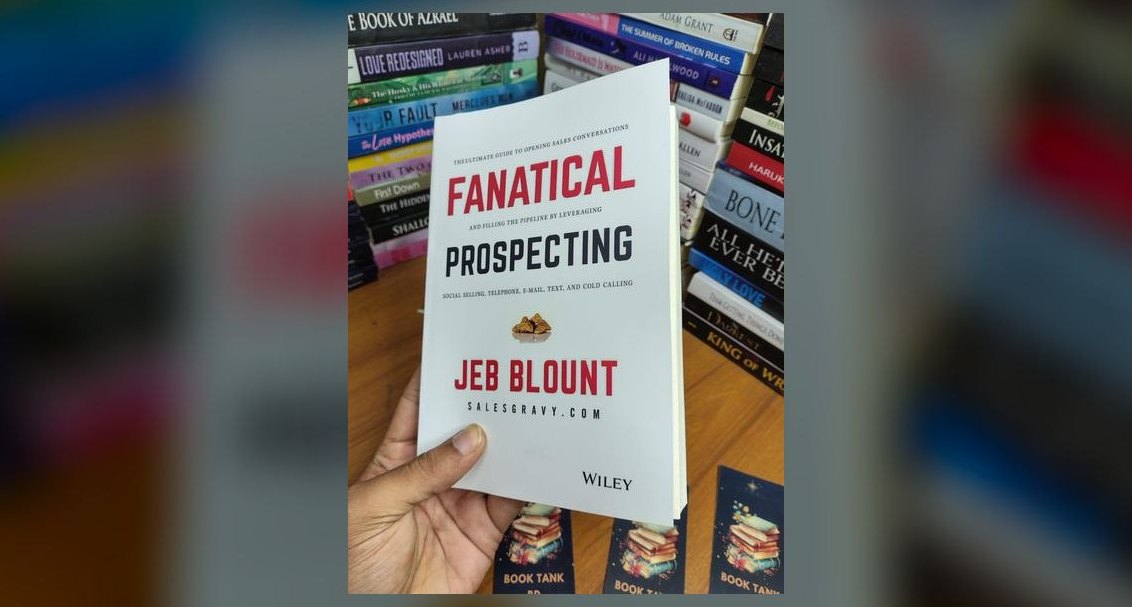 bsHow do you apply *Fanatical Prospecting* to LinkedIn outreach in 2027?
 bsHow does *Gap Selling* help you close more deals in a recession in 2027?
 bsWhat sales script does *New Sales. Simplified.* recommend for cold calls in 2027?
 bsDoes *The Psychology of Selling* still hold up for modern sales techniques in 2027?
 bsWhat’s the most actionable principle from *How to Win Friends and Influence People* for remote work in 2027?
 bsWhat’s the biggest mistake *SPIN Selling* warns against in complex B2B sales?
 bsHow does *Fanatical Prospecting* change your daily routine for outbound sales?
 bsWhat’s the most persuasive technique from *Pitch Anything* for investor pitches?
 bsWhat’s the key insight from *The Challenger Sale* for leading a sales team in 2027?